



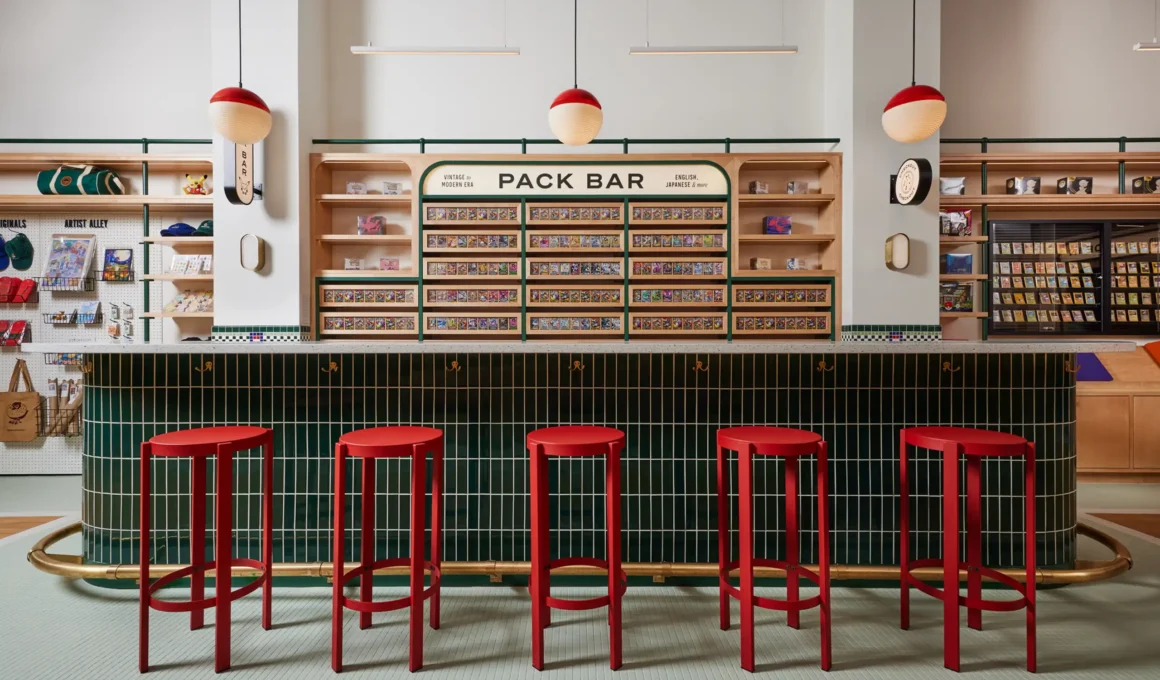
In the heart of the Meatpacking District, where Manhattan’s industrial grit meets high-end fashion, a new type of cultural landmark has emerged. The Poké Court Flagship, designed by New York-based studio GAMPworks, marks a significant evolution for the Pokémon Trading Card Game community. Moving beyond the cramped, second-story offices typically associated with hobbyist shops, this 1,500-square-foot retail experience is housed within a landmarked building, bridging the gap between childhood nostalgia and sophisticated urban architecture.
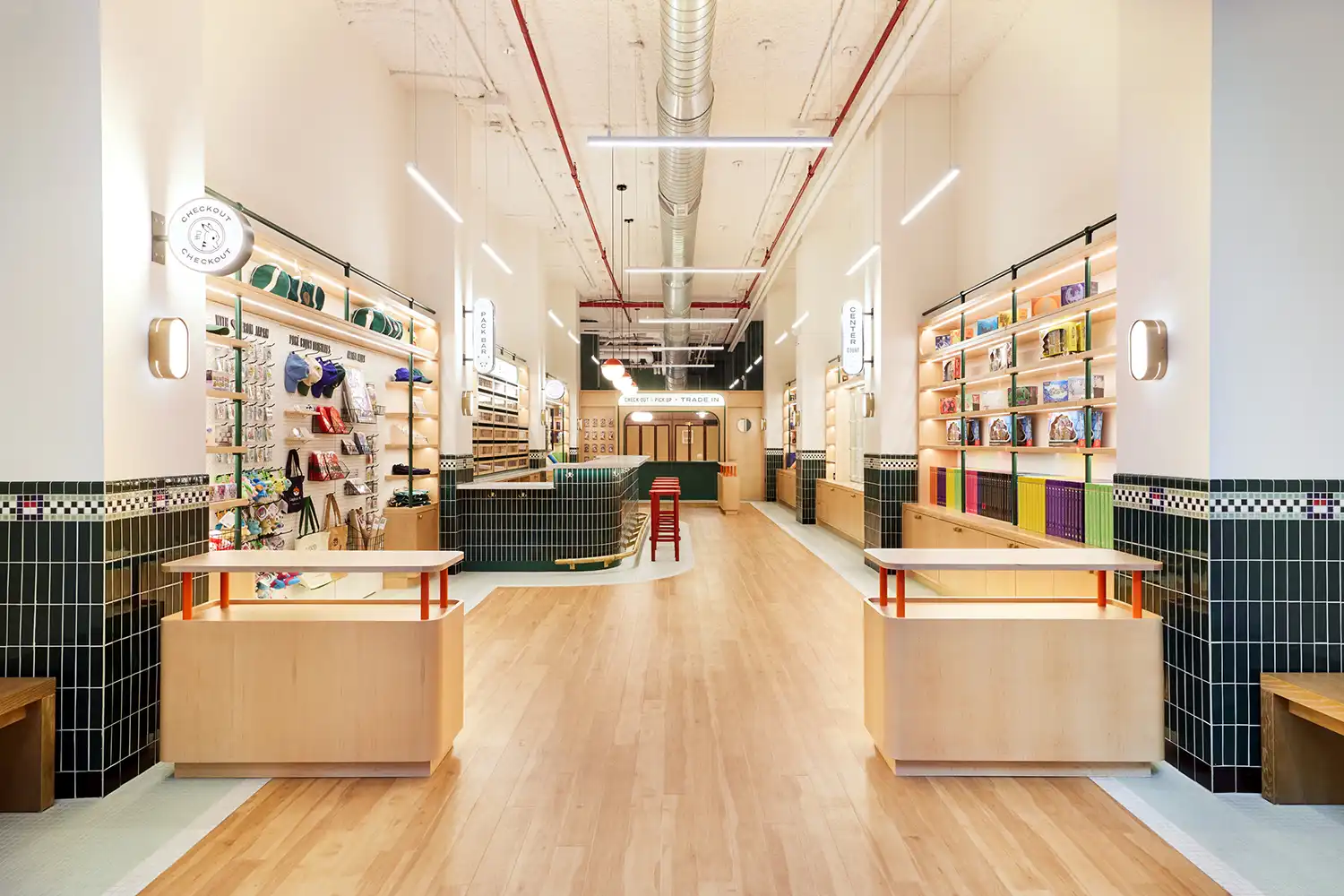
The concept of the “sports court” serves as the primary narrative driver for the floor plan. Founded by Priscilla Auyeung and Maxine Gao, GAMPworks interpreted the competitive spirit of Pokémon through a lens of athletic energy and civic permanence. The long, narrow footprint is grounded by wood-look flooring and custom maple millwork, creating a sense of warmth that contrasts with the soaring ceilings and exposed ductwork of the original structure. At the center of the space lies the “Pack Bar,” a social anchor where “Packtenders” facilitate the ritual of unboxing—a high-stakes ceremony that turns a simple transaction into a shared public event.
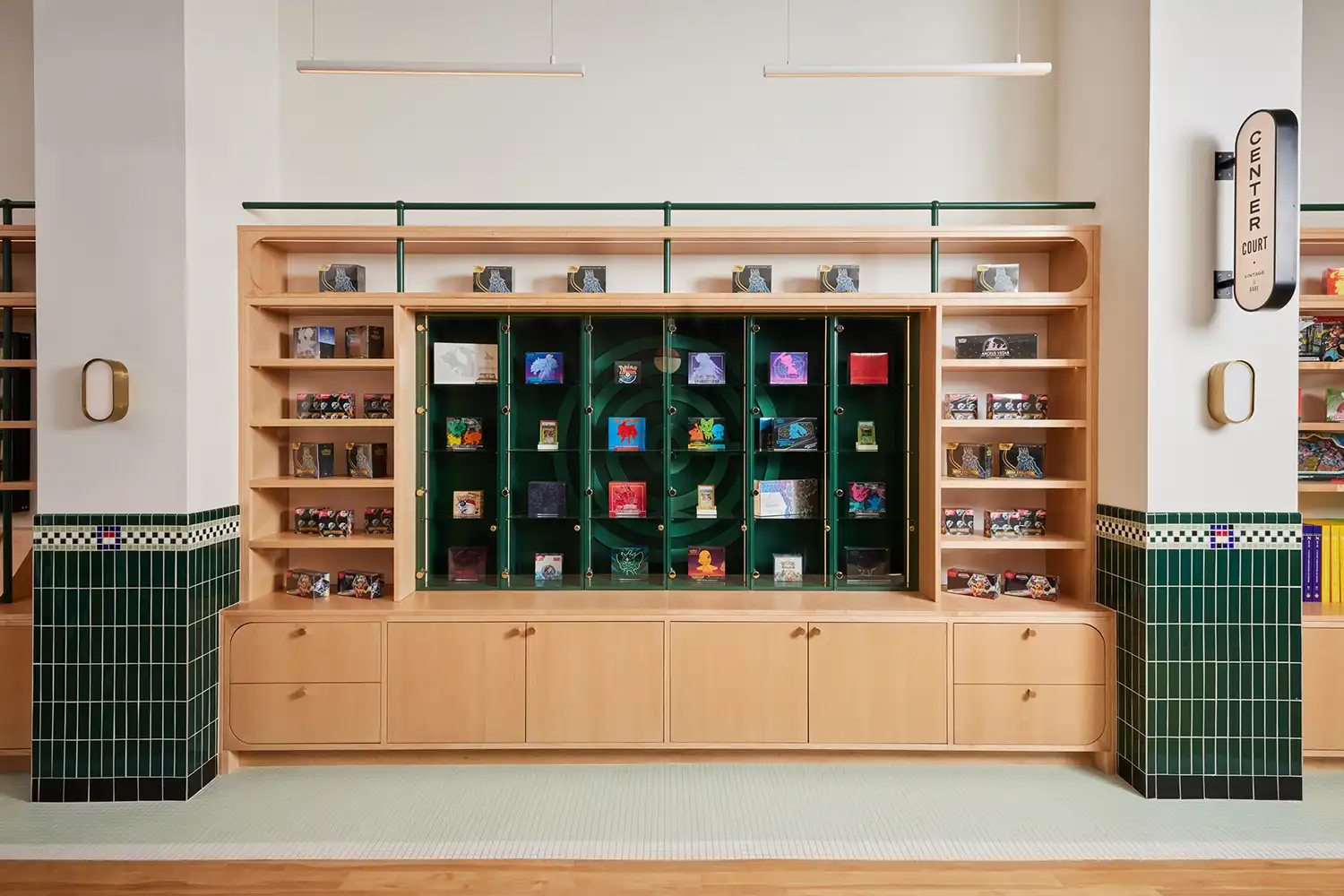
Craftsmanship and materiality provide the tactile layers that elevate the store above standard commercial interiors. One of the most striking details is the wrapping of the structural columns in 1,500 handmade mosaic tiles, each subtly depicting a Pokéball—a meticulous touch that rewards the observant visitor without overwhelming the space. The Pack Bar itself features a counter manufactured from recycled plastics, while dark green subway tiles pay homage to the New York City transit aesthetic. This focus on durability and texture reflects a minimalist retail architecture approach that uses geometry to guide human interaction, much like recent contemporary projects in Mexico.
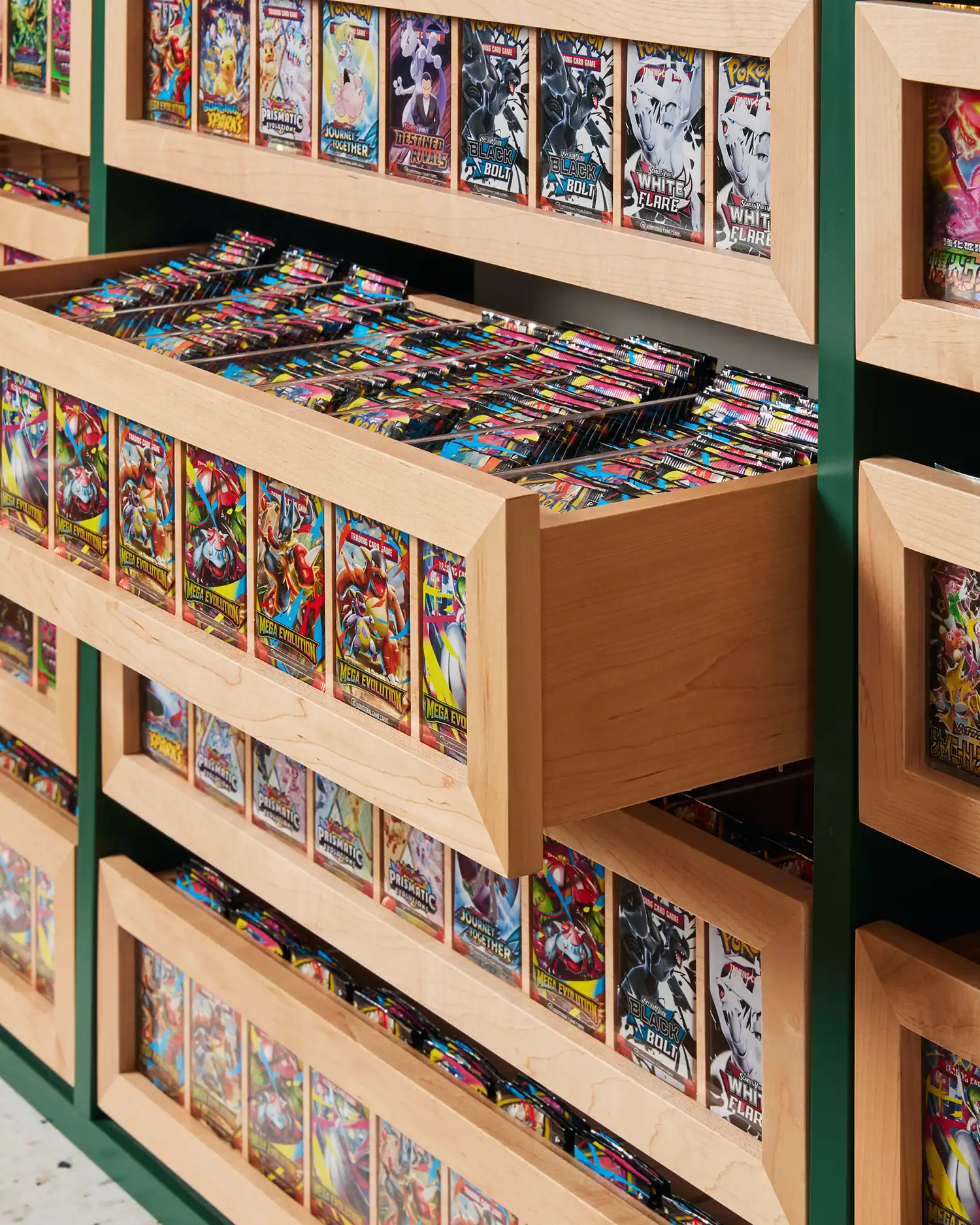
Strategic spatial planning ensures that the flow remains intuitive despite the site’s depth. The transition from the public-facing retail floor to the specialized “Ripping Corner” and trade-in counter is seamless, maximizing every inch of the Meatpacking District real estate. This choreography of movement through a historic NYC shell draws parallels to the way Peterson Rich Office reimagined the MoMA Design Store in Soho, where the dialogue between the existing landmark and modern intervention defines the brand’s authority. In both cases, the design utilizes custom millwork to create a sense of continuity that feels both permanent and light.
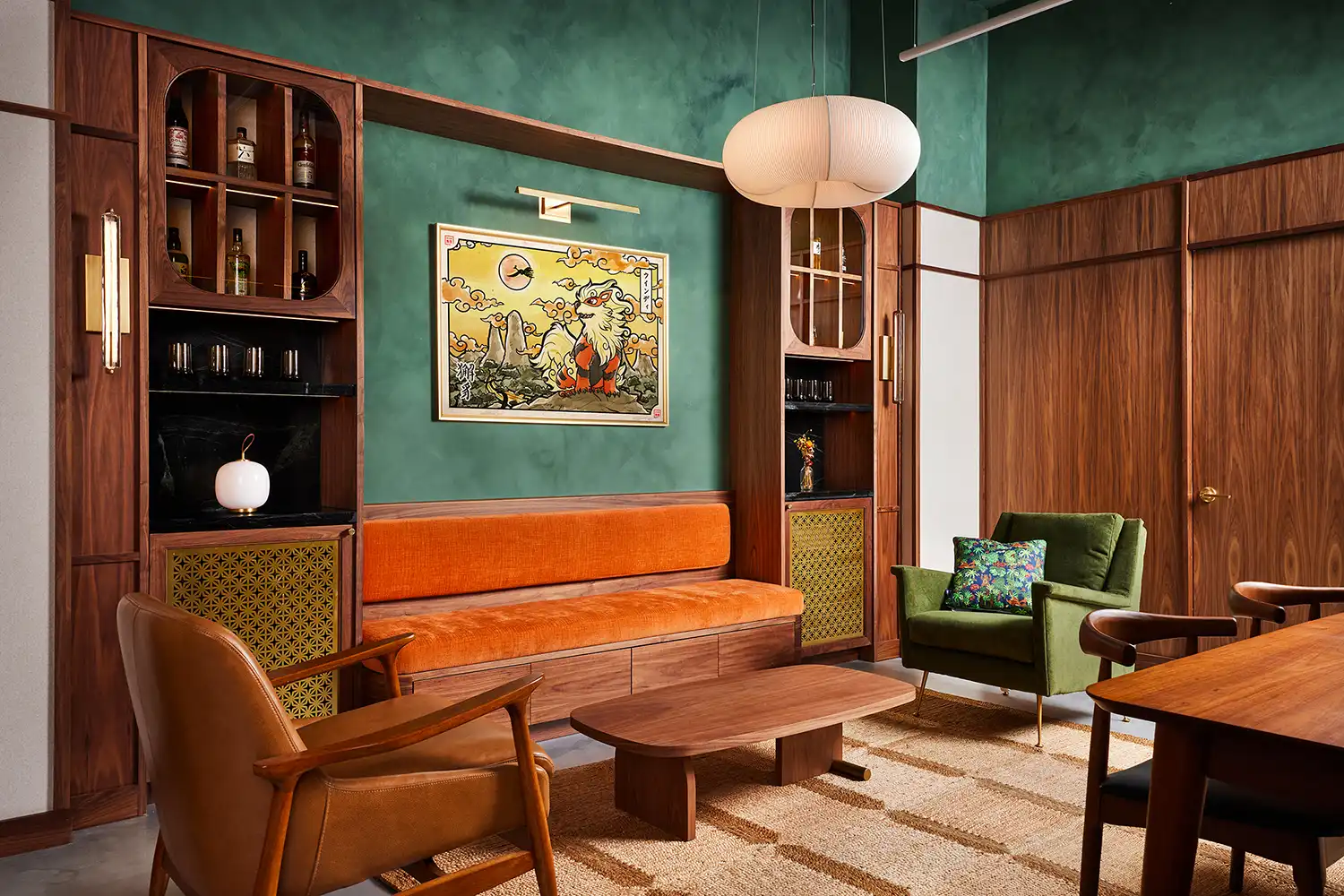
A dramatic atmospheric shift occurs at the rear of the store. Here, the bright maple wood gives way to a walnut-wrapped lounge, a private retreat for staff and VIP collectors. Drawing inspiration from Pokémon’s Japanese origins, the palette becomes darker and more subdued, featuring a shuriken-inspired metal grille and washi-paper light pendants. The lime-wash walls in deep green create a mood of quiet focus, offering a sensory counterpoint to the vibrant energy of the main floor. This “hidden” room acknowledges the brand’s dual identity: a global phenomenon that remains rooted in the intimacy of a personal collection.
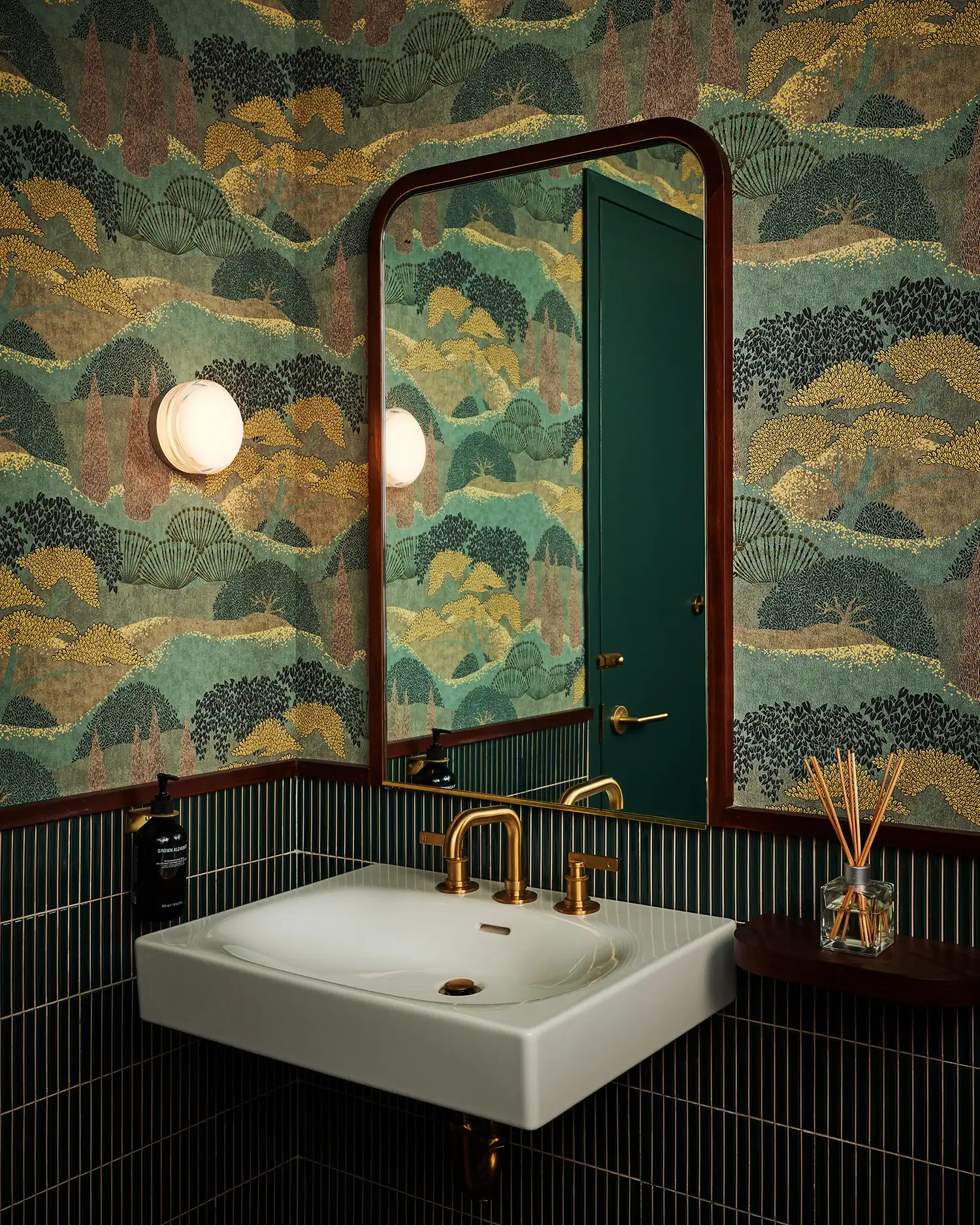
The completion of the Poké Court Flagship represents more than just a successful retail expansion; it is a statement on how niche communities can claim space within the city’s most prestigious neighborhoods. By treating a card shop with the same architectural rigor as a luxury boutique, GAMPworks has created a prototype for the future of hobbyist retail. The project proves that when social rituals are given a dedicated, well-crafted home, the result is a vibrant hub that resonates with both the seasoned collector and the casual passerby in NYC, USA.