

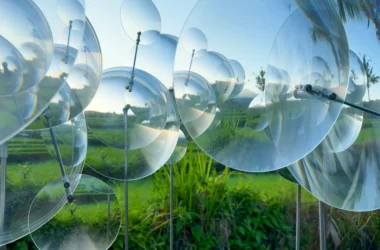

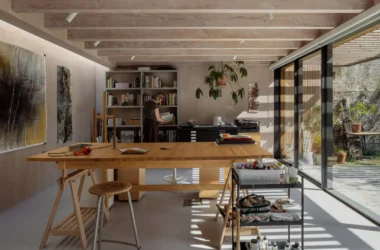
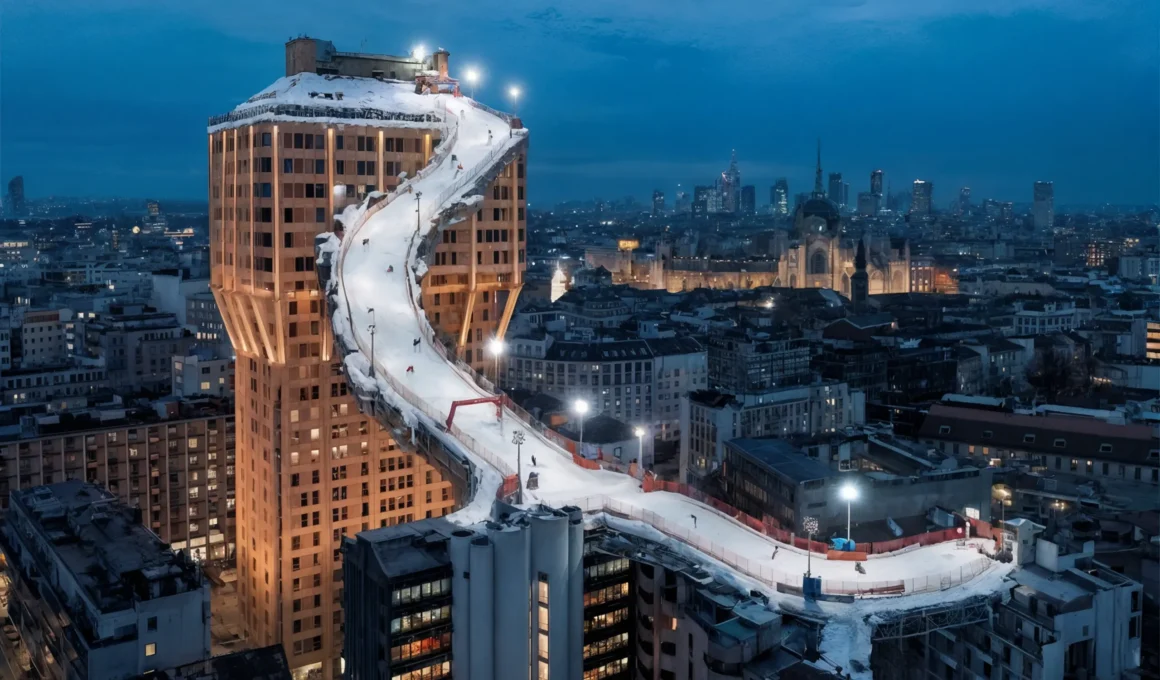
As the world’s eyes settle on the Italian peaks and the urban streets of Milan for the 2026 Winter Olympics, taking place from February 6 to 22, 2026, a parallel, visionary Games is unfolding across the digital landscape. While the official venues host the world’s elite, a series of AI-generated visions created by architect Filippo Mercuri—the mind behind @gaude.ai—is pushing the boundaries of how we perceive the Olympic landscape. The project blends historical stone with the high-velocity aesthetic of winter sports, creating a sensory experience where the cold, crisp air of the mountains seems to permeate the industrial heart of the city.
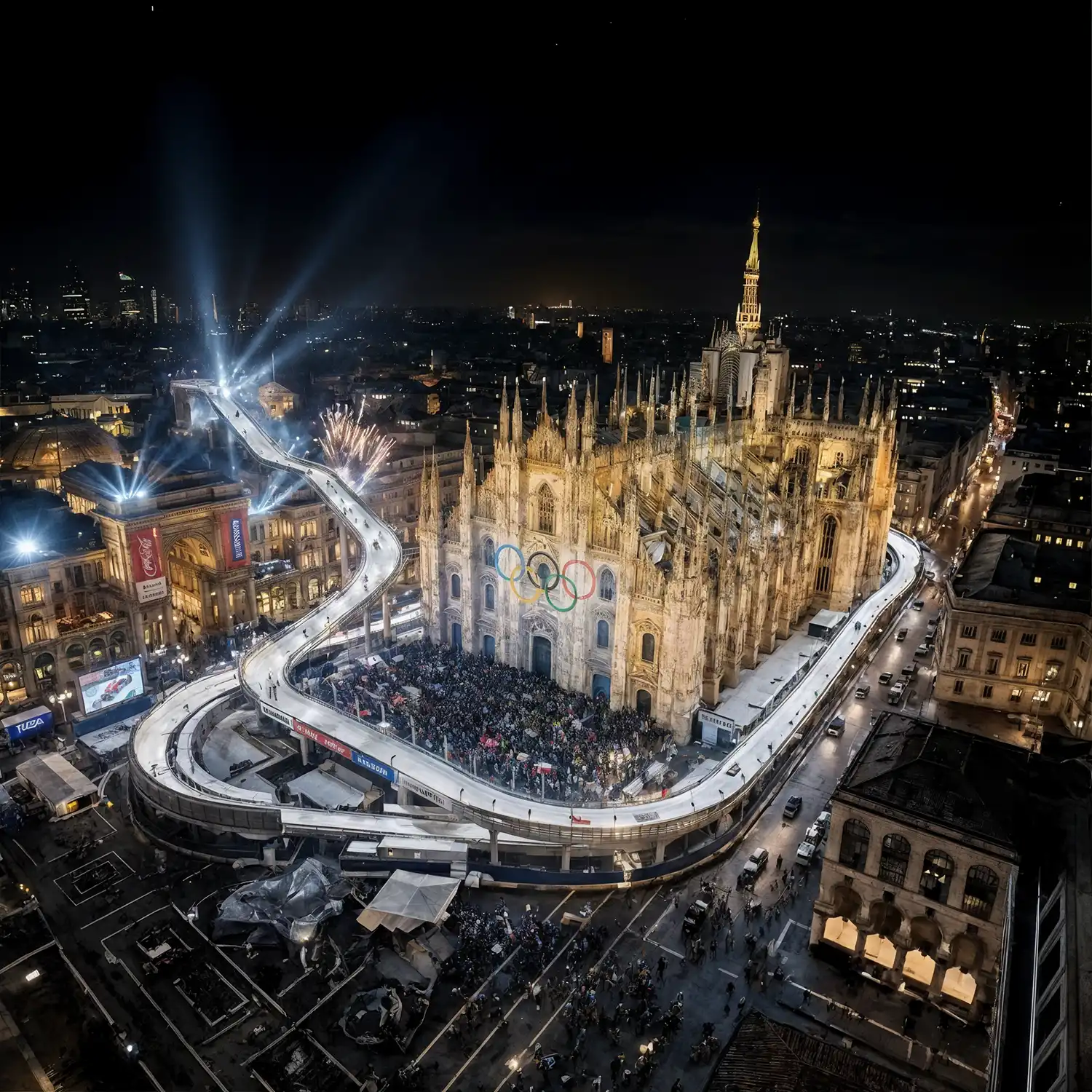
A Live Dialogue with the City. While the current Games demonstrate the logistical reality of a multi-centered event, these digital artworks take the “city venue” concept to its most provocative extreme. The initial spark for the project came from a desire to explore new architectural visions using AI as a primary tool. “I was inspired by the Paris 2024 Olympics and, in particular, by the idea of the city venues,” Mercuri explains. By integrating the excitement of the Olympics with Milanese landmarks like the Torre Velasca, he transforms the city’s historical silence into a vibrant spectacle. The architect, who previously collaborated with Lombardini22 for the Venice Biennale curated by Carlo Ratti, treats Milan’s urban identity as an active participant: “Heritage has been a central theme in my studies… that perspective naturally led me to treat existing buildings and urban identity as part of the creative process.”
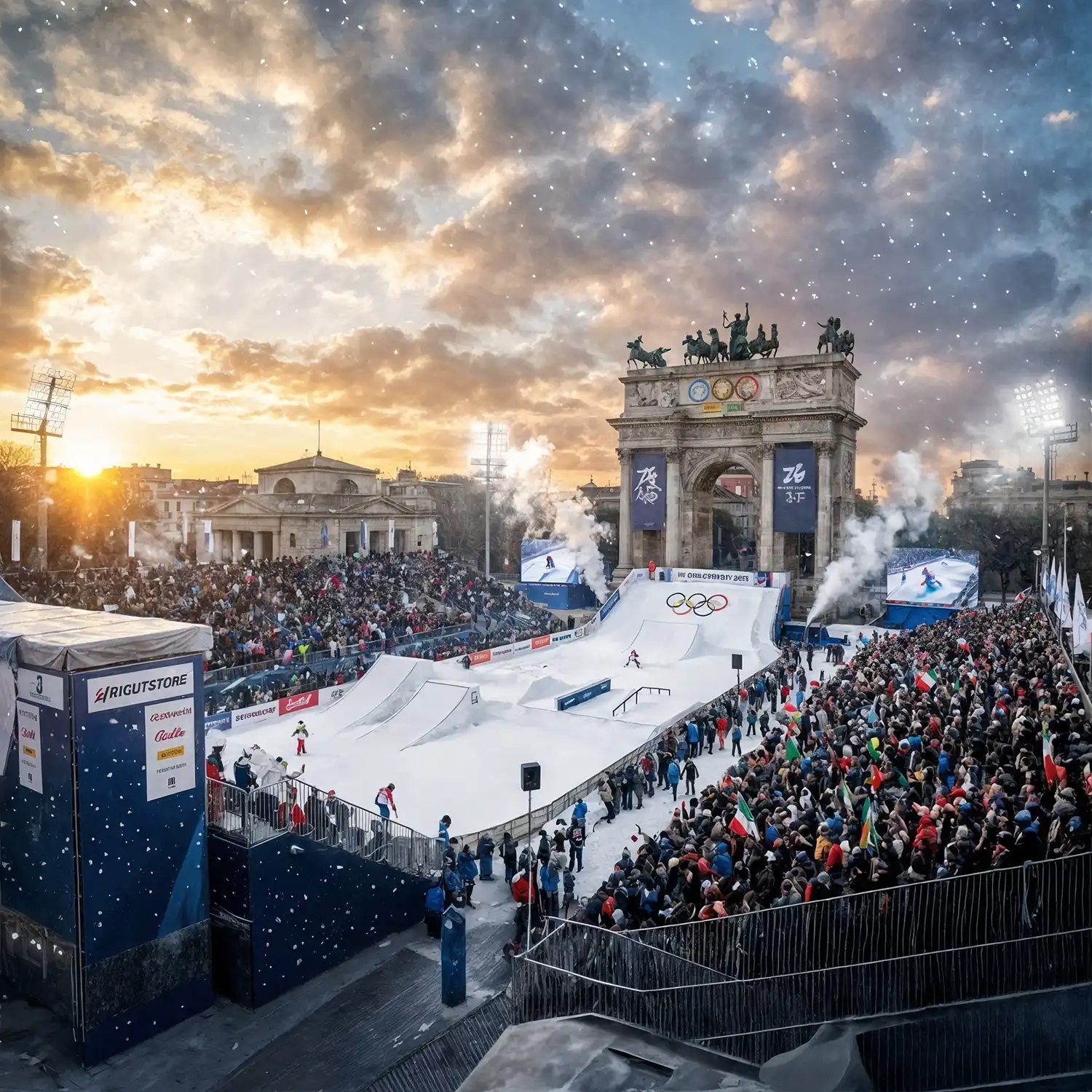
The Velocity of Digital Capture. The speed of generative tools has allowed Mercuri to “capture” these moments with a fluidity that mirrors the fast-paced nature of the athletes themselves. This is not merely about static imagery; it is a rapid-response exploration of architectural possibilities that feels tactile and immediate. In Mercuri’s workflow, AI serves as the fastest instrument to visualize a possible future compared to traditional media. “For me, AI is an instrument for creating visions,” he notes. This speed is essential as the temporary structures of Milano-Cortina are in full use, highlighting a crucial shift in contemporary thinking: the move toward a more agile, responsive way of building that can adapt as quickly as a downhill skier on a technical course.
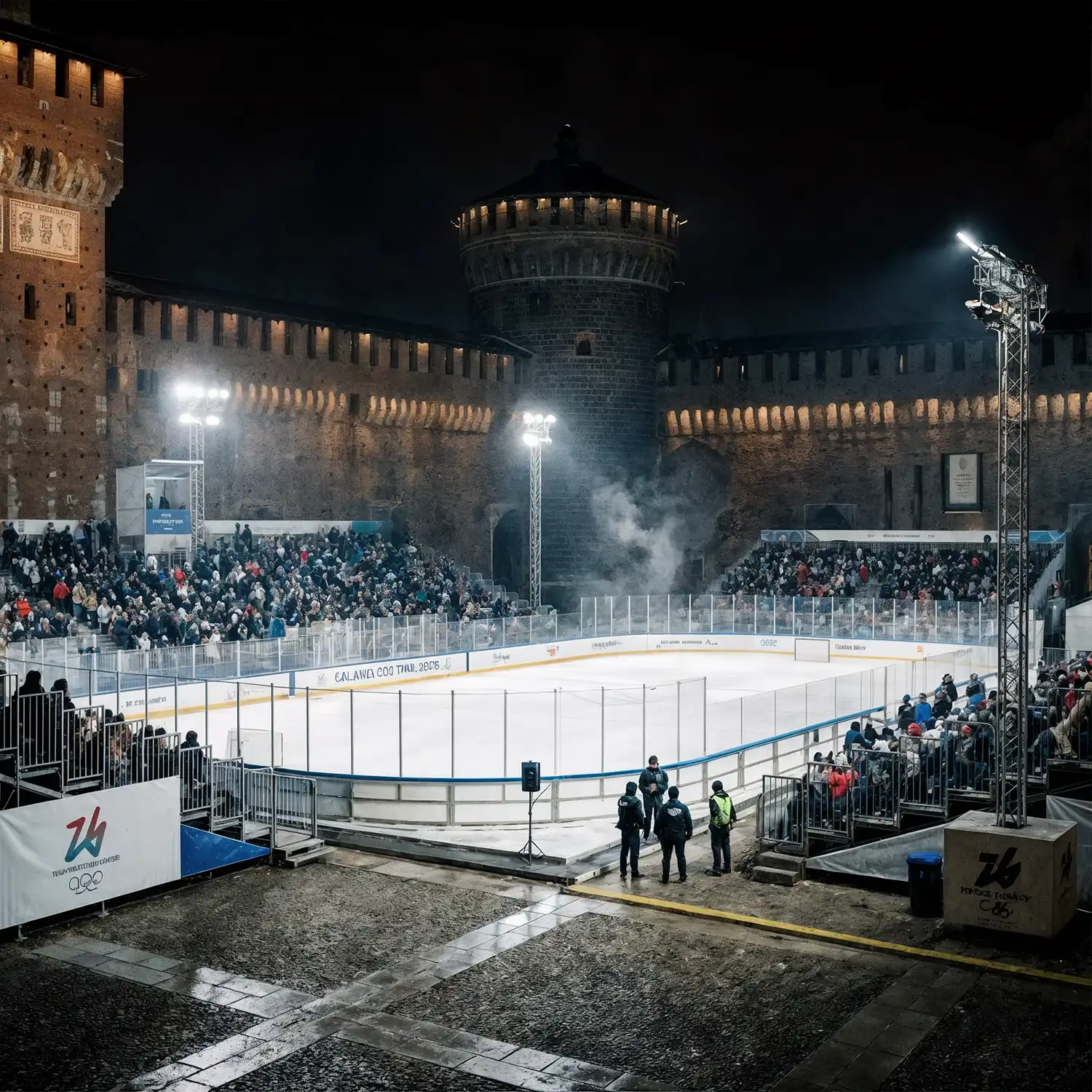
The Concept of Ephemeral Architecture. Beyond the immediate celebration of the Games, this work looks toward the long-term legacy of major global events through the lens of ephemeral architecture. Mercuri’s series champions a future defined by the necessity of fast, economical, and reversible structures that leave no permanent footprint. The vision suggests a “pop-up” Olympic model, where the infrastructure is as fleeting and beautiful as the event itself. “It’s important to build a culture of ephemeral architecture—fast, economical, engaging, and reversible,” Mercuri states, advocating for a design philosophy that prioritizes environmental responsibility without sacrificing the spectacle.
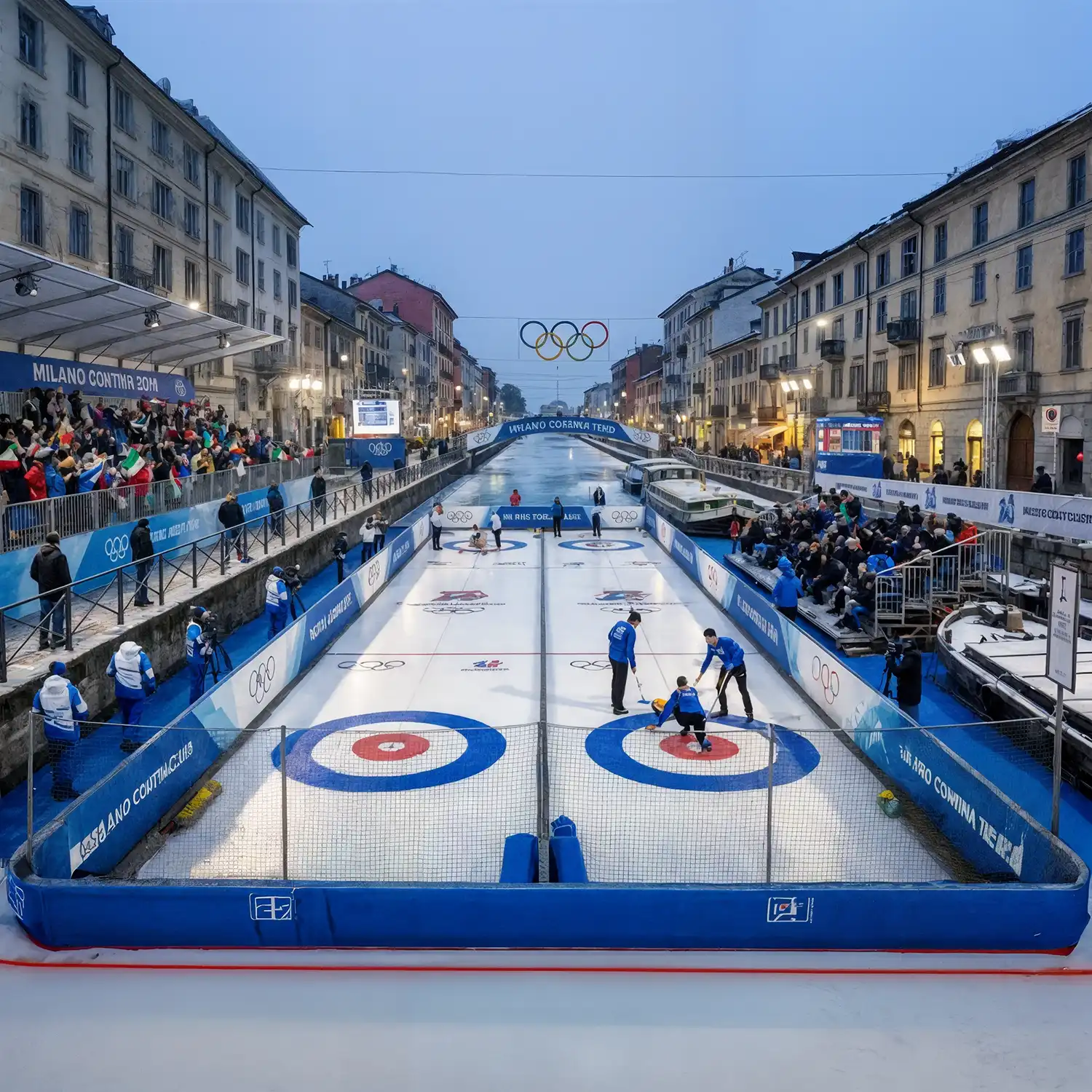
Challenging the Urban Status Quo. By maintaining a “what if” mindset, the project challenges the traditional rigidity of urban planning, a theme Mercuri has consistently explored in his research on climate change and technology. The series serves as a manifesto to pay closer attention to how we share best practices for major-event design. “We should keep challenging the status quo with a ‘what if’ mindset, exploring alternatives,” Mercuri concludes. By visualizing a Milan where heritage and contemporary sport coexist in a temporary, high-contrast embrace, the project reminds us that the Olympics are as much about the collective imagination of the host city as they are about the feats achieved on the ice and snow.