


A quiet revolution is taking root between the utilitarian rear of a shopping center and the rigid verticality of a residential block in Braga, Portugal. Here, the Quinta da Armada urban farm serves as a discreet refuge, an organic lungs-of-the-city where the soil tells a different story than the surrounding concrete. This productive void provided the stage for LIMIT architecture studio to debut Sementeira Ambulante (Mobile Seedbed). Developed for the Festival Forma da Vizinhança as part of the Braga 25, Portuguese Capital of Culture celebrations, the project transcends the traditional boundaries of a greenhouse, transforming a static agricultural necessity into a nomadic educational platform.
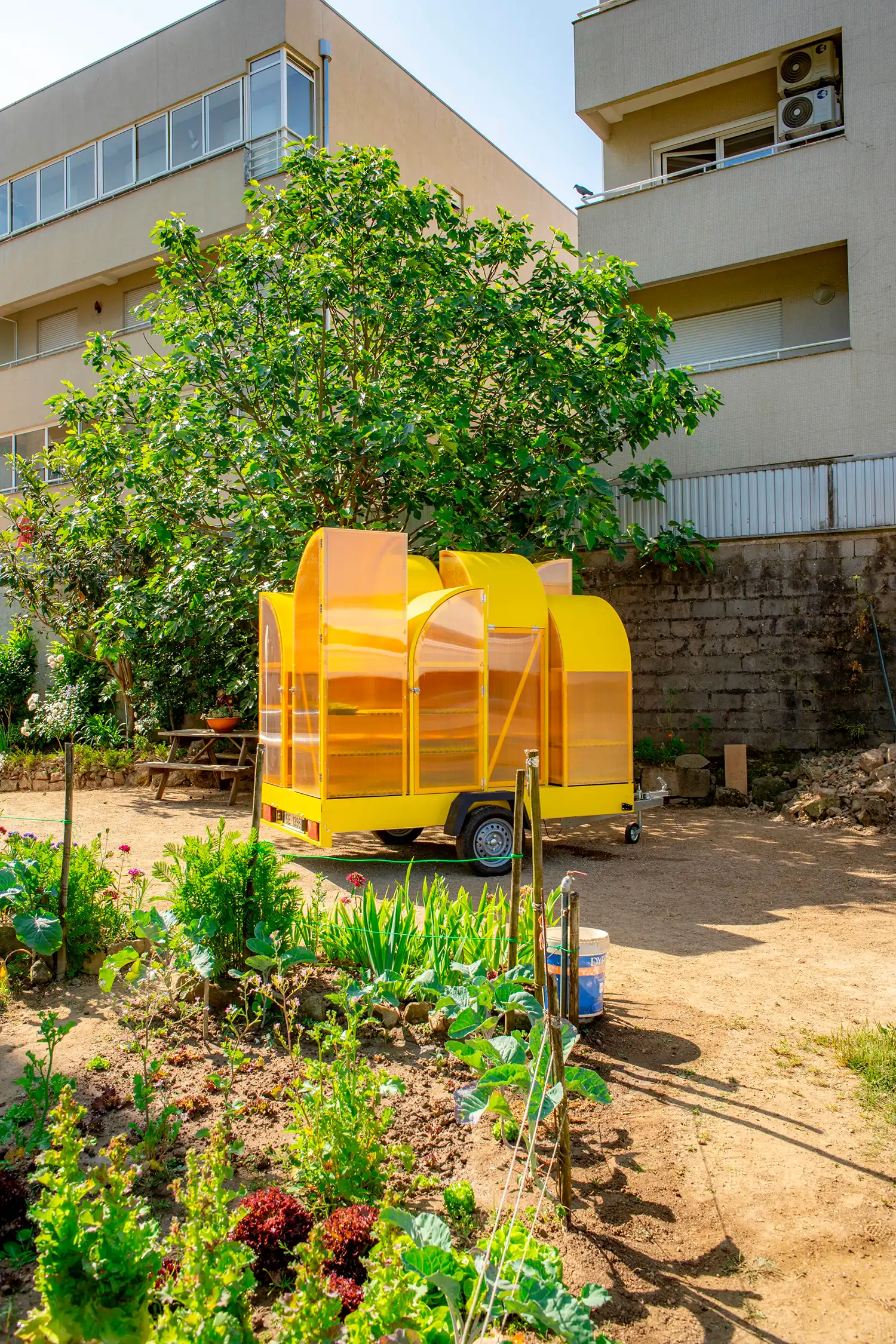
The conceptual spark for the intervention was ignited by a piece of local graffiti discovered near the site: “Who sows illusions, reaps disappointments.” For the architects, this served as a poignant mandate to create something grounded in tangible, collective participation. Rather than designing a permanent monument to urban farming, LIMIT architecture studio opted for a modular system that could “leak” the farm’s values into the wider city. The result is a series of eight mobile units that act as a shared traveling greenhouse, shifting the narrative from passive observation to active urban engagement within the dense fabric of Northern Portugal.
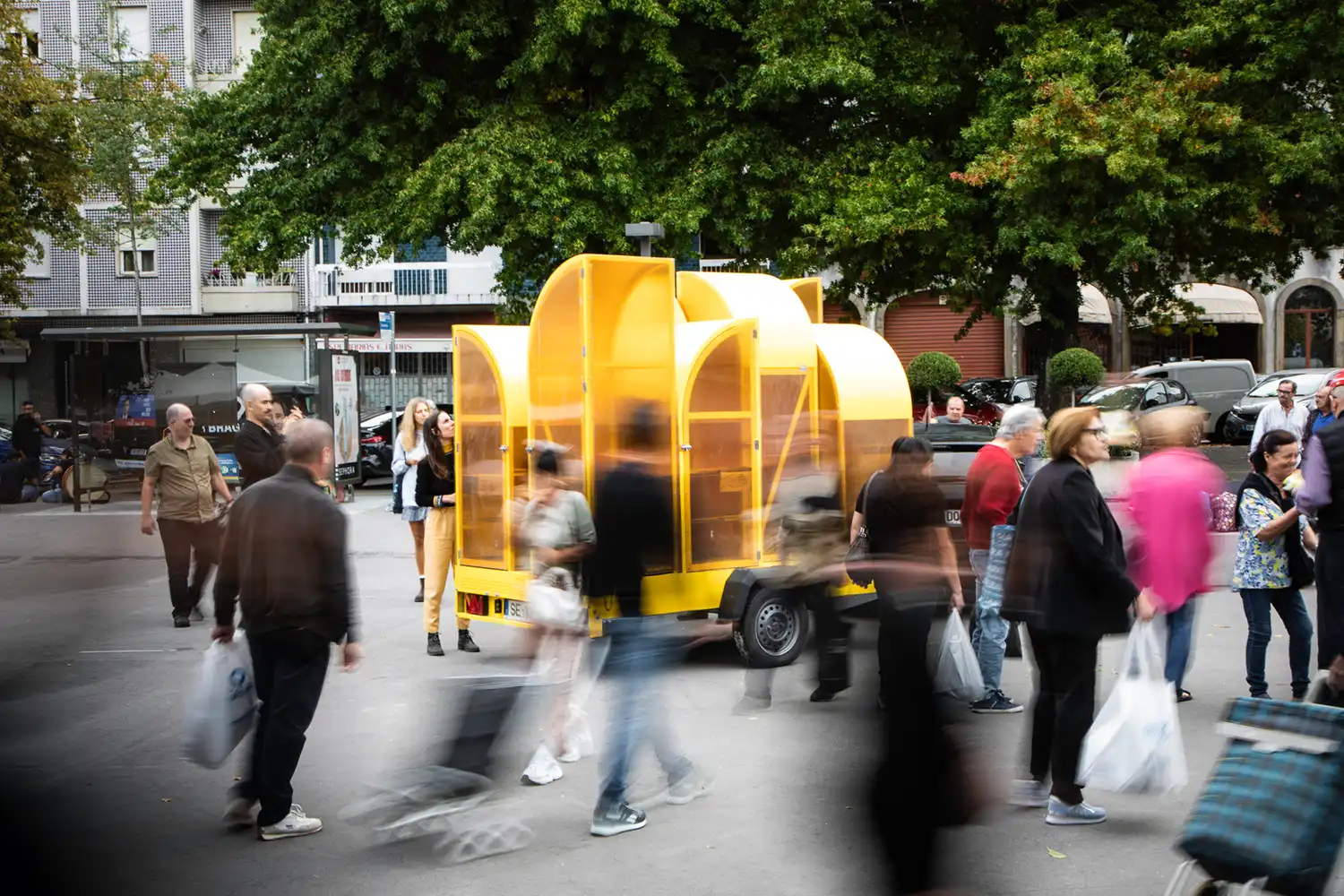
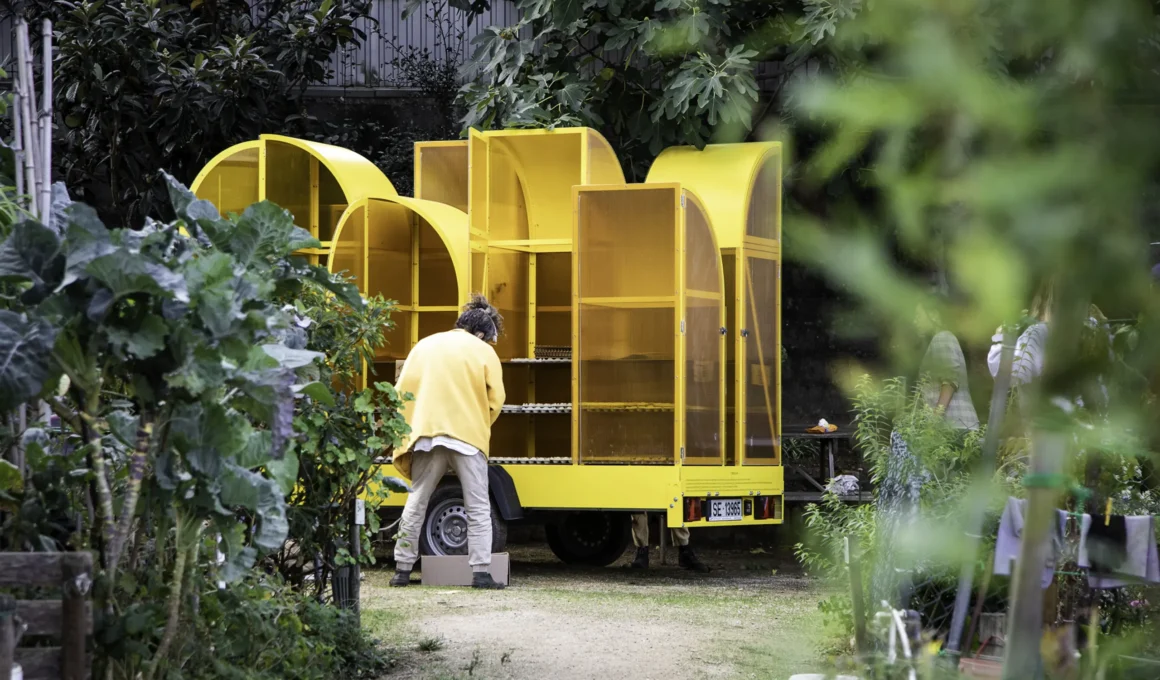
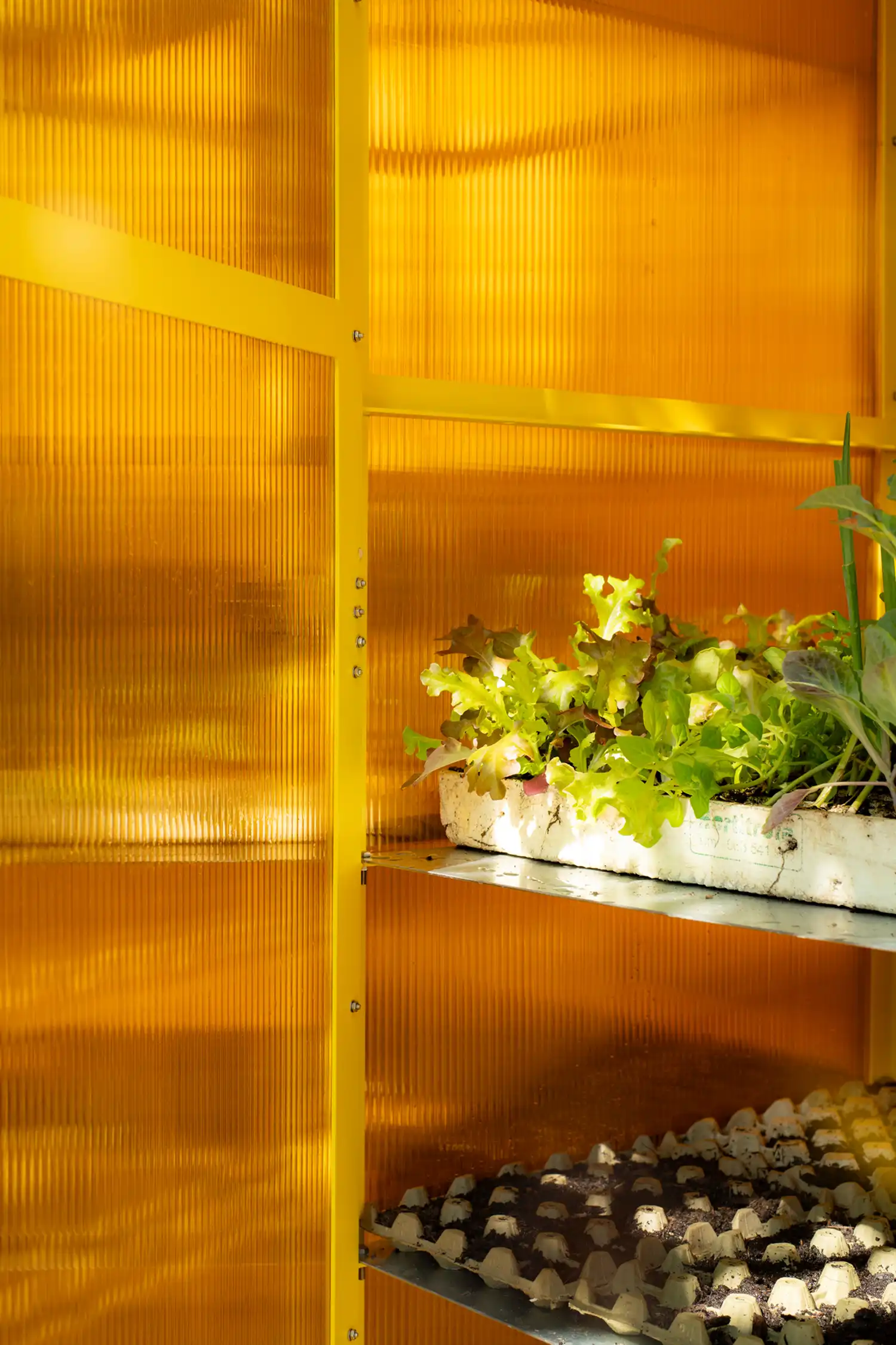
Technical precision meets a translucent aesthetic in the physical execution of the modules. Each unit is constructed from lightweight aluminum frames, designed for ease of movement across varying urban terrains. The structures are clad in vibrant, translucent yellow polycarbonate panels, which capture and diffuse sunlight to create an optimal microclimate for seed germination. Crowning the modules is a curved sheet metal roof—a subtle nod to traditional greenhouse typologies—that ensures efficient rainwater drainage while giving the collective an undulating, rhythmic silhouette when the units are clustered together.
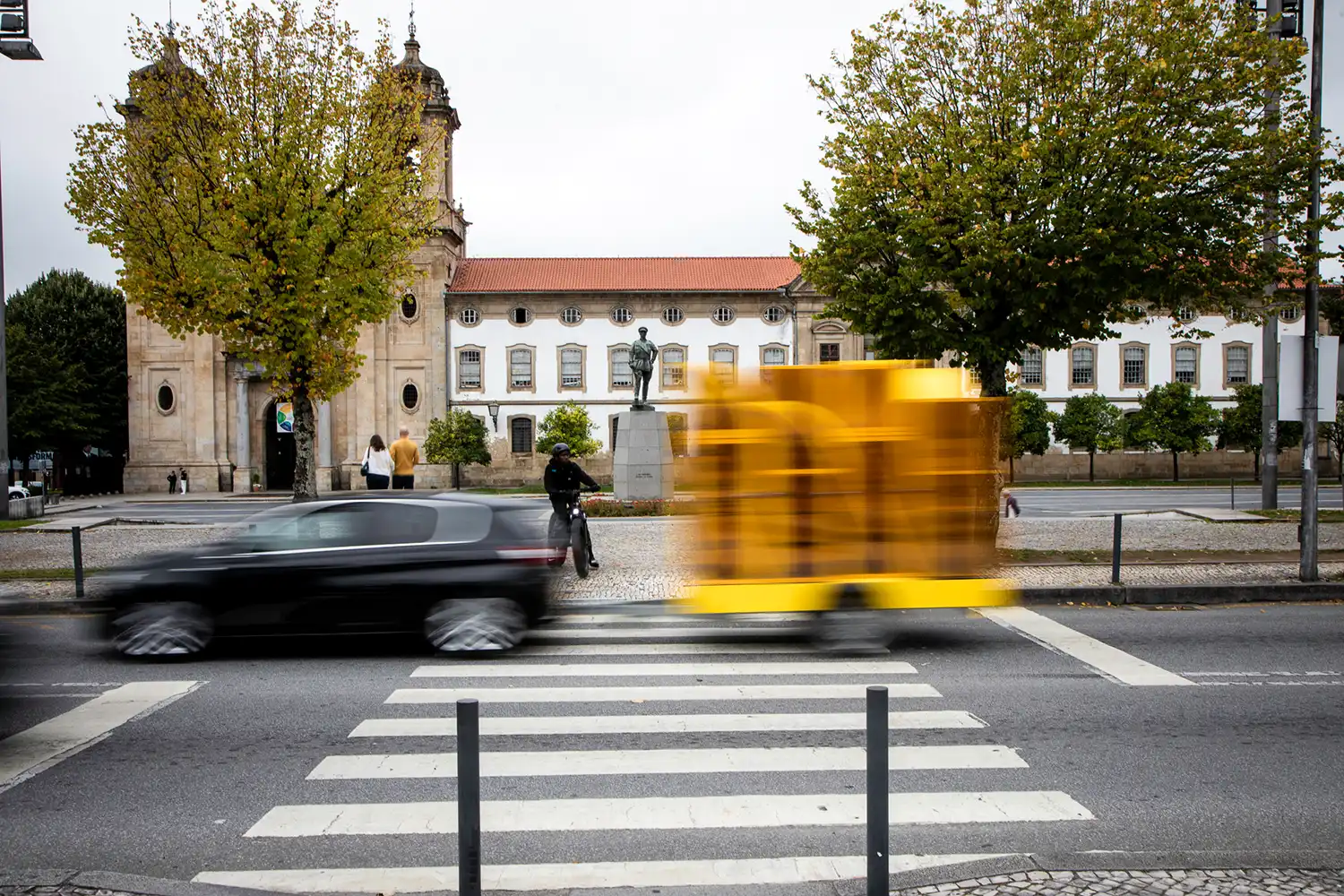
Inside these glowing yellow vitrines, the sensory experience is one of sheltered growth. Internal shelving holds rows of seed trays, where the humidity and filtered light create a stark contrast to the breezy, open-air farm outside. The modularity of the design allows for infinite configurations; the units can be huddled together to form a large, communal growing space at Quinta da Armada or detached to navigate narrow European streets. This flexibility ensures that the Sementeira Ambulante functions effectively as both high-performance agricultural infrastructure and a striking public installation.
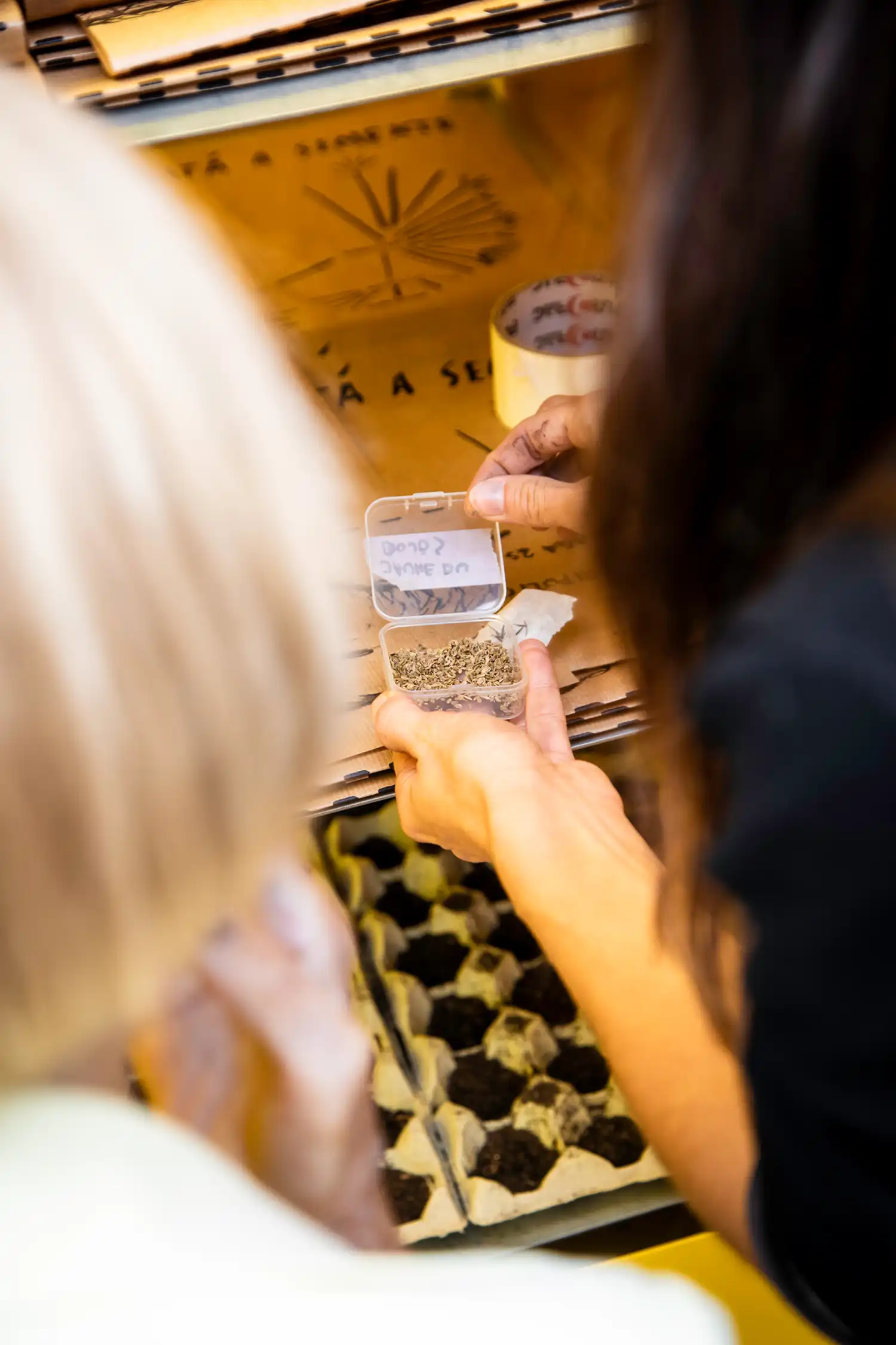
The true impact of the project is felt when the “Seedbed” begins its journey through the city. By relocating fragments of the farm into different neighborhoods, the structure increases the visibility of urban agriculture and encourages citizens to reclaim their own local plots. It operates as a pedagogical tool, distributing seeds and knowledge to residents who may never have stepped foot inside the Quinta da Armada. This movement fosters a “pollination” of ideas, proving that the tools for biodiversity and self-production should not be static, but rather as mobile and adaptable as the communities they serve.
This initiative marks a growing trend in contemporary practice where food production becomes a core pillar of civic life. We have seen similar explorations in the intersection of education and ecology, such as the that integrates nature into the learning environment, or the that tackle food security through compact technology. Like those projects, the Sementeira Ambulante serves as a pilot for a more resilient future. It is a testament to the idea that by sowing physical seeds through thoughtful, mobile interventions, a city can reap a harvest of renewed social awareness and environmental stewardship.