



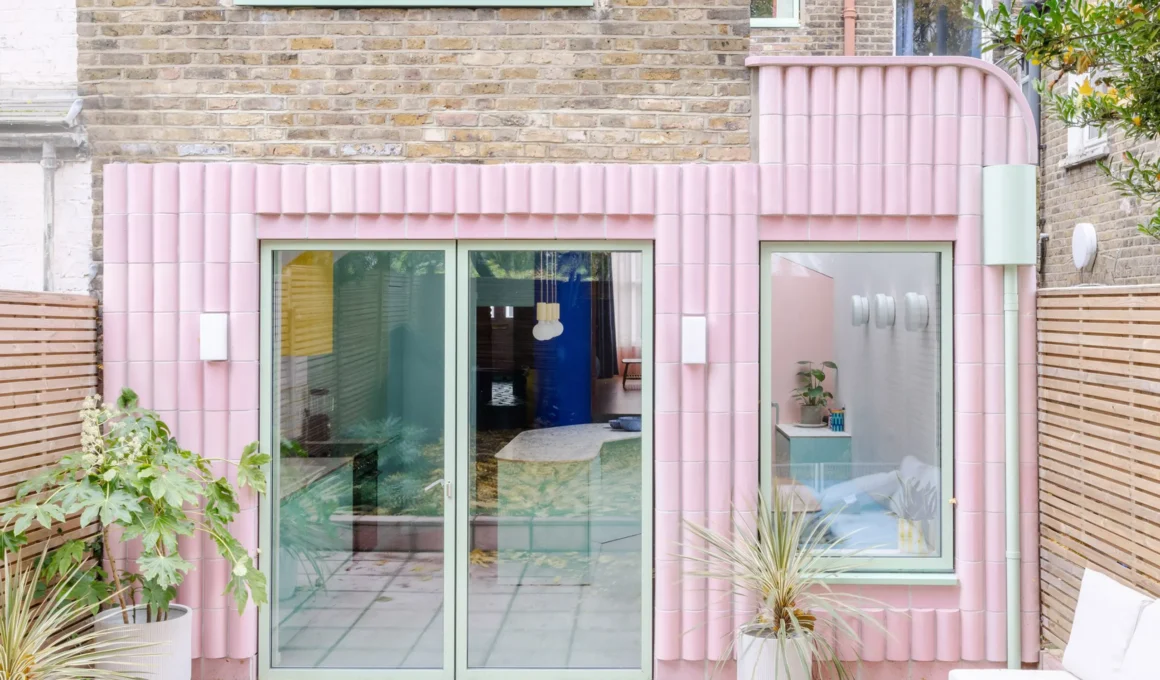
A bold reimagining of the North London residential typology has emerged through the work of Office S&M, where the utilitarian language of the city meets the intimacy of the family nest. Beacon House strips away the conventional expectations of a Victorian renovation to embrace a visual vocabulary borrowed from the London Underground and municipal leisure centers. The result is a home in London, United Kingdom, that feels remarkably sturdy yet vibrates with a soft, pastel energy, designed specifically to withstand the joyful chaos of a young family of four.
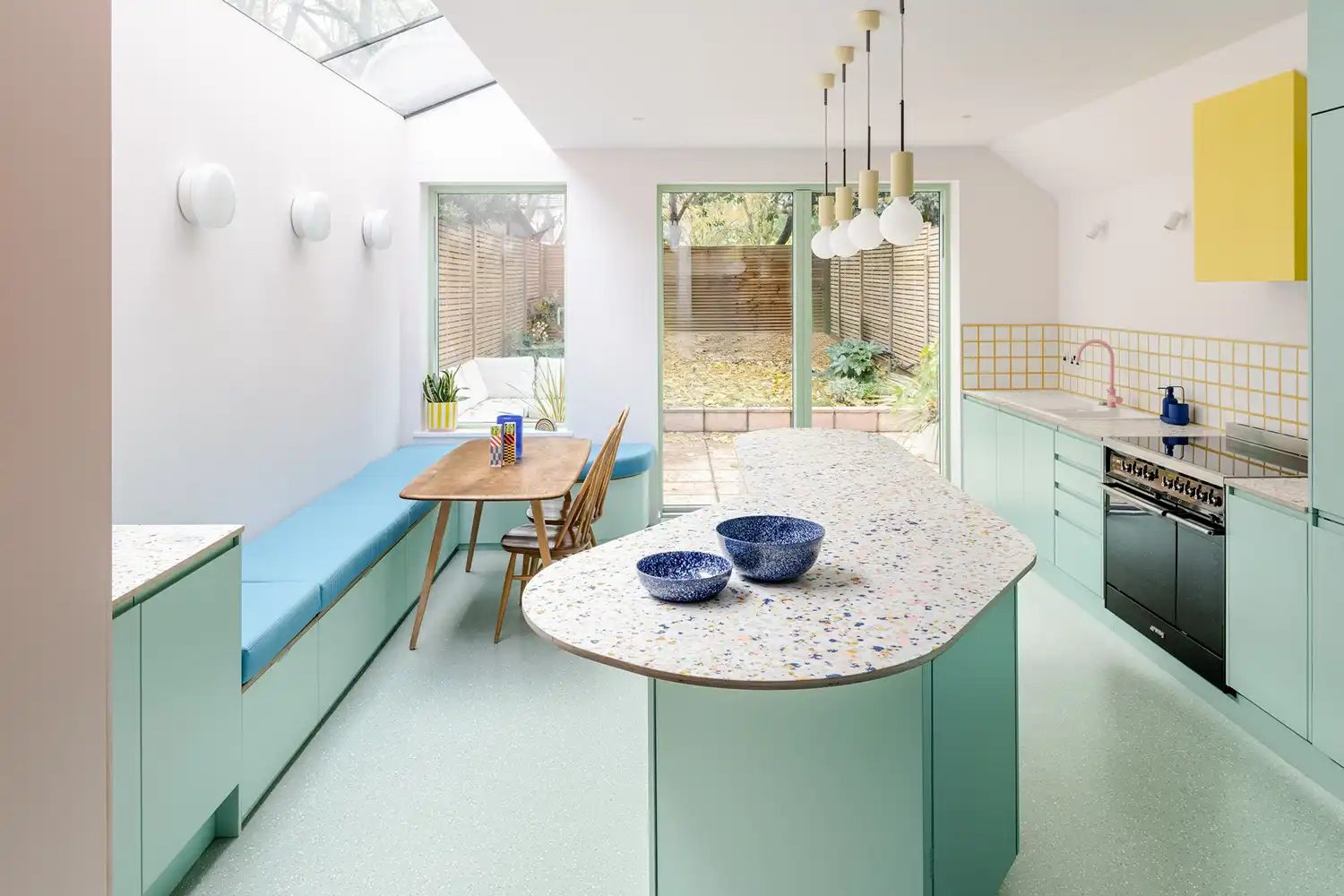
The adoption of a public material palette serves as the aesthetic backbone of the project, stemming from a fascination with the endurance of civic infrastructure. By choosing glazed tiles—a staple of railway stations and swimming pools—the architects have introduced a layer of protection that doubles as a high-end finish on a conscious budget. These surfaces aren’t merely decorative; they are tactical. In a city where residential interiors often feel precious, Beacon House prioritizes a hardwearing generosity, ensuring the spaces can evolve alongside the children without losing their saturated, tactile appeal.
The geometry of the underground informs the exterior through a specific shade of pink that feels both subversive and deeply rooted in the local context. These handmade glazed tiles, developed with Materials Assemble, are precise, scaled-up replicas of the curved corner details found across the London Underground network. The specific glaze is a direct nod to the Hammersmith & City Line, pulling a piece of the city’s transit DNA into the private garden. This choice creates a fascinating dialogue with the traditional warm brickwork of north London, proving that municipal grit can be remarkably domestic.
Bespoke craft and local texture define the interior narrative, marking a shift from the structural to the artisanal. Office S&M collaborated with local makers to ensure every touchpoint feels intentional. From the hand-painted house number at the threshold to the bespoke patterned timber worktops in the kitchen, there is a clear rejection of mass-produced solutions. This focus on craftsmanship is a common thread in the studio’s portfolio; much like the playful approach to color and mid-century shapes seen in their Brockley House, Beacon House uses custom details to build a specific sense of place that feels personal rather than “designed.”
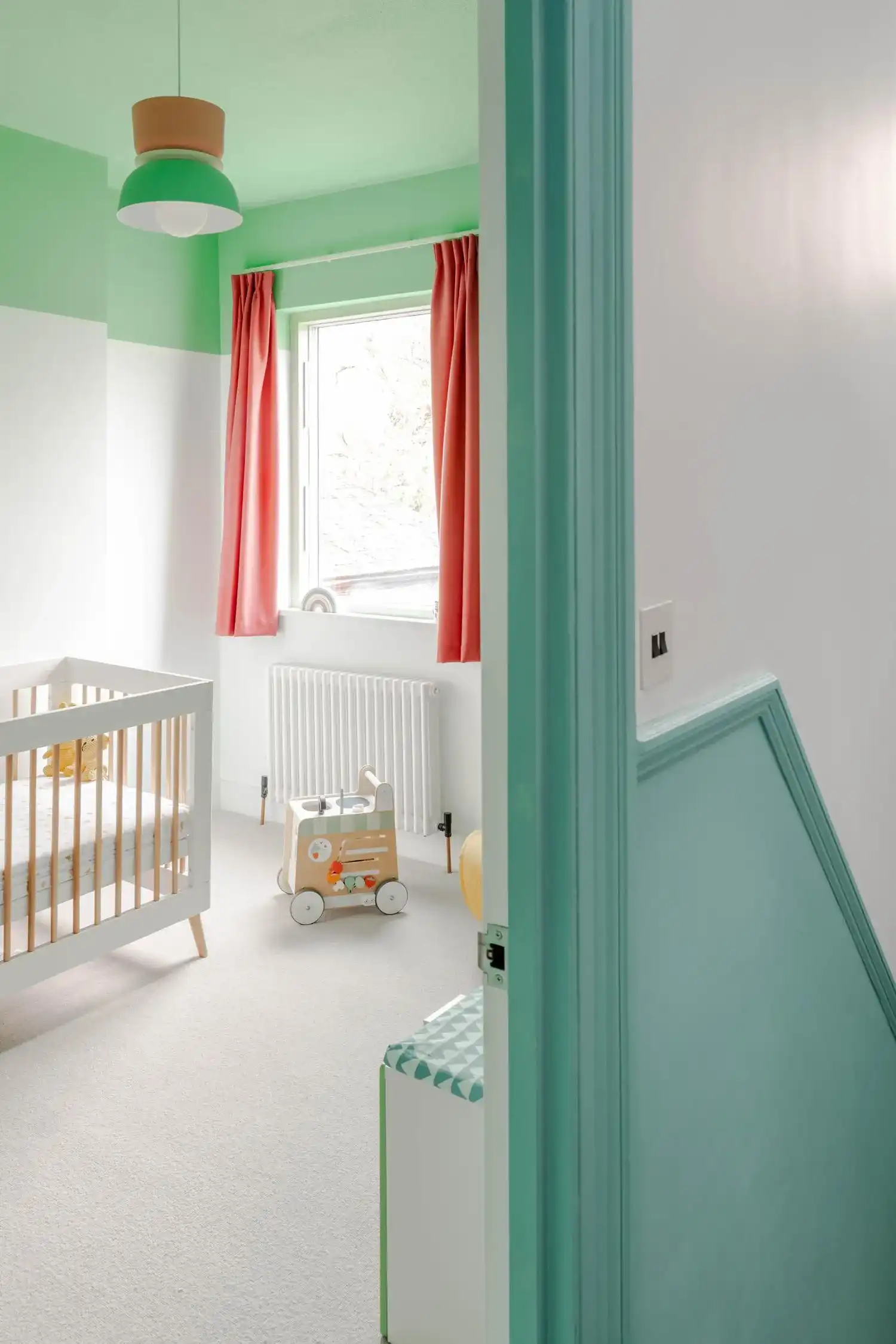
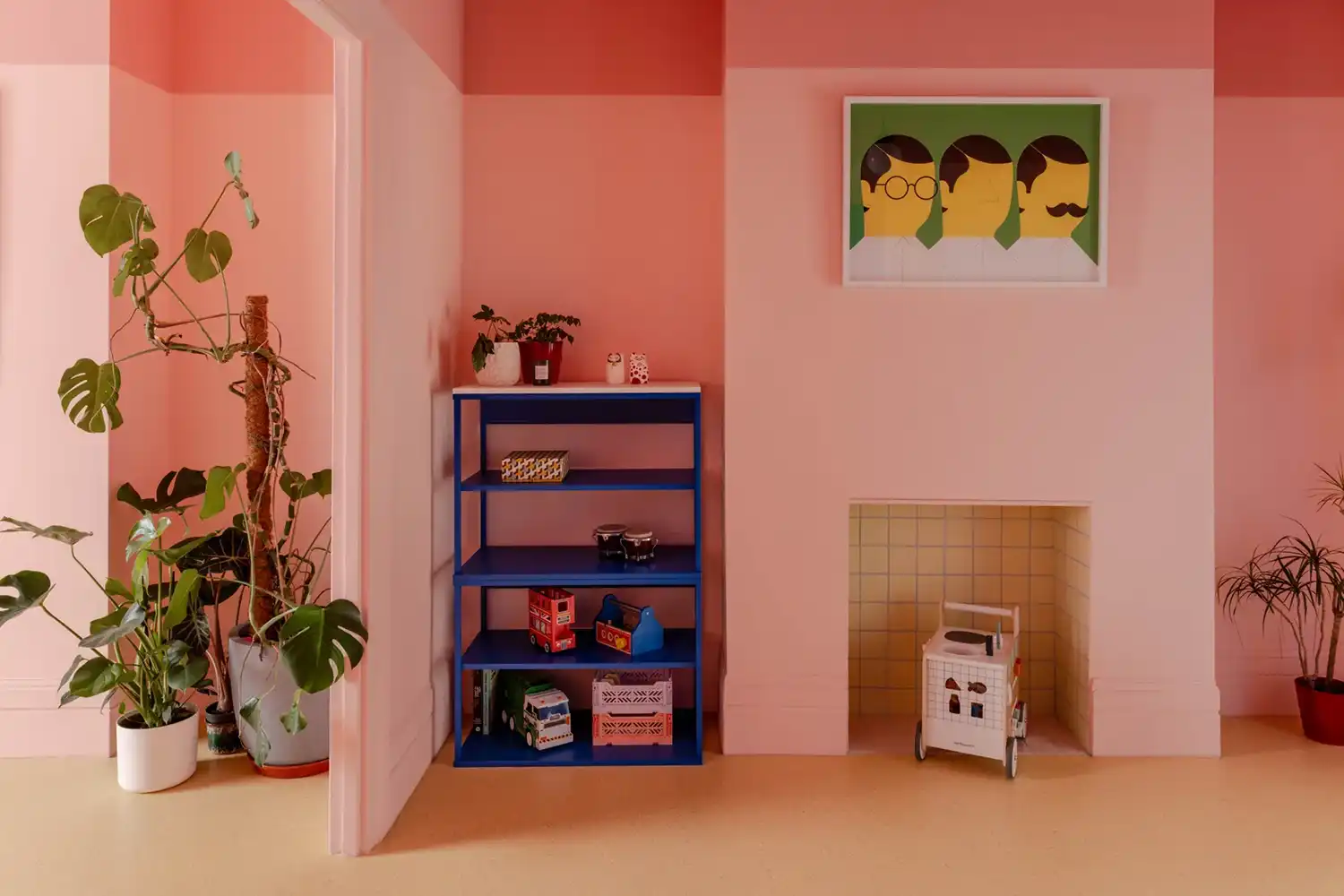
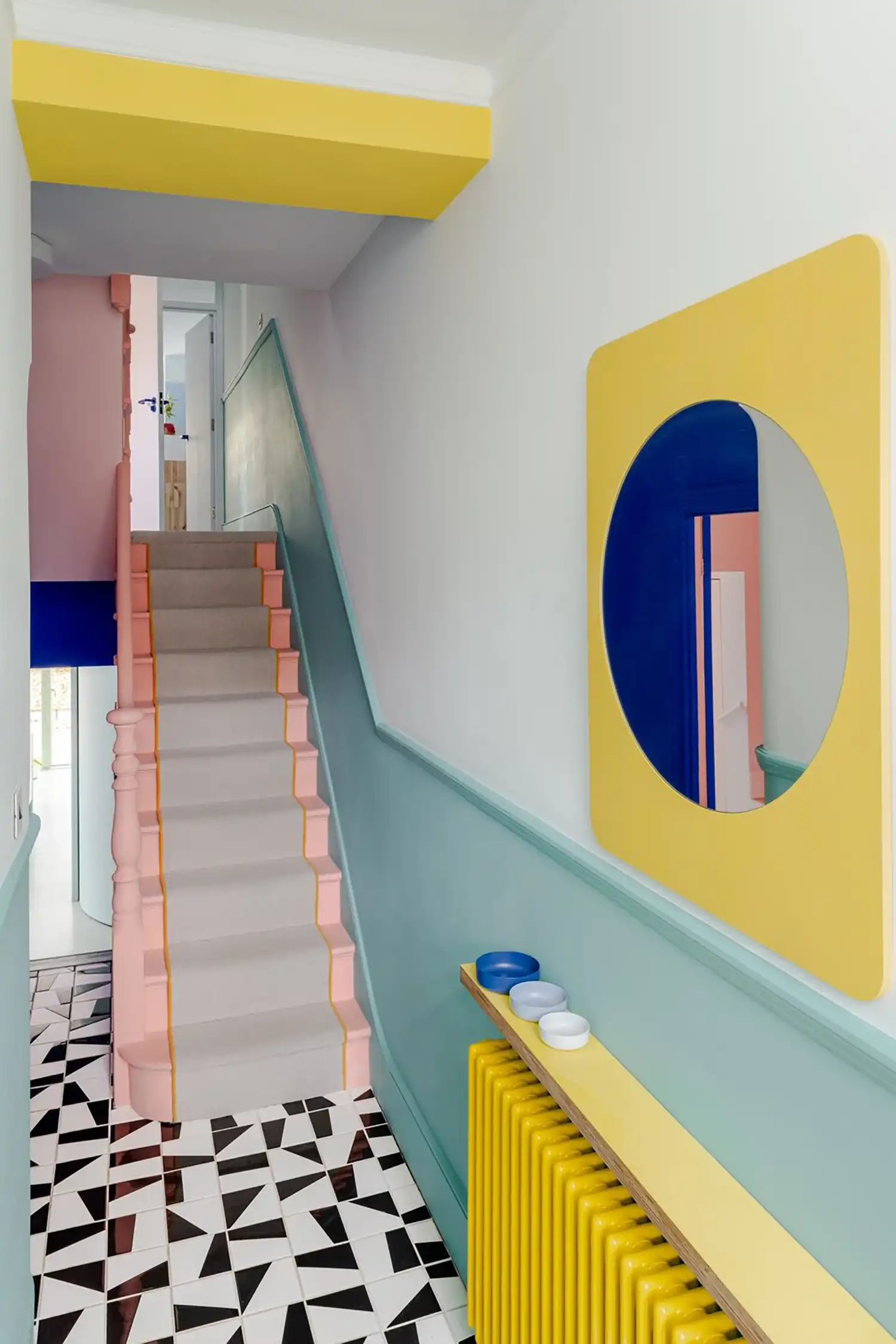
The ergonomics of the curve facilitate spatial flow by removing the friction of sharp corners. In the kitchen, a bespoke curved island anchors the room, managing the transition between the cooking area and the social zones. This softening of the floor plan serves a functional purpose: a curved wall allows for a generous ground-floor WC without cutting aggressively into the hallway, while its sliding door mimics the rhythmic motion of tube train entrances. As the site slopes toward the rear, the house opens up, descending from the darker, moody tones of the original front rooms into a light-drenched, pale-hued extension that connects directly to the garden.
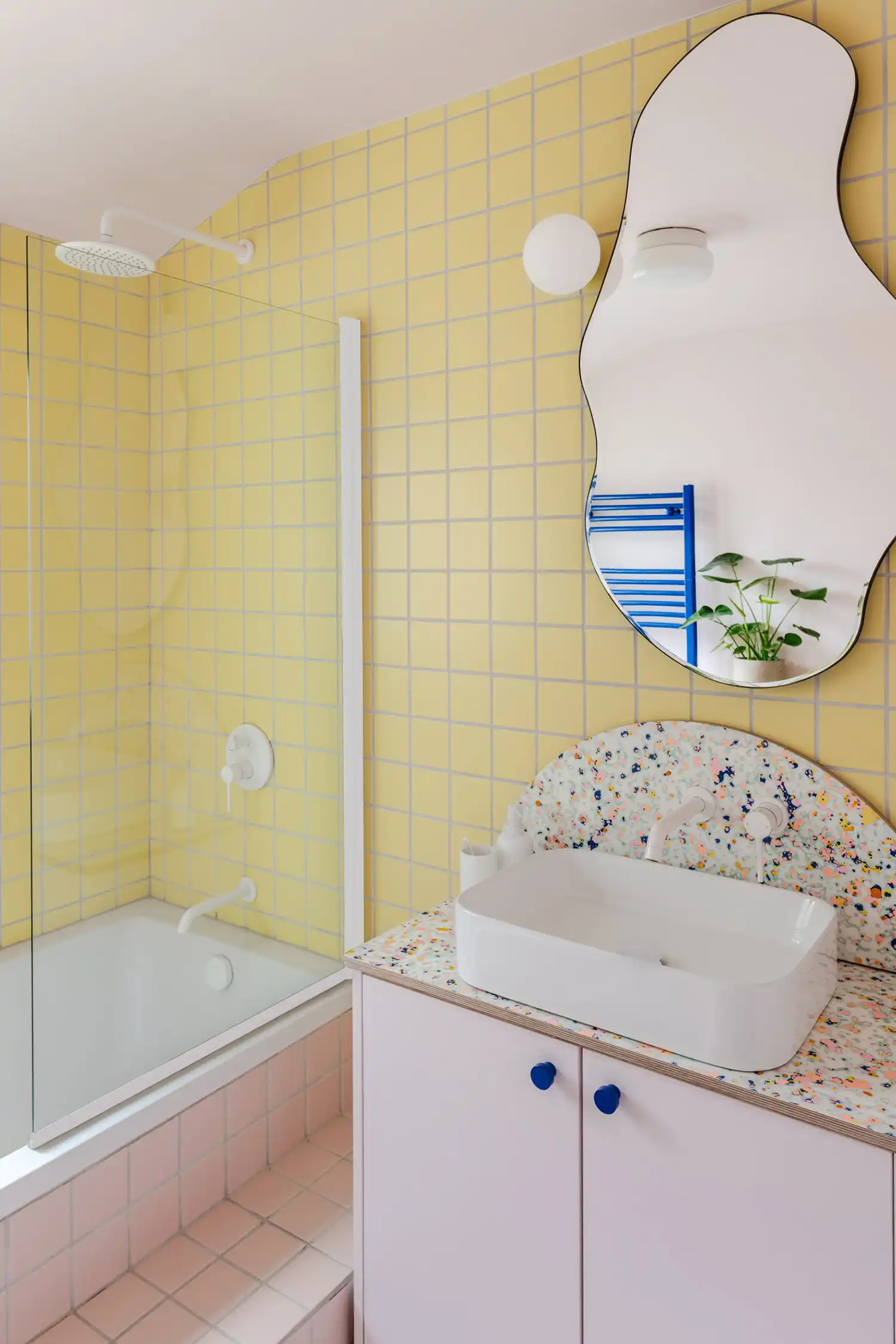
Performance and sustainability underpin the visual impact, transforming the Victorian structure into a high-performance envelope. The building underwent a rigorous thermal upgrade, integrating new insulation and airtightness measures to lower the family’s carbon footprint. The material selection reinforces this commitment to health, utilizing natural linoleum, low VOC paints, and recycled upholstery fabrics. It is a home that functions as a small, efficient ecosystem—a vibrant, joyful space that proves environmental responsibility does not require a clinical aesthetic.