



Emil Eve Architects has transformed a Victorian end-of-terrace townhouse in Frome’s West End, rearranging the internal layout of the Somerset residence to create a seamless flow between the historic fabric and a light-filled contemporary kitchen and courtyard without expanding the building’s original footprint.
A shift in perspective was the driving force behind the relocation from North London to Somerset for owners Alex and Adam, who sought a slower pace of life following the arrival of their first child. Their new home, a six-bedroom period property, possessed the characteristically “worn” charm of a building untouched for decades. While the sunny courtyard and original Victorian details offered immense potential, the fragmented floorplan remained a barrier to modern family life. The challenge lay in rationalizing the awkward internal volumes to unlock a sense of space that felt both functional and expansive.
Zoning for modern living became the primary intervention strategy, with the studio navigating the building’s inherent constraints through a clever vertical reorganization. By designating the top floor as a dedicated sleeping area and the middle level for work, the architects overcame the challenging layout to integrate modern amenities—such as a dressing room and additional bathrooms—without compromising the home’s historic integrity. This thoughtful approach to internal volume echoes the firm’s previous work at Thornhill Road, where a similar priority was placed on enhancing the resident’s daily experience through spatial fluidity.
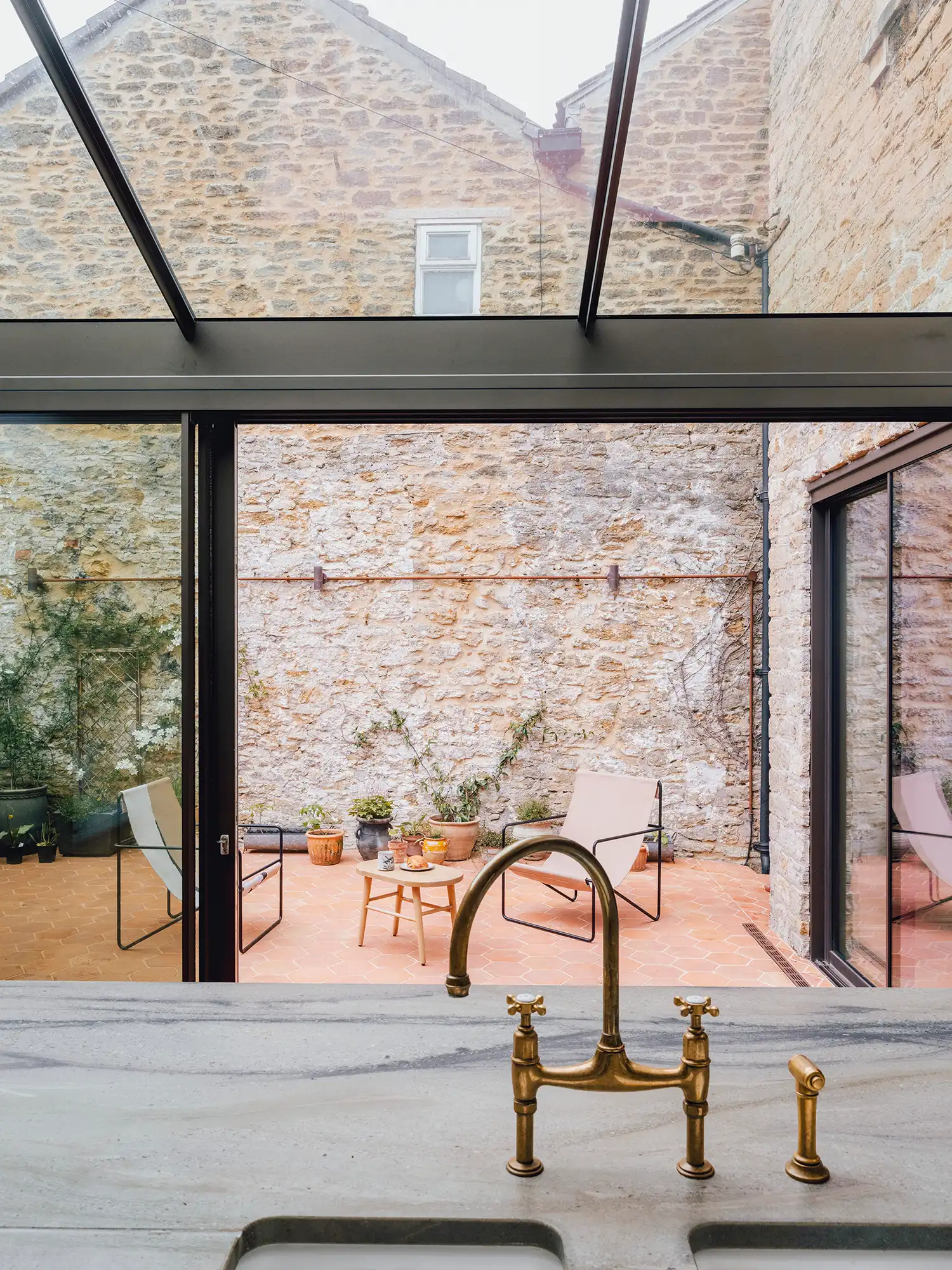
The invisible engineering at the rear of the property represents the project’s most dramatic transformation, where the house now opens entirely to the outdoors. Achieving this required a significant technical feat: cutting through existing masonry and inserting heavy-duty steelwork to support the roof, all while concealing the structure within the traditional stonework. This structural gymnastics enabled the installation of corner-glazed sliding doors with slender, anodized bronze framing, allowing the interior to dissolve into the courtyard. The precision of this alignment ensures that the transition feels effortless, despite the considerable weight held above the glass.
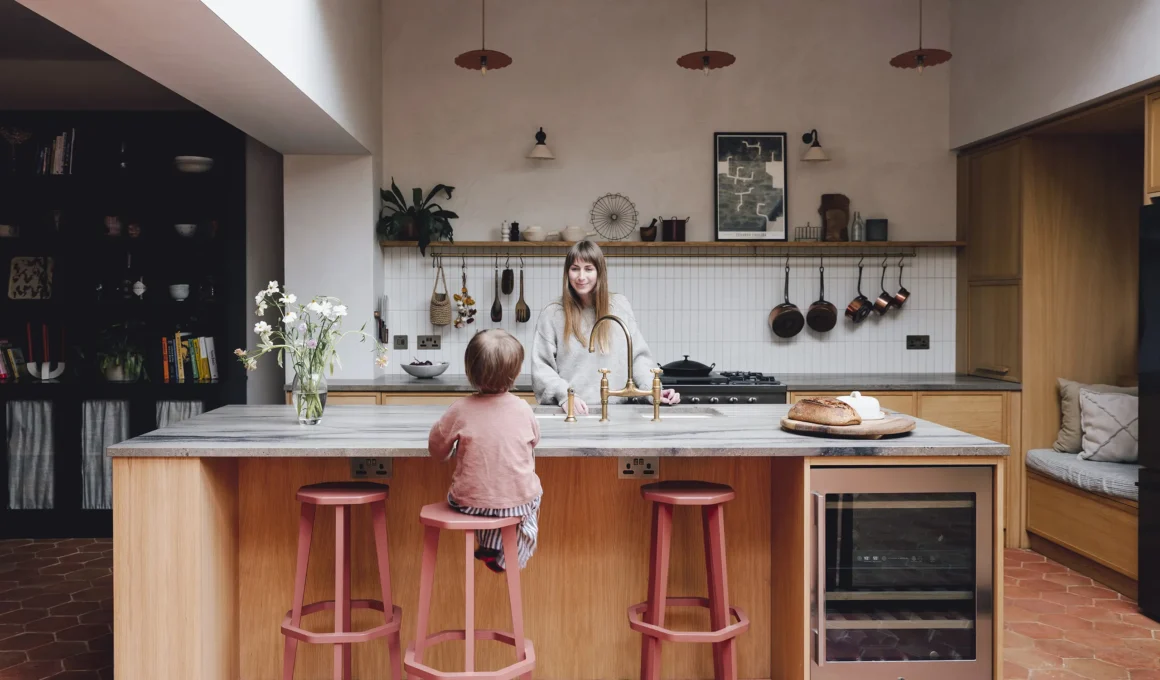
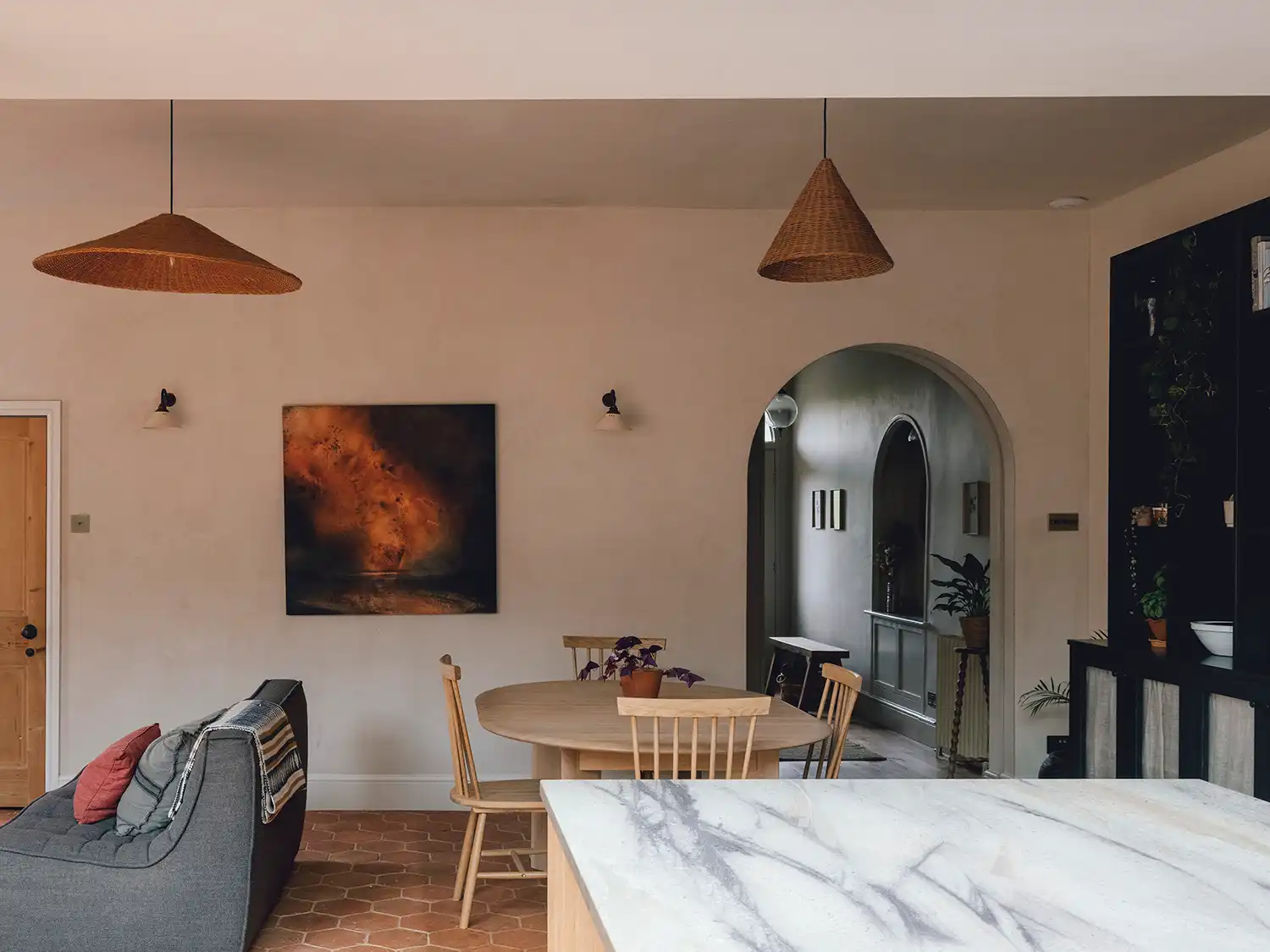
A tactile material palette defines the interior, where the selection is driven by texture and organic variation rather than sterile finishes. Bespoke solid oak joinery anchors the kitchen, featuring a generous island that extends into the living area to unify the two functions. The cool, tonal shifts of the stone worktops—rendered in deep blues and greens—provide a sophisticated contrast to the warmth of the oak and the raw quality of the lime plaster. This emphasis on natural craftsmanship and warmth is a hallmark of the firm’s approach, much like the Scandi-inspired aesthetic utilized in their Harpenden House extension to create a cohesive domestic environment.
The continuity of surface is achieved through the use of hexagonal terracotta floor tiles, which run across both the L-shaped kitchen and the outdoor courtyard. By applying this geometry consistently, the architects have blurred the boundary between the interior and the garden, drawing the eye outward and making the modest footprint feel significantly larger. Natural light, pouring in from both the sliding doors and a strategically placed roof light, dances across these earthen surfaces, shifting the atmosphere of the home throughout the day and providing a rich sensory experience.

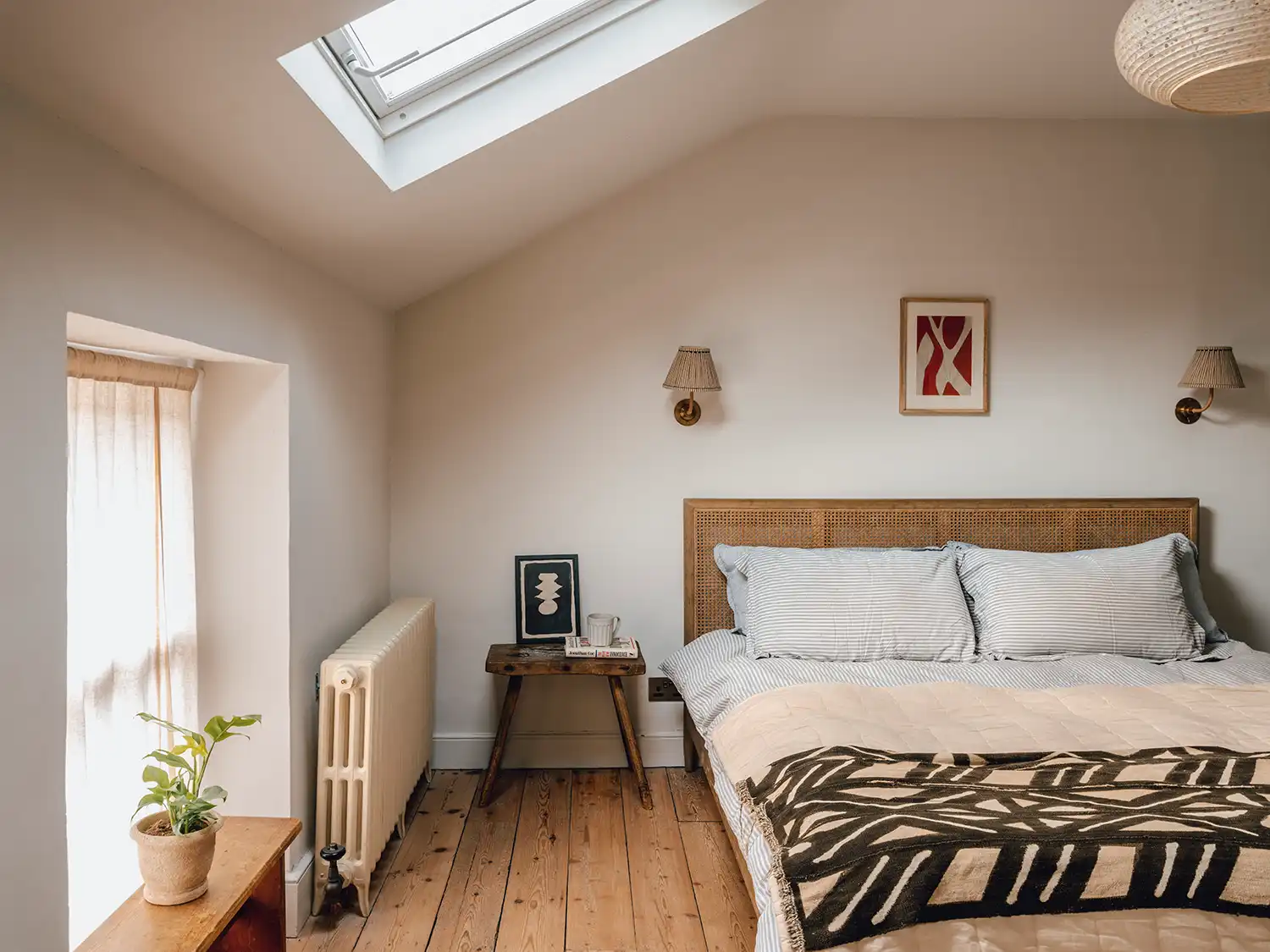
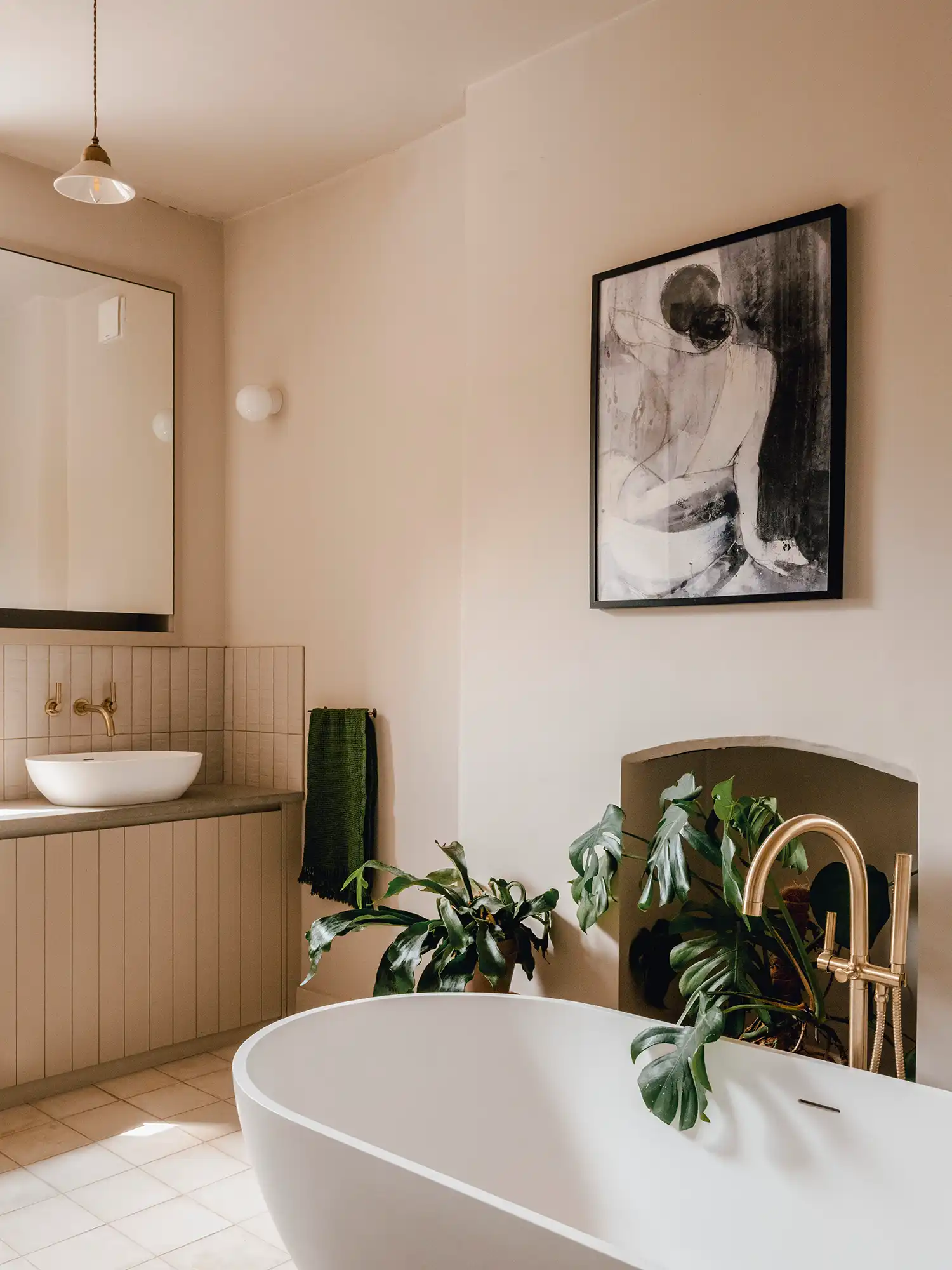
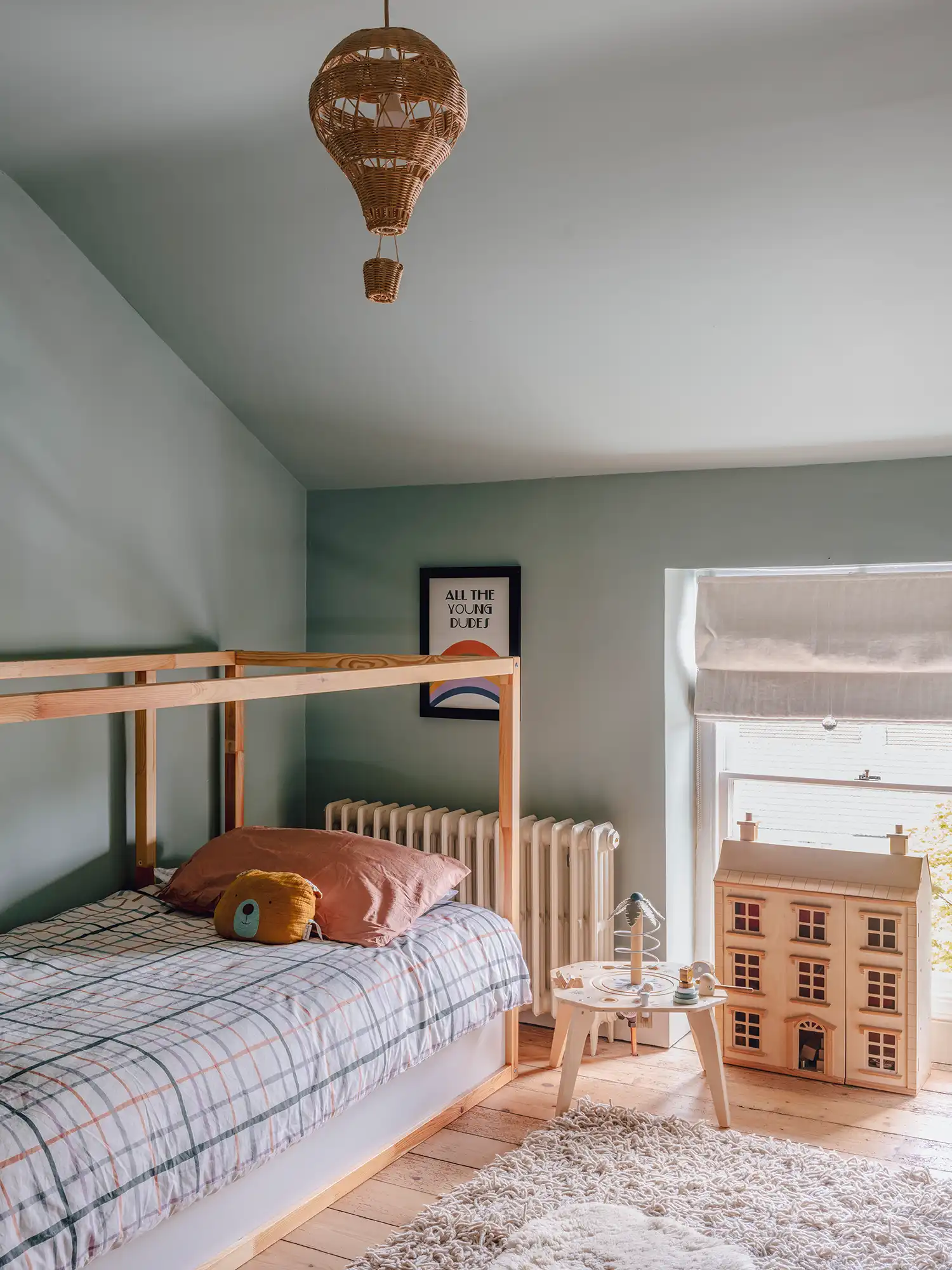
Personalized functionality is woven into the upper levels, where the house adapts to the specific creative needs of its inhabitants. The first floor houses a utility room, a home office, and a dedicated sewing room for Alex, who works with vintage fabrics. This floor acts as a transitionary hub between the high-energy social zones below and the private quarters above. On the second floor, the primary suite and children’s bedrooms offer a quieter, more curated experience. In the bathrooms, the palette shifts toward the luxurious, featuring inky blue tiles and a sunlit window seat that encourages a moment of pause.
Honoring the Victorian narrative remains a constant dialogue throughout the renovation, ensuring the building’s heritage is referenced rather than erased. New interventions, such as an arched pocket door, mirror the geometry of the original front door and hallway alcove, creating a visual thread that runs from the entrance to the rear garden. A simple, earthy neutral palette, punctuated by moments of richer color, ensures that the home feels unified—a space where the history of the Somerset terrace and the requirements of a contemporary family exist in perfect, light-filled harmony.