

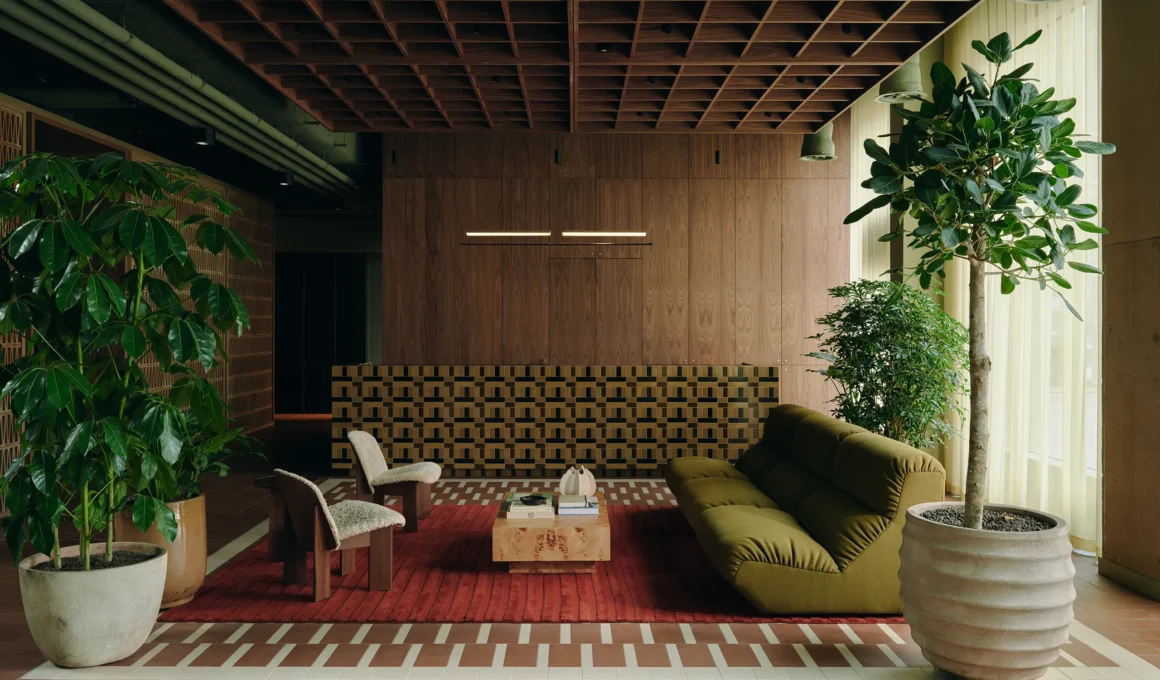
Conductor, a 3,400-square-meter flexible workspace within Stratford’s Coppermaker Square, represents a sophisticated collaboration between interior design studio Tabitha Isobel and architects Studio Multi. Located in the heart of East London, the project translates a large-scale industrial shell into a layered, hospitality-driven environment that moves away from traditional corporate tropes to favor textural intimacy and spatial drama.
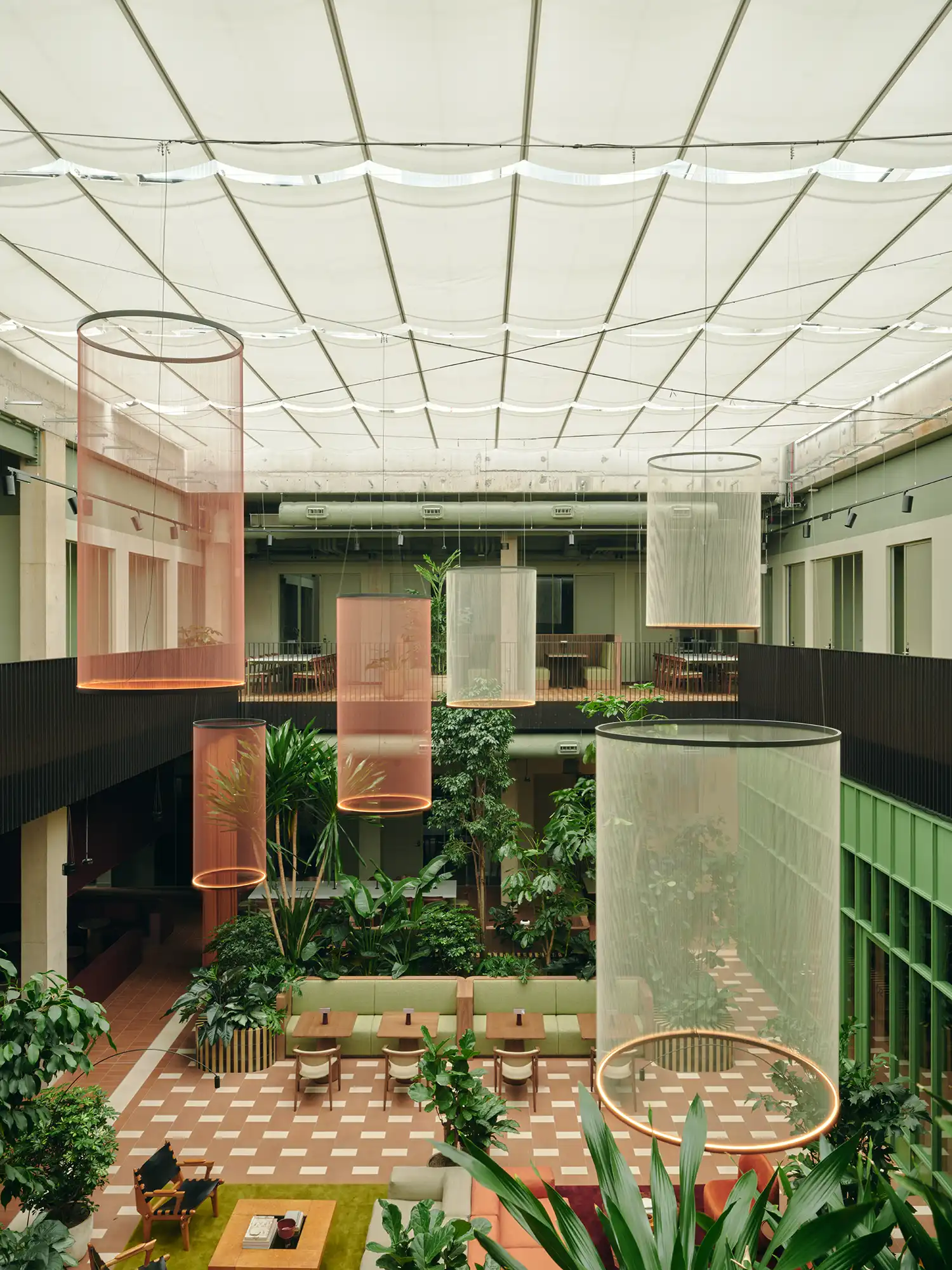
The conceptual vision for the project centers on a dramatic central atrium, which serves as a navigational and emotional anchor for the entire floor plate. Rather than treating the double-height volume as a cold transition zone, the designers looked to the spatial drama of historic palm courts. By flooding the core with natural light and introducing a restrained biophilic sensibility, the team created a sense of scale that feels both grand and welcoming. The color palette draws directly from the local heritage of the Coppermaker Works, utilizing a rich spectrum of rust, amber, and deepened ochreto bridge the gap between the building’s raw structure and its new, refined purpose.
Material rhythm and tactile thresholds define the arrival experience. At the reception, ceramic floor tiles by Solus are laid in alternating brick and block formations, creating a visual cadence that contrasts with the exposed concrete columns and visible overhead services. The reception desk itself, clad in Dzek volcanic ash glazed tiles, functions as a graphic centerpiece with its patchwork of ochre and deep brown tones. This choice of materials establishes a dialogue between the robustness of the base build and the softness of the curated furniture, including pieces by &Tradition and HAY set over Nordic Knots rugs.
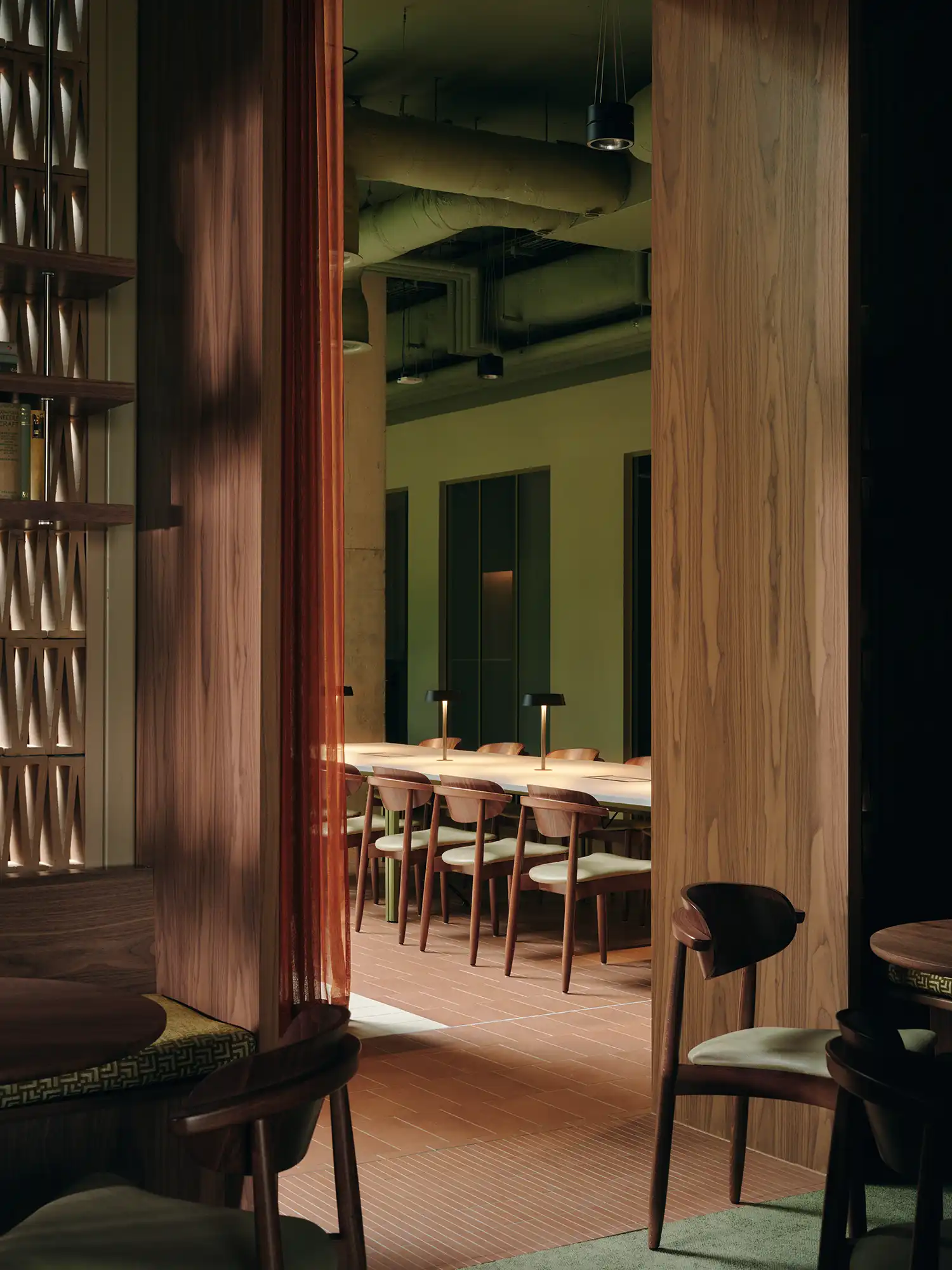
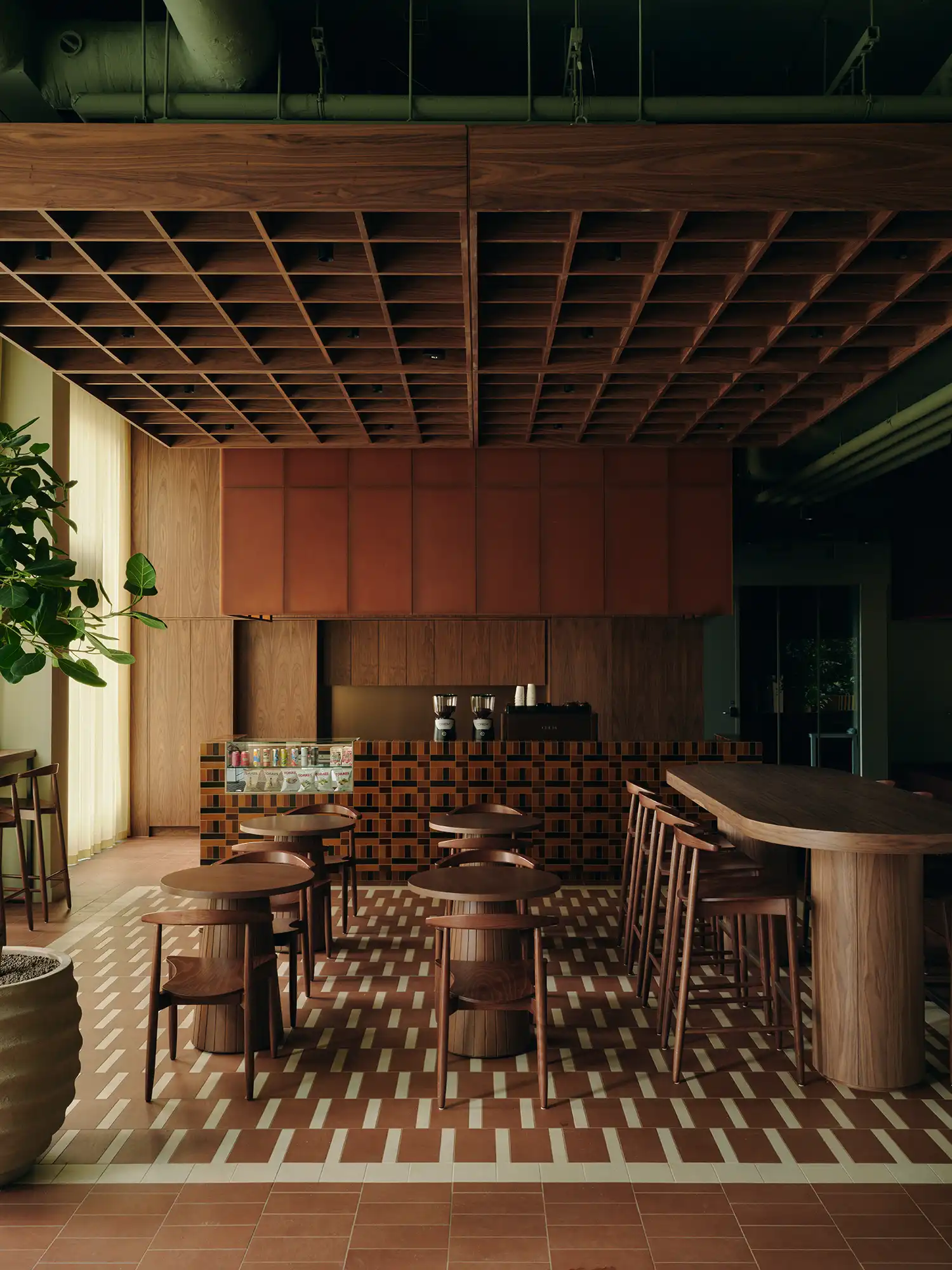
Atmospheric transitions are handled through clever ceiling treatments and varied seating typologies. In the café area, a suspended timber canopy lowers the perceived height of the room, effectively “shrinking” the open plan to foster a more immersive atmosphere. This canopy, crafted from Plasticiet’s recycled solid surface material, catches the shifting light with a gentle sheen. By mixing walnut tables with varied stool and chair heights, the design supports flexible working while maintaining the warmth typical of a high-end hospitality environment rather than a standard office.
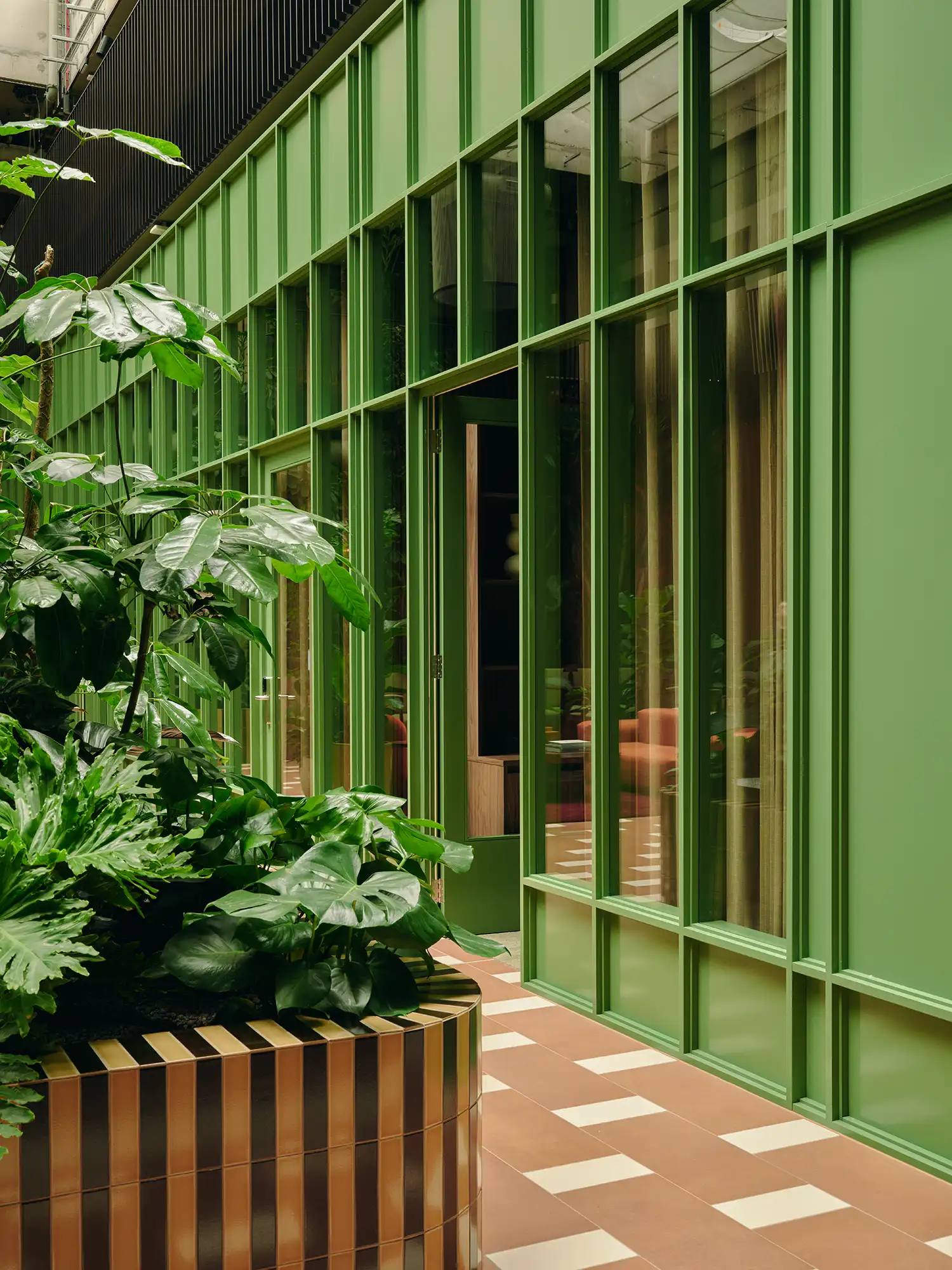
Graphic landscapes and verticality come to the fore within the atrium’s core. Bespoke planters, also finished in volcanic ash tiles but in vertical bands of green, draw the eye upward, mirroring the height of the double-height volume. Integrated bench seating wrapped in moss-colored bouclé by Yarn Collective offers a soft, tactile place to pause among the foliage. Small portable lamps introduce a domestic glow at table level, further softening the industrial backdrop. This layering of vintage timber, leather armchairs, and sculptural mid-century tables ensures the space feels “collected” rather than merely “furnished.”
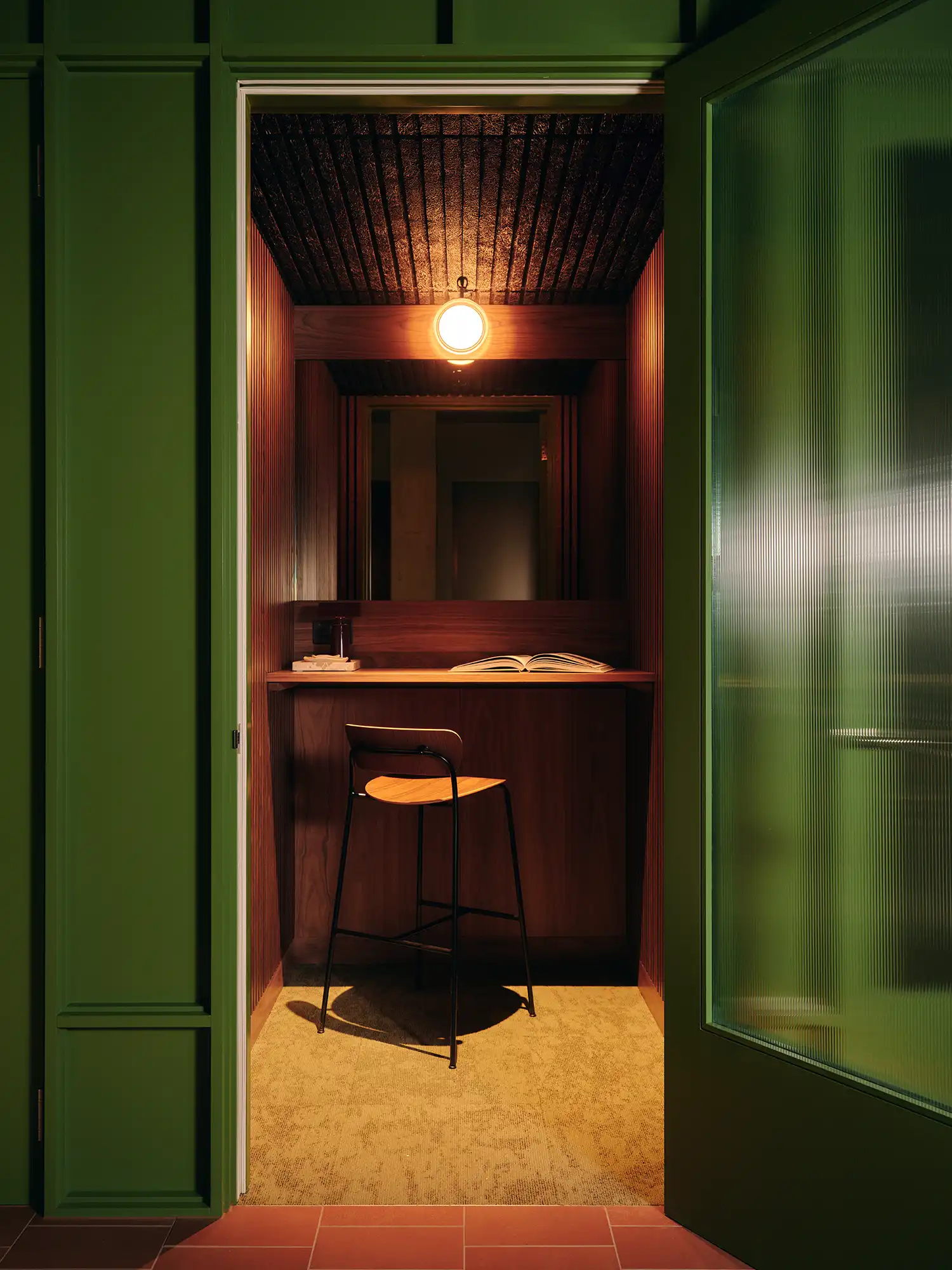
Acoustic intimacy and seclusion are achieved through a deliberate shift in floor levels and material density. The sunken conversation pit, tucked beneath a Symphonic Acoustic canopy, provides a cocooned setting for focused exchange. Here, the floor drops and the palette deepens into wine-colored upholstery and soft Ege Carpets, creating a distinct sensory experience of quietude. Similarly, the library uses Celosia terracotta bricks by Mutina to form permeable partitions; these allow light to filter through in patterned shadows, offering visual privacy without sacrificing the architectural clarity of the wider floor plate.
Vertical progression leads to the mezzanine via a steel staircase, where the flooring shifts to end-grain oak parquetry by Ted Todd. This change in material signals a move toward a quieter register intended for deep focus and private meetings. From this vantage point, the planting below appears as a lush canopy, allowing users to remain psychologically connected to the energy of the atrium while enjoying the necessary distance for concentration. Light blue sofas provide a tonal counterpoint to the earthy heat of the ground floor, diversifying the project’s aesthetic identity.
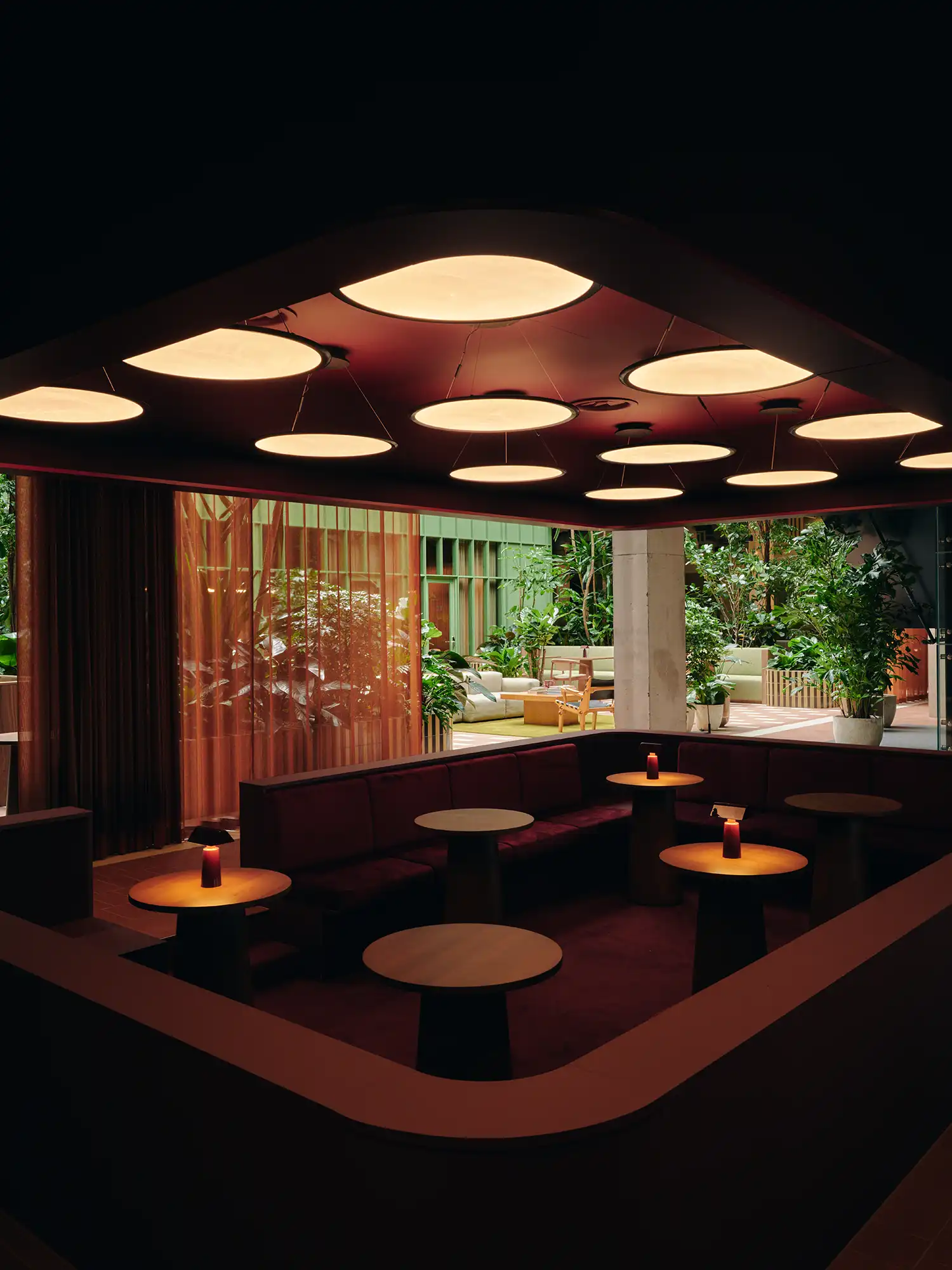
In the interior of Conductor, Tabitha Isobel reshapes expectations of the contemporary workspace, offering an environment that is neither neutral nor corporate, but deliberately layered and atmospheric. In doing so, Tabitha Isobel and Studio Multi signal a shift in how we define the workplace; not as a backdrop for productivity, but as an immersive environment where materiality, colour and spatial layering actively shape the experience of work. This project stands as a sophisticated example of adaptive reuse, demonstrating how industrial heritage can be seamlessly recalibrated into a vibrant, human-centric landscape.