

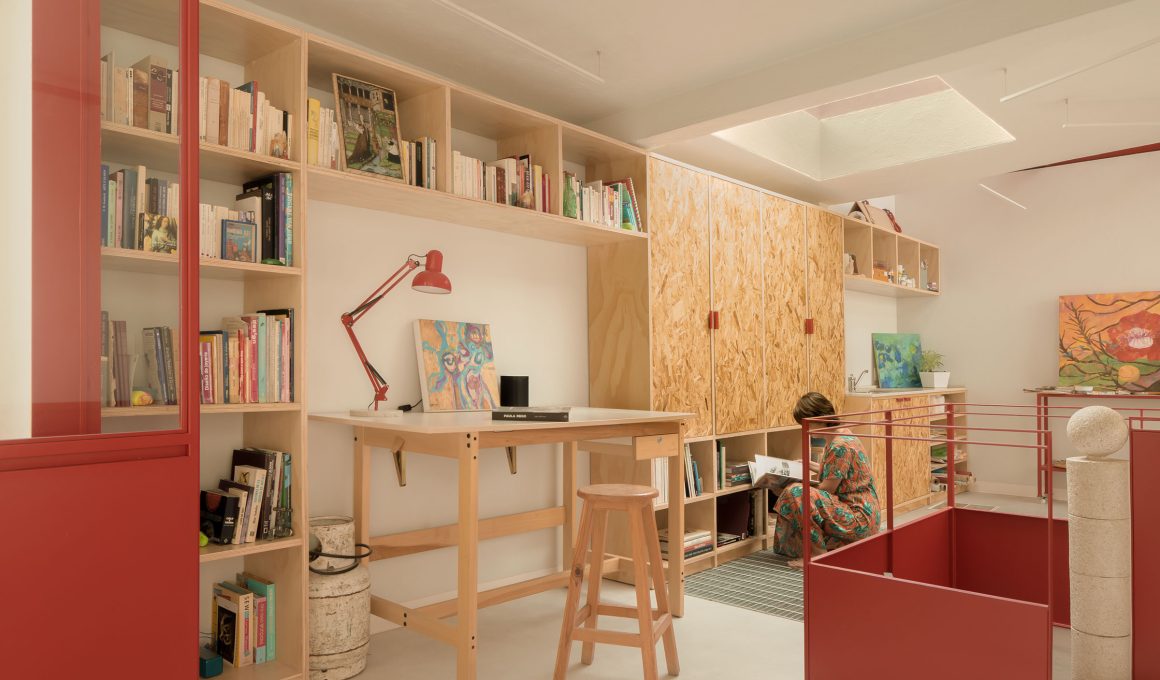
Nestled in the heart of Coyoacán, a historic district of Mexico City known for its vibrant cultural scene, a recent renovation by AMASA Estudio has transformed a traditional residence into a dynamic studio, workshop, and exhibition space for visual artist Daniela Riquelme. The project, commissioned by Riquelme herself, addresses the limitations of her previous workspace, prioritizing natural light, spatial optimization, and a seamless integration of artistic production and display.
Riquelme, a Mexico City-based artist working across painting and jewelry, had previously utilized the upper floor of the house as her studio. However, constraints in space and, crucially, natural light, hindered her artistic practice. AMASA Estudio’s intervention focused on a comprehensive transformation of this upper level, creating a space that not only accommodates her creative process but also enhances it.
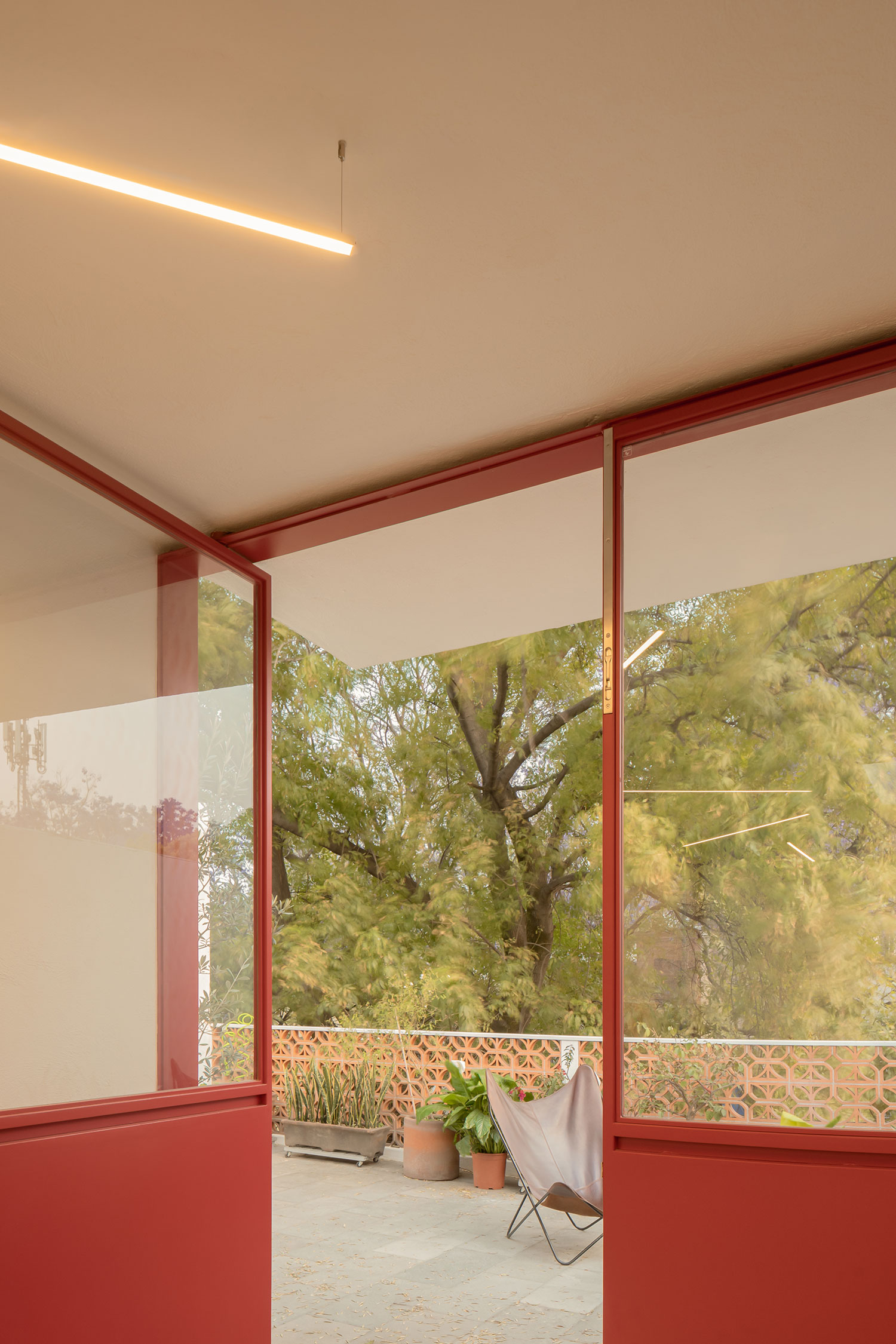
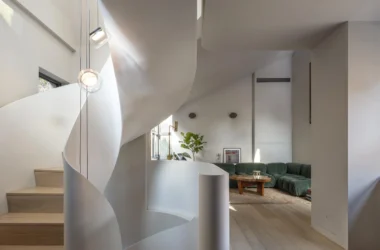
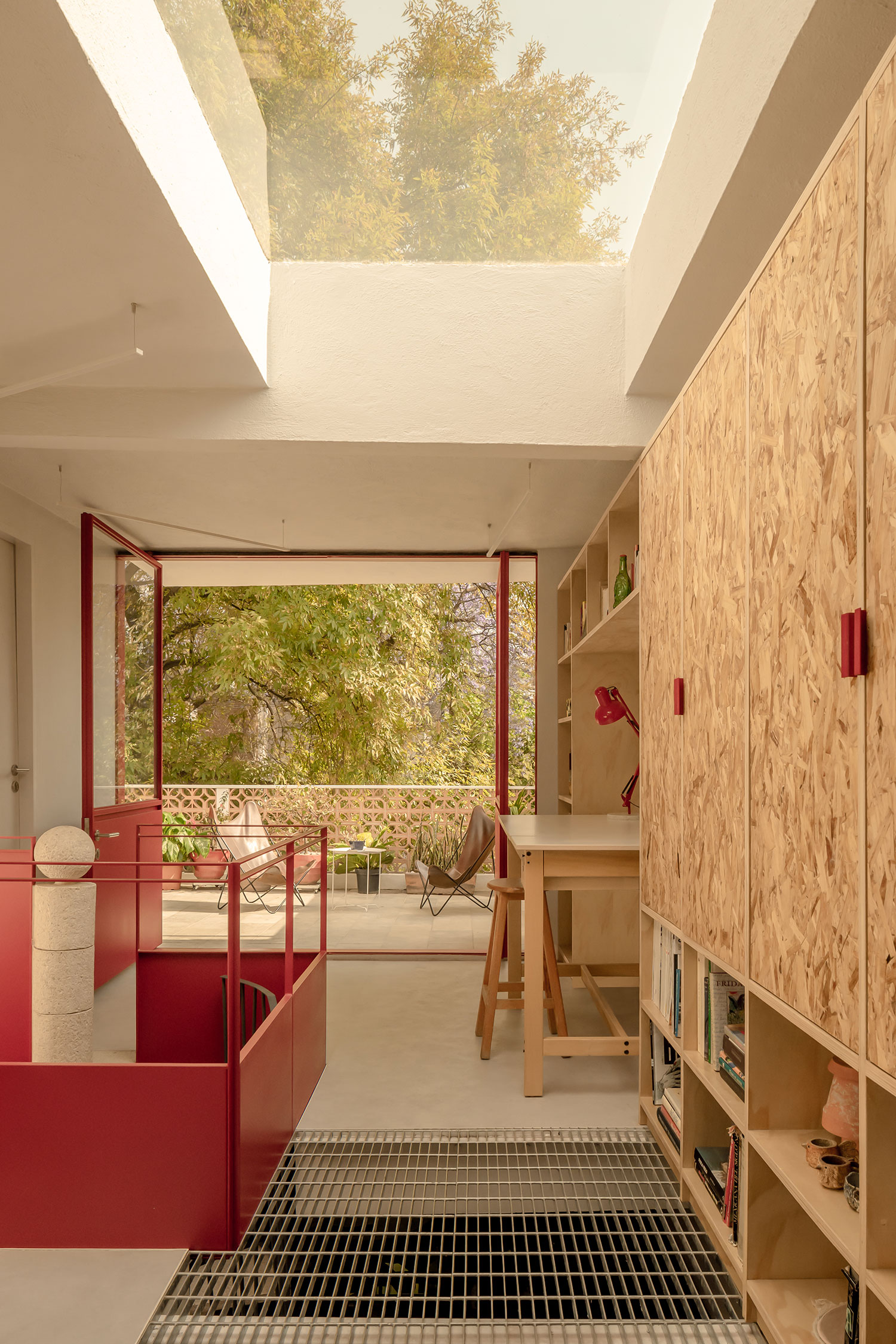
The existing spiral staircase became a central organizing element, dividing the workshop into two distinct yet interconnected zones. The first zone, accessed directly from the staircase, functions as the primary studio area. This space opens onto a terrace, offering inspiring views of the tree-lined streets characteristic of Coyoacán. A more private area, including a full bathroom, is seamlessly integrated within this zone. Along the opposite wall, a bespoke carpentry unit, designed by AMASA Estudio, spans the entire length of the space. This meticulously crafted unit provides ample storage for materials, books, and tools, incorporating shelving, a drafting table, drawers, and a robust workbench complete with a sink for material handling.
The second zone, an expansion of the original floor plan, is dedicated to more specialized work and exhibition. A circulation area adjacent to the staircase, illuminated by a strategically placed skylight, connects the two zones. This skylight not only floods the hallway and staircase with natural light but also, through a grated platform, allows light to filter down to the ground floor, addressing a previous lack of natural illumination in the public areas.
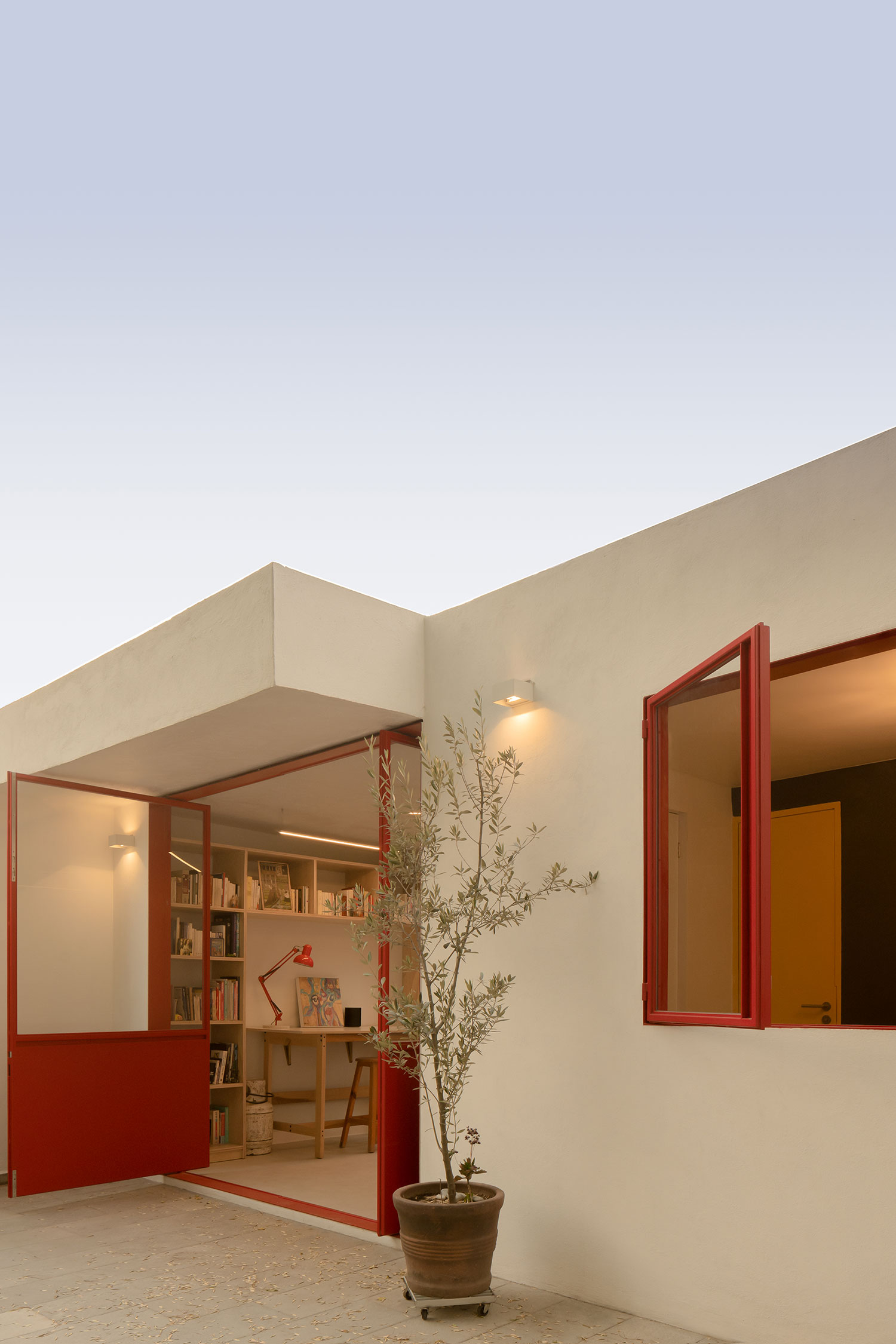
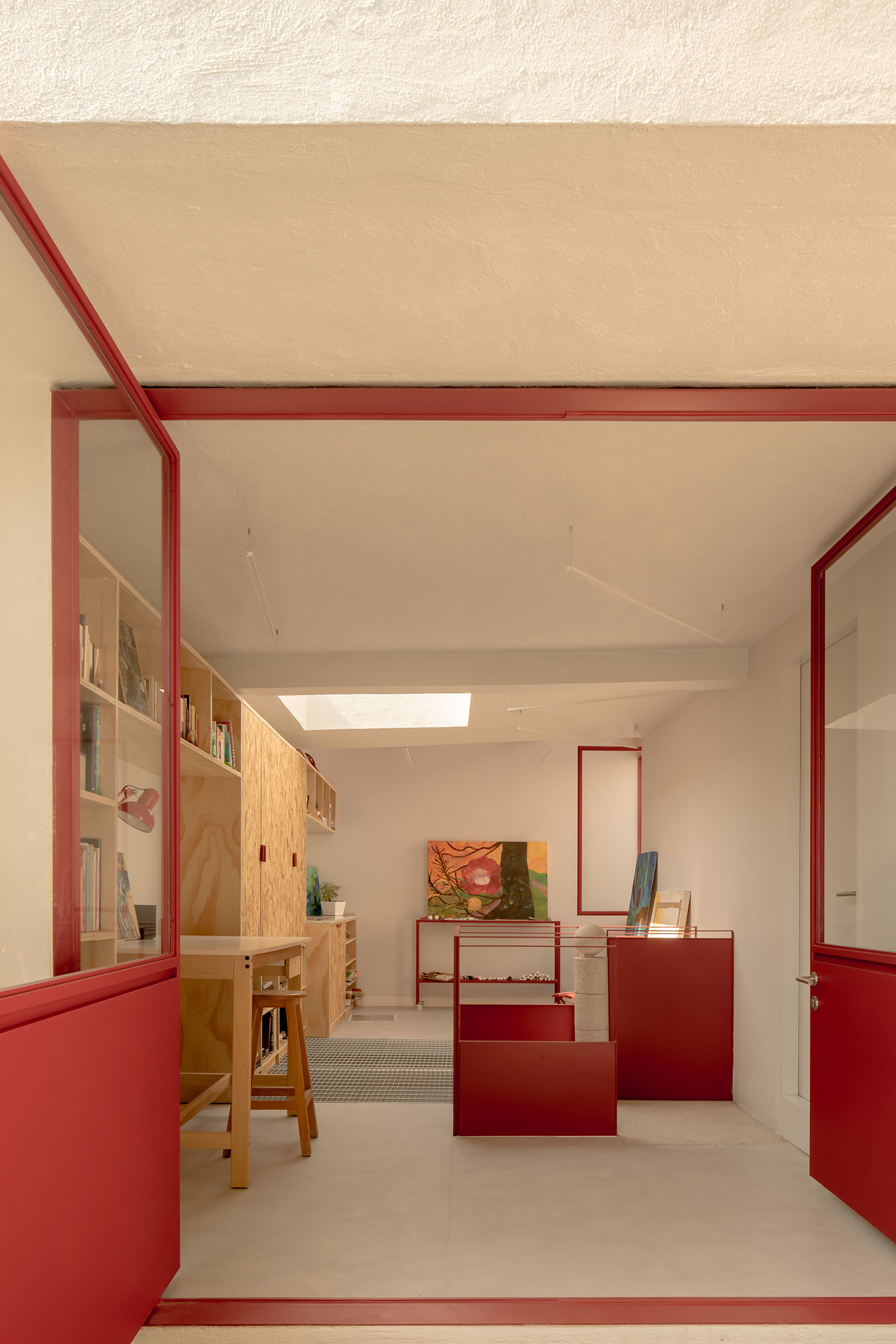
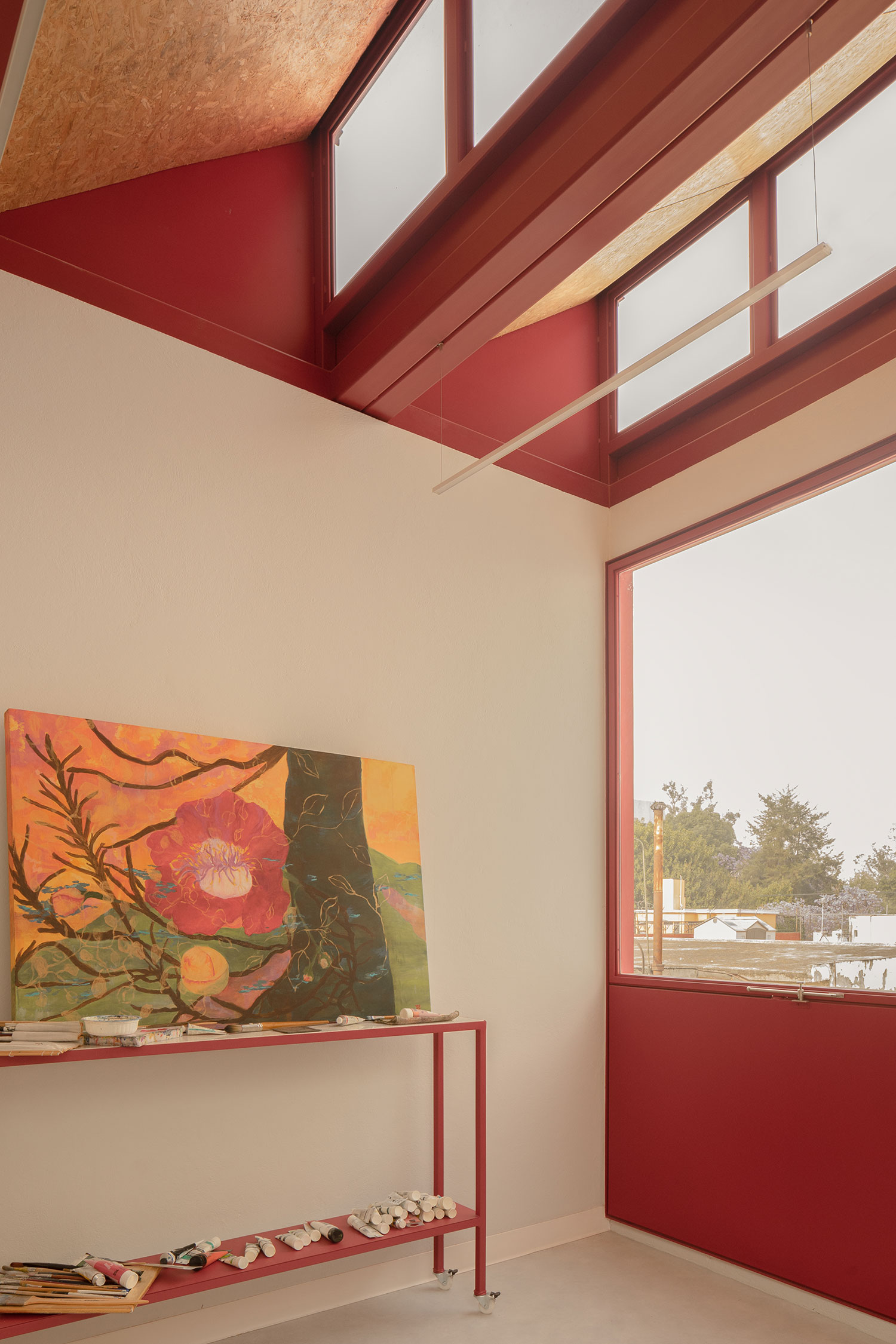
The expanded rear section of the workshop is defined by its enhanced spatial quality and abundance of natural light. A large east-facing window provides ample illumination, its frame crafted from intricately designed ironwork in a striking garnet red. This vibrant accent color, chosen to reflect the energy and vibrancy of Riquelme’s artwork, is used consistently throughout the upper floor, unifying the workshop, staircase, studio, hallway, and terrace. Notably, the window frame incorporates a weather vane mechanism, allowing for effective cross-ventilation.
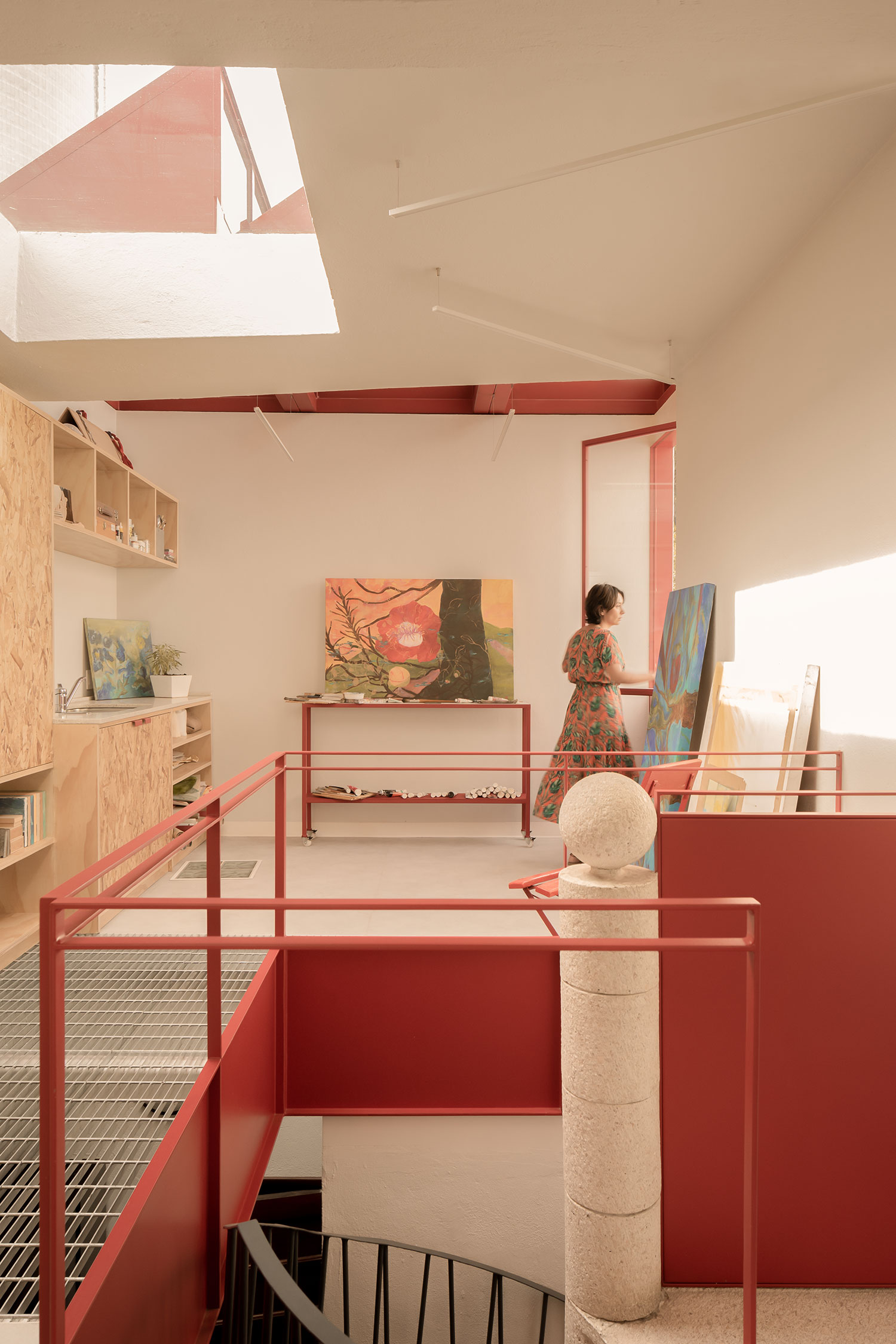
Perhaps the most significant architectural intervention in this zone is the innovative sawtooth roof design. This carefully considered feature optimizes lighting conditions for both painting and exhibition, harnessing indirect sunlight to eliminate glare and harsh shadows. Three additional east-facing openings further enhance the diffusion of natural light, creating an ideal environment for artistic creation.
The project by AMASA Estudio for Taller Estudio Daniela Riquelme is a compelling example of how architectural design can directly support and enhance artistic practice. By prioritizing natural light, spatial organization, and bespoke detailing, the architects have created a vibrant and inspiring space that not only meets the functional needs of the artist but also celebrates her creative vision. The use of the garnet red accent, the intricate ironwork, and the innovative sawtooth roof contribute to a distinct architectural language that resonates with the artistic spirit of Daniela Riquelme and the vibrant cultural context of Coyoacán.