


In the heart of Madrid, where the relentless push of urban development often spells demolition for the city’s vanishing industrial heritage, BURR Studio has executed a masterstroke of adaptive reuse. Their project, Patio, breathes extraordinary new life into a derelict storage space, showcasing a visionary approach to preserving the past while embracing a fluid, artistic future. This intervention is a critical case study within the studio’s broader “Elements for Industrial Recovery” series, tackling the existential threat faced by Madrid’s ground-floor industrial structures – spaces rendered obsolete by shifting economies, stringent environmental regulations, and soaring land values.
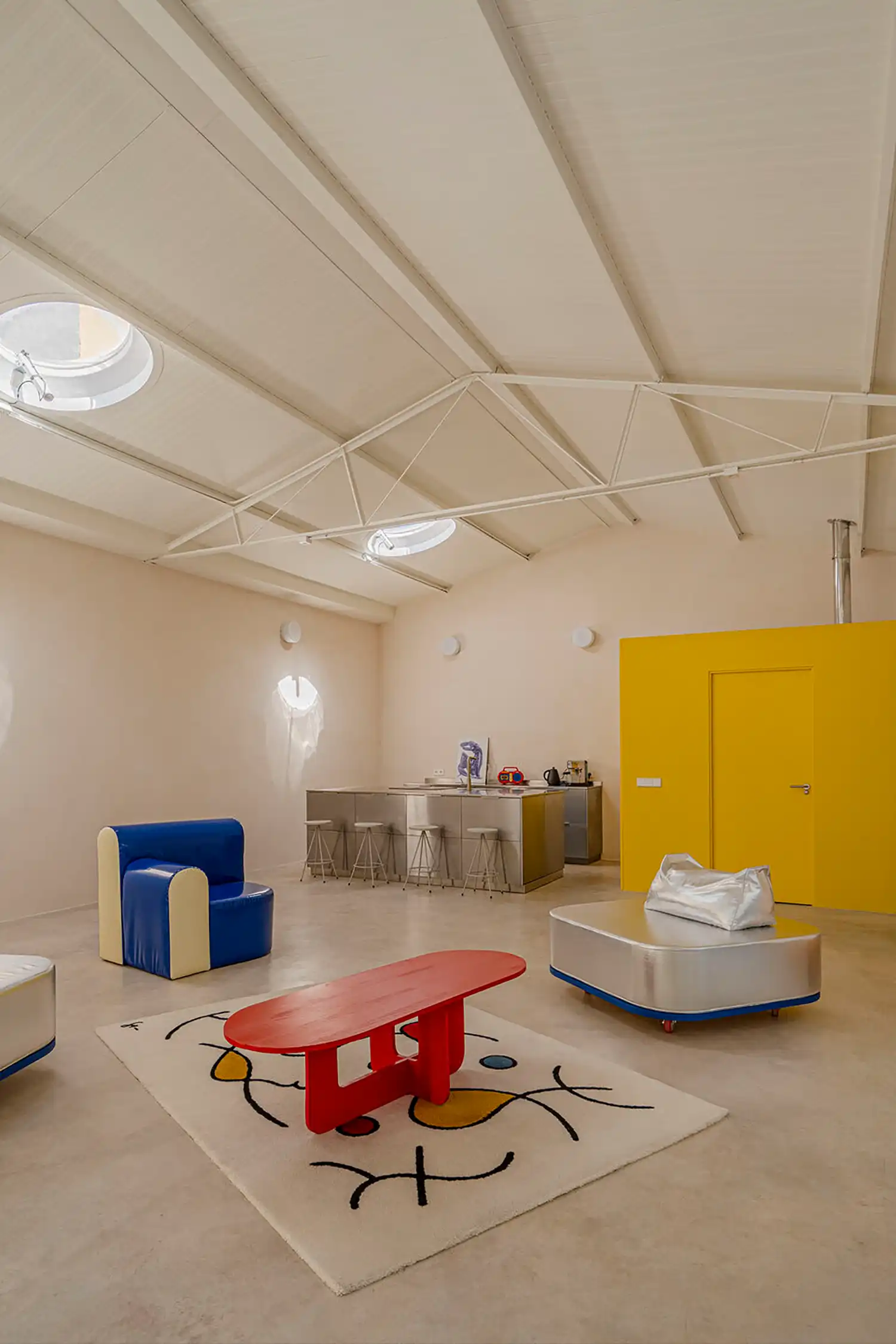
For decades, these cavernous spaces, often extending deep into the blocks behind residential facades, have languished. Too vast for local shops, too expensive for remaining industry, and stifled by regulations, they became urban dead zones. Urban planning policies frequently incentivize demolition, carving out lucrative residential plots from these forgotten courtyards. BURR Studio, however, argues for their salvation through hybrid use spaces – a strategy demanding flexibility and creativity over rigid functional definitions. Patio embodies this philosophy perfectly.
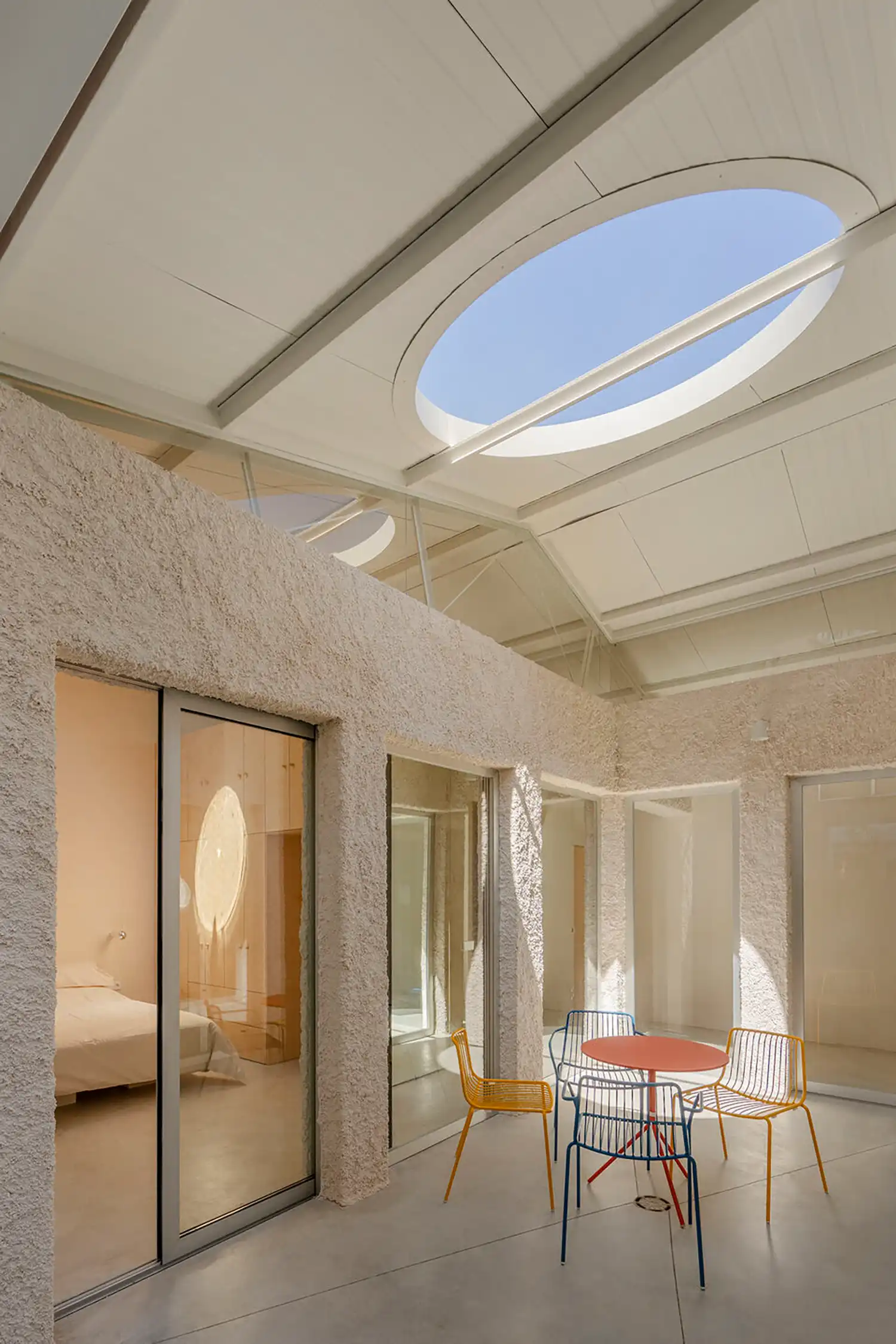
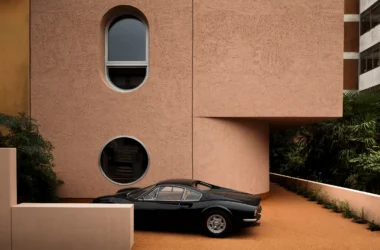
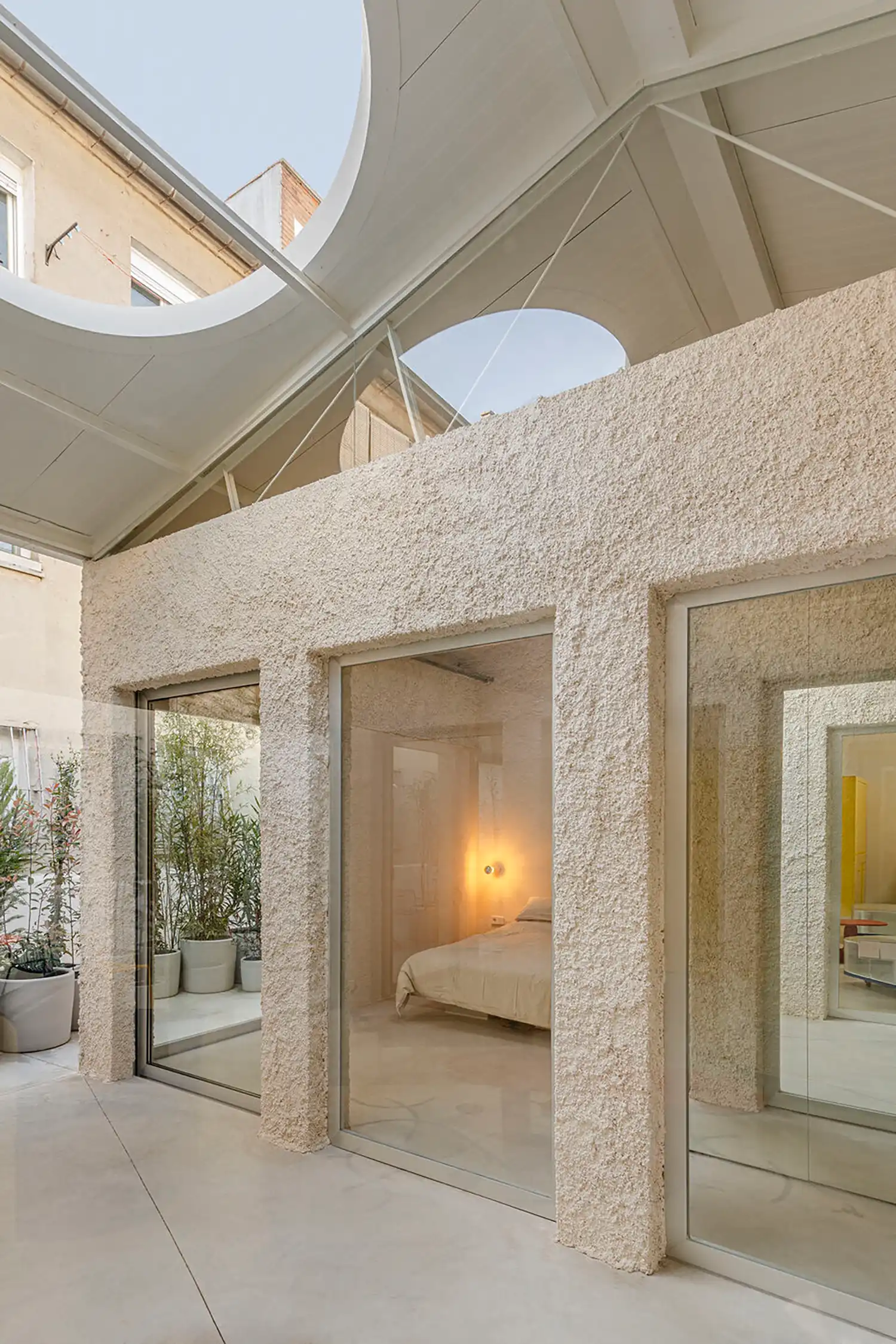
Commissioned by an artist exploring perceptual distortion through digital media, the project became an architectural translation of this concept. BURR Studio transformed the formerly enclosed CNM warehouse, characterized by its large pitched roof and opaque walls, into a luminous, layered experience. The key move is a monumental outer colonnade, finished in a richly textured plaster, that fundamentally redefines the space. Large, regularly spaced openings combine fixed glass panels with overlapping sliding doors. This ingenious system creates a constantly shifting play of transparency and reflection, dissolving the hard boundary between inside and out.
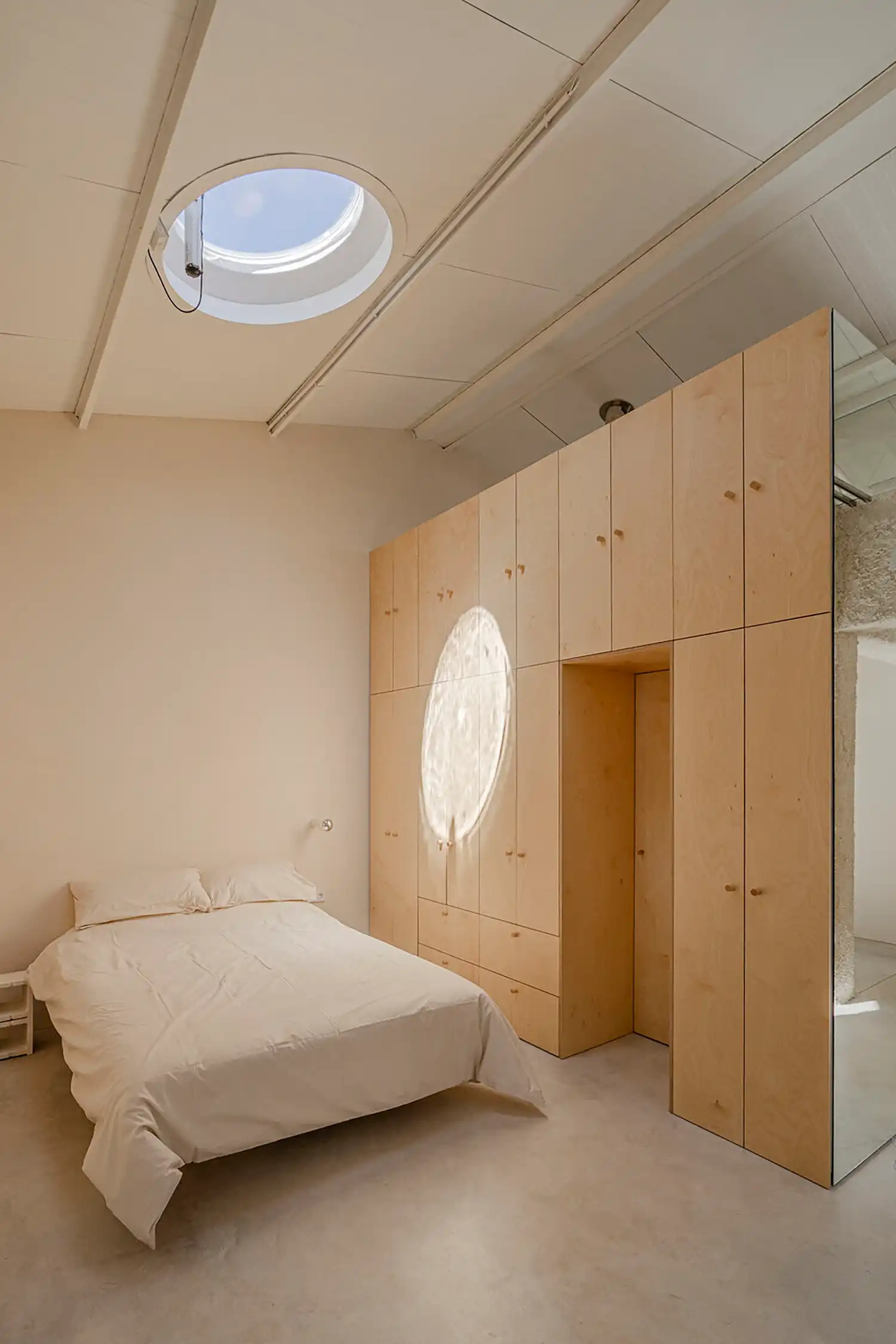
Crucially, the original pitched roof continuity is preserved as the space’s defining soul. Visible from every vantage point, it is strategically perforated to draw natural light deep into the interior, reinforcing the connection to the sky and the passage of time. The interplay between this soaring, uninterrupted roofline and the grand colonnade generates a remarkable depth of field, where spaces visually overlap and boundaries blur.
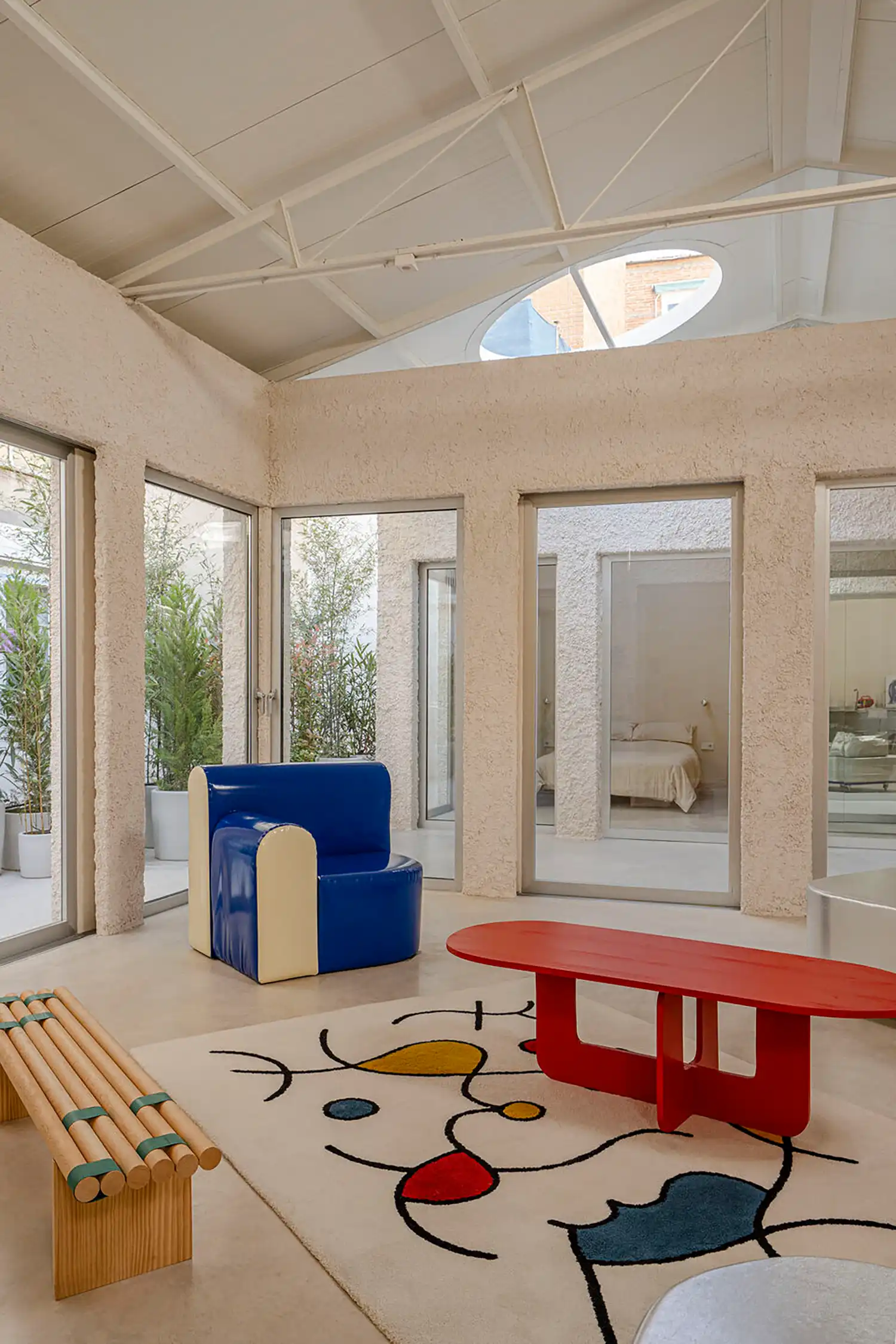
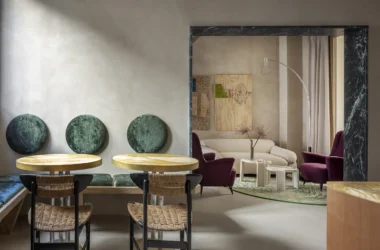
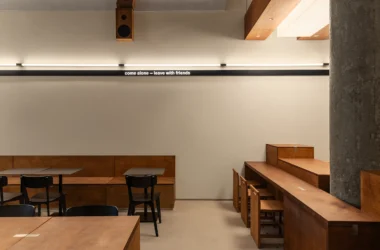
Within this luminous shell, two distinct material volumes provide bold contrast and anchor the journey. Near the entrance, a vibrant bold yellow volume houses essential services – restrooms, storage, and mechanics. At the far end, a warm wooden structure contains additional functions, offering a counterpoint and concluding the spatial narrative. Reinforcing the theme of indeterminacy, BURR Studio employed a furnishing strategy centered on movable objects. These carefully proportioned pieces – tables, seating, displays – glide effortlessly between zones, passing through the colonnade’s arches, enabling uses to migrate and adapt organically across the flexible interior design.
Patio is more than a stunning conversion; it’s a vital prototype for Madrid urban regeneration. By demonstrating the aesthetic and functional potential of these overlooked industrial shells through adaptive reuse, hybrid use spaces, and respect for industrial heritage Madrid, BURR Studio offers a compelling alternative to demolition. It proves that with visionary design, these structures can become vibrant, sustainable assets – luminous spaces for art, innovation, and community within the evolving urban fabric, ensuring architectural preservation isn’t just about memory, but about building a dynamic future.