



Beyond the utilitarian requirements of aviation storage, the AEROTIM Hangar is a rigorous exercise in material honesty and industrial discipline. Situated in a classified location, this 400-square-meter facility serves as the operational headquarters for the AEROTIM collective—a high-performance team of athletes and creatives led by pilot Timur Fatkullin. The project, designed by Dan Vakhrameyev—founder and creative director of +kouple—rejects typical aerospace tropes in favor of a “deliberately restrained” language that mirrors the focused mindset of pre-flight routines.
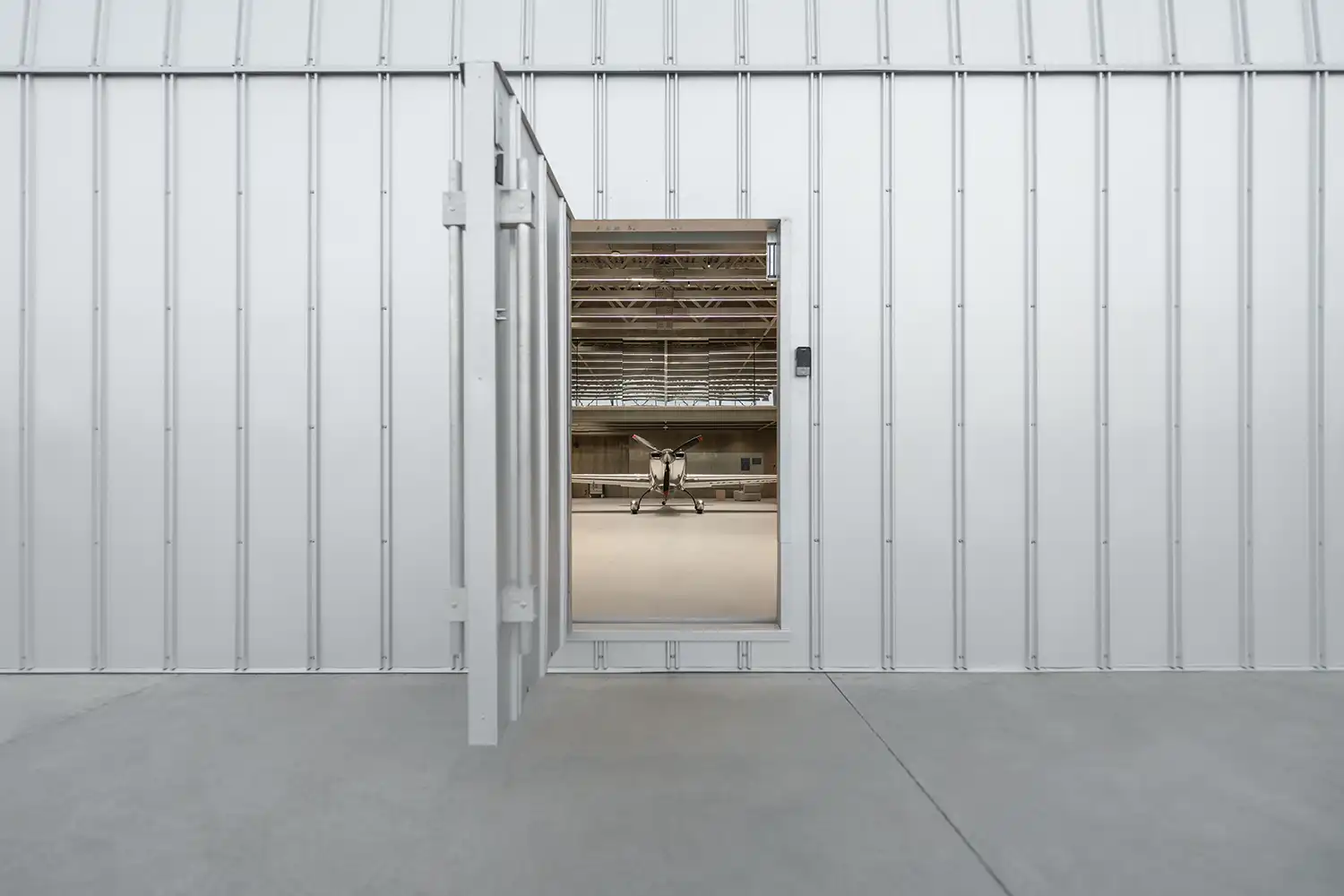
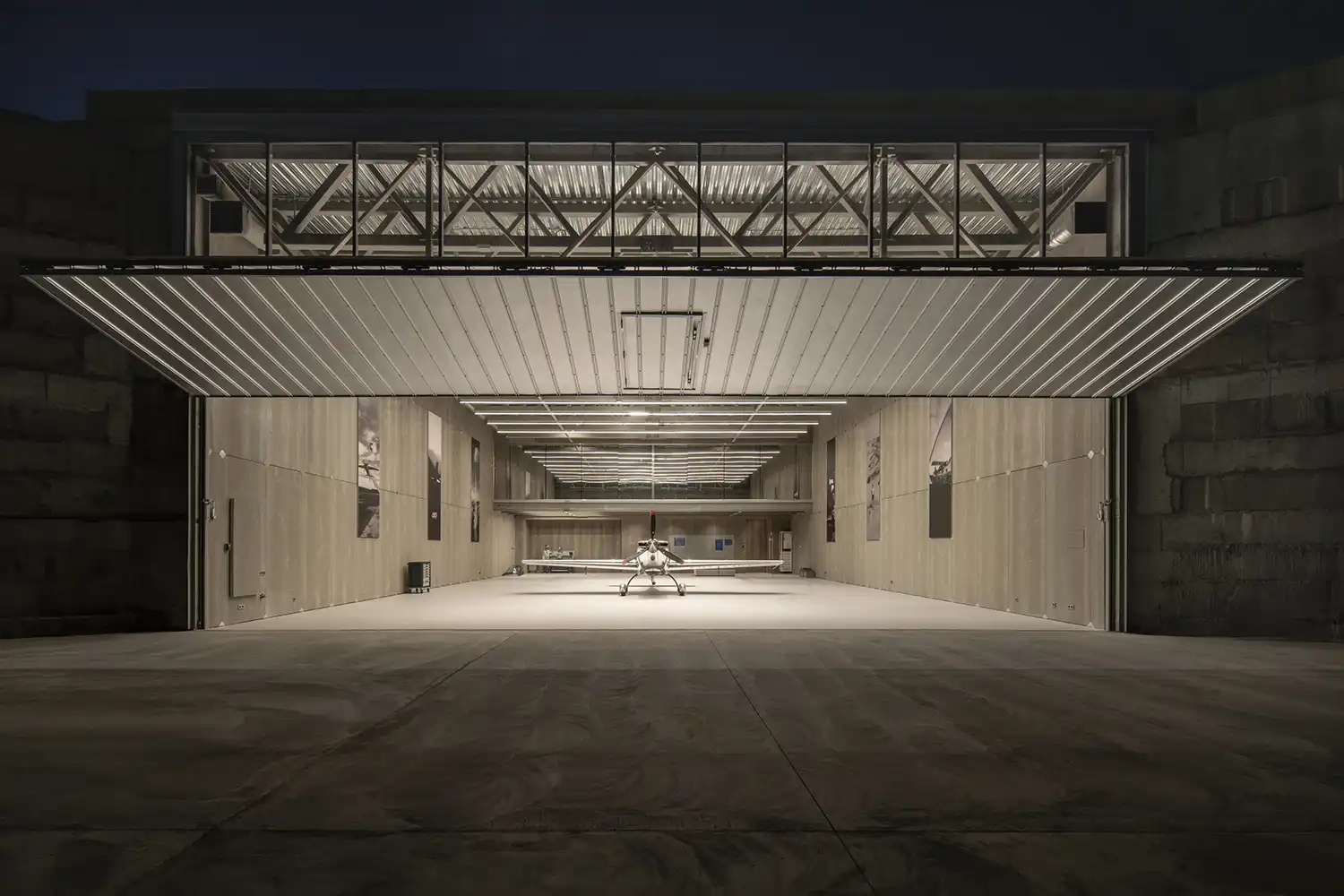
A brutalist approach to the facade establishes an immediate dialogue with the runway. The primary entrance is defined by a full-width gate clad in raw zinc sheets, utilizing a vertical lifting system that enables unobstructed aircraft movement. Above this, a polycarbonate fronton allows natural light to permeate the volume during the day, emphasizing a functionalist character driven by the rhythms of flight.
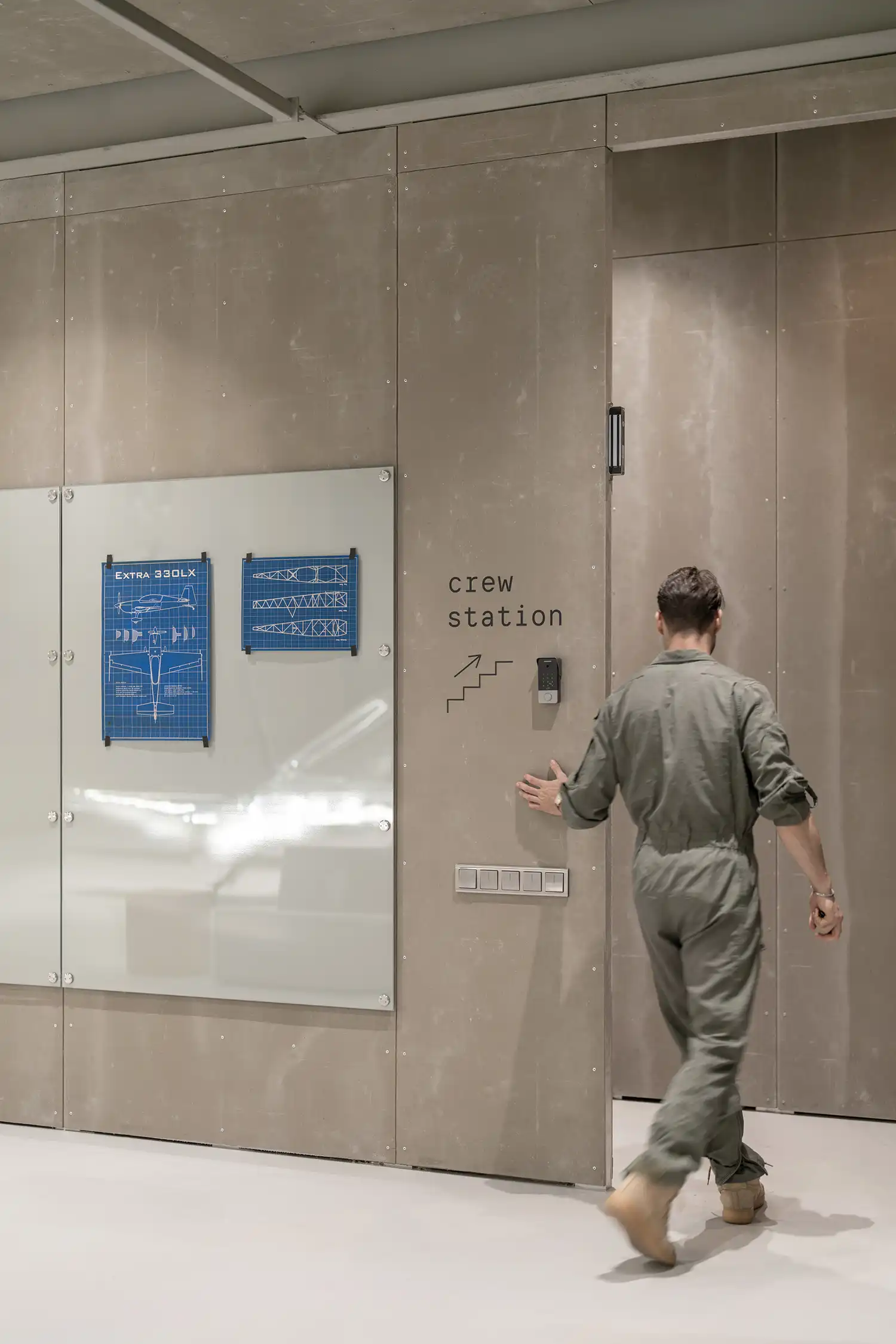
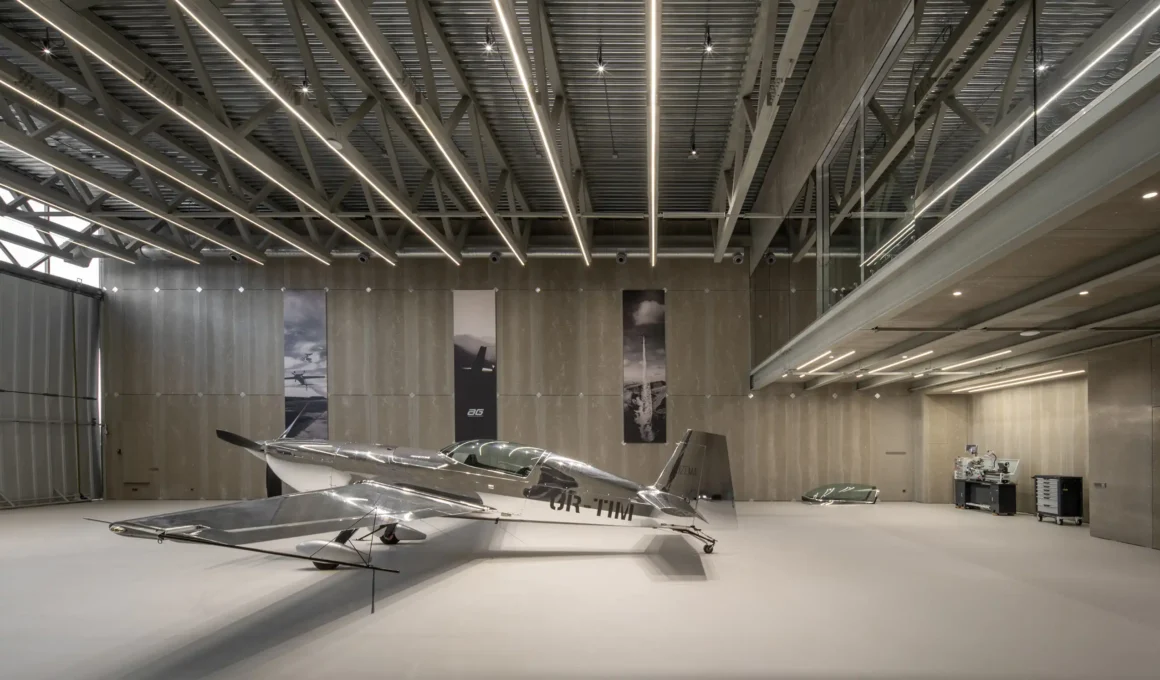
The architectural logic of the interior is dictated by the structural skeleton. Within the full-height hangar hall, steel trusses and corrugated metal roofing are left entirely exposed, integrated with visible engineering systems to create a raw, monochromatic shell. To line the walls, Vakhrameyev selected large-format Cement Bonded Particle Board (CBPB). These panels are fastened with visible joints that explicitly reference the rivet-patterning of an aircraft fuselage—a detail that bridges the gap between the building’s architecture and the machines it houses.
A narrative of achievement is embedded into the very walls of the workshop. Large-format banners are recessed into the masonry, backlit to provide a soft, matte illumination that contrasts with the hard-edged surfaces. These visuals document the crew’s milestones, from world aerobatics championships to high-profile film productions, serving as a quiet reminder of the high stakes involved in their daily operations.
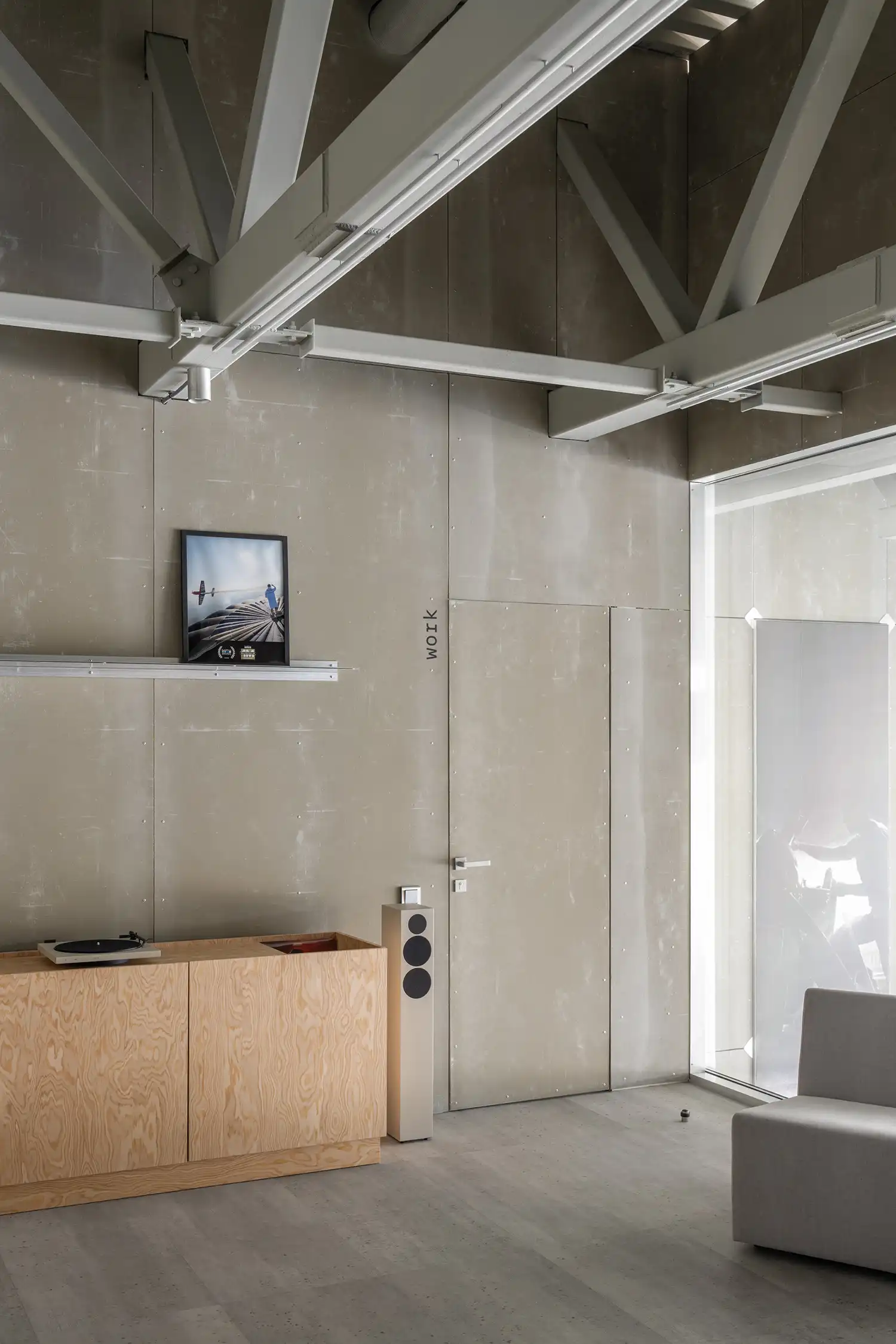
Spatial hierarchy is defined by the Crew Station, a 94-square-meter volume suspended on the second floor. This observation point is fronted by a frameless glass facade, providing an elevated, panoramic gaze over the aircraft below. A central sliding window allows the sensory experience of the hangar—the smell of fuel and the sound of engines—to flow into the briefing area, ensuring the pilots remain tethered to their craft even during downtime.
The tension between metal and wood softens the project’s industrial core. Inside the crew area, the monochromatic palette is interrupted by red-brown color accents and warm wood cabinetry. Vintage chairs are paired with modern ProPro sofas, creating a domestic enclave within the machine. This area is optimized for “situational awareness,” centered around a briefing table for flight tasks, yet it accommodates the team’s lifestyle with a kitchen, office, and a high-end sound system reflecting Fatkullin’s musical interests.
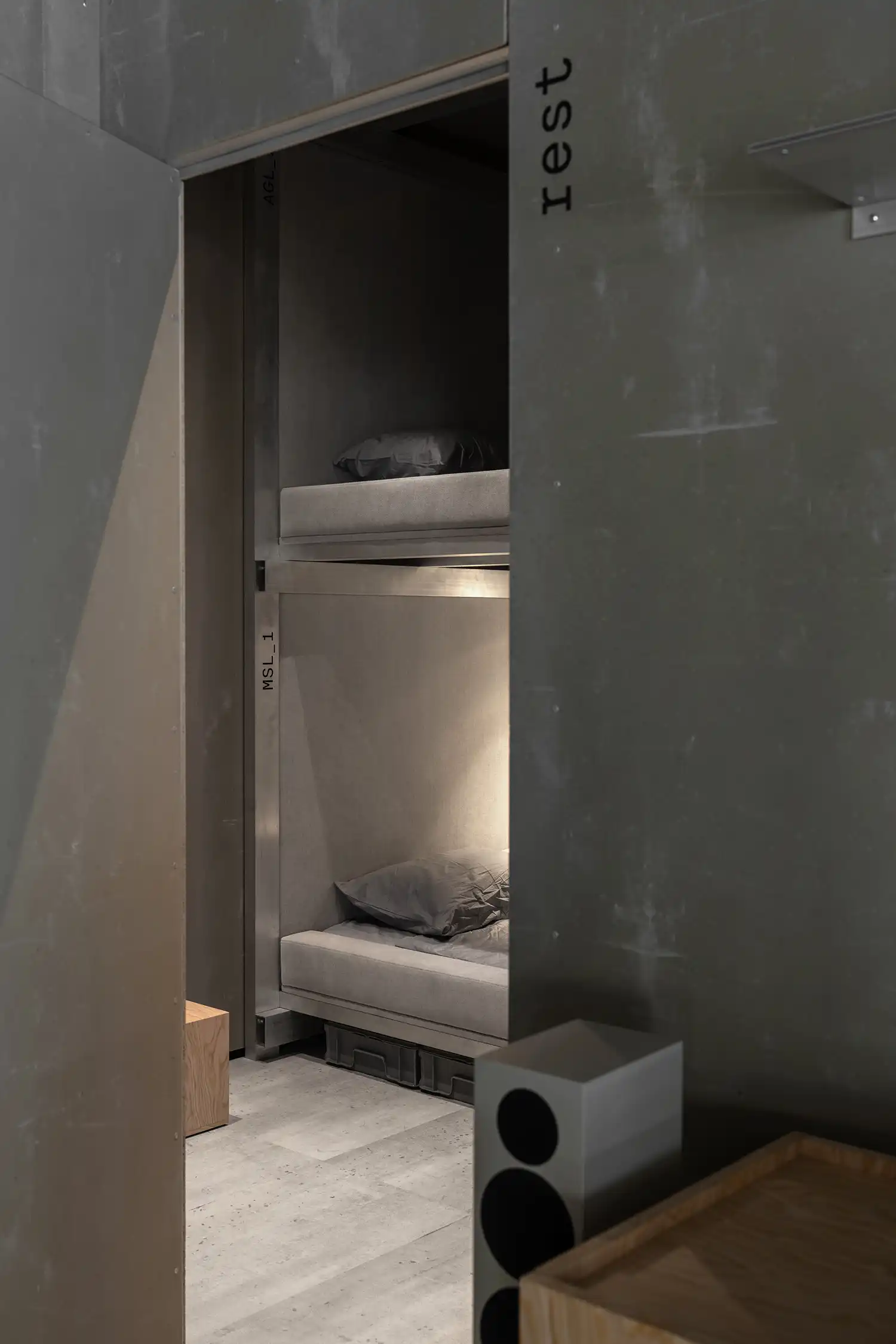
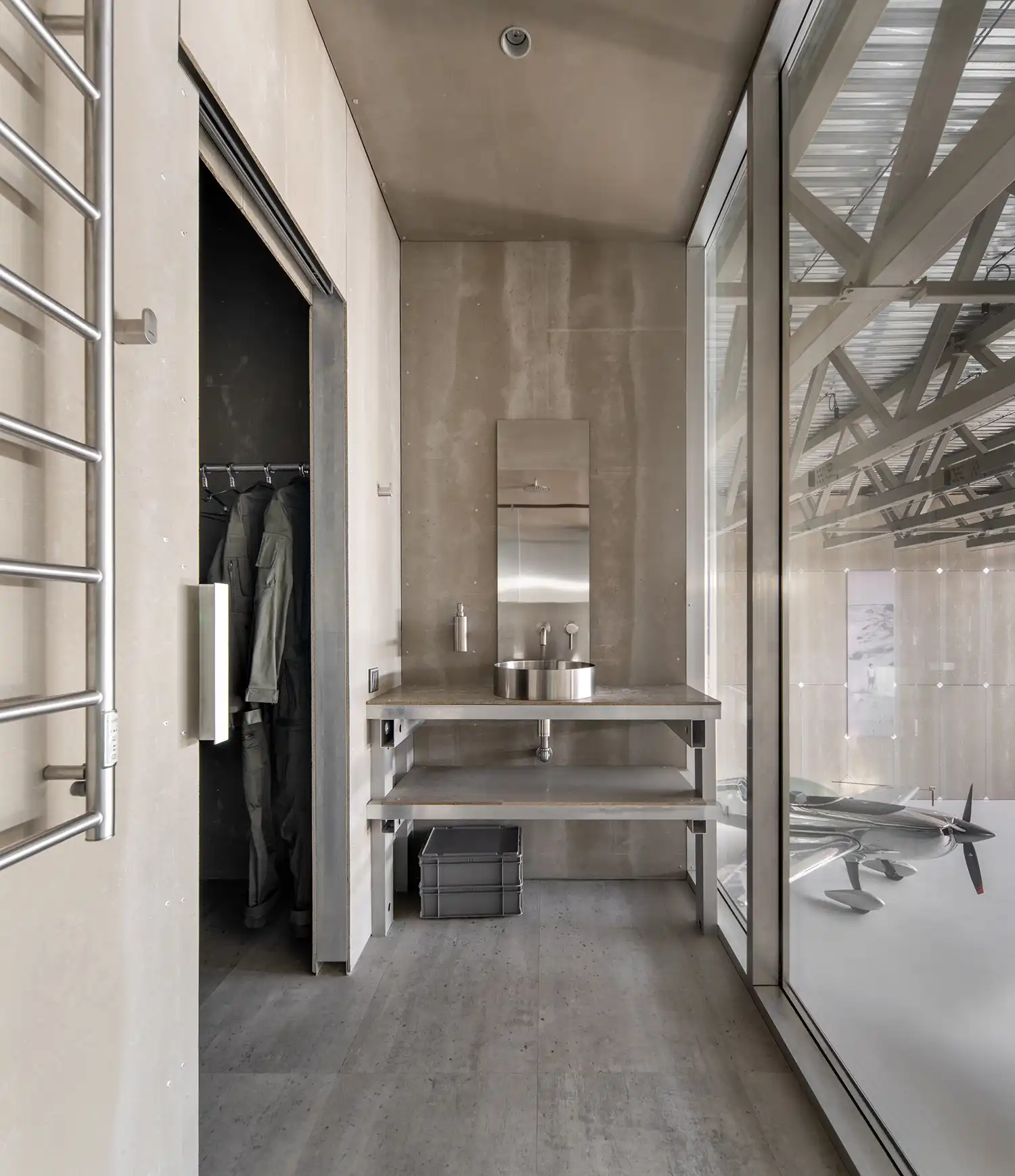
Acoustic and physical restoration were prioritized in the sleeping quarters. To mitigate the noise of a working hangar, the beds are enclosed with upholstered fabric panels that provide sound insulation and a sense of “mental reset”. This efficiency extends to the wet areas, where aluminum wall-profile offcuts were repurposed into benches and rails, and a transparent glass window connects the shower area back to the hangar—a bold design choice that maintains a constant visual link to the fleet.
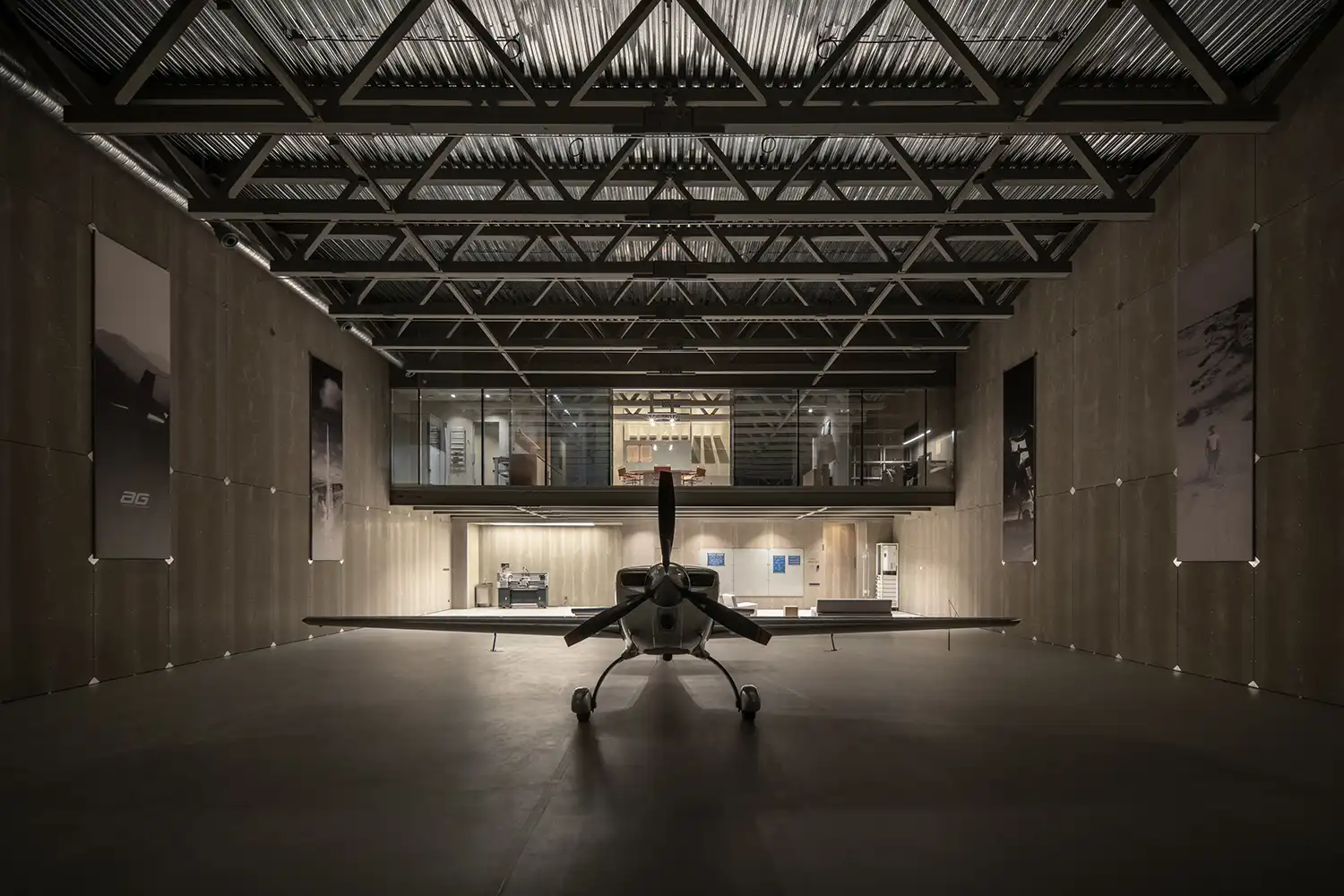
The technical choreography of light completes the space. Linear LED lighting is mounted along the steel framing, following the structural grid to provide uniform, shadow-controlled illumination across the workshop. Meanwhile, spot lighting is used selectively to anchor the parked aircraft and work zones. By utilizing on-site fabricated luminaires and seamless polymer flooring, the AEROTIM Hangar achieves a rare cohesion—a site where the grit of maintenance and the clarity of flight exist in total alignment.