

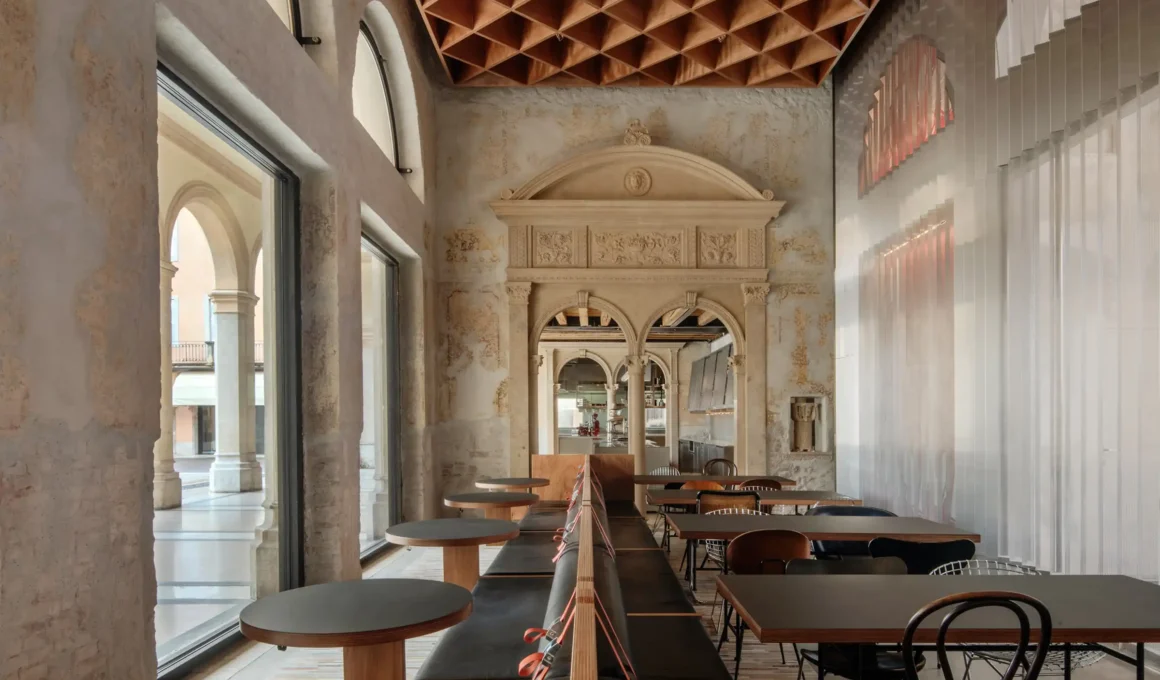
Venice-based studio AMAA has transformed the historic Caffè Nazionale in Arzignano, Italy, into a dynamic spatial narrative where past and present converse. This meticulous restoration project, embedded within Antonio Caregaro Negrin’s 19th-century Palazzo Municipale colonnade, reimagines the café as a “living palimpsest.” By stripping away decades of incongruous additions, architects Marcello Galiotto and Alessandra Rampazzo uncovered authentic traces of history, weaving them into a contemporary social hub that embraces public space and urban memory.
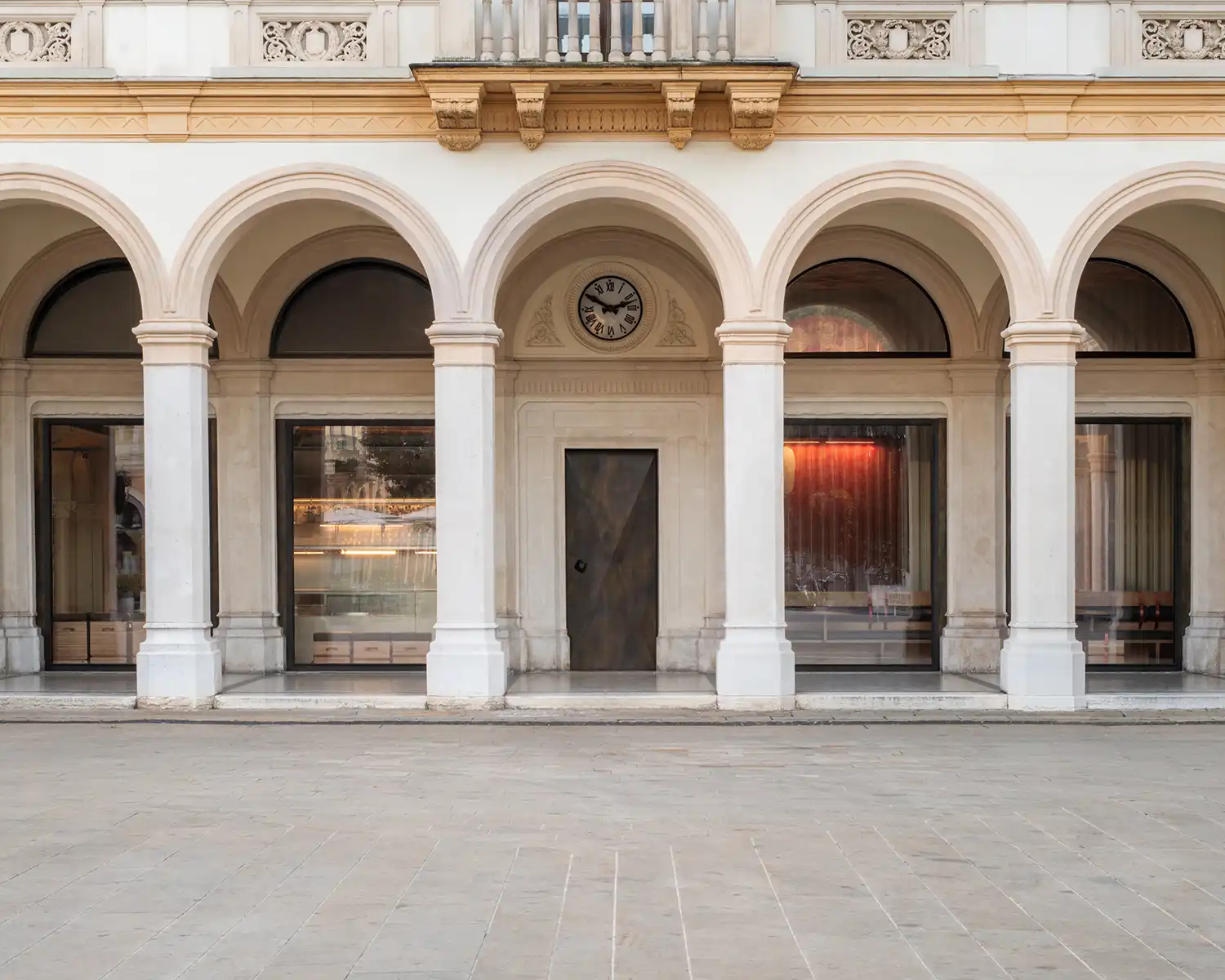
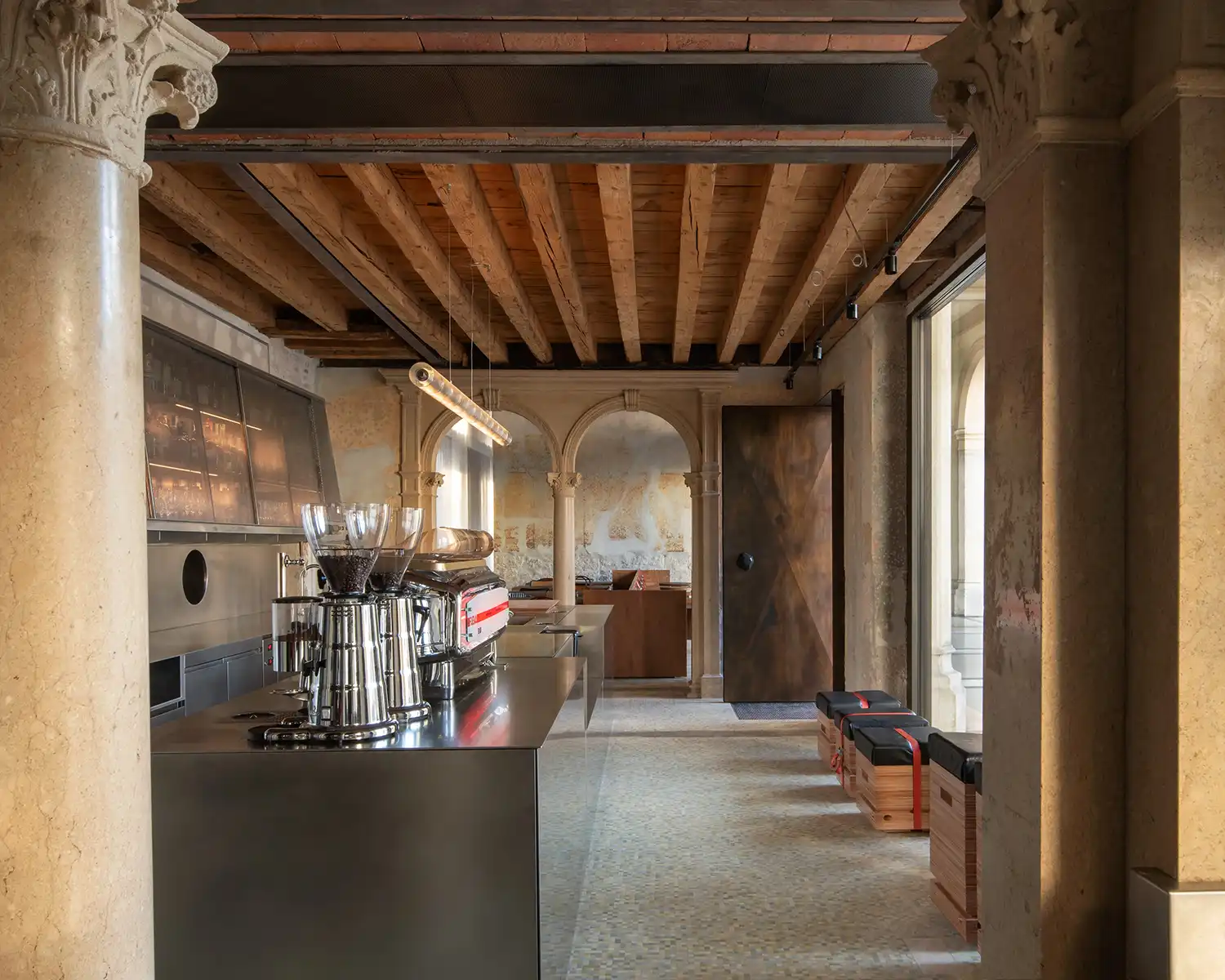
The design orchestrates a seamless flow from Arzignano’s Piazza Libertà through the colonnade into the café’s heart. A burnished iron entrance door—featuring a diamond pattern and a handle carved from Valmalenco green serpentine marble by artist Nero/Alessandro Neretti—anchors the façade as its only opaque element.
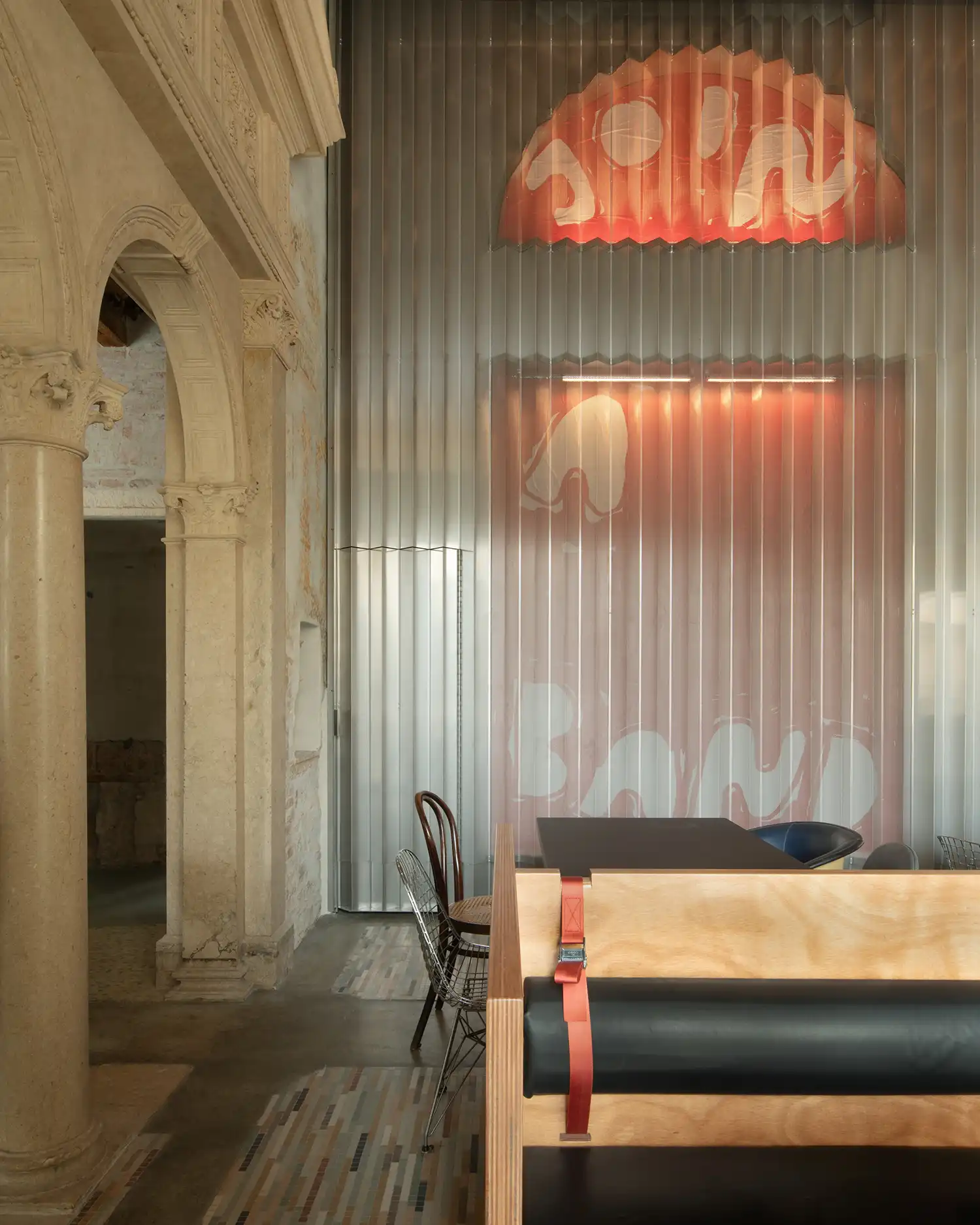
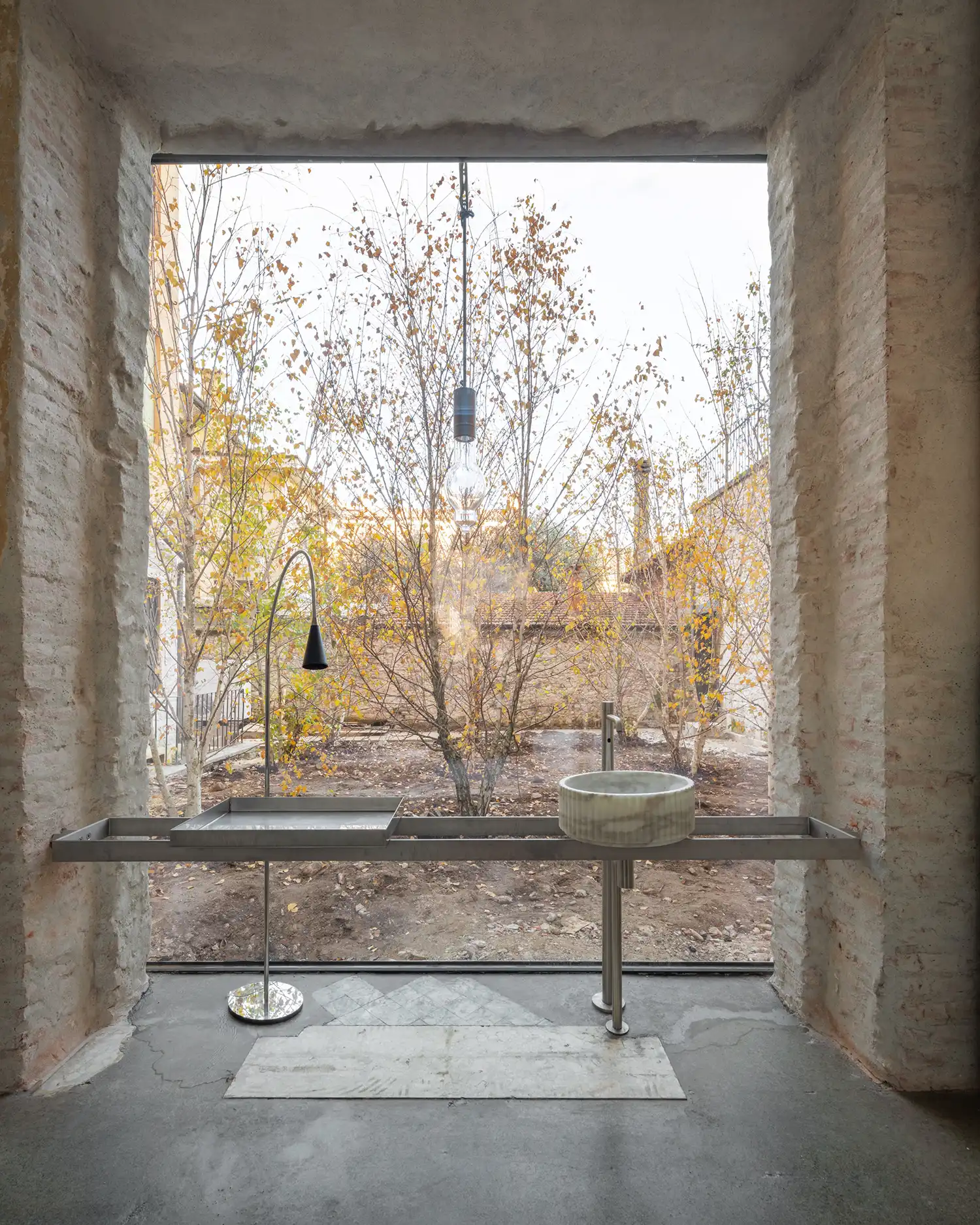
Inside, AMAA employs theatrical backdrops to heighten transitions: a pleated stainless steel wall, perforated like a curtain, reveals glimpses of grand arches and hosts illuminated posters by Stefan Marx, evoking Belle Époque vibrancy. Beyond it, a birch-tree courtyard blurs boundaries between physical and metaphysical realms.
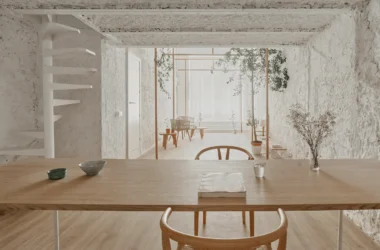
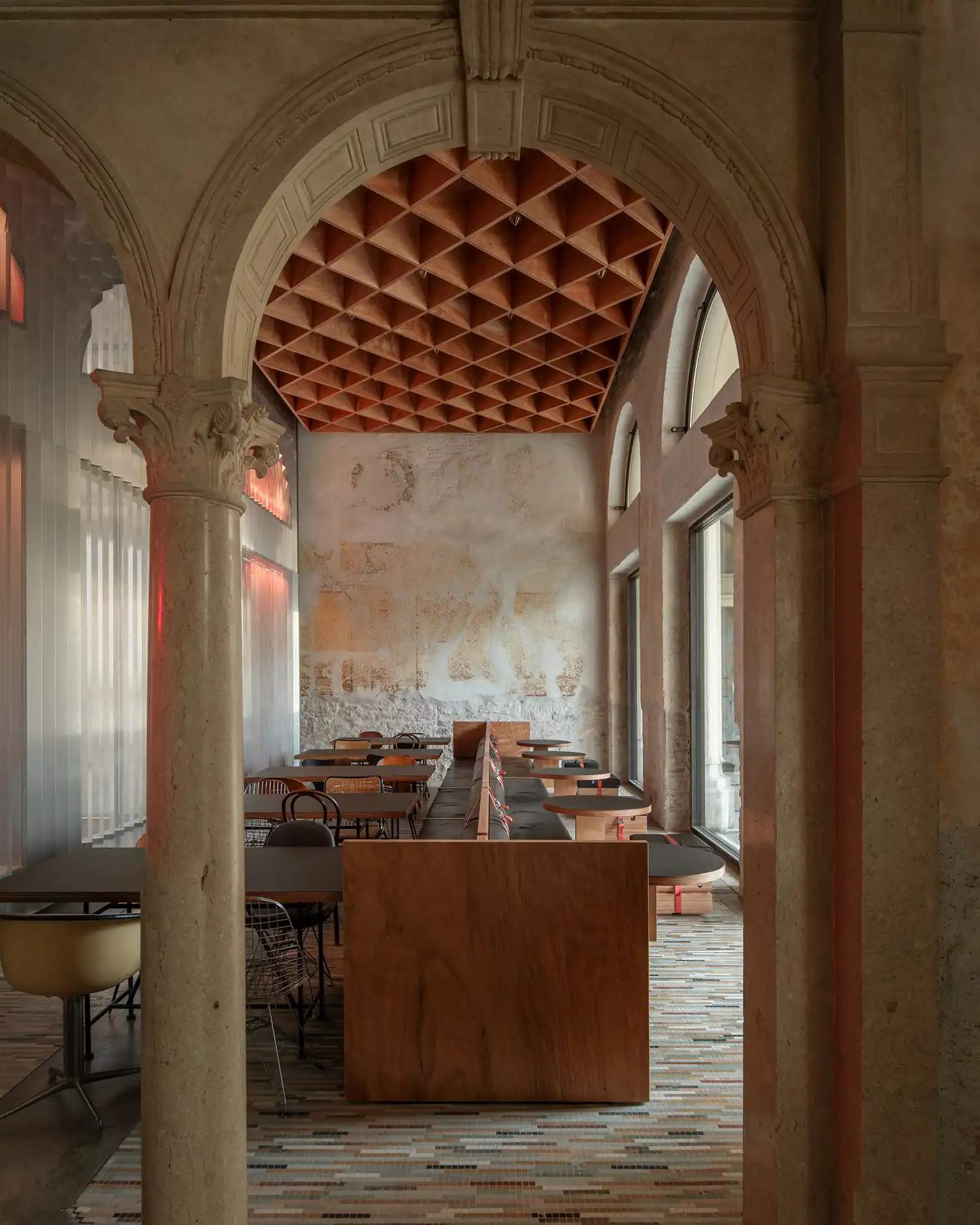
Material contrasts define the interiors. A recovered polychrome mosaic floor dialogues with an imposing goffered ceiling in layered wood, addressing acoustics while referencing historical craft. Custom-designed furniture—oak plywood tables and benches inspired by Donald Judd and New York subway seating—extends from the main hall to outdoor areas. Rectangular tables cluster in dining zones, while smaller rounds near the square encourage casual gatherings.
Crucially, AMAA celebrates the unfinished aesthetic, leaving structural fragments exposed to honor the building’s evolution. Collaborations amplify the project’s narrative depth. Beyond Nero and Marx, Studio MUT shaped the visual identity, while Ottavia Mettifogo curated the dress code.
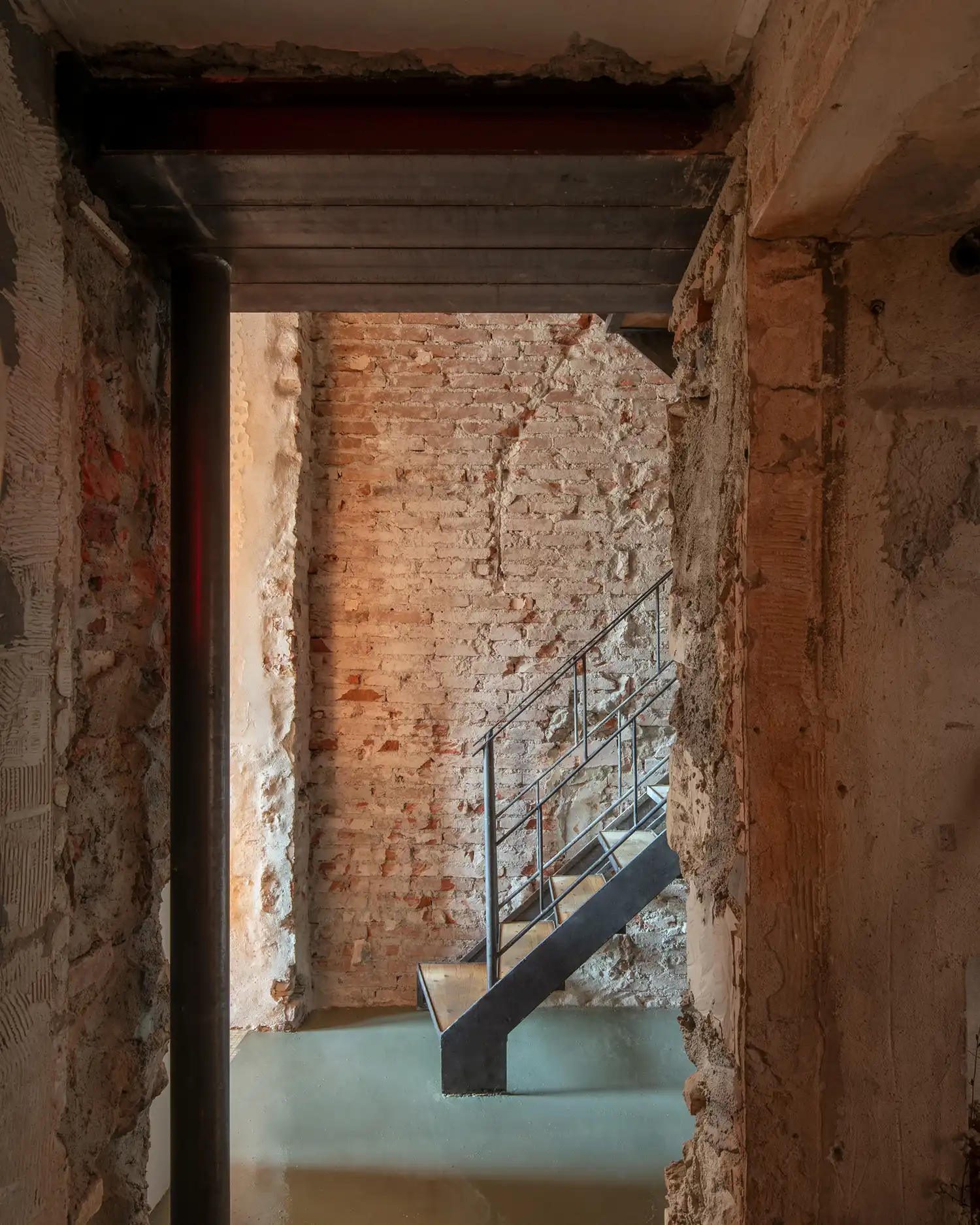
The 18-month process, costing 1.6 million euros, prioritized “honest” materiality—weathered surfaces and visible construction techniques embody AMAA’s research into temporality and architectural memory. As the architects state: “The project engages with layers of meaning as textured as the memory of the place itself.”
This intervention reinforces AMAA’s growing stature. Recently featured in AMAG magazine and lauded at the Venice Architecture Biennale, the studio will teach at the University of Pennsylvania in 2025. Caffè Nazionale stands as a testament to their philosophy: architecture as an open, evolving dialogue between history, community, and innovative spatial storytelling.