




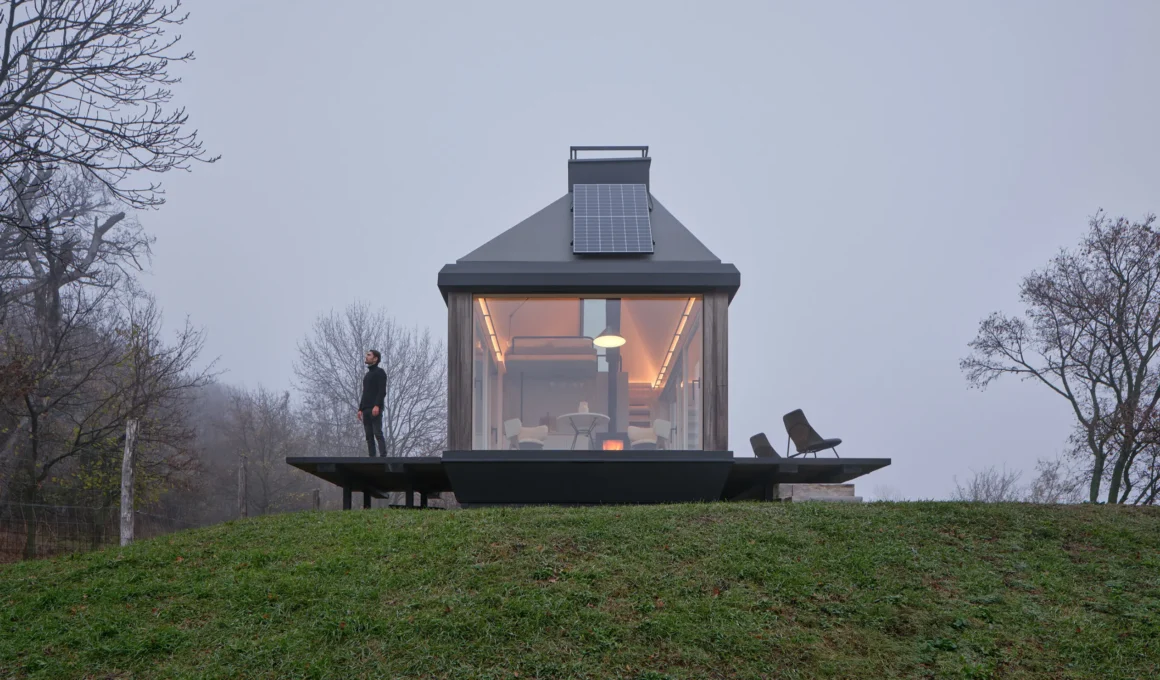
Perched on the edge of the Zlatý Roh vineyards in Bratislava, Slovakia, Ark-Shelter and Archekta have realized Cabin Devín, a 20-square-meter off-grid retreat that dissolves the boundaries between its minimal interior and the expansive horizon of the Austrian Alps.
A vision of compressed expansion. The project challenges the conventional limitations of a small footprint by treating the landscape as its primary living room. Positioned above the historic Devín Castle, the structure does not merely sit on the land; it observes it. The conceptual core lies in the ability to transition from a secure, weathered volume to a radical openness. By utilizing two fold-down terraces, the architects effectively double the usable floor area, turning a compact shelter into a panoramic stage where the daily rituals of the inhabitants are framed by the shifting light over the vineyards.
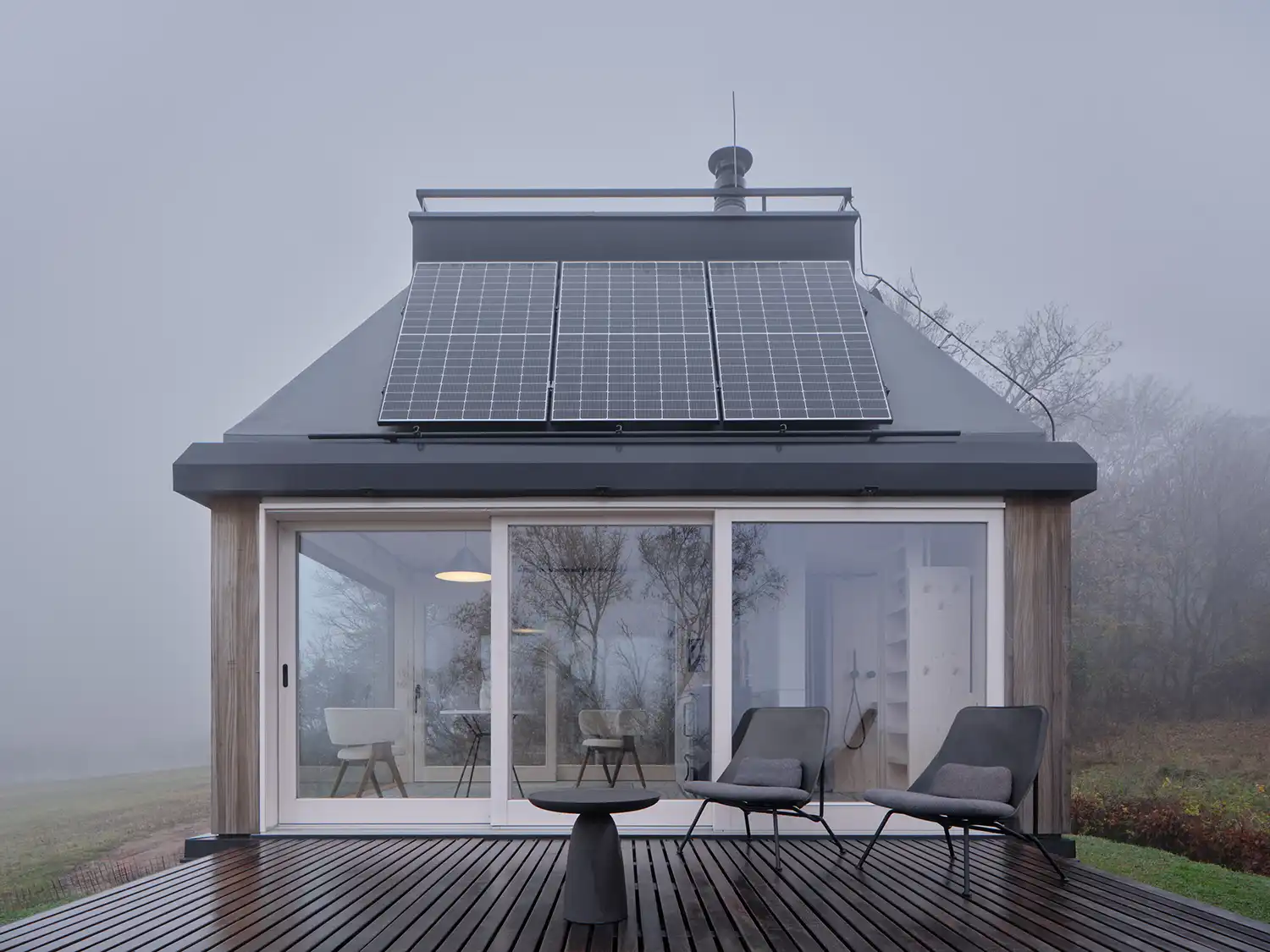
The fluidity of the threshold. Inside, the experience is dictated by the sliding glass walls that replace traditional solid boundaries. The sensory quality of the space is defined by this transparency—the smell of the vines and the cool breeze from the slopes become integral components of the interior climate. The layout is a study in functional minimalism, where every square centimeter is tasked with multiple roles. The transition between the exterior deck and the internal living zone is seamless, ensuring that even within a restricted volume, the occupant never feels confined.
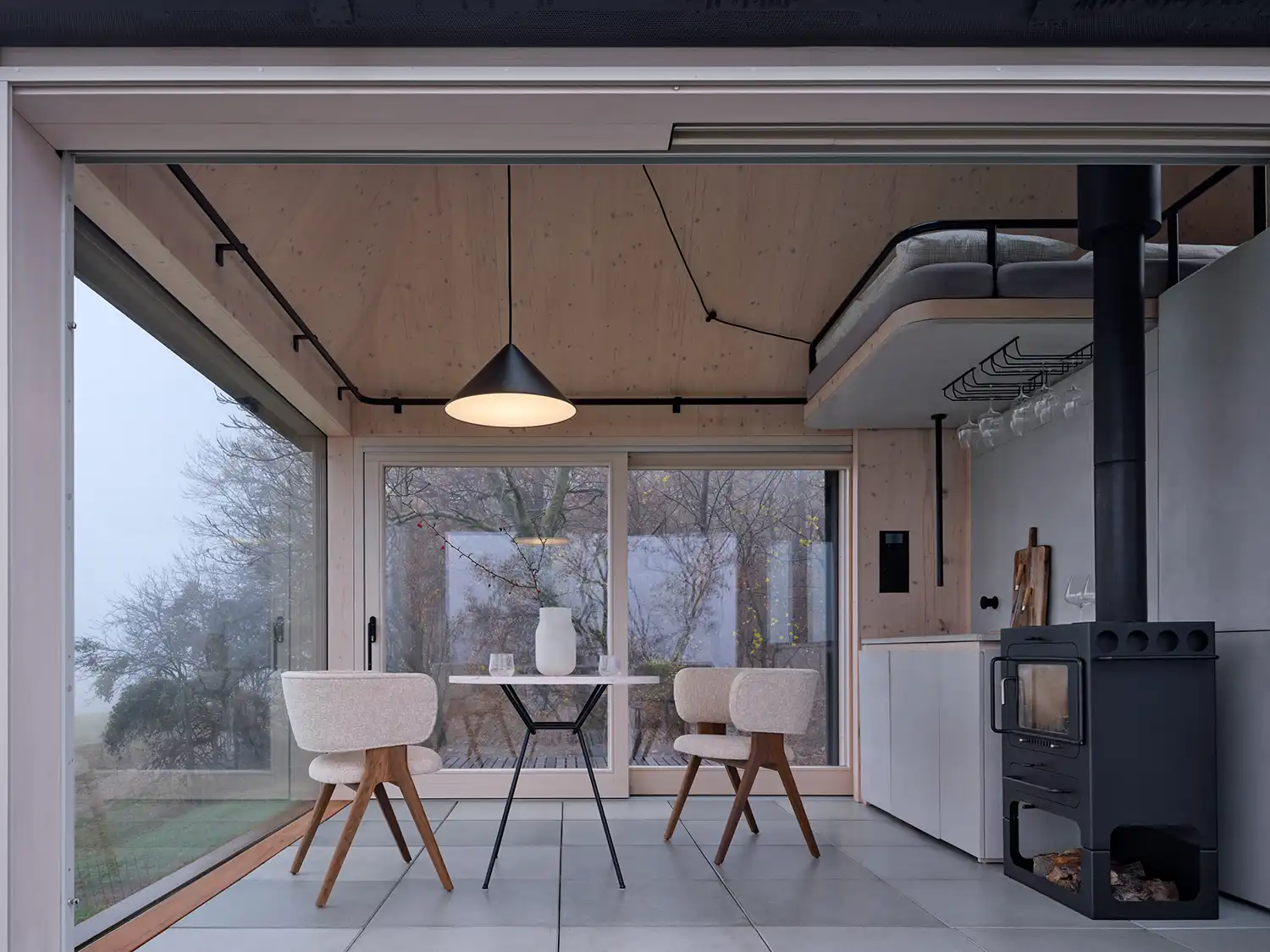
Intimacy and the vertical shift. As the sun sets over the Austrian border, the cabin’s atmosphere undergoes a calibrated transformation. Behind the open living area, a compact kitchenette and a bathroom provide the essential comforts of a permanent dwelling. A bespoke concrete sink is positioned intentionally within a window frame, forcing a connection with the adjacent forest during the morning routine. To maintain the purity of the lower level, the sleeping area is tucked into a discreet loft. Accessed by a retractable ladder hidden within the cabinetry, this upper volume trades glass walls for a solid, protective envelope, leaving only a skylight for a direct connection to the night sky.
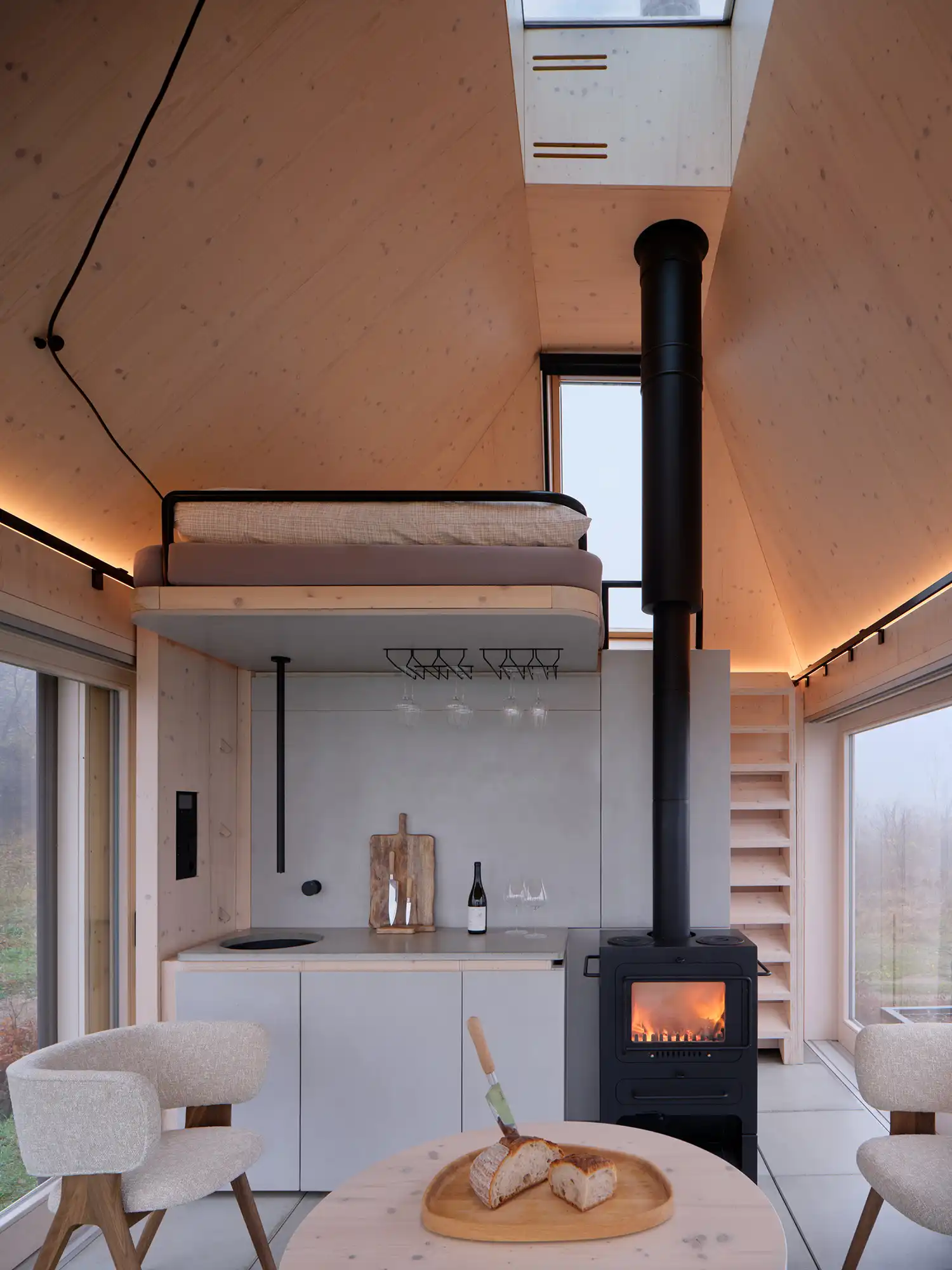
Technological independence in the wild. Achieving year-round comfort in the Slovakian climate without connection to the grid required a sophisticated modular construction strategy. The cabin operates as a self-sustaining organism, powered by a hybrid system of photovoltaic panels and battery storage. To ensure reliability during the colder months, the energy management system automatically toggles between electricity and gas, prioritizing life-support functions like heating and cooling. This high-tech autonomy allows for a profound sense of detachment, proving that sustainable living does not require a sacrifice of modern convenience.
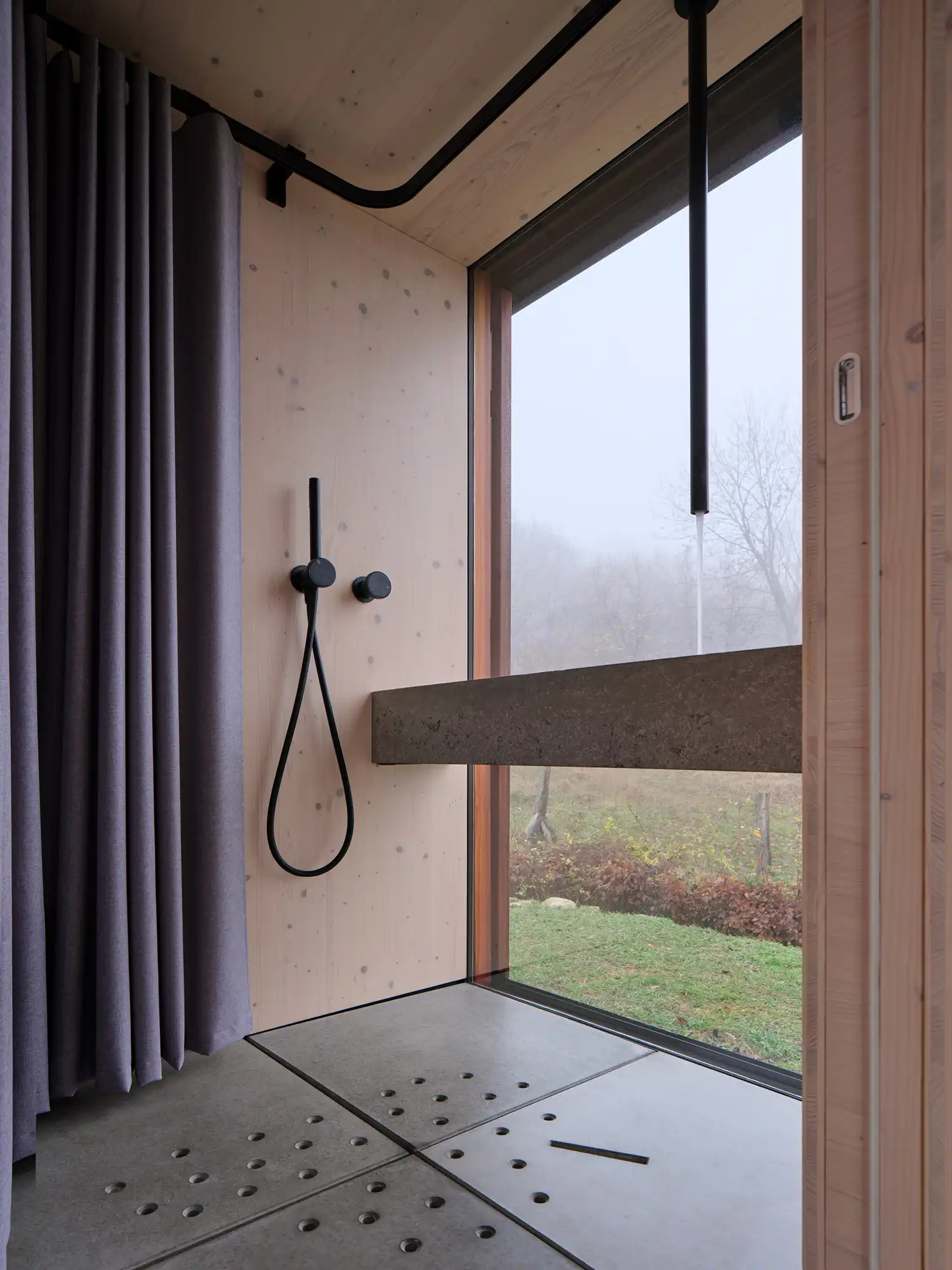
Thermal intelligence and airflow. Beyond power, the cabin manages its internal environment through passive and active mechanical systems integrated into the raised floor. In the heat of summer, the structure breathes, drawing cooler air from the shaded northern underside and exhausting warmth through a heat recovery unit located at the highest point of the roof. This bi-directional ventilation, regulated by CO₂ and humidity sensors, ensures that the air quality remains optimal regardless of the external conditions. It is an architecture that thinks, constantly adjusting its “skin” to protect the inhabitant.
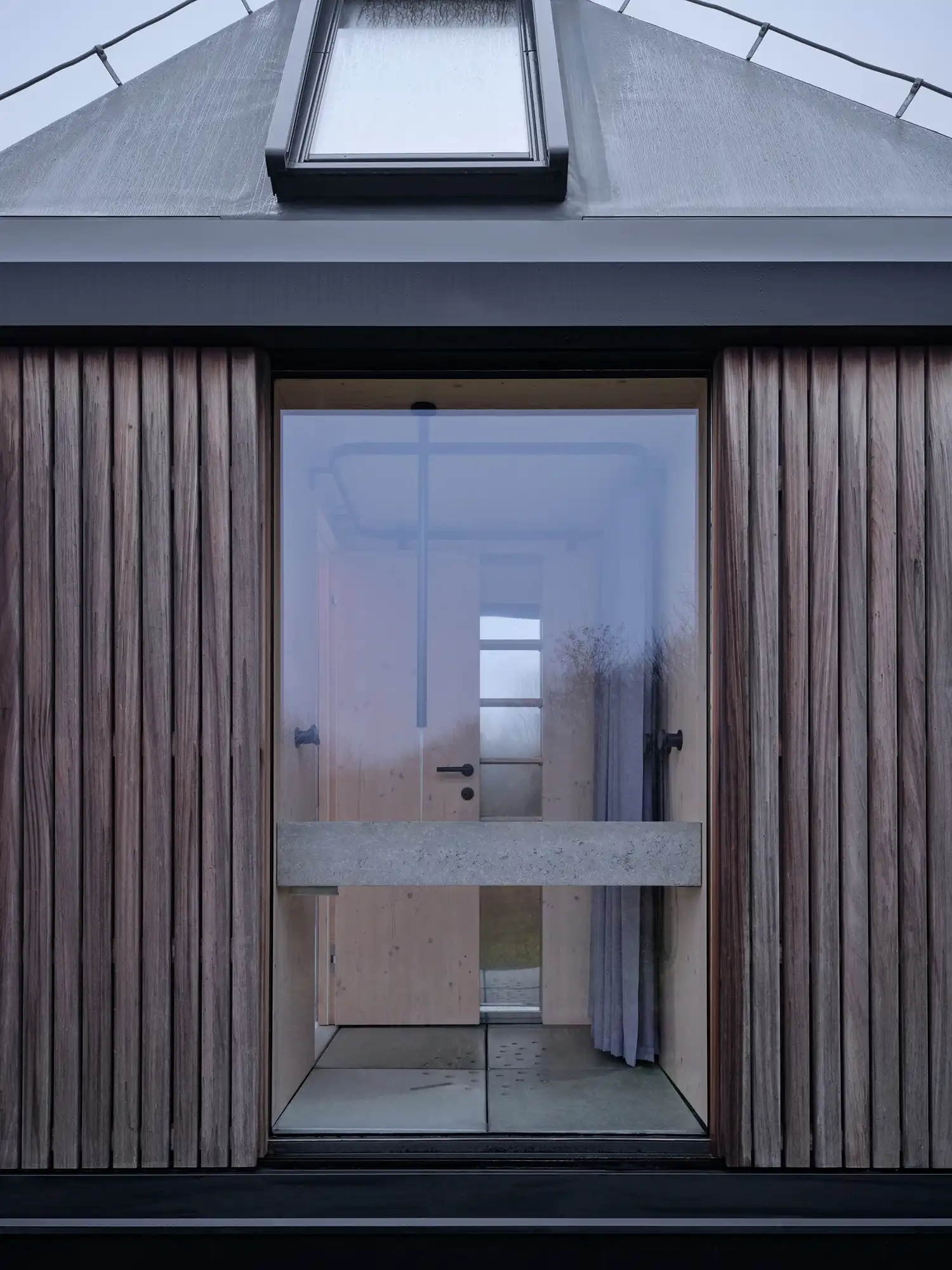
A narrative of spatial intensity. What Ark-Shelter and Archekta have created is not just a building, but a tool for experiencing the environment. The project sits at the intersection of high-performance engineering and poetic restraint. It serves as a compelling entry in the evolving dialogue of contemporary off-grid cabins that prioritize the quality of the view over the quantity of the square footage. By stripping away the excess of traditional housing, the design team has amplified the essential—the horizon, the weather, and the quiet.
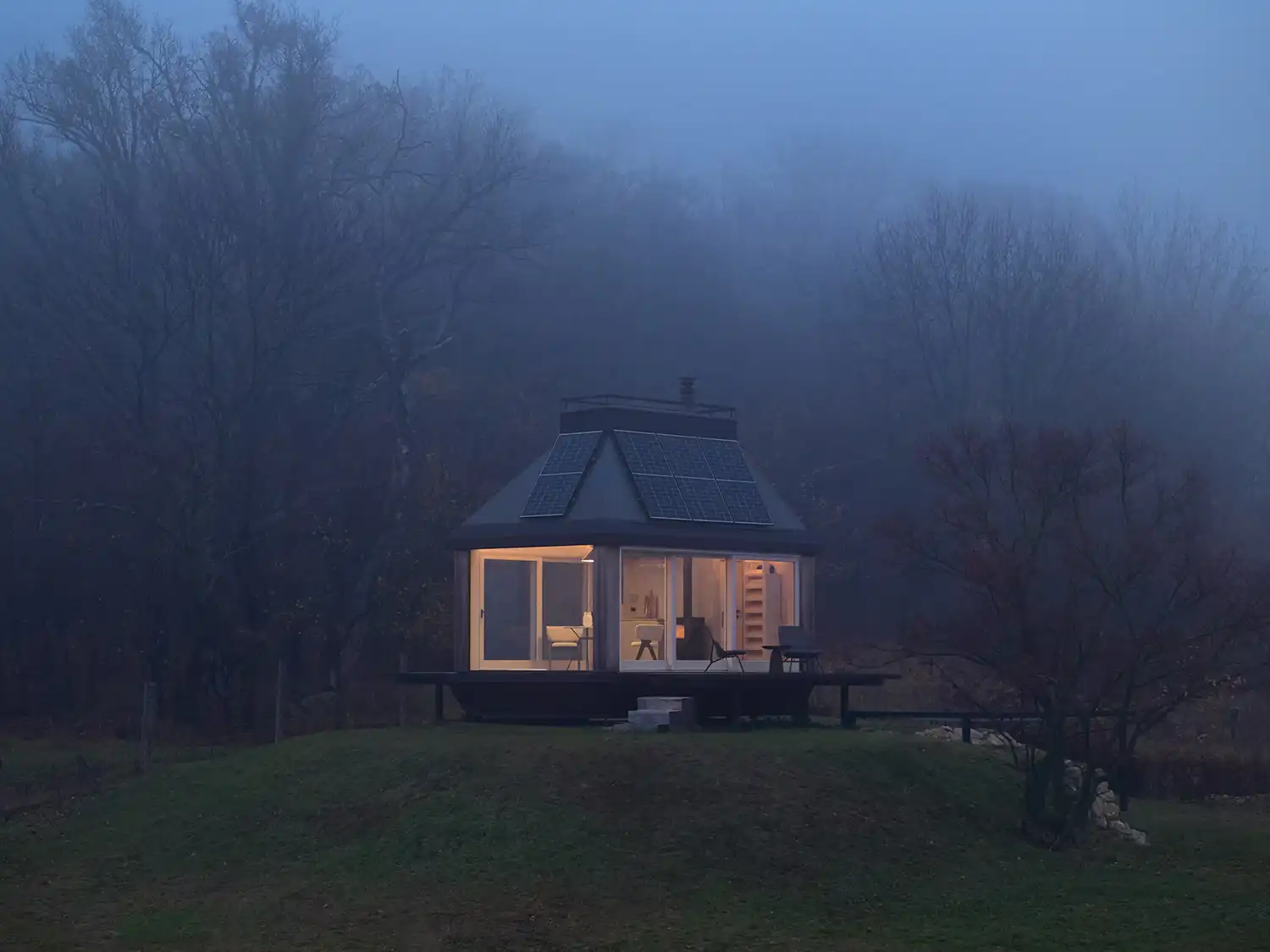
The weight of the landscape. The cabin represents a sophisticated response to the modern desire for disconnection. It functions as a vessel for slow living, where the technical complexity of the off-grid systems remains invisible, leaving the user to focus entirely on the sensory experience of the site. From the tactile cold of the concrete sink to the expansive warmth of the vineyard sun, the project demonstrates that a truly thoughtful dwelling is measured not by its dimensions, but by the depth of the connection it fosters with its surroundings.