

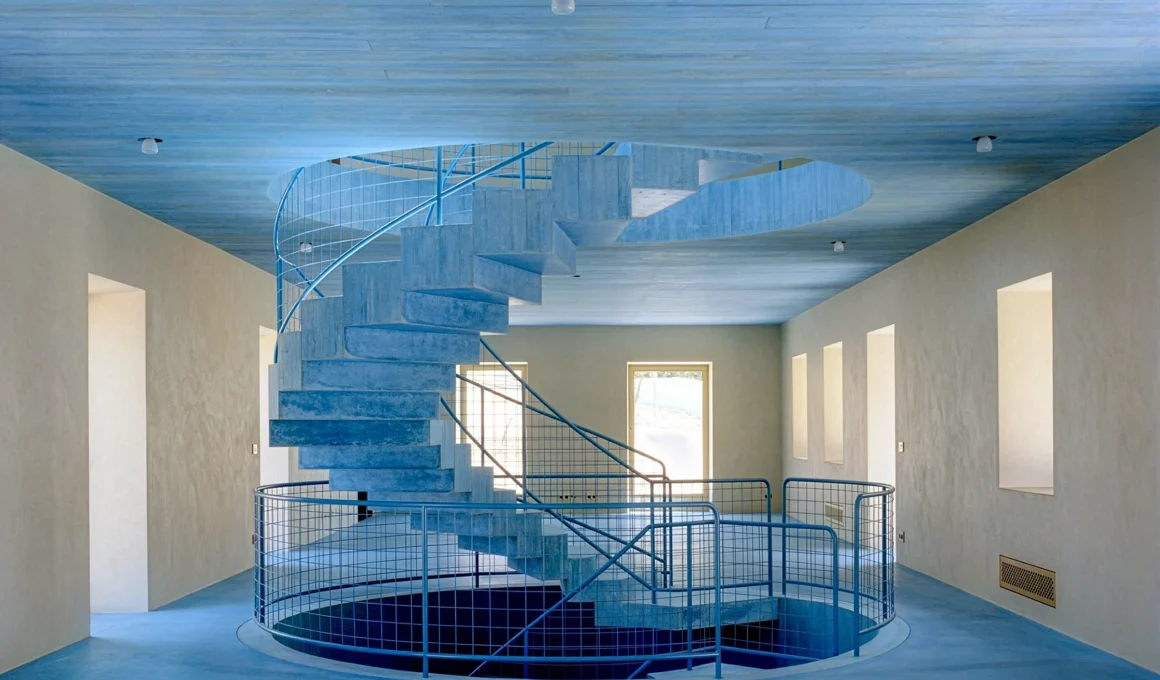
Nestled within the romantic, forested hills of Sintra, Portugal, a remarkable architectural transformation is unfolding. The House II in a Quinta de Recreio represents the latest chapter in a long-term revitalisation project for a long-abandoned agricultural estate. Led by the visionary Barcelona-based studio Arquitectura-G, this intervention is part of a sequenced masterplan dedicated to conservation and rehabilitation, aiming to restore vitality to the entire quinta and its vineyards, envisioning a self-sufficient territory guided by the principles of permaculture.
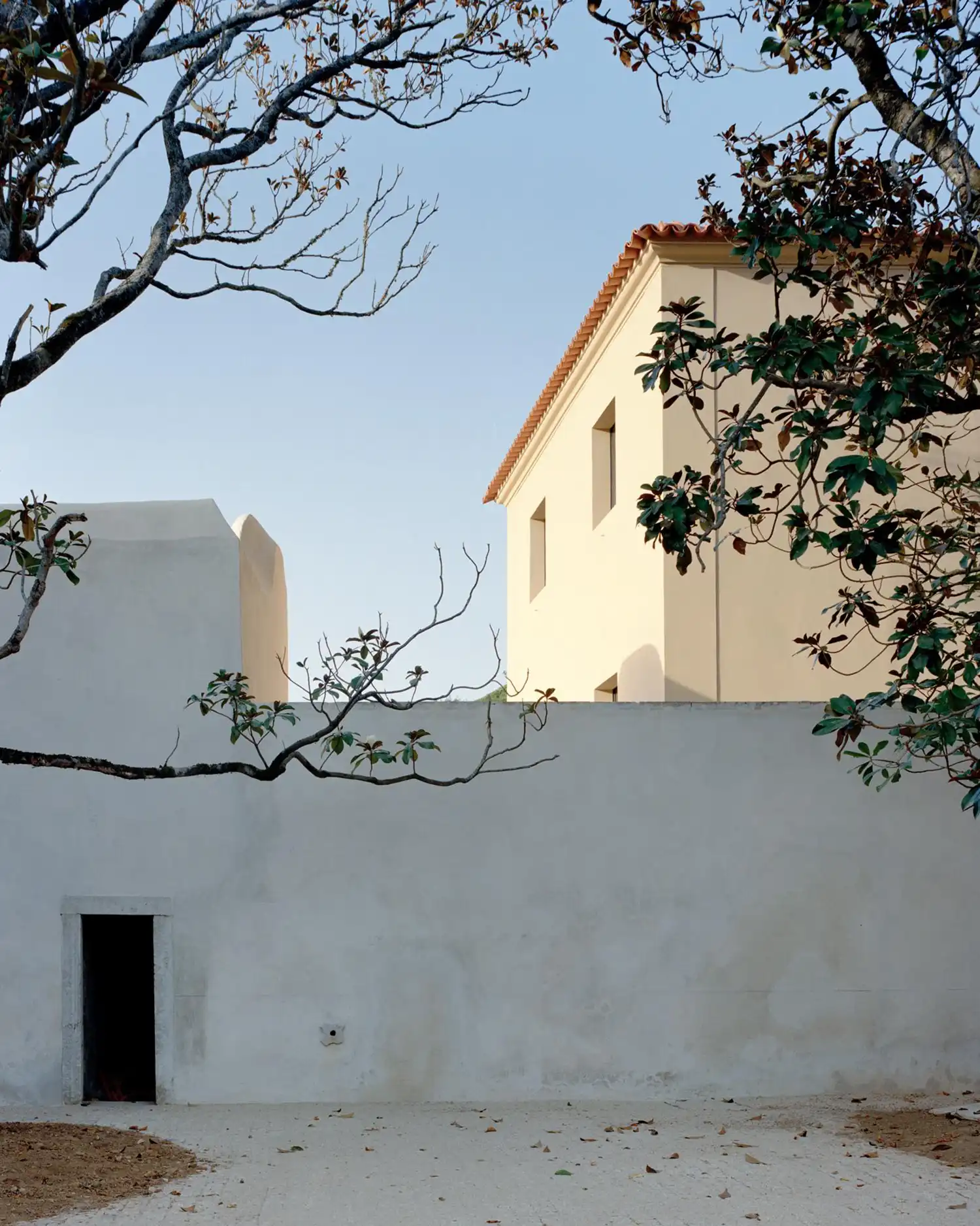
The building’s history is deeply etched into its fabric. Originally, it served a dual purpose, housing a wine cellar for storing casks and bottles alongside the living quarters for the estate’s workers and servants. Its existing volume was a complex arrangement of segmented parts, divided and interconnected by multiple staircases. In a thoughtful approach to architectural preservation, the project retains this original mixed program, reinterpreting it for a new era as a single, cohesive dwelling.
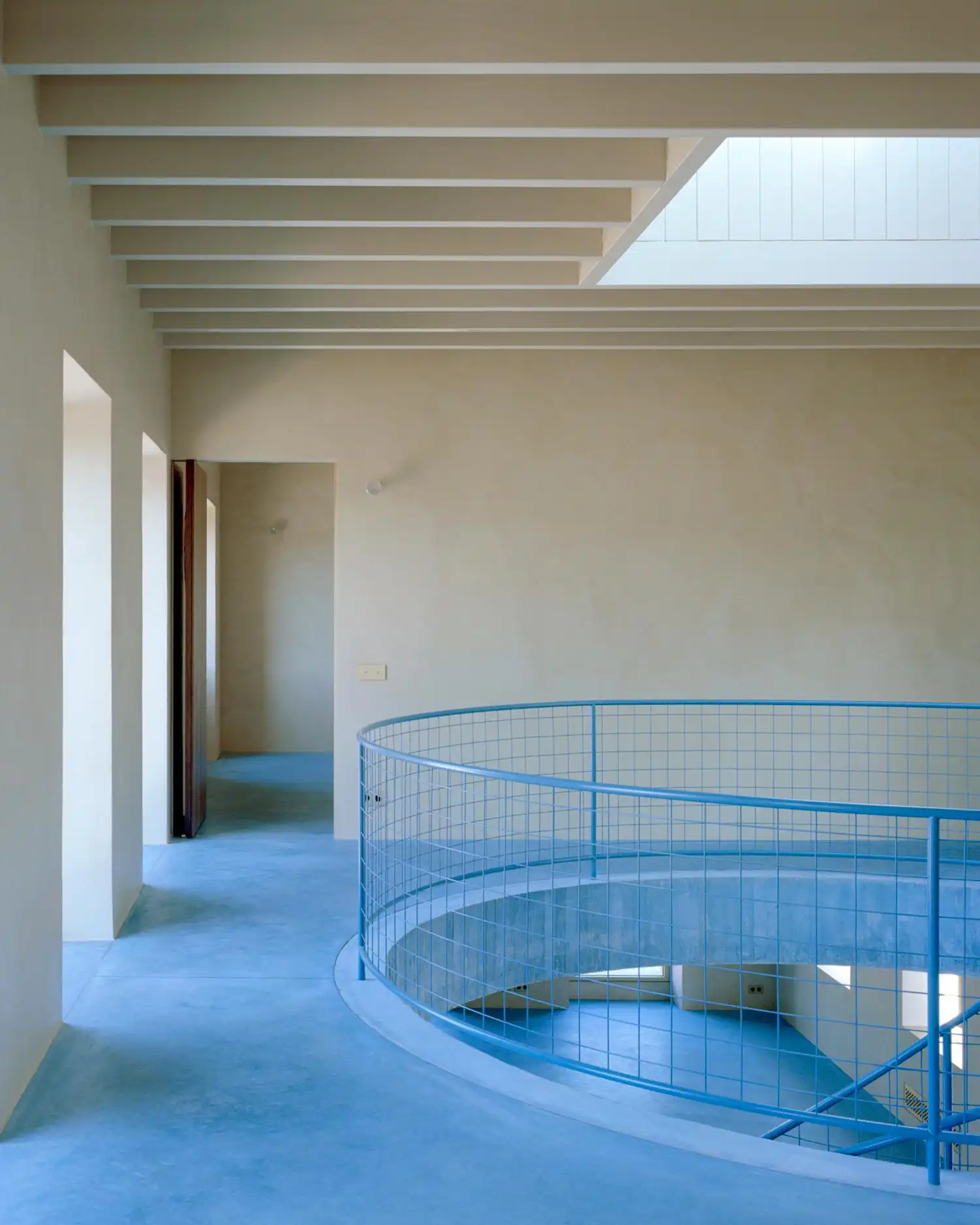
A significant constraint shaped the entire design process. Local building regulations prohibited alterations to the overall volume and restricted significant changes to the historic façades and roof. This challenge became the catalyst for a bold and ingenious solution. The architects completely emptied the preexisting structure, leaving only the perimeter walls standing, and embedded a new body of blue-pigmented concrete within this historical shell.
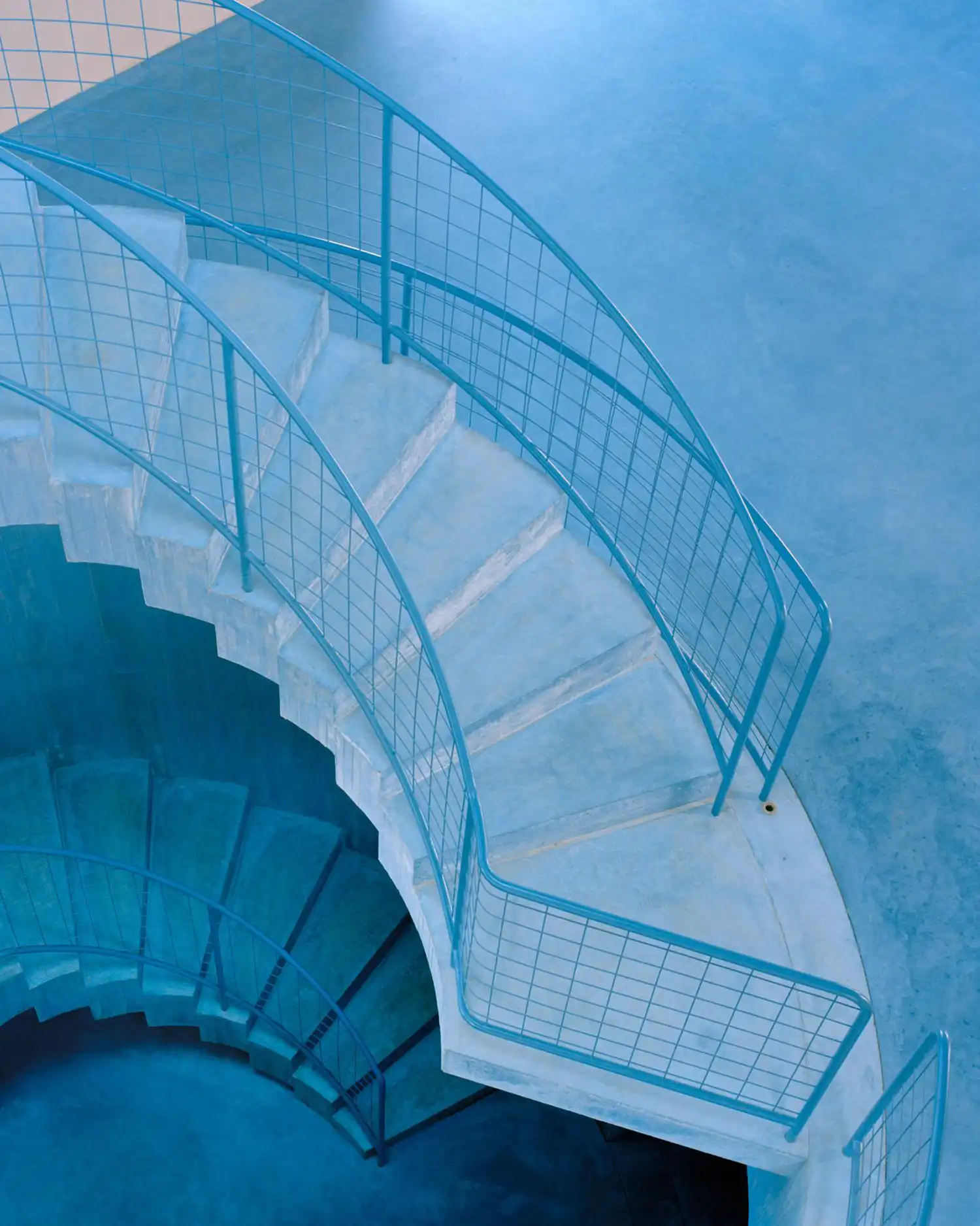
This striking new internal structure acts as the home’s spine and circulatory system. It rises dynamically from the basement—where the new wine cellar is located—and ascends via a dramatic helical staircase. This concrete form extends to create the floor slabs of the upper levels, culminating on the first floor beneath a large skylight that floods the central void with a cascade of natural light, creating a luminous heart for the home.
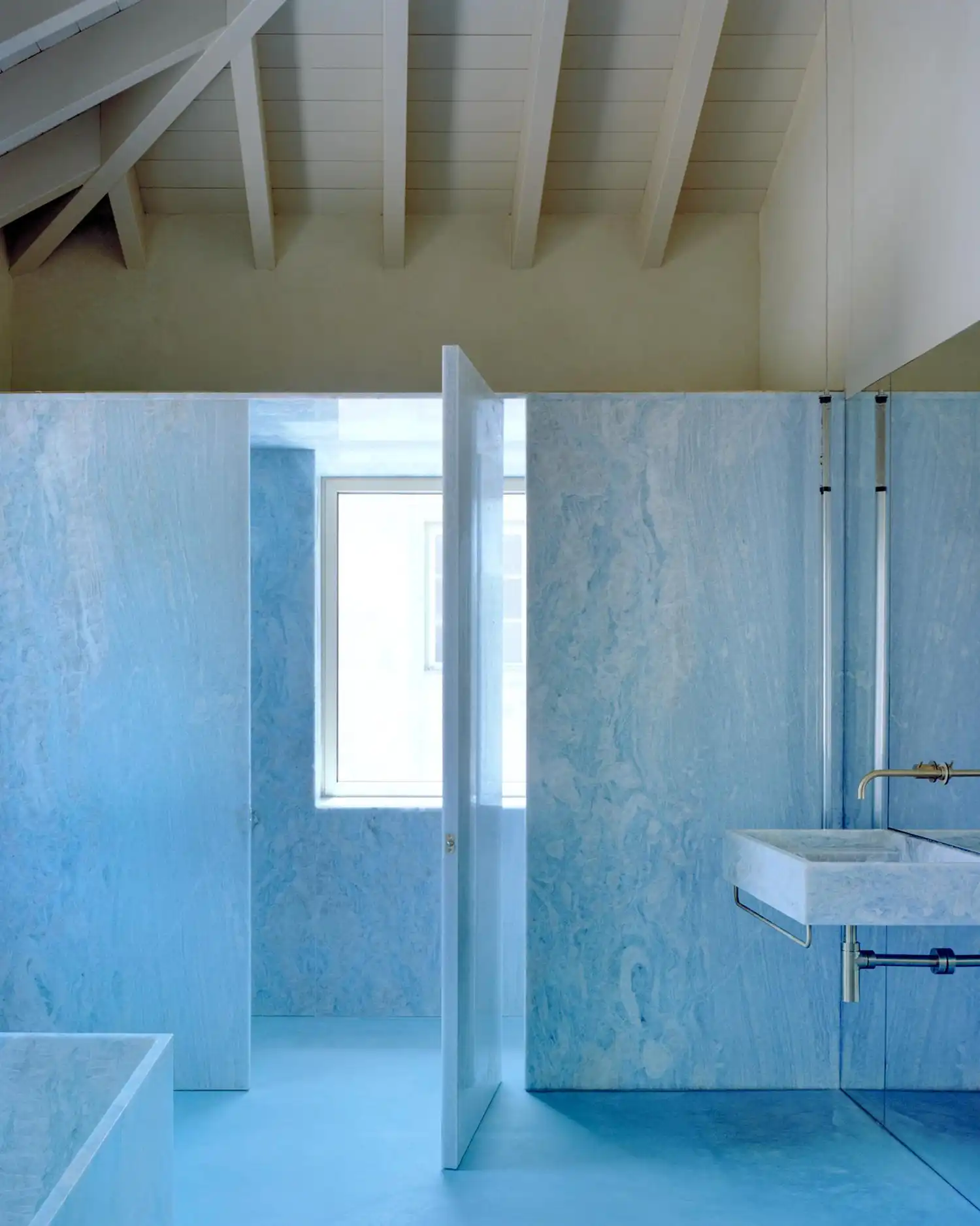
The interior design is fundamentally reconfigured by this bold intervention, which organizes the overall functioning of the house. The ground floor is conceived as a fluid, open-plan area that seamlessly integrates the kitchen, dining room, and main living room. These spaces are thoughtfully arranged around the central staircase, promoting a sense of connection and continuity while allowing for both intimate moments and larger gatherings.
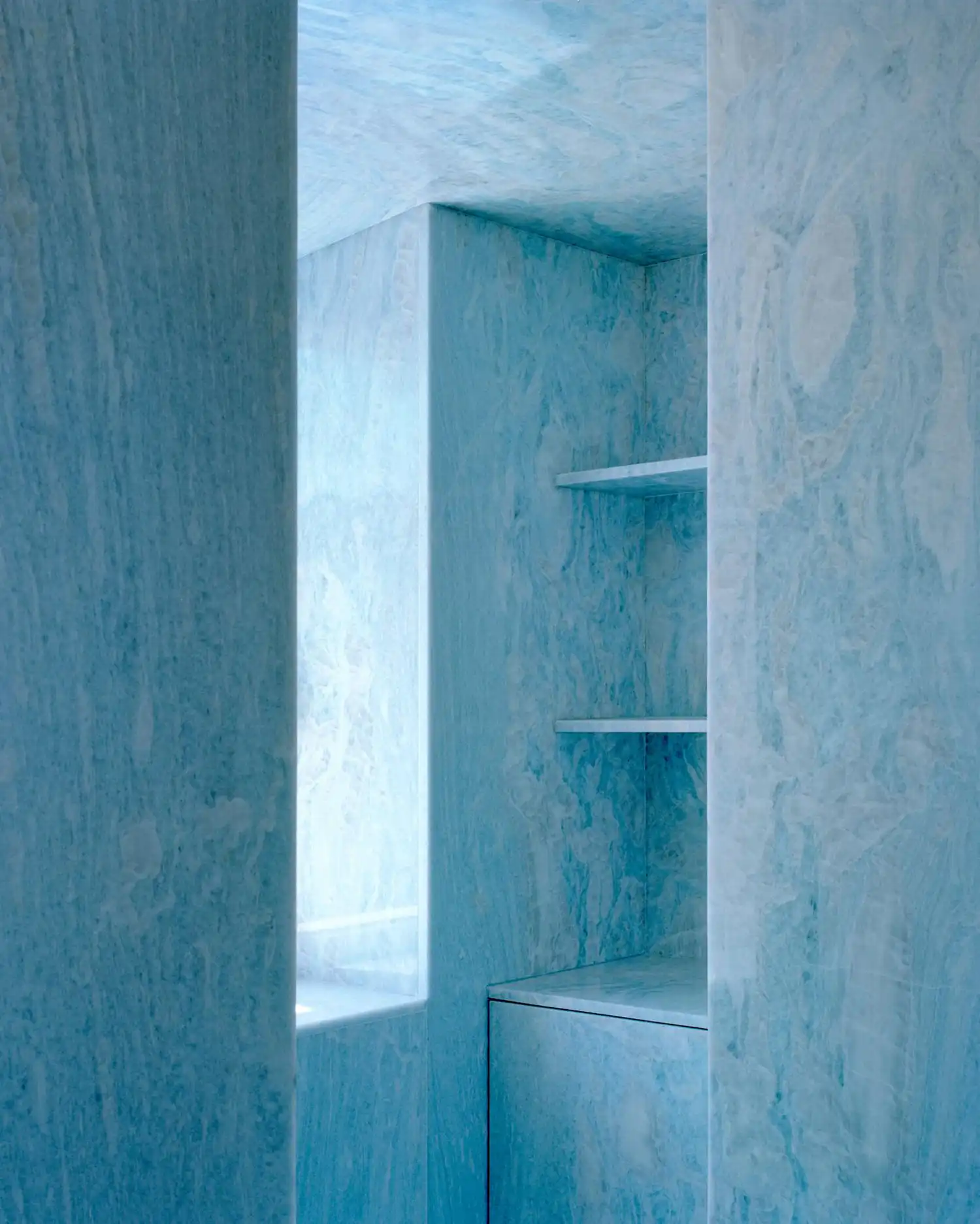
Ascending to the upper floor, the layout becomes more private. Bedrooms are situated at both ends of the plan, ensuring tranquility. A secondary lounge occupies the prime position directly beneath the skylight, bathed in the ever-changing quality of daylight from above. Through this sophisticated spatial reconfiguration, Arquitectura-G has masterfully woven a narrative of old and new, creating a contemporary intervention that respects its heritage while boldly asserting its own timeless identity.