


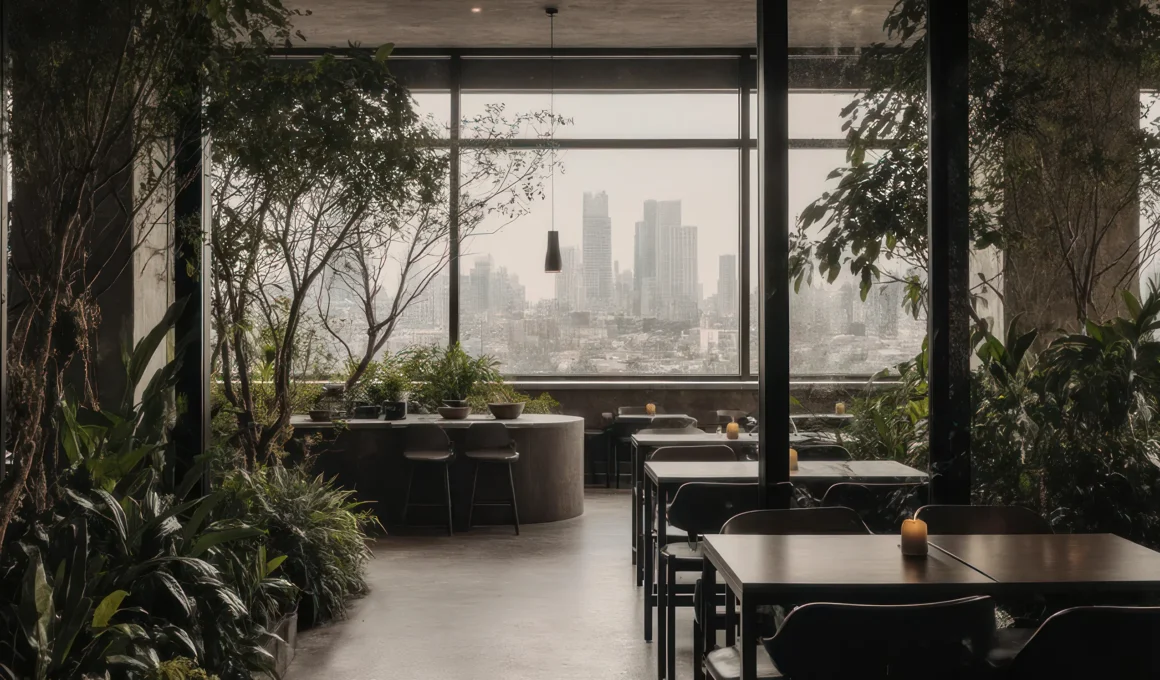
Contemporary restaurant and café design frequently draws from the proven benefits of biophilic elements—design features that connect people with nature.
The mere sight of greenery, whether real or faux, evokes feelings of relaxation, comfort, and a brief escape from the external hustle. In dining settings, this psychological effect encourages guests to settle in, linger, and savor their experience.
However, maintaining live plants in busy hospitality environments poses real challenges: fluctuating lighting,temperature changes, and high traffic all hinder dependable plant health.
Artificial trees have emerged as a practical answer, allowing hospitality spaces to replicate the calming look and mood of nature with far less ongoing maintenance. These trees create gentle spatial divisions without blocking light or lines of sight, encouraging guests to move naturally and select seats that feel both welcoming and subtly private. The sense of comfort they inspire can play a key role in guests’ decisions to return.
Zoning, Intimacy And Acoustic Comfort
Hospitality designers face a constant balancing act: how to create inviting, open layouts that still offer nooks of privacy and quiet. Too many physical partitions can close off a space, while unrestricted openness may lead to excessive noise and a lack of intimacy.
Artificial trees are increasingly used as flexible, movable partitions that soften the line between open space and private enclosure. Placing trees between tables or along busy walkways ensures that diners can enjoy an element of seclusionwithout feeling isolated.
The foliage adds a visual rhythm and gently absorbs some sound, making conversation easier even in bustling rooms with hard floors and ceilings. Restaurant managers also appreciate the ease with which artificial trees can be rehoused or rearranged, enabling quick adaptations for events or new dining concepts.
By blurring boundaries and bringing softness to interior acoustics, artificial trees help create adaptable spaces that cater to solitary visitors, couples, and groups alike.
Aesthetic Cohesion, Branding And Atmosphere
Artificial trees not only serve a practical purpose; they are also powerful storytelling tools. A thoughtfully selected tree can reinforce the overarching theme of a venue, whether it’s a breezy coastal café or an urban retreat with industrial elements.
For example, a faux olive tree instantly conjures a Mediterranean vibe, while a tall, sculptural ficus can fit effortlessly into minimalist schemes.
Lighting designers often integrate spotlights or pendant fixtures among artificial canopies, producing dynamic play between light and shade and creating memorable highlights within the interior. This approach unifies furniture, textiles, and decorative details under a shared visual narrative.
The judicious placement of statement pieces—such as a tall tree by the entrance or a leafy focal point in the center of a dining area—can anchor the entire design. For venues seeking this kind of lasting visual impact and design flexibility, it is worth considering the diverse range of restaurant and café artificial trees now available from specialist suppliers that focus on hospitality needs.
Operational Benefits And Design Flexibility
For restaurant and café owners, the operational appeal of artificial trees is clear. Once installed, they require minimal attention—no watering, feeding, or pest control—and eliminate the risk of unsightly wilted foliage.
This dependability opens up new placement opportunities, such as in dim corners, under HVAC vents, or near kitchen areas where live plants would struggle.
Operators can also experiment with new layouts throughout the year, grouping trees for a snug winter experience or spacing them apart to evoke open, fresh energy in summer.
This adaptability helps venues respond swiftly to evolving guest preferences and event scheduling, making it easier to test concepts and refresh the ambience as needed. The result is a dynamic, welcoming environment that prioritizes guest comfort while reducing ongoing upkeep, allowing restaurants and cafés to focus energy where it matters most: hospitality and experience.