

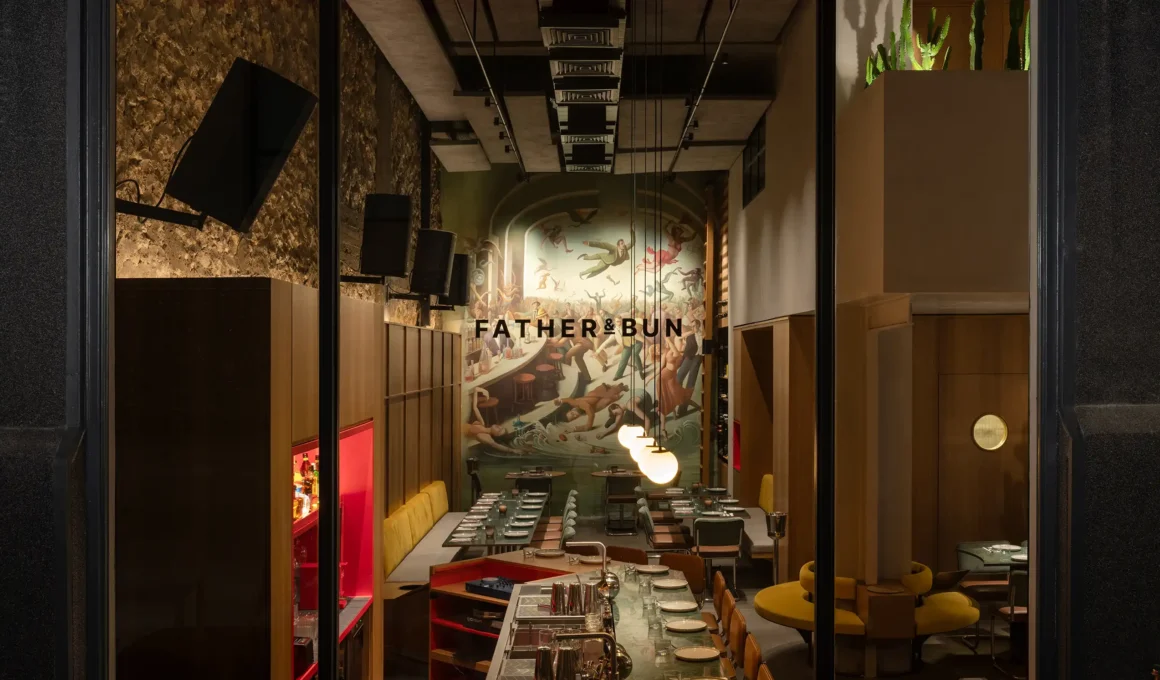
In the evolving culinary landscape of Beirut, where history often serves as a silent protagonist, Father & Bun emerges as a masterclass in atmospheric storytelling. Designed by Atelier130 in collaboration with creative director Mo Al Ghossein, this restaurant and bar is a sophisticated nod to mid-century Manhattan and the idiosyncratic palettes of Wes Anderson. Located in the city’s rehabilitating port area, the project navigates a complex dialogue between inherited constraints and contemporary luxury, transforming a challenging subterranean site into an intimate urban sanctuary.
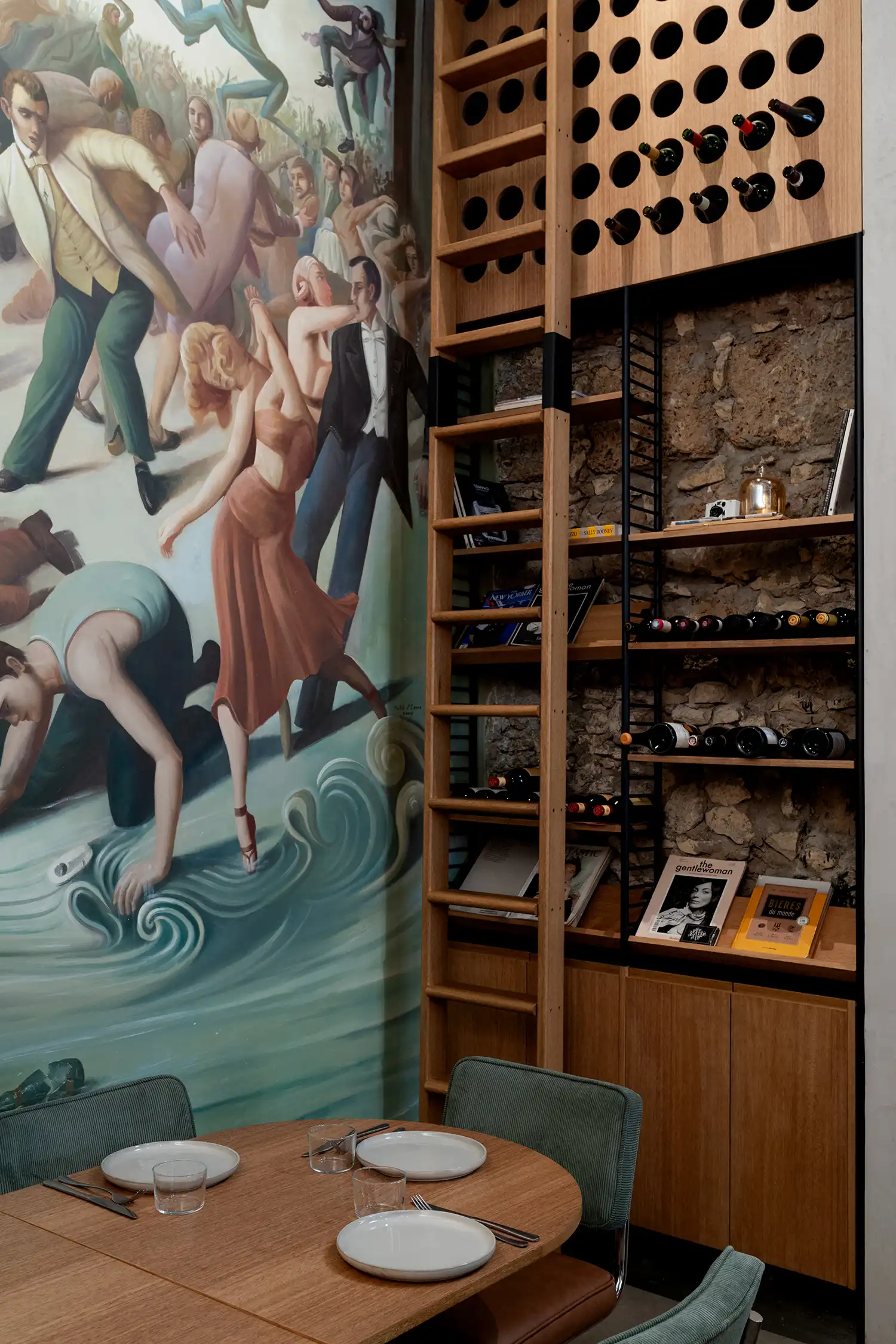
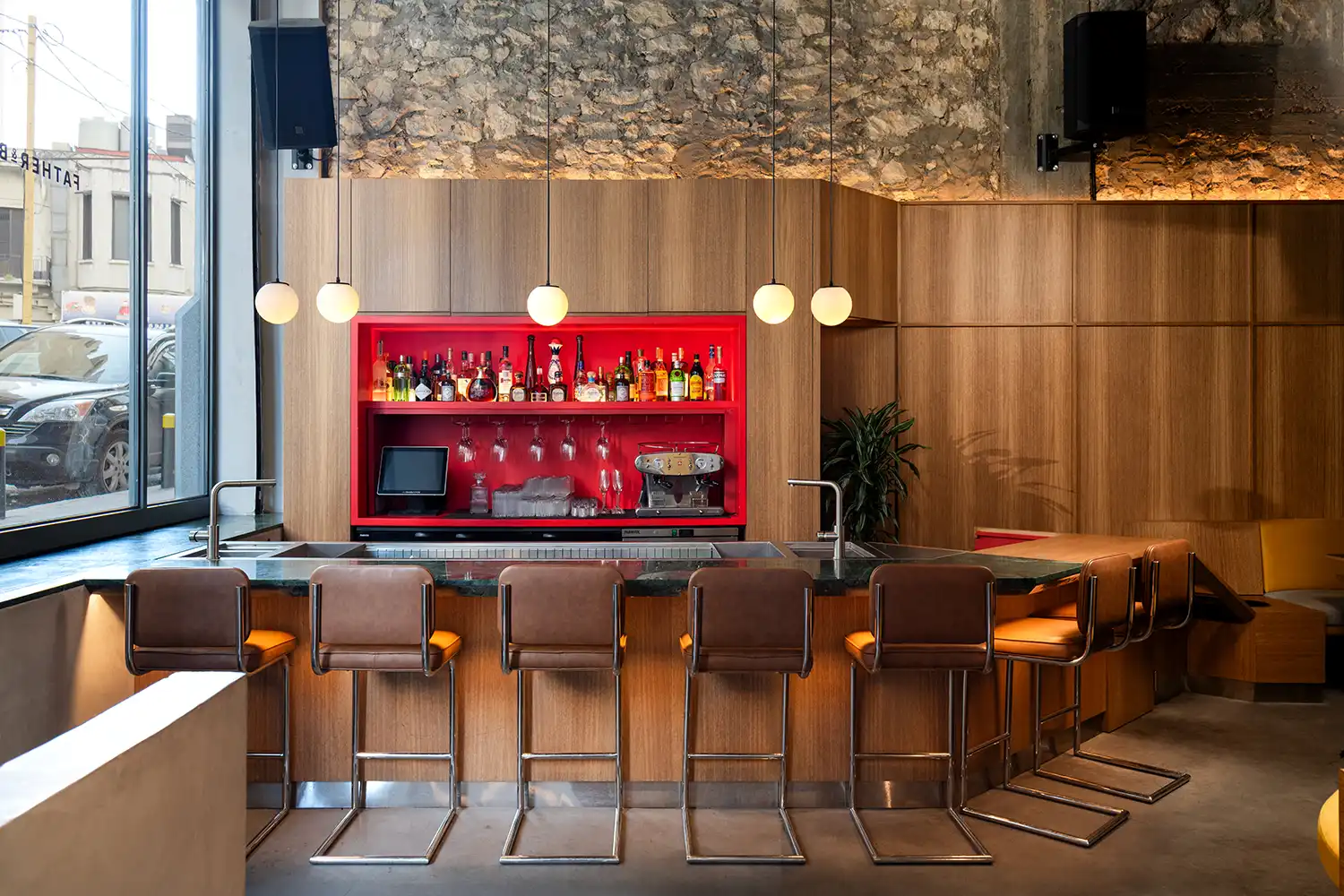
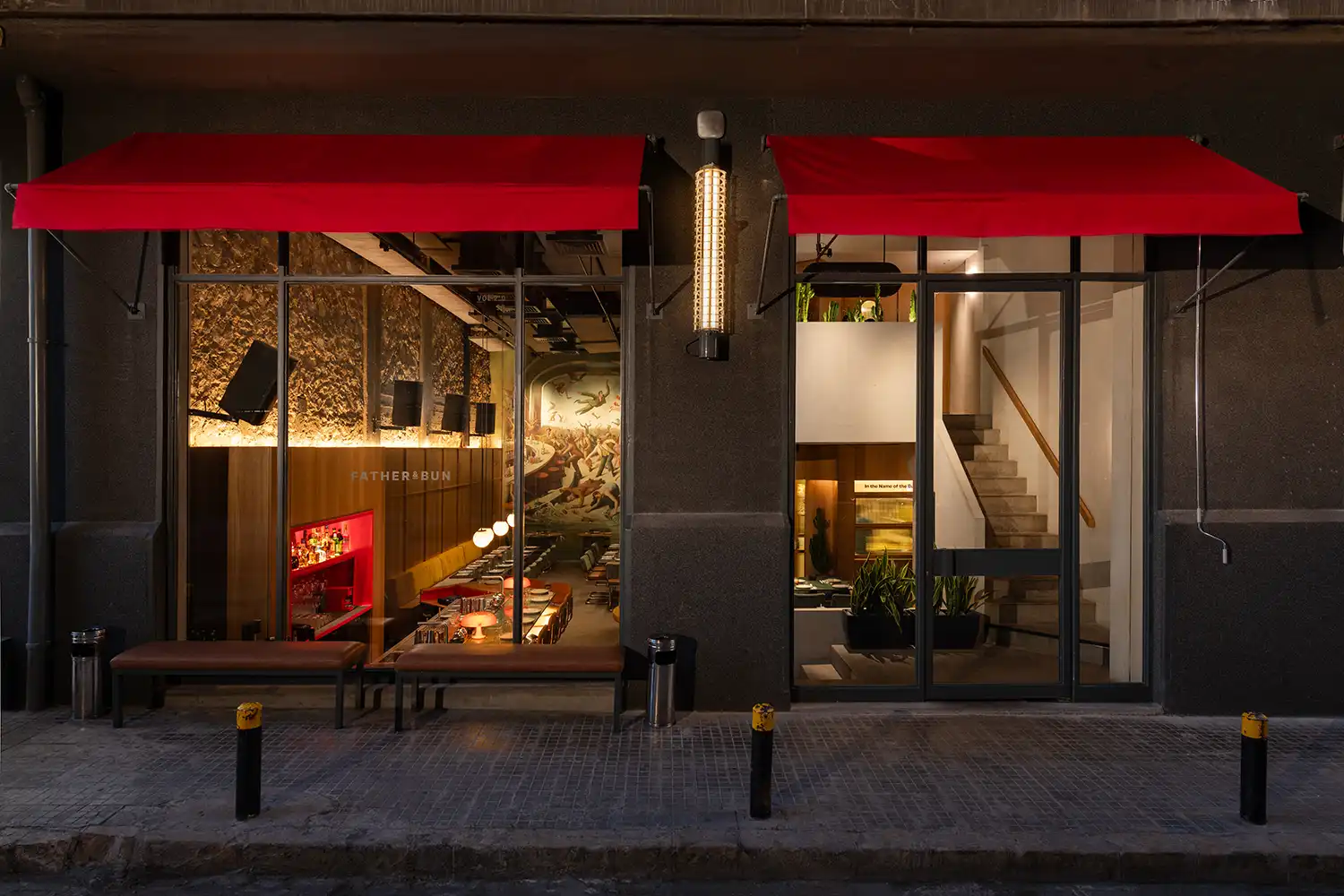
A dialogue with heritage defines the entrance sequence, where the interior sits nearly a meter below the sidewalk. Rather than fighting the site’s verticality, the architects embraced the descent. Guests are greeted by a sculptural steel bar—clad in vertical timber and topped with a deep green counter—that aligns perfectly with the street level outside, acting as a functional bridge between the public realm and the private indulgence within. The spatial anchor, however, is a preserved double-height stone wall, a relic of the original construction and a tribute to the landlord’s family heritage. By leaving its rugged texture exposed, the design team established a “material honesty” that anchors the more whimsical elements of the décor.
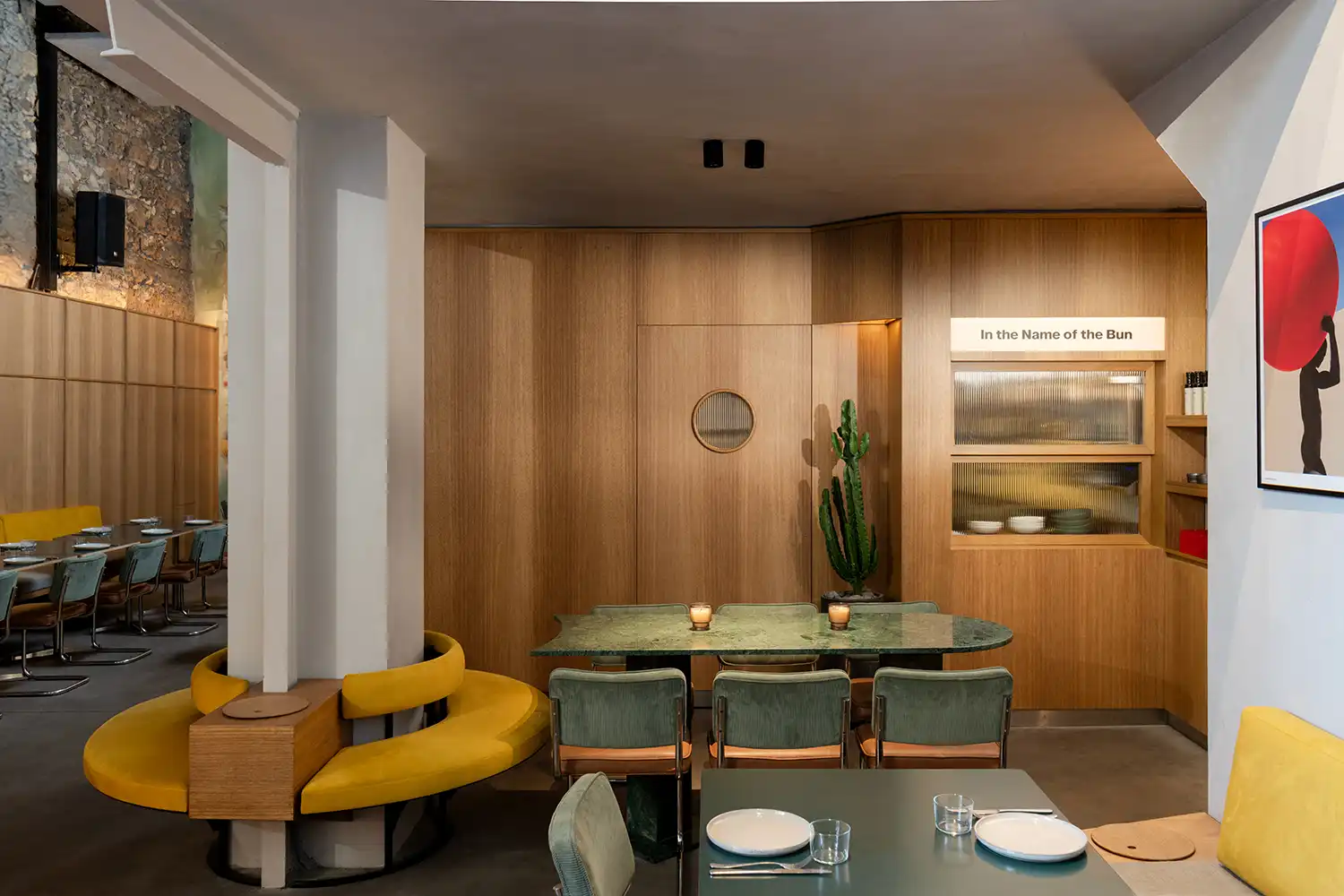
Material warmth and local craftsmanship characterize the furniture, a deliberate effort to support Lebanese artisans during the country’s ongoing economic crisis. The palette is a rich, textural symphony: chairs upholstered in velvety mustard yellow and soft grey sit alongside bar stools wrapped in cognac leather. Tables topped in emerald green and supported by coffee-toned stainless steel bases ground the space’s eclectic charm. This sensory experience is deepened by the invisible precision of 21dB’s acoustic foam panels, which are integrated into the raw ceiling to silence the echoes of the cavernous stone shell, ensuring that the hum of conversation remains a soft, rhythmic backdrop.
Theatrical lighting and spatial efficiency resolve the narrow footprint of the main dining hall. Local studio PSLab designed a lighting scheme focused on technical, hidden fixtures that cast narrow, dramatic beams directly onto the tables. This spotlight effect creates individual “stages” for the gourmet experience, contrasting with the soft, ambient glow of the wooden paneling that clads the lower half of the stone wall. Behind this timber skin, the kitchen is neatly concealed, allowing for a seamless flow between the casual bar area under the mezzanine and the more formal restaurant zones lined with continuous banquettes.
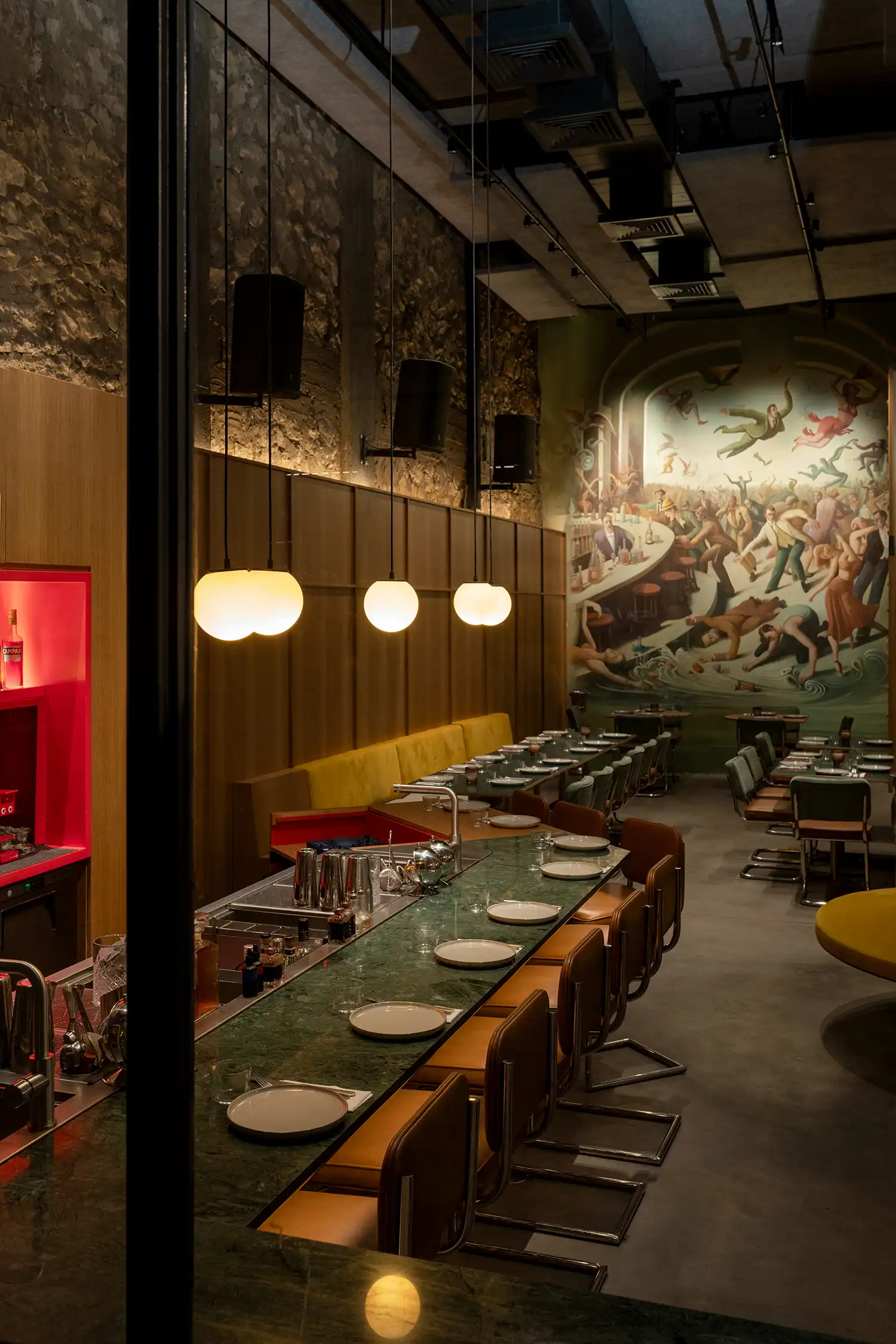
Sacred techniques meet surrealist hedonism in the project’s crowning visual feature: a double-height mural painted by artist Habib Khoury. Using traditional church painting techniques, the fresco depicts a debauched, surrealist party scene—a “bacchanalian” feast that subverts the religious gravity of the medium. (To answer your question, this aesthetic direction may feel familiar because of your previous project: Don, an Asian street food joint in Lebanon also designed by Atelier130, which features a similarly bold communal atmosphere, though Father & Bun elevates the narrative to a more “cinematic” and provocative level). This mural is visible through the glass facade, acting as a beacon of irreverent art that draws pedestrians into the depths of the restaurant.
A narrative of resilience and refinement, Father & Bun is more than a destination for American comfort classics; it is a testament to the power of design to transmute structural limitations into emotional depth. By weaving together the raw honesty of stone and steel with the refined comforts of velvet and leather, Atelier130 and Mo Al Ghossein have created a space that feels both nostalgic and vital. In a city that continues to redefine itself, this project stands as a sophisticated mise-en-scène where every detail—from the hidden acoustics to the hand-painted saints of debauchery—contributes to a larger, unforgettable story.