


In the heart of Riga, Lithuania, where Art Nouveau facades whisper tales of a gilded past, Sampling Architects have orchestrated a quiet revolution. Augustine’s Garden—a residential ensemble blending a 1911 National Romantic style tenement by legendary architect Aleksandrs Vanags with former industrial workshops—emerges as a manifesto for adaptive reuse in the 21st century.
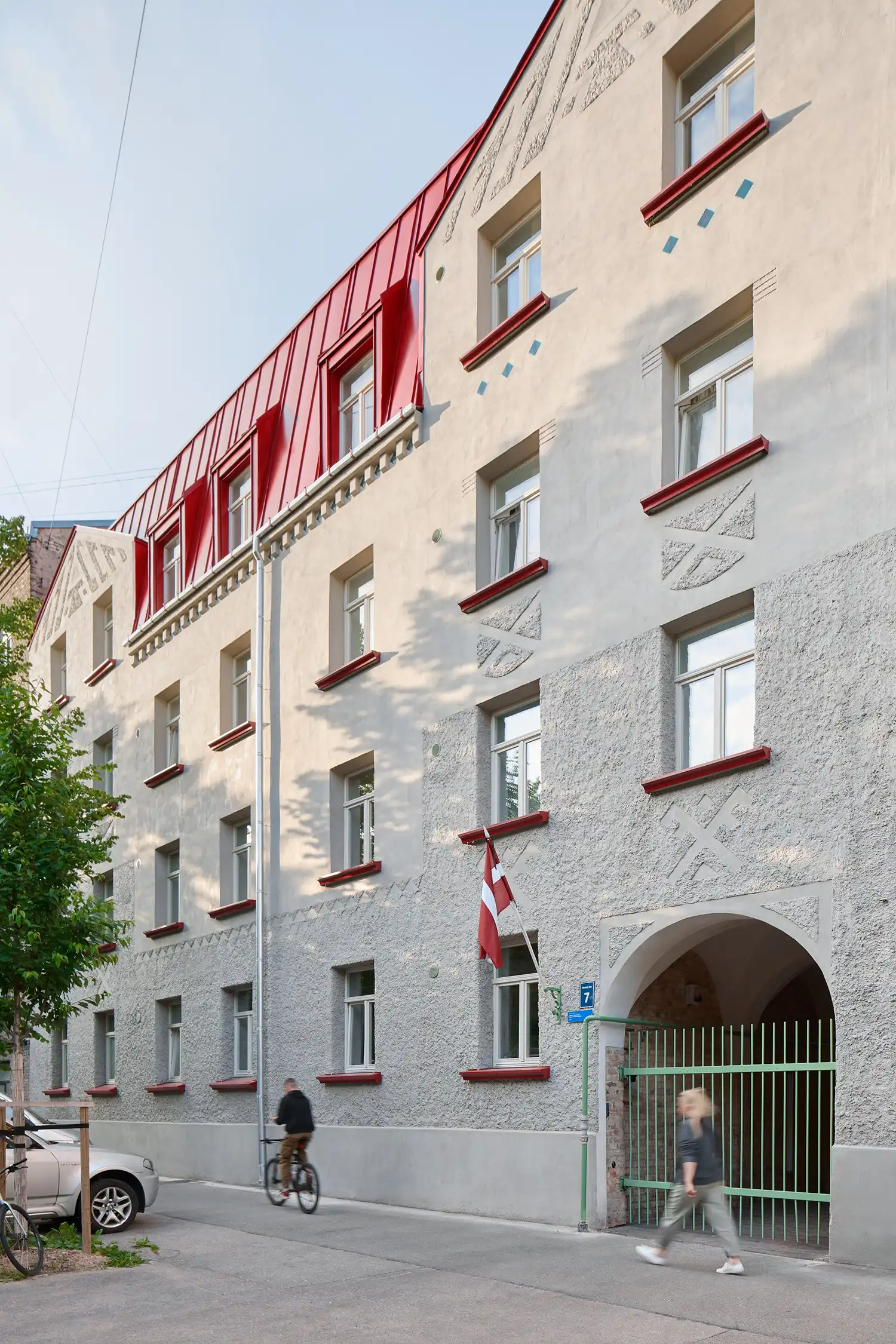
Facing the street, Vanags’ original tenement—a masterpiece of Latvian National Romanticism—required surgical sensitivity to balance modernization with heritage. Sampling confronted the urban dilemma of enhancing thermal performance without compromising historic integrity through innovative internal insulation.
This delicate approach preserved the façade’s rhythmic dance of rough and smooth plaster—a monochrome signature of early 1900s Latvian architecture—now meticulously restored. Carmine red tin roofs and window sills punctuate the exterior, seamlessly integrating discreet facade lighting for nocturnal elegance.
The olive-green gatehouse serves as a temporal threshold: historic vaulting restored and juxtaposed with contemporary lighting, framing the passage to the courtyard’s hidden world. This methodology aligns with cutting-edge sustainable retrofitting philosophies, prioritizing bespoke solutions for heritage structures.
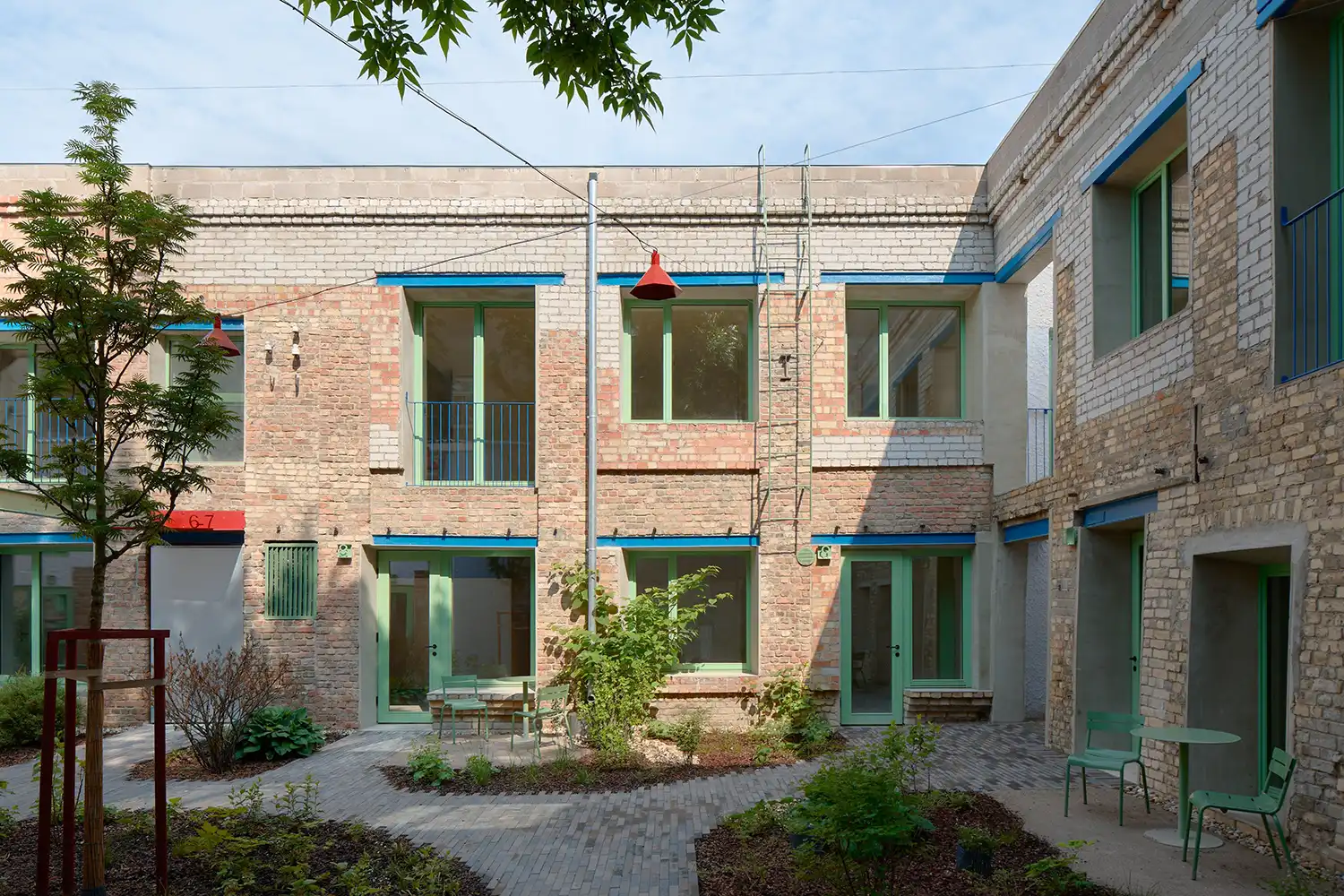
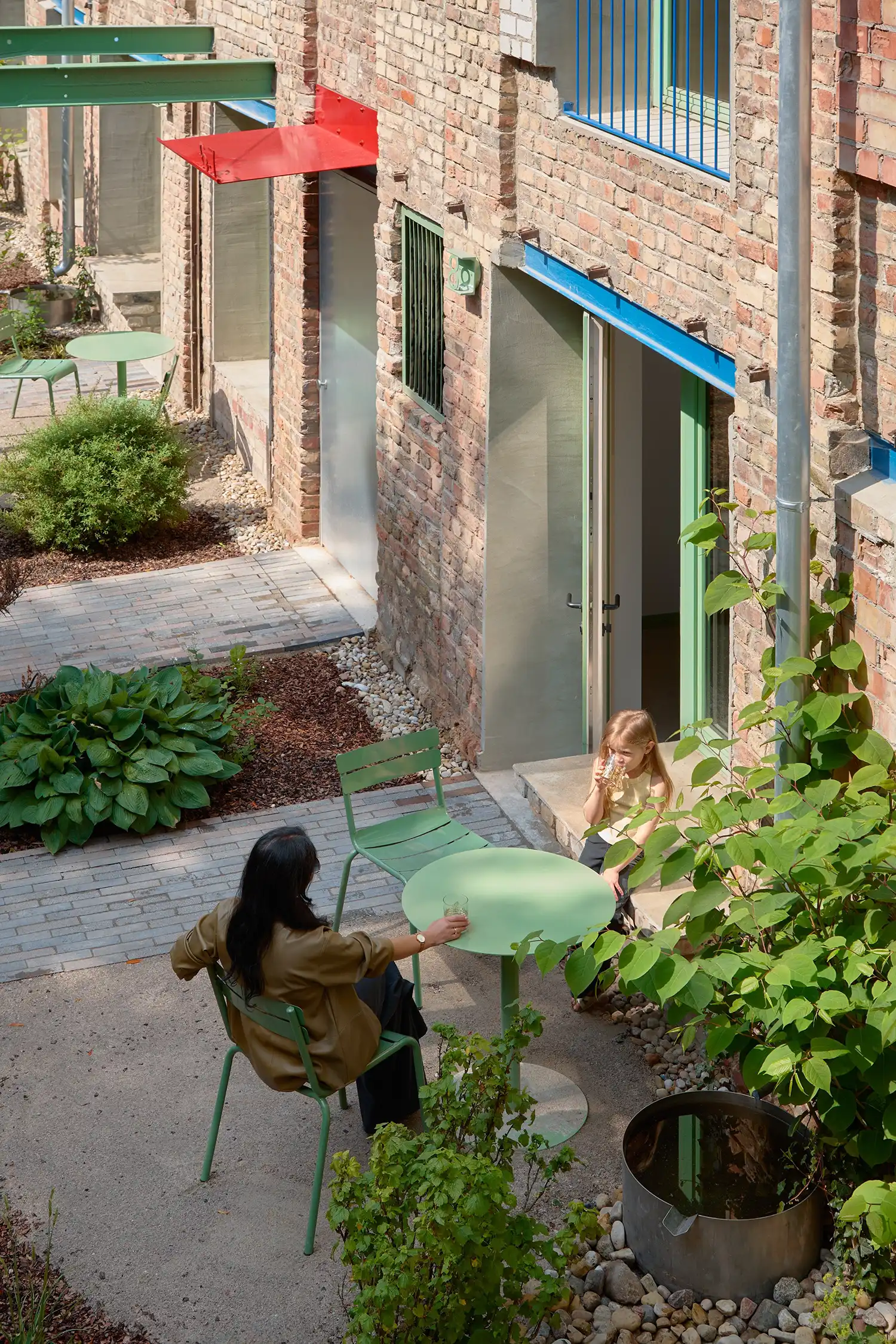
Beyond the gate unfolds an urban revelation—a green oasis where industrial epochs collide. Ceramic bricks from the early 20th century, Soviet-era silicate blocks, and functional steel elements stand exposed as a material palimpsest celebrating Riga’s layered history.
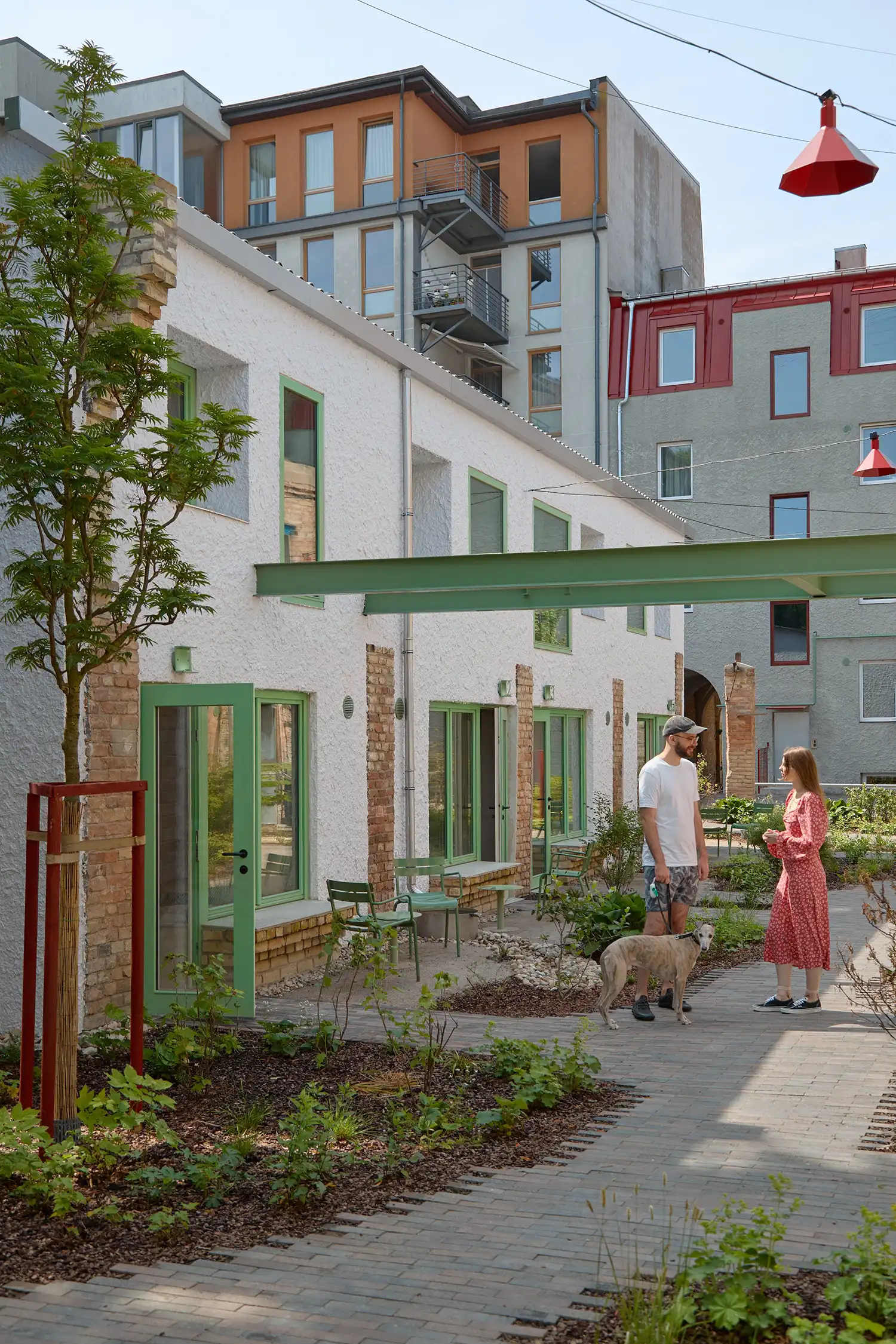
Sampling’s commitment to minimal intervention transforms these industrial relics into sculptural testaments of circular economy principles. The courtyard defiantly rejects car parking, opting for bicycle parking and gravel terraces that dissolve into native greenery.
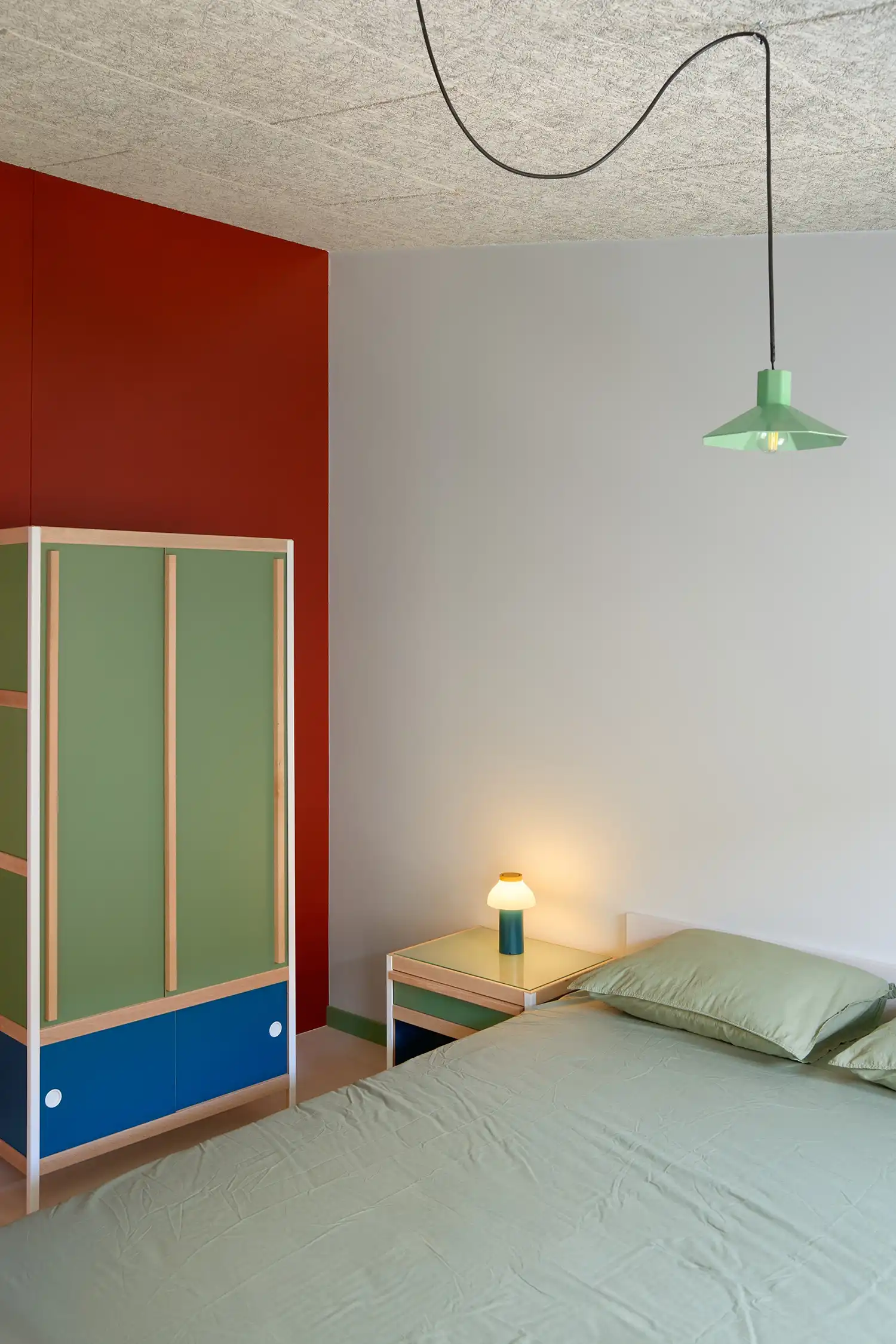
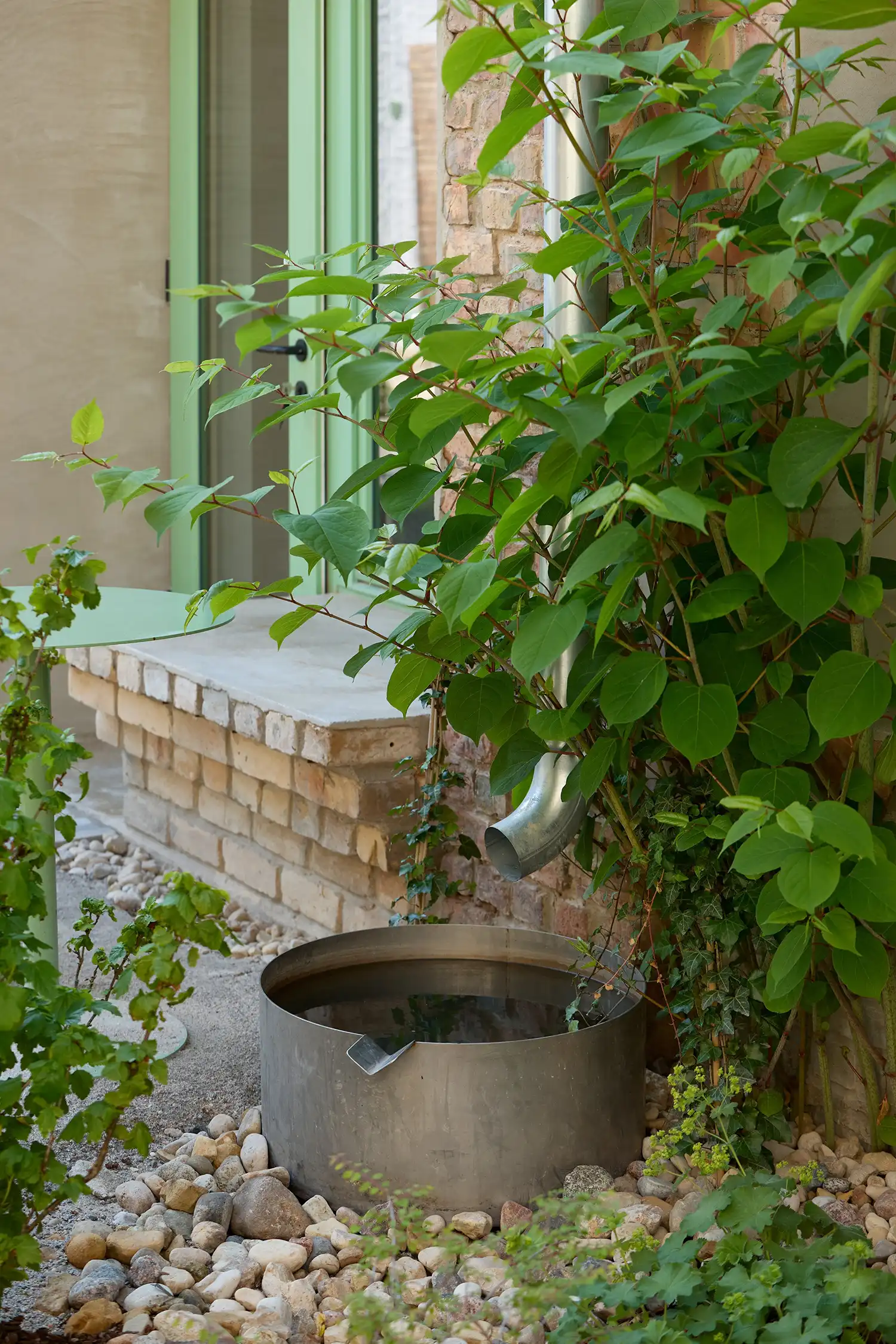
Low concrete windowsills blur domestic and communal realms, inviting residents to perch overlooking the garden. French balconies and terraces cascade with vegetation, ensuring privacy within this community-building ecosystem.
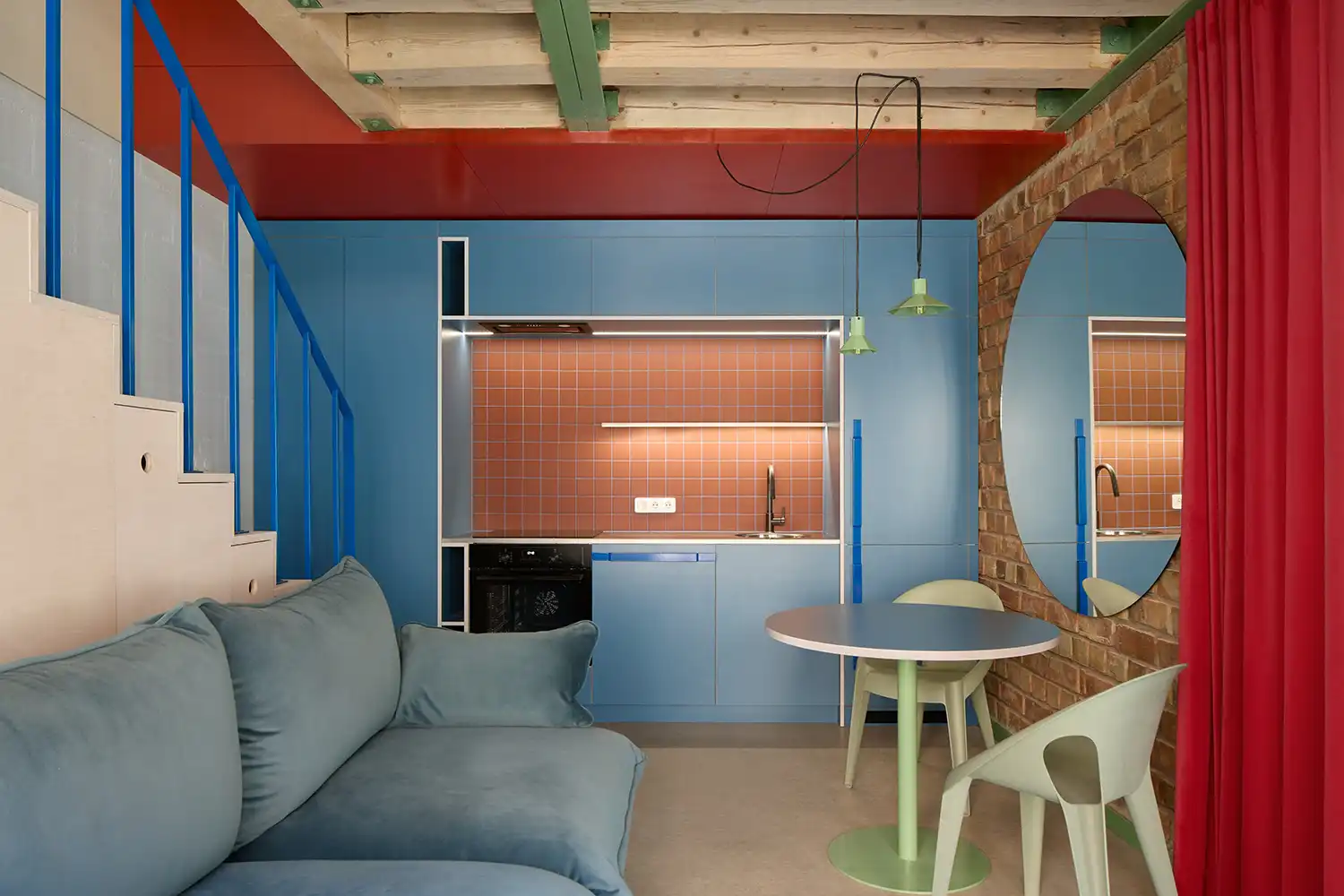
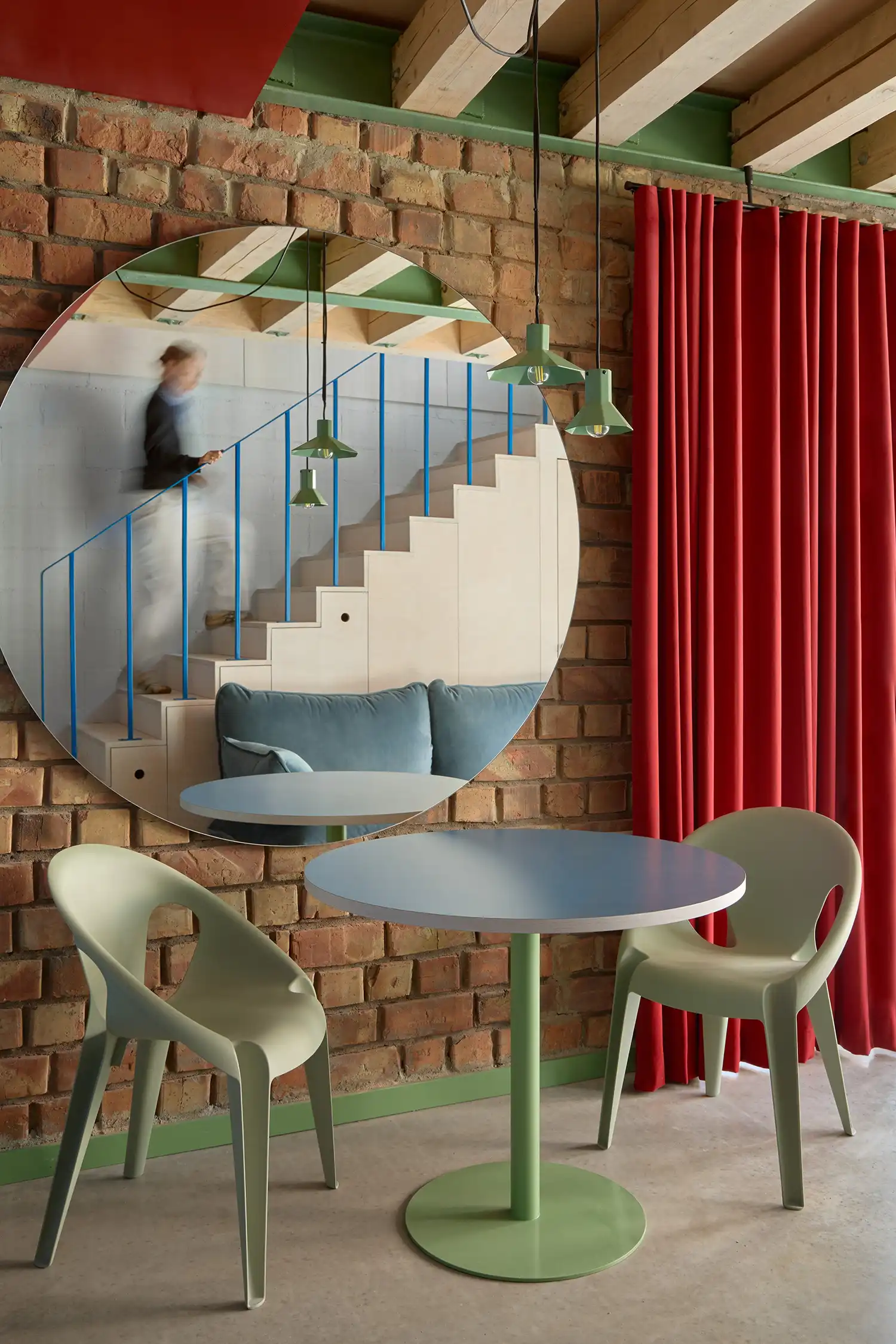
The project’s genius lies in programmatic alchemy: former workshops become studio duplexes and spacious terraced apartments with strategic openings framing courtyard or street vistas. Adaptive reuse here transcends aesthetics, embodying carbon accountability by maximizing existing structures.
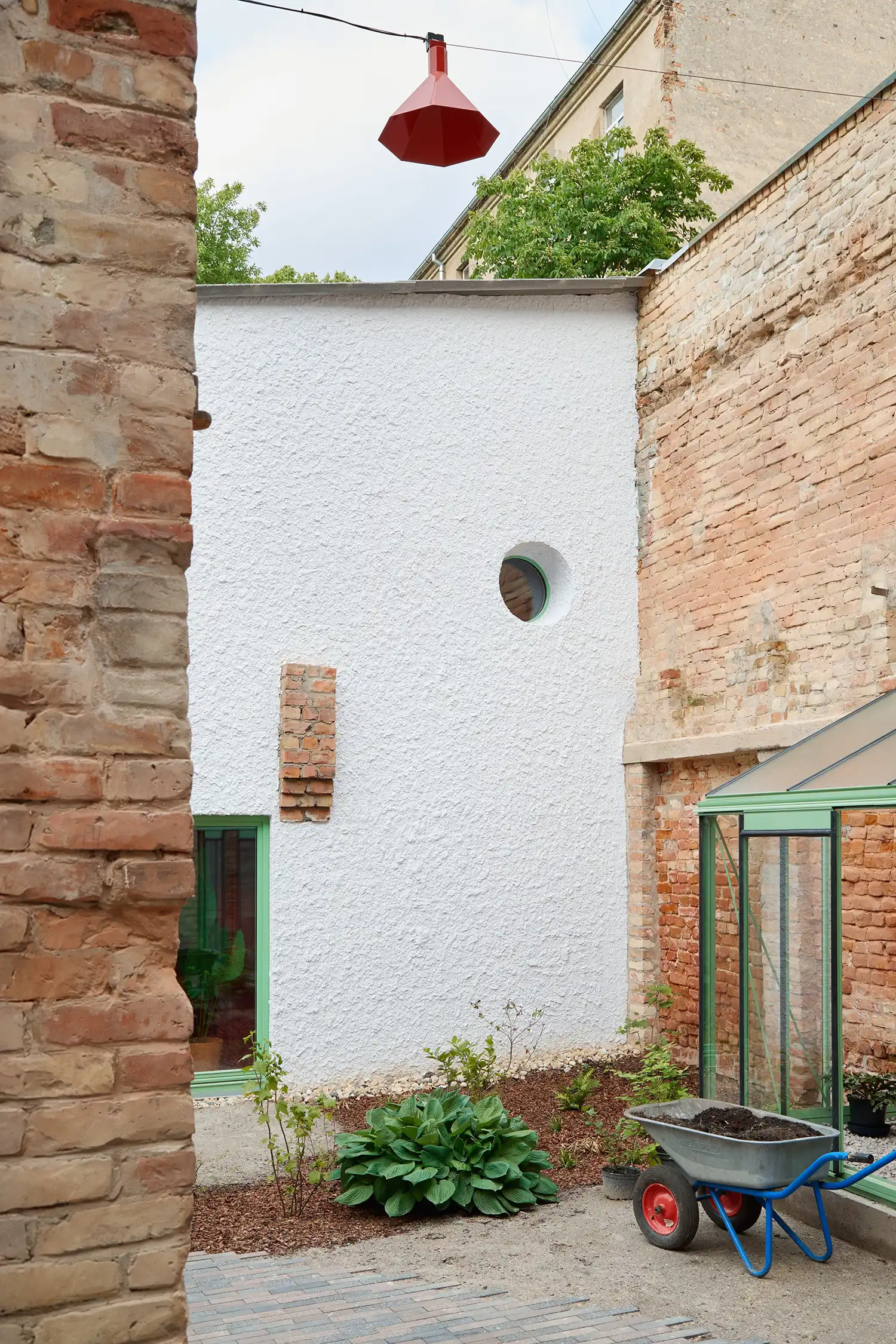
This ethos resonates with frameworks like RIBA’s NBD Overlay, though Sampling’s execution feels refreshingly organic. Gravel-surfaced terraces—free of rigid boundaries—invite spontaneous interaction beneath mature trees, epitomizing sustainable urbanism.
In a city where historic courtyards routinely surrender to asphalt, Augustine’s Garden is radical horticultural activism. Sampling proves industrial heritage gains value through visionary reinvention, prioritizing community resilience and material conservation.
As European cities combat densification and climate urgency, this project charts a path: retrofit fearlessly, reuse poetically, and let gardens—not cars—anchor our shared future. Augustine’s Garden isn’t mere housing; it’s horticultural urban repair, blooming where industry once thrived.