

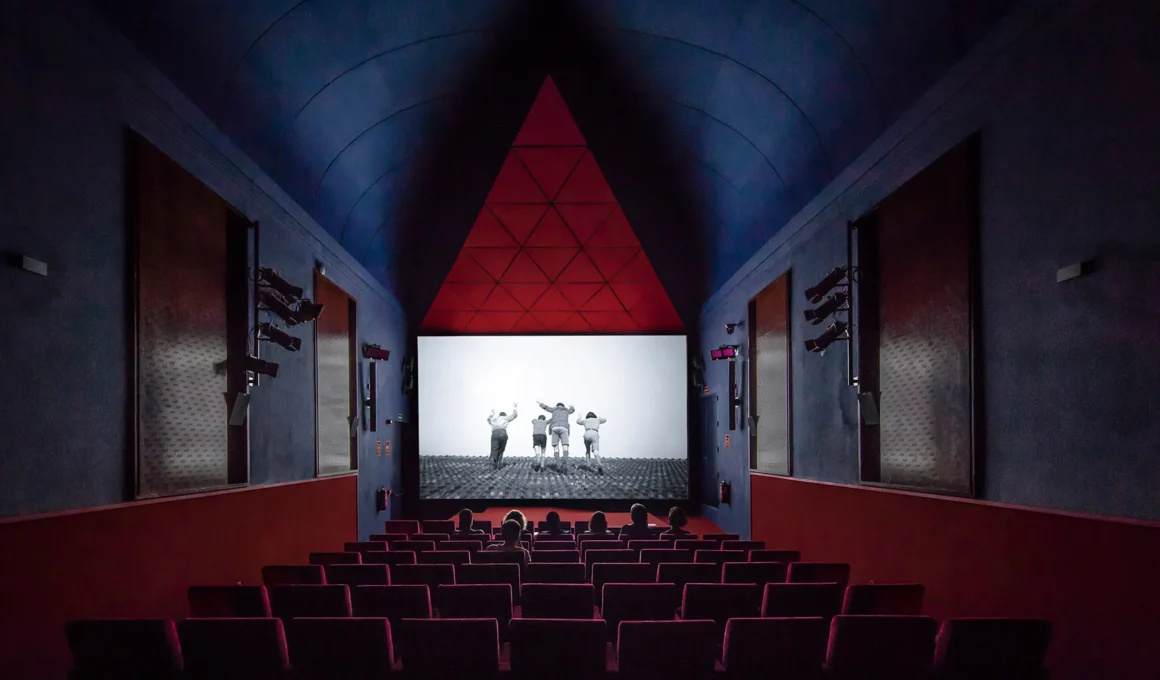
A compelling transformation has taken place within the historic walls of the Museo Nacional Centro de Arte Reina Sofía in Madrid, Spain. The project, led by Bach Arquitectes, re-envisions the museum’s former auditorium—a space originally designed by Jaume Bach and Gabriel Mora in 1987—as a state-of-the-art cinema and auditorium for audiovisual formats. This intervention is crucial for a major institution dedicated to modern and contemporary art in Europe, requiring a delicate balance between preserving architectural history and embracing new technology for an enhanced viewer experience.
The original space, located in the former General Hospital of Madrid (the famed Sabatini building from the 18th century), was central to the museum’s conferences and events. However, the museum’s 2005 expansion added new auditoriums, allowing the older space to be dedicated to film. The architectural design challenge was to adapt the hall for its new function—improving visibility, acoustics, and audiovisual systems—while maintaining the distinctive character established by Bach and Mora’s original design.
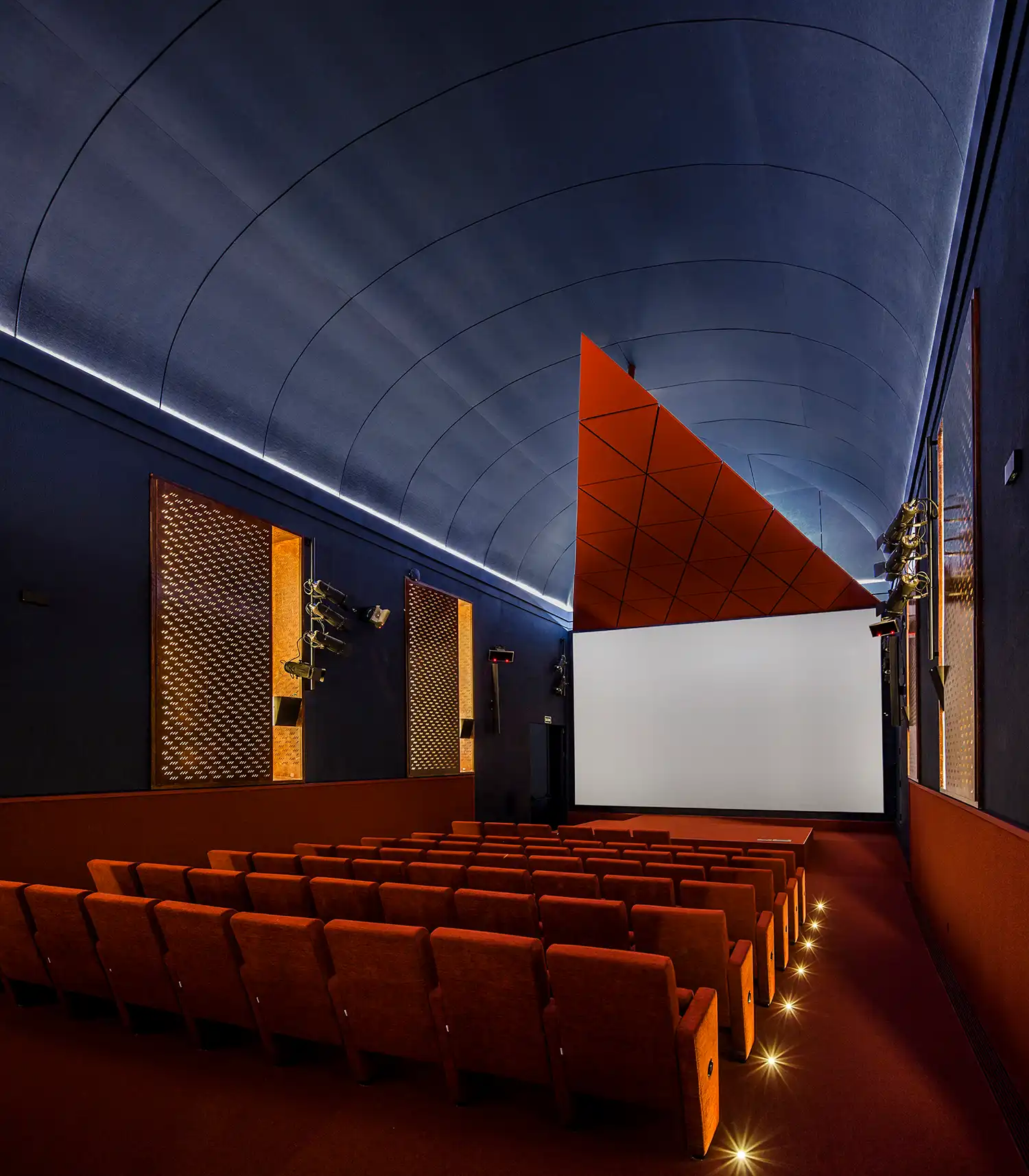
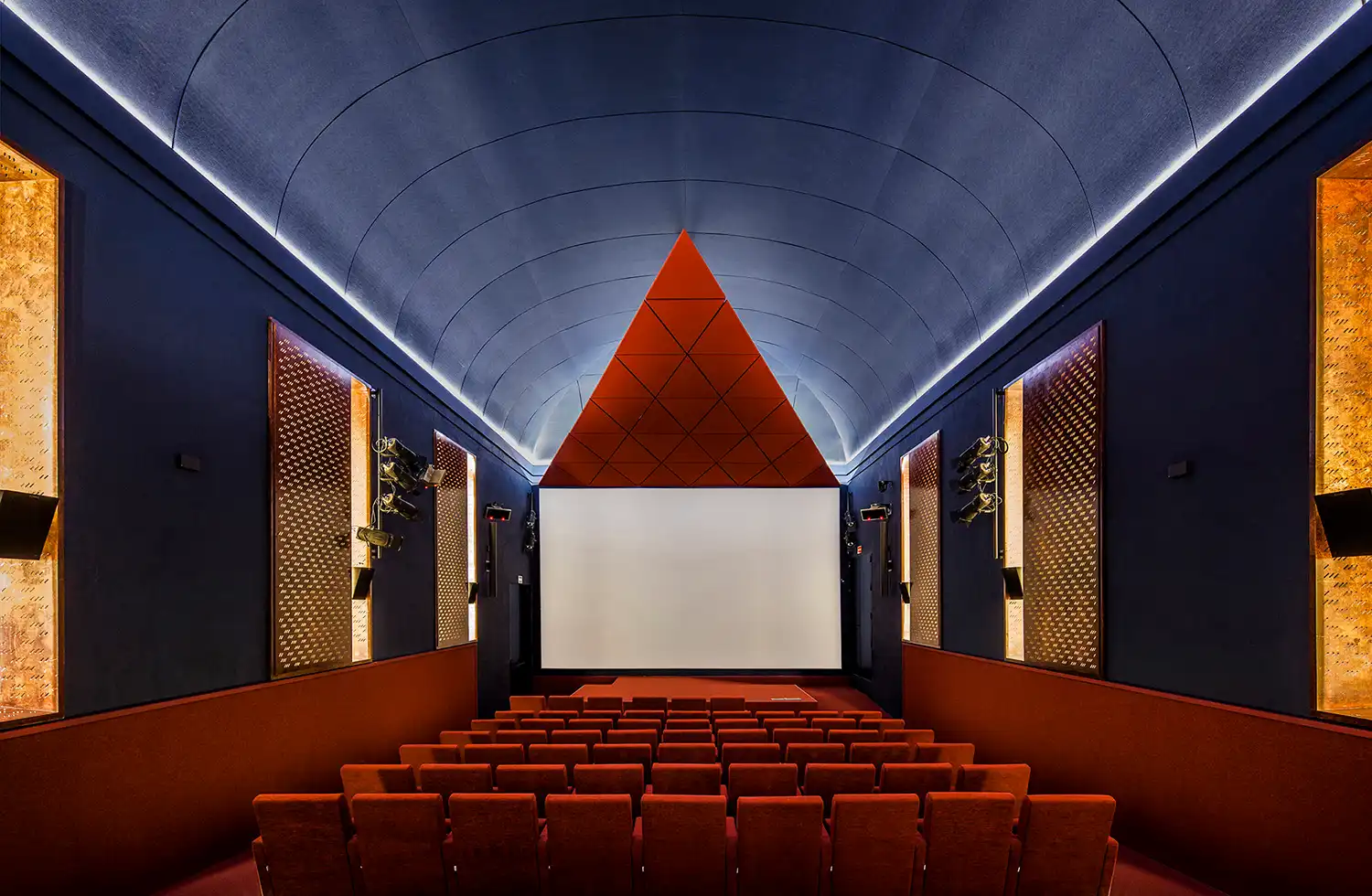
Bach Arquitectes chose a preservation strategy that focused on the iconic elements. They kept the triangular projection room at the entrance and the suspended triangular device above the stage. In contrast, modifications included removing the outdated translation booths, a testament to how modern technology has streamlined interpretation. Crucially, the seating area was modified to increase its slope, significantly improving screen visibility for every visitor and cementing the hall’s role as a dedicated cinema space.
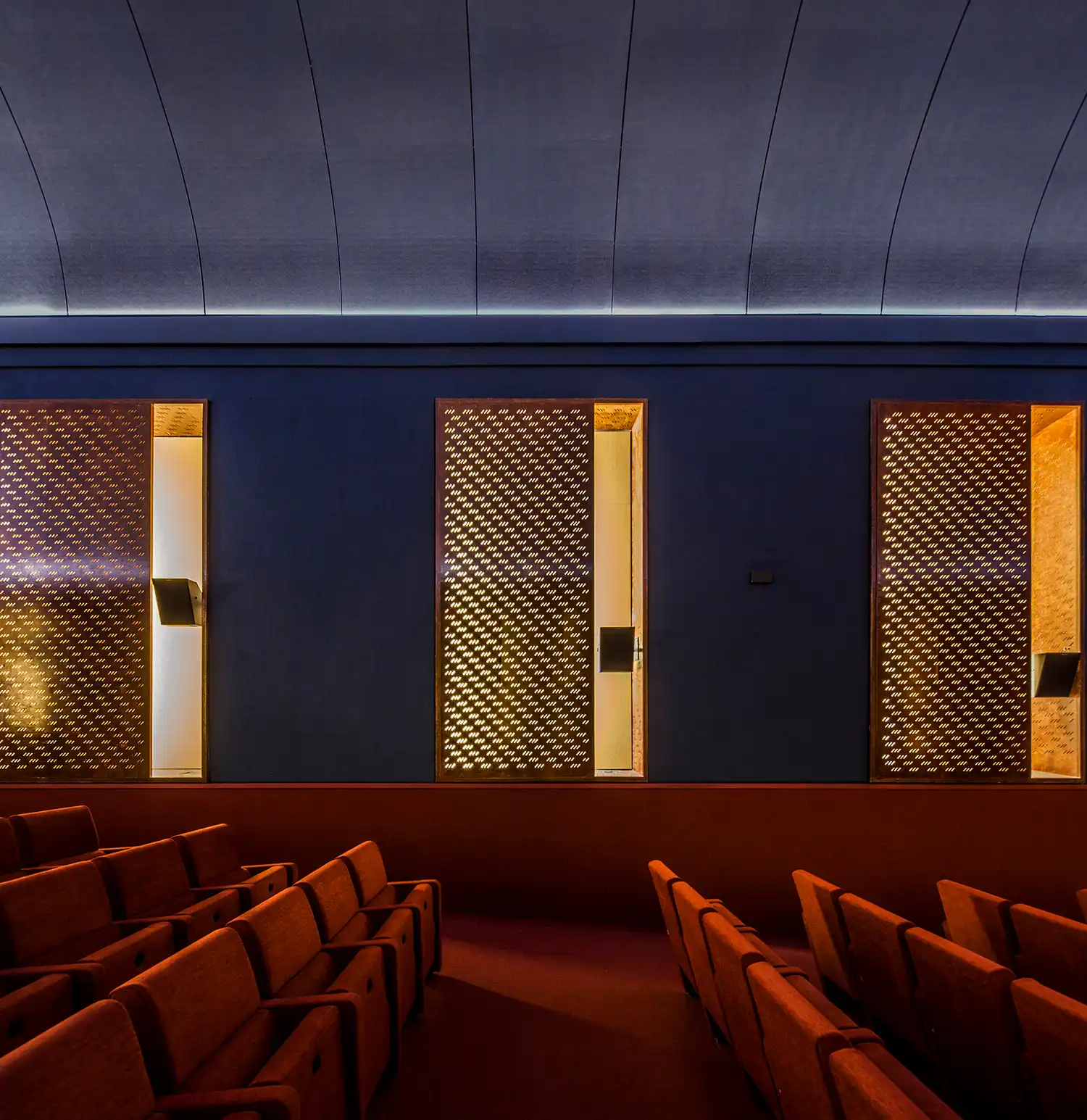
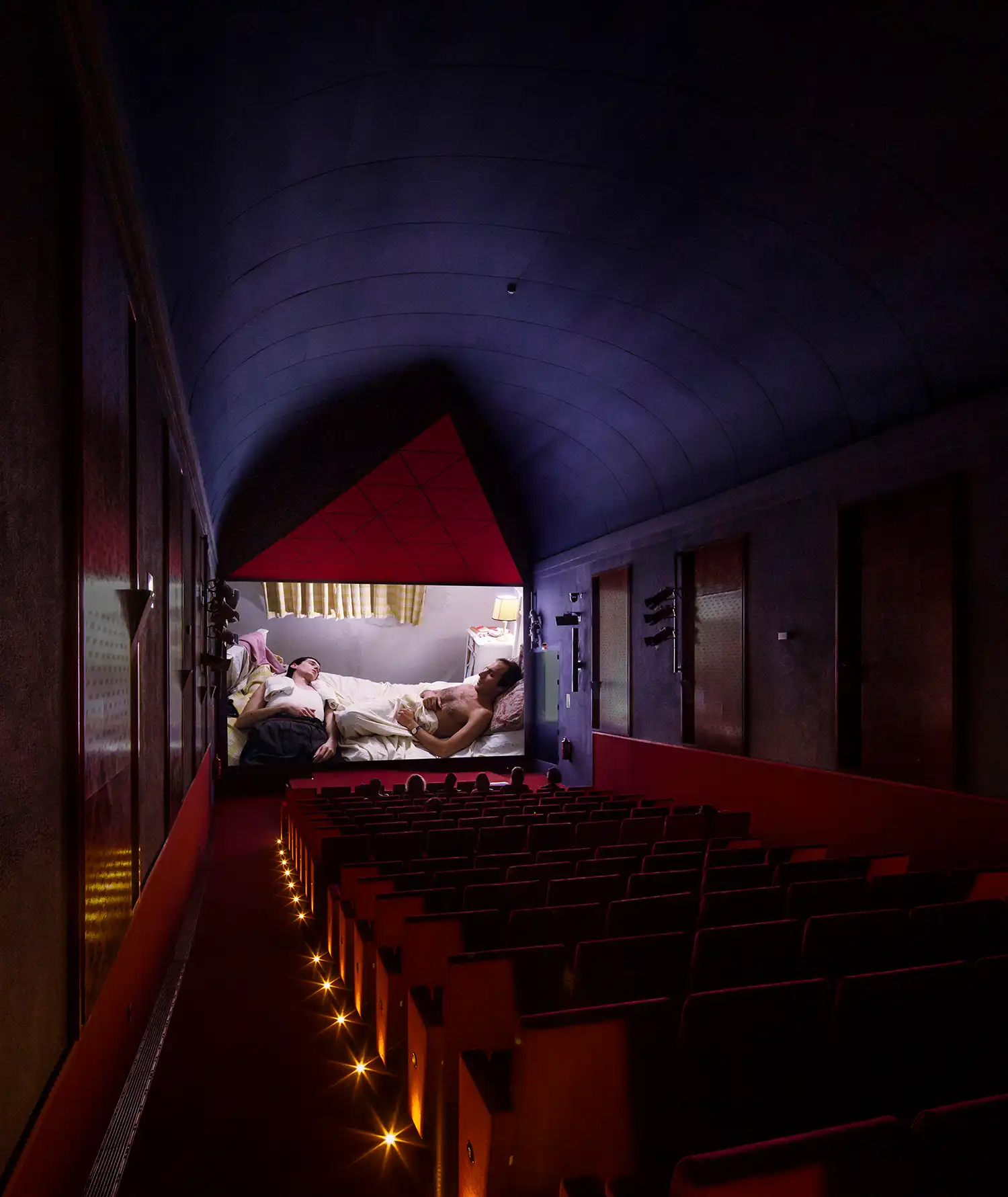
The most transformative intervention involves the ceiling and materiality. The emblematic suspended triangle was repurposed, transforming from a simple reverberation device into a large, sophisticated acoustic screen that artfully conceals the central speakers. This move maintains the original project’s concept of “geometric objects” arranged under a large, vaulted space—a celestial theme the new design embraces by painting the vault a deep, evocative blue.
This blue vault, intended to evoke a ‘night sky,’ is paired with a reclaiming of the classic red seen in celebrated cinemas throughout history, such as Erik Gunnar Asplund’s Skandia Cinema and Madrid’s own Cine Doré. The red is used on the carpet and soft surfaces, striking a dramatic, dark contrast that helps prevent light reflection—a necessity for a modern cinema. The combination of blue and red is not only a nod to classical theater design but also establishes a visual link between the hall’s function and the surrounding neoclassical building.
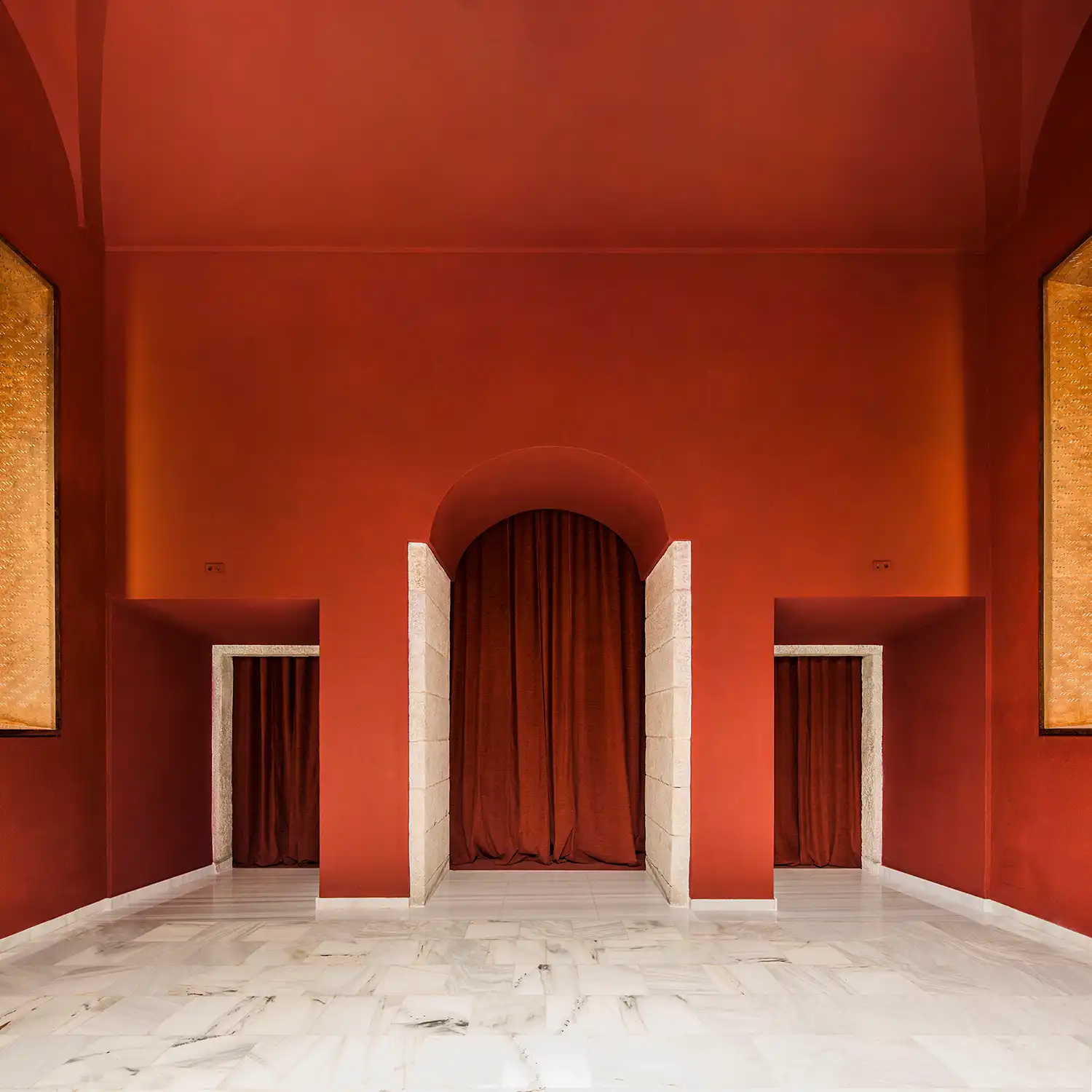
In the entrance lobby, the transformation deepens the cinematic experience. A new triangular storage unit is introduced, echoing the geometric motif of the projection booth and subtly guiding circulation. All surfaces in the lobby are unified in the same rich red tone, acting as a striking welcome element. This bold red is partially veiled by dense velvet curtains, designed to evoke the grand, dramatic entrances of classic film houses, setting the stage for the audiovisual universes that await within—a fitting prelude for a museum that champions art and culture.