

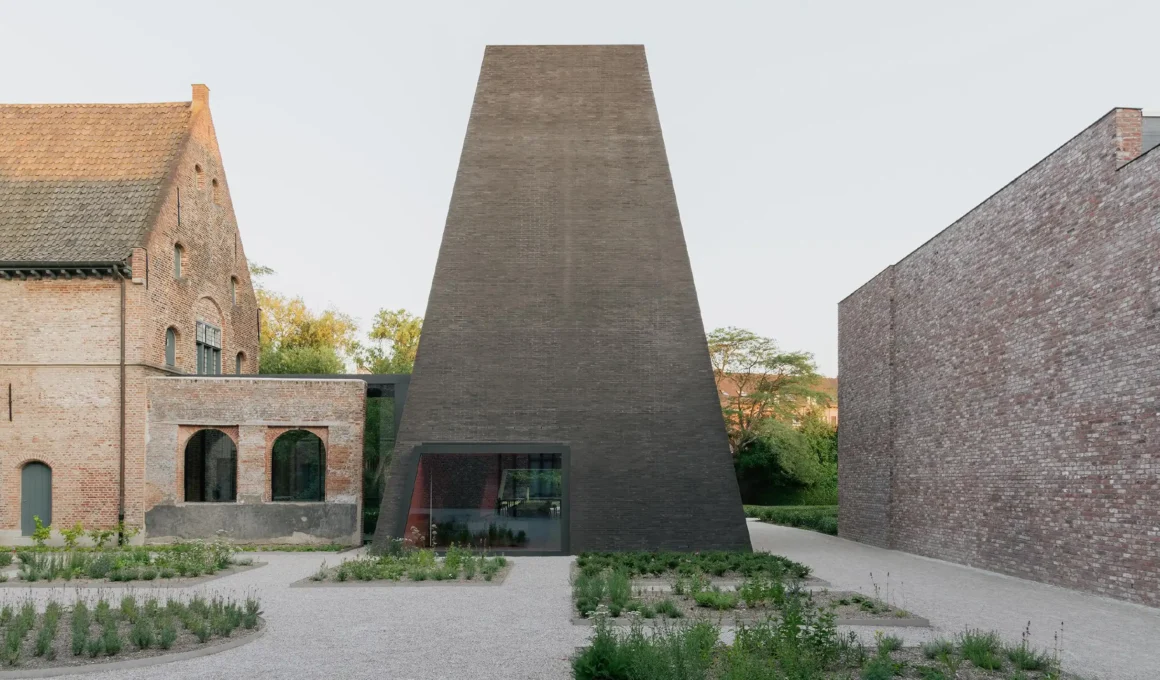
The art of architectural subtraction and the precision of contemporary insertion find a rare equilibrium in the heart of Kortrijk, Belgium, where the Barcelona-based studio Barozzi Veiga has completed the transformation of the historic Groeninge Abbey. Now known as Abby Kortrijk, this project is far more than a simple restoration; it is a sophisticated exercise in adaptive reuse that untangles centuries of fragmented history to reveal a cohesive, open, and versatile cultural destination. By stripping away incongruous additions and introducing a singular, dark-brick pavilion, the architects have successfully anchored the 16th-century complex back into its urban fabric, creating a seamless transition between the secluded history of the cloister and the public vitality of the nearby Begijnhof Park.
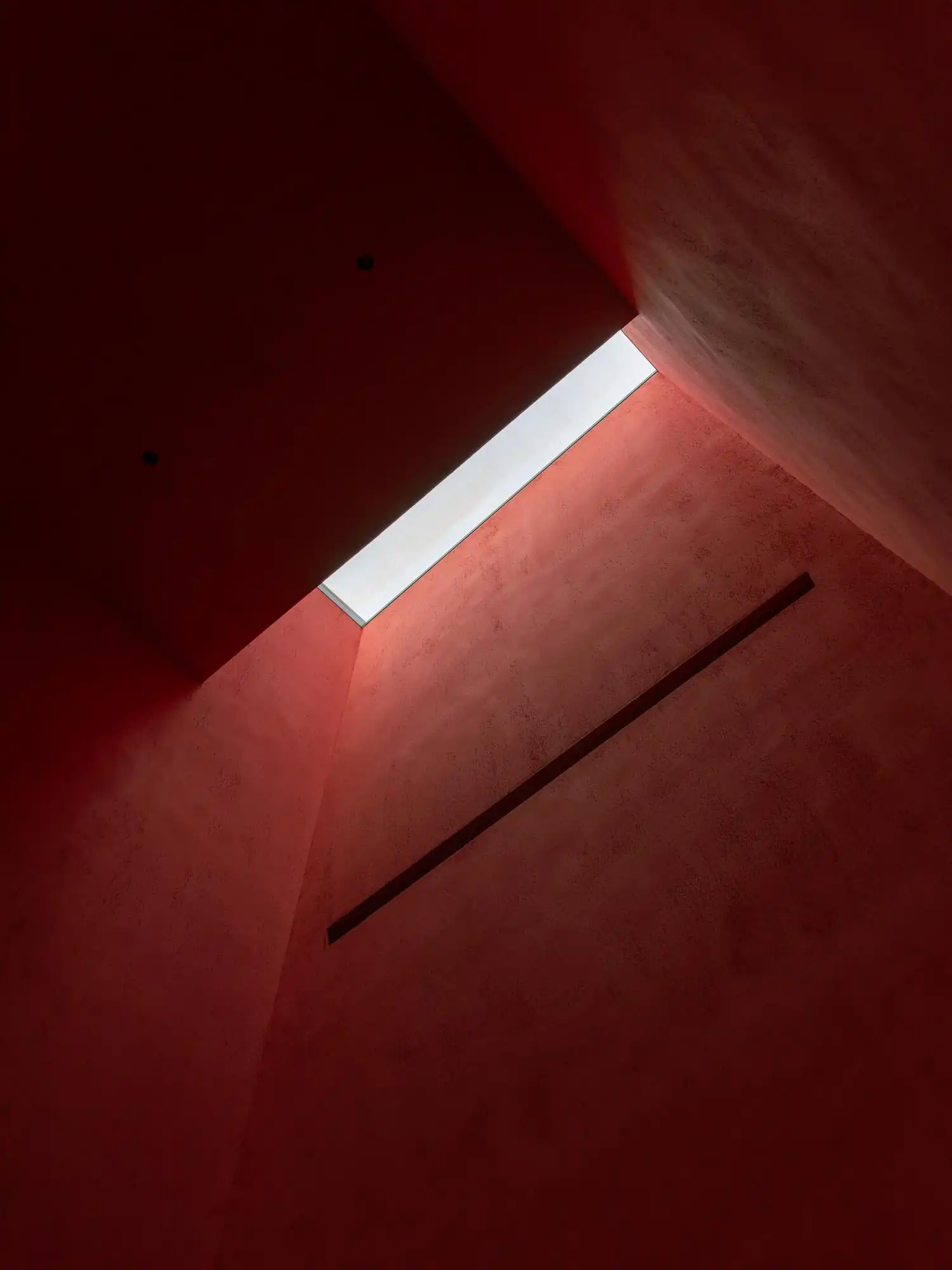
Restoring spatial clarity through a sensitive dialogue with the past was the primary objective for the interiors of the existing abbey buildings. Over the centuries, the original 16th-century architecture had been obscured by functional interventions that weakened its soul. Barozzi Veiga navigated a tight budget by prioritizing the “uncovering” of space rather than its reinvention. The former chapel, for instance, has regained its impressive verticality, transforming into a soaring exhibition hall where the echoes of the past resonate within clean, minimalist volumes. In the dormitory, the restoration was deliberately light-handed; the original windows, timber ceilings, and weathered terracotta floors were preserved, allowing the sensory experience of the building’s age to remain the protagonist of the visitor’s journey.
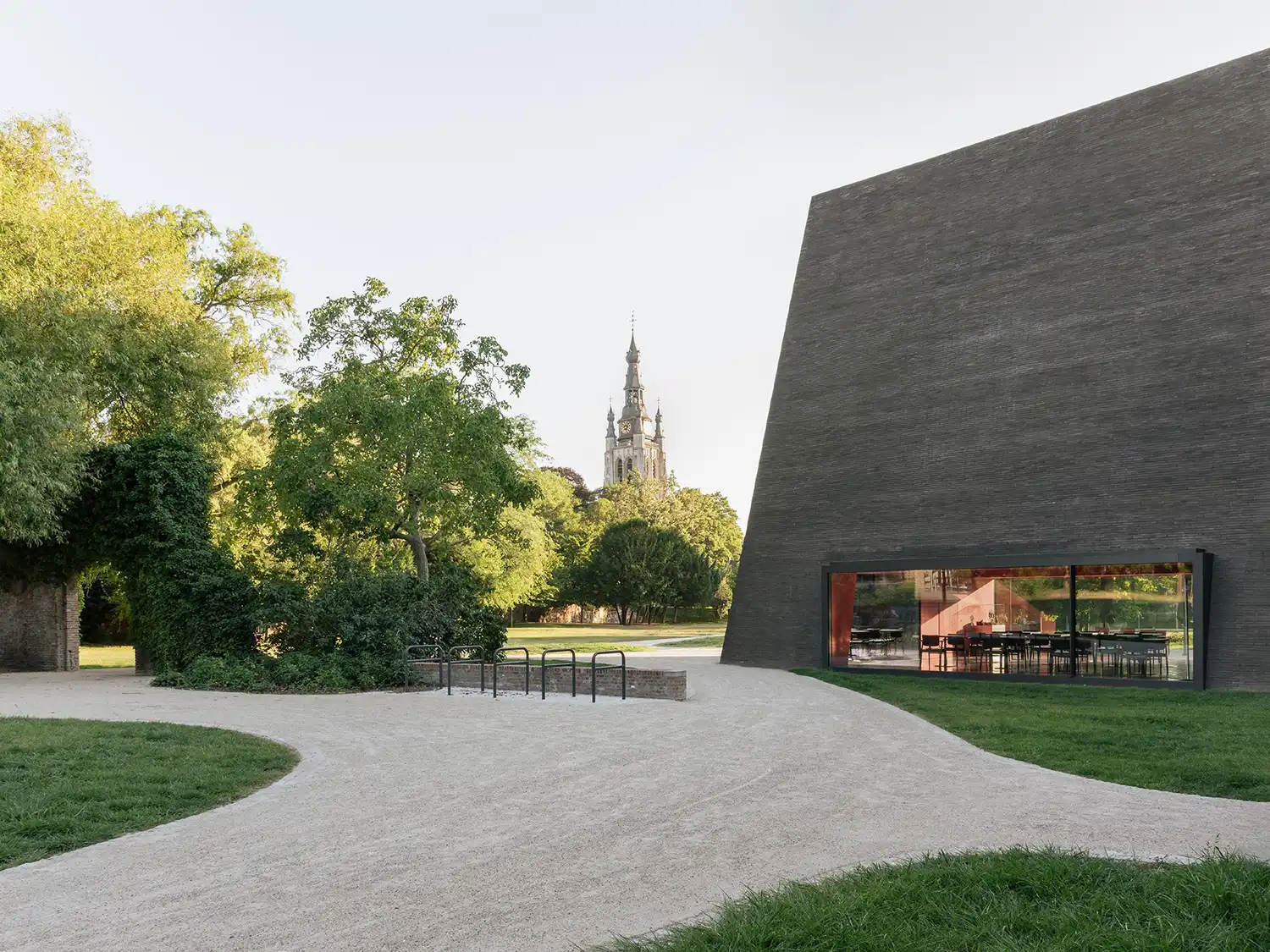
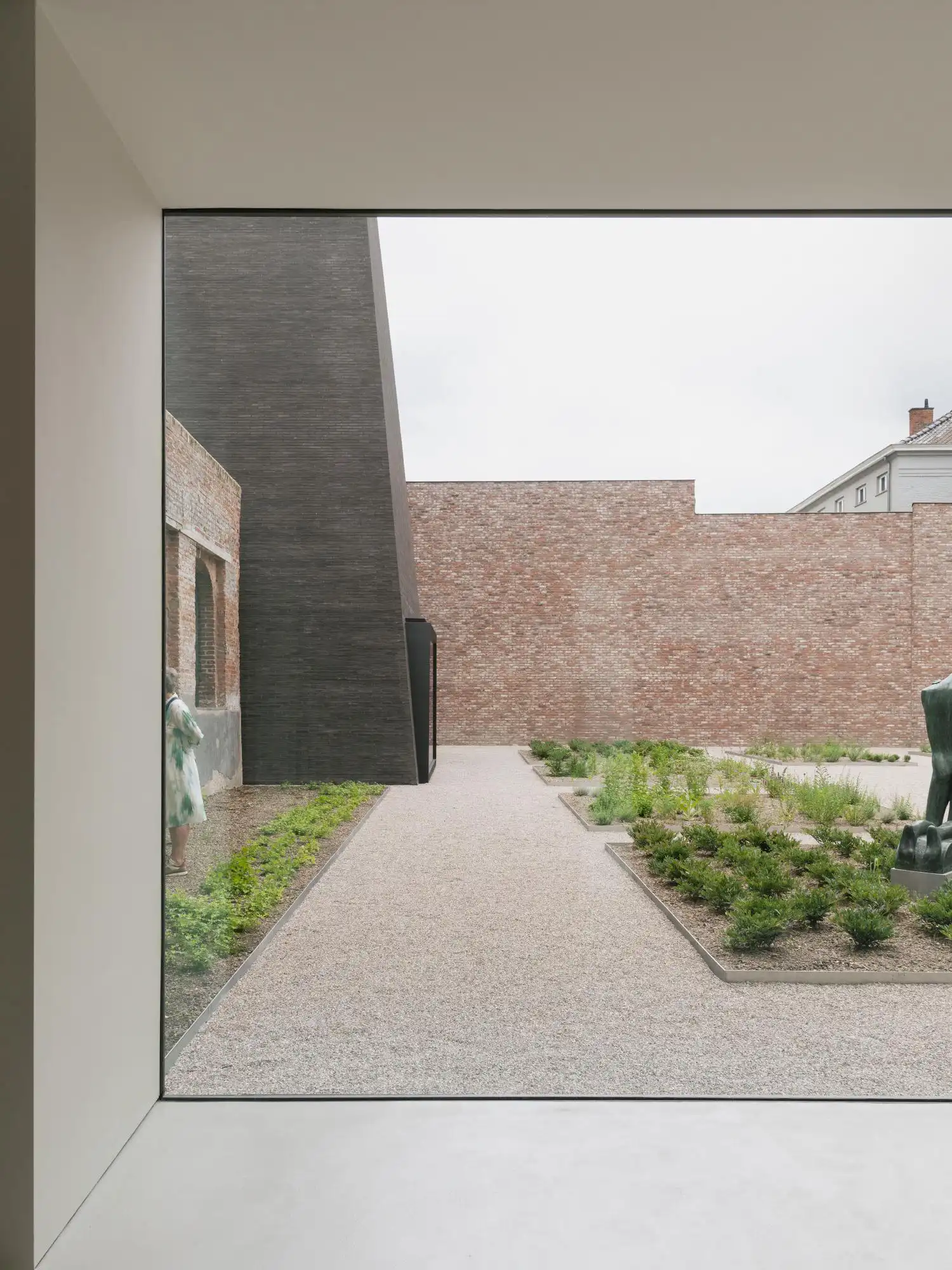
A new architectural identity emerges in the form of a dark-brick pavilion that defines the abbey’s renewed relationship with the city. Placed orthogonally to the historic wings, this structure serves as the new public face of the institution, housing a café and multipurpose spaces. The pavilion’s form, characterized by its rhythmic, pitched roofline, intentionally echoes the silhouettes of the surrounding traditional Belgian roofs without lapsing into mimicry. Its dark, tactile façade creates a striking yet respectful contrast against the pale masonry of the old abbey, marking a clear distinction between the heritage fabric and the contemporary layer. This volume acts as a gateway, guiding pedestrians from Groeningestraat through a revitalized courtyard and into the lush greenery of the public garden beyond.
The material intelligence of the project highlights a commitment to the circular economy and local craftsmanship. The pavilion’s striking exterior is composed of custom bricks manufactured from 60% recycled construction waste and 40% clay, a process that saw 92 tons of ceramic waste upcycled for the project. These bricks were fired at lower temperatures to reduce energy consumption, yet they possess a precise, smooth finish achieved through exact cutting. This focus on sustainable architecture extends to the interior finishes, where new cement tiles were designed to bridge the aesthetic gap between the contemporary additions and the historic terracotta floors. This careful blending of old and new materials ensures that the intervention feels like a natural evolution of the site’s identity rather than a foreign imposition.

Abby Kortrijk joins a growing global movement of cultural transformations where industrial or ecclesiastical heritage is repurposed into world-class art spaces. This philosophy of “breathing new life into the old” is increasingly defining the future of our cities, as seen in other ambitious projects such as the carbon-fiber innovation of the MAE Museum by CRA-Carlo Ratti Associati, which reimagines industrial history through a lens of technological lightness. Similarly, the sculptural transformation of the Fenix Museum of Migration by MAD Architects demonstrates how a historic warehouse can be revitalized to tell new human stories. In Kortrijk, the approach is quieter but no less profound, focusing on the preservation of a “spirit of place” while providing the technical infrastructure required for a modern museum.
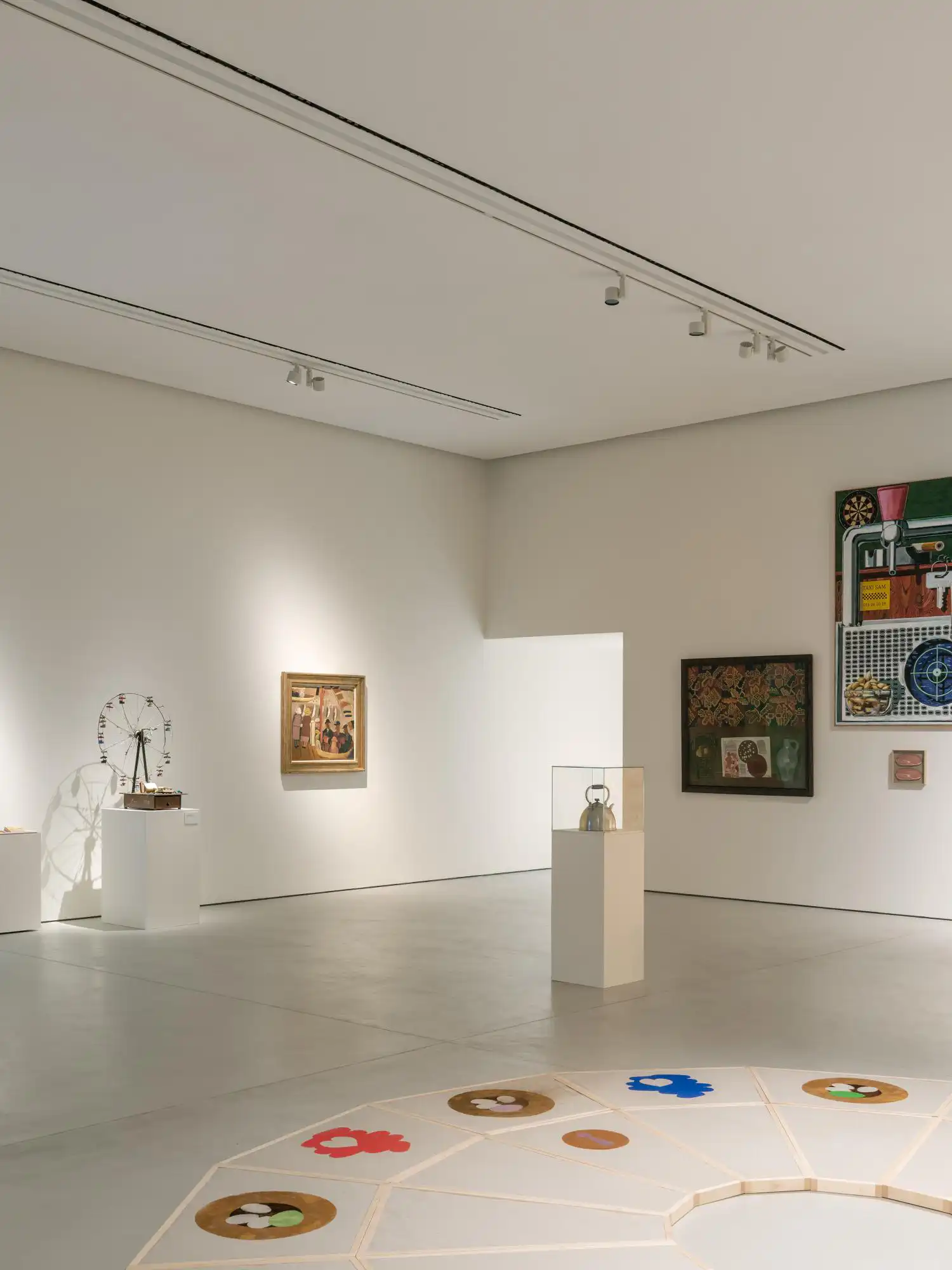
The programmatic expansion of the museum is cleverly hidden beneath the surface, preserving the integrity of the abbey’s open spaces. To avoid cluttering the historic site with massive new volumes, Barozzi Veiga opted to place the primary exhibition galleries underground. These subterranean halls offer the flexible, “white cube” conditions necessary for high-caliber art displays, free from the constraints of the abbey’s heritage layout. By sinking the bulk of the program, the architects were able to restore the central courtyard as a serene, public void. Ultimately, Abby Kortrijk stands as a testament to the power of architectural restraint, proving that the most impactful urban gestures are often those that listen most intently to the history of the ground they occupy.