


Nick Kent Design’s Bondi House in Sydney, Australia, emerges as a study in structural lightness and environmental adaptability, serving as both a family residence and a creative studio. Defined by a suspended steel skeleton and a responsive skin of polycarbonate and mesh, the project rejects traditional load-bearing masonry in favor of a modular system that hovers above a newly established native landscape.
A departure from the streetscape is the first impression one gathers of the home. Located near the frenetic energy of Bondi Road, the structure does not attempt to mimic the architectural incoherence of its neighbors. Instead, it sits as a contemporary sculptural object, intentionally set back further than required to give breathing room to the public domain. By prioritizing a continuous flow of native vegetation from the private garden to the street, the design offers a quiet critique of the local urban fabric, suggesting that shade and greenery are as vital to the neighborhood as the buildings themselves.
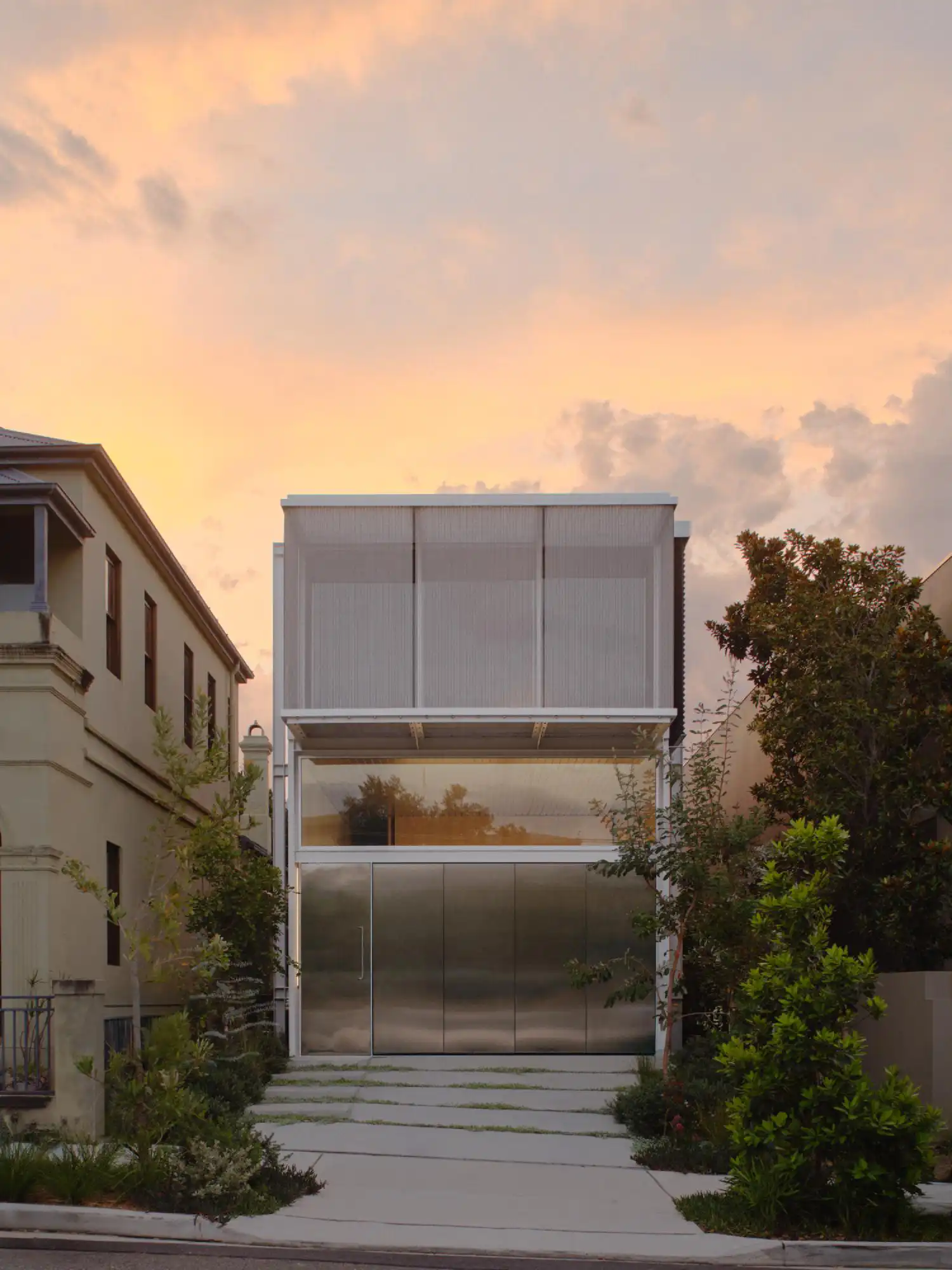
The conceptual vision centers on a “living machine” that breathes with the Pacific breeze. The ground floor is dedicated to open-plan living, maintaining a grounded connection to the earth through thermal mass concrete slabs and floor-to-ceiling transparency. In contrast, the upper level—housing the bedrooms and the design studio—is elevated to capture the northern sun. A screened terrace acts as a porous buffer between the internal sanctuary of the studio and the life of the street, allowing for a filtered visual connection that maintains privacy without total isolation.
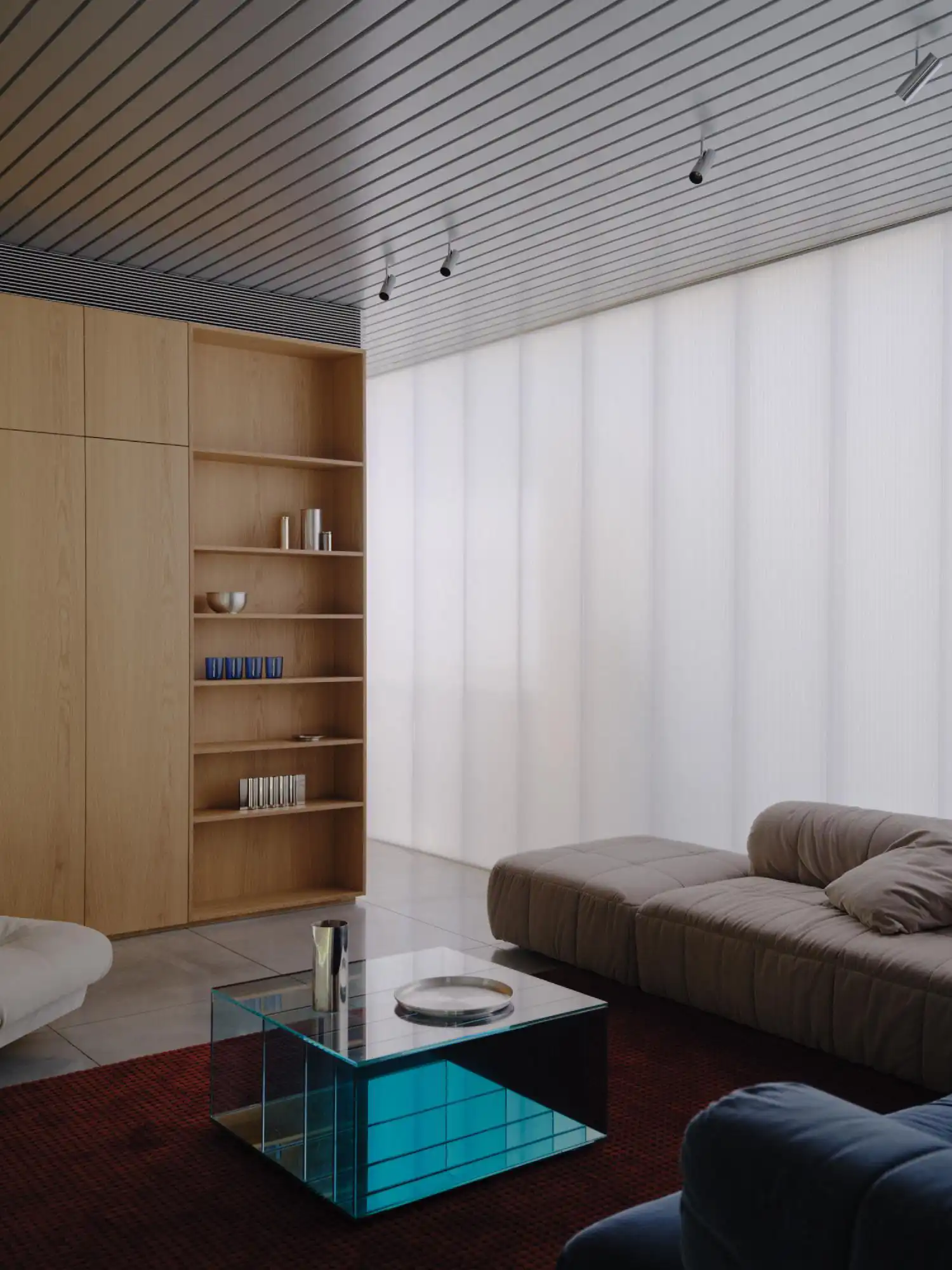
Technical precision and modularity define the building’s physical DNA. Kent utilized a rigorous 2000mm x 900mm module to standardize components, using identical 150UC steel sections for all primary columns and beams. This industrial logic extended to the construction process; once the structural slabs were set, grid lines were scored by hand to ensure that every subsequent element—from polycarbonate panels to joinery—aligned perfectly. This systematic approach significantly accelerated the construction timeline compared to traditional residential builds in New South Wales.
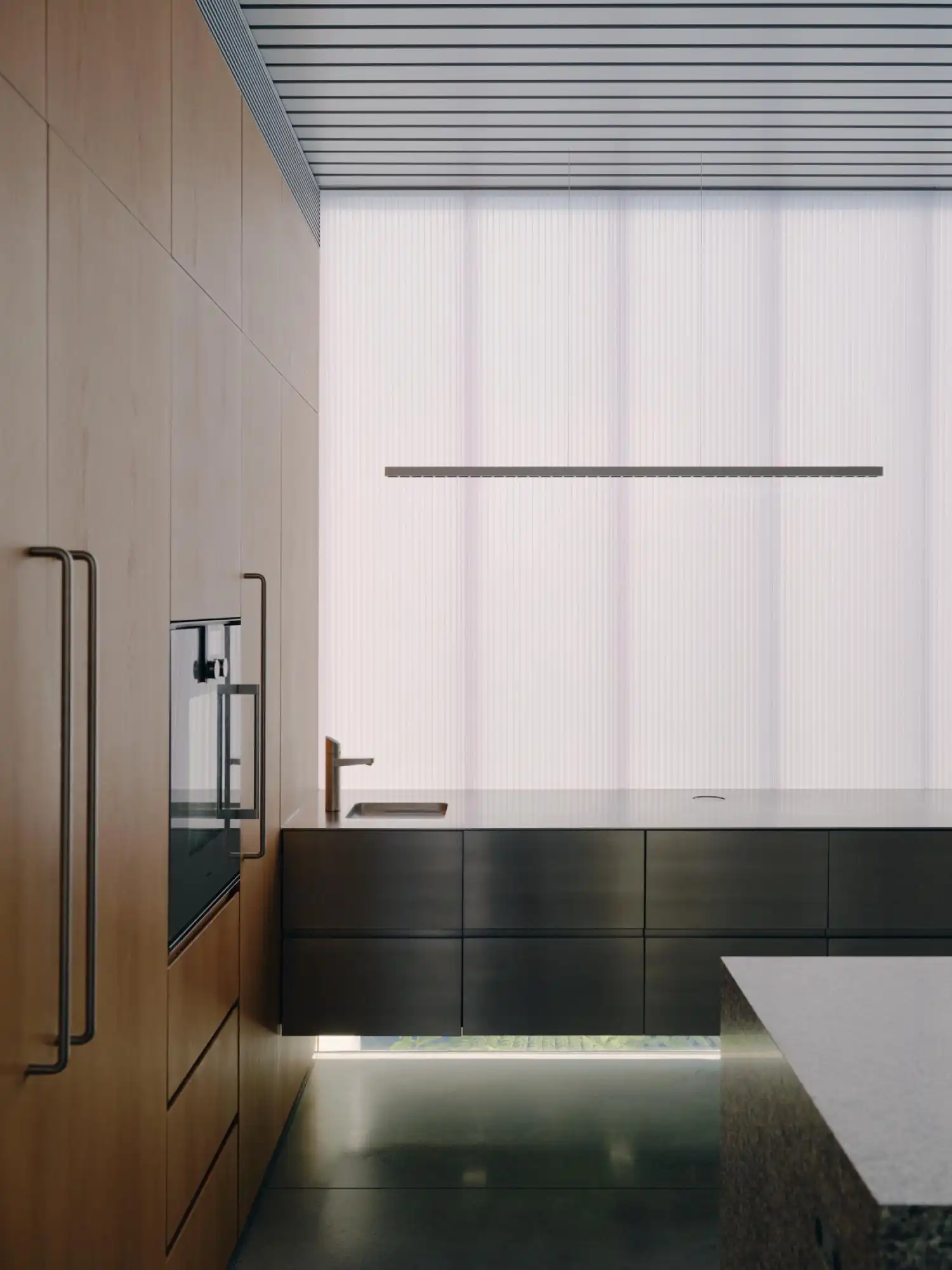
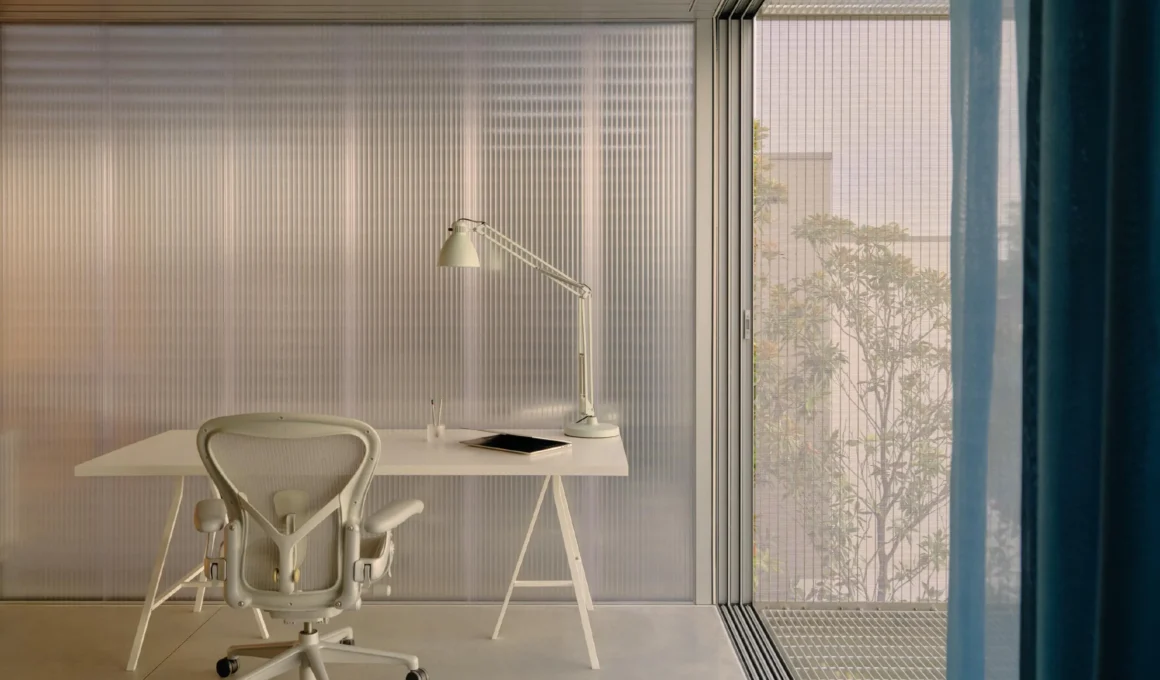
The responsive envelope acts as a sophisticated environmental filter rather than a static wall. By forgoing load-bearing partitions, the facade becomes a curated mix of transparent glass, translucent polycarbonate, and reflective aluminum. This multi-layered skin, augmented by adjustable aluminum louvres and textile awnings, allows the inhabitants to calibrate the interior climate manually. It is an architecture of performance, where the building changes its opacity and permeability in direct response to the shifting microclimate of the coast.
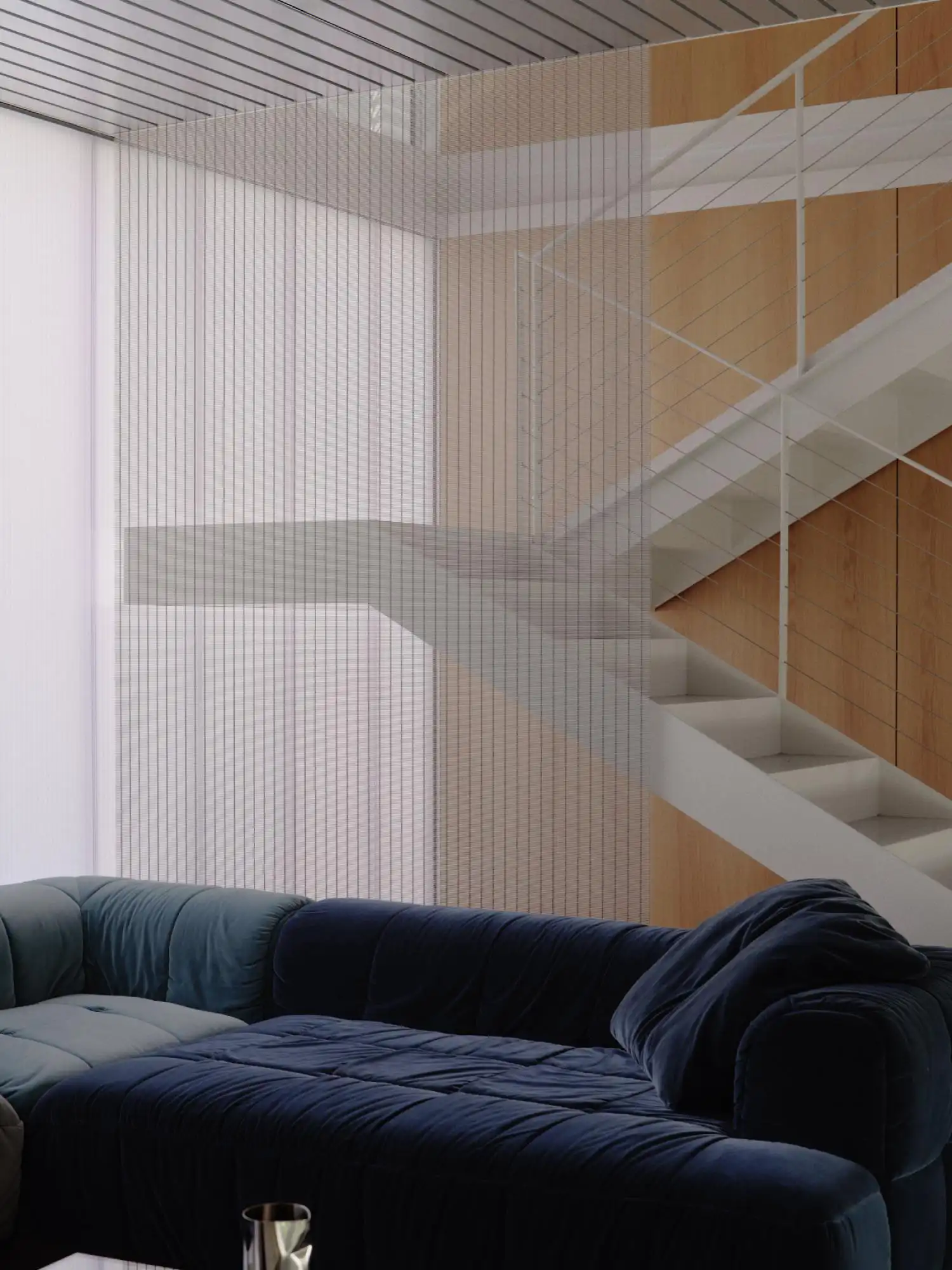
Internal materiality and sensory experience provide a necessary counterpoint to the rigor of the steel frame. While the exterior palette is lean and industrial, the interior is softened by a careful selection of furniture and fittings that bring texture and warmth to the rooms. The continuity between external and internal finishes ensures a seamless transition, yet the “sombre” language of the metalwork is balanced by the play of light through the polycarbonate walls, which mimic the quality of double glazing while bathing the studio in a soft, ethereal glow.
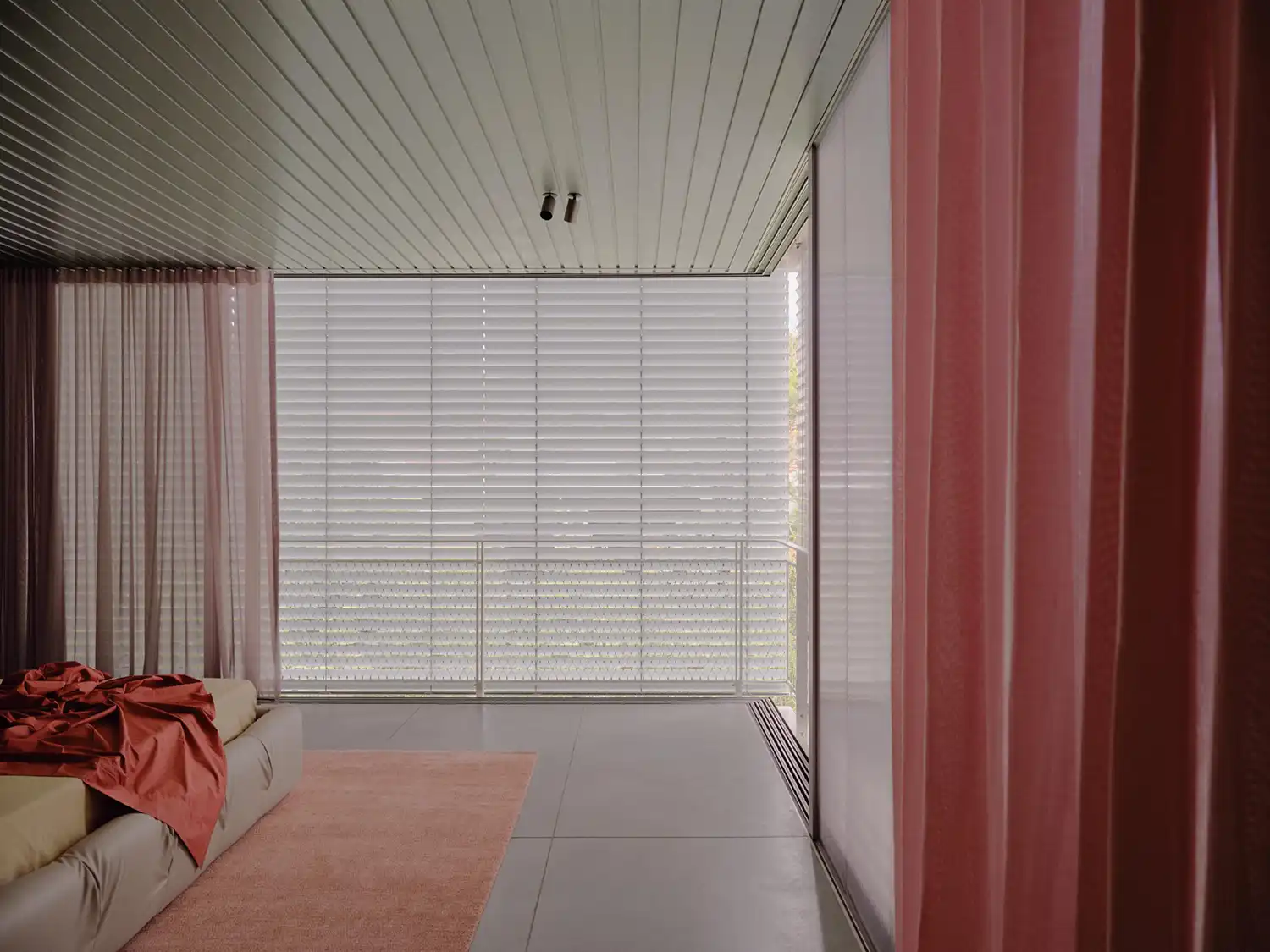
Passive environmental strategies are integrated into the core of the home’s operation rather than added as afterthoughts. The high thermal mass of the floors is supplemented by hydronic heating and a heat pump hot water system, while the removal of gas lines signals a commitment to a de-carbonized future. Solar penetration is maximized in the winter months, while the operable facade ensures that 100% of the site’s rainwater is harvested to sustain the extensive soft landscaping that will eventually envelop the house.
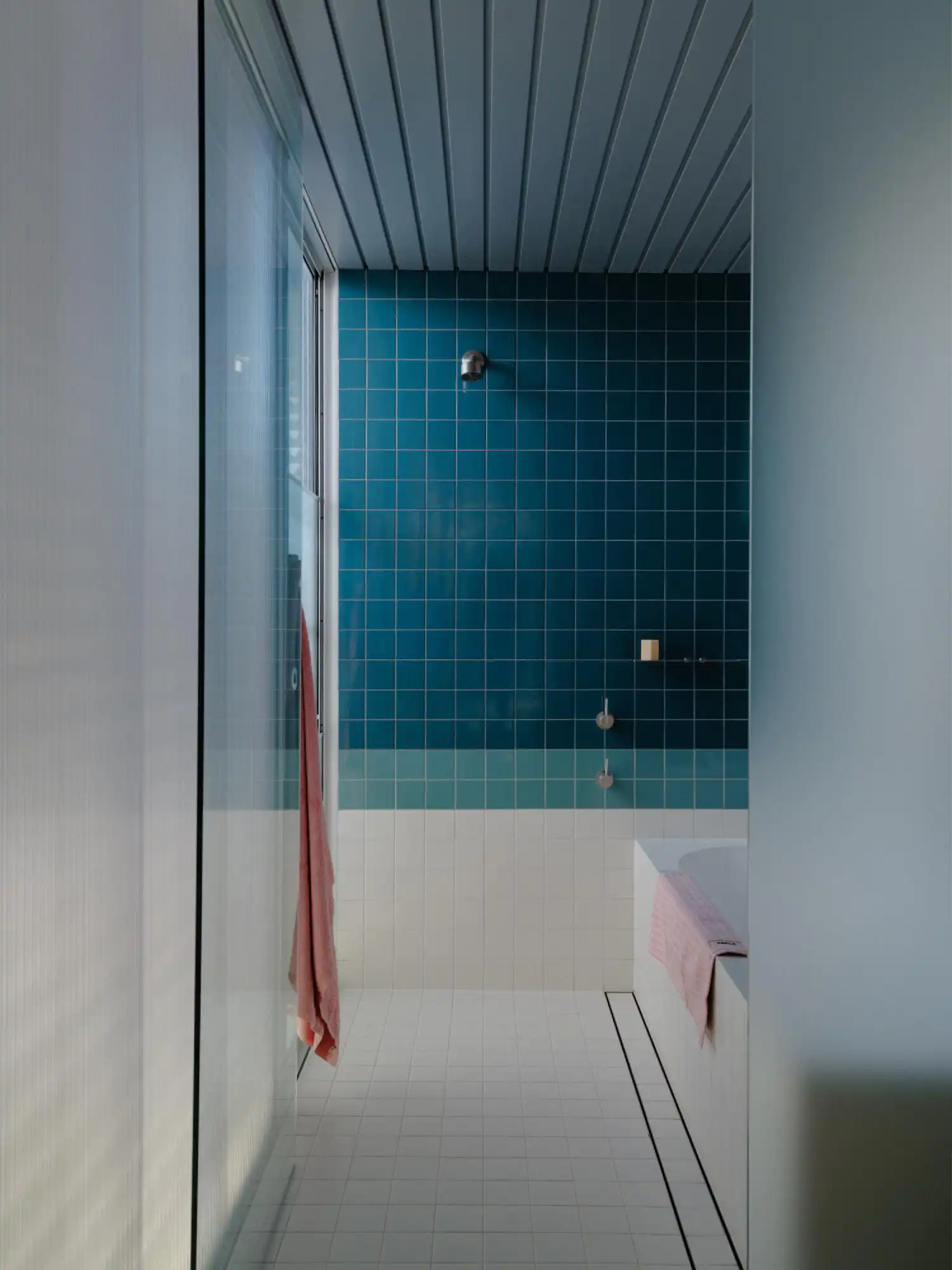
The contextual impact of the Bondi House lies in its ability to be both a private retreat and a laboratory for sustainable living. It stands as a testament to the potential of prefabricated systems to create bespoke, soulful spaces that respect their site’s ecological needs. For those interested in how this project compares to the broader evolution of modernist Australian homes, you can explore more innovative architecture and residential projects in Australia that continue to push the boundaries of regional design.