

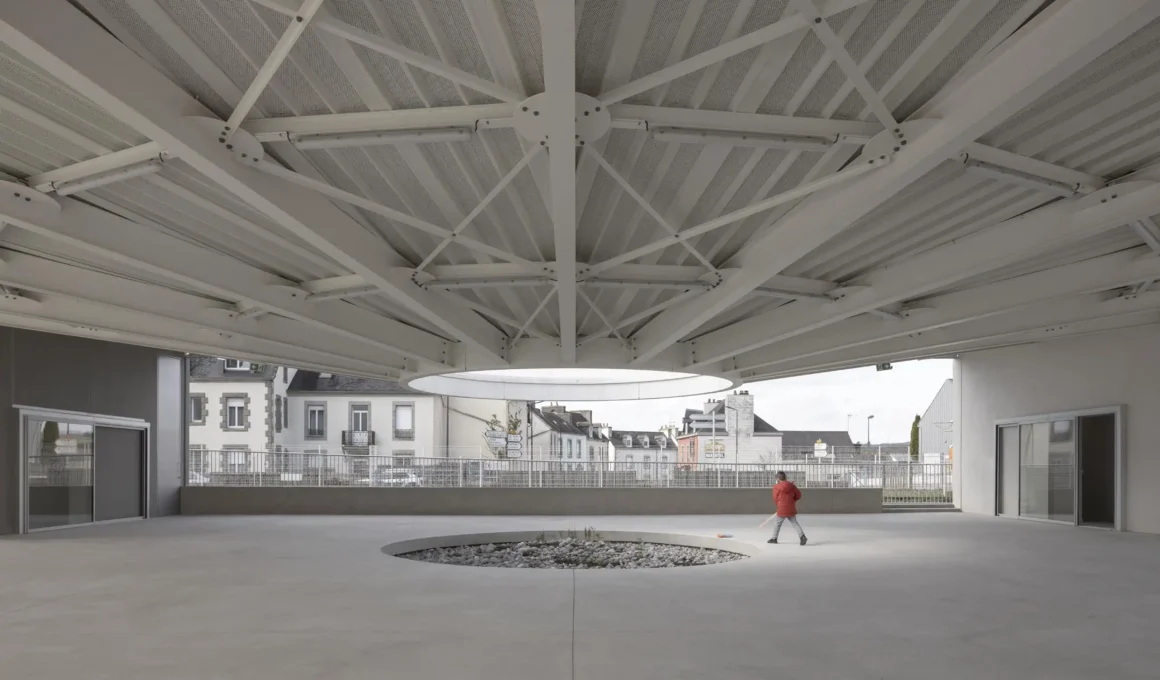
The reimagining of the town center in Pont-de-Buis, France, serves as a poignant study in how architecture can mend a fractured urban fabric. Tasked with revitalizing an enclosed, illegible site, the French practice BRA has avoided the temptation of tabula rasa, choosing instead to engage in a delicate dialogue with the existing Breton heritage. By integrating a new market hall, public square, and train stop, the project transforms a neglected transit point into a cohesive civic heart. The intervention is not merely about adding square footage; it is about revealing the latent potential of a site that had long struggled to find its identity within the scale of the village.
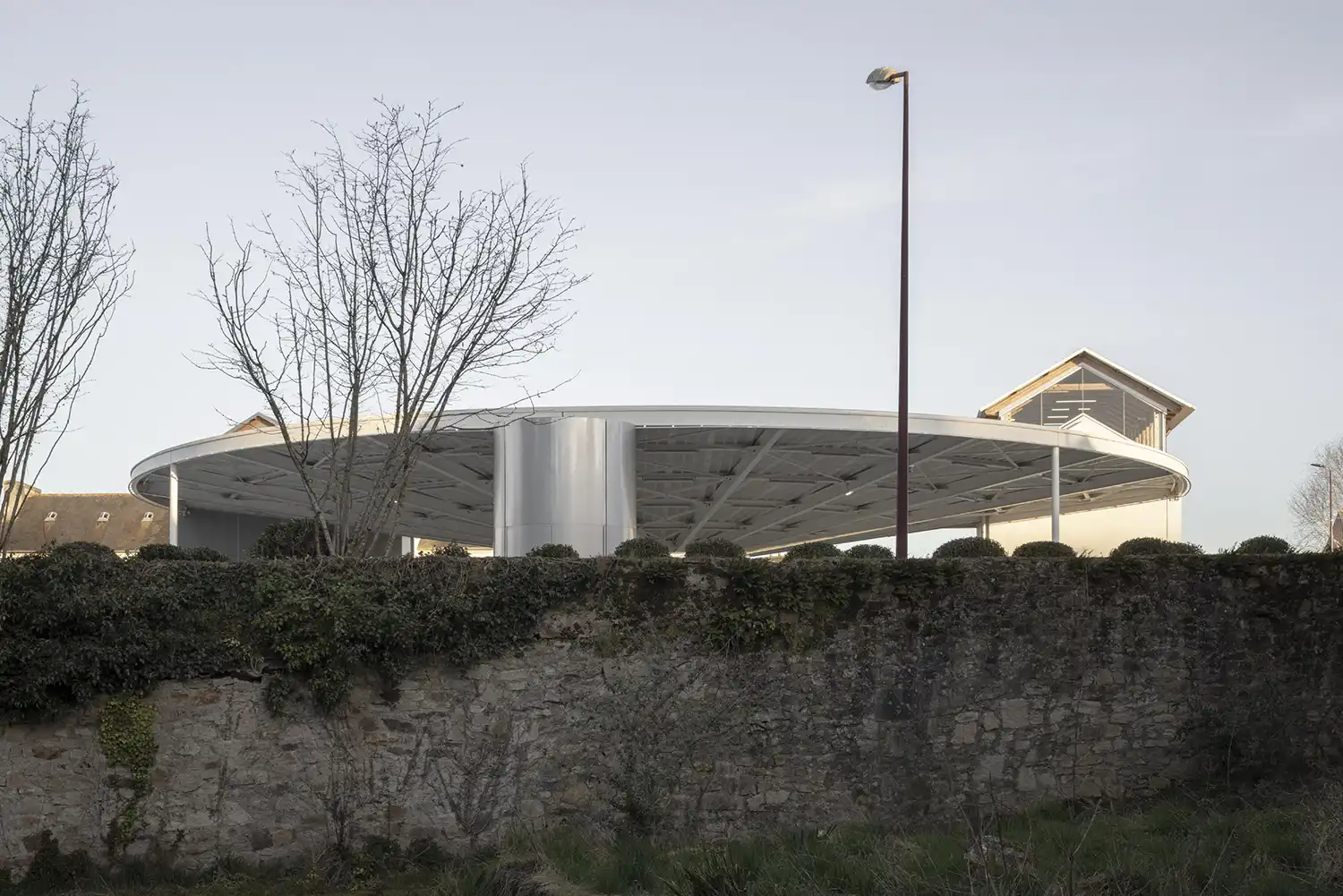
A landmark of circular simplicity now defines the horizon, acting as a geometric compass for the community. The architects opted for a radical, iconic form—a simple circle—to establish a new focal point that feels both contemporary and timeless. This central hall is meticulously positioned to anchor the surrounding buildings, utilizing its braced structure to create a versatile “open room” for the city. The sensory experience is one of surprising lightness; while the form is monumental, the atmosphere remains porous. A micro-perforated curtain, cleverly inspired by the materiality of local agricultural tarps, offers a tactile layer of protection. It shields visitors from the biting Atlantic winds and rain of Western France while ensuring the interior remains bathed in soft, translucent light.
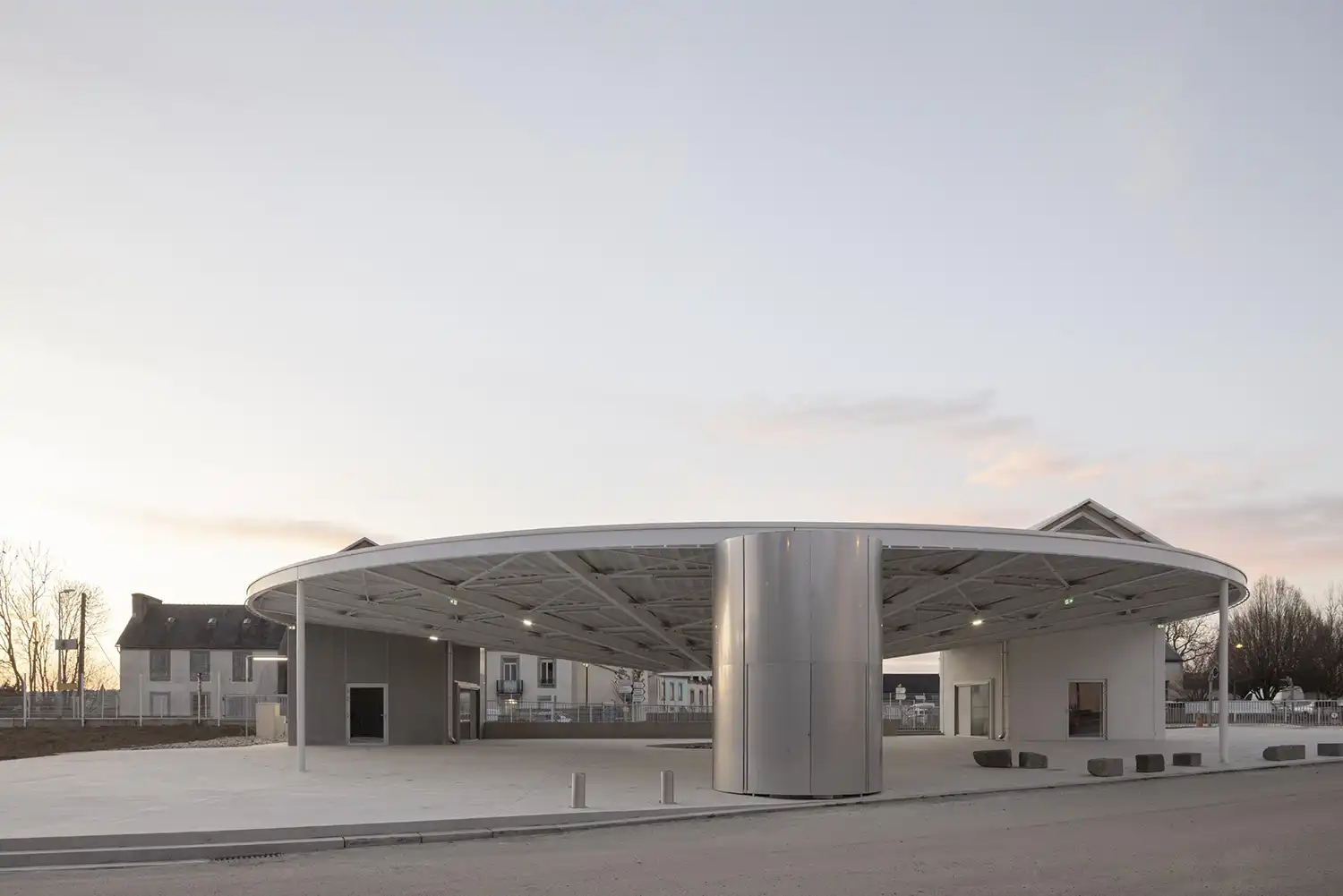
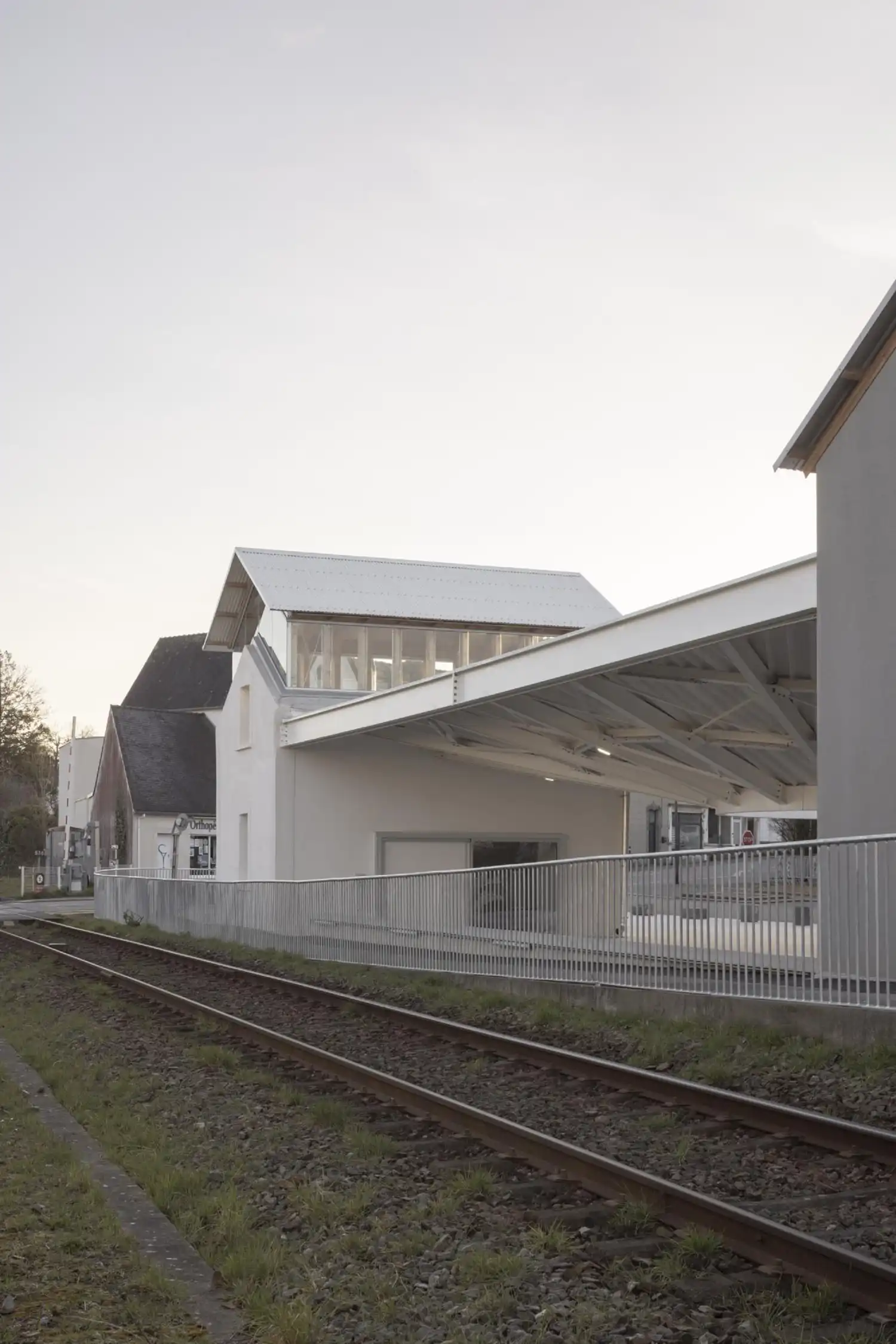
The retention of the original train station pavilion provides a crucial historical tether, grounding the new construction in a sense of continuity. Rather than overshadowing the past, the new market hall responds to the station’s proportions, creating a rhythmic tension between the old and the new. The elevated former station has been repurposed to house a panoramic cultural space, a move that elevates the site’s function beyond mere commerce. From this vantage point, the building marks the literal and metaphorical starting point for the local hiking trails, successfully stitching the town’s urban life into the broader natural landscape of the Aulne River valley.

Technical ingenuity lies at the core of the project’s environmental strategy. At the heart of the circular hall, a landscaped patio serves as a functional lung, concentrating natural light and managing rainwater runoff with quiet efficiency. The roof, a sloping mono-pitched structure, is a pragmatic response to the diverse needs of the community. Its geometry provides ample clearance for merchant trucks during market days, while the perimeter remains accessible and inviting for pedestrians. This “sensitive pragmatism” ensures that the architecture never feels precious; it is a hard-working piece of infrastructure designed to endure the rigors of daily use in a busy transportation hub.
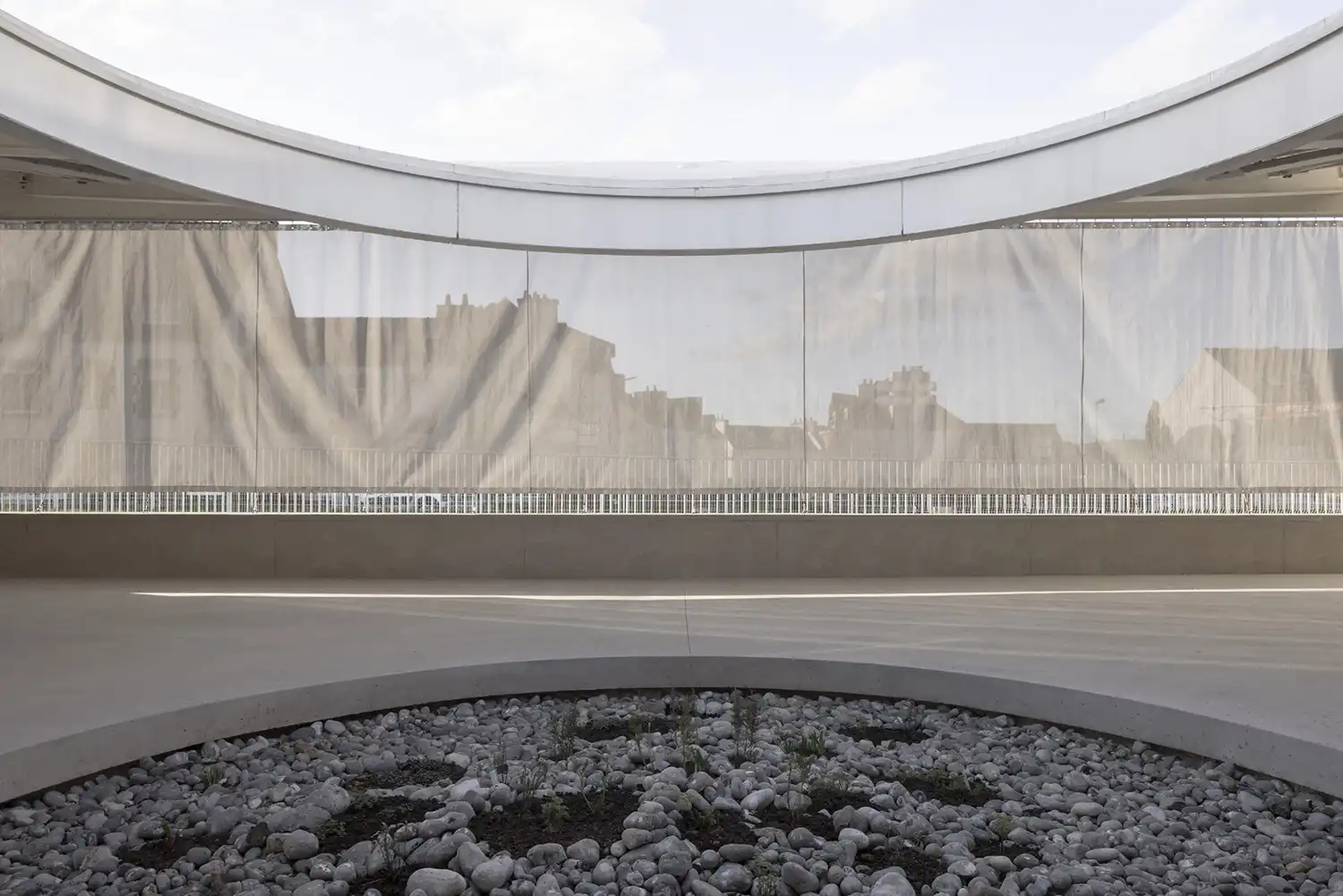
The seamless integration of retail and public space further reinforces the project’s role as a social catalyst. By occupying existing buildings with new shops, BRA has ensured that the square is active even on non-market days, fostering a consistent flow of foot traffic. The project operates at multiple scales: it is a functional asset for the daily commuter catching a train and a symbolic landmark for the resident seeking a sense of place. The architecture acts as a mediator, reconciling the logistical demands of a SNCF rail stop with the human need for a dignified, sheltered gathering space.
The intervention at Pont-de-Buis demonstrates that the most successful urban renewals are those that listen to their territory. By balancing the technical requirements of weather protection and logistics with a high-minded aesthetic vision, the project redefines what a village square can be in the 21st century. It is a space that feels deeply rooted in its context, providing the residents of Brittany with a durable, light-filled stage for public life.