


In the hallowed grounds of London’s Dulwich Picture Gallery, a quiet revolution is taking place. The UK’s first purpose-built public art gallery, a seminal Grade II listed* masterpiece by Sir John Soane, has long been celebrated for its collection of Old Masters and its profound influence on museum design. Now, a new chapter begins with the unveiling of the ArtPlay Pavilion and Canteen, a bold yet sensitive intervention by acclaimed architects Carmody Groarke. This new permanent structure is not an addition to the historic fabric but a freestanding companion, designed to broaden audiences, foster creativity, and spearhead a radical decarbonisation of the entire historic estate.
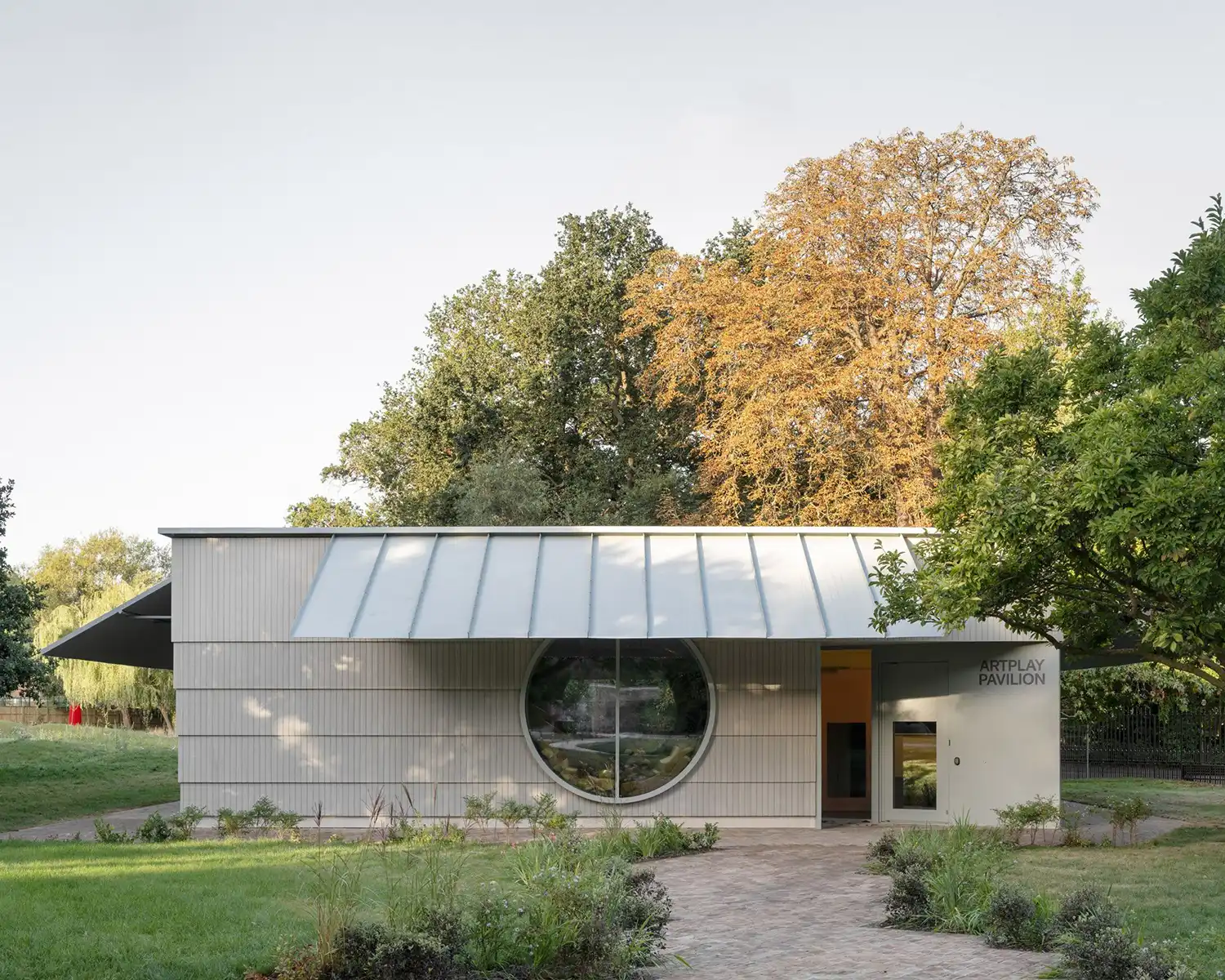
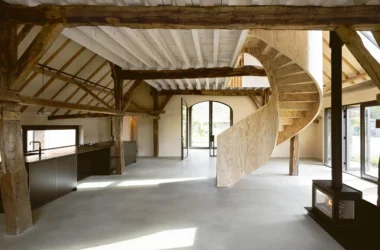
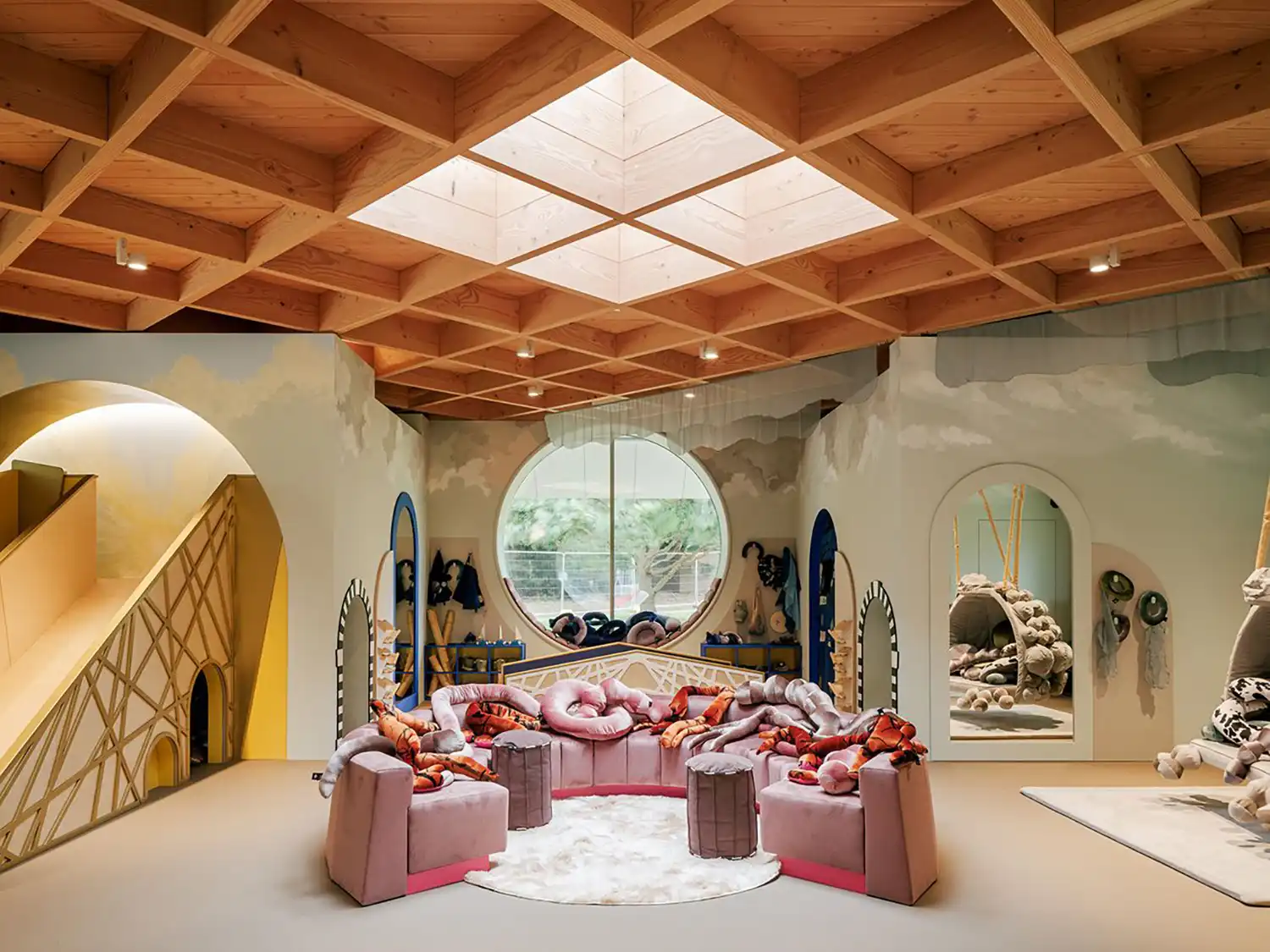
Set within the newly expanded Sculpture Garden, the ArtPlay Pavilion is a purpose-built space dedicated to children’s creative play. Its form immediately establishes a dynamic dialogue with Soane’s original axis. A square footprint is rotated 45 degrees, opening up new sightlines across the landscape and creating a sense of purposeful departure from the old. The pavilion is crowned by its most striking feature: a visually expressive reciprocal timber roof crafted from UK-grown Douglas Fir. This ingenious structure draws natural light from above into the heart of the space, a clear and respectful contemporary echo of Soane’s own pioneering use of top-lighting in the main gallery.
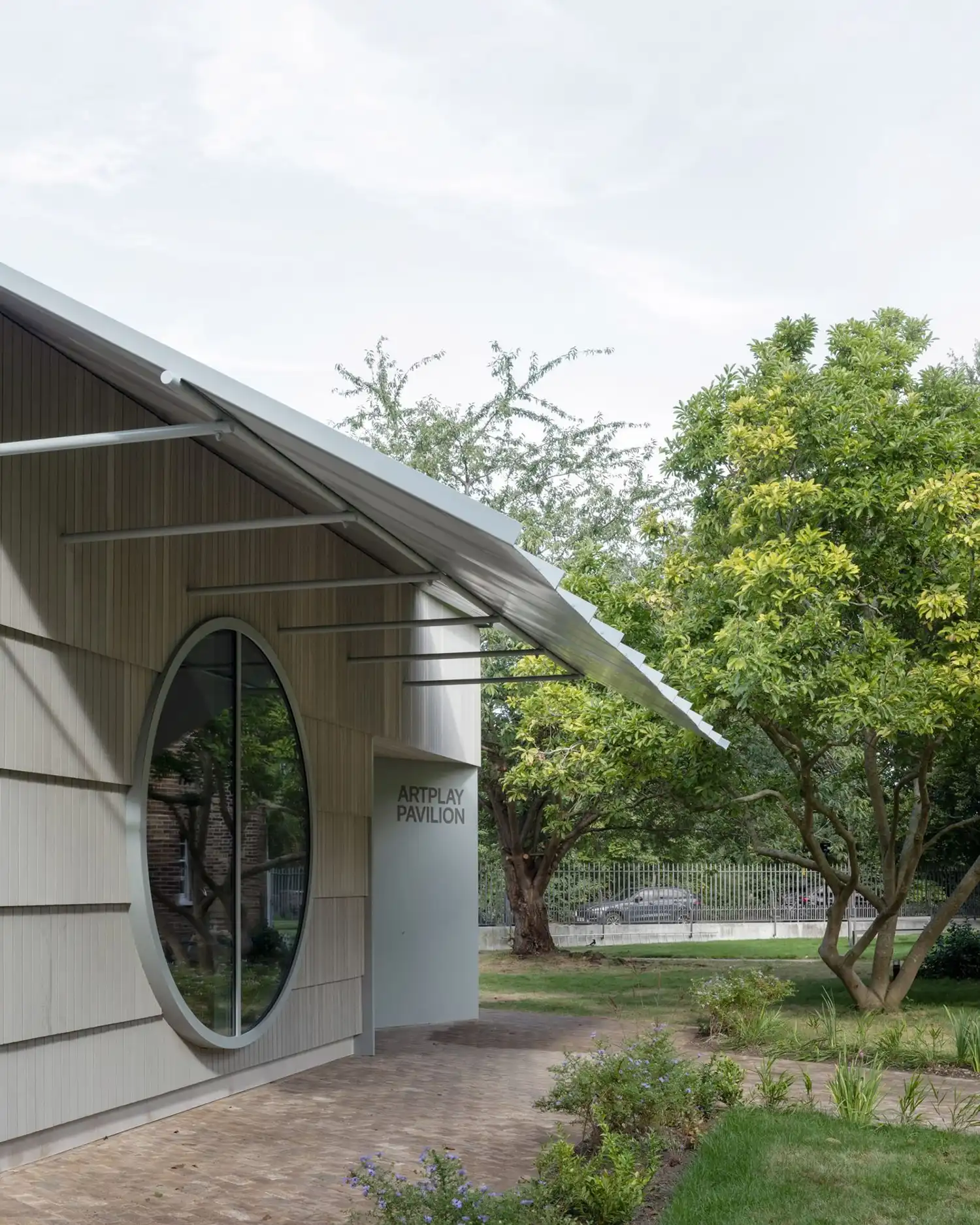
The design philosophy is one of openness and connection. Large, circular-framed apertures puncture the walls, functioning as both windows and playful frames that connect children directly to the surrounding gardens. These portals flood the interior with daylight and encourage moments of joy, discovery, and a direct connection to nature. Externally, generous overhanging painted-metal canopiesreach out on all four sides, providing shelter, passive solar shading, and generous thresholds that blur the line between building and landscape. These canopies are subtly reminiscent of the lantern atop Soane’s nearby mausoleum, creating a thoughtful architectural lineage.
The commitment to sustainable construction is rigorous and integral to the design. The entire pavilion is built from a lightweight timber frame, forming a low-carbon structure that sits lightly within the protected grounds. The design prioritises natural ventilation, passive solar strategies, and low-tech, dry construction methods to minimise both operational and embodied carbon. All timber is fully traceable, with provenance tracked from forest to fabrication, ensuring complete environmental integrity. This low-carbon approach extends beyond the new build; a newly installed ground source heat pump located within the pavilion’s energy centre provides sustainable heating not only to the new buildings but also to Soane’s original 1815 gallery, a major step in the site-wide decarbonisation strategy.
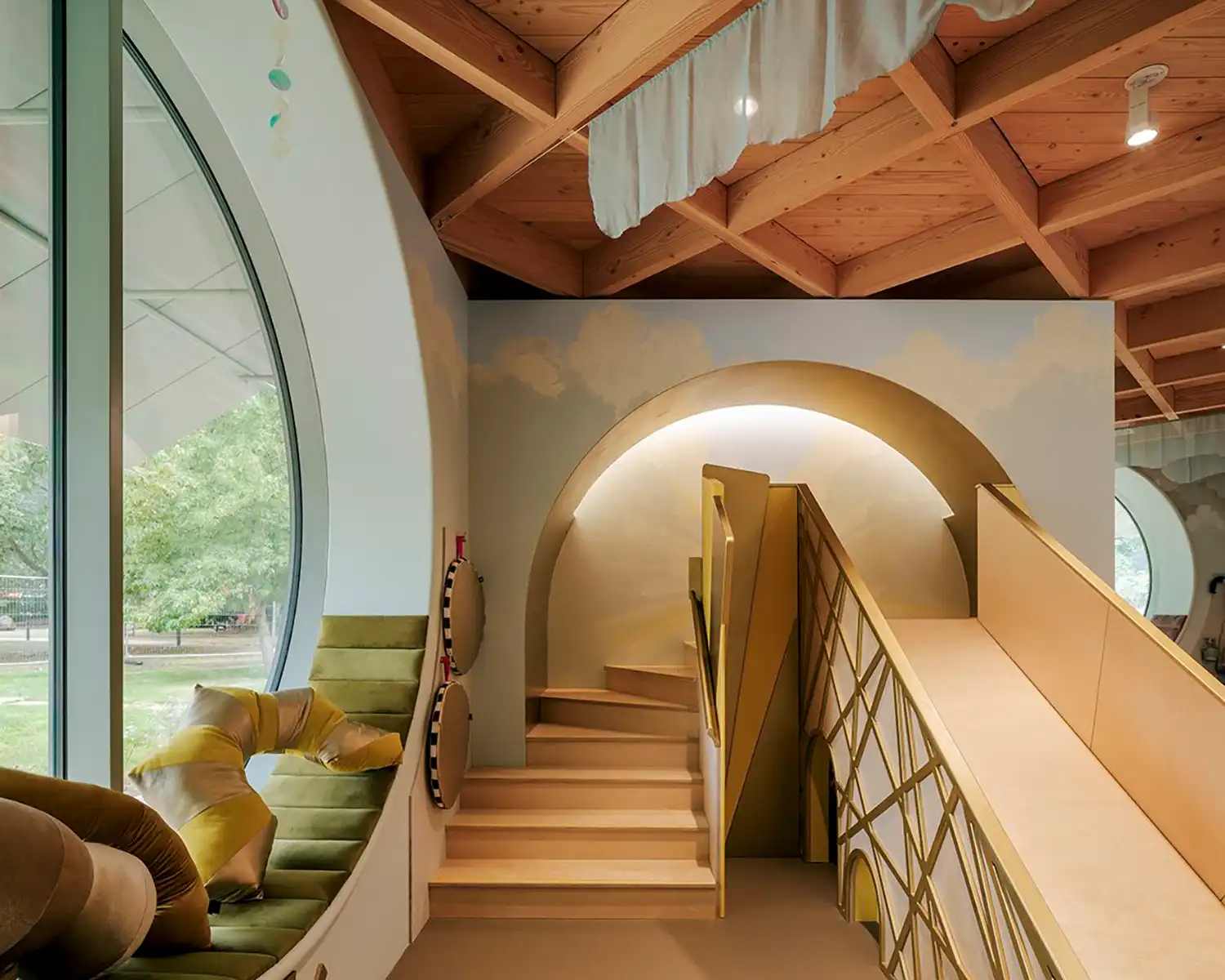
Inside, the square plan takes on a cruciform layout with distinct rooms at each corner housing specific functions. Here, the sensory environment is enriched for imaginative play. The HoLD Art Collective has designed a series of activities for under-8s, with sculpted walls that respond to themes and details from the Gallery’s Collection of historic paintings, translating them into interactive experiences. Adjacent to the pavilion, the formerly disused Grade II listed Gallery Cottage has been adaptively reused and extended to form the new Canteen. Clad in copper with canvas awnings, this light-filled family café and school lunchroom, also constructed in UK-grown Douglas fir, offers panoramic views and enhances the Gallery’s provision for visitors.
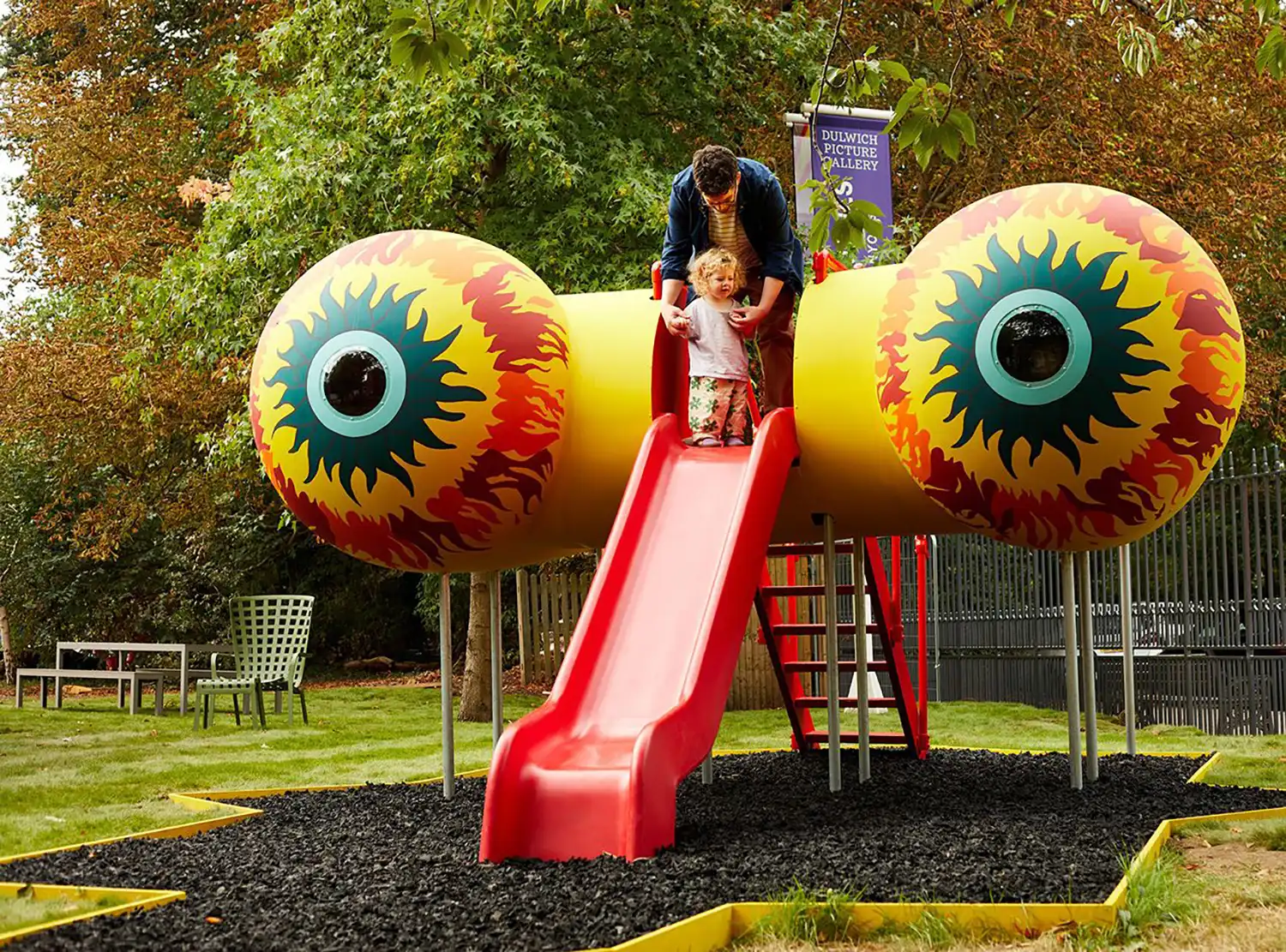
Together, the ArtPlay Pavilion and Canteen represent a profound and optimistic evolution for Dulwich Picture Gallery. Carmody Groarke have responded to Soane’s legacy not through mimicry but through principled continuity: with daylight from above, refined geometries, and buildings that frame rather than dominate the landscape. They have created a new environment that is joyful, deeply rooted in place, and built for the next generation—a space where creative play, environmental responsibility, and world-class art peacefully and productively coexist.