

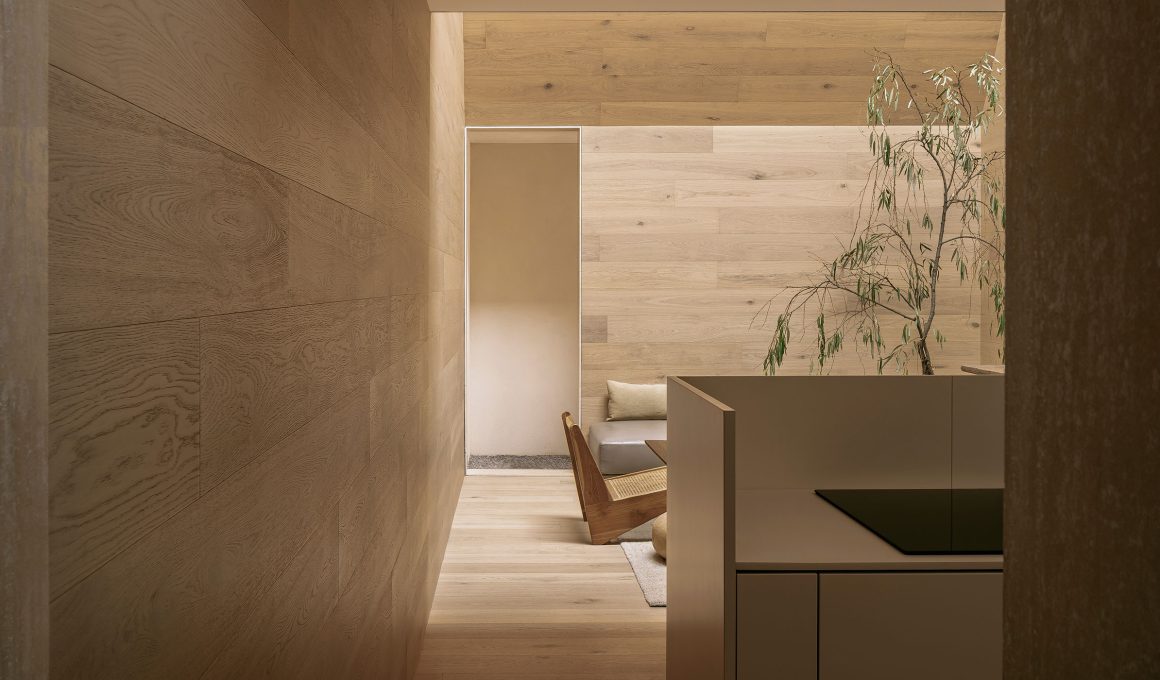
HW Studio‘s Casa Emma in Morelia, Mexico, is more than just a house; it’s a carefully orchestrated experience of light and memory. The architects, deeply moved by their visit to Eduardo Souto de Moura’s Paula Rego Museum, sought to recreate the profound sense of serenity and awe they felt within its pyramidal forms. This experience, defined by the gentle caress of light filtering through high skylights, became the driving force behind Casa Emma’s design.
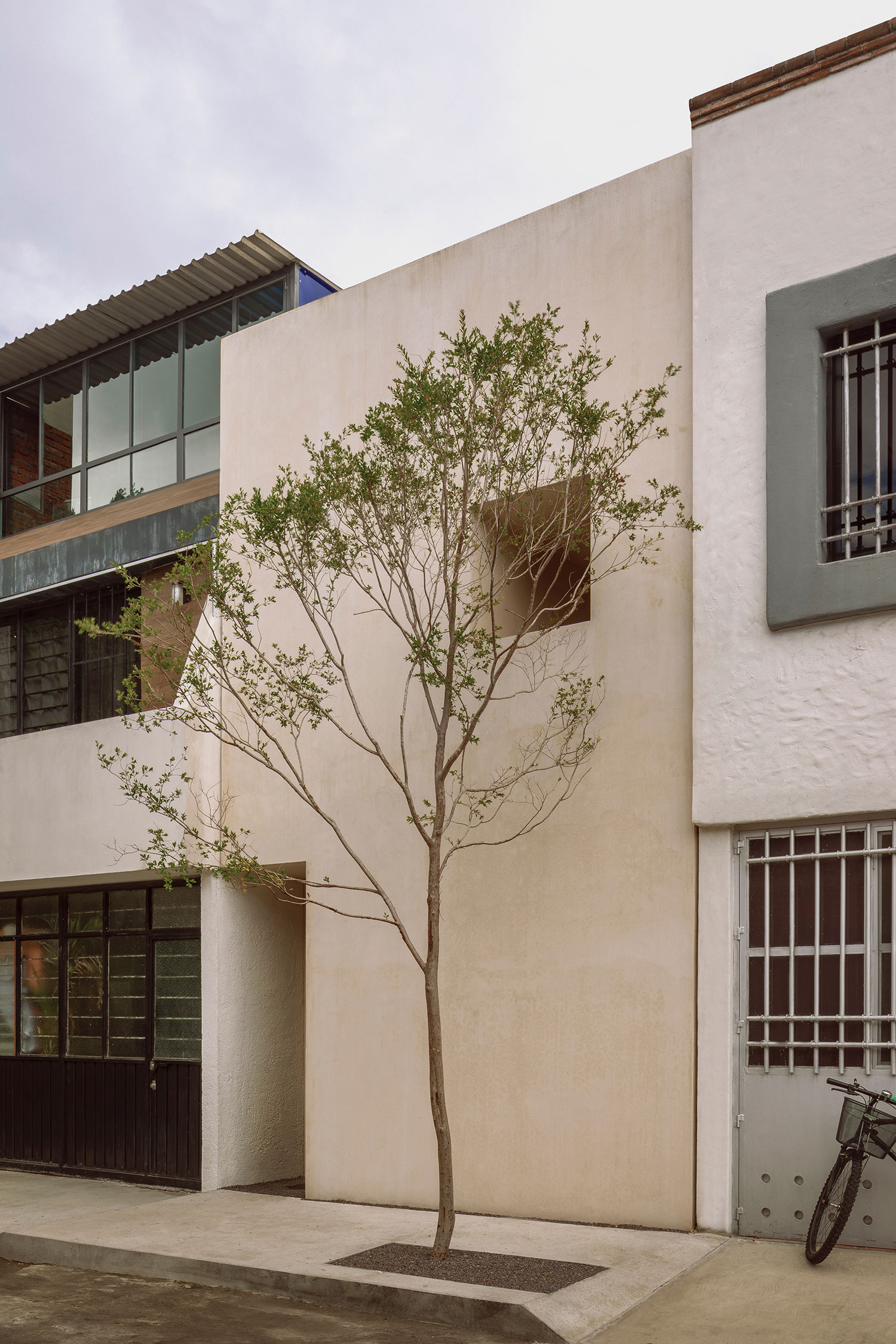
However, rather than replicating the museum’s architectural language, HW Studio embarked on a process of excavation, carving a void within a narrow 4×10 meter plot. This void takes the shape of a traditional Purépecha granary, or Troje, a form deeply significant to the client, Emma. This connection to local heritage informs the interior materiality, which is clad entirely in wood. This choice not only evokes the warmth and texture of traditional constructions but also reinforces the concept of carving a space from within, creating a sense of continuity and respect for cultural heritage.
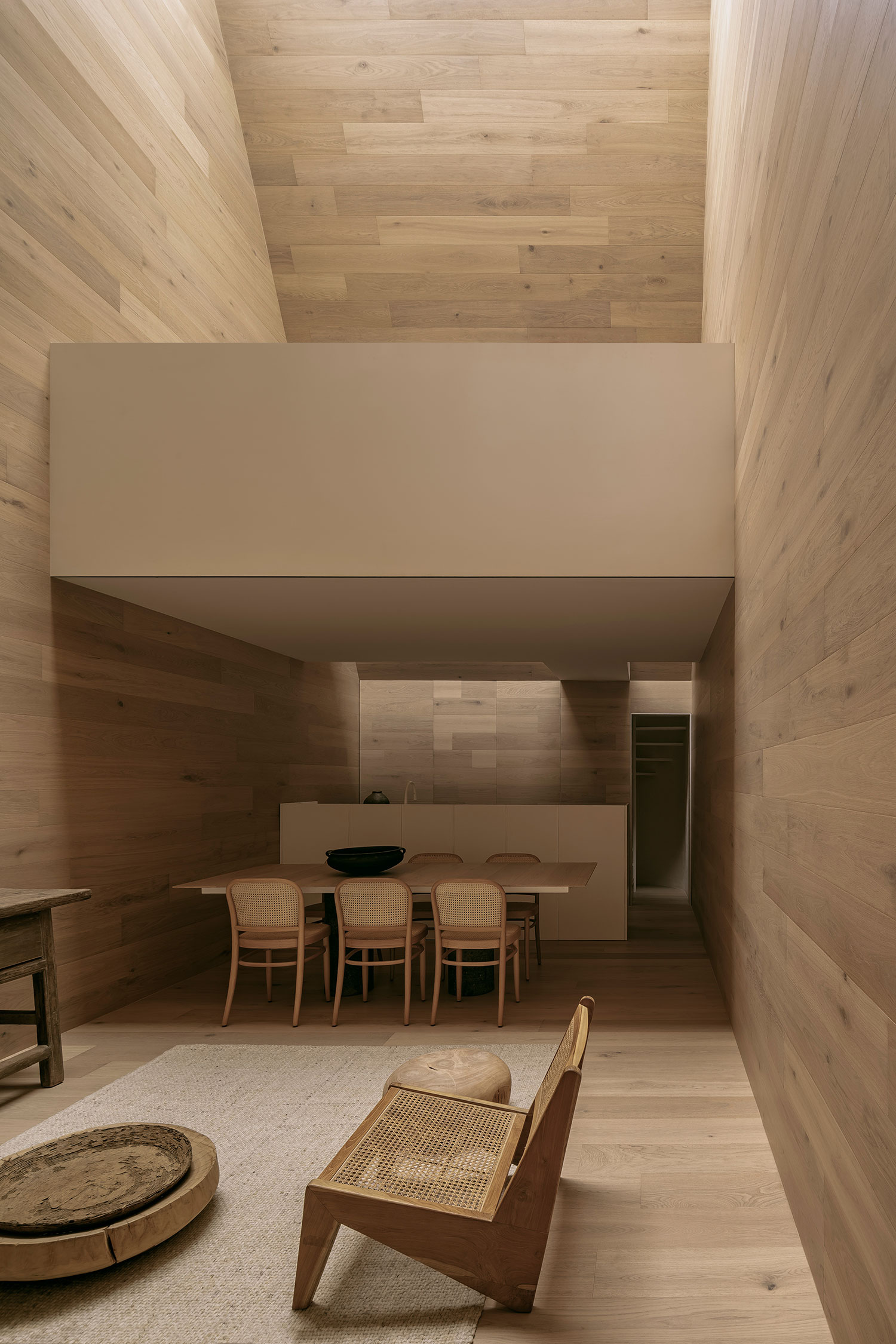
The challenge of such a compact footprint demanded ingenious solutions for light and ventilation. Zenithal lighting became crucial, not just for illumination but for shaping the atmosphere. Like the light that captivated them in the Paula Rego Museum, the architects meticulously studied how to capture and direct downward light, creating an immersive environment that evokes a sense of calm and introspection. This carefully controlled light dances across the wooden surfaces, creating a dynamic interplay of shadows and reflections, animating the space and imbuing it with a tangible sense of presence.
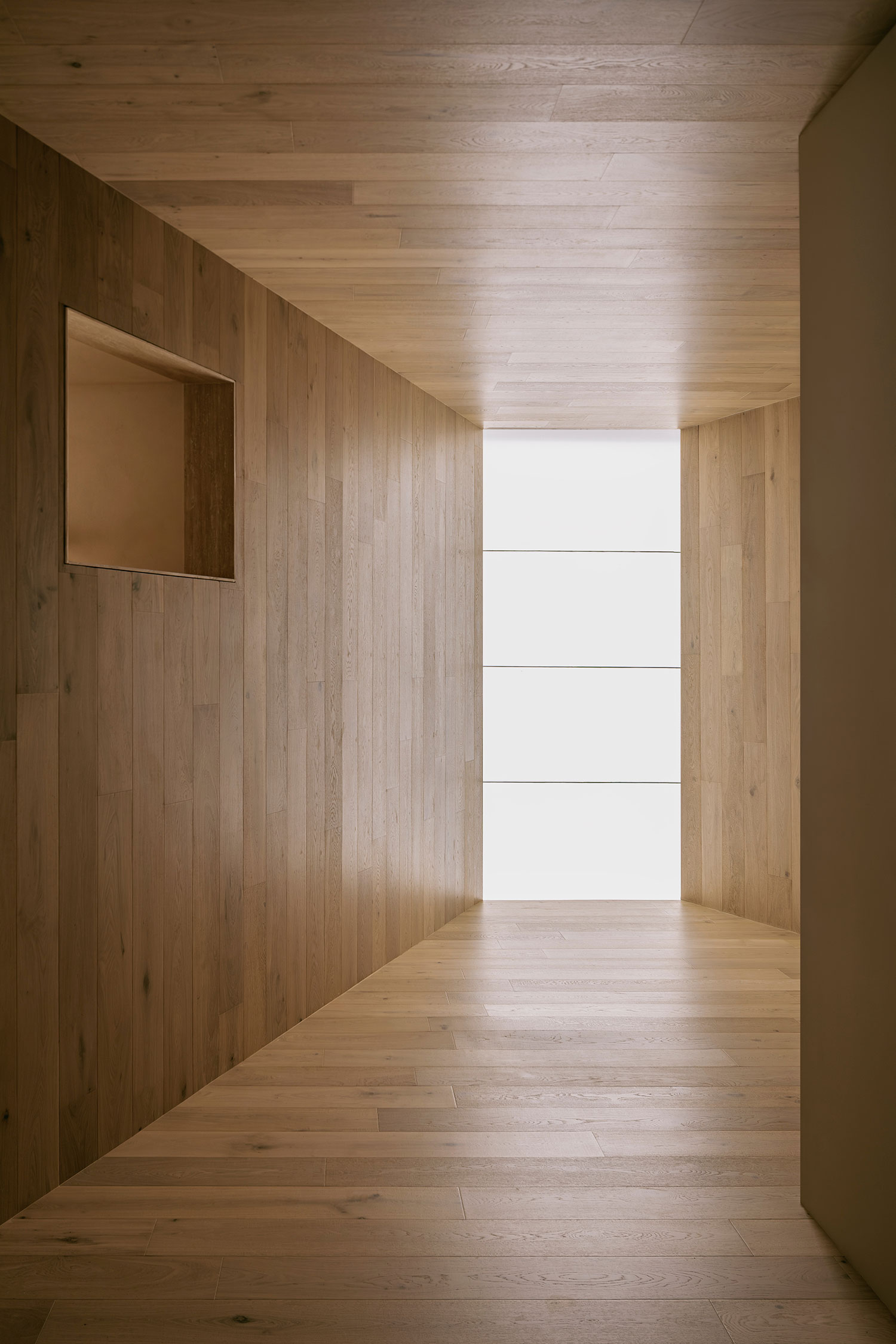
The spatial organization of Casa Emma is equally considered. An access corridor at the front conceals the roofline upon entry, creating a sense of anticipation and revealing the full height of the space further inside. The central area is an open-plan living, dining, and kitchen area, devoid of partitions to maximize the sense of spaciousness. This open layout allows the light to permeate the entire volume, further enhancing the feeling of unity and connection. Discreetly tucked away at the rear are the utility and storage areas, along with the staircase leading to the mezzanine level.
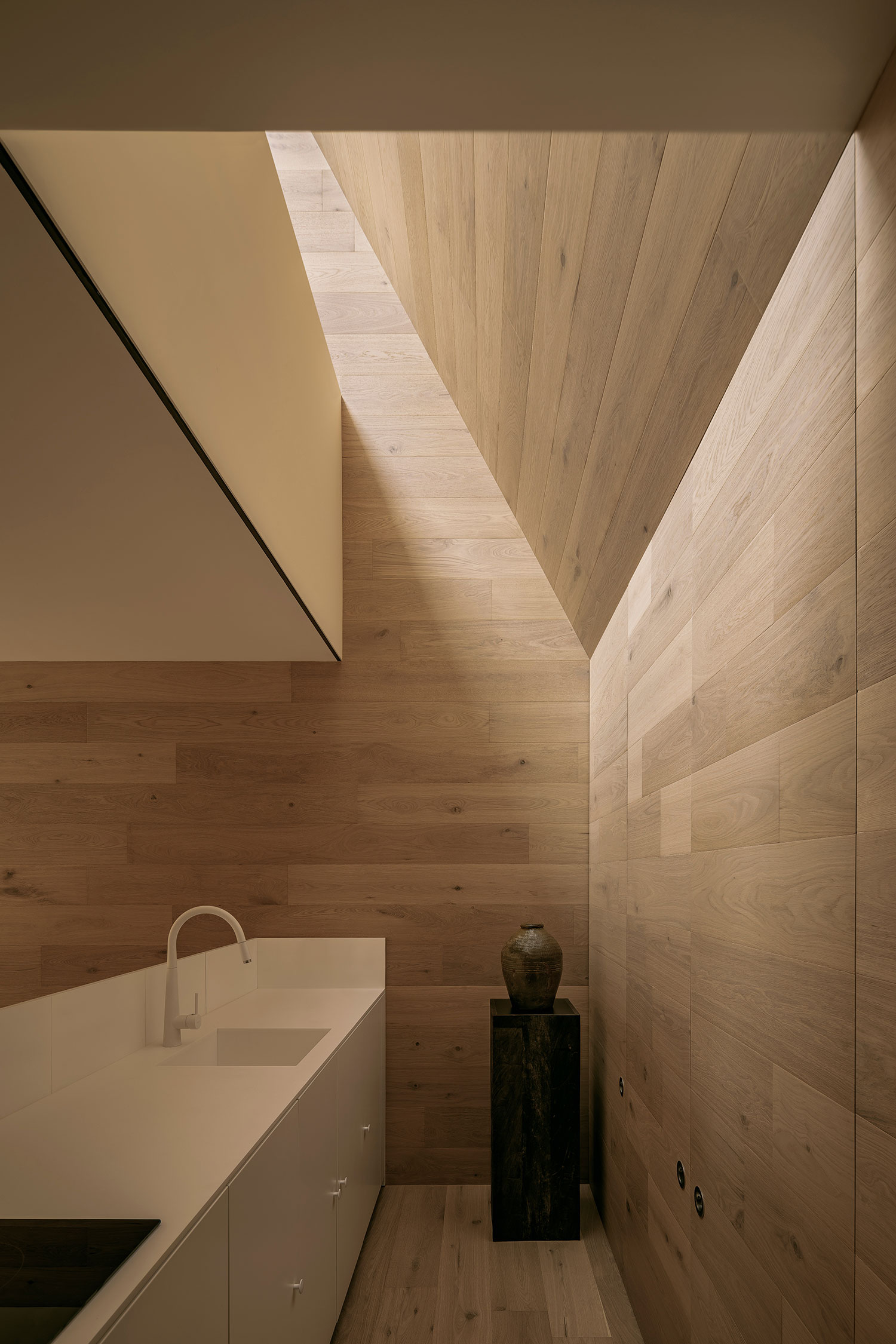
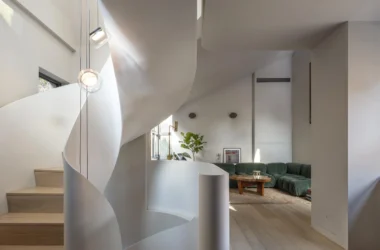
The mezzanine, housing the bedroom and bathroom, marks a deliberate shift in materiality. A white volume, seemingly floating within the wooden structure, defines this private realm. This contrast is not merely aesthetic; it’s a carefully calculated strategy to visually lighten the volume, making it appear as “a piece of cotton floating in space,” as described by the architects. The diffused light further softens its boundaries, blurring its edges and contributing to the ethereal quality.
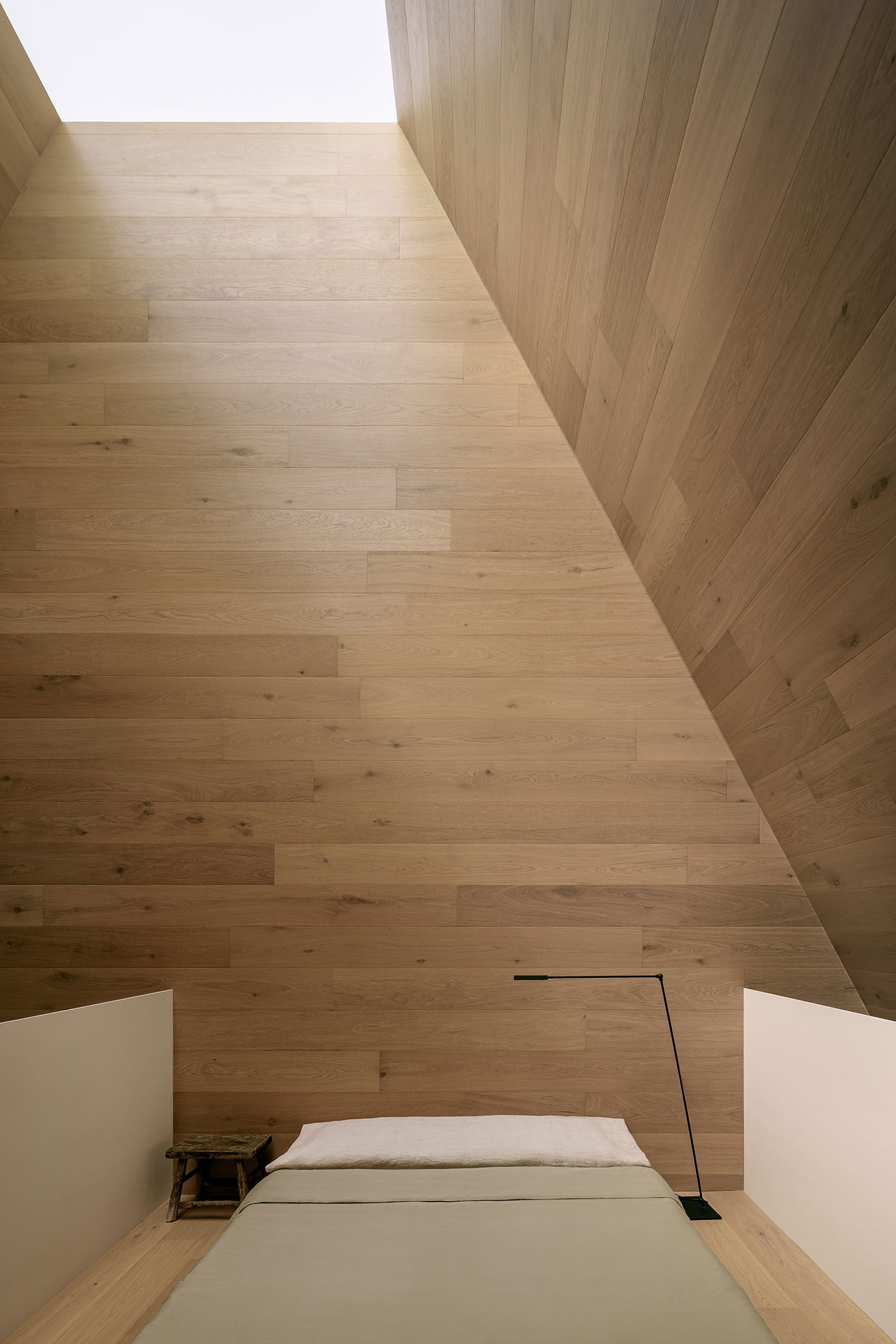
Casa Emma represents a compelling synthesis of influences: the evocative power of Souto de Moura’s architecture, the rich heritage of Purépecha tradition, and the deeply personal connection to the client. By weaving these threads together through the careful orchestration of light and space, HW Studio has created a project that transcends mere functionality, becoming a powerful testament to the ability of architecture to evoke emotion, preserve memory, and connect us to something larger than ourselves.