

Nestled within El Puerto de Santa María—a sun-drenched Andalusian town celebrated for sherry vineyards and pristine beaches—lies a 300-year-old architectural gem known as Casa Puerto. Once languishing among the town’s fabled “100 palaces,” this historic residence has been meticulously reawakened by Madrid-based studio Lucas y Hernández-Gil. Commissioned by an Austrian couple and their two daughters, the project embodies a radical approach to historic renovation: a phased, surgical revival they poetically term “architectural acupuncture“.
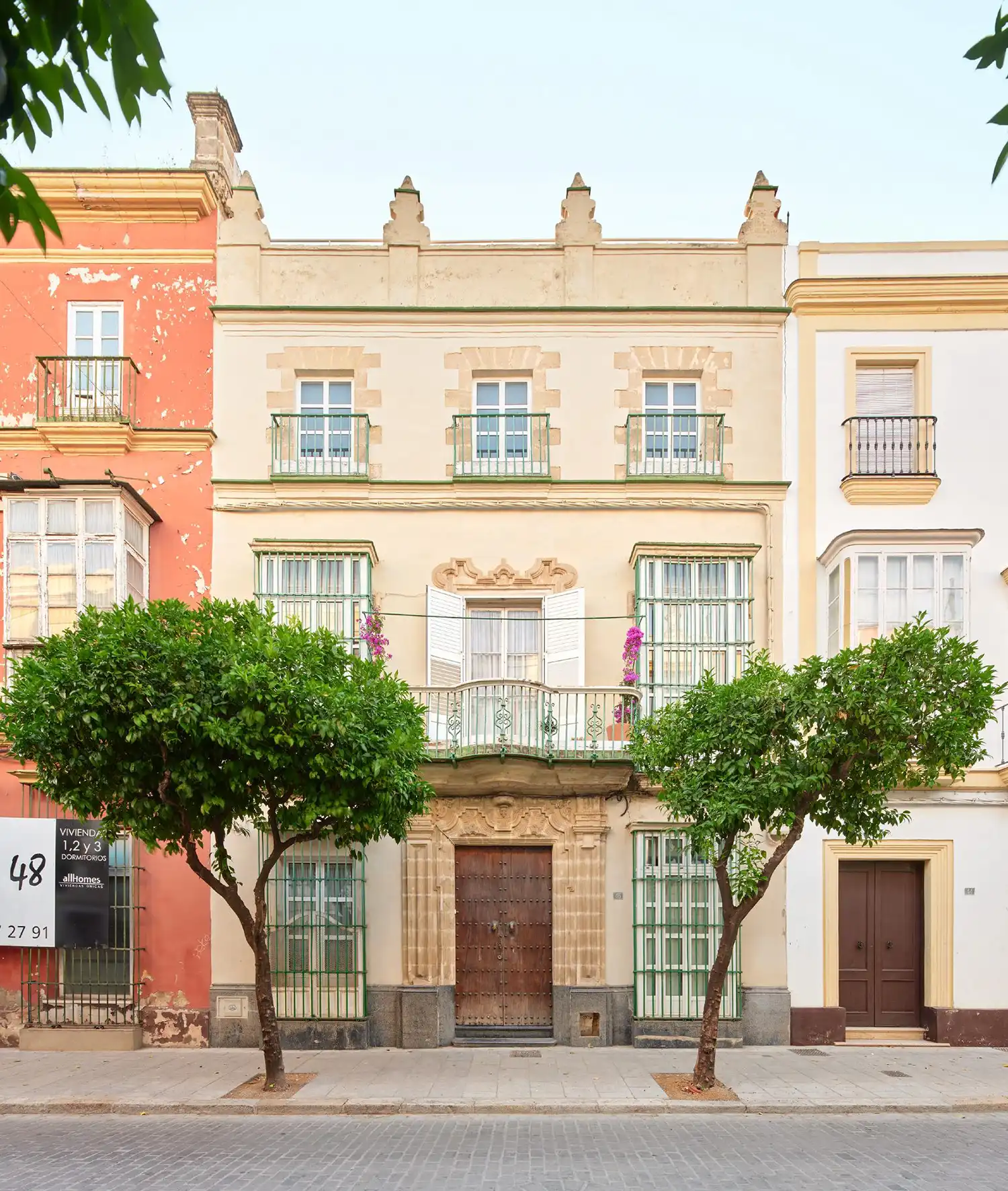
Faced with a three-story mansion in irregular states of preservation, the architects rejected a total overhaul. Instead, they deployed precise interventions only where the structure was most fragile. “By focusing on less-qualified areas and keeping others almost untouched,” explains the studio, “we revitalized the whole without losing its original charm“. This method allowed the family to inhabit parts of the home while restoration continued—a practical solution for living heritage. New elements were inserted as freestanding “boxes” or “large furniture pieces,” ensuring the original structure remained unaltered. A ground-floor bathroom, for instance, inhabits a wooden volume hovering beneath vaulted ceilings, never touching historic surfaces.
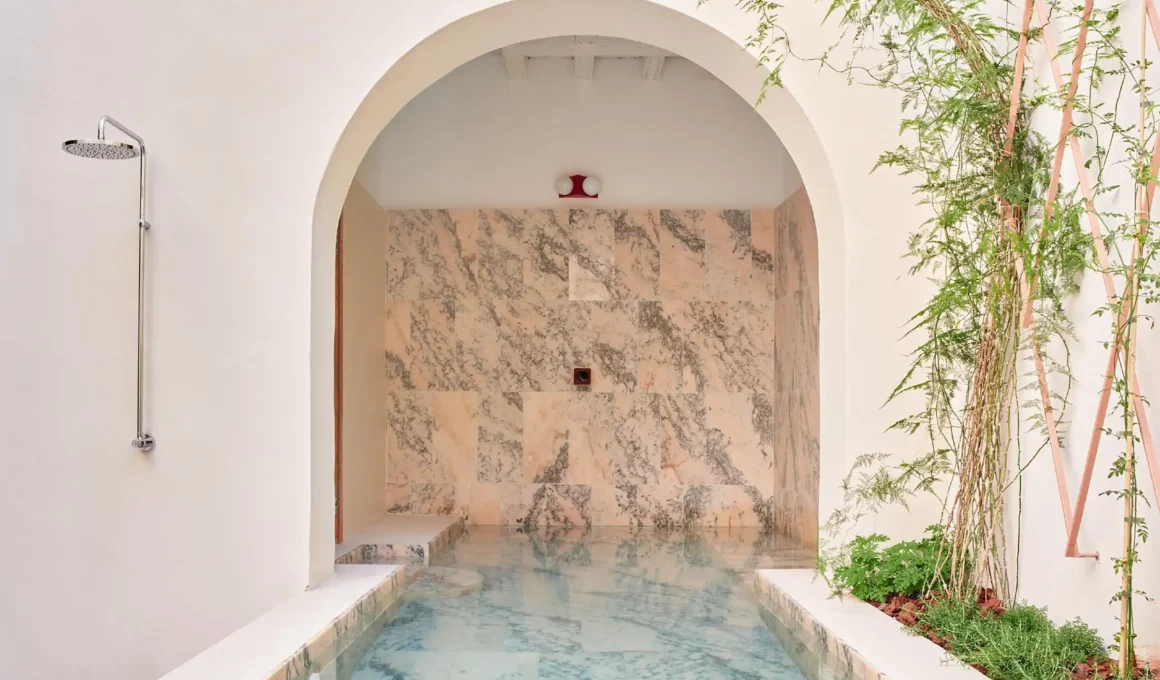
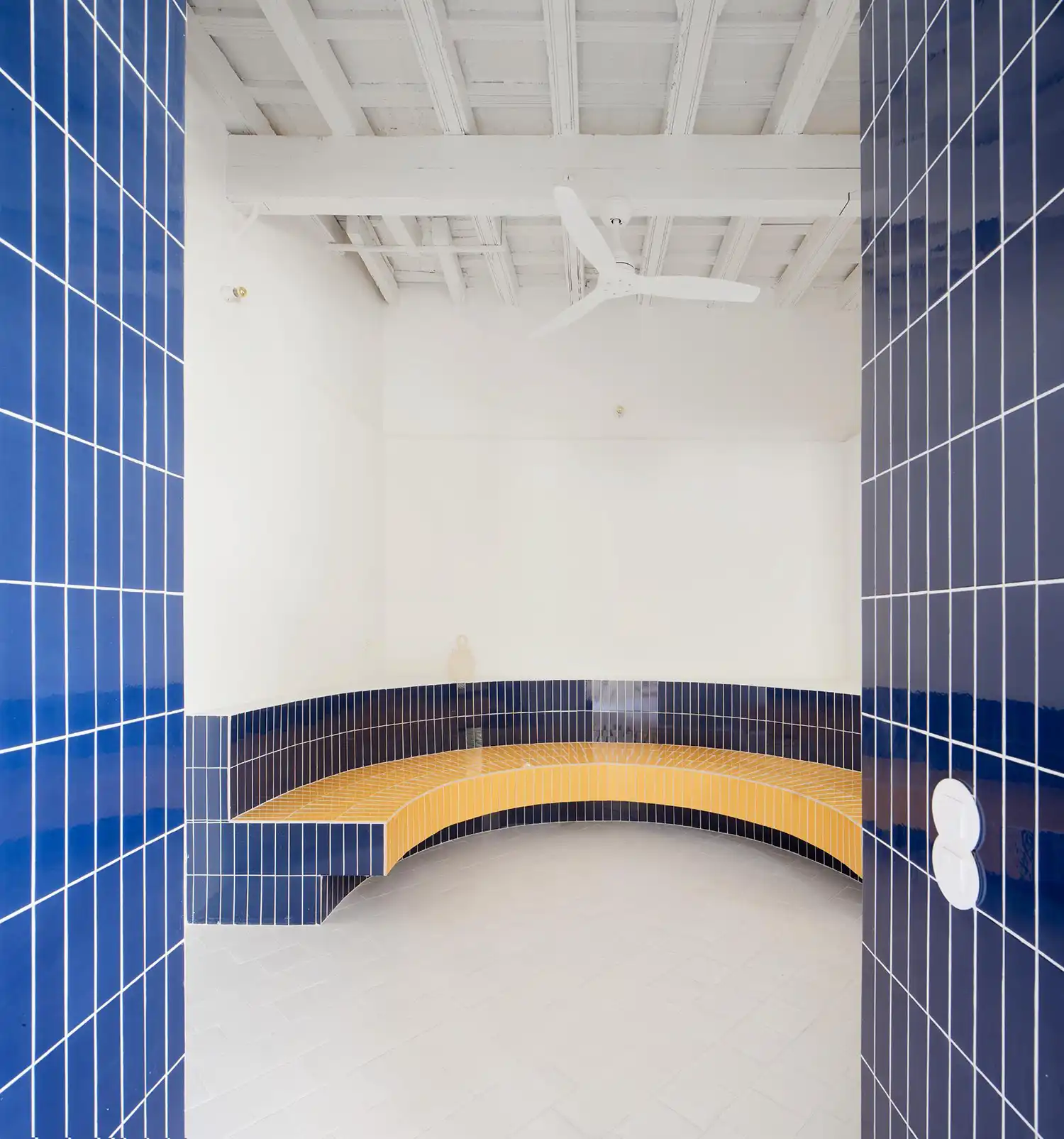
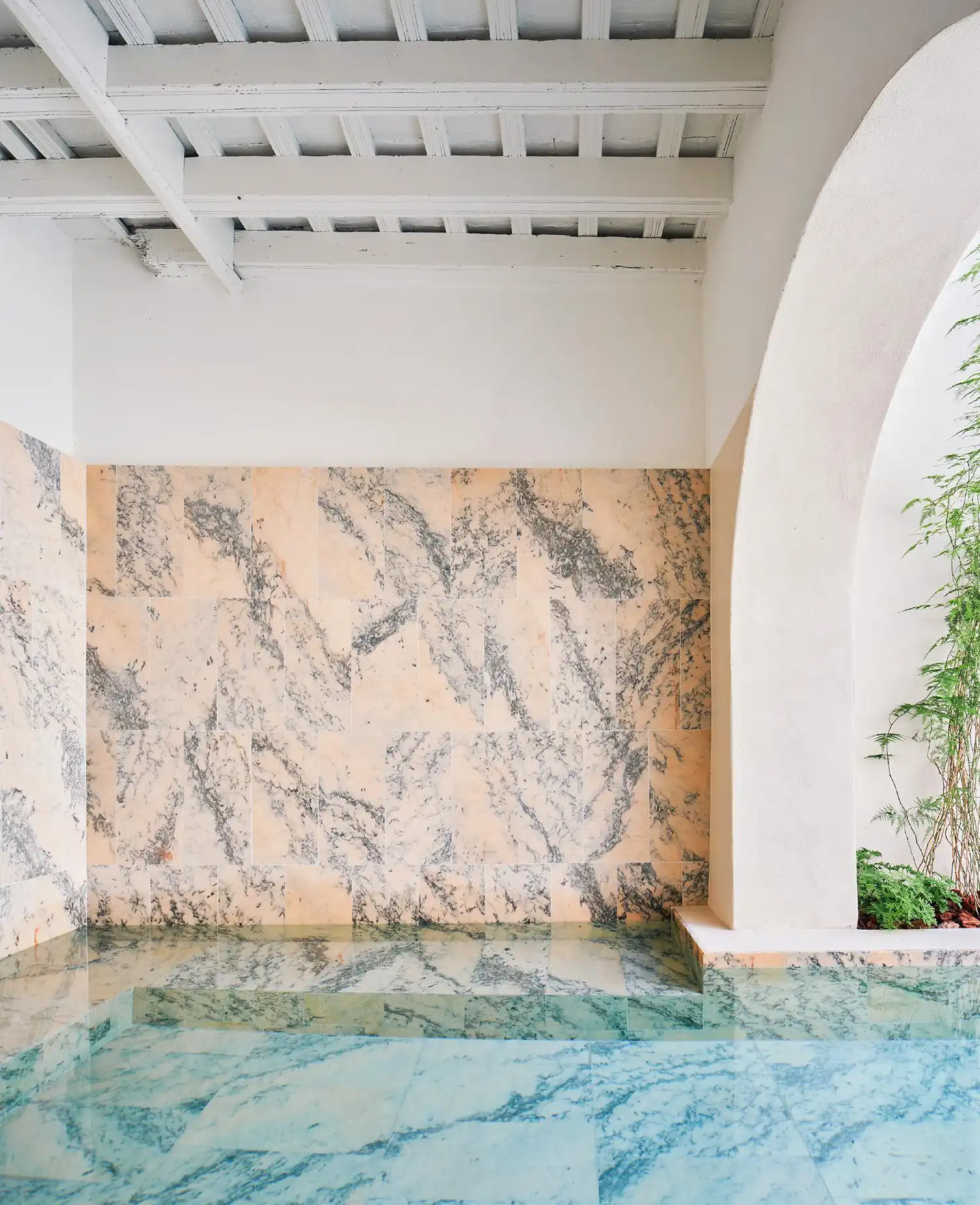
The heart of the revival is a pink marble-lined pool in the rear courtyard—a modern reinterpretation of Roman thermal baths. Accessed through a ceramic-tiled apodyterium (changing room), the space features a sweeping semicircular bench clad in blue and yellow glazed tiles. This nod to antiquity transforms the pool into a year-round social epicenter, tempering Andalusia’s fierce summers while creating a therapeutic oasis. The pool’s placement turns the courtyard into an inward-focused sanctuary, visible from upper floors through a glazed opening in the first-floor kitchen—a deliberate visual connection between old and new.
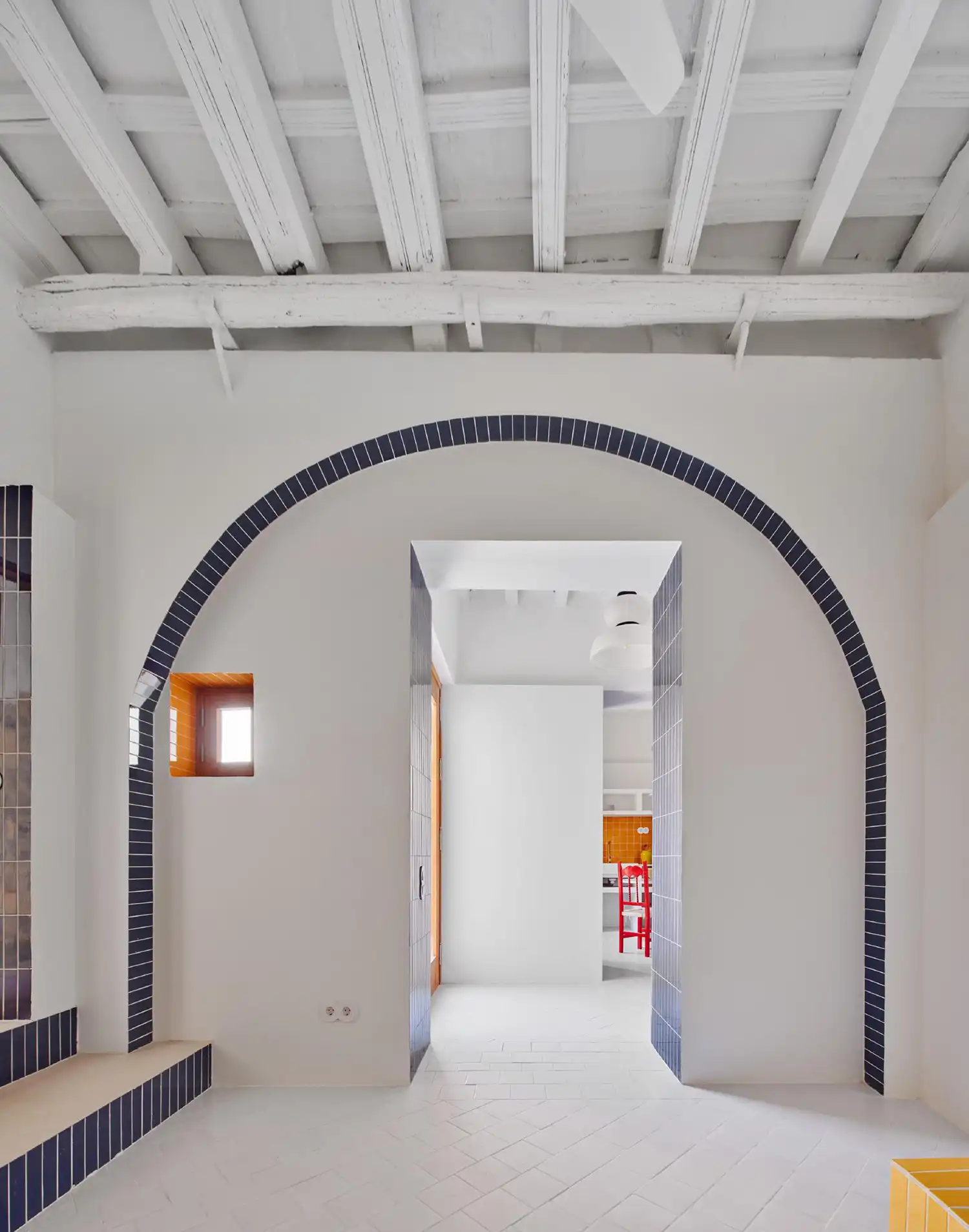
With over 30 rooms spanning three floors, circulation spaces became critical design opportunities. The architects lined doorways, stairs, and corridors in reflective blue tiles, creating a luminous journey through the home. “These thresholds connect the memory of the house with the sea,” notes the studio. The tiles’ watery sheen amplifies natural light while subtly honoring El Puerto’s coastal identity—a masterclass in narrative-driven materiality 1. In the kitchen, clementine-orange tiles form a vibrant backsplash, contrasting with white-painted surfaces to modernize without erasing history.
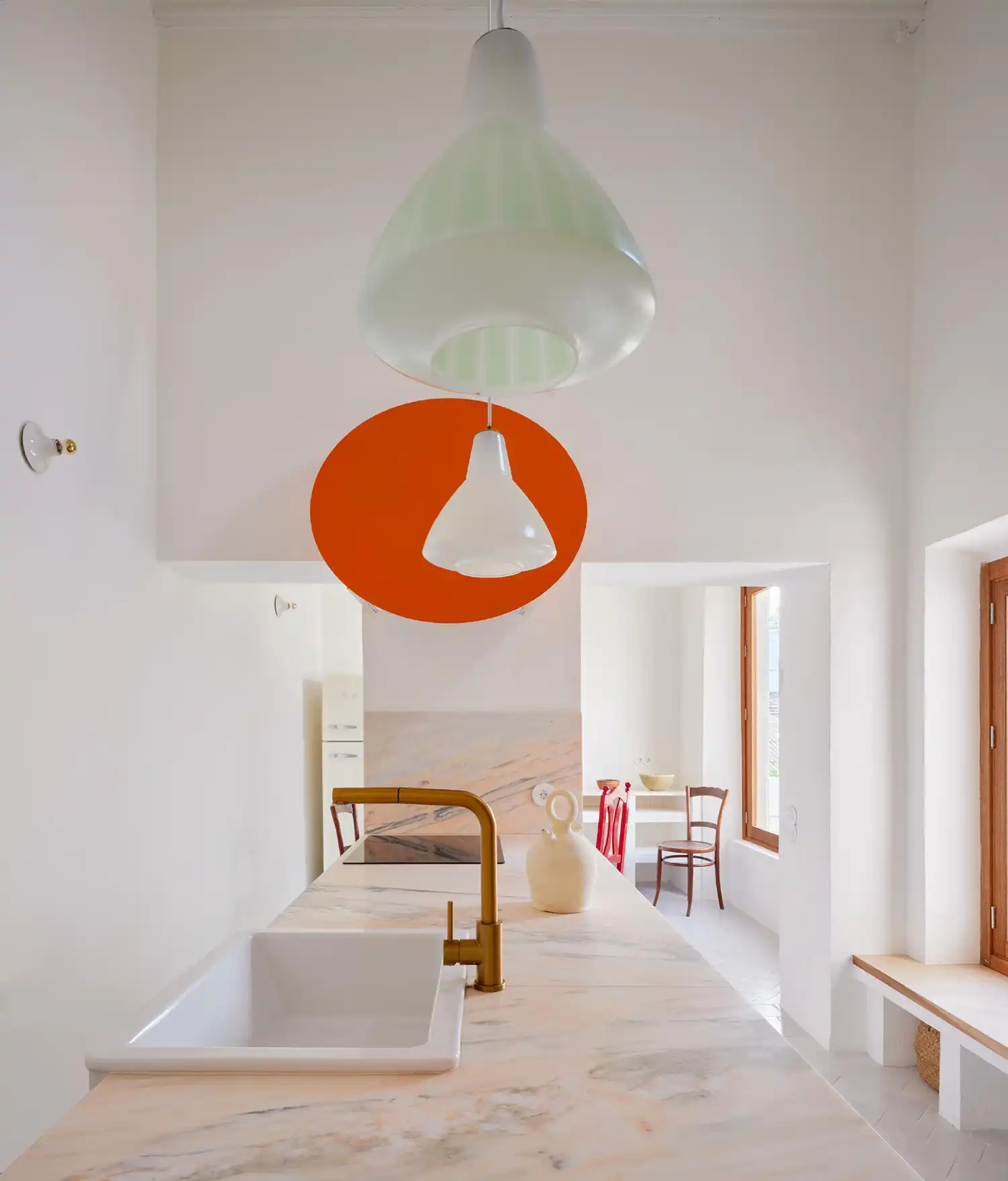
To accommodate the family’s international guests, the architects split culinary functions across levels. A playful first-floor kitchen features a bright-red circular range hood and floor glazing overlooking the pool. This allows the upper floor to operate as a self-contained apartment when needed. Bedrooms incorporate minimalist wooden volumes for en-suites, resembling crafted furniture more than built structures. The insertions’ intentional detachment from ceilings and walls preserves original plasterwork and brick—a physical manifesto of the “acupuncture” ethos.
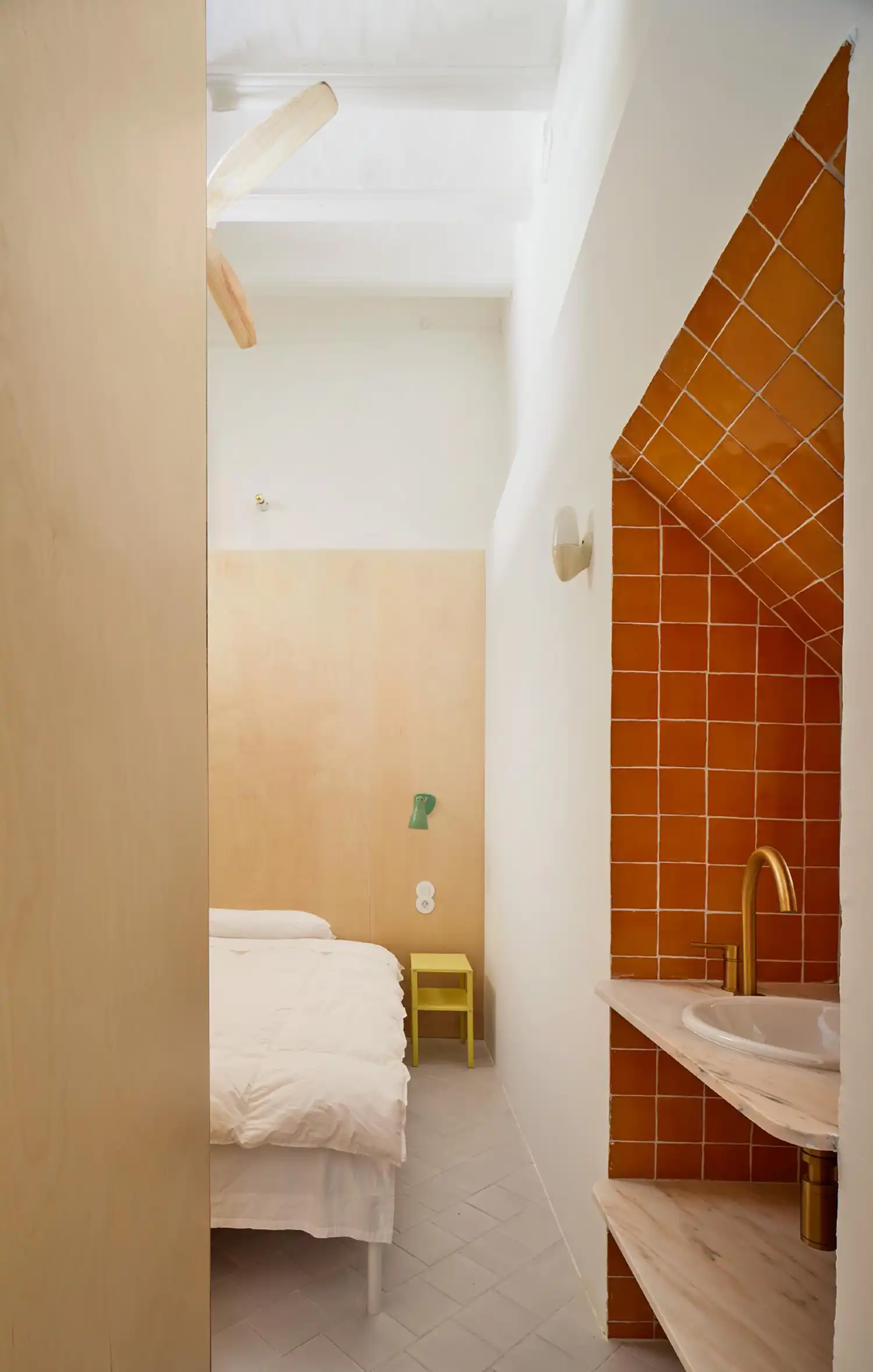
Casa Puerto remains a work in progress. The upcoming phase will transform the top floor into an artist’s residence, continuing the home’s evolution as a living cultural canvas. It’s a logical extension for Lucas y Hernández-Gil, whose portfolio includes adaptive reuse projects like Madrid’s Kresta Garden House—a prefabricated greenhouse reconfigured as a guest gym-office hybrid. For Casa Puerto, each intervention becomes a collage of textures and eras: cracked plaster beside sleek marble, 18th-century brick supporting laser-cut metalwork. The result isn’t preservation through embalming, but through respectful coexistence.
In an age of scorched-earth renovations, Casa Puerto champions incremental revitalization. Like the studio’s transformation of a 1920s Madrid apartment—where coral-hued shelving contrasts exposed concrete beams—this project proves that heritage relevance requires neither surrender to decay nor erasure by minimalism. As El Puerto de Santa María’s neglected palaces await their own revival, Lucas y Hernández-Gil offer a blueprint: architectural empathy as timeless as the structures it saves.