



In the rugged volcanic landscape of the Azores, where the Atlantic Ocean dictates the rhythm of daily life, architecture often oscillates between defensive enclosure and expansive transparency. Casa da Rocha Quebrada, located in Lagoa on the island of São Miguel, chooses a third path: that of the “essential house.” Designed by SO Arquitectos, the residence is a profound exercise in restraint, emerging not as a disruption to the coastline, but as a mineral extension of the earth itself. Built for the parents of one of the studio’s founders, the project carries a rare intimacy, stripped of aesthetic “noise” to focus purely on the dialogue between mass, light, and the salt-laden breeze.

A monolithic presence on the southern coast, the house occupies the final void in a traditional building block, acting as a structural full stop to the urban fabric. The architects opted for exposed concrete as the primary language—a material choice born of necessity rather than mere trend. In a climate defined by high humidity and saline corrosion, the raw concrete behaves like an artificial stone, gaining character as it weathers. The street-facing facade presents itself as a silent, impenetrable volume, a sequence of solids and voids that mimic the natural fissures found in the surrounding cliffs. It is an architecture of “caves,” offering a sense of sanctuary that feels ancient and permanent.

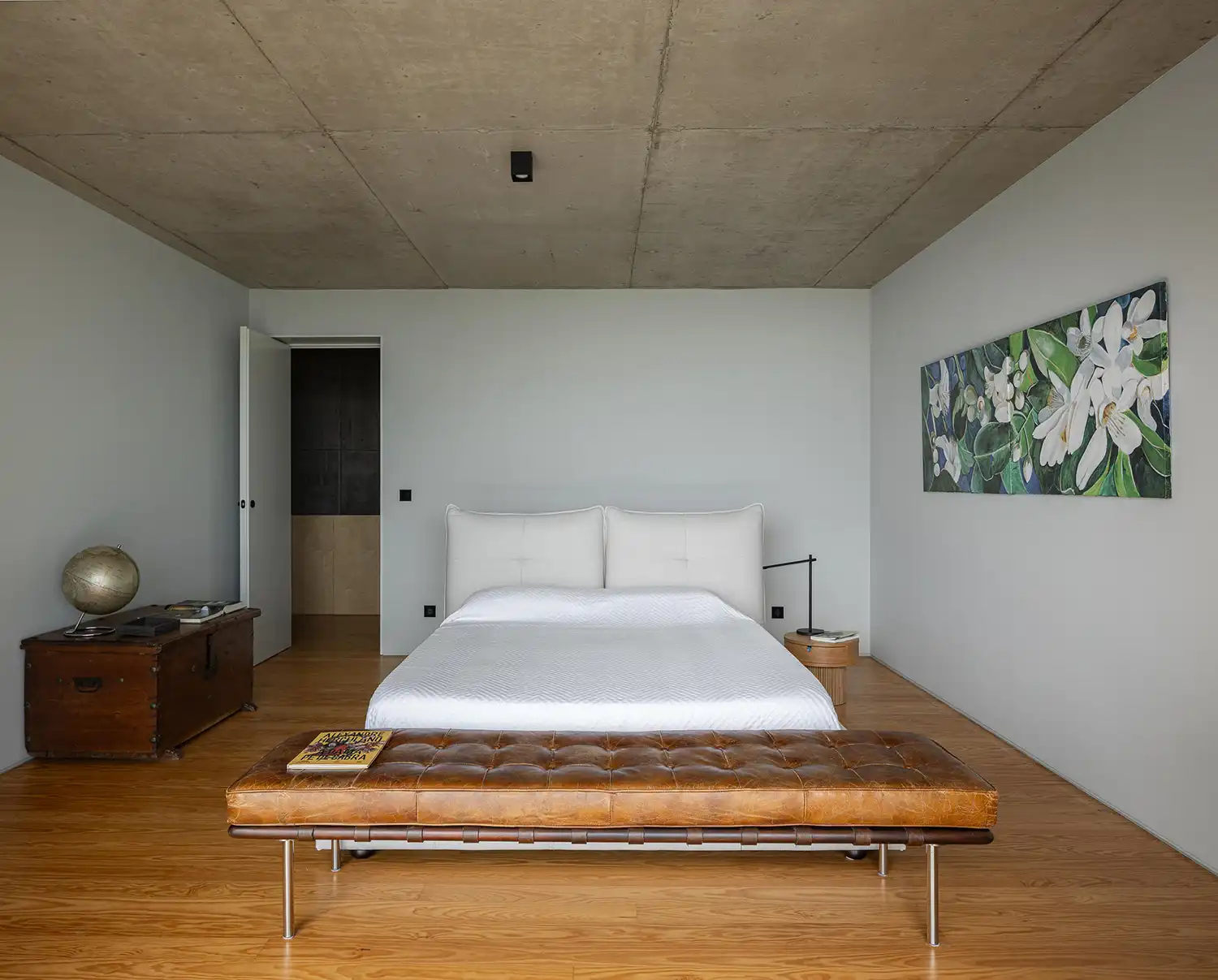
The sensory transition from exterior to interior reveals a surprising softness. Once inside the concrete shell, the “ruin” becomes a home. To balance the inherent coolness of the mineral walls, SO Arquitectos introduced warm wood accents that define the domestic atmosphere. The floor plan is deceptively simple, organized around three bedrooms and a fluid social area. Central to the home’s breathing rhythm is an internal patio that carves through the volume, acting as a light well and a lung for natural ventilation. This void ensures that even the most protected corners of the house are touched by the changing Azorean sky, grounding the residents in the specific temporality of the island.
A dialogue with the legacy of raw materiality connects this project to a wider global movement of residential honesty. While Casa da Rocha Quebrada draws its soul from the Atlantic, its formal rigor shares a DNA with other contemporary masterpieces that redefine the “brutal” label. It evokes the same uncompromising spirit seen in the reimagined Victorian terrace of Chelsea Brut, where raw surfaces are used to celebrate structural truth. Similarly, the way the Azorean house balances its heavy mass with internal lightness mirrors the spatial efficiency of the Workshop House, proving that when a building is reduced to its essence, it gains a universal architectural power.
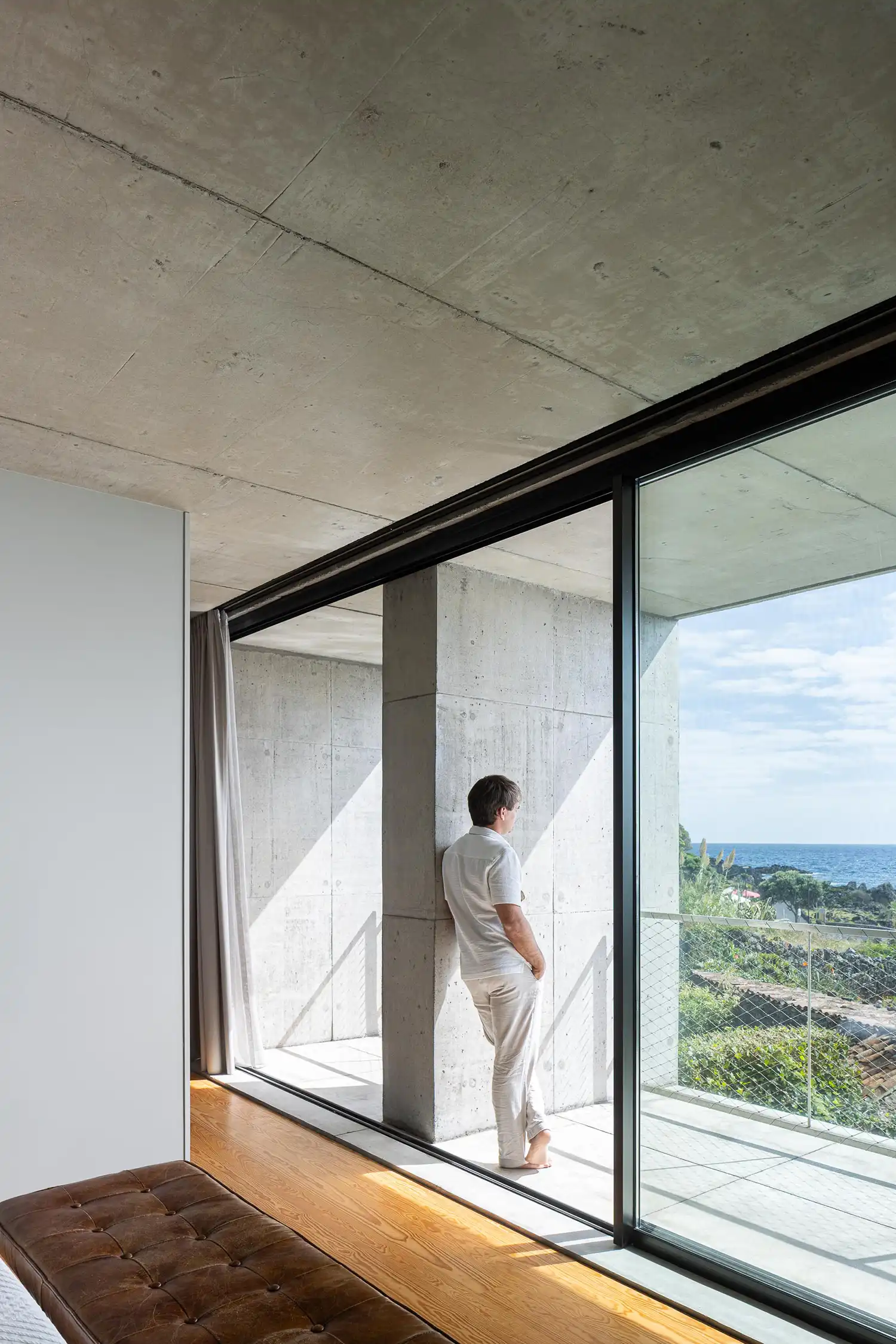
Framing the horizon without artifice, the southern elevation of the house turns toward the sea. Here, the architects avoided the cliché of the floor-to-ceiling glass curtain. Instead, the views of the Atlantic Ocean are curated through the concrete structure, filtered and framed to feel like a private discovery rather than a theatrical display. From the vantage point of the nearby natural pools, the house appears “deaf and silent”—a stoic observer of the waves. This refusal to “show off” is precisely what gives the project its strength; it does not compete with the landscape but waits to be absorbed by it.
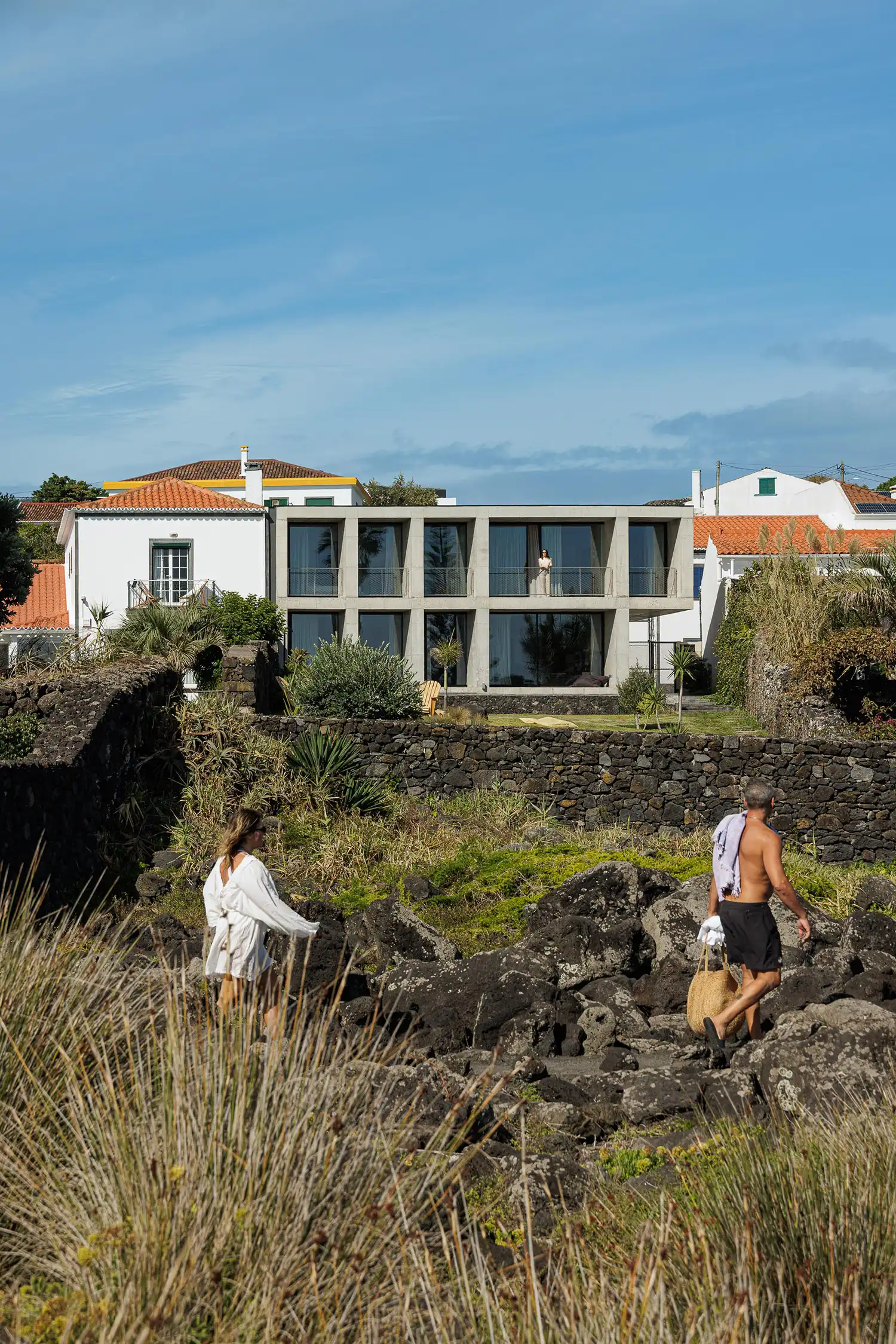
The contextual impact of the residence lies in its rejection of the non-essential. By focusing on matter, proportion, and function, SO Arquitectos has created a dwelling that feels as though it has always been part of the São Miguel shoreline. It is a house that understands its place in the world, providing a lesson in how architecture can be both a fortress against the elements and a delicate vessel for family life. In an era of digital overstimulation, Casa da Rocha Quebrada stands as a silent, textured reminder that the most powerful spaces are often the ones that dare to be just what they need to be.