

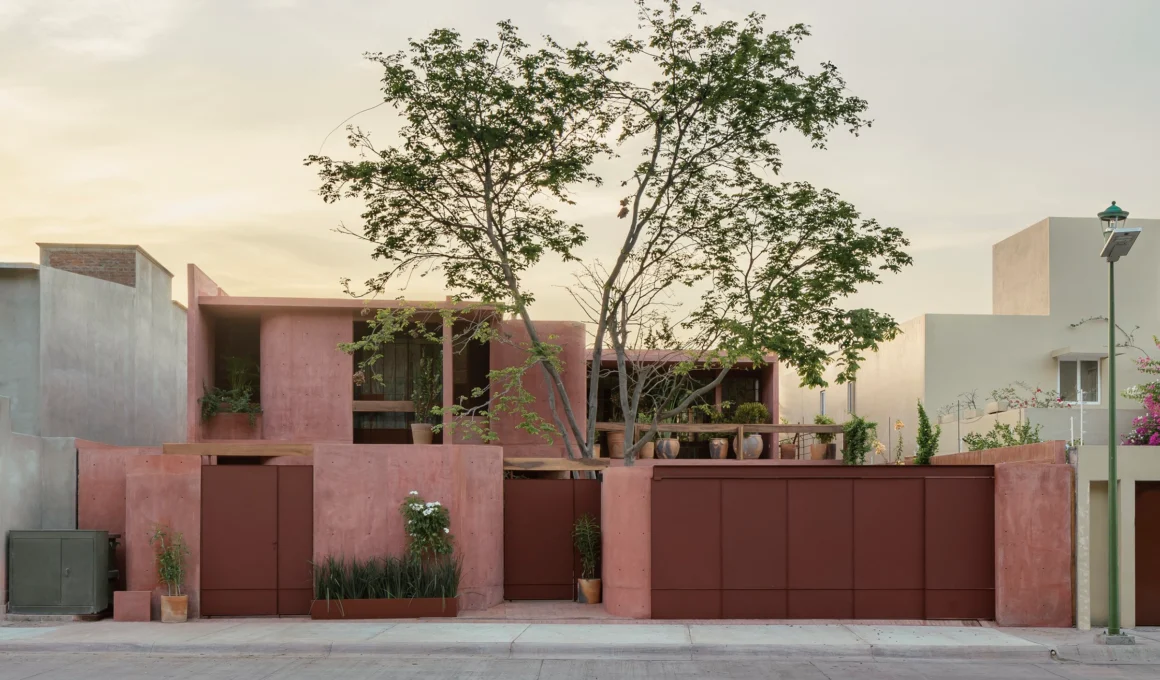
Nestled within the vibrant yet landlocked urban fabric of Bahías de Huatulco, Oaxaca, Casa Roja stands as a bold architectural statement. Designed by Ángel García, the project confronts a common suburban condition: a site surrounded on three sides by neighbouring houses and opening to a main street with views of an undeveloped natural area to the west. This challenging context became the catalyst for a highly inventive scheme that prioritizes privacy without sacrificing familial connection, creating a sanctuary that turns resolutely inward.
The primary objective for Ángel García was to create three independent living units for a single family, a program demanding a delicate balance between compartmentalization and community. The resulting architectural strategy is both clever and poetic, articulating the separate volumes not through isolation, but through a series of exterior and semi-exterior spaces. The design carefully respects the existing trees, weaving the main access between a Guayacán and an Alejo tree, immediately establishing a dialogue between the built environment and the natural one that is central to the home’s character.
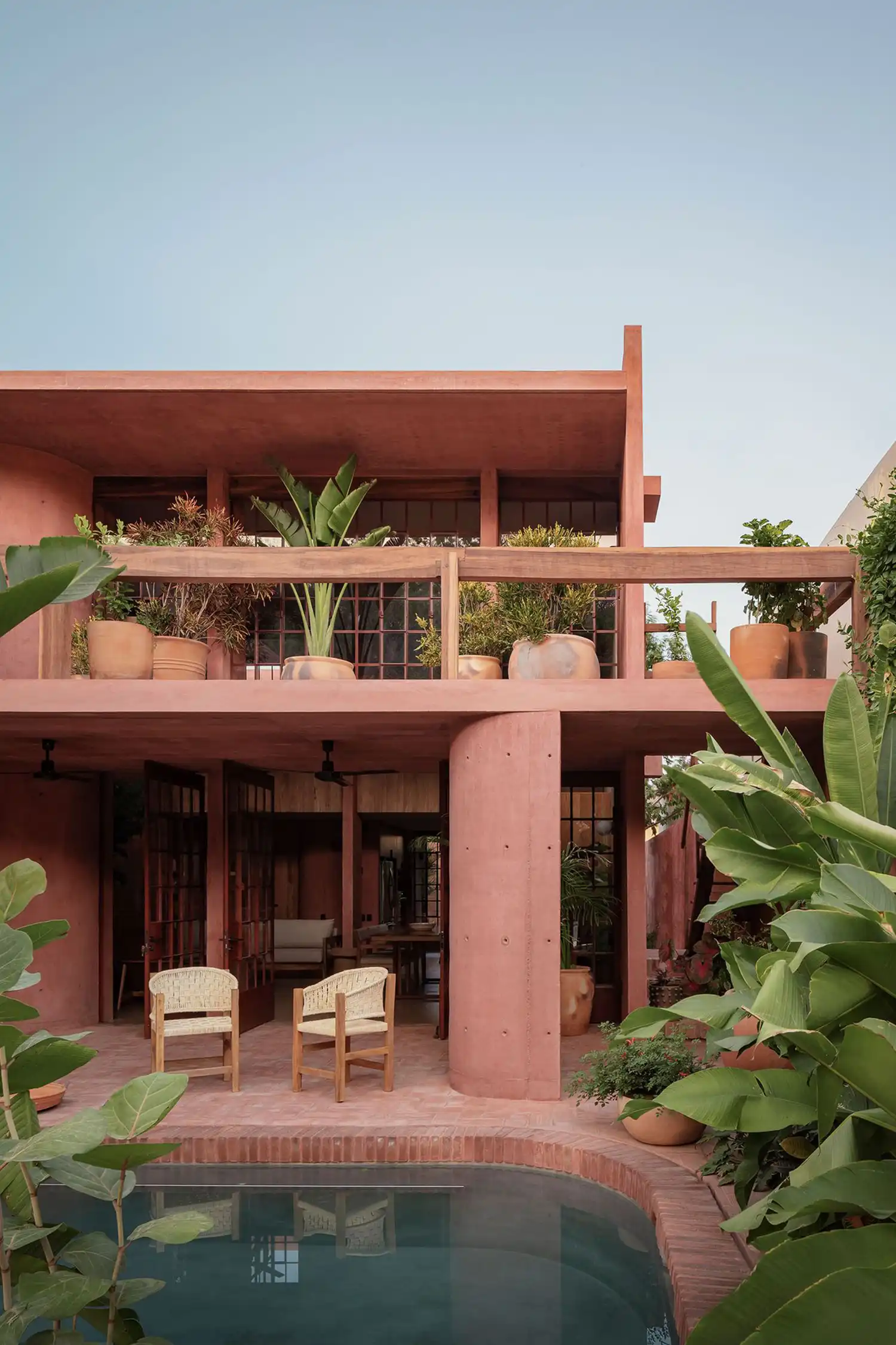
Central to the experience of Casa Roja is a corridor-gallery that wraps around a swimming pool, acting as the project’s vibrant circulatory heart. This space is more than just a passageway; it is the primary link, a social condenser that fosters spontaneous interaction between the three units. To mitigate the tight urban surroundings, the architect generated a protective envelope with two blind façades on the north and south sides, effectively blocking views into the adjacent properties. In contrast, the east and west elevations are conceived as permeable façades, opening generously through patios, terraces, and gardens to frame the exterior.
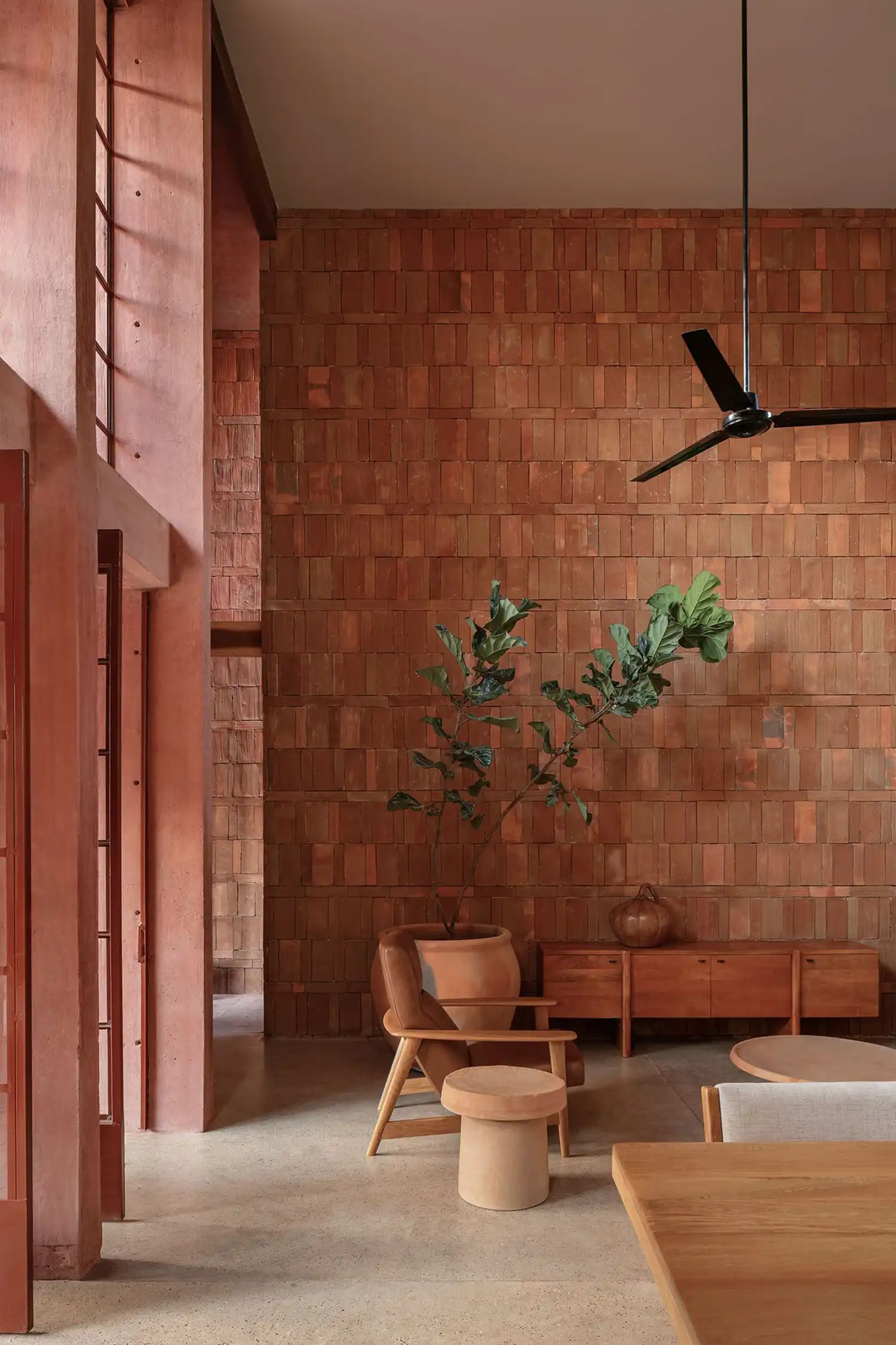
The materiality of Casa Roja is a profound expression of its place. The house seeks and achieves a distinct architectural identity by reinterpreting the memories and routines of its inhabitants. This is felt in the integration of collected objects, furniture, and handicrafts, but most powerfully in the walls themselves. The use of local construction materials like earthen brick (tabique de barro), custom ironwork (herrerías), and traditional shutters (postigos) grounds the building in Oaxaca. The warm, reddish tones of the pigmented concrete walls directly reflect the iconic hues of Oaxacan ceramics, making the structure feel as if it emerged from the very earth it stands on.
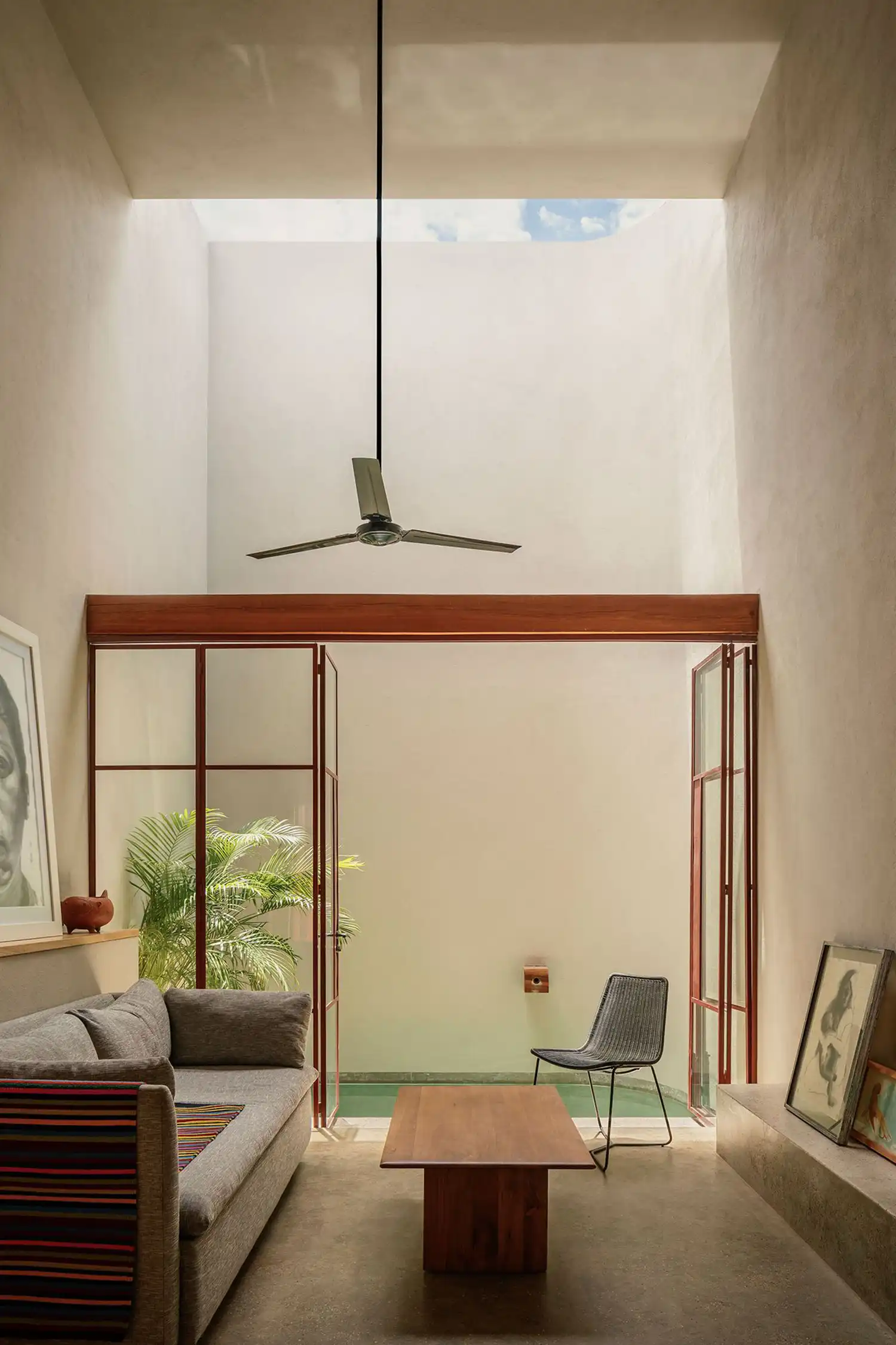
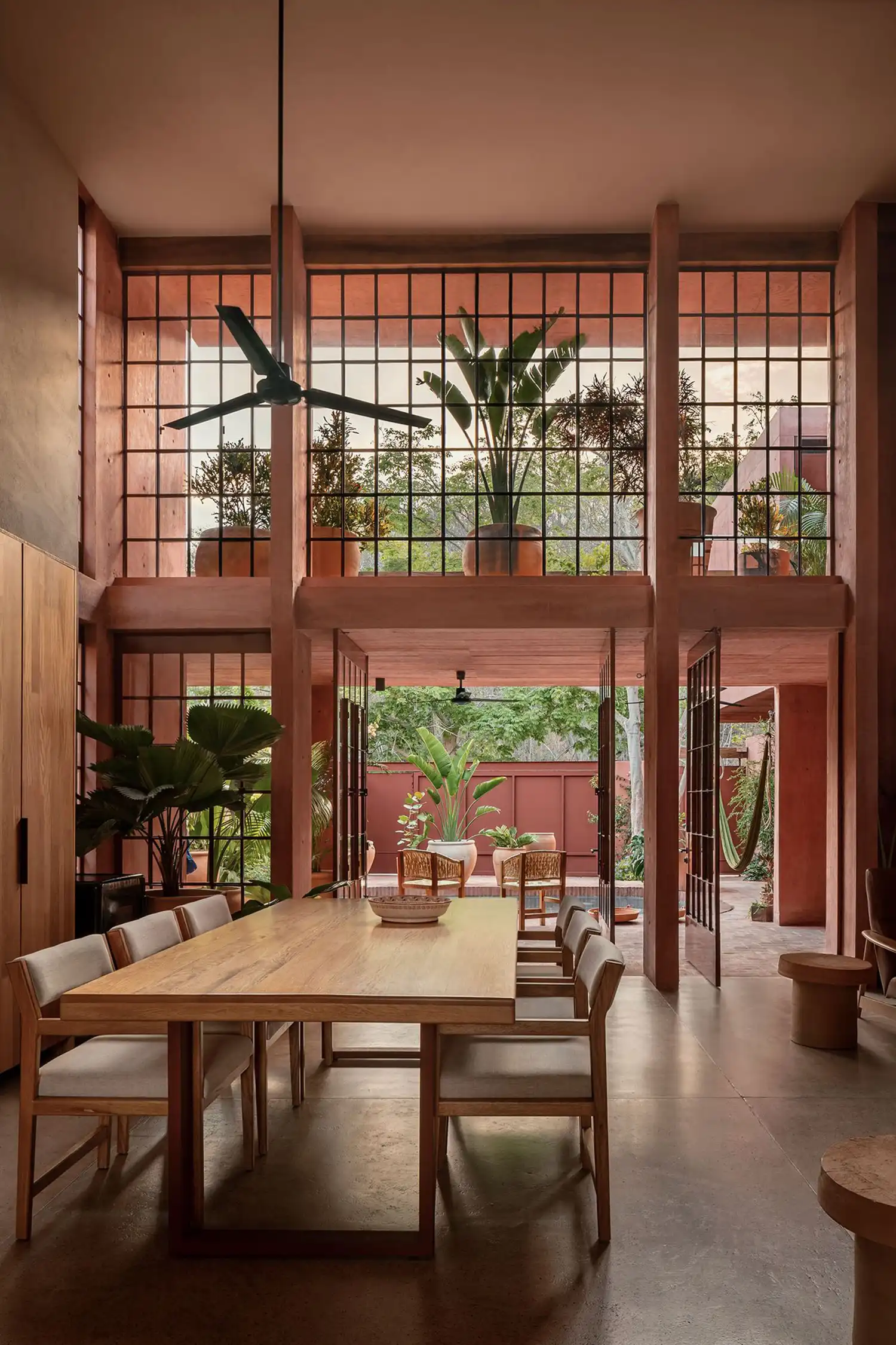
Diverging from the cold tenets of minimalist modernism, Casa Roja does not pursue an ideal of simplified forms or spatial purity. Instead, the residential architecture embraces a rich and artisanal complexity. It is a project that explores the sensuality of the curve, the intrigue of labyrinthine paths, and the visual poetry of a collage of textures. There is a deliberate superposition of layers—of light, of vegetation, of material—that creates a dynamic and ever-changing domestic landscape. This approach celebrates the artisanal tradition and acknowledges a home as a living, evolving entity.
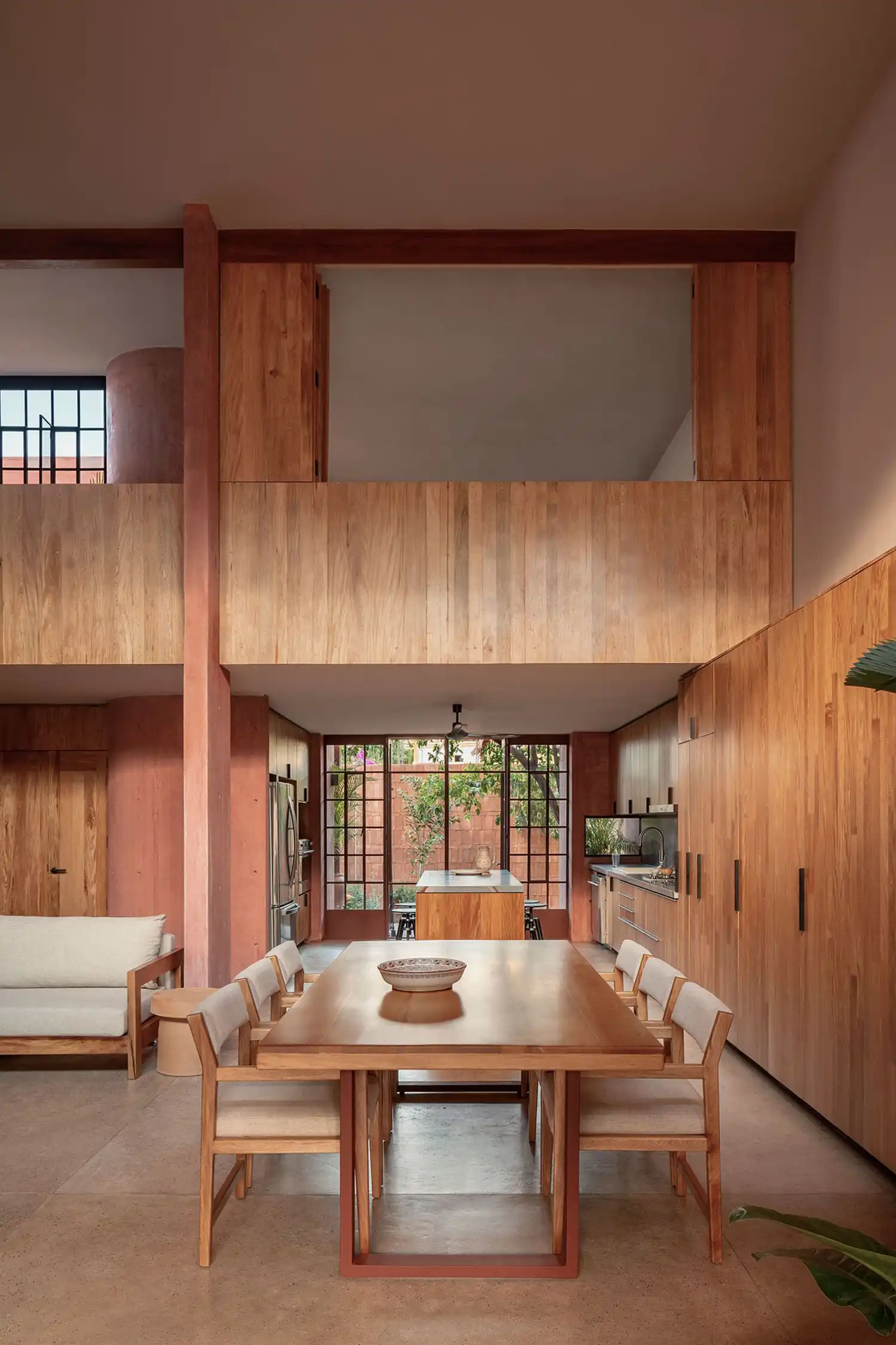
Ultimately, Casa Roja by Ángel García is a masterful study in contradiction and warmth. It is a collection of private units that feel profoundly connected, a defensive enclosure that is simultaneously open and airy, and a complex architectural composition that exudes the simple, comforting warmth of home. It successfully reflects the particular identity of the family that inhabits it, proving that contemporary Mexican architecture can be both deeply personal and universally resonant, a true sanctuary of domesticity and art.