

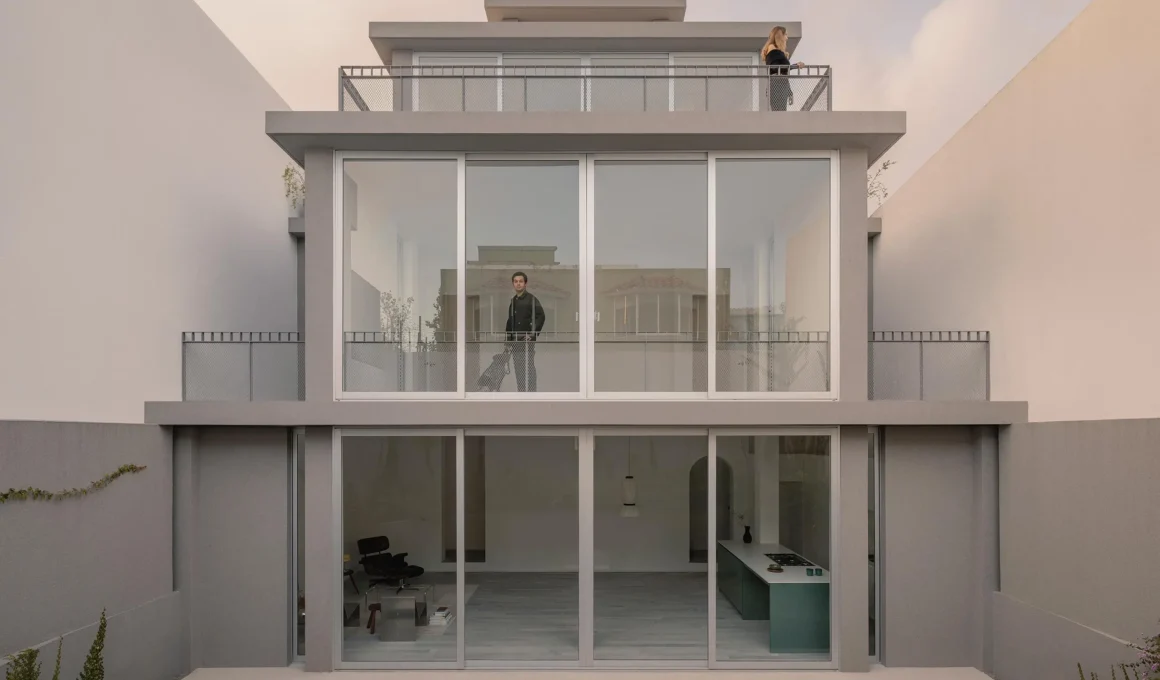
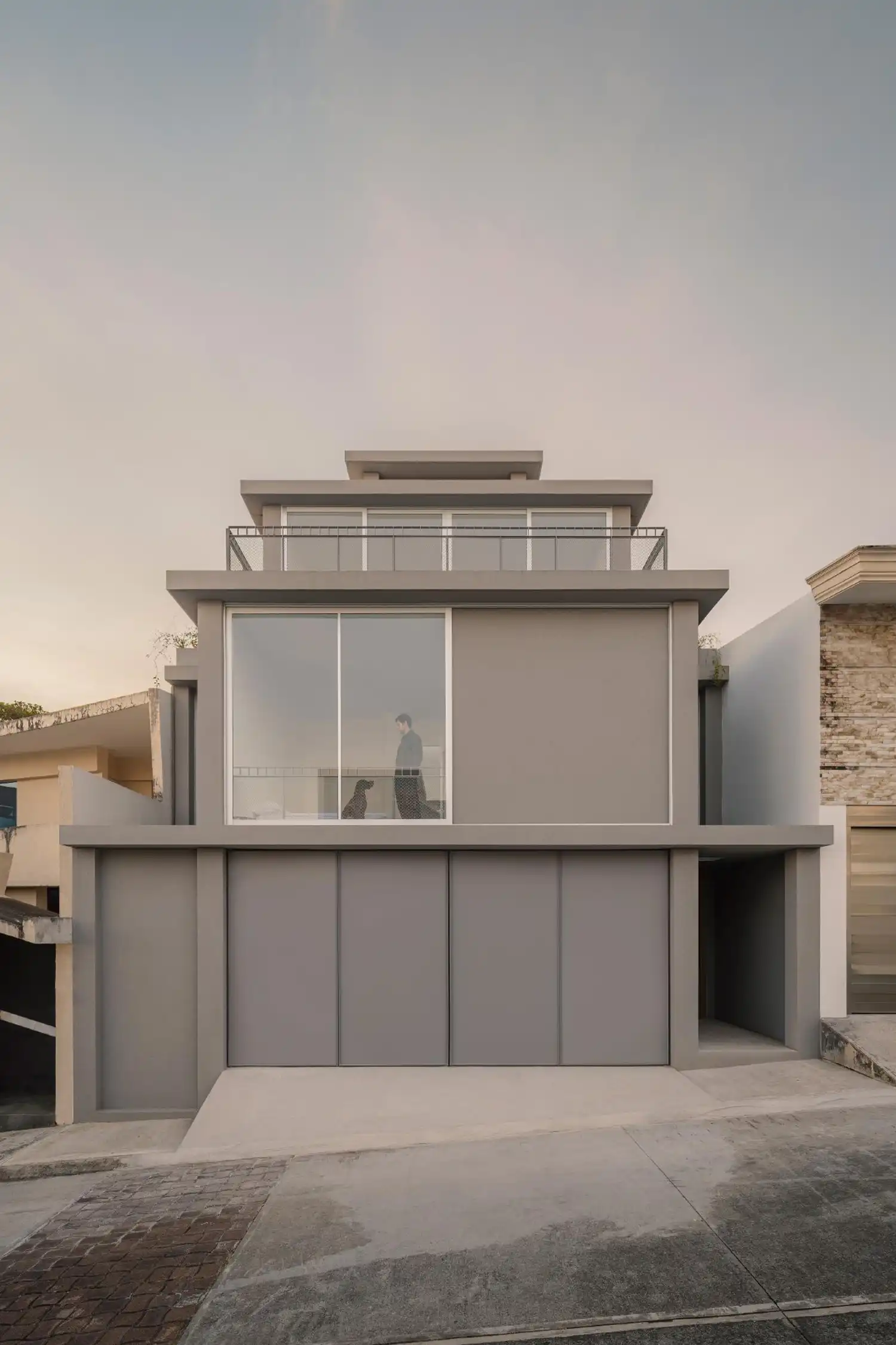
Mexican architecture studio Lopez Gonzalez has completed Casa Tlaloc, a vertical concrete residence in Xalapa that functions as a structural “alphabet” for the rituals of daily life. The conceptual vision for the project is rooted in the idea of architecture as an act of dominion over gravity. Situated on a sloped site in the capital of Veracruz, the house is composed as a stack of volumes that ascend with the “naturalness of the inevitable.” By organizing the program vertically, the architects have created a clear hierarchy of privacy, moving from the communal transparency of the ground floor to the sequestered, contemplative studios at the summit.
A rigorous structural language defines the building’s aesthetic. The house is built upon a grid of four bidirectional axes, utilizing square columns and three pairs of double metallic supports to clear wide spans. These cantilevers are not merely decorative; they serve as critical thresholds for solar protection and integrated mechanisms for rainwater harvesting. This honest approach to tectonics—where every element serves a technical function—parallels the structural purity found in Fernanda Canales’ House 720 Degrees, which similarly uses a rhythmic geometry to frame the Mexican landscape.
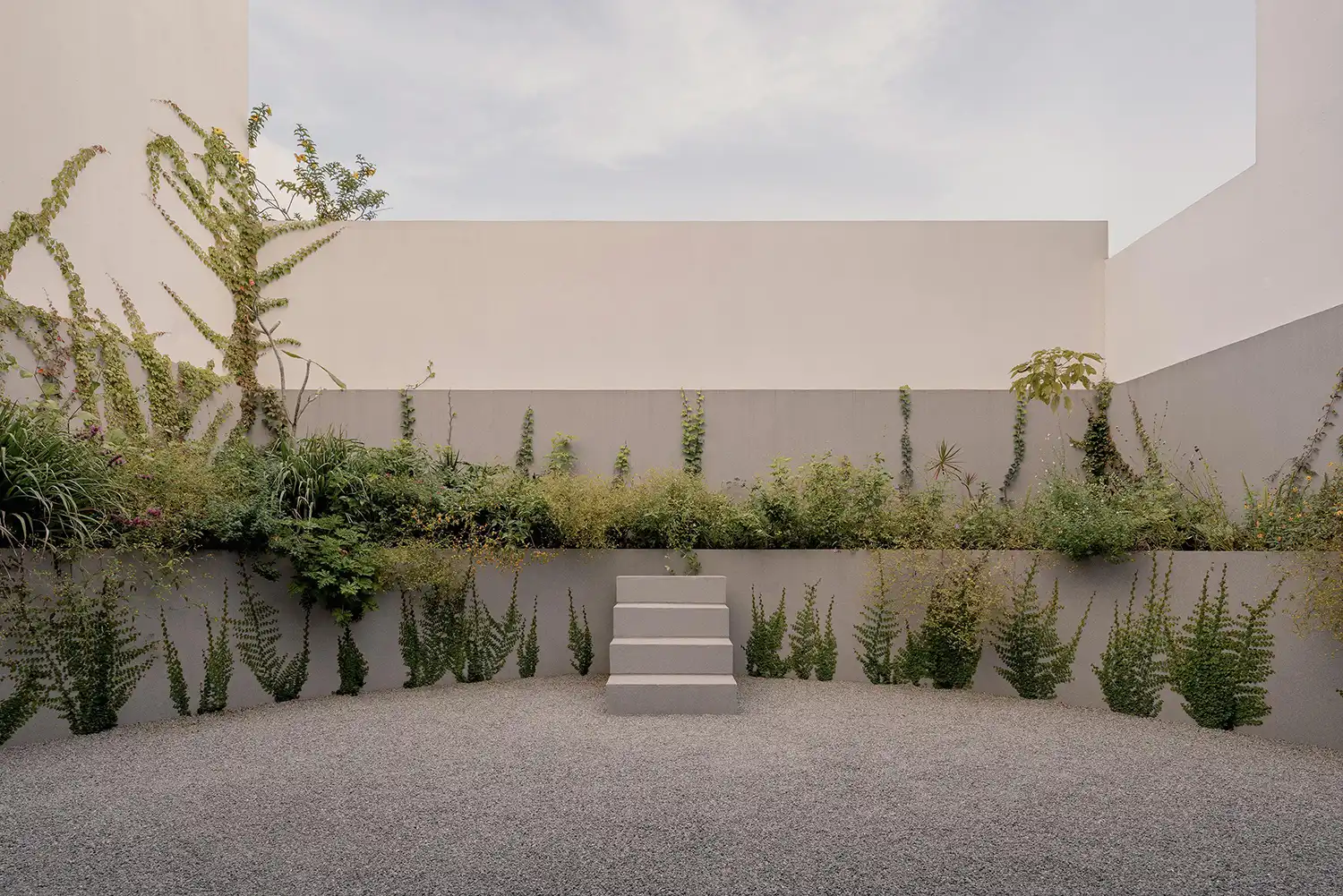
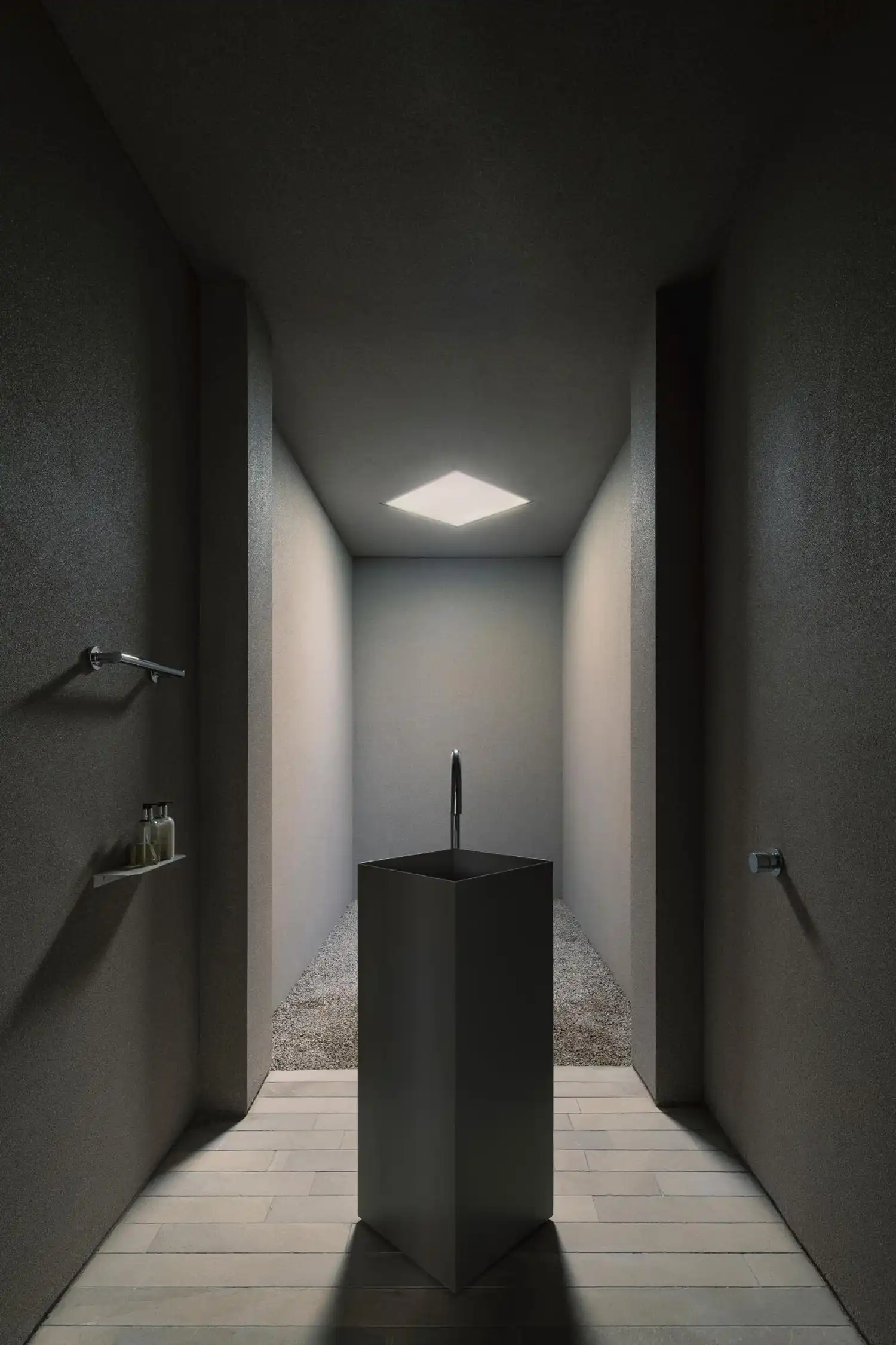
The sensory experience of the ground floor is centered around a guayacán tree, enclosed by a semi-circle of mineral gravel. This biological indicator synchronizes the inhabitants with the cadence of the seasons, acting as a living clock within the social core of the home. Tucked into the shadows at the rear, a metal plate sink manifests as a freestanding monolith. This placement elevates the simple act of using water into a ceremonial sequence, grounding the house in a series of tactile, atmospheric moments.
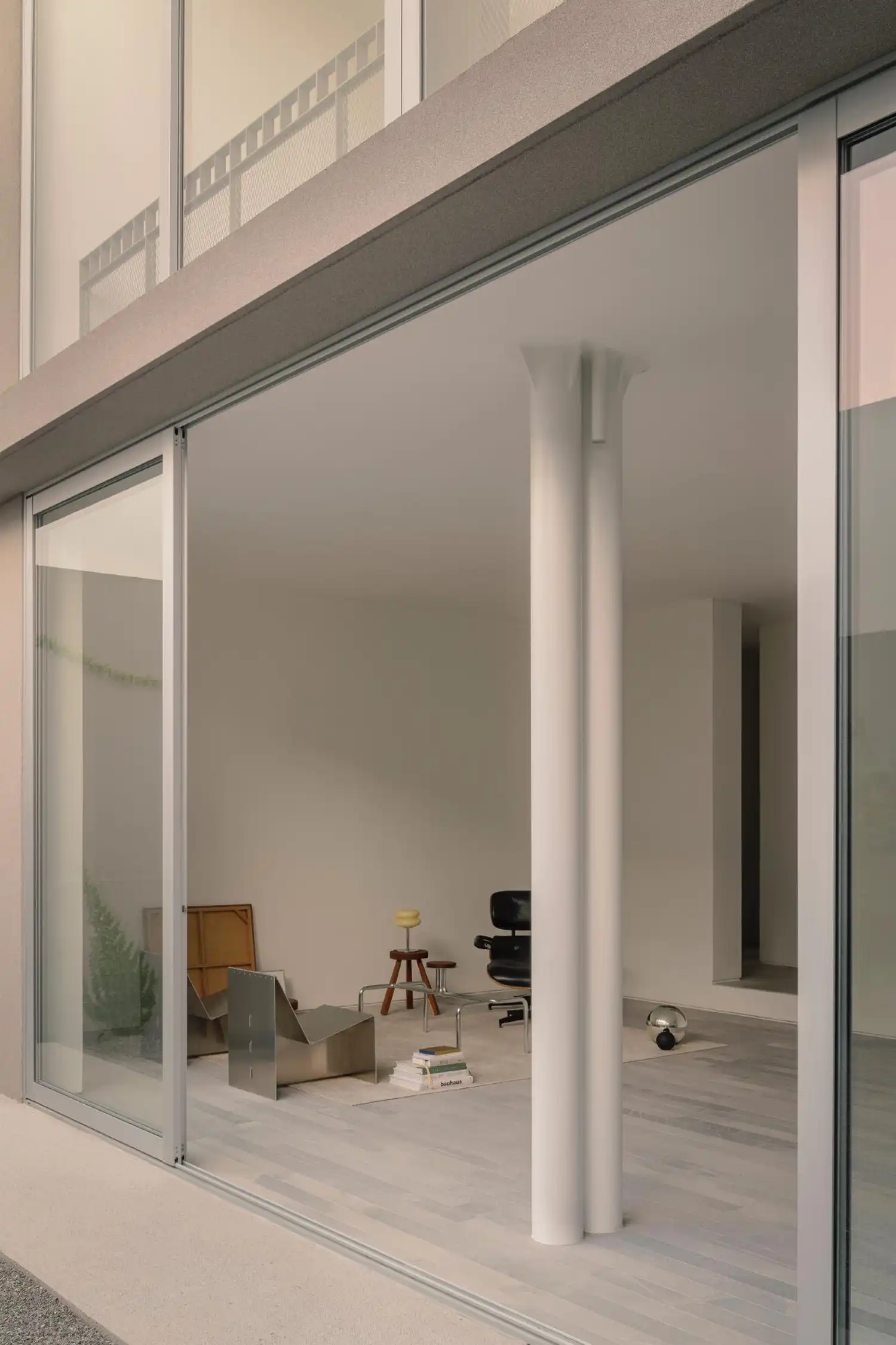
A cruciform floor plan organizes the first level, providing a geometric clarity that ensures both privacy and openness. Three bedrooms are arranged like balanced arms around a central vertical axis; the master suite projects toward the urban fabric of Xalapa, while the secondary rooms extend toward the garden. The interiors are finished in absolute white, creating a sense of “paused time” that mimics the minimalist spatial continuum achieved by HW Studio. Within these rooms, the outside world is treated as a framed painting, inviting the residents to observe the shifting light through the dense vegetation.
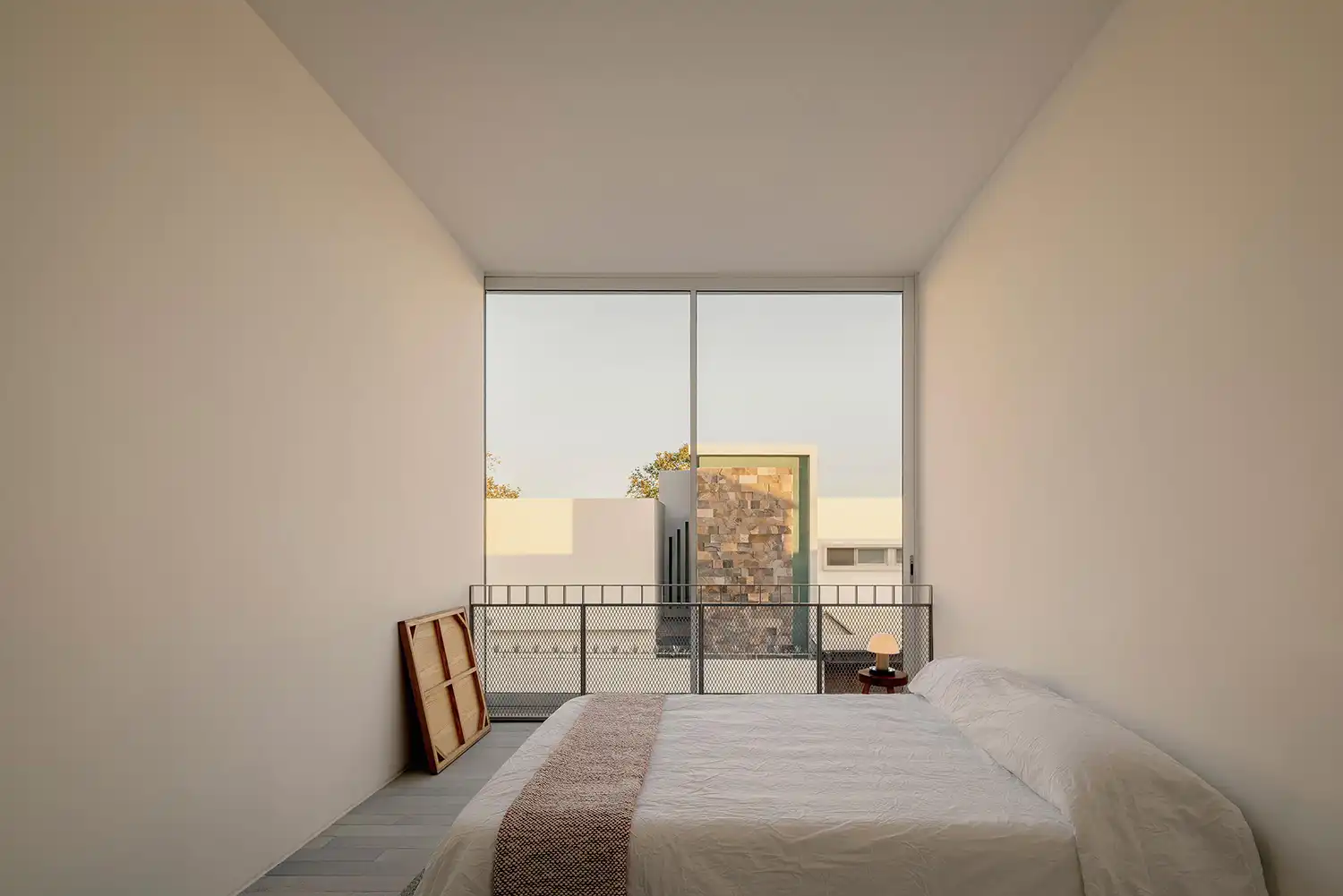
The upper-level studio and living area retract from the edges of the structure to create a spatial continuum bathed in sunset light. These elevated planes extend onto generous terraces that sit above the neighboring rooflines, turning the surrounding forest into a panoramic backdrop. This connection to the horizon and the use of raw, monochromatic surfaces reflects a growing trend in contemporary Mexican residential design, similar to the material complexity seen in Casa Roja, where the building is allowed to age alongside its environment.
A technical volume crowns the composition with absolute frankness, housing the essential machinery for the home’s operation. By refusing to hide the utilitarian equipment, Lopez Gonzalez asserts that the functional can attain the dignity of the essential. The result is a project that does not fear its own truth—a building that finds beauty in the synthesis of climate, tectonic logic, and the quiet observation of the passing days.