

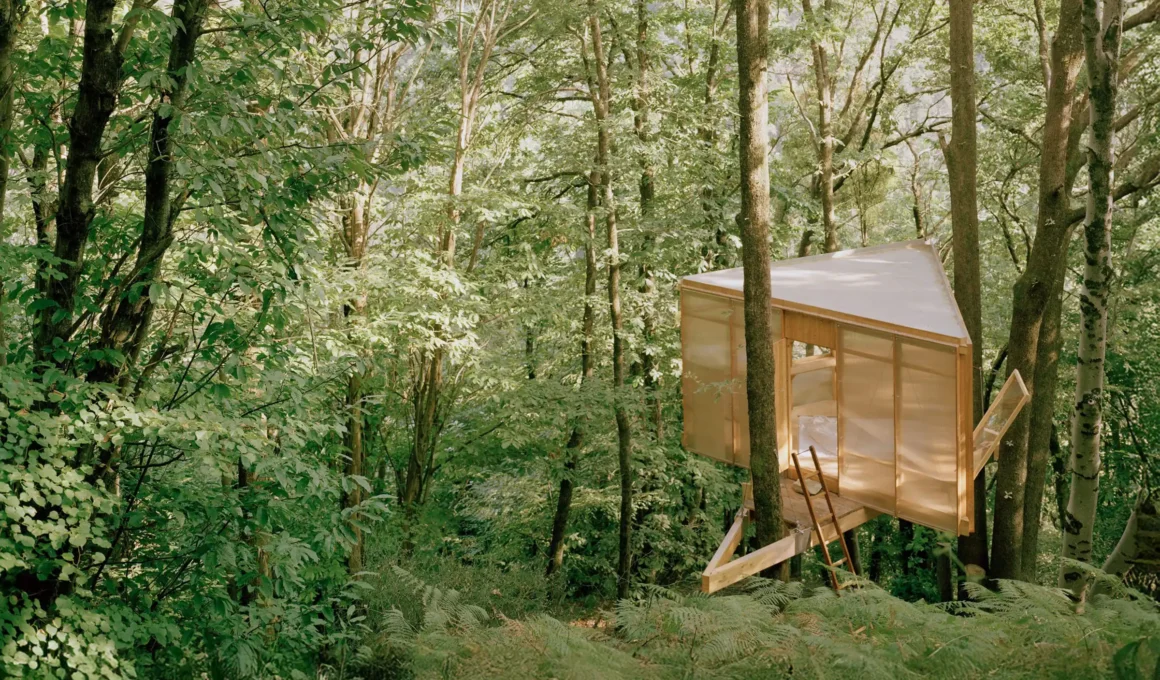
In the dense, vertical landscape of Valle Onsernone, Switzerland, the act of building is often a negotiation with gravity and strict preservation laws. For architect Olin Petzold, the challenge was to create a sanctuary that felt entirely detached from the domesticity of an existing residence near the village of Loco. The result is Casetta Tessino, an elevated timber retreat completed in early 2024 that functions less like a traditional building and more like a shared vessel for the creative mind. Commissioned by a Swiss artist and climate activist, the project finds its soul in the philosophy of Henry David Thoreau, seeking a “Walden” of the Alps where the distractions of the modern world are replaced by the rhythmic rustle of oak leaves.
A conceptual lightness guides the project, born from a necessity to bypass local zoning regulations that forbid new foundations or extensions to the existing building stock. By detaching the structure from the earth and suspending it within the forest canopy, Petzold navigated these constraints through a clever interpretation of “temporary” architecture. Located roughly 150 meters from the main house, the cabin is reached only by a narrow woodland path, ensuring that the physical journey acts as a psychological palate cleanser. It is a space designed for the singular tasks of sleeping, sitting, and writing, stripped of the excess that typically defines contemporary living.
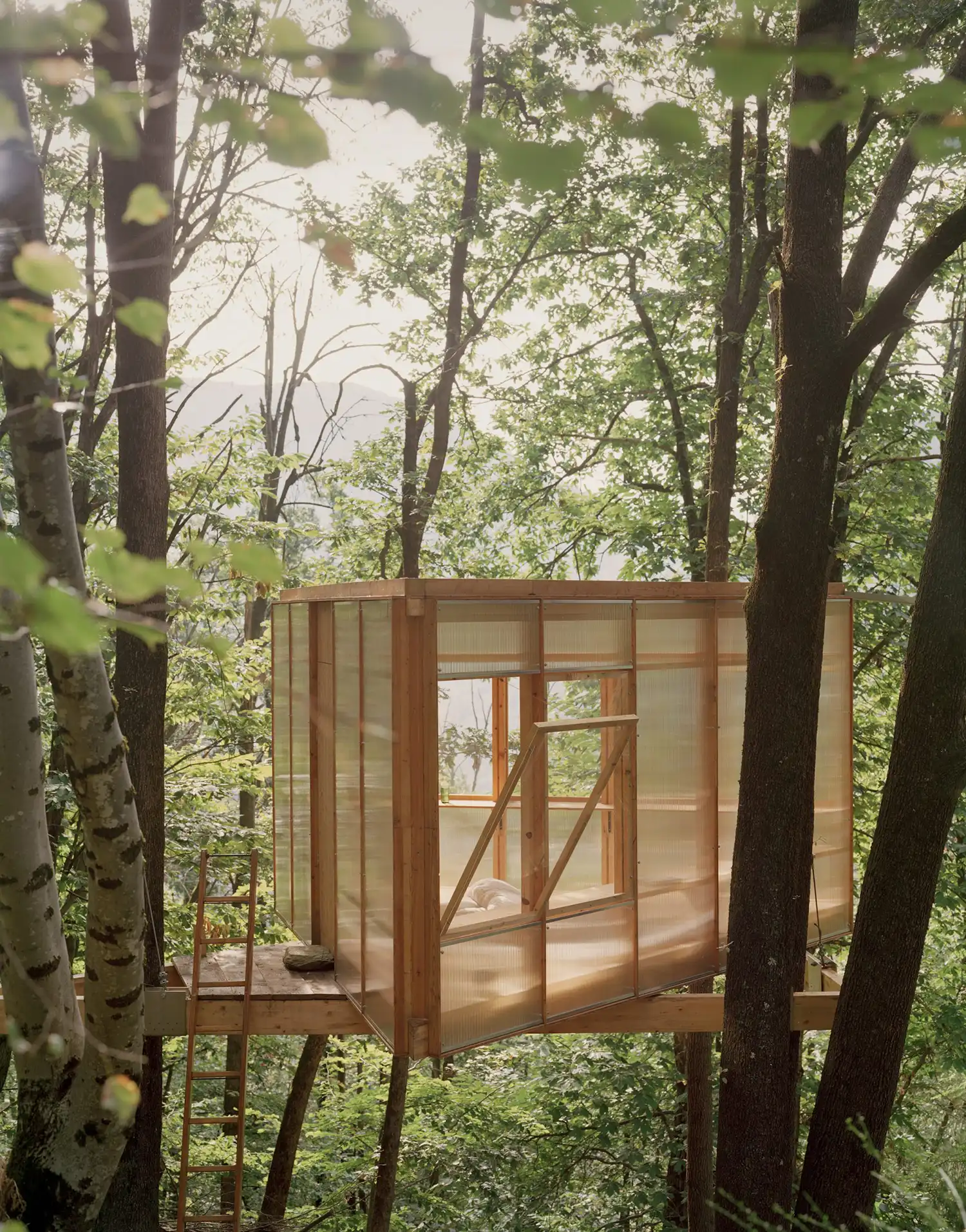
The technical execution of the suspension system reveals a sophisticated understanding of arboreal movement. Three mature oak trees serve as the living pillars for an irregular triangular frame, upon which an equilateral triangle defines the floor plan. This geometry is purposefully rotated; while one side faces the rising slope, the others project views deep into the valley, carefully avoiding any visual connection back to the main house. This orientation ensures that the inhabitant is not merely looking at the forest, but is suspended within its very logic, aligning the internal experience with the natural contours of the Swiss terrain.

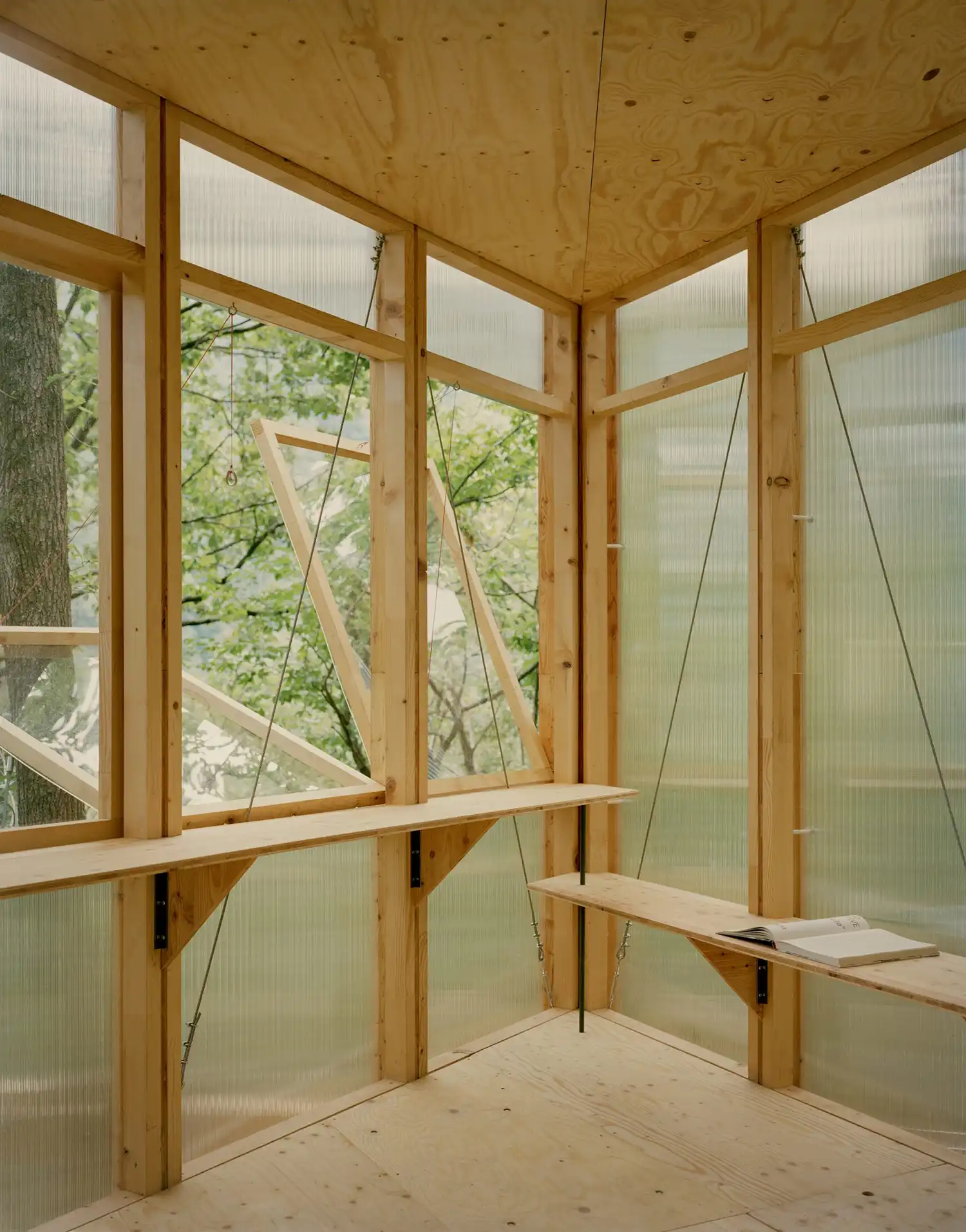
Inside, the sensory experience is one of radical monasticism, where the boundary between furniture and floor is intentionally blurred. To maintain a sense of “emptiness” upon entry, Petzold integrated the bed directly into the floor plane—hidden beneath four wooden panels that, when flush, create a continuous timber deck. The remaining interior life is dictated by two fixed planks: one for sitting and one for the act of writing. When the three facades are thrown open, the room dissolves into a sheltered platform, inviting the damp scent of the forest floor and the shifting alpine light to become the primary decor.
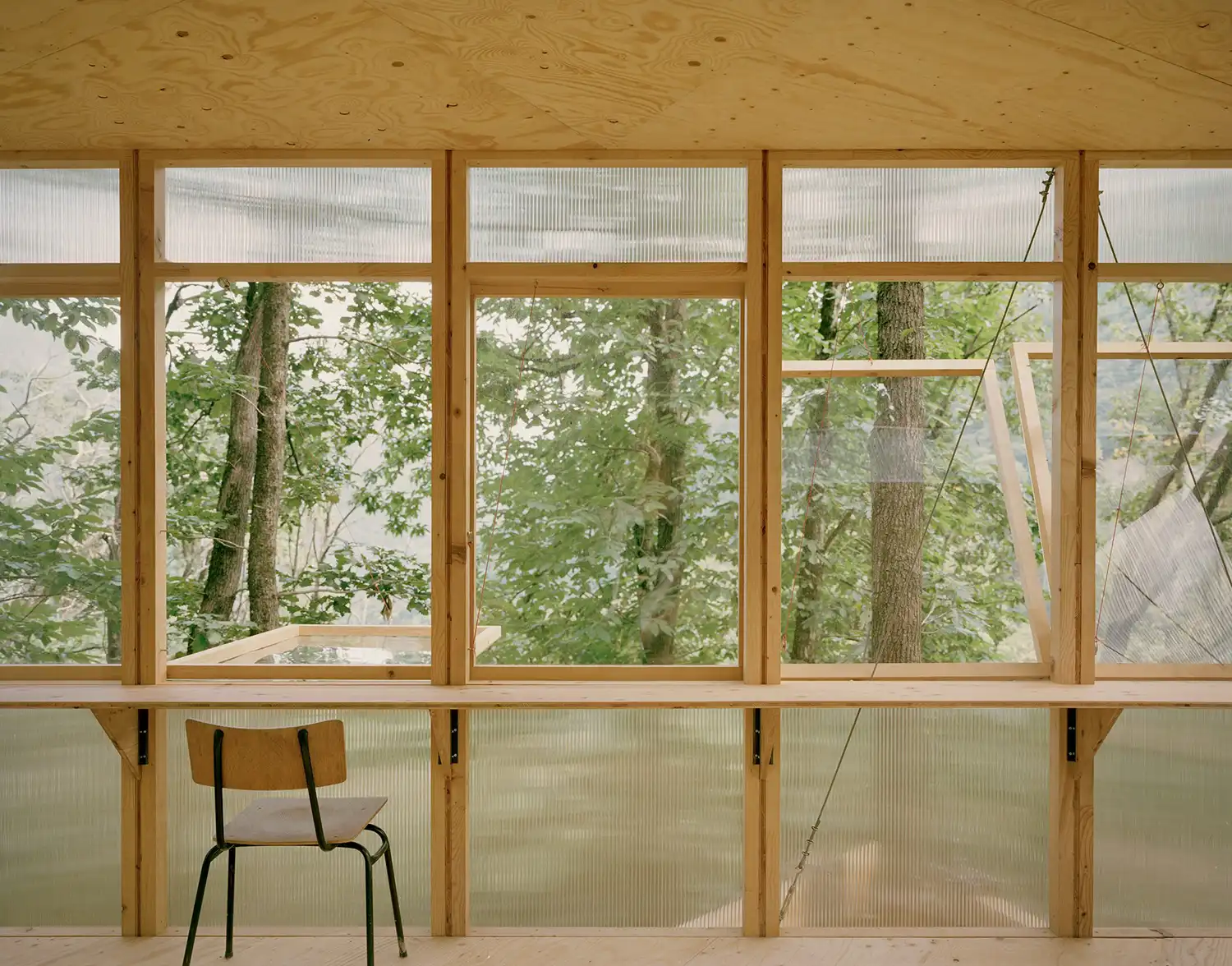
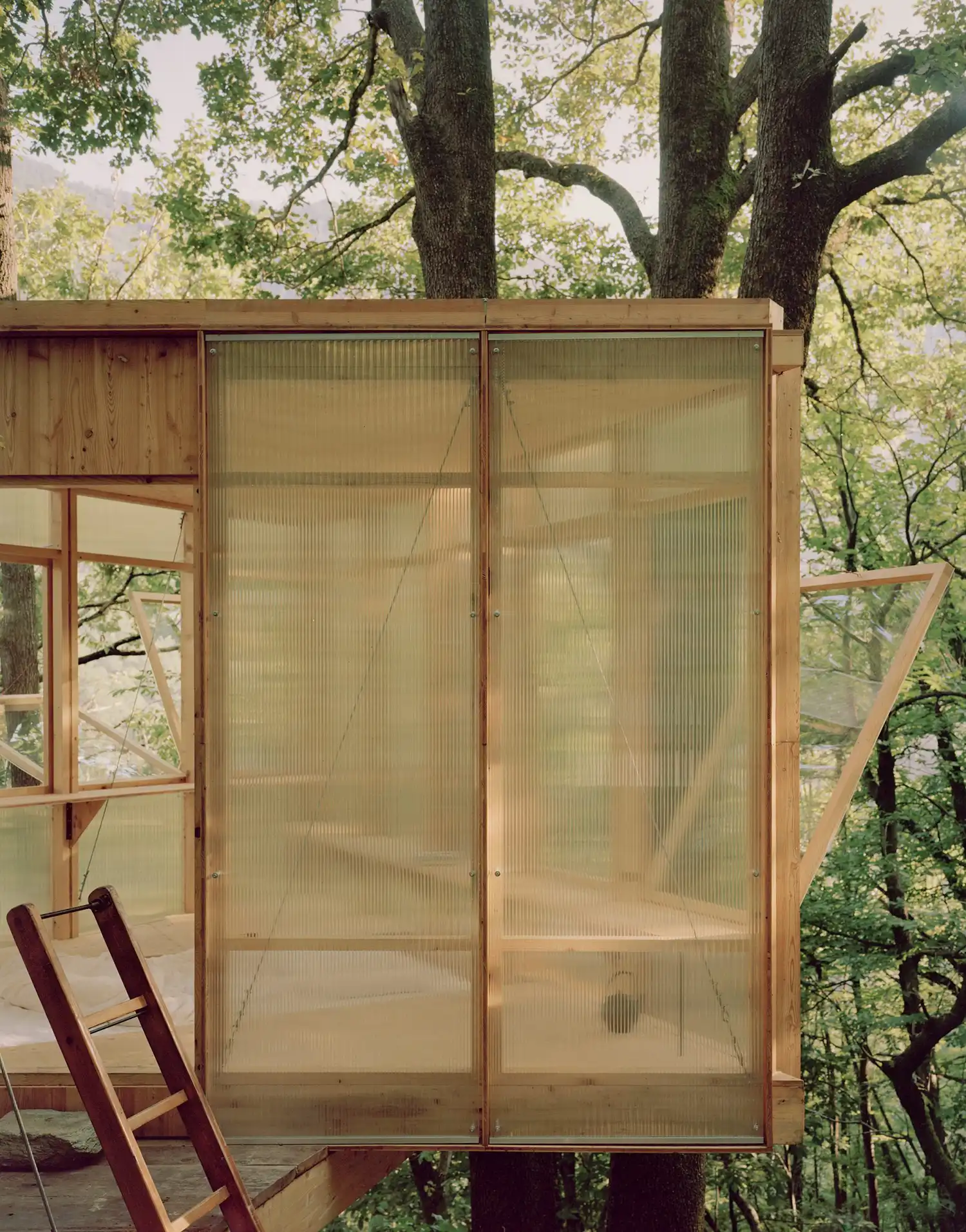
The material palette reflects a pragmatic dialogue between weight, durability, and light. Spruce was selected for the interior and structural frame for its workability, while the exterior is clad in larch to withstand the humid, shaded microclimate of the valley. This timber skeleton is wrapped in translucent polycarbonate panels, a choice that serves both an aesthetic and a climatic function. In the height of summer, the thick canopy provides a natural parasol, while in winter, the skeletal branches allow low sunlight to permeate the polycarbonate, naturally warming the interior through a gentle greenhouse effect. The result is a diffused, milky light that softens the transition between the crisp geometry of the cabin and the organic chaos of the woods.
A philosophy of self-sufficiency defined the construction process, as the remote location dictated that every component be carried to the site by hand. Eschewing heavy machinery and specialist tools, Petzold designed the joints and assemblies to be executed as a “self-build” project. This economy of means is perhaps the most profound aspect of Casetta Tessino; it proves that architectural sophistication is not a product of expensive materials, but of precise thought. As it begins to host a rotating cast of writers and creatives, the cabin stands as a quiet testament to the idea that by limiting our physical footprint, we might expand our intellectual horizon.