




In an era where architecture often seeks to dominate its surroundings, GLA Architects offers a masterclass in quietude and respect with the Dongmingshan Senyu Hotel. Completed in 2024, this 1,300-square-meter hospitality project is nestled deep within a lush, mature forest near Hangzhou, China, where towering metasequoias and whispering bamboo groves set the stage. More than just a place to stay, the hotel is conceived as a profound forest retreat, achieved through minimal intervention and a deep reverence for the existing ecosystem.
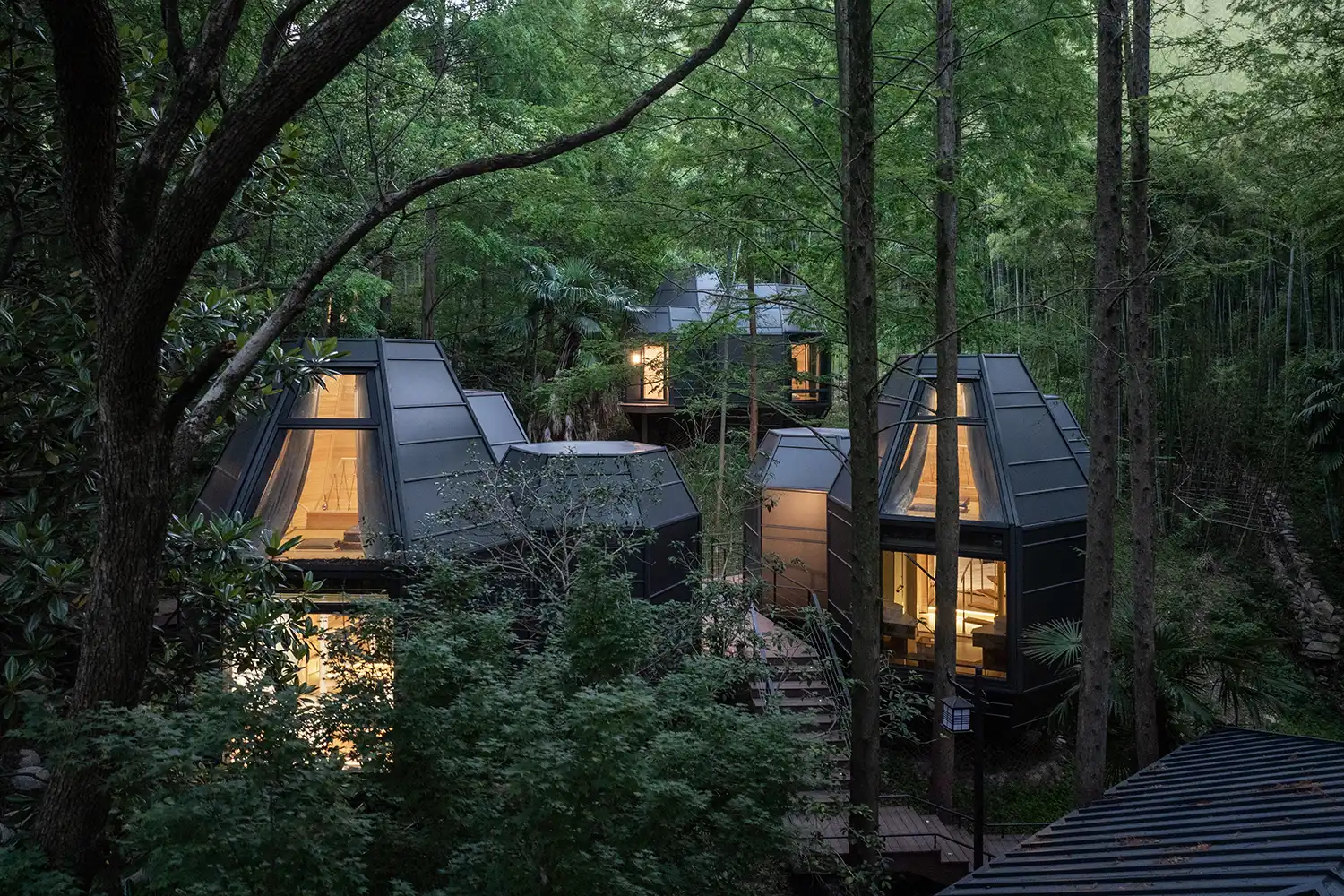
The site itself presented a complex challenge: a clearing at the end of a mountain path, bordered by a stream and dotted with decaying old wooden structures. Rather than imposing a grand new vision, GLA Architects approached it with the sensitivity of “minimally invasive surgery.” Their core principle was preservation; no trees were cut during the entire process. New structures were carefully threaded between the existing vegetation, guided by the natural terrain and ecology. This fundamental respect defines the project’s sustainable architecture ethos.
The heart of the development is the reception center, thoughtfully integrated into the footprint of a former building. Its design is a dialogue with the landscape: a large south-facing window dramatically frames the dense metasequoia forest while subtly shielding against the adjacent slope. To the north, clerestory windows capture views of the bamboo canopy. This building acts as a deliberate threshold, immediately immersing arriving guests in the nature-immersive experience that defines the retreat.
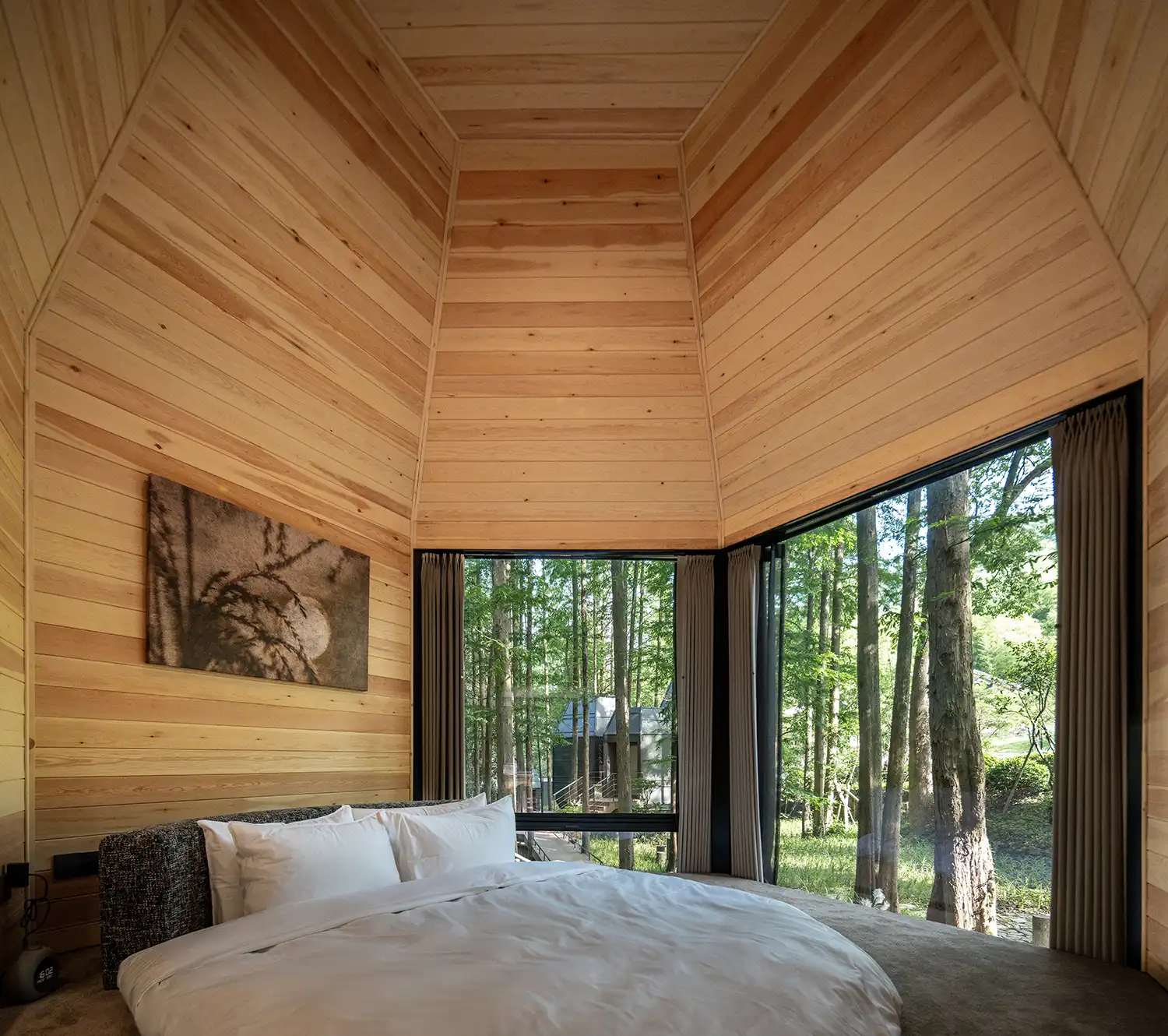
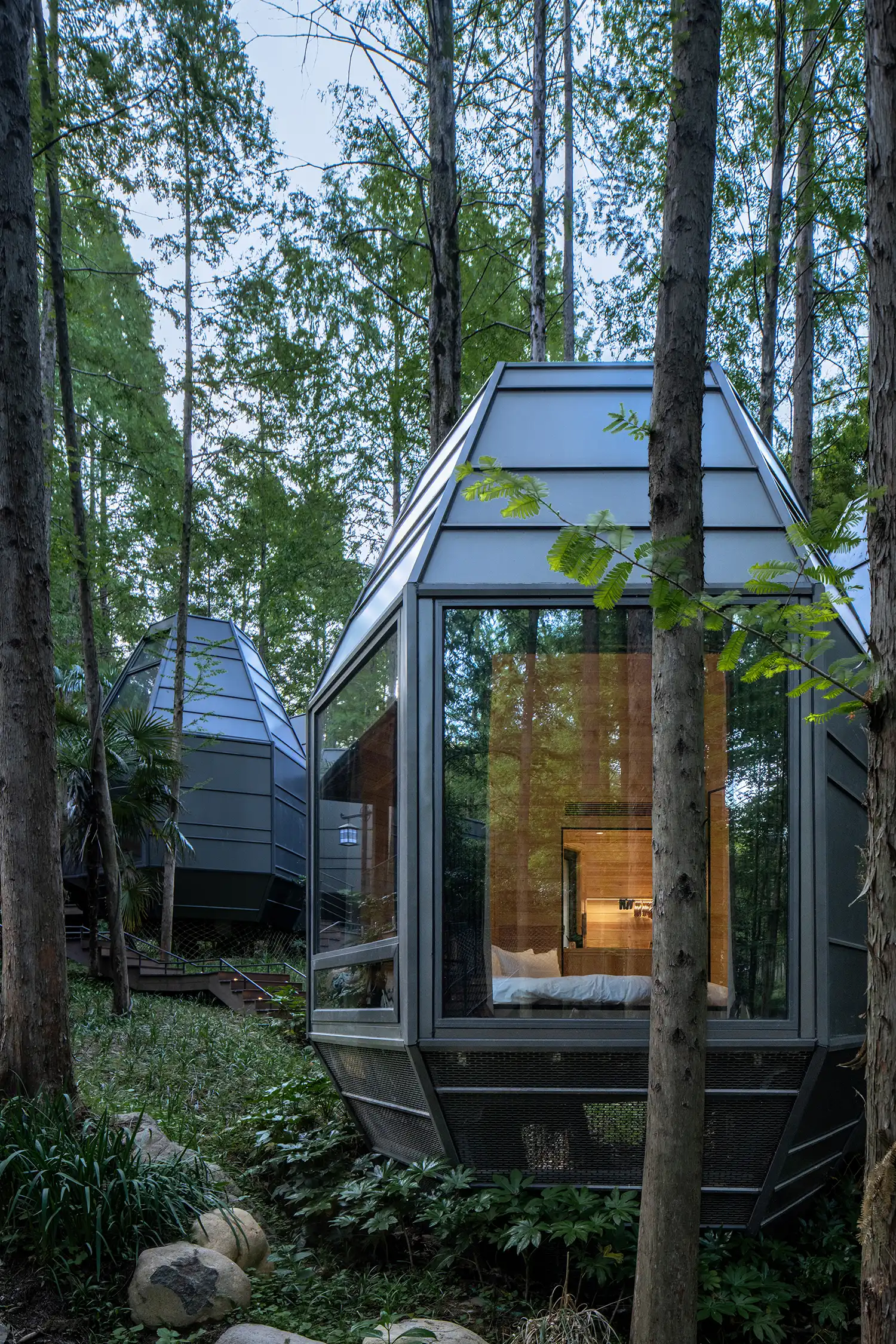
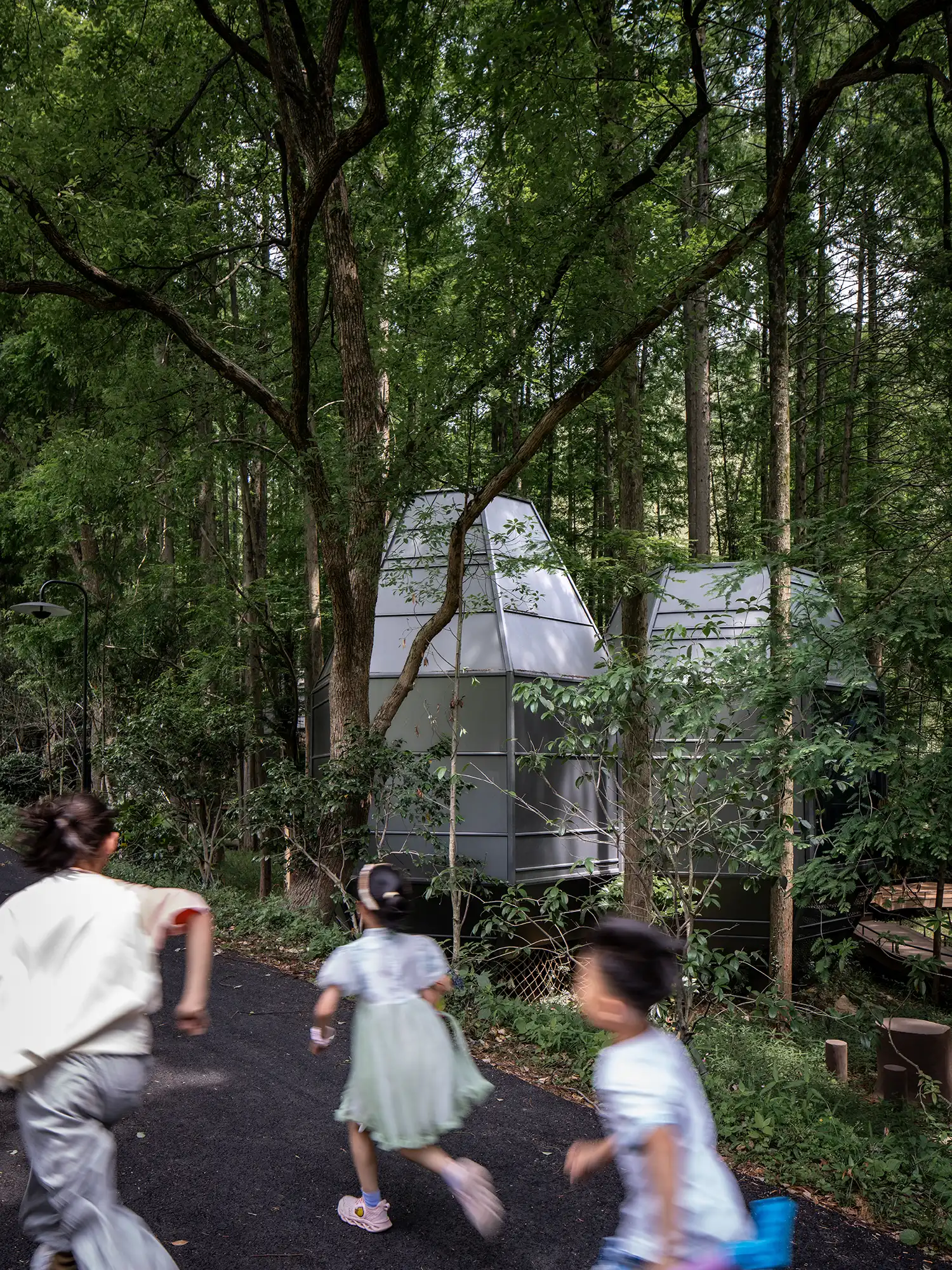
Accommodation takes three distinct forms, each responding poetically to its specific woodland setting. Within the majestic metasequoia grove, the Pinecone Cabins perch lightly above the forest floor. Their elevated structures protect the sensitive root systems below. Inspired by the form and modular logic of pinecones, these cabins feature narrowing rooflines that echo the verticality of the surrounding trees, creating a distinctive silhouette while ensuring flexible adaptation to the uneven ground.
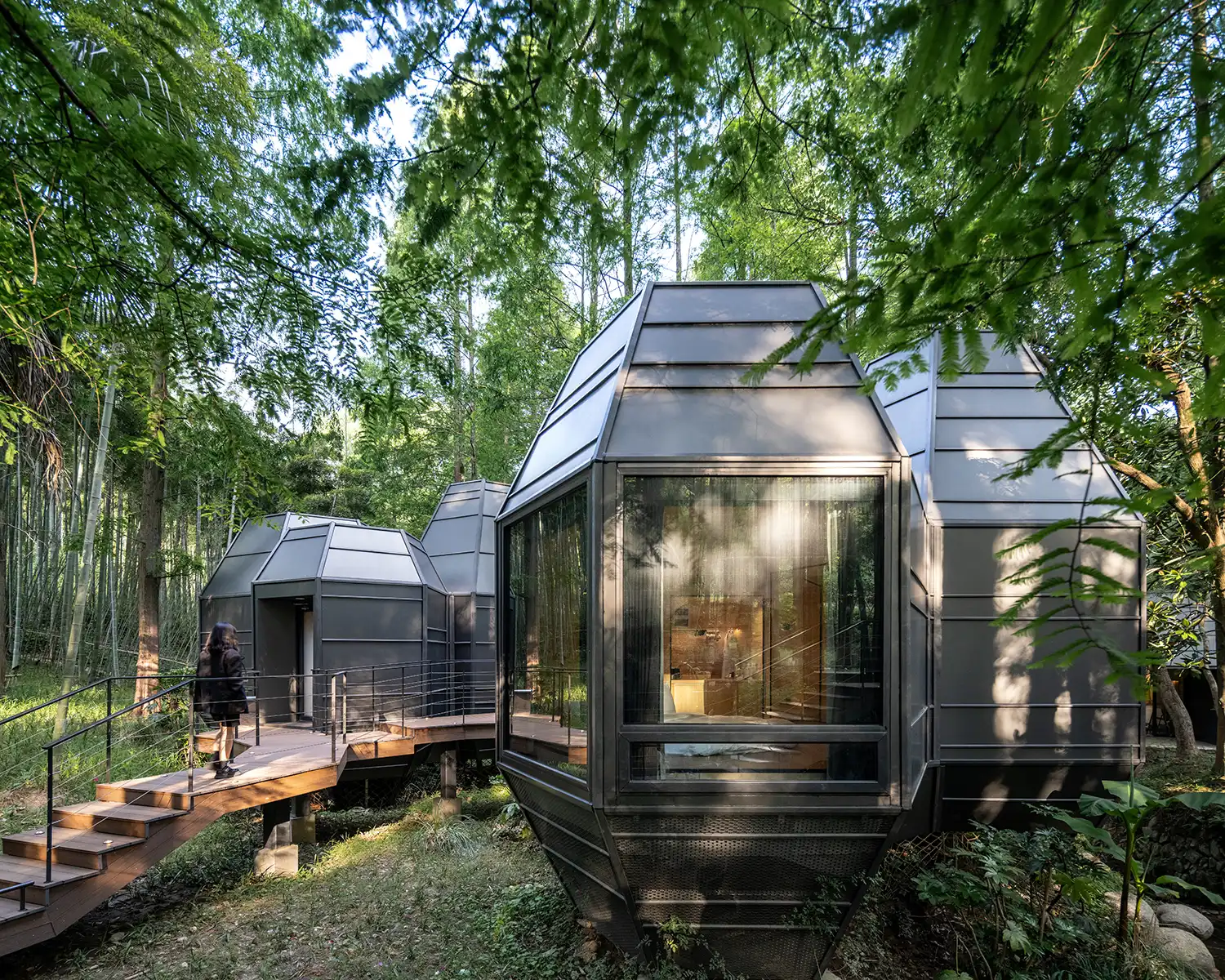
Nearby, the Metasequoia Wood Cottages further exemplify the strategy of building lightly on the land. Utilizing stilted construction, these units enhance natural ventilation – crucial in the humid environment – and minimize disturbance to the forest floor. Their double-pitched roofs mirror the rhythm of the tree canopy overhead. Strategically placed skylights draw natural light deep into the tall interiors, fostering a constant connection to the sun’s path and the movement of the wind, deepening the guest’s immersive forest experience.
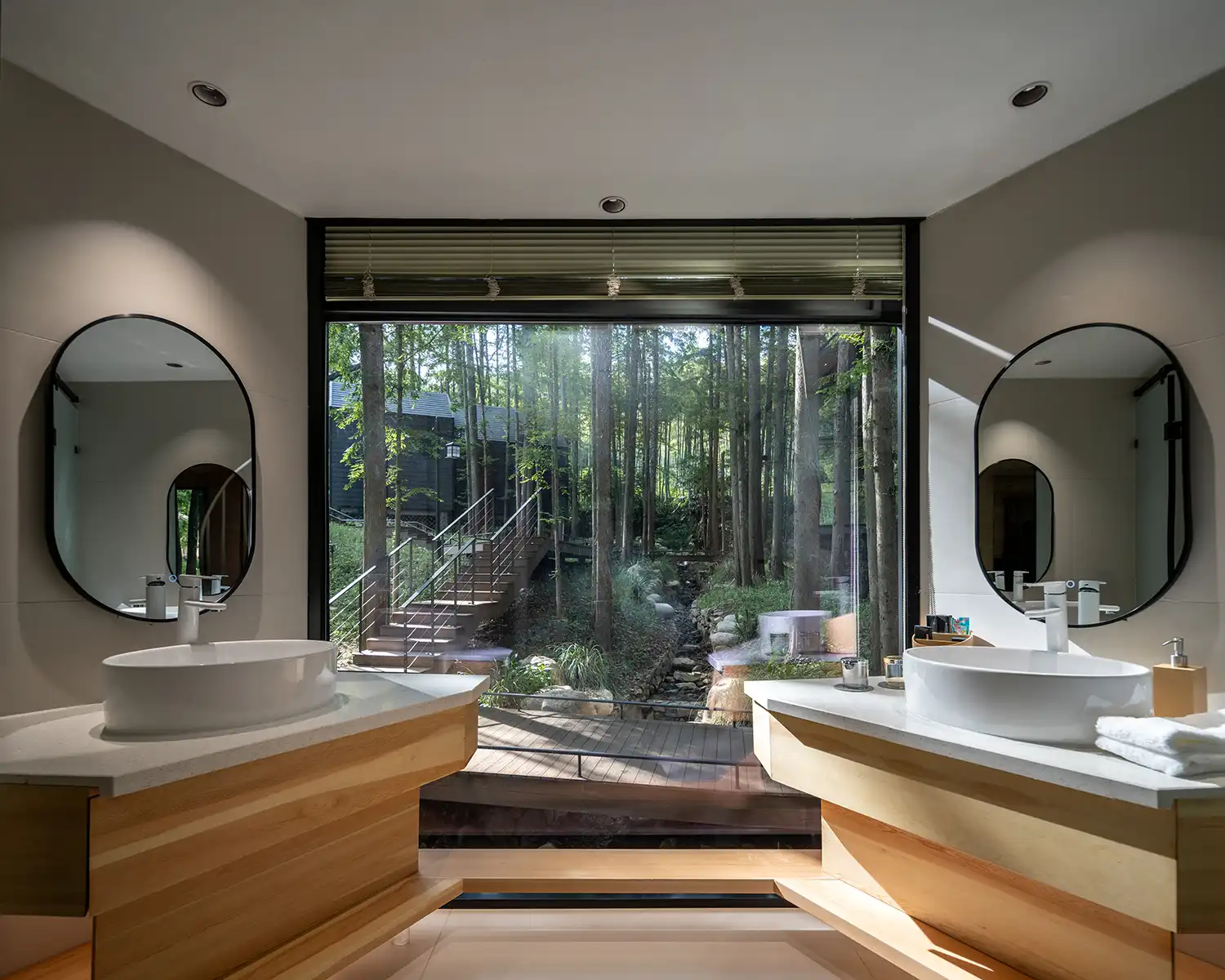
Along the forest edge, three Bamboo Huts offer a different expression of transparency and adaptability. These minimalist volumes are enveloped in woven bamboo façades, a direct nod to the local material palette. These screens filter daylight beautifully, creating soft, dappled interiors and gentle transitions between inside and out. A visible steel frame hints at the potential for future modifications, showcasing a quiet, adaptable architectural language.
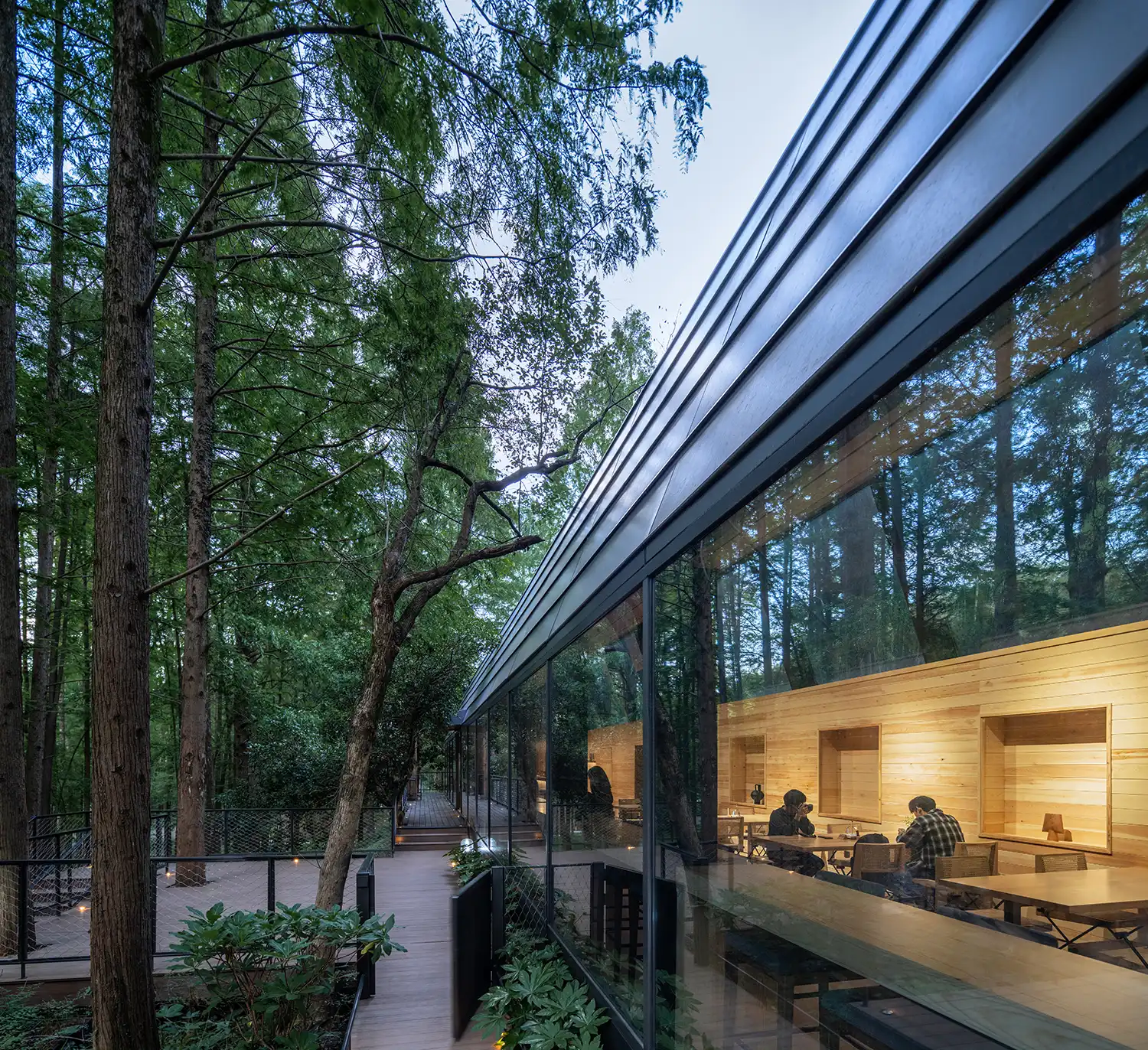
The realization of the Dongmingshan Senyu Hotel was as gentle as its design. GLA Architects conducted meticulous, repeated on-site surveys, mapping every significant tree. Construction planswere dynamically adjusted in real-time to avoid any harm to the precious landscape. The result feels effortless, as if the hotel was always meant to be there – placed, not imposed.
This is not architecture as spectacle. The Dongmingshan Senyu Hotel is a profound spatial response to its natural context. Through minimal intervention and deep ecological sensitivity, GLA Architectshas transformed a neglected corner of forest into a sanctuary of retreat, intimacy, and quiet wonder. It stands as a compelling example of sustainable hospitality design, inviting guests not just to visit the forest, but to truly reconnect with it, and perhaps, with themselves.