



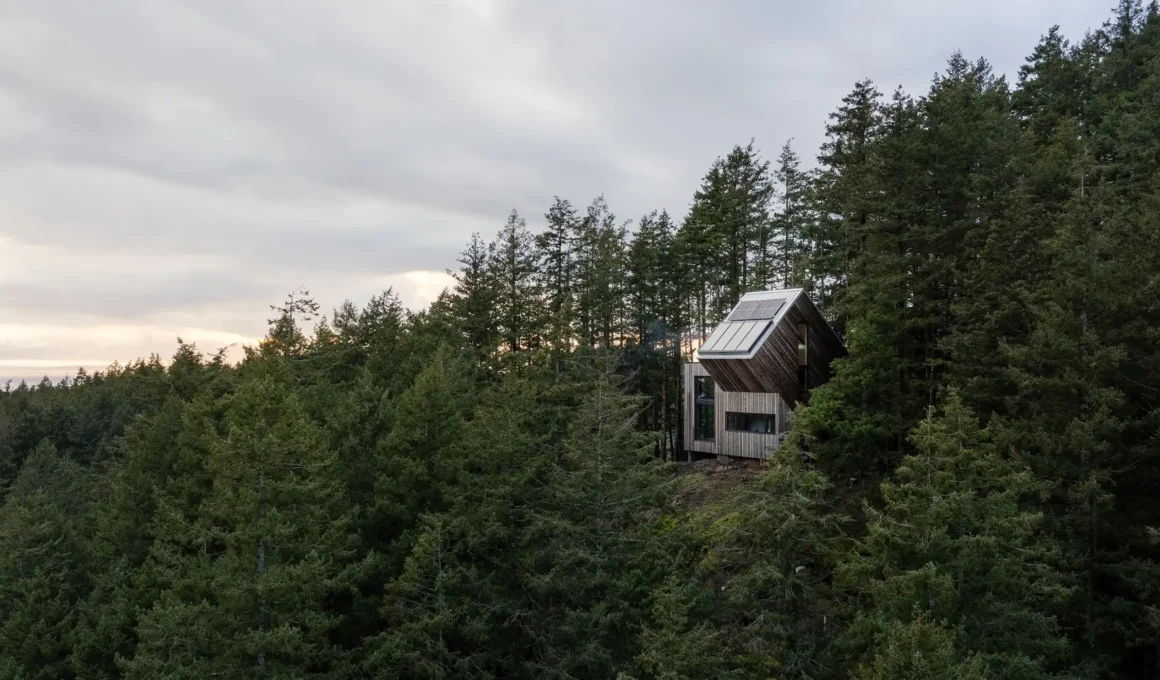
Elevated on the rugged expanse of Keats Island, British Columbia, The Nest is a starkly geometric residential intervention by Daria Sheina Studio (DSS). Conceived as a high-altitude sanctuary, the project embodies a fusion of elemental Pacific Northwest raw beauty and highly resolved prefab architecture. It is an off-grid retreat that eschews conventional building typologies, instead favouring an innovative, vertical composition that maintains a low-impact relationship with its demanding site.
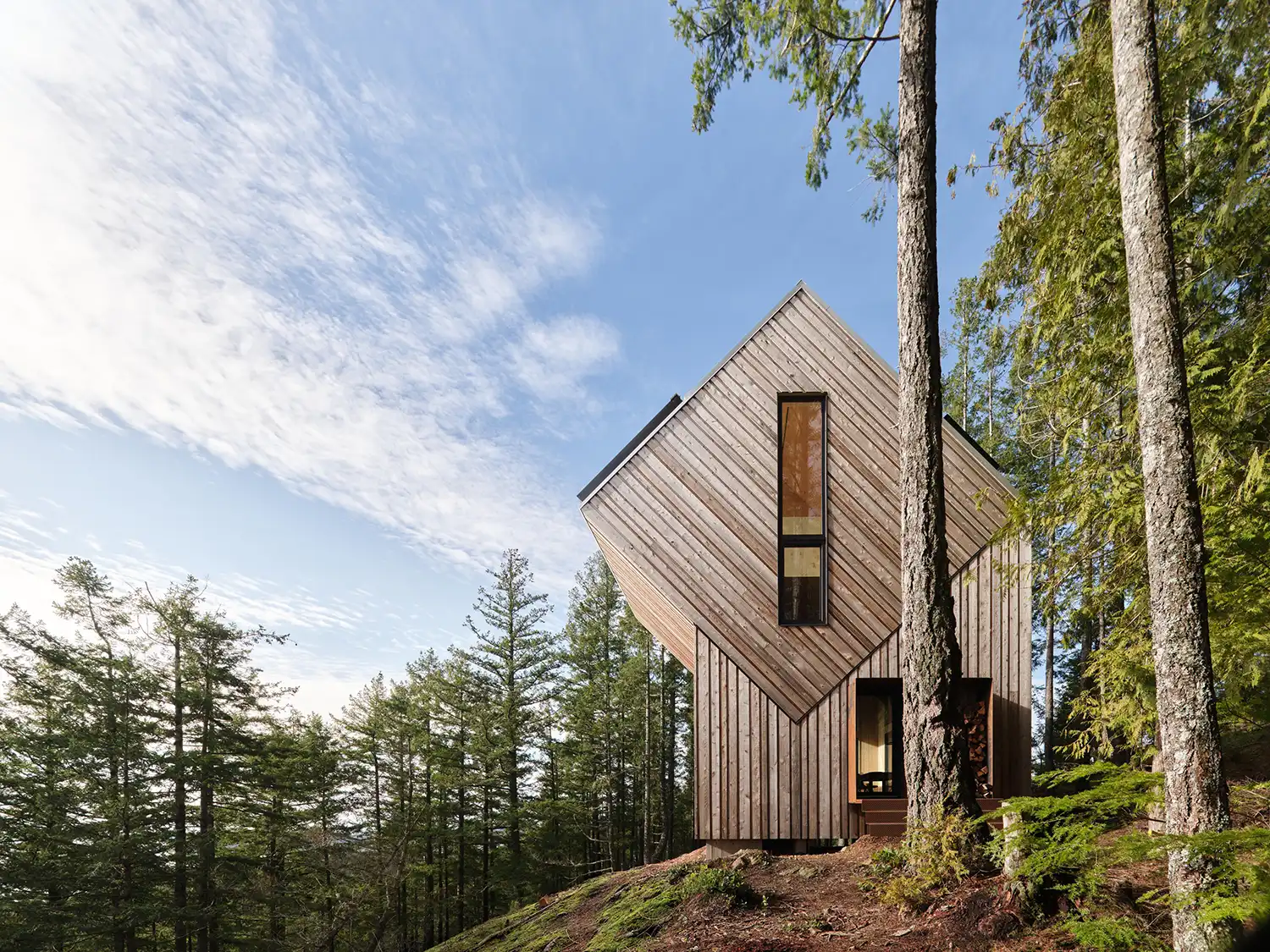
The residence is fundamentally a structural metaphor, explicitly designed to evoke a “shelter” through controlled, circular movement. This design intention manifests as a kinetic interplay between two crisp geometric volumes, deliberately rotated off-axis. This volumetric torsion generates a refined, three-level living experience within a notably compact small footprint. Set within the dense evergreen canopy, the form maximizes light and captures sweeping, uninterrupted panoramas of Howe Sound, establishing a potent visual dialogue between dwelling and landscape.
The logistical challenge posed by the site’s extreme inaccessibility—accessible only by air or sea—dictated that prefabrication was the essential design strategy, not merely a construction convenience. Daria Sheina Studio partnered with specialist BC Passive House to engineer every component. Through rigorous virtual modelling, the home was deconstructed into precise, lightweight modules. These pieces, a carefully managed three-dimensional puzzle, were shipped via barge and then airlifted by helicopter for final assembly. Remarkably, the entire structural carcass was erected in a mere two days, demonstrating the efficacy of modern digital engineering and remote construction logistics.
Materiality reinforces the sustainable mandate. The exterior is robustly clad in natural Western red cedar, chosen for its ability to weather naturally and symbiotically blend with the forested context over time. Beyond aesthetics, the engineering prioritised sustainability: the structural system utilises mass timber, cleverly eliminating the need for high-carbon structural steel. This strategic material choice, combined with the optimised foundation, significantly reduced the requirement for concrete footings and extensive site excavation, upholding the project’s eco-friendly and minimal environmental impact principles.
Operating entirely off-grid, The Nest is a model of self-sufficiency powered exclusively by a high-efficiency solar power array. Essential services are managed internally through a closed-loop system, which includes both a comprehensive rainwater collection and filtration setup and an incinerating toilet. This level of self-contained operation positions the residence as a critical study in sustainable design for remote habitation.
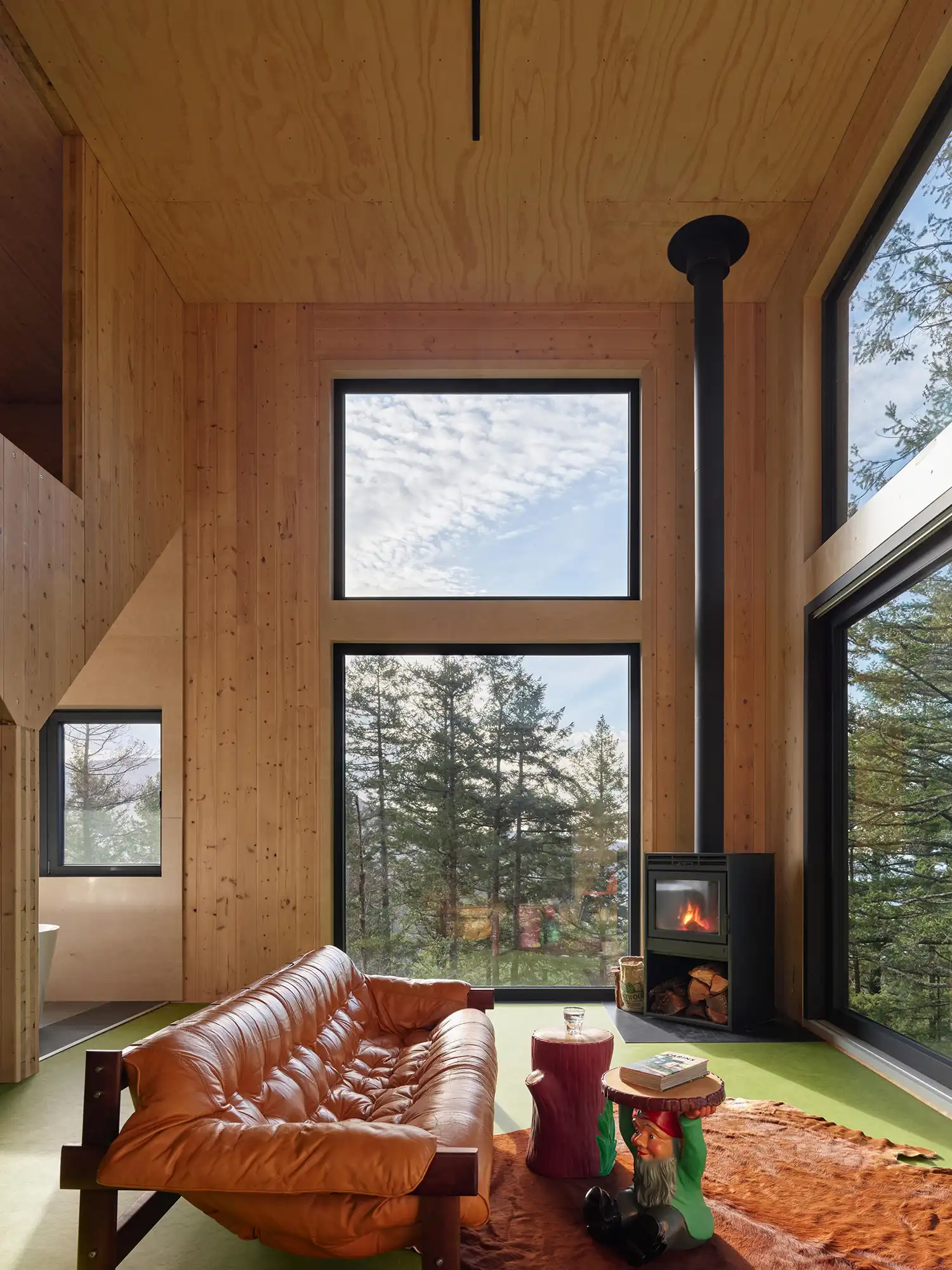
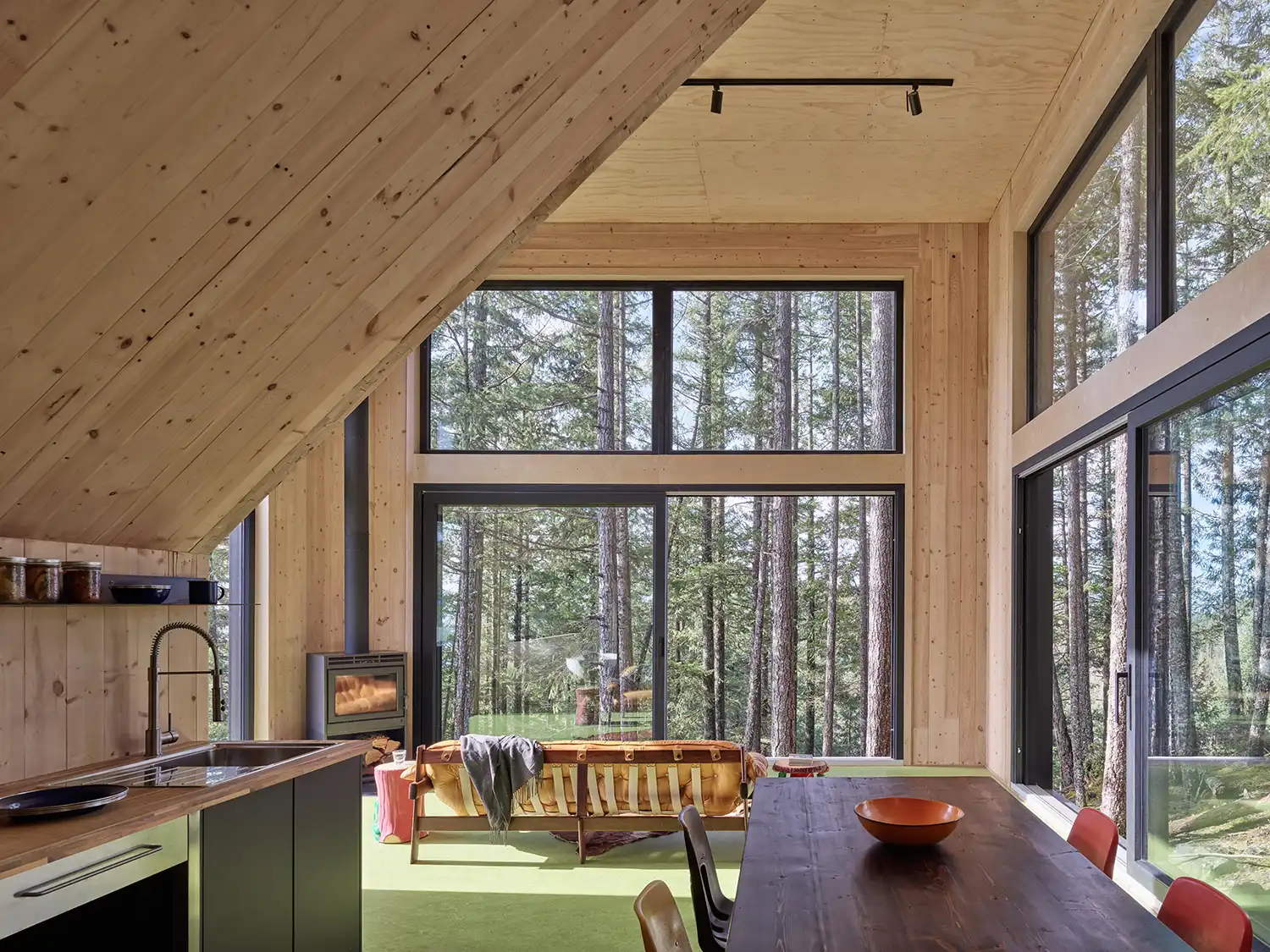
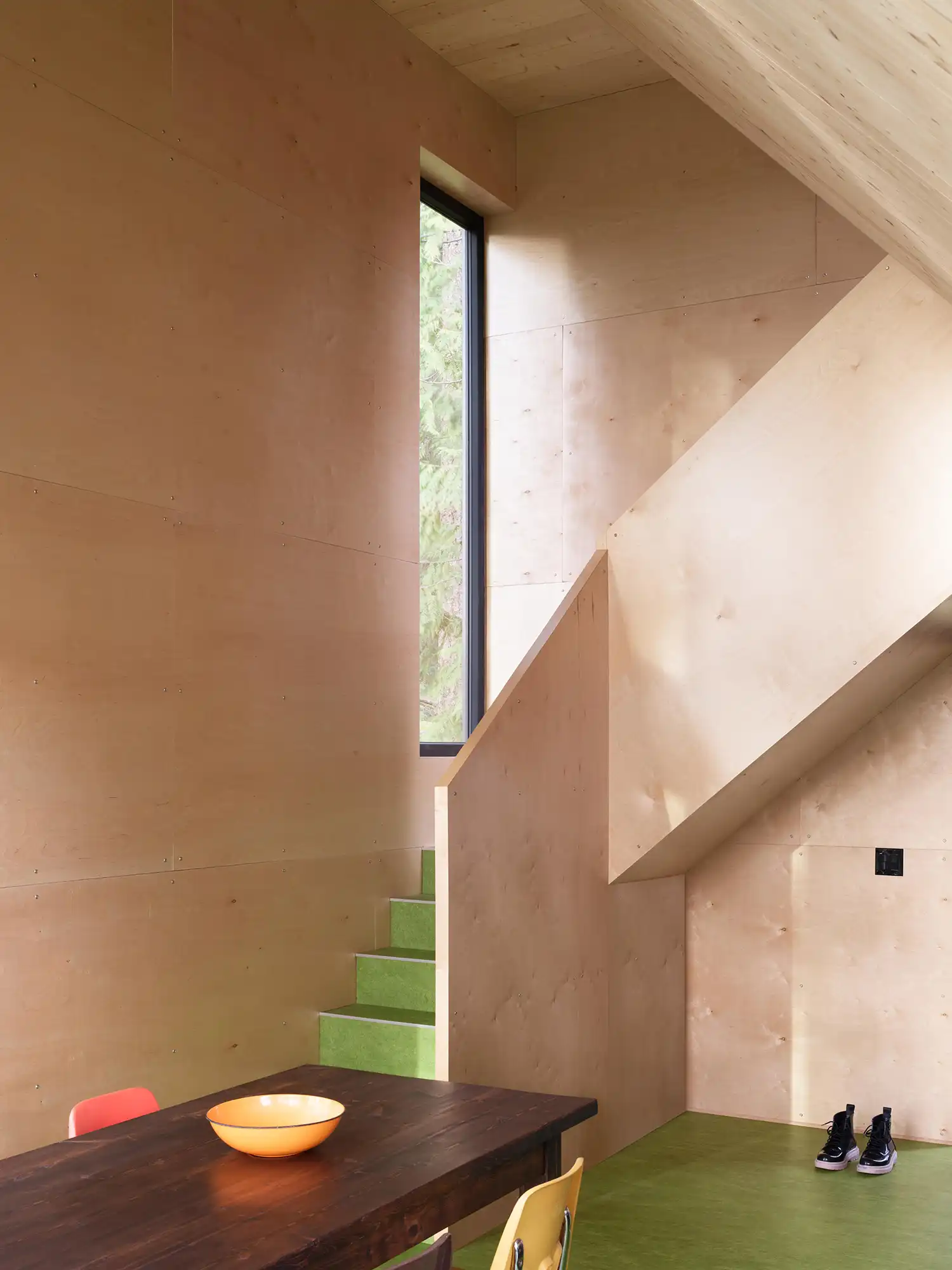
Inside, the minimal, contemporary interiors amplify the structural integrity with exposed wood surfaces and an austere palette. Floors are finished in green Marmoleum, a deliberate, moss-toned choice that visually extends the forest floor into the residence. The interior volume is dissolved into the exterior via large-scale lift-and-slide doors, aggressively connecting the inhabitants to the Pacific Northwest environment. Ultimately, The Nest—as a profoundly personal sanctuary for its owners—serves as a compelling exemplary model of how complex architectural design can be delivered through prefab techniques, creating a deeply resonant, self-sufficient structure rooted firmly in place.