


In the tranquil, lakeside forest of Shirakabako, Japan, a new kind of architectural escape has taken anchor. Designed by the visionary team at PAN-PROJECTS, the Earthboat Cave is a compact, contemplative timber accommodation that embodies the “nature escape” philosophy of the Earthboat series. This design initiative seeks to offer a crucial respite from the density of urban life, inviting occupants to slow down, reconnect, and immerse themselves in a genuinely calm environment. It’s a beautifully simple structure that prioritizes the experience of the surrounding landscape above all else.

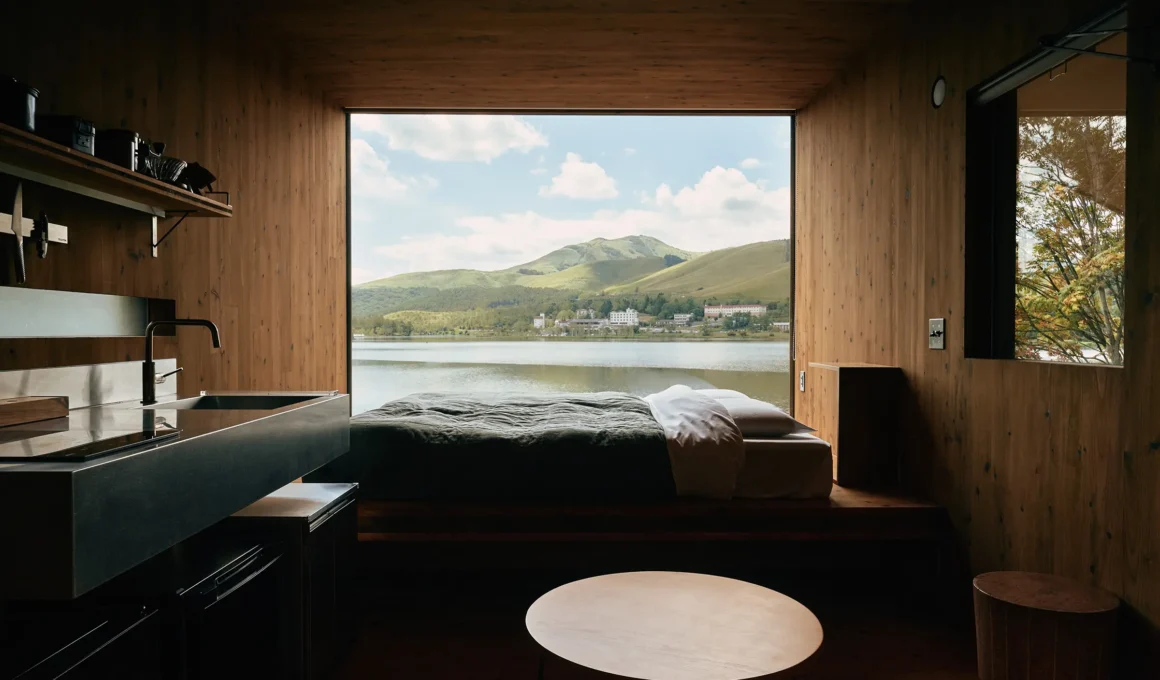
The structure is a masterful showcase of material honesty, constructed entirely from Japanese cedar cross-laminated timber (CLT). This choice provides the cabin with both a welcoming warmth and robust solidity. Internally, the cedar surfaces are deliberately left exposed, creating a tactile and serene atmosphere. This unfinished approach allows the wood to naturally register the passage of time and subtly age, a living material that deepens the connection between the architecture and the natural world it inhabits.

A key feature of the Earthboat Cave is its minimal impact on the precious landscape. The cabin is ingeniously installed without traditional foundations, touching the ground lightly and preserving the natural environment beneath it. This sustainable design not only protects the site but also allows for easy relocation, showcasing how mobile CLT structures can foster new, low-impact models of hospitality across Japan’s diverse landscapes.

The architectural concept revolves around the idea of outdoor living. Rather than serving as a completely enclosed shelter, the Earthboat Cave is a quiet anchor designed to support life that actively unfolds outside its walls. The exterior spaces are thoughtfully integrated, featuring surrounding steps and carefully placed fireplaces that become natural gathering spots. Crucially, a small sauna is positioned with direct access to the open air, providing a welcome blast of warmth against the chill of the mountain climate and further enhancing the visitors’ connection to the forest setting.

Inside, the atmosphere is deliberately minimalist and reflective. The layout is kept simple, providing essential functions: a place to cook, to rest, and, most importantly, to observe. The primary window frames a magnificent, scenic view of the lake, effectively turning the interior into a direct extension of the outdoors. Light floods in through multiple openings, constantly shifting in tone throughout the day to reflect the subtle changes in the weather, making the interior design a dynamic, sensory experience.

The profound power of this project lies in its quiet character. The Earthboat Cave does not compete with or assert itself over the landscape; instead, it sits modestly among the trees, allowing the power of nature to remain the dominant, unforgettable experience. Every element, from the tactile cedar to the outdoor living space, is meticulously designed to enhance a visitor’s sensitivity toward the surroundings, offering a moment to feel the quiet, profound rhythm of the natural world—a true masterpiece of sensitive, contemporary Japanese architecture.