

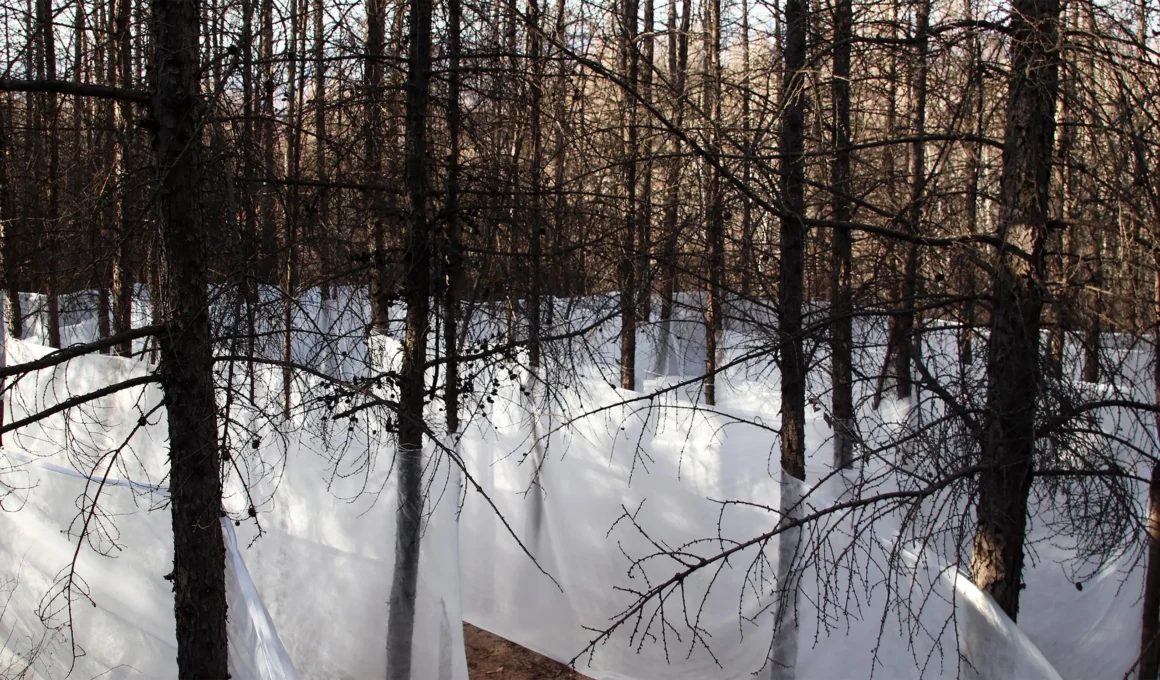
The intersection of human intervention and environmental flux takes center stage at the foot of the Great Wall in Aranya, China, where the design collective ELSE has unveiled its latest project, Ice Garden. Situated near the historic Jinshanling section, the installation does not compete with the stone-clad permanence of the ancient fortifications. Instead, it offers a rhythmic, translucent echo—a temporary architectural gesture that uses the freezing temperatures of the Golden Mountain region as its primary building tool. By leaning into the dry, harsh climate of the forest slope, the project transforms the landscape into a legible spatial sequence, revealing an underlying order that usually remains hidden within the density of the woods.
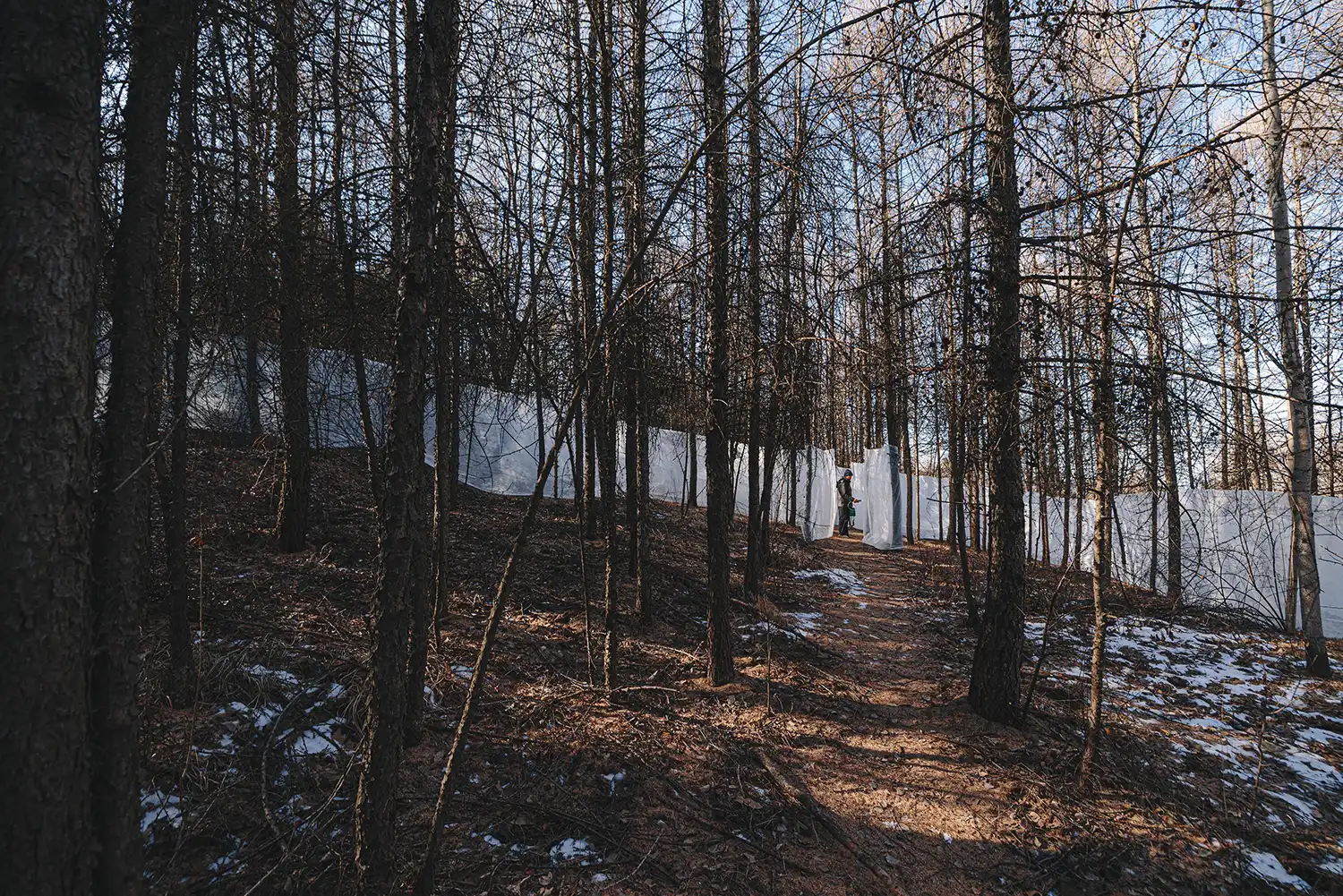
A dialogue with the existing topography dictates the layout of the installation, which eschews fixed geometric patterns in favor of a site-specific logic. The ice walls meander through the trees, following the natural distribution of the forest. In denser thickets, the walls converge to create intimate moments of enclosure, while more open clearings naturally dictate the flow of pedestrian passages. This sinuous arrangement mimics the continuous edge of the nearby Great Wall, yet it does so with a material presence that is entirely season-specific. By framing the terrain in this way, ELSE shifts the visitor’s experience from a casual hike across a mountain trail to a deliberate exploration of volume and light.

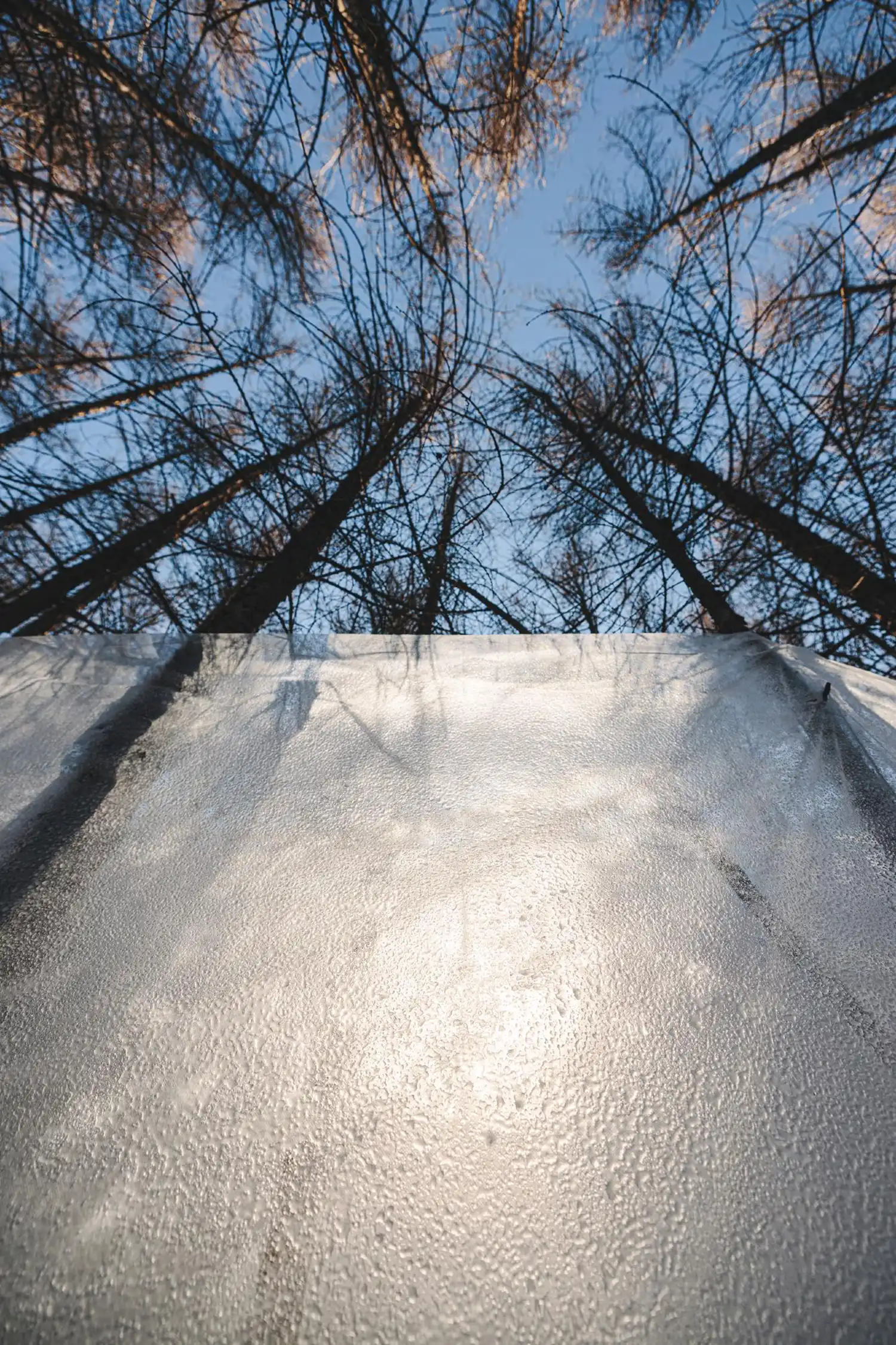
The synthesis of agricultural technology and natural forces defines the technical execution of the project. Rather than transporting pre-cast blocks, the designers utilized lightweight agricultural fleece membranes as a structural “loom.” These membranes were suspended between trees and sprayed with water, allowing the sub-zero temperatures of Northern China to take over the construction process. Layer by layer, thin ice shells crystallized on both sides of the fabric, creating semi-transparent partitions with a distinct architectural weight. This collaborative process between human intent and the laws of thermodynamics results in a structure that feels less like a built object and more like a captured atmospheric phenomenon.
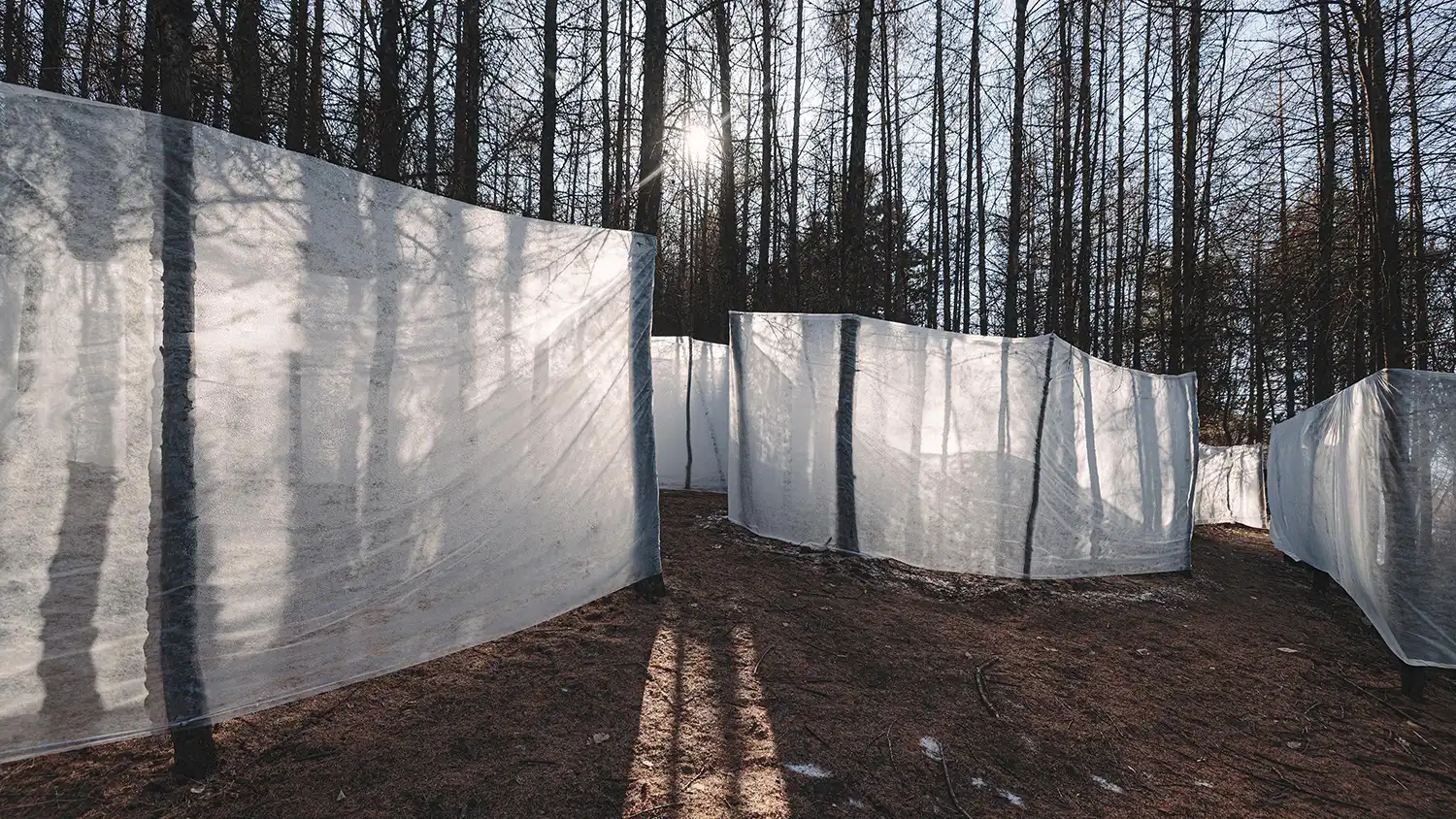
A heightened sensory experience awaits those who move through the frozen corridors, where the boundaries between the interior and the natural world become porous. As winter sunlight slants through the ice, it creates a complex interplay of overlapping shadows—the silhouettes of gnarled branches and passing visitors blur into a soft, monochromatic collage. The physical depth of the forest is subtly compressed through the layers of ice, bending distance and forcing a renewed reading of the surroundings. In this quiet environment, the spacing of the trees and the shifting quality of light become suddenly perceptible, offering a “frozen” moment of reflection that allows an unfamiliar, site-attuned sensibility to emerge from the quietude of the forest.
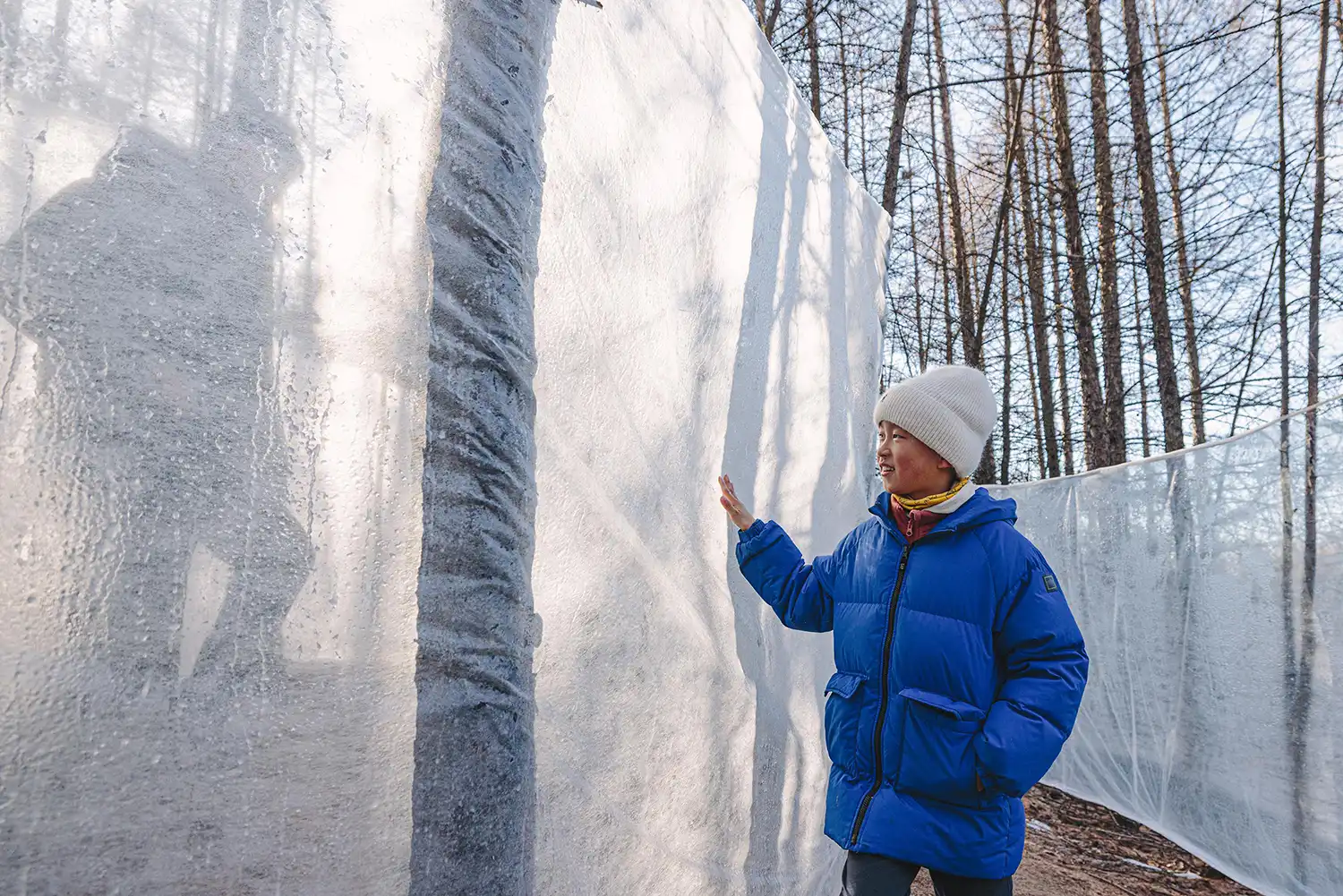
The poetic embrace of impermanence is perhaps the most compelling aspect of the Ice Garden. Unlike traditional architecture that seeks to withstand the elements, this installation is designed to be unformed by the very forces that created it. As the season turns and temperatures rise, the direct solar exposure and mountain air currents accelerate the process of sublimation. The walls begin to crack, emitting faint, audible sounds of splitting—a sonic reminder of the project’s fleeting nature. Eventually, the ice melts and collapses, returning its moisture to the ground and leaving the forest floor entirely unchanged, embodying a philosophy of “leave no trace” within the fragile mountain ecosystem.
Contextualizing the ephemeral in contemporary design, this intervention joins a growing movement of installations that prioritize an interplay with natural environments over structural longevity. Much like the immersive woodland experiences that use geometry to refocus our perception of the forest, Ice Garden challenges the user to engage with their surroundings through a new lens. By integrating these temporary structures, designers are able to explore acoustic ecology and site-specific narratives that celebrate the transition of the seasons. In the case of Jinshanling, the result is a profound meditation on the beauty of the temporary—a space that emerges briefly, only to dissolve back into the landscape from which it was born.