

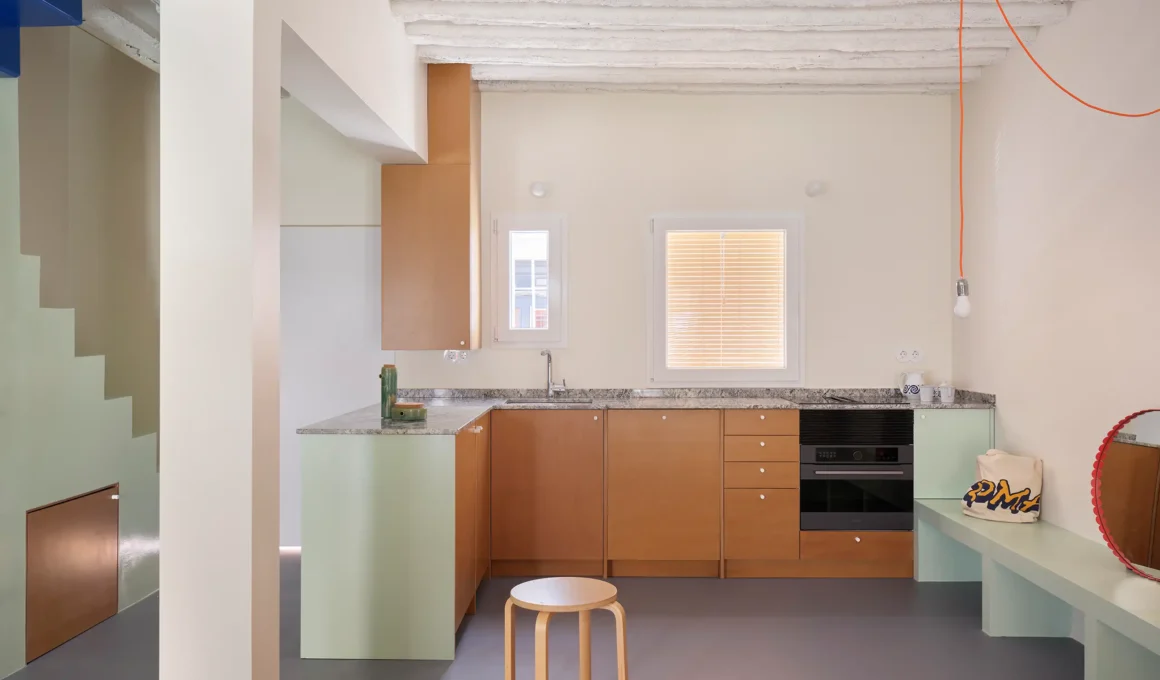
In the dense urban fabric of Carabanchel, a historic working-class neighborhood in Madrid, Spain, the traditional two-storey terraced house is undergoing a quiet, colorful revolution. Built in the late 1940s, these homes—characterized by modest footprints and narrow backyards—often feel constrained by their original, compartmentalized layouts. However, for Extrarradio Estudio, the TET House presented an opportunity to move beyond preservation, treating the existing structure as a skeletal “blank canvas” for a lifestyle defined by creativity and social gathering.
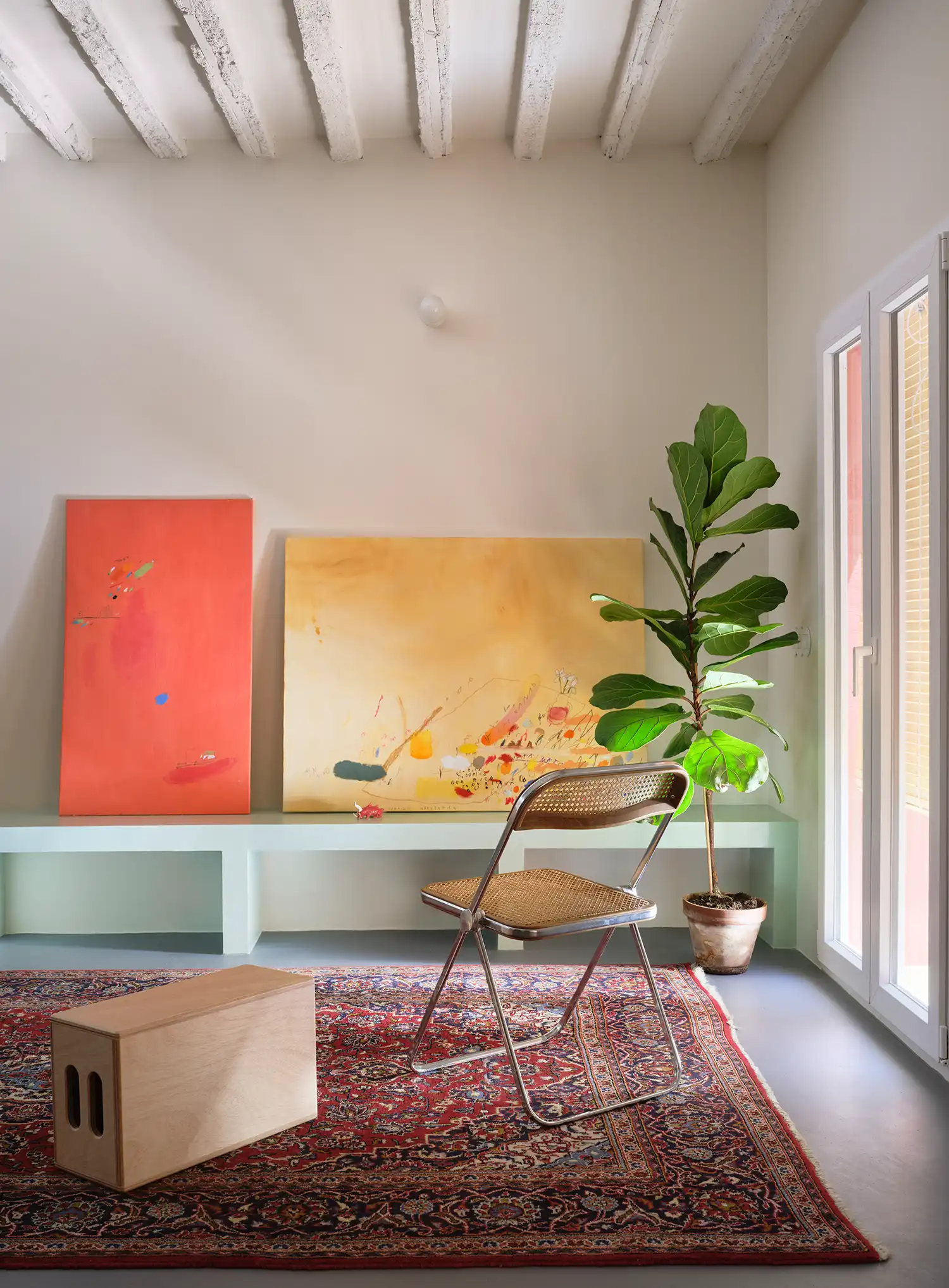
A radical conceptual vision guided the renovation, centered on the idea of stripping the building to its primary essence. By removing every non-essential partition, the architects exposed the raw honesty of the original beams, walls, and roof frames. This “archaeology of the domestic” allowed the studio to reimagine the home not as a series of fixed rooms, but as a fluid, multi-dimensional void. It is a philosophy that echoes the studio’s previous work at Prado Toro, where they reimagined the rural archetype as a single, expressive volume. Just as that mountain retreat celebrated the connection between the inhabitant and the landscape, TET House focuses on the internal landscape of human interaction.
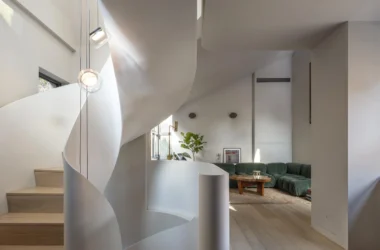
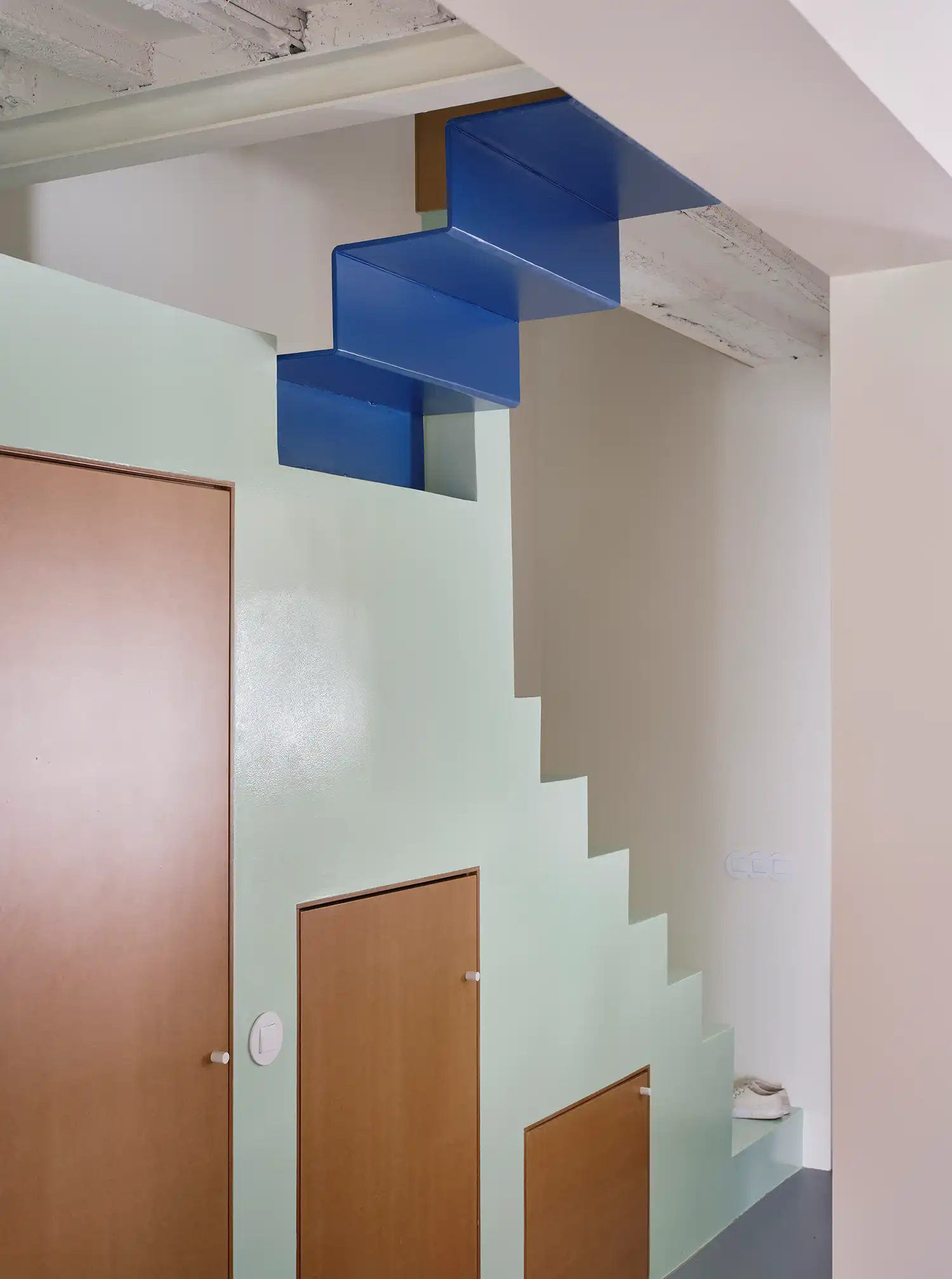
The technical choreography of the ground floor is defined by a continuous “zigzag” element that snakes along the perimeter. This architectural ribbon is a masterstroke of spatial efficiency, integrating a disparate program—a guest toilet, a compact kitchen, the staircase, and even a small outdoor bathtub—into a single, unified gesture. By pushing the functional “servant” spaces to the edges, the center of the house is liberated, creating a cavernous, double-height volume that breathes. The sensory experience is one of unexpected expansion; the smell of fresh coffee from the open kitchen mingles with the cool, tactile sensation of the polished floor, while light filters through from the backyard, no longer obstructed by 20th-century masonry.
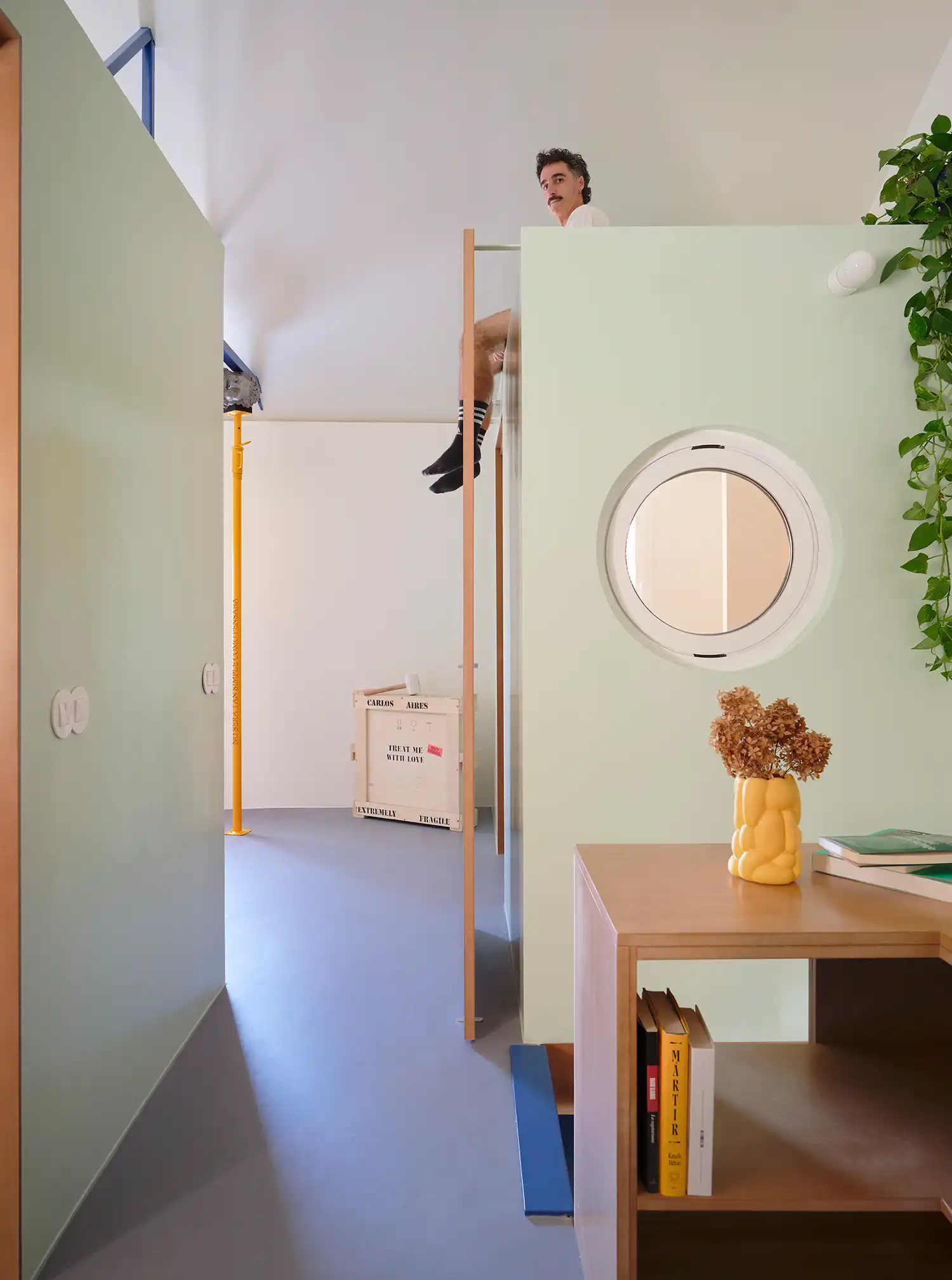
Vertical complexity and spatial perception were the primary challenges in this limited footprint. On the upper level, Extrarradio Estudio avoided the trap of traditional hallways. Instead, two independent volumes—containing the bathroom and a secondary bedroom—sit within the larger shell like oversized furniture. These “boxes” deliberately stop short of the ceiling, allowing the eye to travel across the entire underside of the roof. This strategy creates a series of hybrid, flexible zones where a study can seamlessly transition into a master bedroom, ensuring the house feels significantly larger than its physical dimensions suggest.
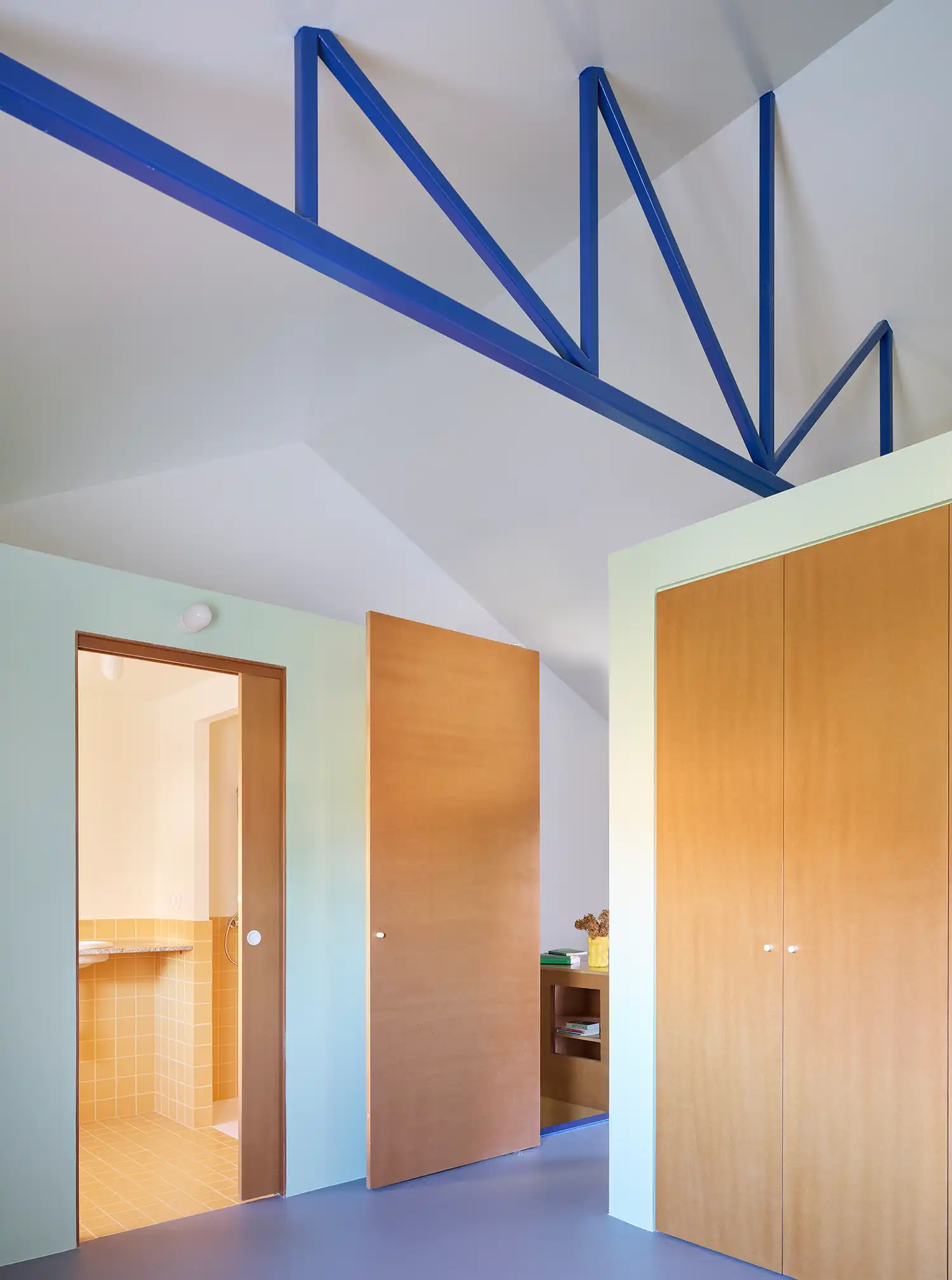
Color as a compositional tool becomes the project’s most defining visual signature. A vibrant, deep green is applied to the zigzagging perimeter and the functional upper volumes, creating a rhythmic pulse throughout the home. This bold choice provides a sharp, sophisticated contrast against the neutral white of the original walls. It is a dialogue between the old and the new that is both playful and disciplined, reflecting the client’s desire for a home that facilitates dinners, parties, and reunions. The green does not just decorate; it identifies the “active” parts of the house, leaving the rest as a peaceful, white background for living.
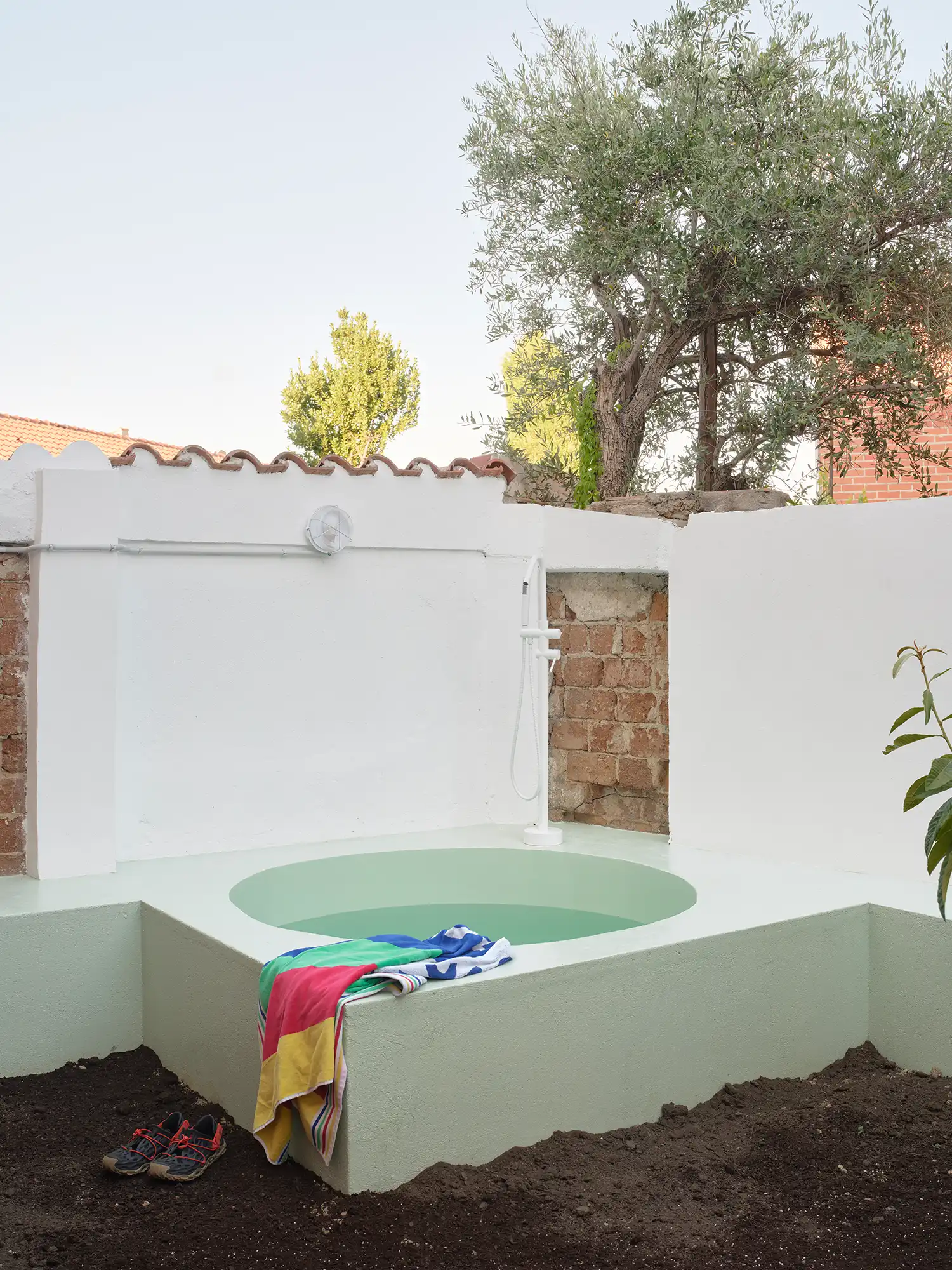
Contextual impact and urban rebirth in Madrid are often found in these small-scale interventions. In Carabanchel, where the streetscape is defined by repetition, TET House stands as a testament to the power of “liberated” architecture. By transforming a dilapidated 1940s dwelling into a sophisticated, light-filled stage for modern life, the architects have proven that space is not about square meters, but about the quality of the void. It is a celebration of the casual and the creative, proving that even within the most rigid historical frameworks, there is always room for a radical, colorful escape.