



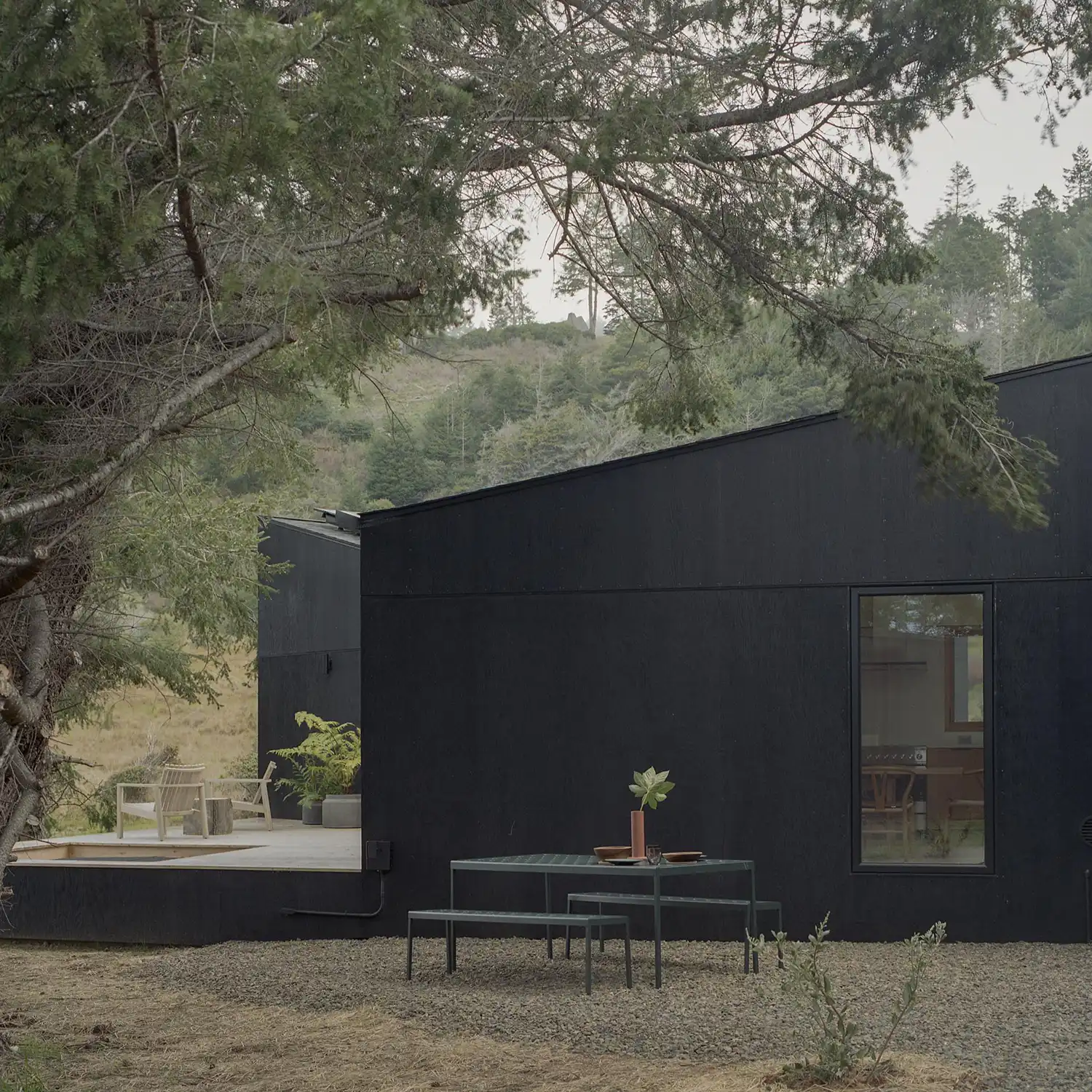
In the rugged, winds-swept expanse of Sonoma County, the legacy of The Sea Ranch has long stood as a beacon of environmental stewardship. It is within this storied landscape that Figure, a San Francisco-based architecture office, has realized the House of Four Ecologies. Conceived not merely as a residence but as a shared sanctuary for a collective of four friends—ranging from architects to ultramarathoners—the project serves as a profound meditation on how we inhabit the “sublime coastal environment” of Northern California. By atomizing the traditional single-family home into a cluster of four distinct volumes, the design honors the site’s existing residents: a grove of windblown Douglas firs that dictate the home’s delicate, wandering footprint.
A conceptual vision of collective stewardship guides the project, moving away from the paradigm of the isolated luxury villa toward a model of shared experience. Inspired by Lawrence Halprin’s original master plan for The Sea Ranch, which traces a sectional journey from the Pacific headlands to the woodland ridges, the house acts as a spatial instrument for observing these shifts. This ethos of “building lightly” echoes the sensitive approach seen in other contemporary coastal interventions, such as the monolithic concrete integration of Casa Plaj in Portugal, where the architecture serves as a silent observer of the sea’s immense power.

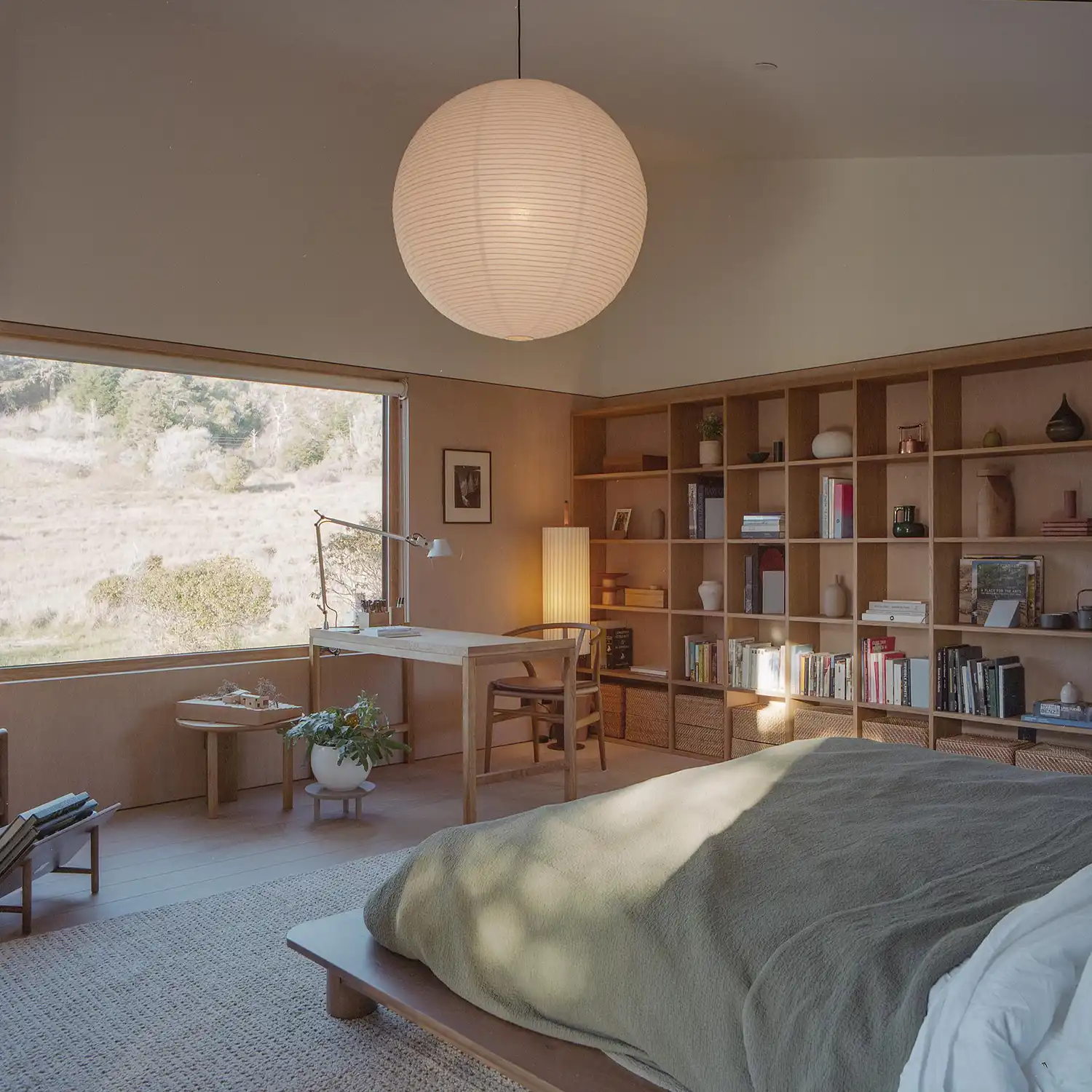
The technical execution of the four volumes reflects a “choreography of deference” toward the immediate micro-ecology. Rather than clearing the land, the four sheds weave between the trees, using the timber giants as natural shields against the Pacific winds. Each volume is rotated to frame a specific cinematic view: the “Ocean Room” peers westward toward the blue horizon, while the primary suite turns northward to embrace the open meadow. This fragmented layout creates a sensory experience akin to “ambling through the landscape,” where the transition between rooms mirrors the shifting light and textures of the Sonoma coast.

Internal flexibility and modular living define the “Ocean Room” and “Garden Room,” where built-in banquettes and sliding partitions allow spaces to oscillate between communal hubs and private retreats. This fluid programmatic approach shares a spiritual kinship with projects like the House for Two DJs in Portugal, which similarly explores how specific creative needs can dictate a non-traditional domestic layout. In the House of Four Ecologies, the “Garden Room” can transform from a bedroom into a painting studio or a sun-drenched extension of the central courtyard, emphasizing that the house is a living, breathing workshop for its inhabitants.
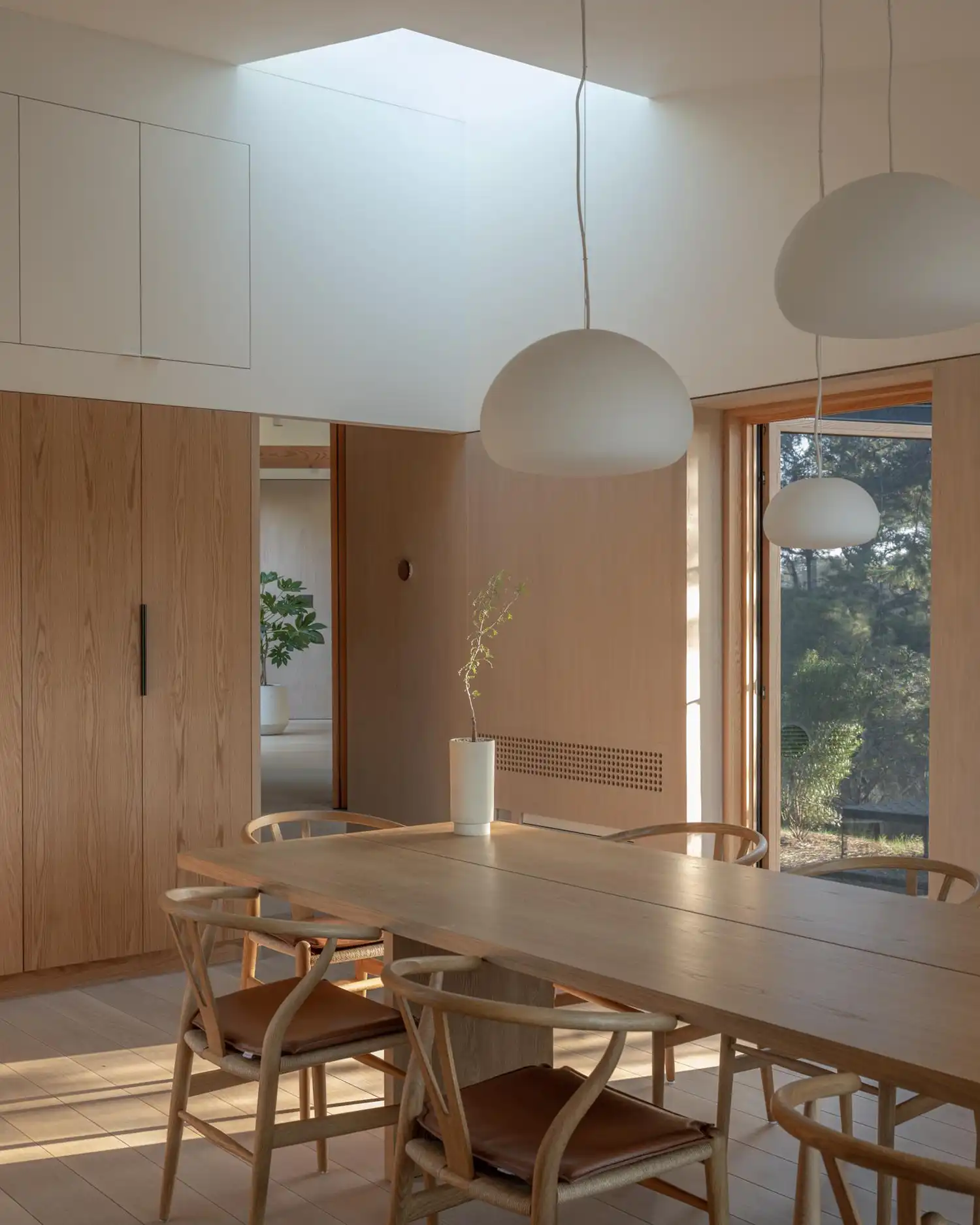
At the heart of the home, the third and largest volume houses the kitchen and dining area, acting as the social anchor for the collective. Framed by a riparian grove and a narrow corridor of firs, this space is centered around a generous communal table designed for everything from “backcountry meal prep” to remote architectural conferencing. The materiality is restrained, allowing the “four orientations of daylight” to activate the interior throughout the day. A concealed hot tub on the western deck offers a final, tactile connection to the environment, allowing the residents to soak within the coastal grasses and coffeeberry bushes that dapple the site.
A new prototype for co-ownership emerges as the project’s most significant contextual impact. Beyond its architectural merit, the House of Four Ecologies addresses the housing crisis in California by experimenting with shared equity. Now owned by a group of six, the residence operates on a rotating basis, even hosting artist residencies to foster cultural production. As James Leng launches his new practice, Glacial Erratic, this project stands as a testament to the idea that density and environmental stewardship are not mutually exclusive, but rather the essential ingredients for the next era of coastal living in the United States.