

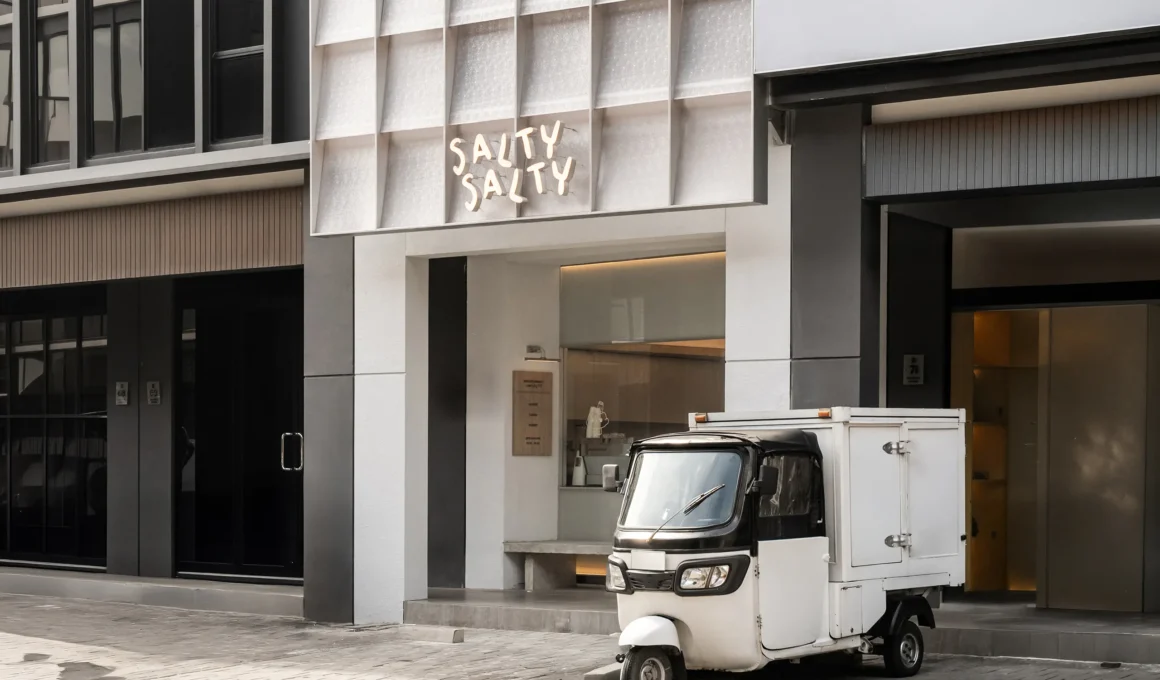
In the urban fabric of Tangerang, Indonesia, Jakarta-based For Good Studio has completed a venue that functions as a macroscopic study of a salt crystal. Located in the district of Gading Serpong, the Salty Salty cafe moves away from the typical industrial or rustic aesthetics of regional coffee shops, opting instead for a rigorous exploration of crystalline form and light. The resulting structure does not appear as a traditional building, but rather as a solidified fragment of mineral clarity.
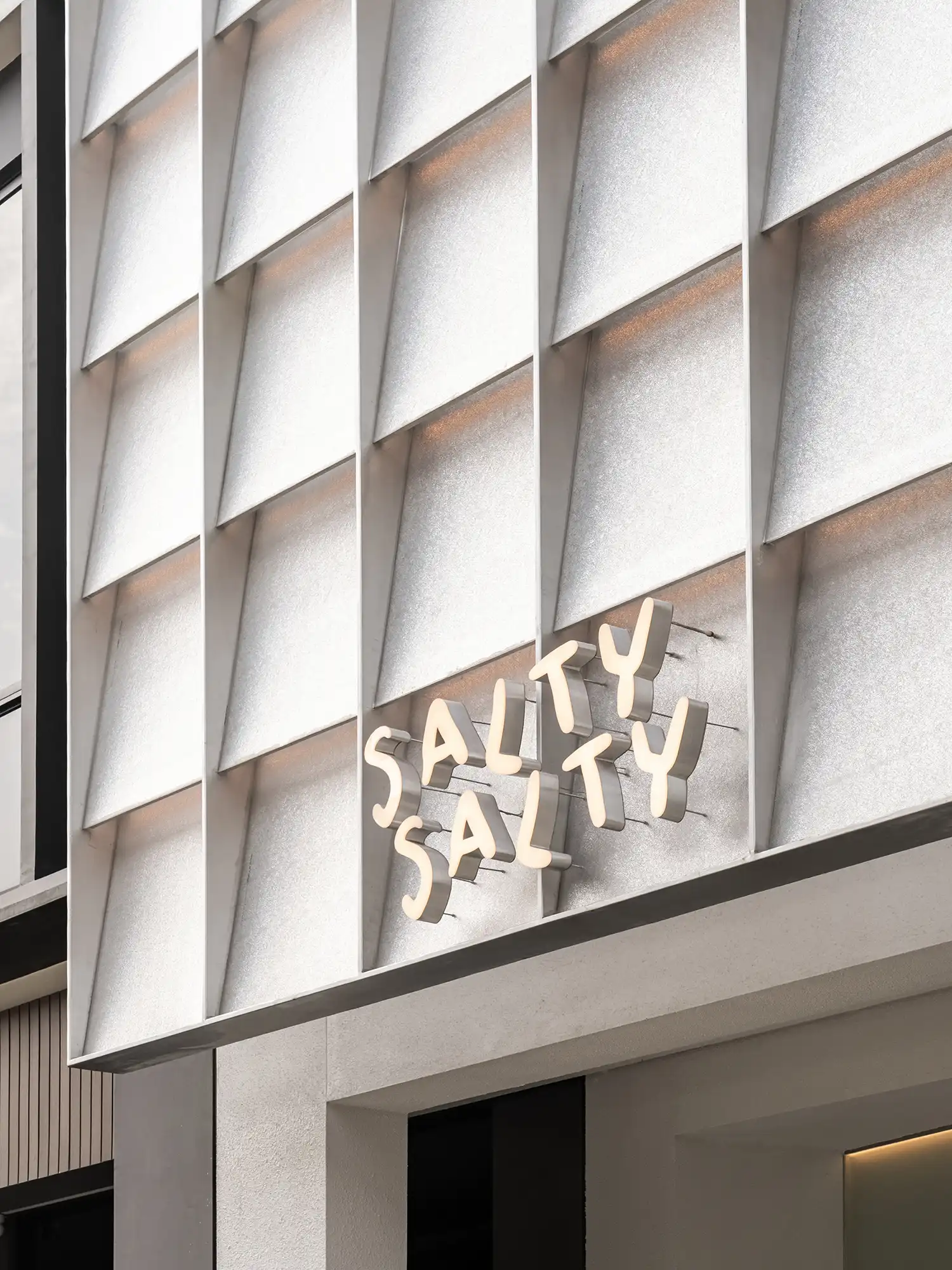
The conceptual foundation rests on the abstraction of microscopic formations. By observing how salt crystals grow in structured yet complex patterns, the design team developed a spatial language of sharp angles and overlapping transparencies. This vision translates the natural lattice of a salt grain into a human-scaled environment, where the clarity and brilliance of the raw element are rendered through contemporary materiality, turning the act of visiting a cafe into an immersive sensory event.
A multifaceted skin transforms the exterior into a civic beacon. The facade is wrapped in an embossed solar turf surface, a material choice that creates a tactile, three-dimensional texture. By day, this crystalline geometry plays with the intense Indonesian sun, providing depth and visual richness to the volume through a series of shifting shadows. After sunset, the building undergoes a metamorphosis; the interior illumination bleeds through the translucent skin, turning the entire cafe into a glowing lantern that punctures the urban landscape of Tangerang.
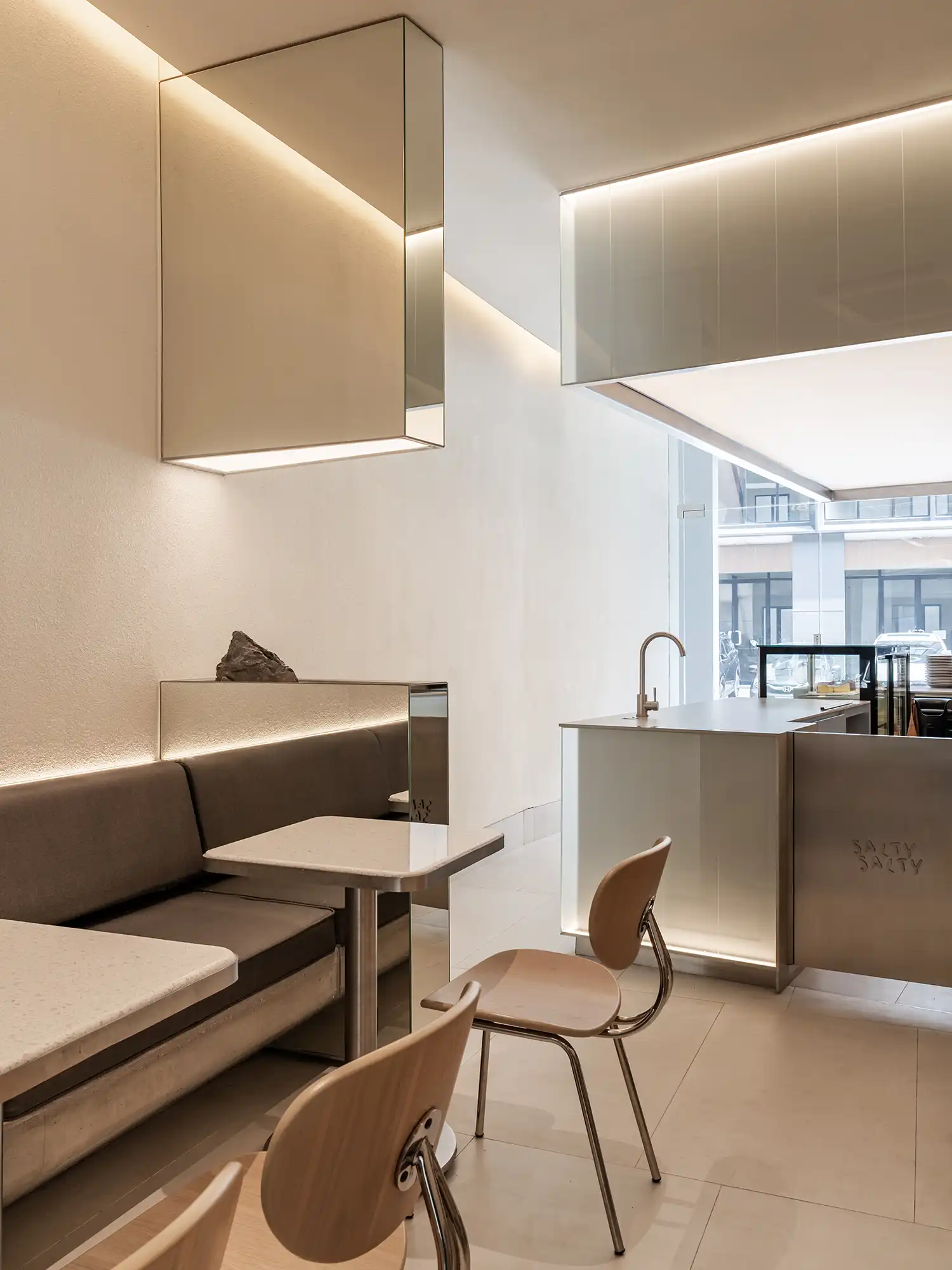
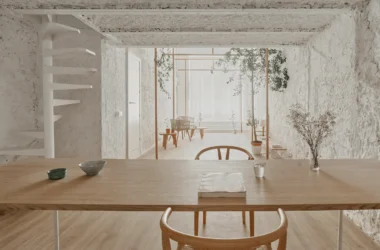
Atmospheric reduction defines the internal user experience. Upon entering Salty Salty, visitors are met with a high-clarity, monochromatic environment that prioritizes light over ornament. The interior is defined by a disciplined palette of acid glass, mirrors, and pure white surfaces. Acid glass partitions are strategically utilized to diffuse natural daylight, washing the space in an even, shadowless glow that blurs the boundaries of the room and lends the seating areas a weightless quality.
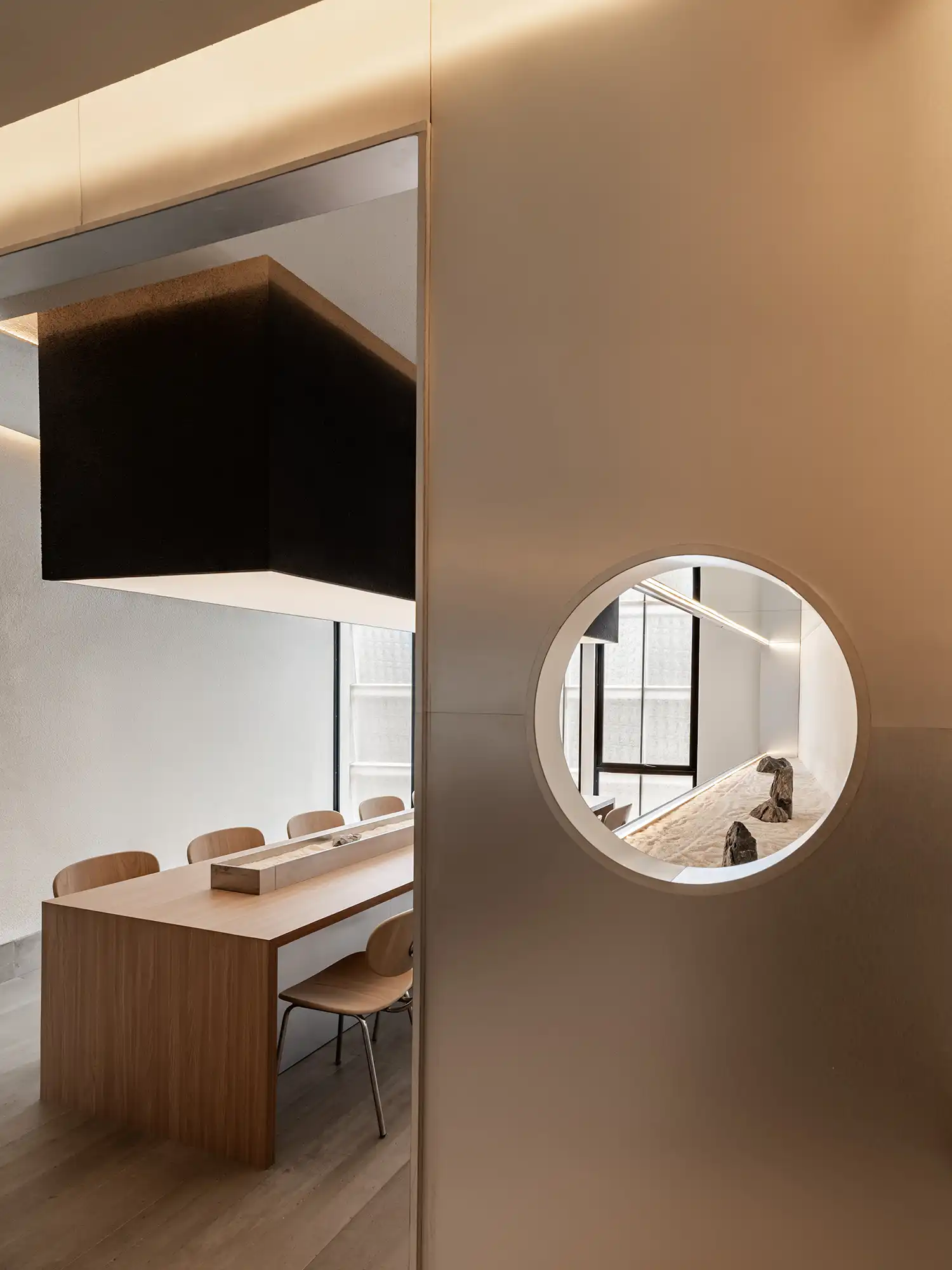
Light is treated as a primary structural element within the cafe. Against the backdrop of pristine white surfaces, illumination takes center stage. A large, suspended light box hangs over a communal timber table, mirroring the blocky geometry of the exterior facade. This central element is anchored by a trough filled with actual salt and stones, grounding the abstract concept in physical reality. Mirrors are further employed to amplify spatial depth, creating rhythmic reflections that mimic the internal refractions found within a crystal.
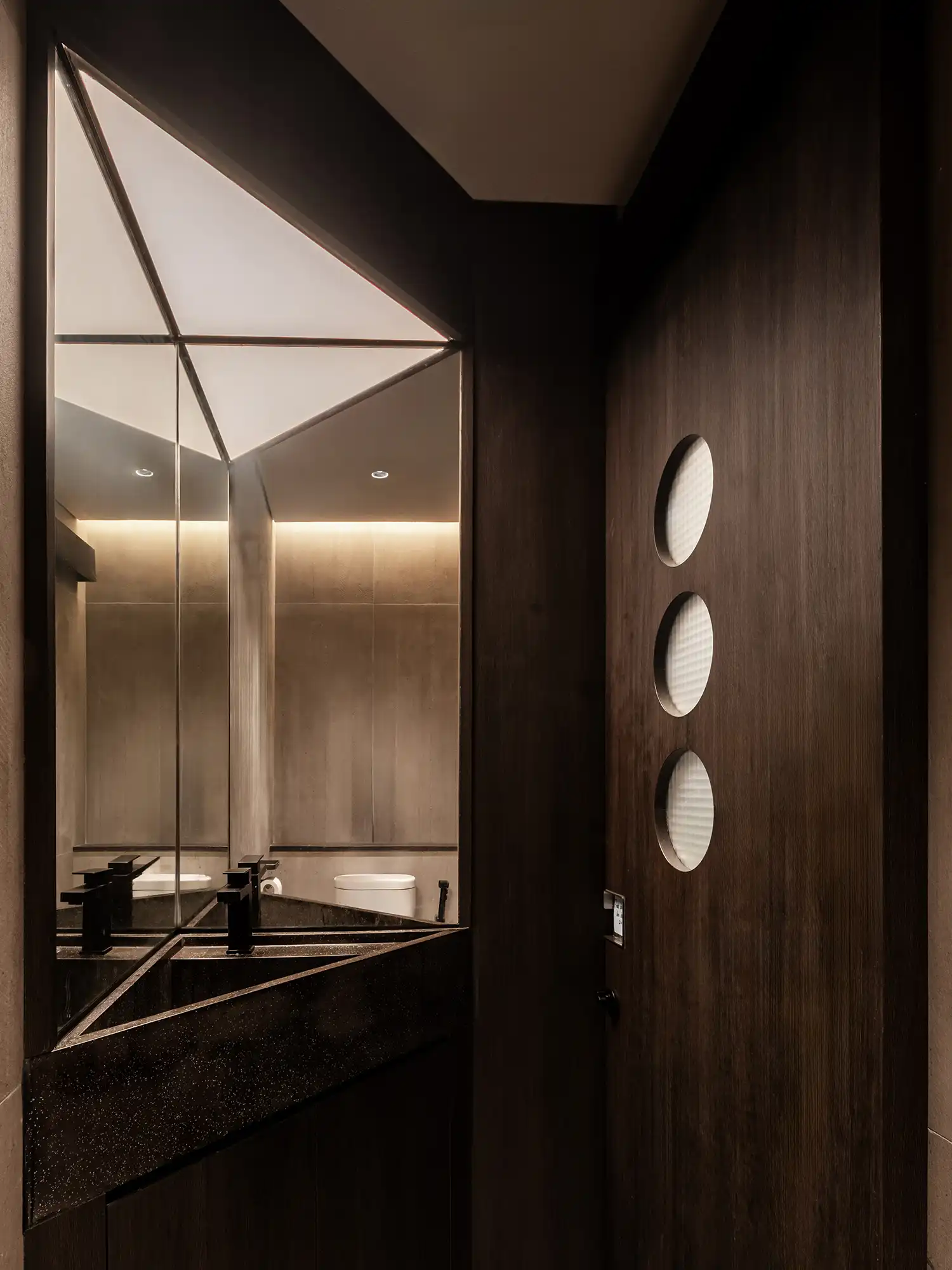
The project contributes to a growing regional dialogue on conceptual hospitality. By focusing on the intrinsic qualities of a single mineral element, For Good Studio has created a moment of crystalline order within the bustling context of Jakarta. The cafe joins a sophisticated lineage of spaces that prioritize spatial reduction and material immersion, much like the refined textural interplay seen in the Season Patisserie Taipei or the serene, contemplative atmosphere found at the Bufen Atelier Tea Pavilion in Beijing.