

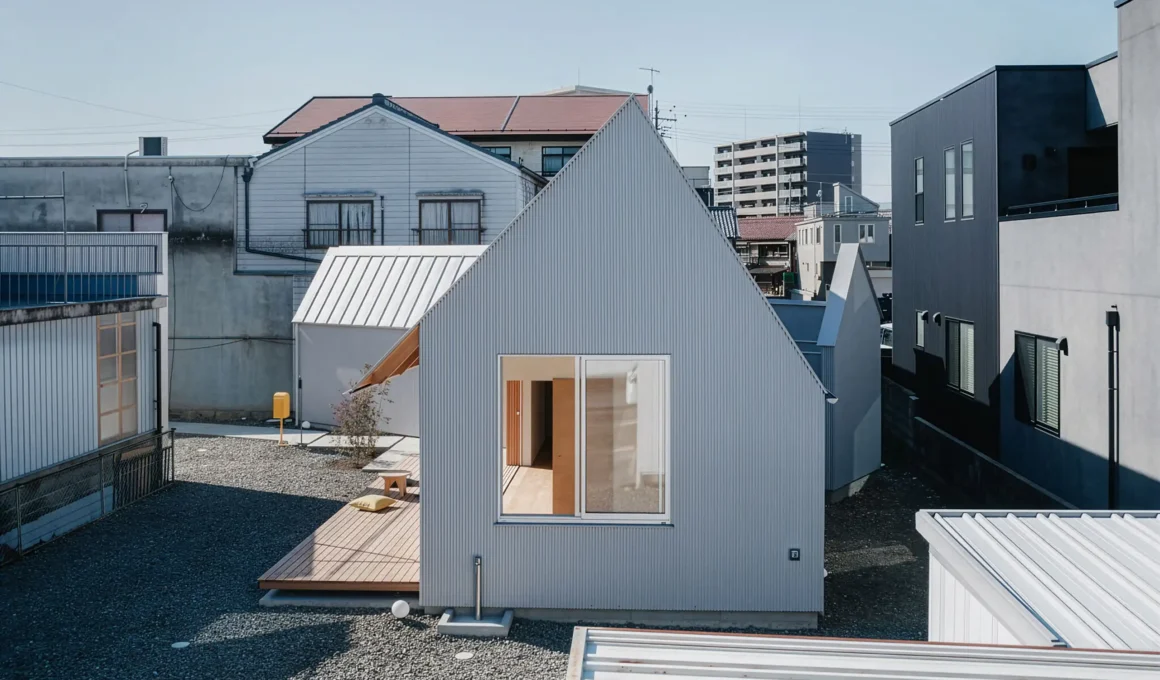
The urban fabric of regional Japan is undergoing a quiet, structural transformation. In the heart of Tajimi City, Gifu Prefecture, a locale once defined by its commercial density, the phenomenon of urban hollowing has left behind pockets of underutilized land. It is within one such “flag-shaped” lot that architect Fumi Aso has realized the Kaleidoscape House, a single-story residence that rejects the impulse for architectural sprawl. Rather than maximizing the building’s footprint to the site’s commercial potential, the project opts for a humble, human-centric scale that prioritizes the sensory quality of the living environment over mere square footage.

A geometric simplicity born of necessity defines the home’s primary silhouette. In response to the global surge in material costs following the pandemic, the design utilizes a refined spatial composition: a primary house-shaped cylindrical volume intersected by a strategic sub-volume. This T-shaped arrangement on the site creates a series of transitional zones that blur the boundary between the interior and the surrounding landscape. The architecture does not merely sit on the land; it curate’s the inhabitant’s movement through it, utilizing a long, choreographed approach that builds a sense of quiet anticipation before one even reaches the threshold.
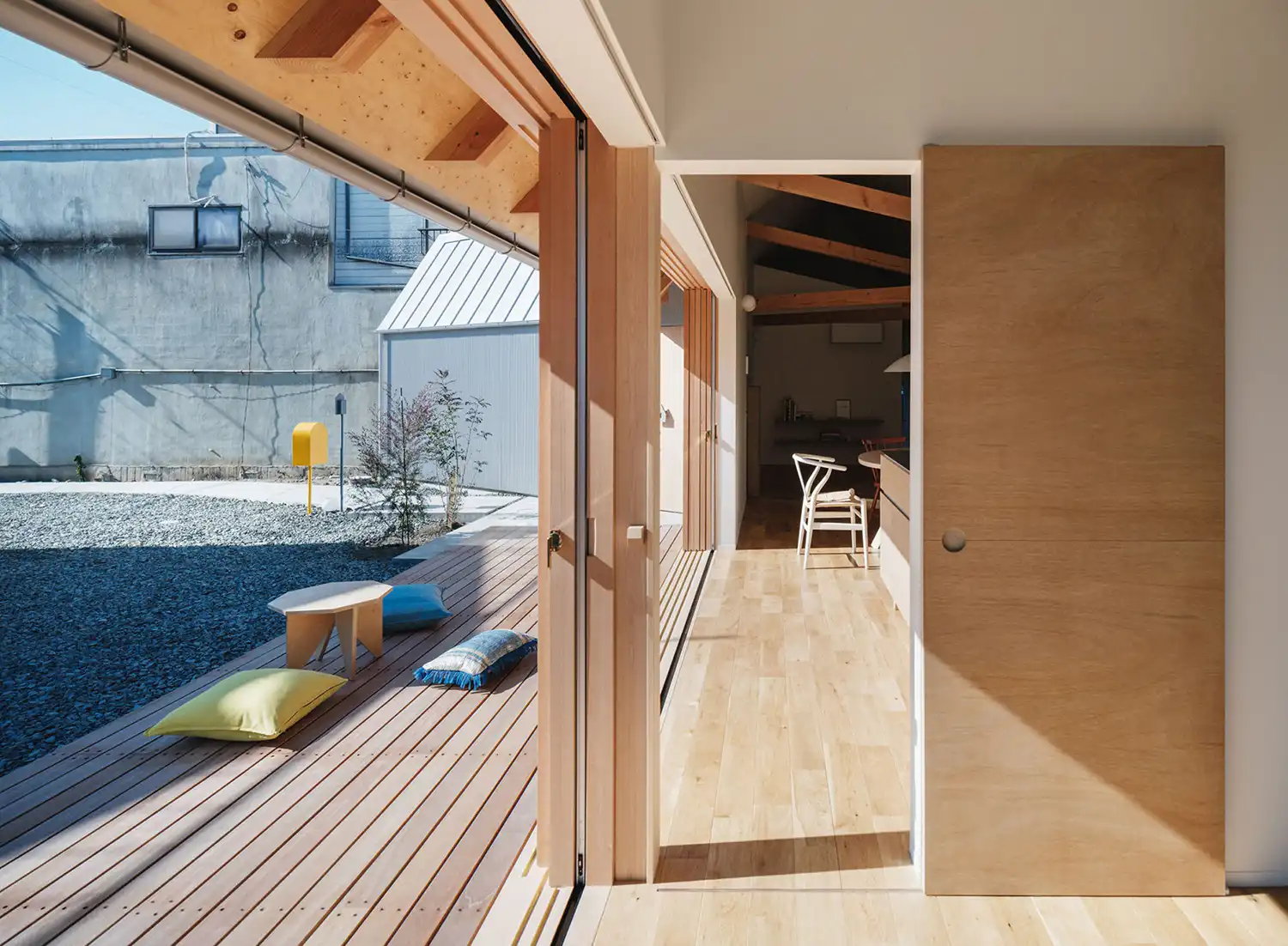
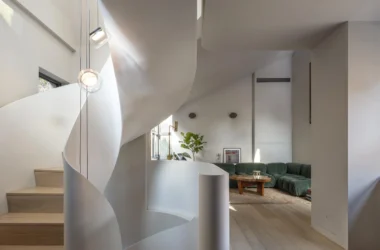
The interior experience is one of constant evolution, living up to the project’s namesake. Like the internal mechanisms of a kaleidoscope, the house is designed to capture and fracture the shifting light of Central Japan. The cylindrical structure is punctuated by openings of varying sizes and orientations, allowing the white interior walls to serve as a canvas for the “shimmering light” of the passing day. Depending on the season and the hour, the space is tinted with different hues—cool blues in the morning, warm ambers at dusk—ensuring that the domestic atmosphere is never static, but rather a living reflection of the world outside.

Addressing the climatic extremes of Tajimi City, which frequently records some of the highest temperatures in Japan, required a sophisticated approach to passive cooling. The single-story structure features high ceilings and a distinctive triangular roof profile, a geometry specifically chosen to facilitate gravity ventilation. This architectural gesture is reminiscent of other innovative approaches to high-density living in the region, such as the nuanced exploration of Japanese urban living seen in the IEIE House by Masa Architects. While the IEIE project navigated the constraints of a narrow urban plot through verticality and internal voids, the Kaleidoscape House achieves a similar sense of spatial liberation through horizontal expansion and a rigorous dialogue with the sky.

The concept of “field play” informs the southern face of the residence, where deep eaves and a wide deck create a versatile veranda. For a family with a passion for the outdoors, this area acts as a semi-outdoor extension of the kitchen, perfect for alfresco dining or hanging tarps during the sweltering summer months. Conversely, the north side features a free-standing wall that carves out a secluded, shaded terrace. As the climate warms, these cool, northern-facing pockets have become essential sanctuaries, providing a respite from the direct solar gain that characterizes the Gifu summers.
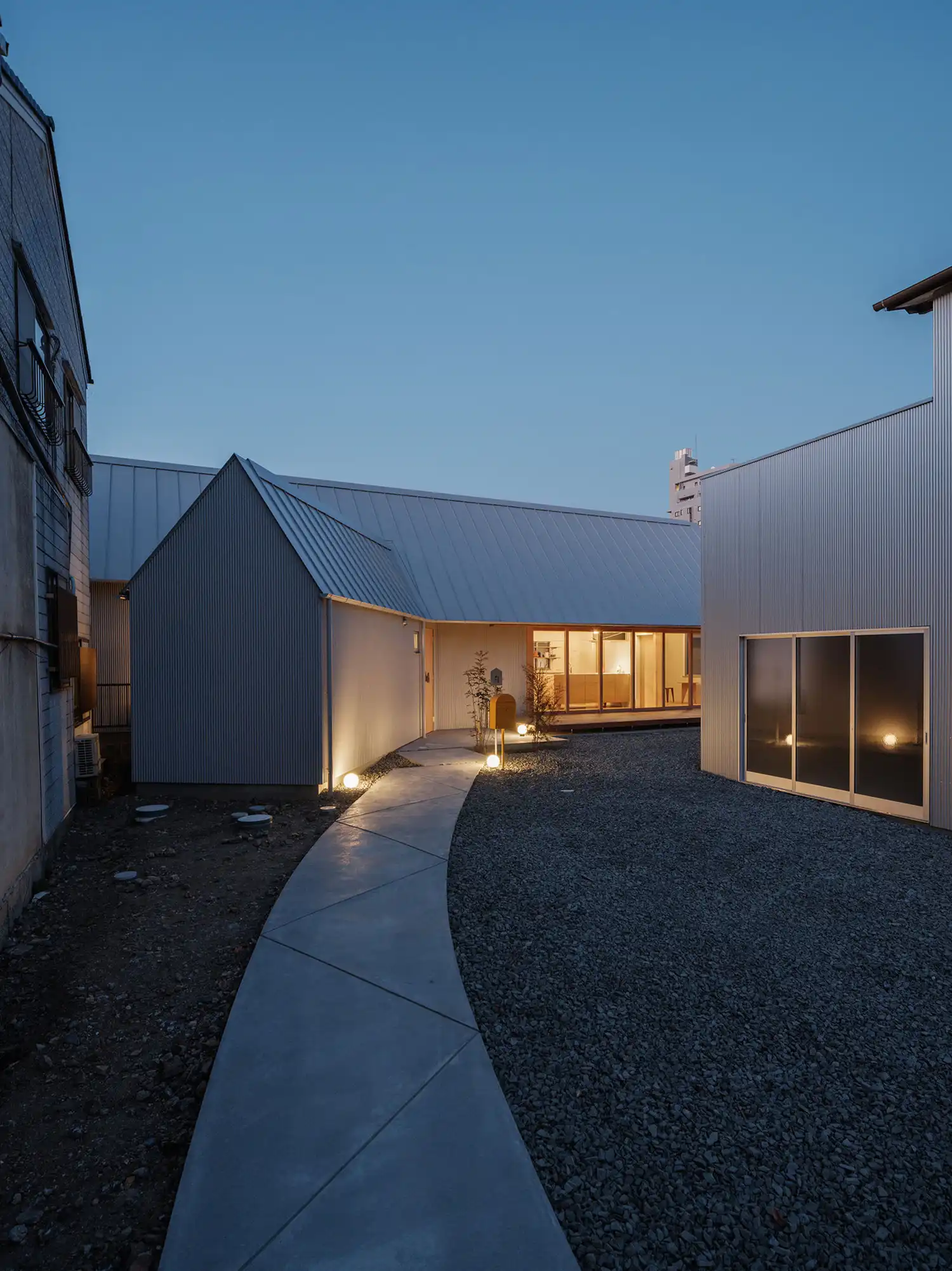
Ultimately, the Kaleidoscape House serves as a beacon of architectural kindness within the town. By keeping the roofline low and visible from the street, the building maintains a modest, approachable profile that respects the scale of its neighbors. Beyond the living quarters, the site is programmed for future growth, with dedicated zones for a vegetable garden and an orchard. It is a residence that looks forward—not by being grand or imposing, but by being adaptable, responsive, and deeply rooted in the rhythmic beauty of its specific geographic context.