

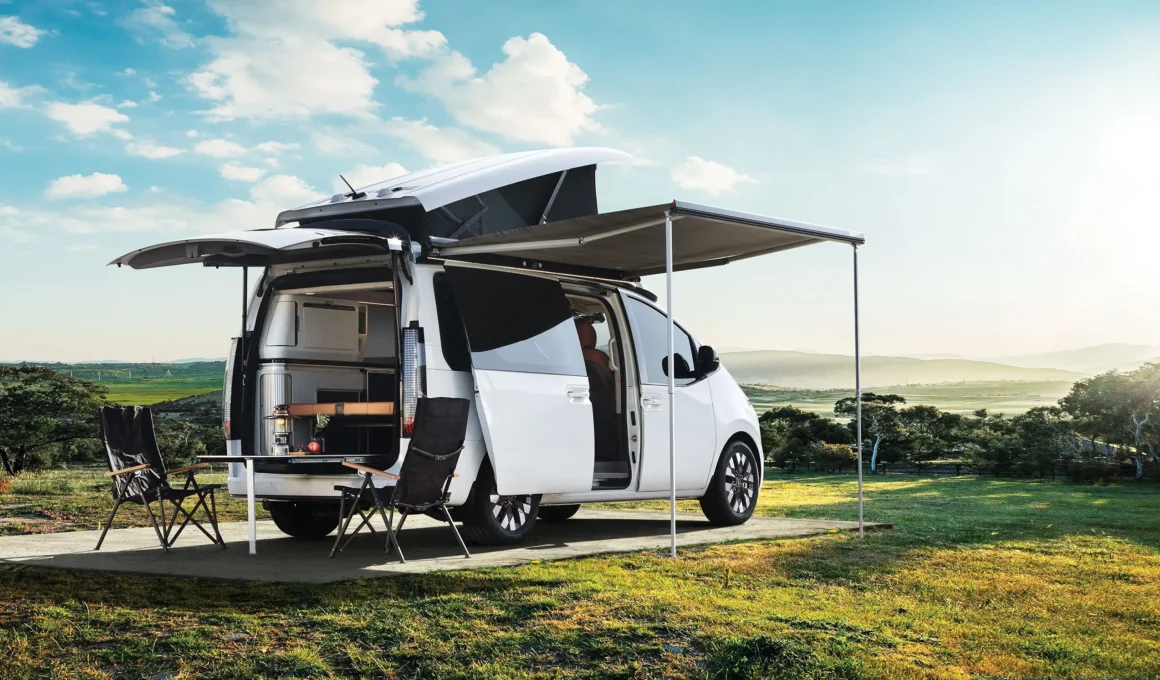
A futuristic vision for European wanderlust made its debut this week as Hyundai unveiled the STARIA Camper Concept at the CMT trade fair in Stuttgart, Germany. Following the successful launch of the STARIA Electric in Brussels, this latest iteration transforms the brand’s distinctive “Inside Out” design philosophy into a high-tech sanctuary for the modern nomad. Rather than merely adding a bed to a van, Hyundai has synthesized a premium recreational vehicle that addresses the growing demand for emission-free, experiential travel across the continent. It represents a shift in how we perceive the transition between transit and dwelling, moving away from the utilitarian aesthetic of traditional caravans toward a more cohesive, architectural fluidity.
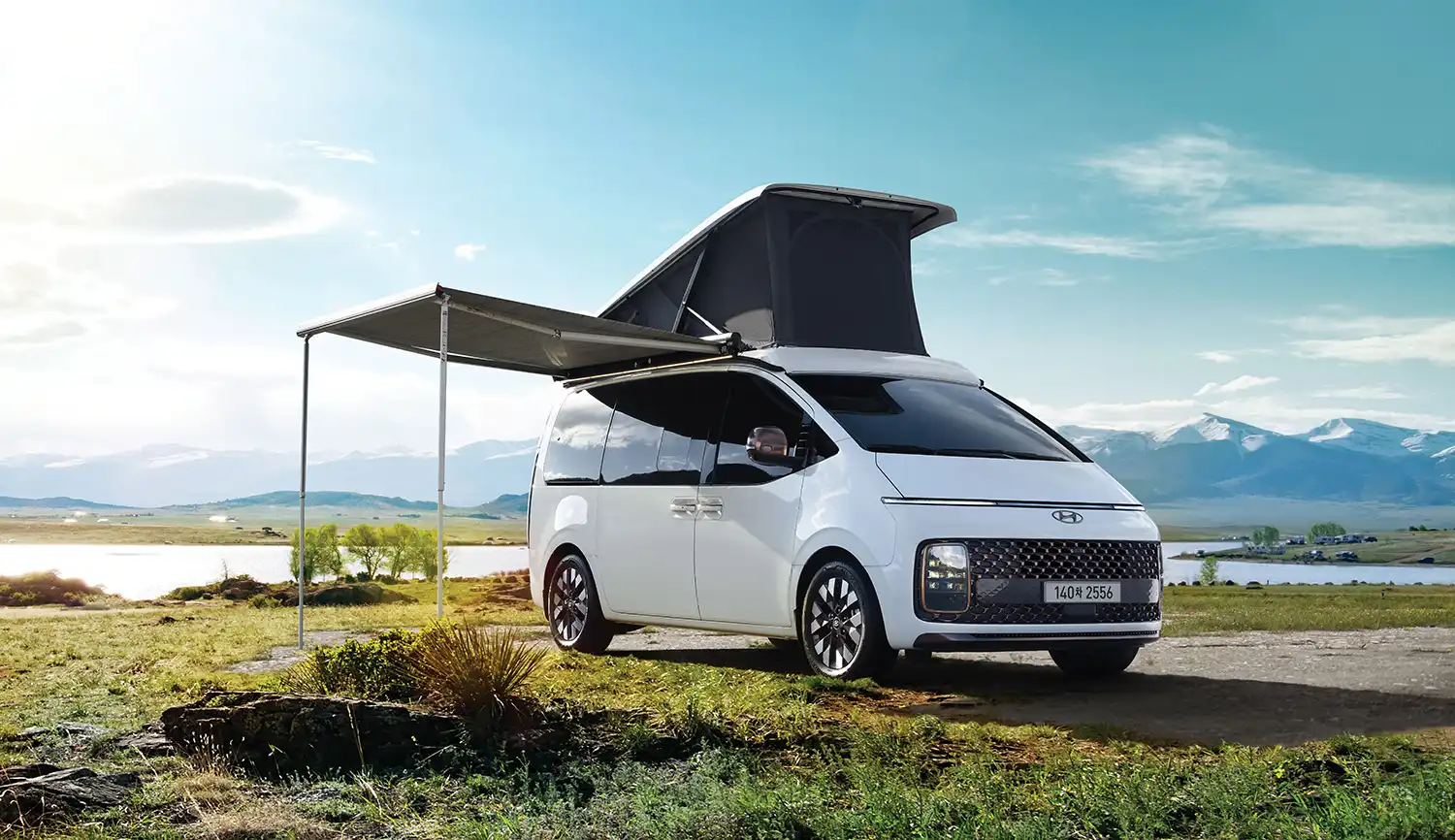
The seamless integration of form and function is most evident in the vehicle’s power-operated pop-up roof. Unlike many aftermarket solutions that disrupt a vehicle’s silhouette, this integrated system is finished in body-colored, high-quality materials to preserve the aerodynamic efficiency of the South Korean manufacturer’s signature MPV. Once stationary, the roof ascends at the touch of a button to create a voluminous, light-filled interior that enhances the ergonomics of the kitchen area. This sensory experience of “opening up” the cabin reflects a broader trend in mobile architecture, where the boundaries between the mechanical shell and the surrounding landscape are increasingly blurred to reduce the feeling of confinement during long-haul journeys.
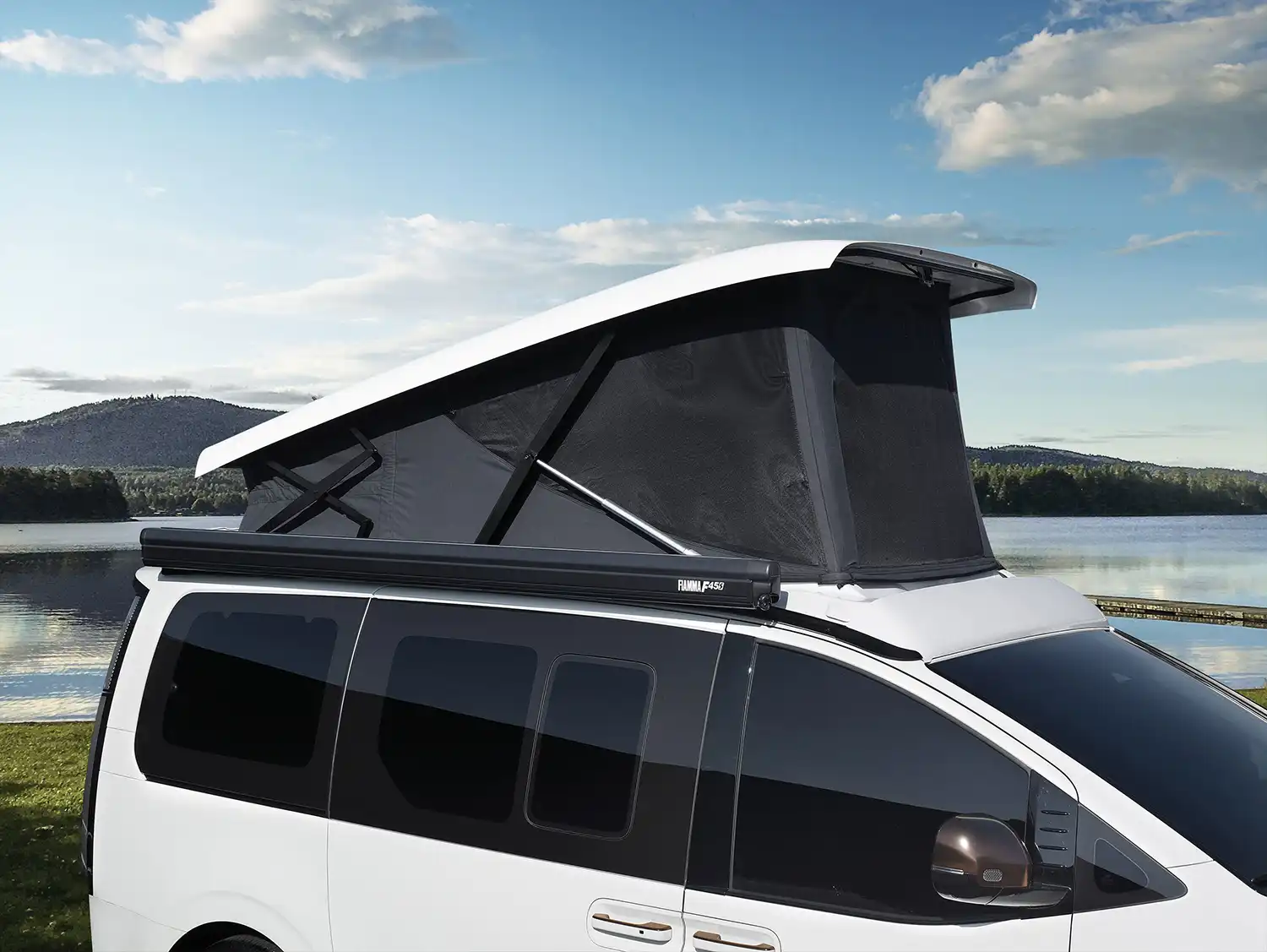
Off-grid autonomy through smart engineering positions this concept as a serious contender for independent explorers. The pop-up roof houses a 520W lightweight composite solar panel, a feature that turns the vehicle into a self-sustaining ecosystem capable of generating up to 2.6 kWh of electricity daily. This energy harvest powers essential lifestyle amenities, including a 36-liter refrigerator and a portable shower, without depleting the main drive battery. Such focus on energy independence mirrors other recent innovations in the sector, such as the modular flexibility of the Honda lightweight EV towable base station, suggesting a new era where electric mobility and self-sufficient camping are no longer mutually exclusive.
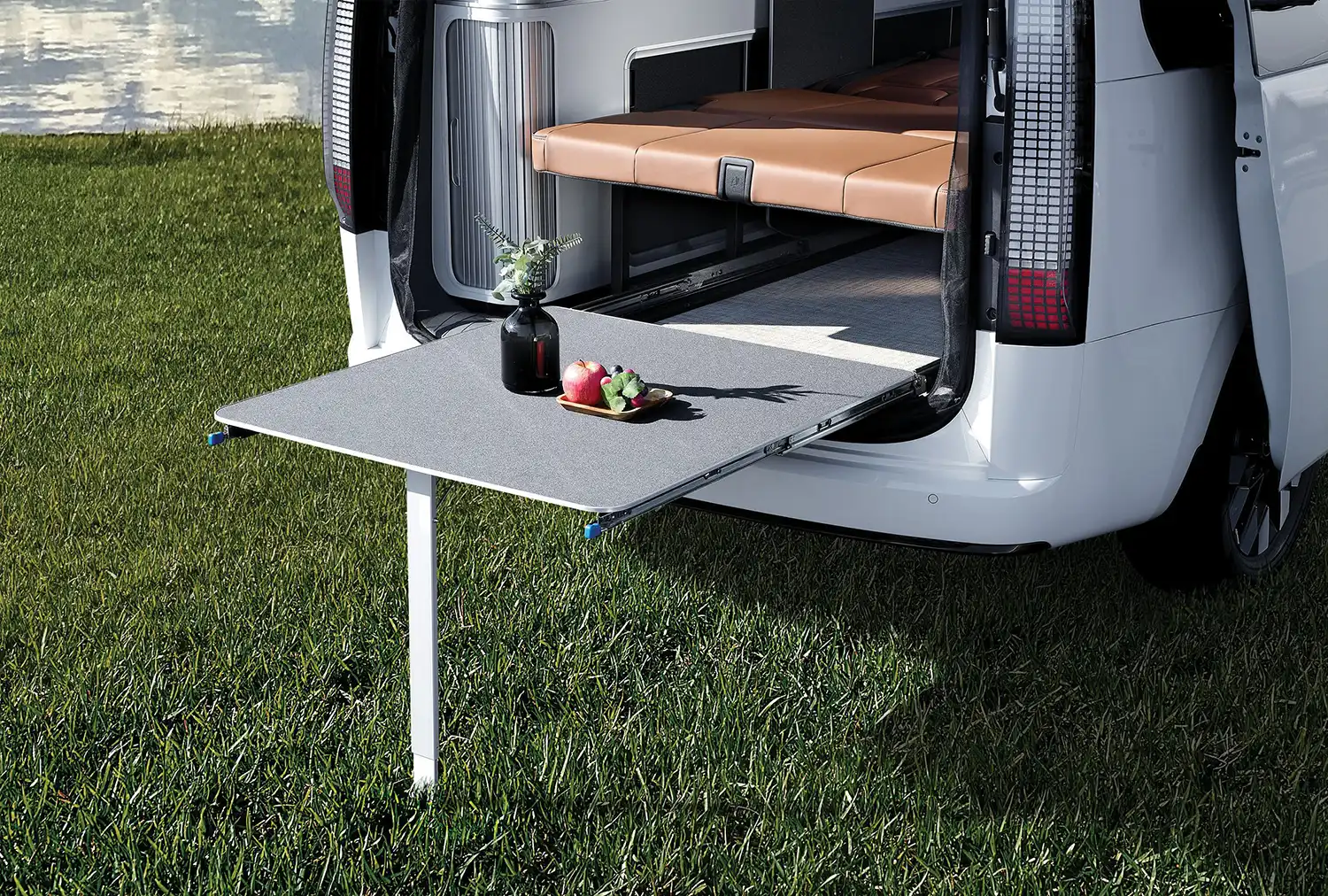
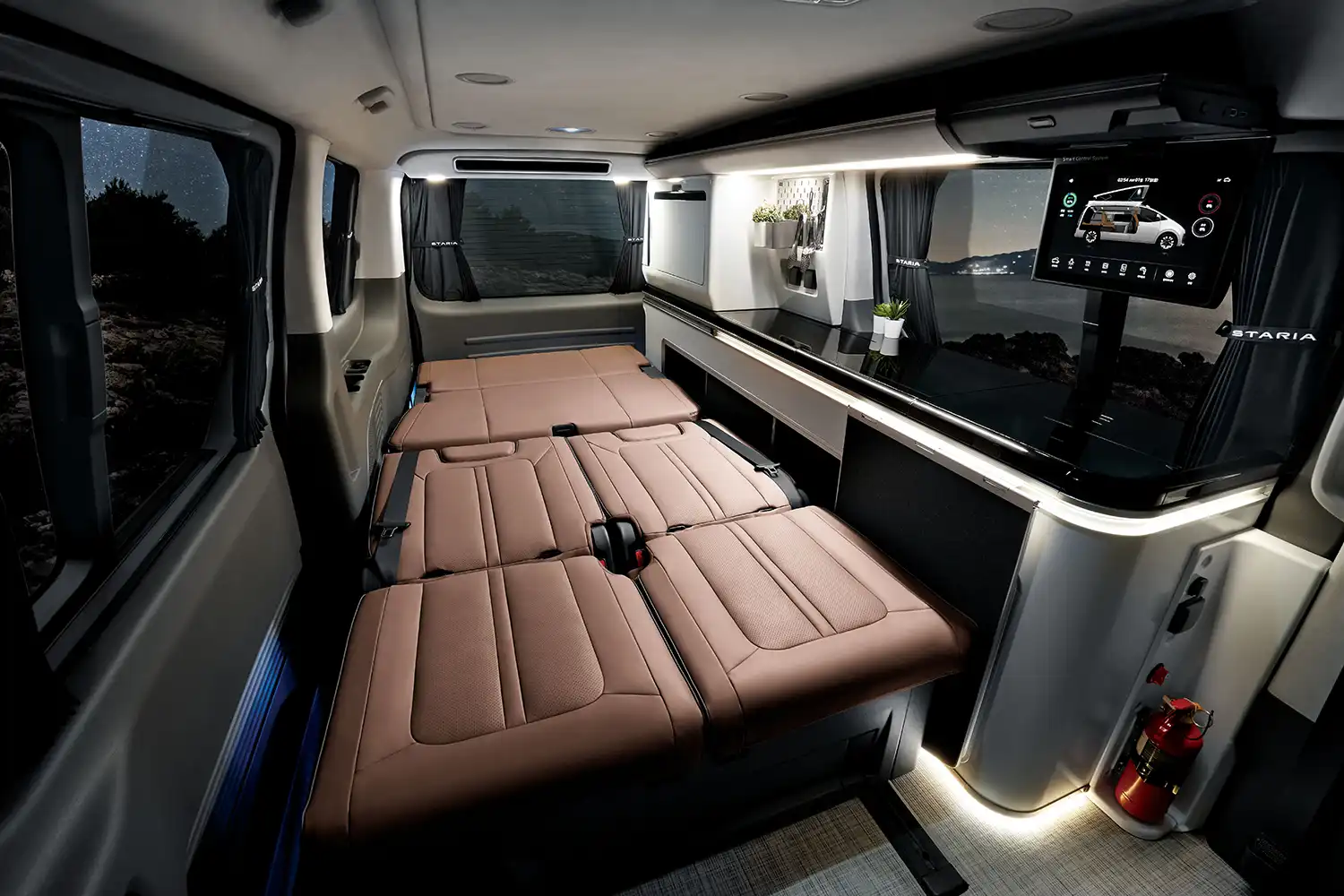
Privacy and atmosphere are managed with digital precision through the introduction of electronically adjustable smart glass in the rear cabin. This technical addition replaces traditional curtains with a touchscreen-controlled system that adjusts transparency and shading on demand. Beyond the visual privacy, the smart glass provides superior thermal and acoustic insulation, shielding occupants from the harsh UV rays of the Mediterranean sun or the ambient noise of a crowded European campsite. It is a sophisticated touch that elevates the interior from a mere vehicle cabin to a controlled, lounge-like environment, allowing travelers to curate their visual connection to the outside world.
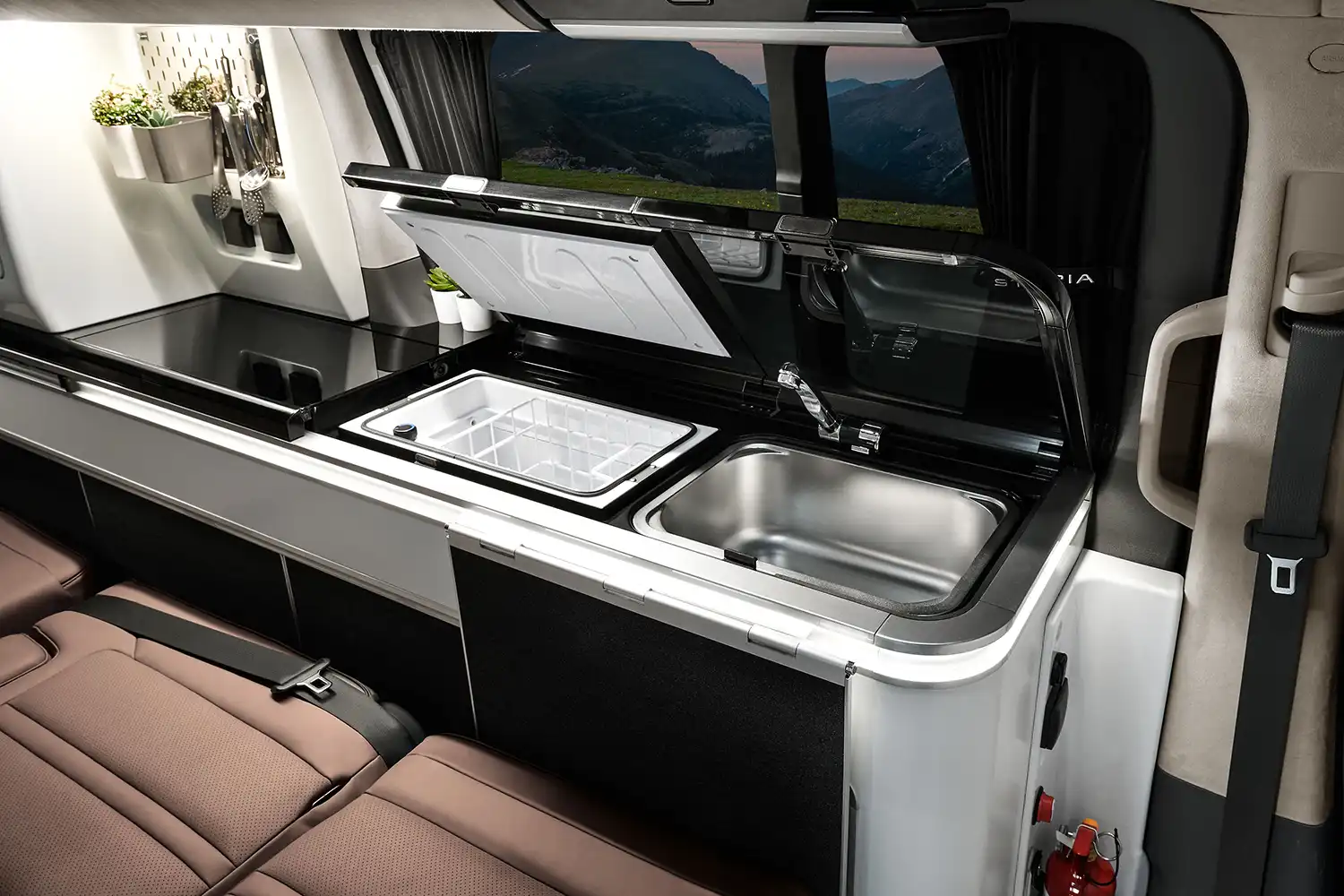
The interior choreography of the STARIA Camper emphasizes social interaction and spatial versatility. At the front, two high-specification captain’s chairs can rotate 180 degrees electrically, instantly converting the cockpit into a conversational lounge. In the rear, the transformation is equally effortless; the seats fold flat via a dedicated module to create a sleeping area for two. This focus on “effortless living” is supported by a 160 kW (218 PS) front-wheel-drive electric powertrain that ensures the journey itself is as serene as the destination. By utilizing additional sound-absorbing materials and structural suspension enhancements, Hyundai has prioritized a quiet, vibration-free experience that traditional internal combustion engines simply cannot replicate.
The technical backbone of the production-ready future lies in Hyundai’s proven 800-volt high-voltage architecture. If transitioned to series production, the camper would share the same platform as the IONIQ series, enabling DC fast charging from 10 to 80 percent in approximately 20 minutes. With an estimated WLTP driving range of up to 400 kilometers, the STARIA Electric provides the necessary endurance for traversing Europe’s diverse landscapes, from the Alps to the coastlines. By inviting direct feedback from the enthusiast community in Stuttgart, Hyundai is not just showcasing a prototype; they are refining a blueprint for a more sustainable, design-led approach to the classic road trip.