



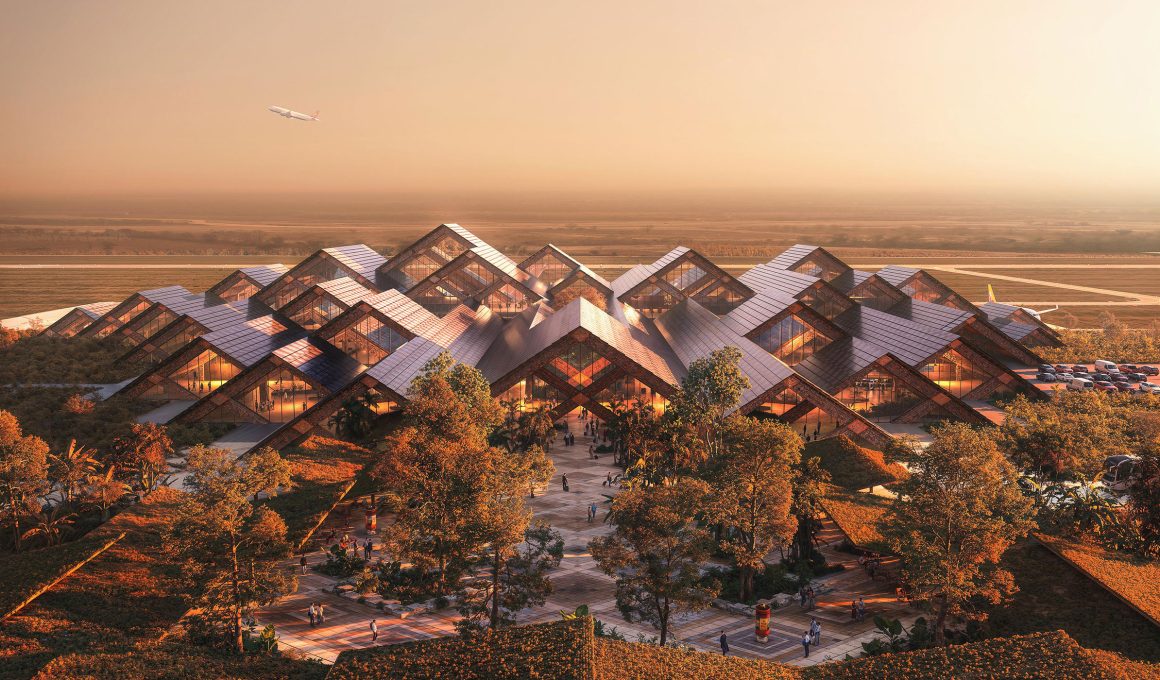
Nestled amidst the verdant embrace of Bhutan’s subtropical forests, where the Himalayas meet the Paitha River, a new gateway is rising. The Gelephu International Airport, a collaborative vision of Bjarke Ingels Group (BIG), NACO, Arup, and Cistri, transcends the traditional notion of an airport, becoming a living demonstration to Bhutan’s cultural heritage and its ambitious leap into the future.

This isn’t merely a transportation hub; it’s an architectural poem, a symphony of timber and tradition designed to resonate with the soul of the Gelephu Mindfulness City (GMC). Spanning 68,000 square meters, the airport’s diagrid structure, crafted from locally sourced, sustainable timber, immediately captivates. It’s a framework that speaks of both strength and grace, a nod to the “Kachen” pillars that have long anchored Bhutanese architecture.
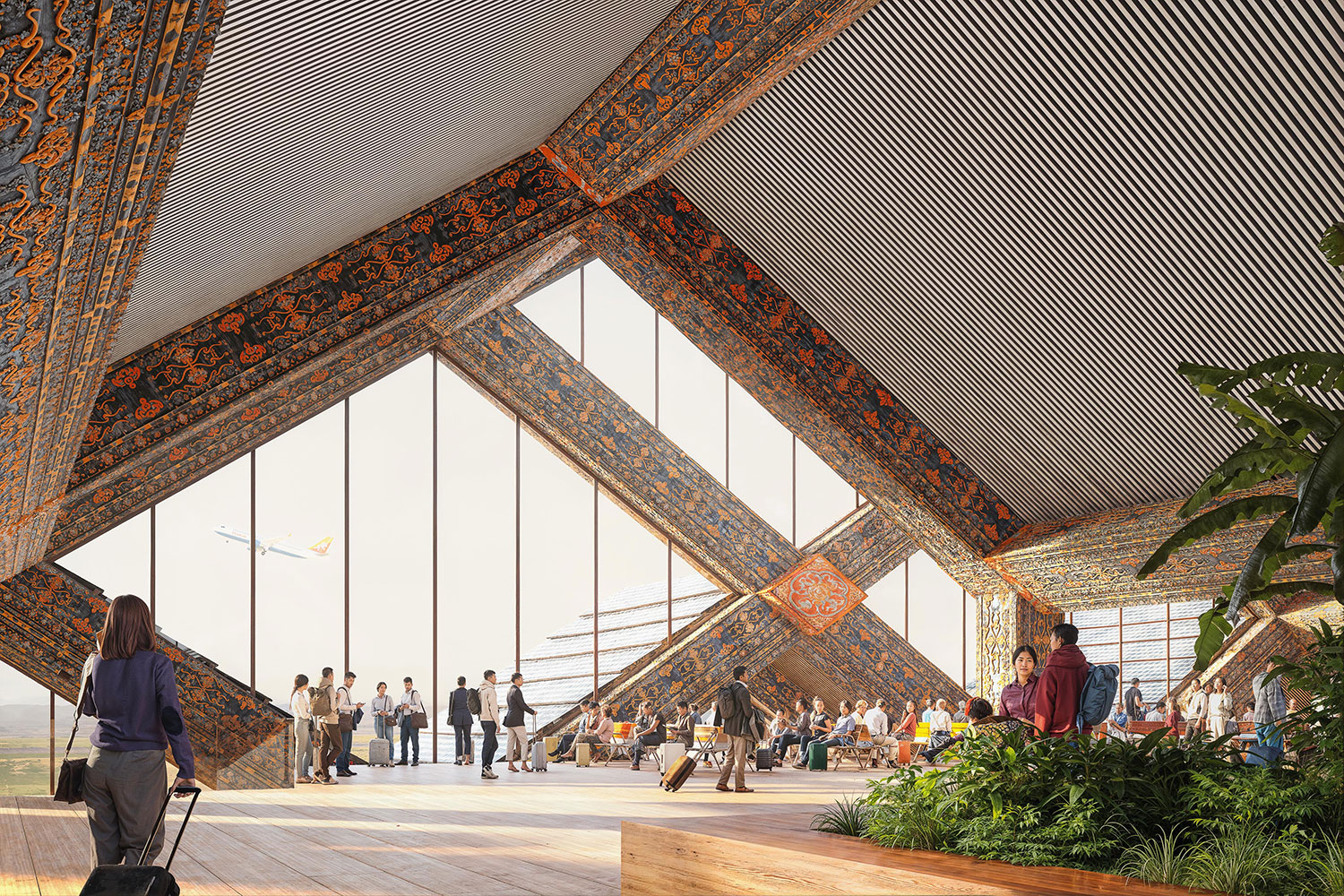
The façade, adorned with intricate wood carvings by local artisans, transforms the airport into a living gallery. Every surface tells a story, a celebration of Shing-Zo (carpentry), Par-Zo (carving), Lha-Zo (painting), and Tshar-Zo (weaving). The painted details, inspired by the revered wooden pillars, infuse the structure with spiritual symbolism, creating an atmosphere of reverence and tranquility.

But the beauty is not merely skin deep. The airport is designed for growth, its timber frames engineered for simple disassembly and expansion. This adaptability mirrors the dynamic nature of the GMC, a city poised for significant development. And in keeping with Bhutan’s commitment to carbon neutrality, the roof is crowned with photovoltaic panels, silently generating clean energy.

The arrival experience is a journey through Bhutan’s rich biodiversity. The plaza is divided into four distinct zones, each showcasing the unique flora of the Gelephu forests. Natural stone paving and integrated seating areas invite travelers to pause and connect with the landscape, while a lush canopy provides shelter from the elements.
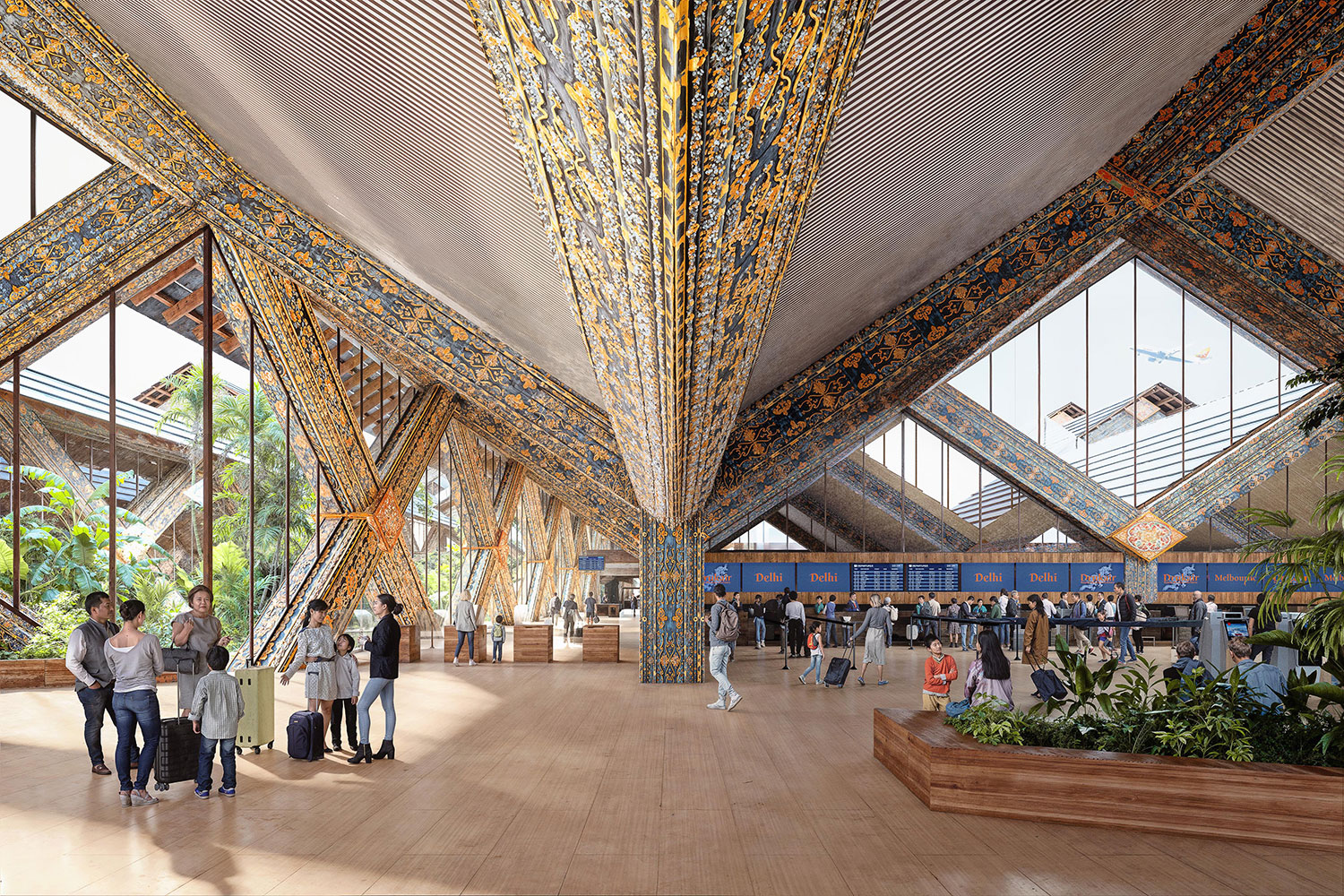
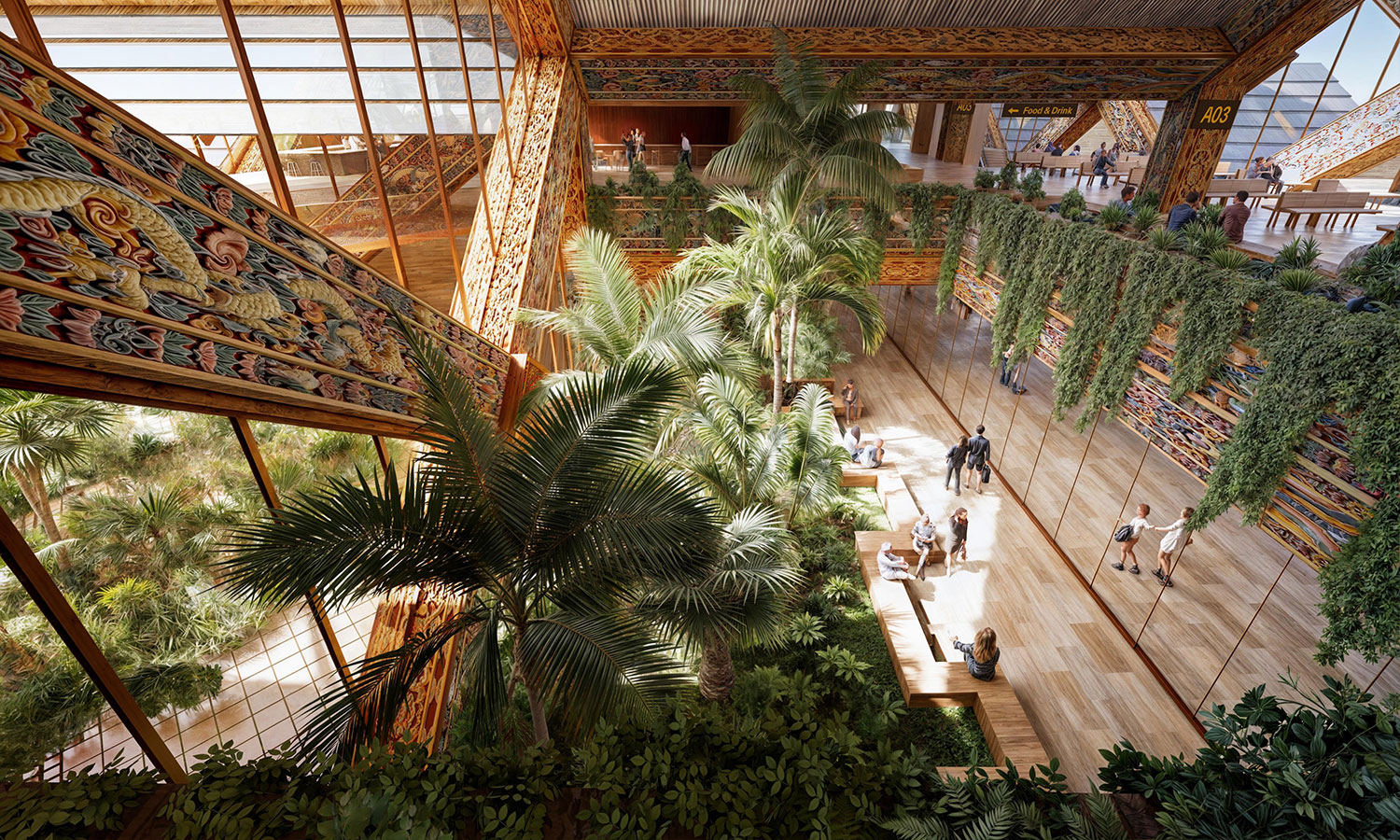
The heart of the airport, the “Forest Spine,” is a stroke of genius. This interior courtyard, a verdant oasis, brings Bhutan’s biodiversity corridors indoors. It divides the terminal into domestic and international zones, yet remains visually accessible from every corner, ensuring that nature is a constant companion. Tranquil green spaces, a treetop walkway, and indigenous fauna create a serene environment, a stark contrast to the typically sterile airport experience.
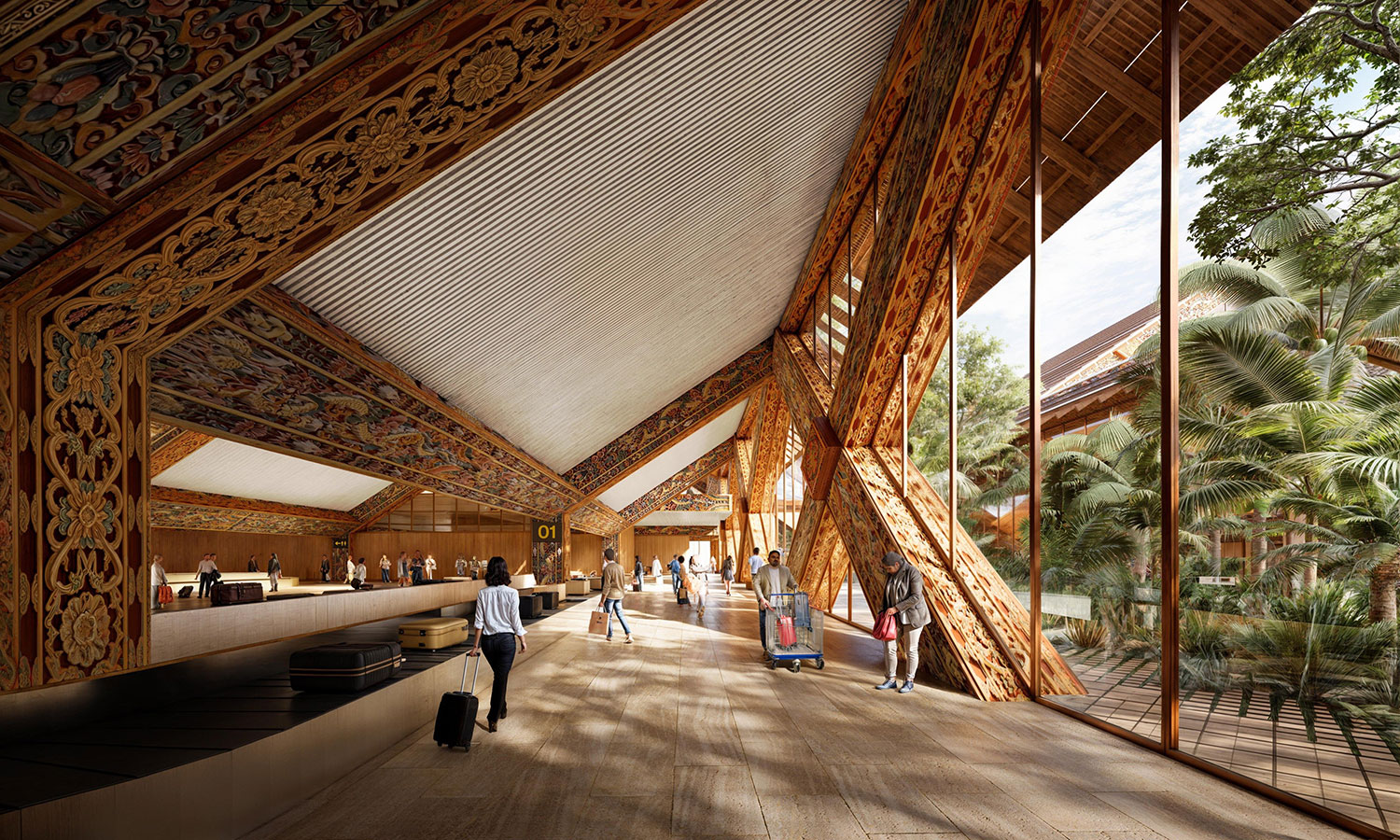
BIG’s design places passenger experience at the forefront. Intuitive wayfinding, clear visual cues, and thoughtfully designed circulation paths ensure a seamless journey. Gates, located on the upper level, offer panoramic views of the apron and the majestic Himalayas, while retail and dining areas provide ample opportunities for relaxation.
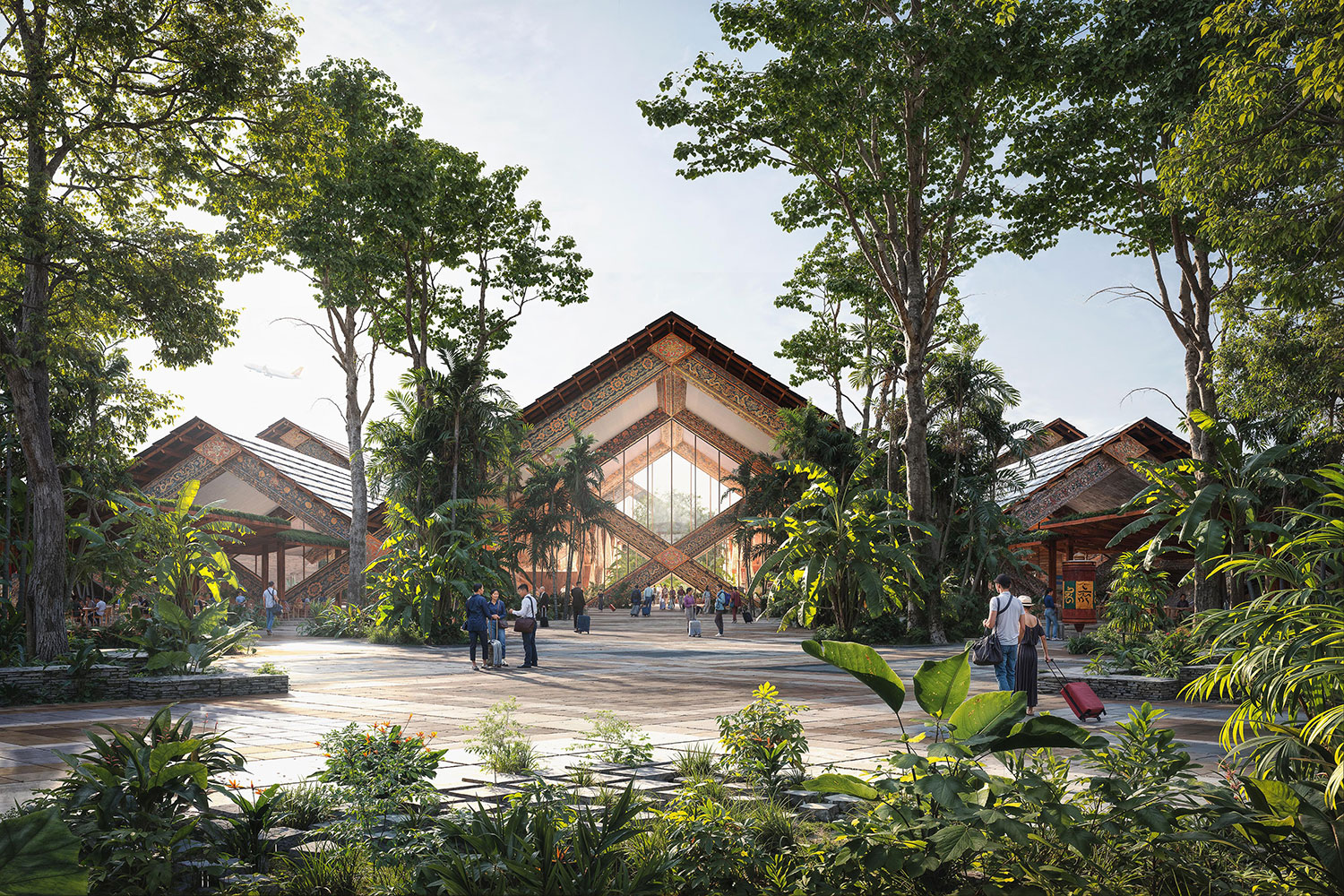
The airport’s design is a masterclass in climate-responsive architecture. Drawing inspiration from traditional Bhutanese building practices, the timber structure naturally regulates humidity, while ventilated roofs and courtyards encourage natural airflow. Extended eaves provide shade and protection from heavy rainfall, adapting to the subtropical climate.
Beyond its role as an aviation hub, the Gelephu International Airport will serve as Bhutan’s first inland mobility hub, seamlessly connecting to the revitalized town center and the rest of the country via trackless trams and buses.
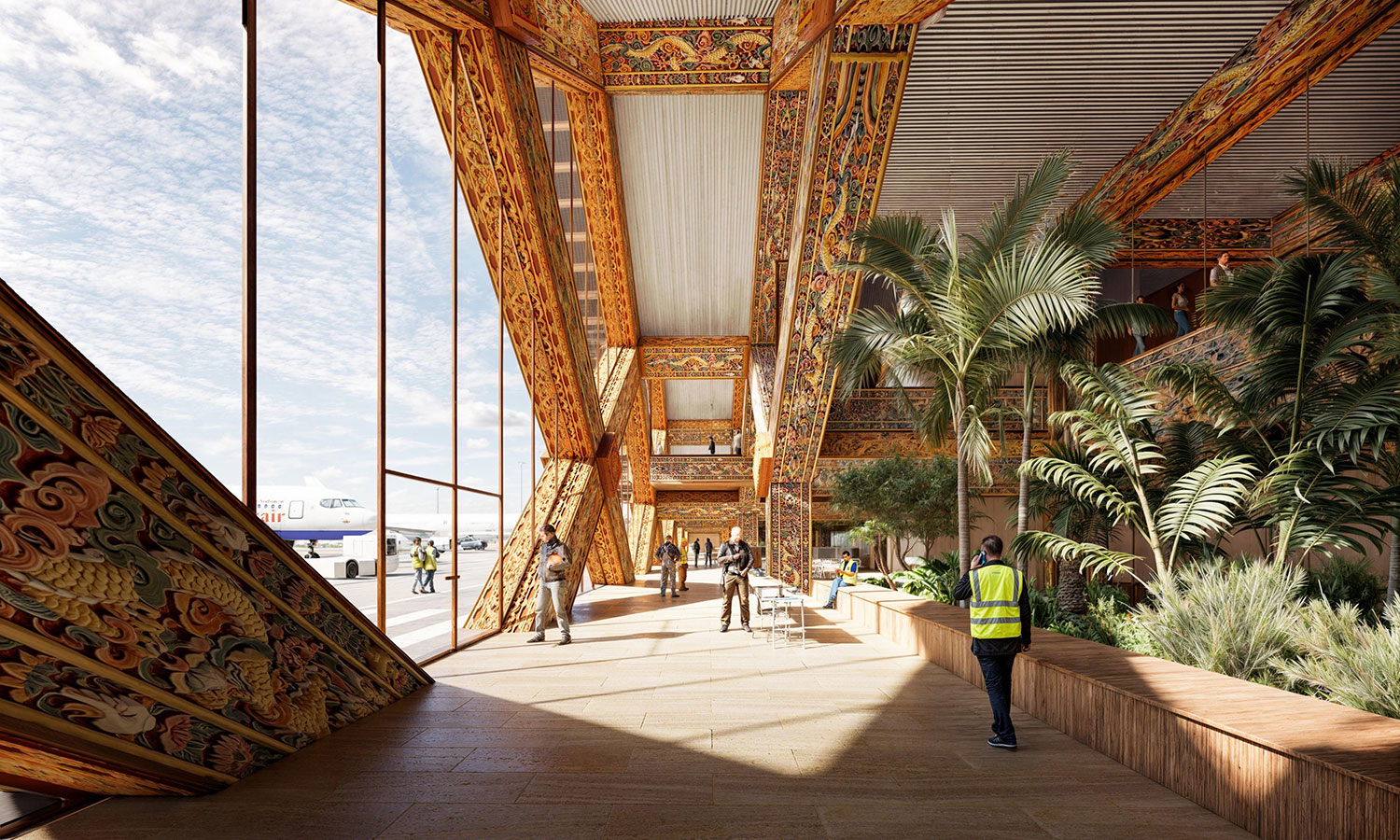
The airport’s commitment to mindfulness is evident in every detail. Bathed in natural light, with grand triple-height entries, expansive windows, and skylights, the space fosters a sense of openness and tranquility. Indoor and outdoor lounges provide dedicated spaces for yoga, gong baths, and meditation, inviting travelers to recenter and recharge.
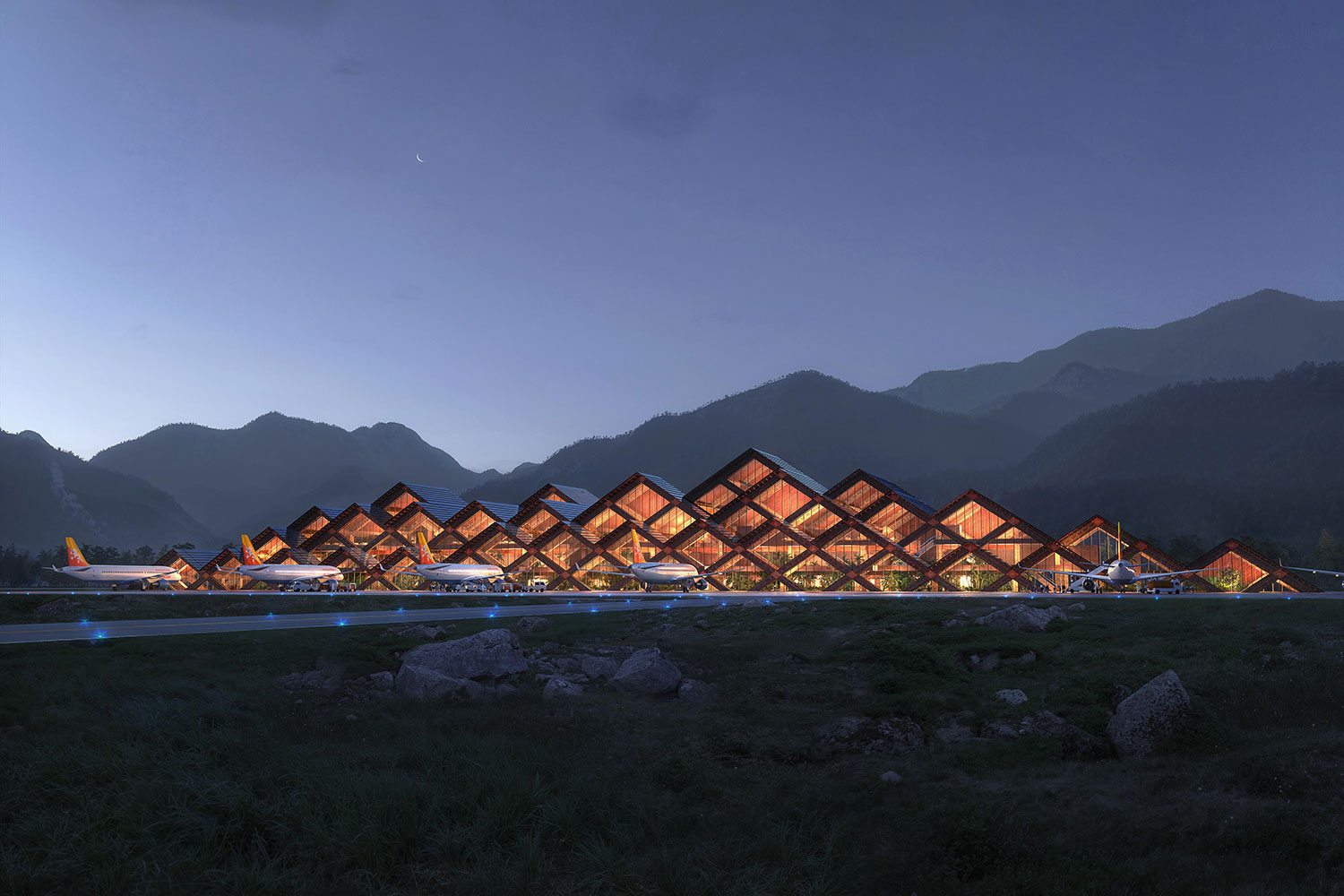
As the airport prepares to open its doors in 2029, it stands as a beacon of Bhutan’s unique approach to development. It’s a place where tradition meets innovation, where nature and architecture coexist in harmony, and where every journey begins with a sense of peace and well-being. The Gelephu International Airport is more than just a gateway; it’s a sanctuary in the sky, a representation to Bhutan’s enduring spirit and its vision for a mindful future.