

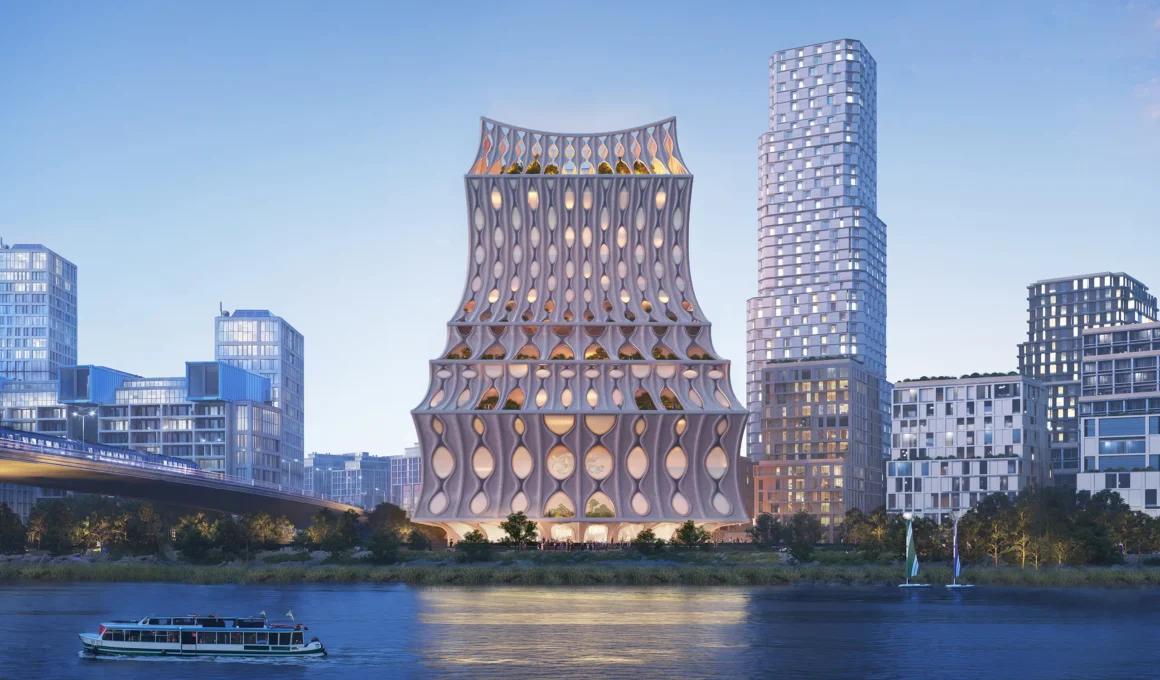
Heatherwick Studio’s ‘Urban Reef’ proposal for Rotterdam’s Waterkant district reimagines the public landmark as a regenerative, timber-framed ecosystem designed to bridge the gap between climate anxiety and collective agency. Situated within one of Europe’s most forward-thinking urban expansions, the project avoids the static nature of traditional monuments, opting instead for a modular, biobased structure that functions as a living laboratory for circular innovation.
A shift toward sensory engagement defines the core of the proposal. Moving away from the didactic, often-alienating language of environmental crises, the studio introduces a narrative of “hopeful curiosity.” Visitors are not met with cold statistics but are drawn into an immersive, multisensory exhibition that highlights the inherent beauty of the natural world. The experience is grounded and accessible, focusing on the vulnerability of our planet without resorting to a rhetoric of blame, allowing the waterfront architecture to act as a facilitator for emotional connection.
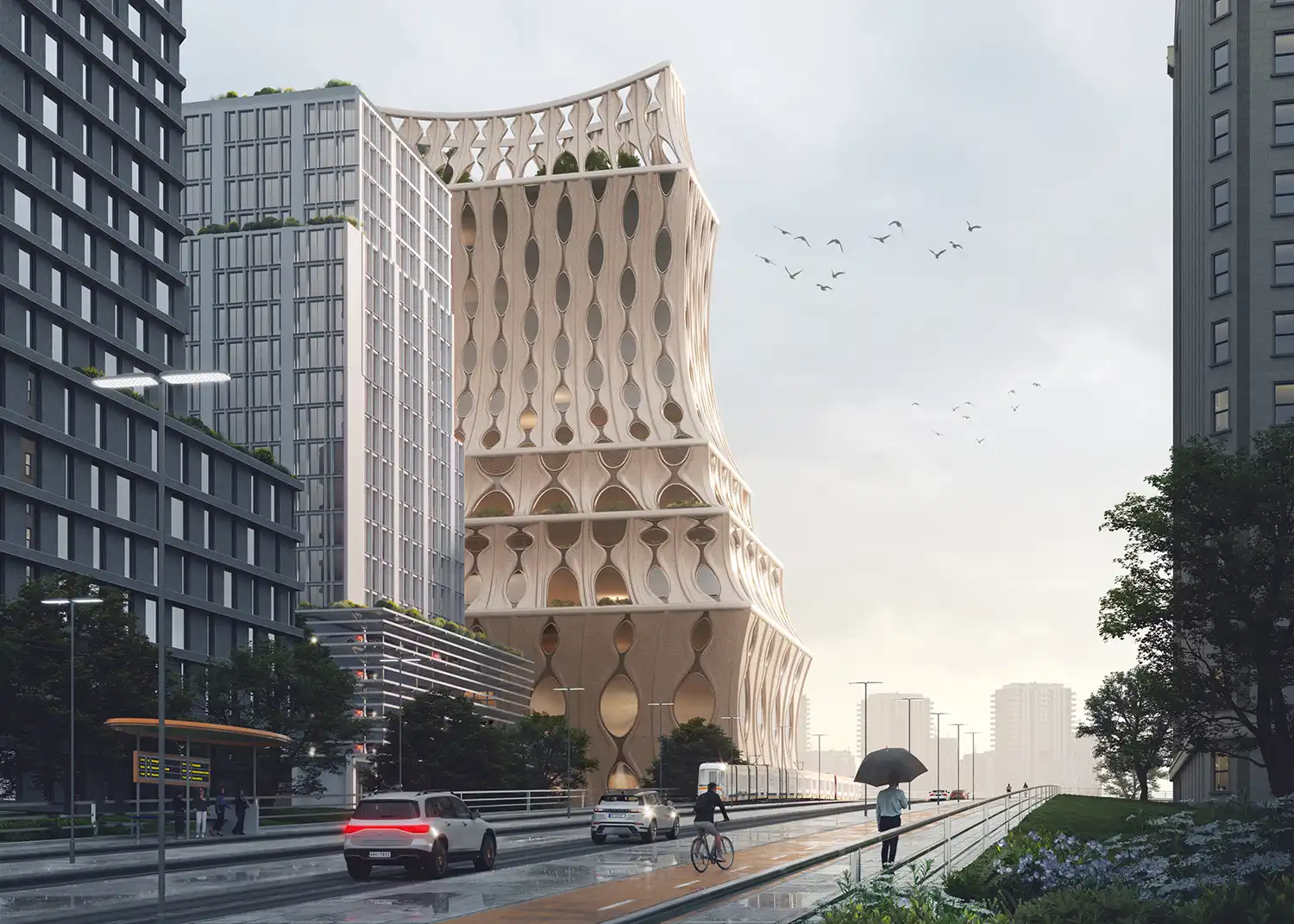
The conceptual vision draws a direct parallel to marine biology, specifically the layered complexity of a coral reef. Just as a reef provides the infrastructure for diverse life to flourish, the building layers stories of global climate action. The journey begins in light-filled volumes that showcase practical, real-world solutions already in motion. By making the circular economy tangible and visible, the design transforms abstract environmental goals into something visitors can touch, explore, and eventually adopt.
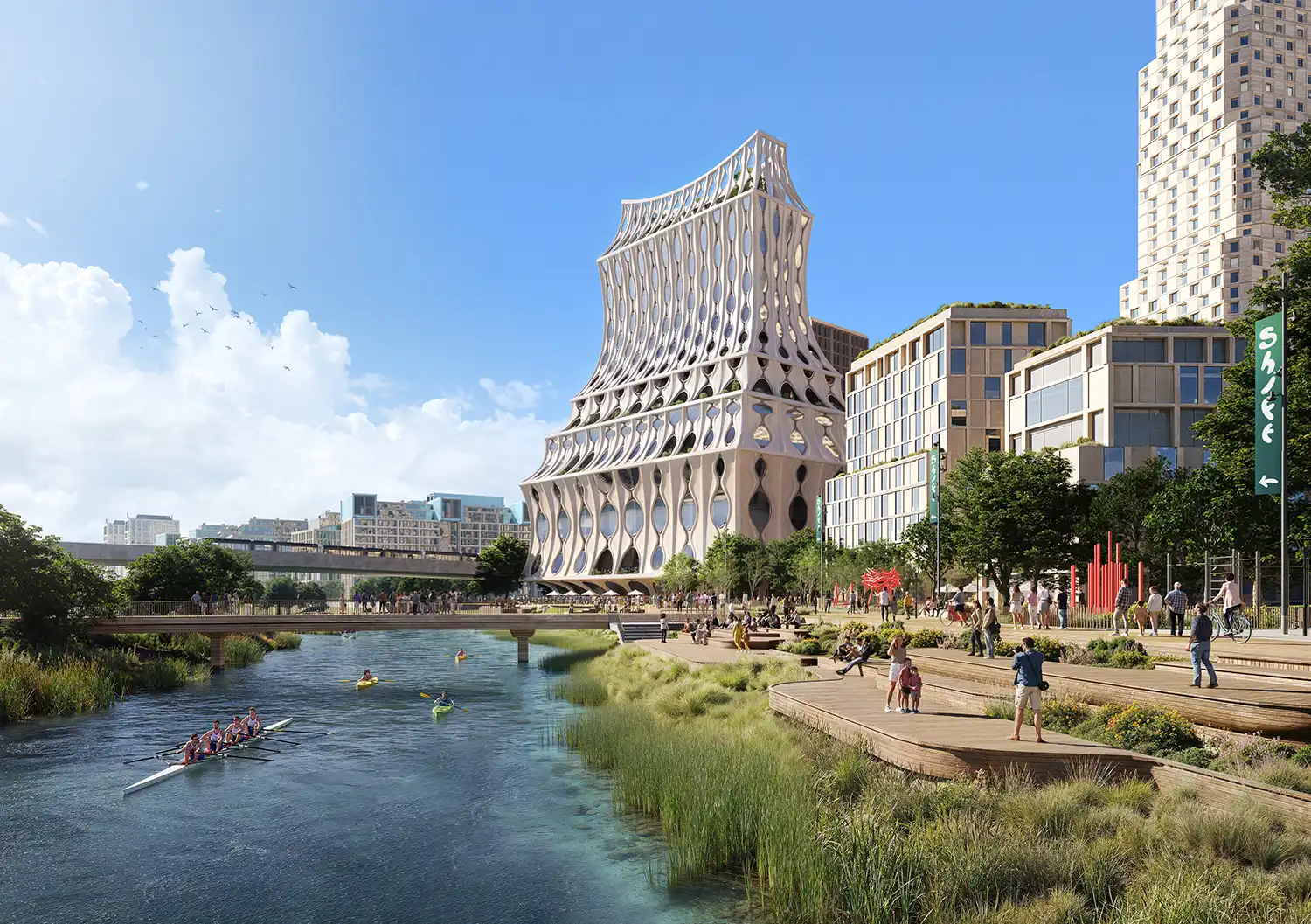
Technical innovation and adaptability sit at the heart of the structural logic. To minimize embodied carbon, the studio proposes a primary timber skeleton paired with a sophisticated system of modular components. This ensures the building remains as fluid as the science it houses; as new ecological breakthroughs emerge, the interior configurations and exhibition spaces can be reordered without the need for carbon-intensive demolition. It is a building designed to evolve in tandem with our understanding of the planet.
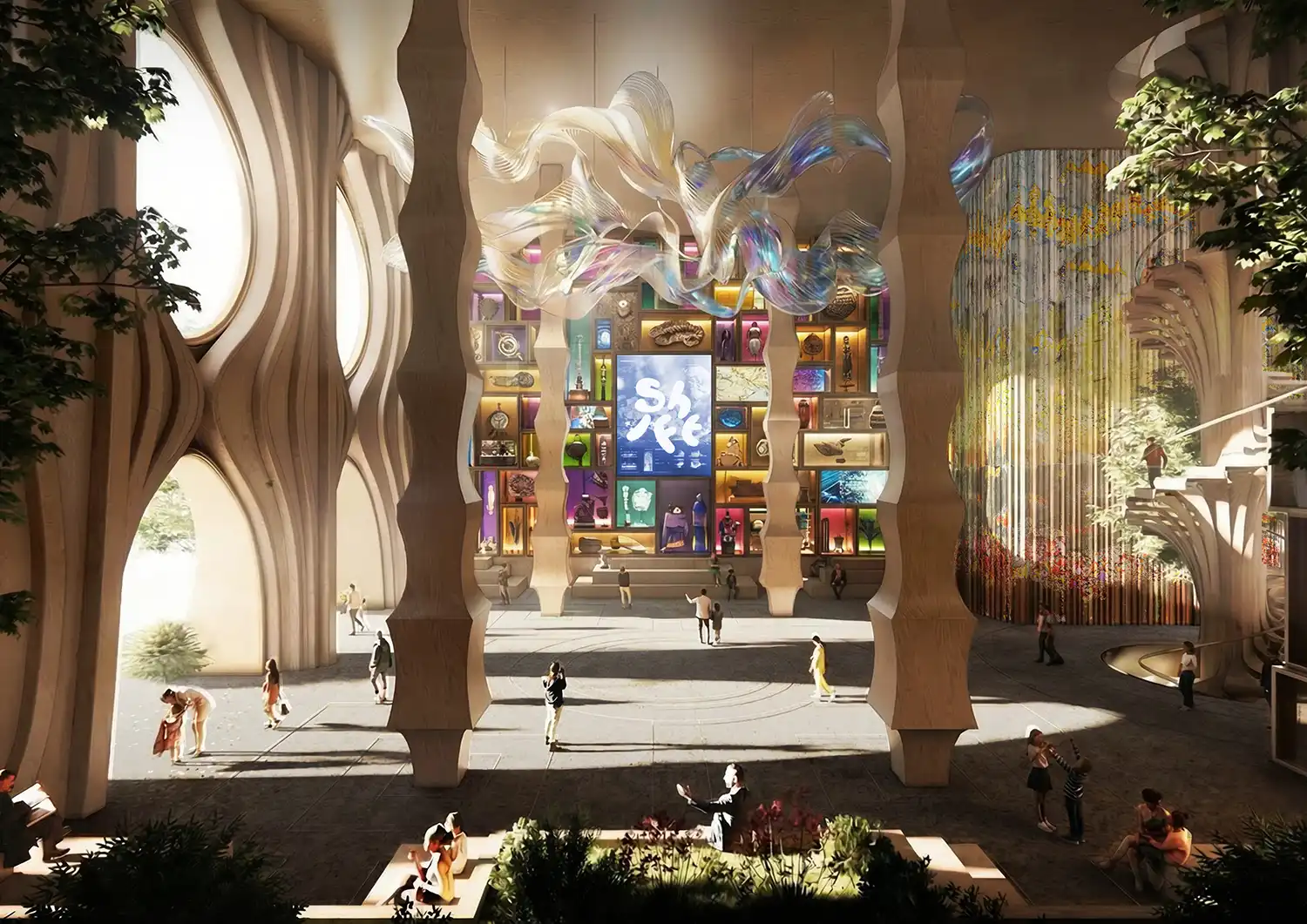
Materiality and biobased construction further reinforce the project’s ecological credentials. The external skin and interior finishes are specified from recyclable and plant-based sources, drastically reducing waste over the building’s lifecycle. By utilizing sustainable materials that reflect the textures of the natural environment, the structure achieves a tactile warmth that encourages public interaction. Every surface serves as a testament to the possibility of living “lighter” on the land, as suggested by Heatherwick partner Lisa Finlay.
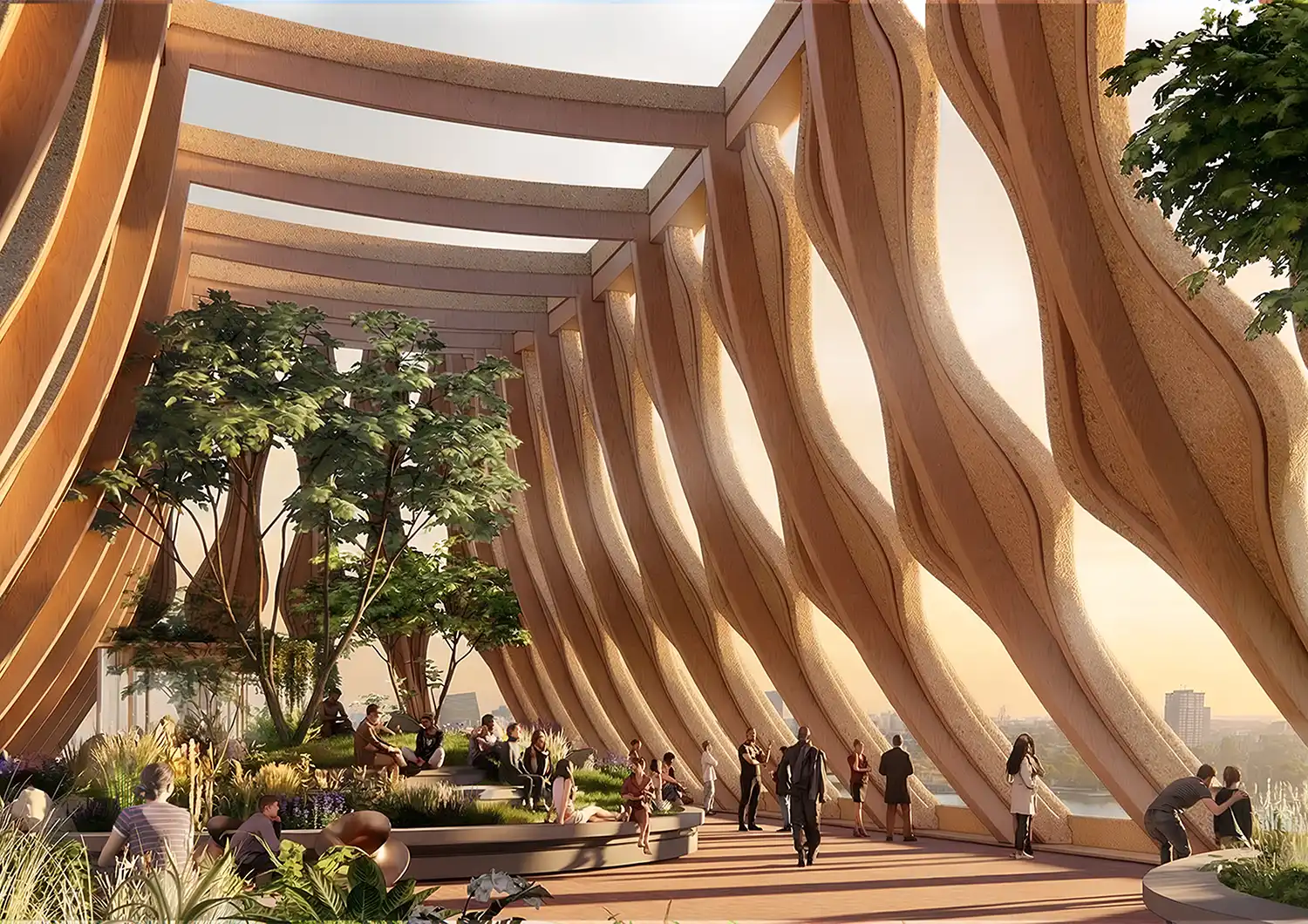
The surrounding landscape is treated not as an ornament, but as a functional extension of the reef. A sequence of planted terraces and “outdoor rooms” has been engineered to bolster local biodiversity within the Waterkant district. These green lungs provide essential habitats for local species while doubling as natural cooling systems for the building. Integrated water management and natural ventilation strategies ensure that the project operates with high efficiency, providing a comfortable public experience that remains in constant dialogue with the elements.
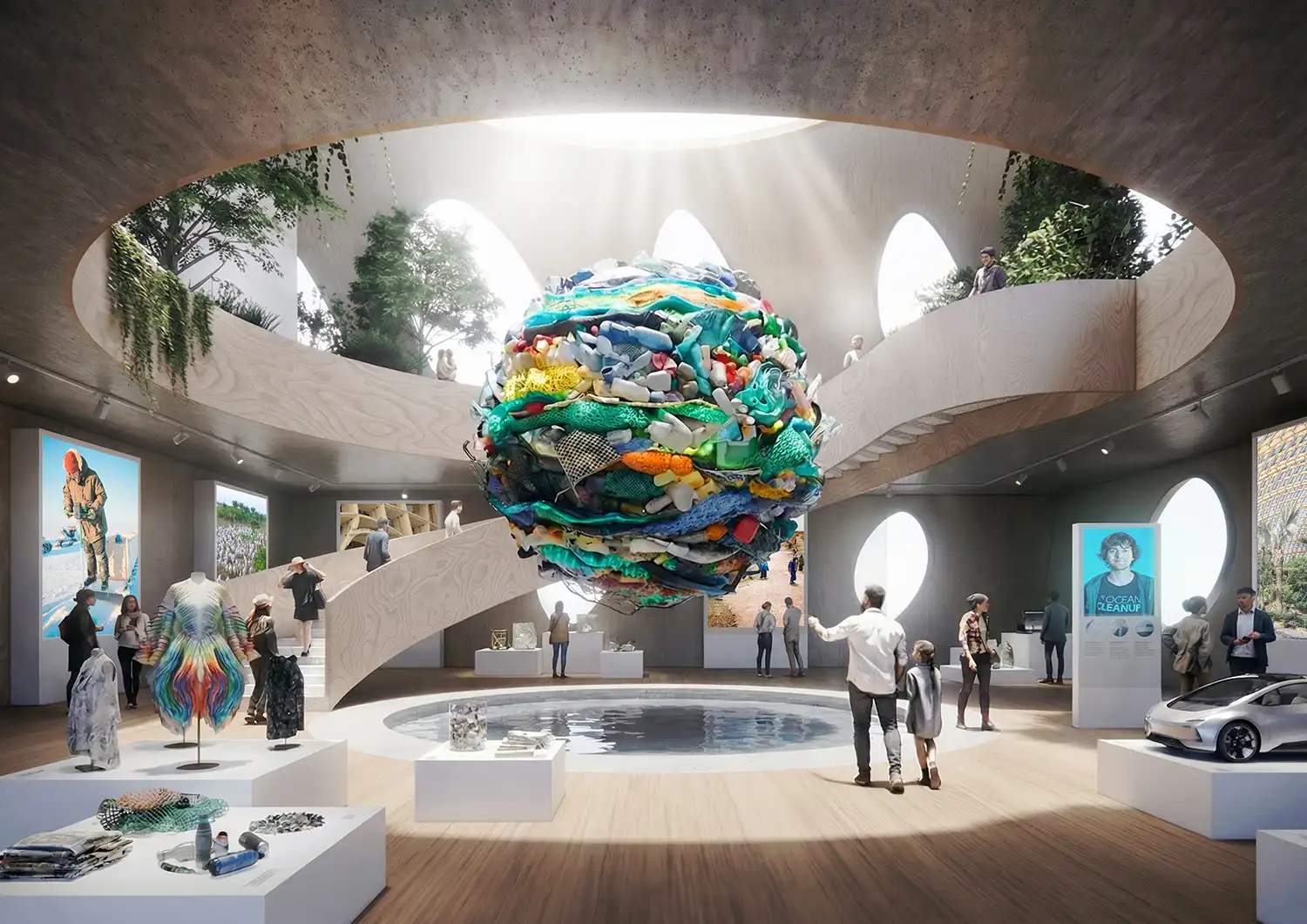
Empowerment through data concludes the visitor journey. As guests transition back into the city, they are offered simple, non-judgmental tools—such as personal carbon footprint scanning—to help them interpret their own impact. The goal is to provide a sense of agency, translating the “wonder” of the exhibition into immediate, manageable steps. It is an attempt to move the needle for the 75% of Europeans concerned about the climate but unsure how to act, turning inspiration into a clear, actionable pathway.
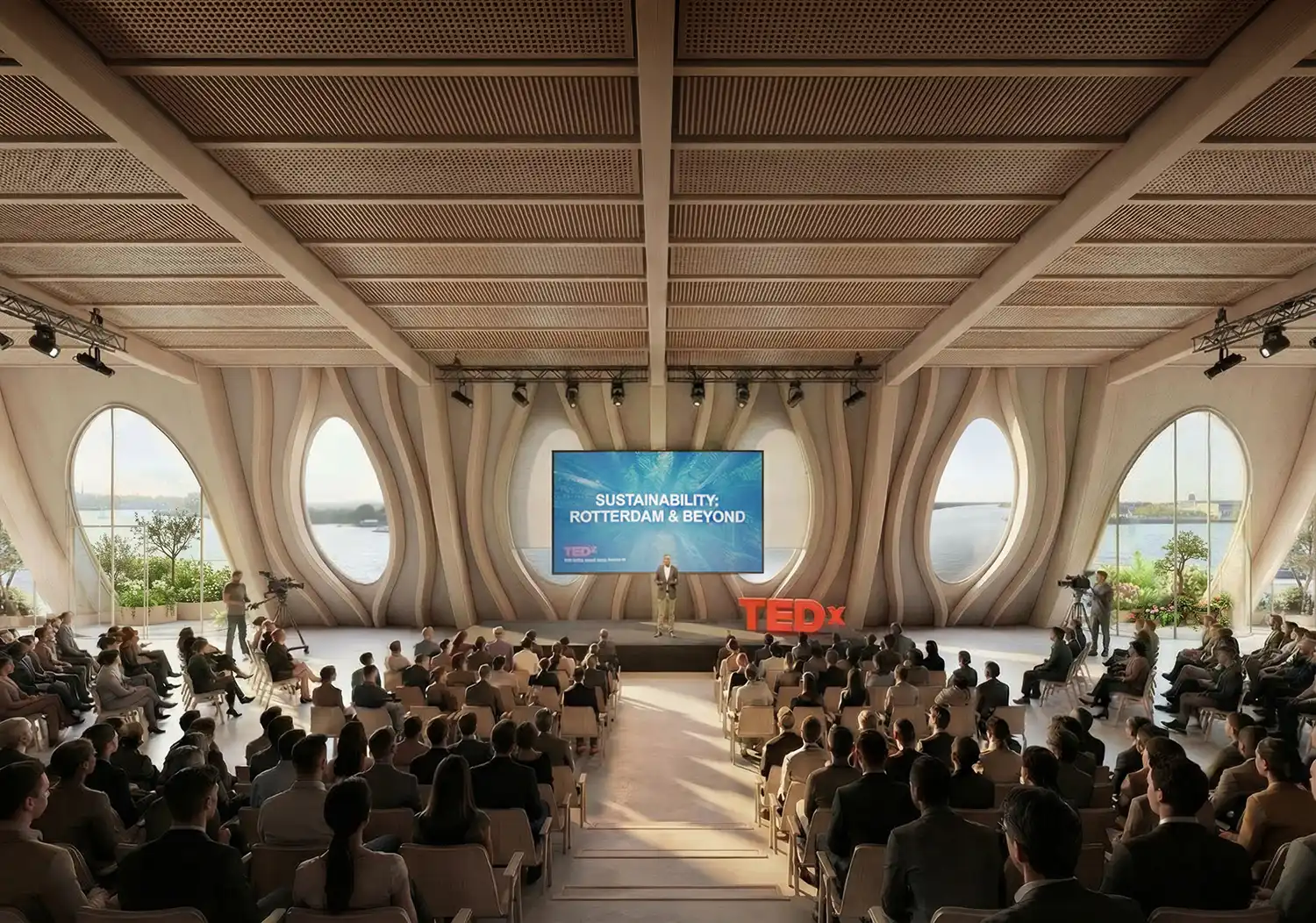
A landmark of collaborative ambition, the proposal highlights a new era of civic space where innovation meets education. The project is currently shortlisted alongside visions from other global leaders in the field, including MVRDV, Mecanoo, OPI, and Ecosistema Urbano, all of whom are vying to define the future of Rotterdam’s skyline. You can explore the full Rotterdam World Wonder shortlist to see how these diverse studios are addressing the urgent need for climate-positive urban icons.