



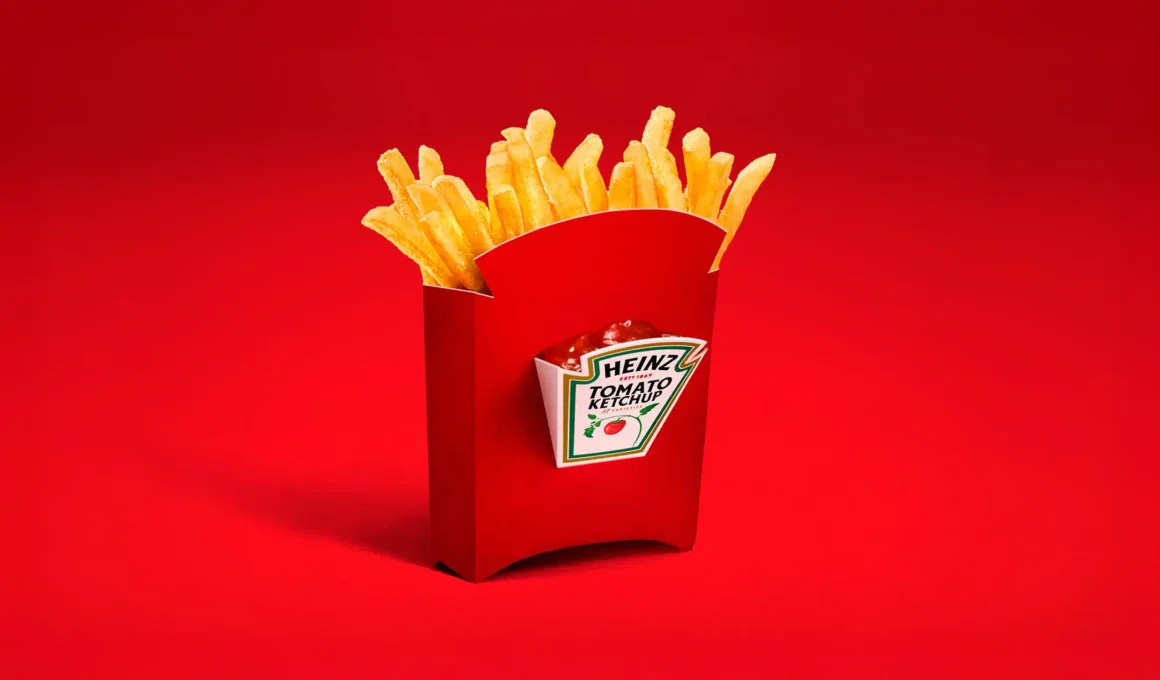
A conceptual shift in functional packaging is often born from the most mundane frustrations. For decades, the ritual of consuming fries on the move has been a clumsy negotiation between physics and desire—a precarious dance of balancing ketchup sachets on car dashboards or risking the dreaded upholstery stain. Recognizing that the “away-from-home” dining experience has become a primary touchpoint for modern consumers, Heinz has stepped beyond the condiment bottle to redesign the vessel itself. The result is the HEINZ Dipper, a patent-pending intervention that transforms a disposable container into a sophisticated piece of functional industrial design.
The sensory logic of the design centers on a seamless, intuitive integration of two distinct elements. By embedding a dedicated condiment compartment directly into the structural geometry of the fry box, the brand has eliminated the friction of the “two-handed” struggle. There is a tactile satisfaction in the stability of the new format; the cardboard architecture provides the necessary rigidity to support the weight of the sauce, ensuring that the dipping motion feels deliberate rather than desperate. It is a solution that acknowledges a “universal truth” of the culinary experience: the perfect fry is nothing without the perfect dip, and the logistics of the two should never be at odds.

Technical precision meets consumer data in this new rollout, which addresses a staggering reality: 80 percent of enthusiasts have previously considered skipping condiments altogether simply to avoid the logistical mess of traditional packaging. To solve this, the HEINZ Dipper utilizes a clever fold-out or built-in reservoir that maintains the center of gravity of the box even as the contents diminish. This shift toward high-utility containers echoes the growing trend of creating custom packaging to boost business, where the container ceases to be mere waste and instead becomes a value-added component of the product’s identity and user loyalty.
A global localized strategy sees this innovation debuting simultaneously across a diverse map of cultural and urban landscapes. From the high-energy atmosphere of sports stadiums in Italy and the United States to the fast-paced drive-thrus of Brazil, Germany, and Kuwait, the Dipper is being tested in environments where mobility is non-negotiable. By launching in eleven countries—including Mexico, Canada, China, and Thailand—Heinz is treating the fry box not as a regional commodity, but as a global design standard that must perform equally well in a London tube station as it does in a car in Manila or Lisbon.

Contextualizing the “Away from Home” channel, this launch signals a broader movement within the food and beverage industry to prioritize ergonomics as much as flavor. The “irrational love” fans harbor for the brand is being channeled into a tangible, physical improvement of the daily commute and the casual outing. This isn’t just about preventing spills; it is about respecting the user’s environment. In a world where our hands are increasingly occupied by smartphones and steering wheels, the objects we interact with must adapt to a more streamlined, single-handed reality.
The future of disposable design lies in this blend of simplicity and high-impact utility. As the HEINZ Dipper begins its pilot phase in more than 20 major venues worldwide, it sets a precedent for how legacy brands can stay relevant through thoughtful, human-centric interventions in everyday objects. By focusing on the “pain points” of the sidewalk and the stadium seat, the brand has moved from being a mere accompaniment to the meal to becoming the lead designer of the consumer experience itself. It is a compelling reminder that even the most ephemeral, temporary objects deserve the rigor of sophisticated design.