

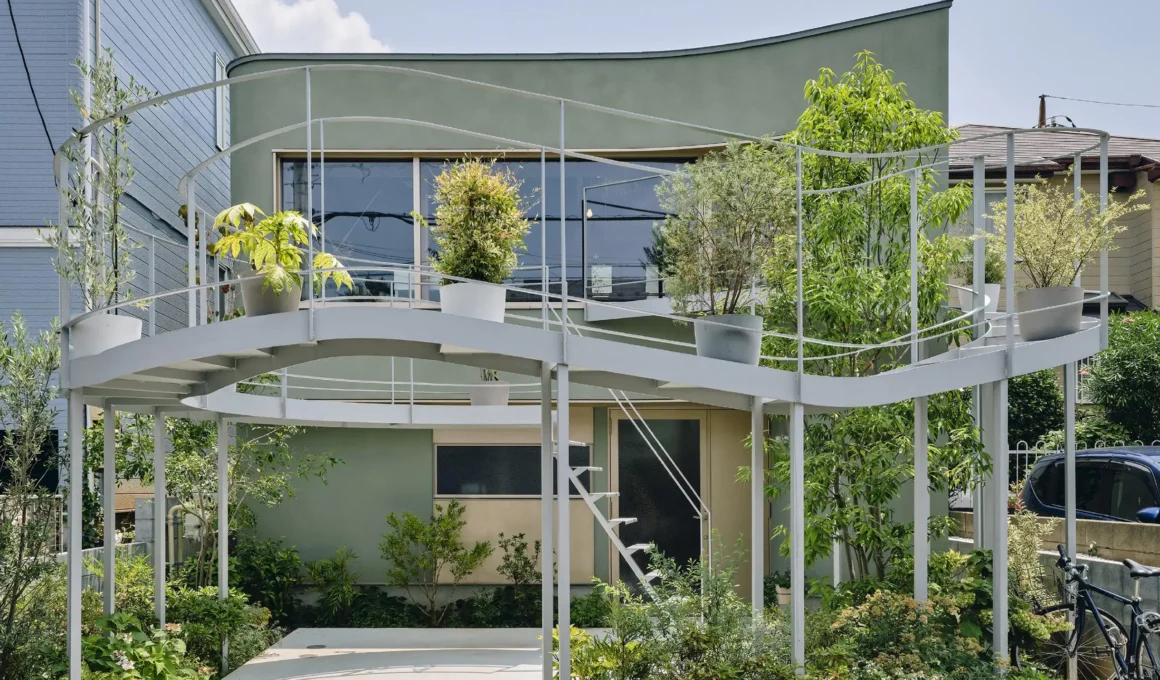
In the dense urban fabric of Tokyo, where the proximity of neighbors often dictates a defensive architectural posture, Hiroyuki Oinuma of HOAA has crafted a residence that challenges the binary between private sanctuary and public ornament. The project, known as Kazari House, serves as both the architect’s personal home and his professional atelier. Situated on a site hemmed in by residential structures on three sides, the design confronts the classic Japanese urban dilemma: how to invite light and air into a constricted footprint without sacrificing the intimacy required for domestic life. Rather than retreating behind windowless concrete walls—a common trope in contemporary Japanese residential design—Oinuma utilizes a sculptural intervention to negotiate the boundary between the interior and the street.
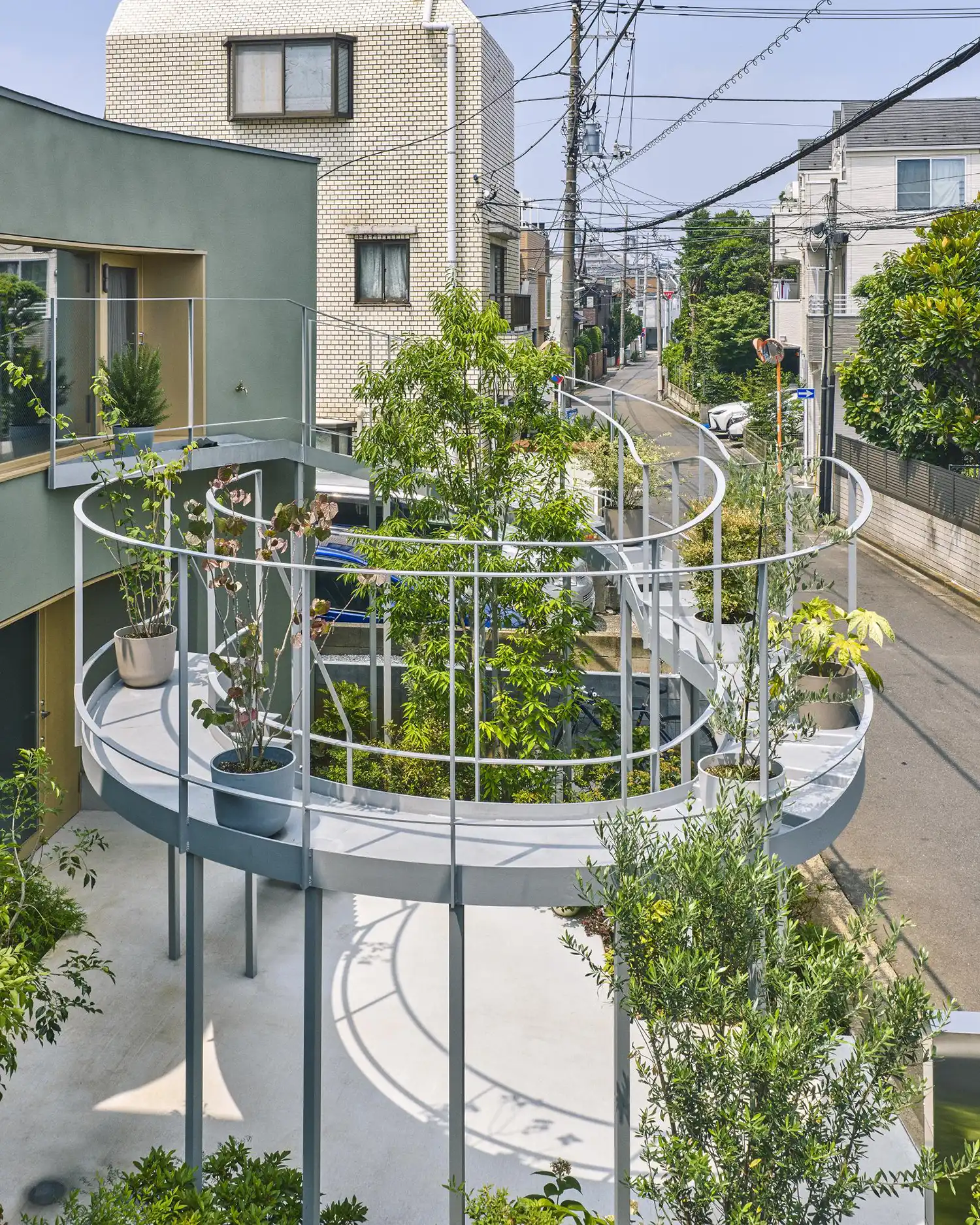
The conceptual heart of the residence is the “Kazari Garden,” a daring, curved terrace that sweeps outward from the second-floor dining area toward the northern road. In the northern hemisphere, north-facing windows are often synonymous with flat, consistent light, yet they lack the “sparkle” of direct sun. To counteract this, the terrace’s smooth, white curves reach out into the airspace above the road, “chasing” the sunlight that falls beyond the building’s own shadow. This architectural limb does more than just harvest light; it creates a vital buffer zone. From the dining room, the view is no longer an abrupt transition to a crowded Tokyo streetscape, but a curated vista of suspended greenery that softens the urban intensity.
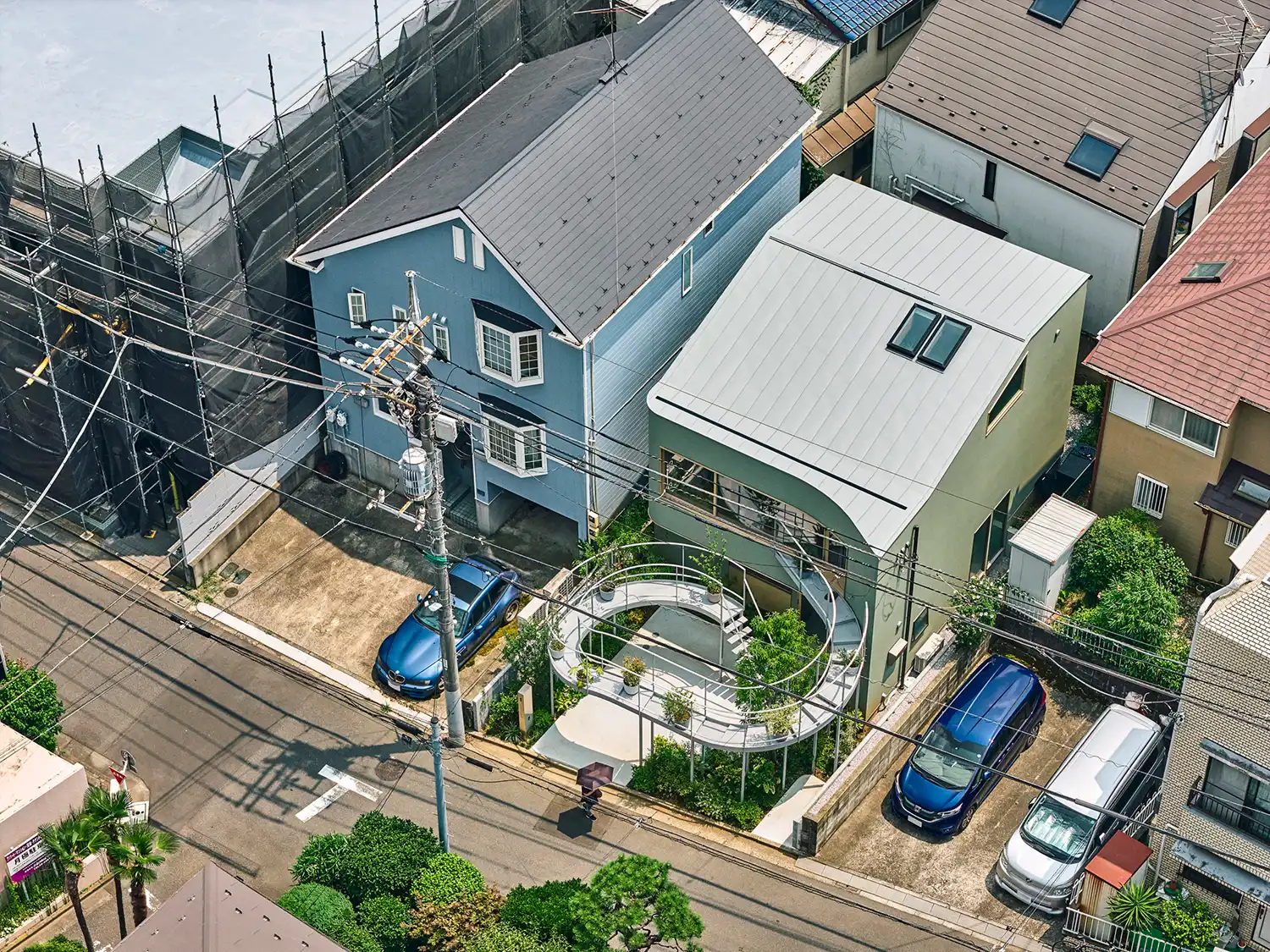
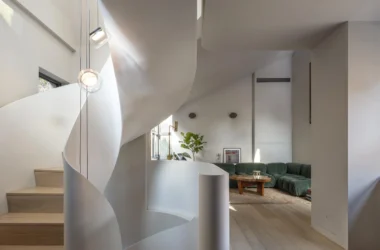
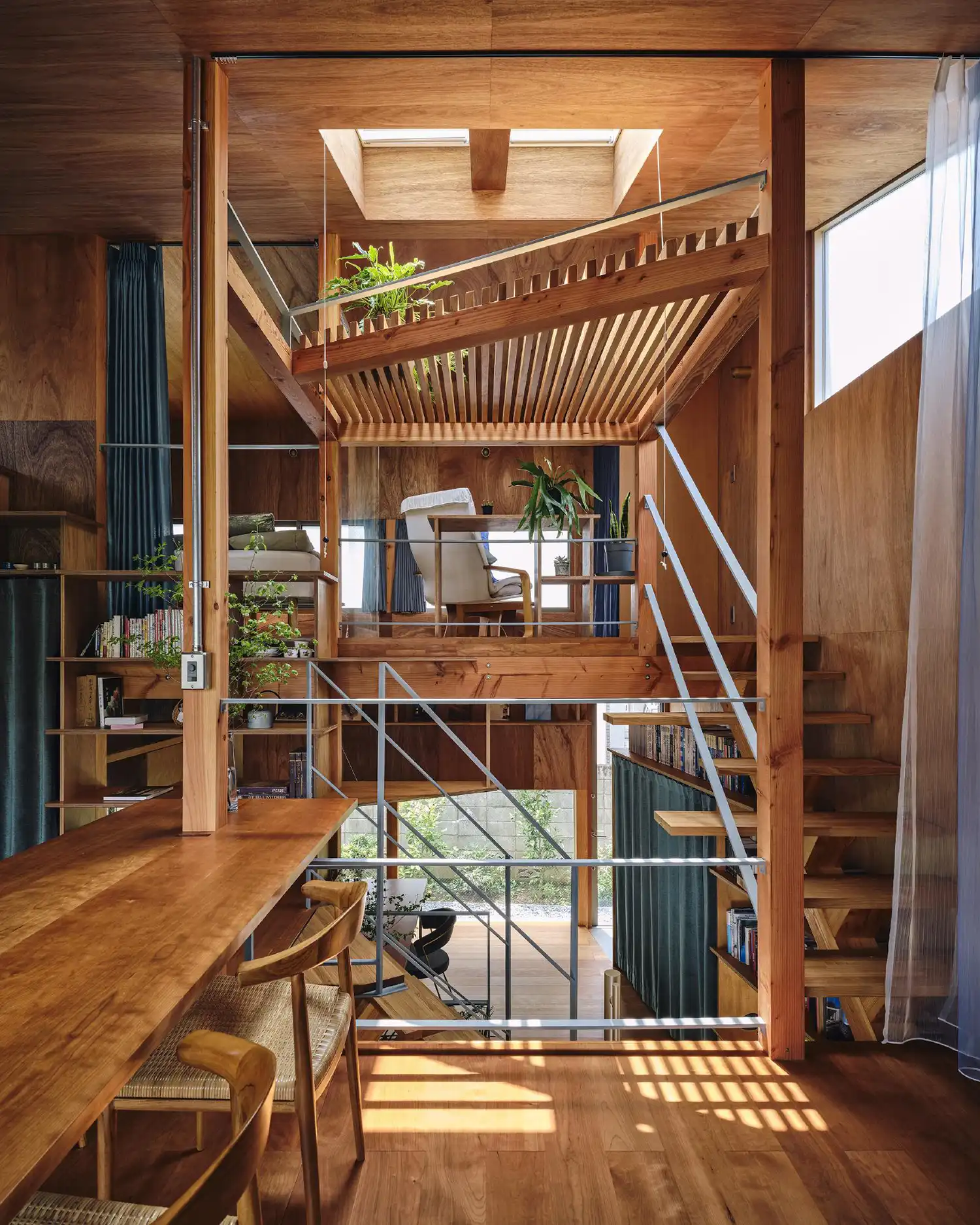
The internal logic of the house is governed by a sophisticated split-level floor plan that responds to the site’s natural elevation changes. This is not a static sequence of rooms, but a spiral of movement that alternates between the Kazari Garden at the front and a secluded “Back Garden” at the rear. This rhythmic oscillation ensures that nature is never more than a glance away, regardless of where one stands in the house. This approach to spatial organization is characteristic of the innovative ways architects in Japan reinterpret the concept of “home,” often deviating significantly from Western archetypes of compartmentalized living. Whether it is the vertical complexity of the House in Hirano or the radical transparency found in other Osaka residential projects, there is a recurring Japanese philosophy that views the dwelling as a flexible, porous entity rather than a fixed box.
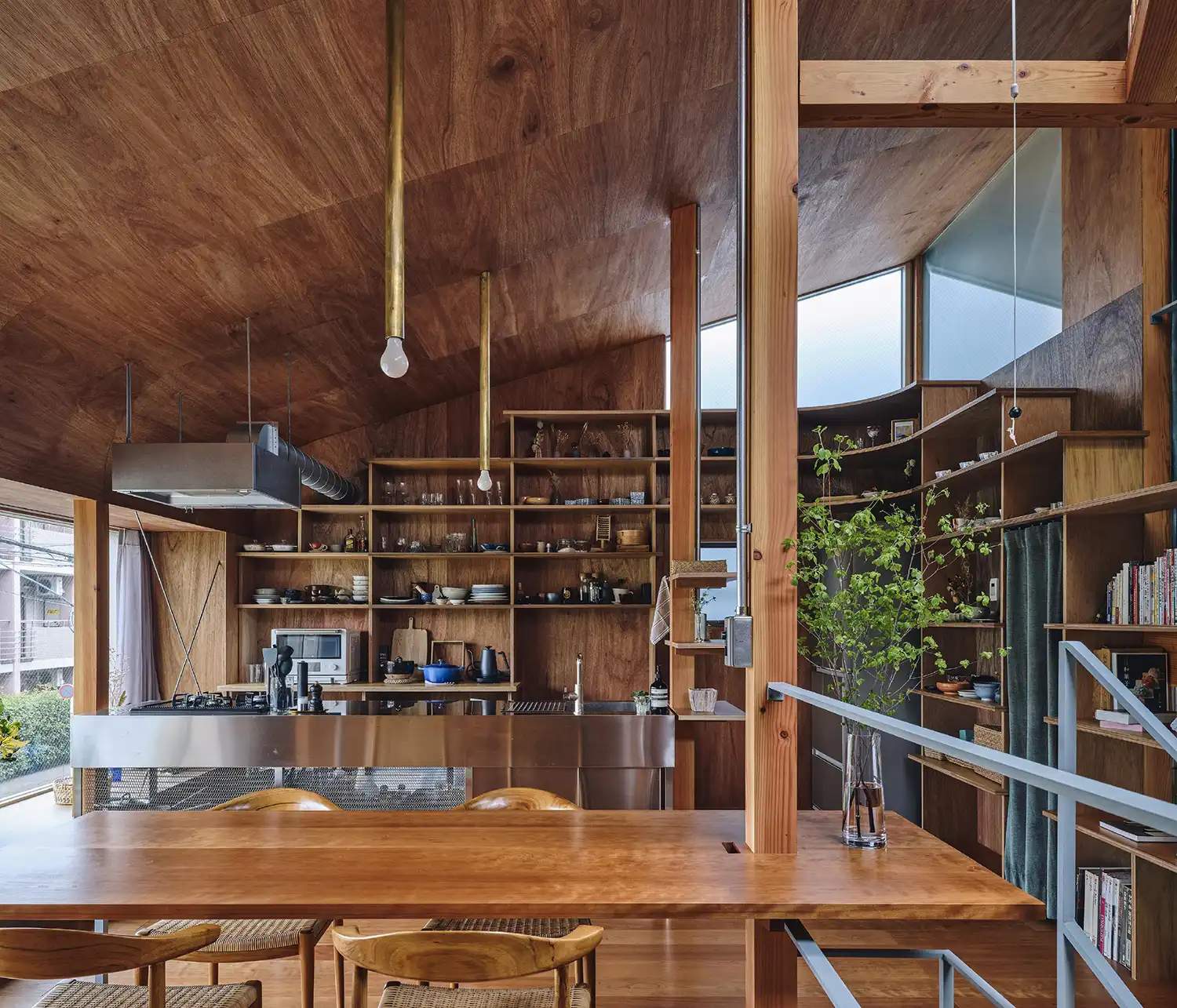
Within this fluid layout, Oinuma introduces a sense of “mindful tension” through the integration of extensive display shelving that lines the circulation paths. By treating cherished personal items—books, photographs, ceramics, and plants—as essential components of the architecture, the home takes on the quality of a small, private museum. These objects are framed as “representations of life,” turning the act of moving through the house into a reflective journey. This curation serves a dual purpose: it organizes the architect’s professional inspirations while fostering a disciplined, intentional way of living for the family. It is a domesticity that demands participation, much like the spiritual and geometric precision seen in the Pyramid Hut of Okinawa, where architecture serves as a vessel for memory and contemplation.
Technically, the “Kazari” (ornament) of the house represents a philosophical shift away from the historical rejection of decoration in Modernism. While Adolf Loos famously equated ornament to crime, and Postmodernism often used it for ironic pastiche, Oinuma proposes a functionalist “ornament.” The plants and the curved terrace are decorative, yes, but they perform crucial psychological and social roles. When the family steps out to water the garden, the physical structure facilitates spontaneous interactions with passersby. The “decoration” becomes a bridge, transforming the house into a public entity that contributes beauty and social energy to the Setagaya-ku neighborhood. The building does not just sit in the city; it performs for it.
The success of Kazari House lies in its ability to make life in a high-density urban environment feel expansive and connected. By prioritizing the “sensory experience” of light, the tactile presence of personal history, and the social potential of the façade, HOAA has demonstrated that decoration is not a superficial addition but a fundamental tool for human-centric design. In the context of global architecture, where the pressure of urbanization often leads to sterile, disconnected dwellings, this Tokyo residence offers a compelling argument for architecture as a living, breathing “ornament” that enriches both the inhabitant and the city at large.