

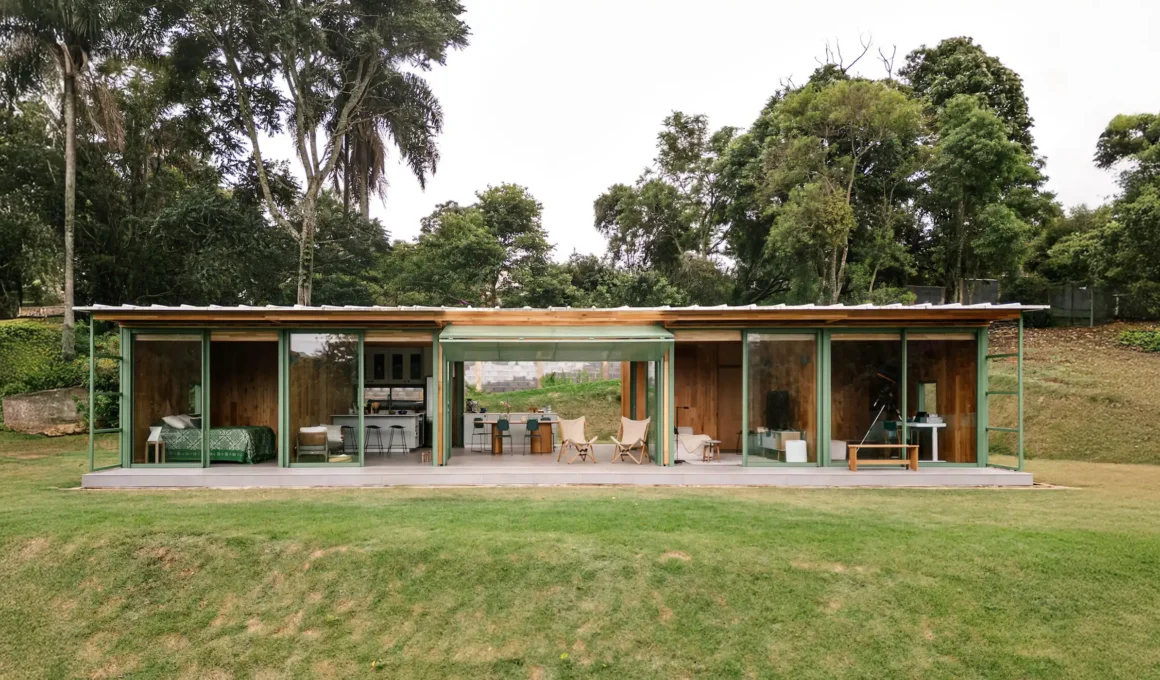
In the serene highlands of São Paulo’s countryside, Nitsche Arquitetos has crafted a compelling argument for sustainable architecture that harmonizes with its environment without sacrificing comfort or beauty. The House in Piedade, a 140-square-meter retreat, exemplifies how low-impact design, innovative materials, and climatic sensitivity can converge in a rural residential project. Designed for efficiency and rapid assembly, this Brazilian home rethinks rural living through a lens of environmental responsibility and contemporary technique.
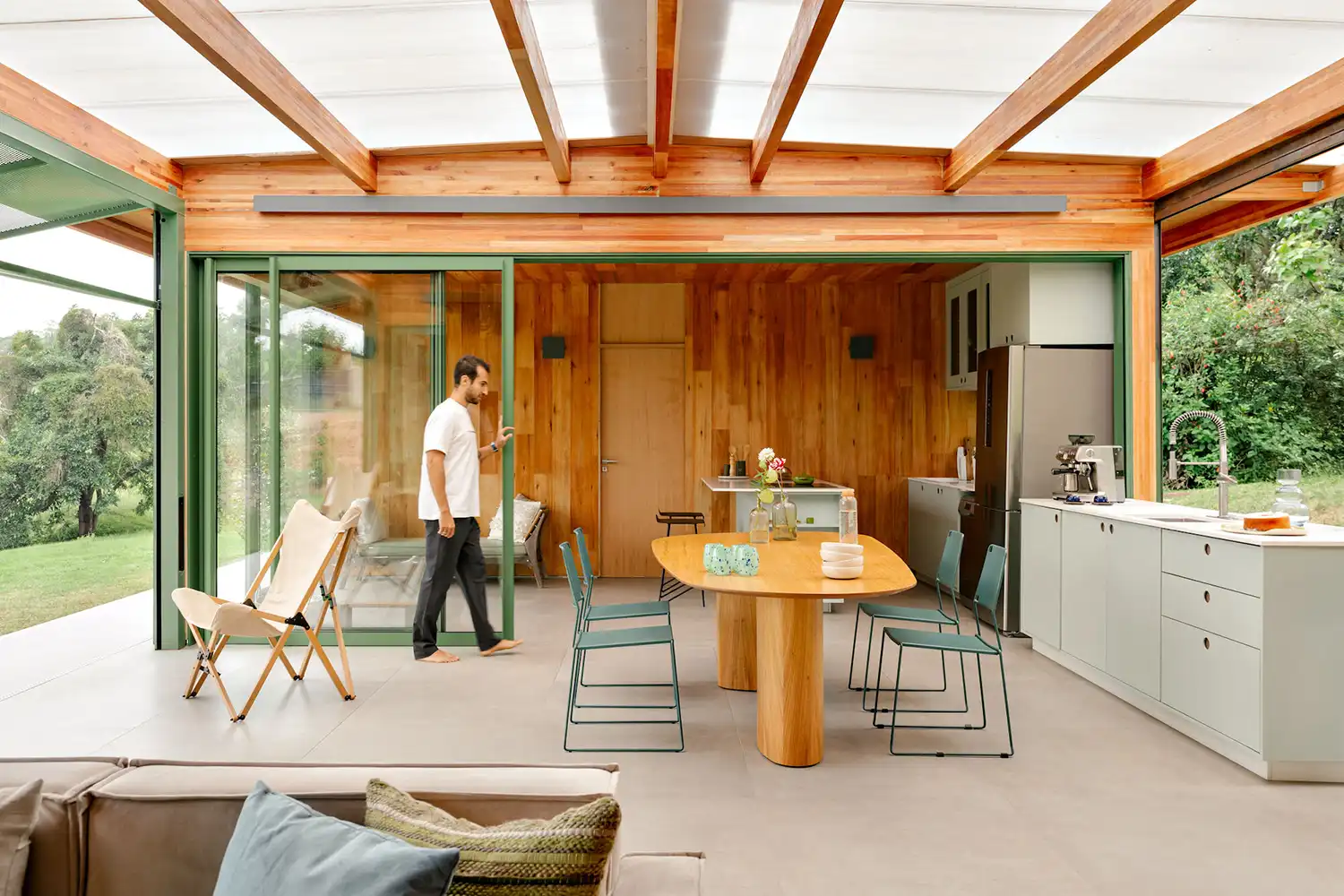
Responding to the region’s cooler climate, the architects organized the home into two distinct timber volumes housing private areas like bedrooms and bathrooms. Between them lies the heart of the design: a covered veranda crowned with translucent tiles. This central space acts as both a social nexus and a climatic mediator, flooding the interior with natural light while providing a sheltered gathering zone shielded from the elements. The semi-outdoor living area becomes a year-round refuge, blurring the boundary between the architectural envelope and the lush surroundings of the São Paulo countryside.
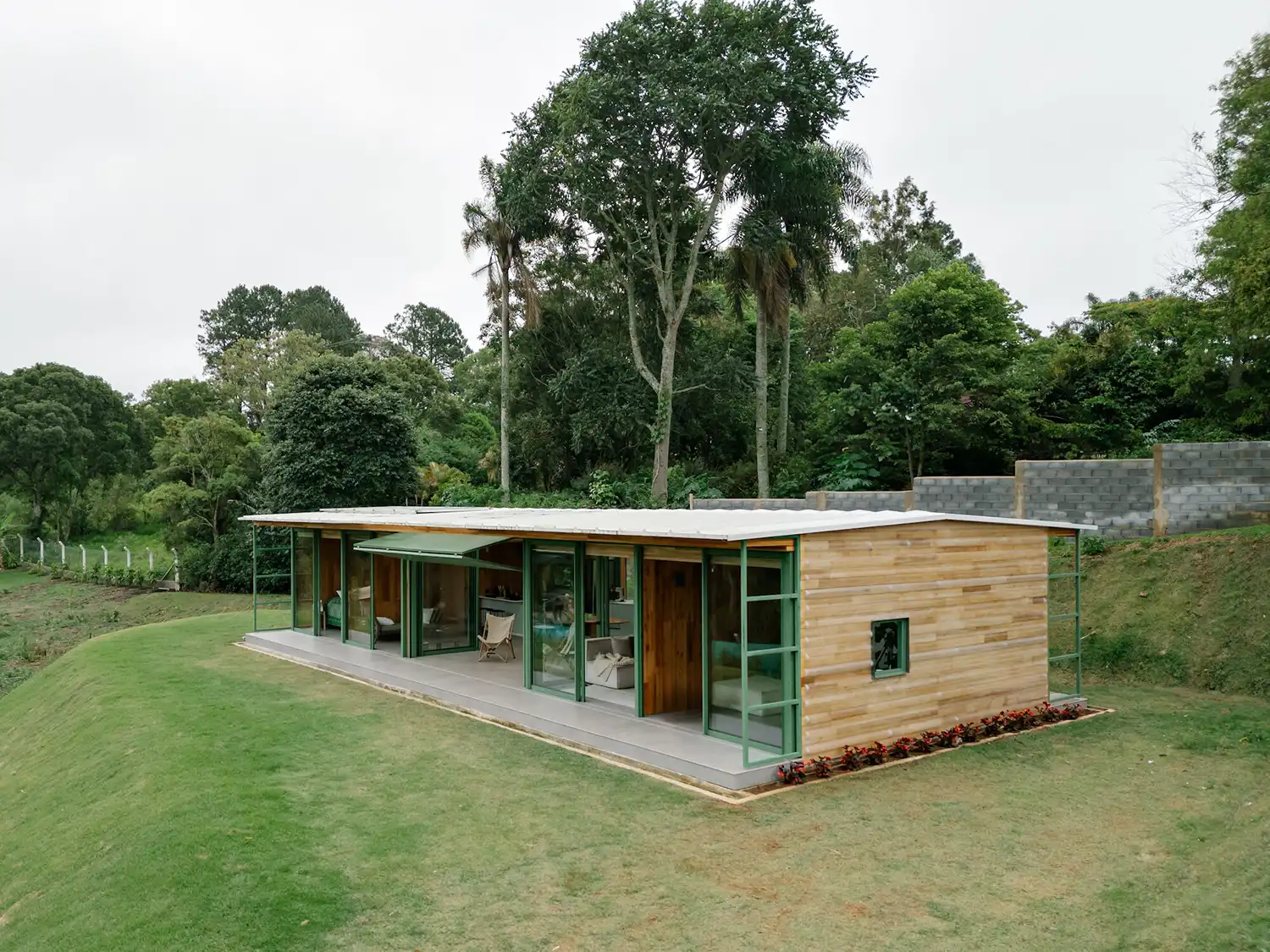
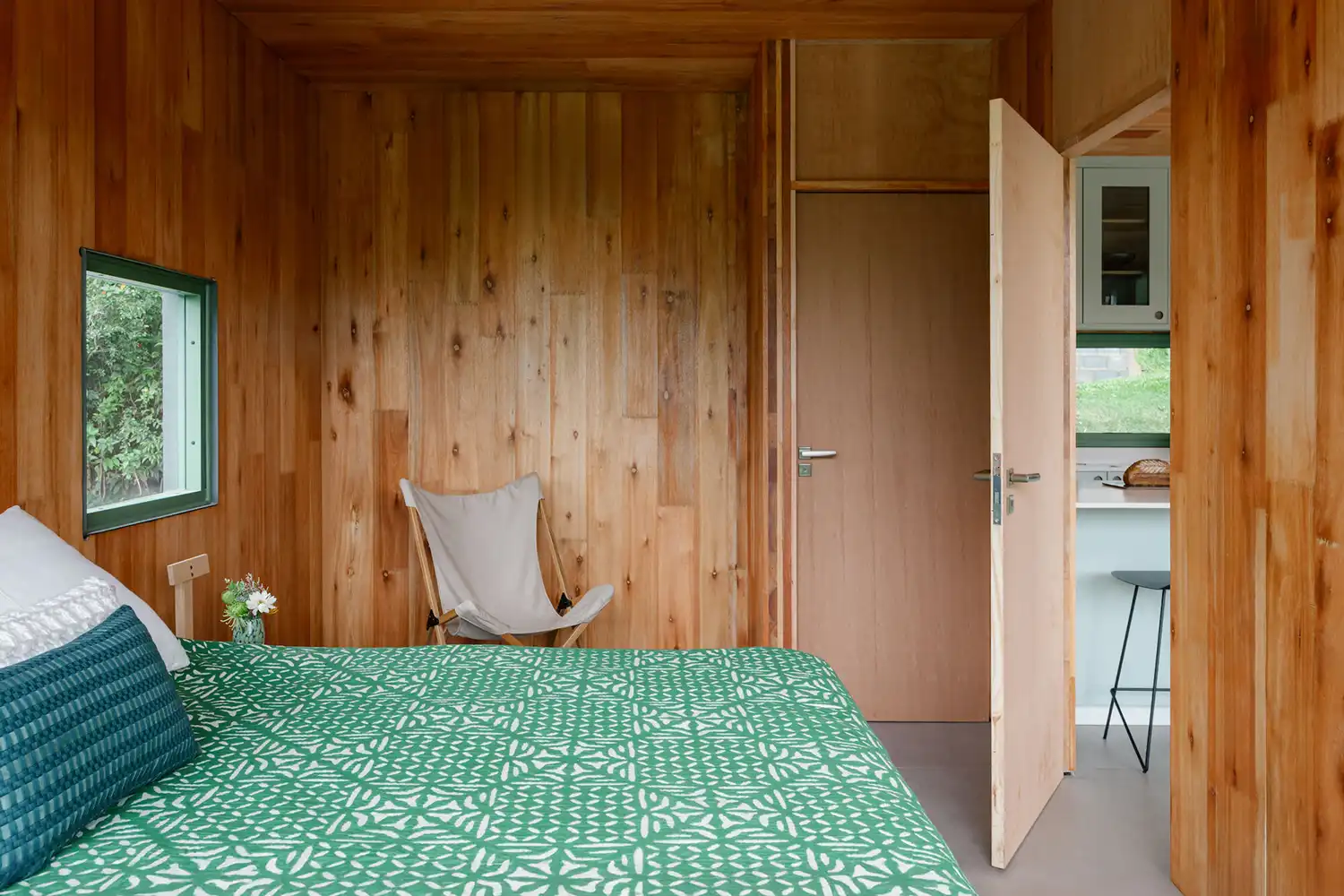
Crucially, speed and sustainability were engineered into the project’s DNA via cross-laminated timber (CLT). Chosen for its structural efficiency, factory precision, and carbon storage capabilities, the prefabricated timber construction system enabled the entire structure to be assembled on-site in under a week. This approach minimized disruption to the landscape and showcased CLT’s viability for remote contexts, while its lower embodied energy—compared to steel or concrete—underscored the project’s eco-conscious ethos. The material’s natural warmth also enhances the interior atmosphere, requiring minimal finishes.
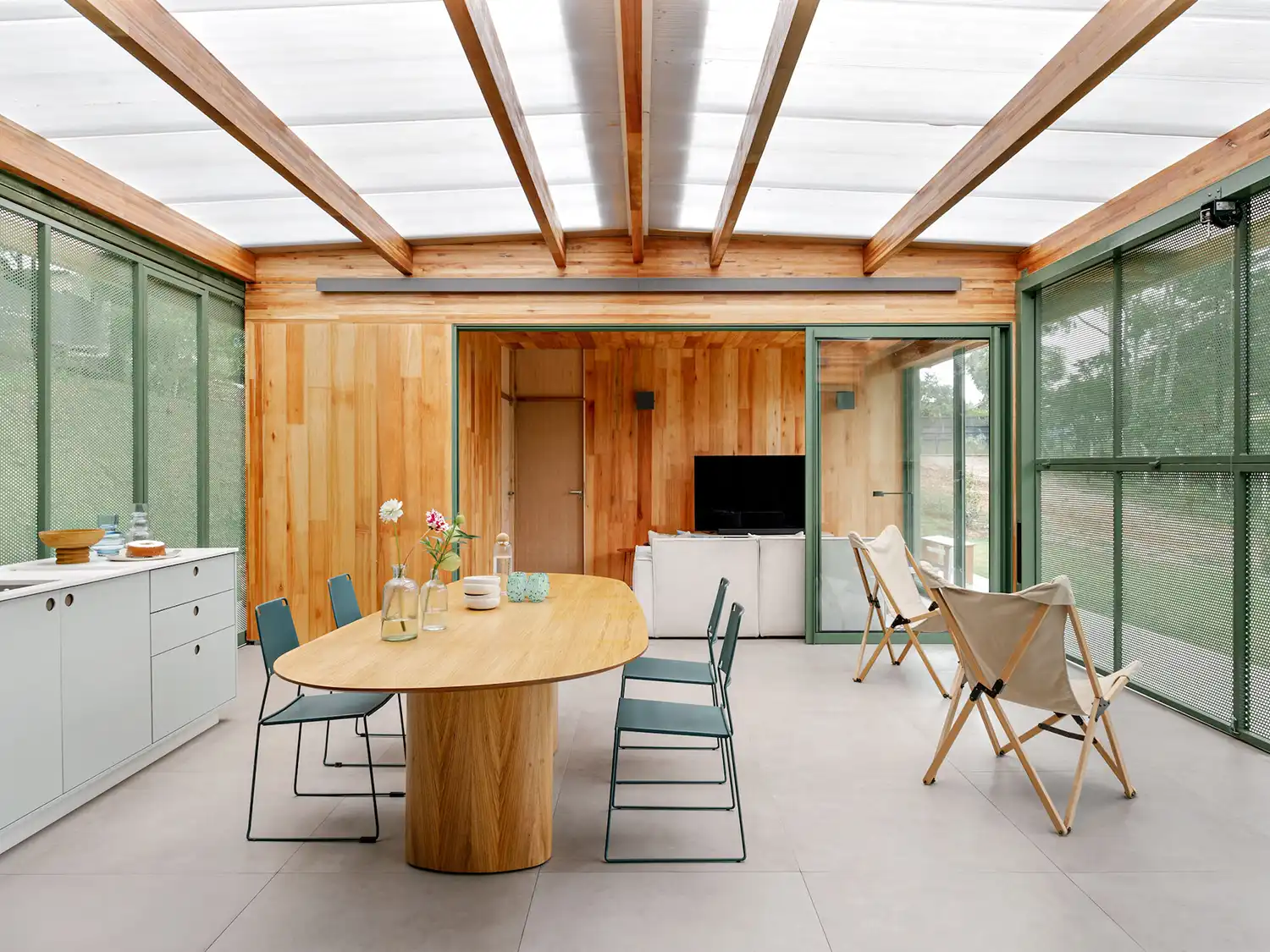
Beyond its rapid construction and reduced costs, the house prioritizes long-term resilience. The translucent roof protects the timber ceiling from weathering while strategically channeling daylight deep into the plan. This creates a dynamic interplay of shadow and illumination throughout the day, reinforcing the connection to nature. By merging traditional vernacular elements—like the protective veranda—with advanced engineered wood systems, Nitsche Arquitetos proves that low-impact design need not compromise on aesthetic grace or comfort.
The House in Piedade stands as a quiet manifesto: that rural homes can be both rapidly built and deeply sustainable, offering climatic responsiveness through smart planning and materials. In an era demanding ecological awareness, this project demonstrates how architecture can tread lightly on the land while providing profound spatial poetry.