




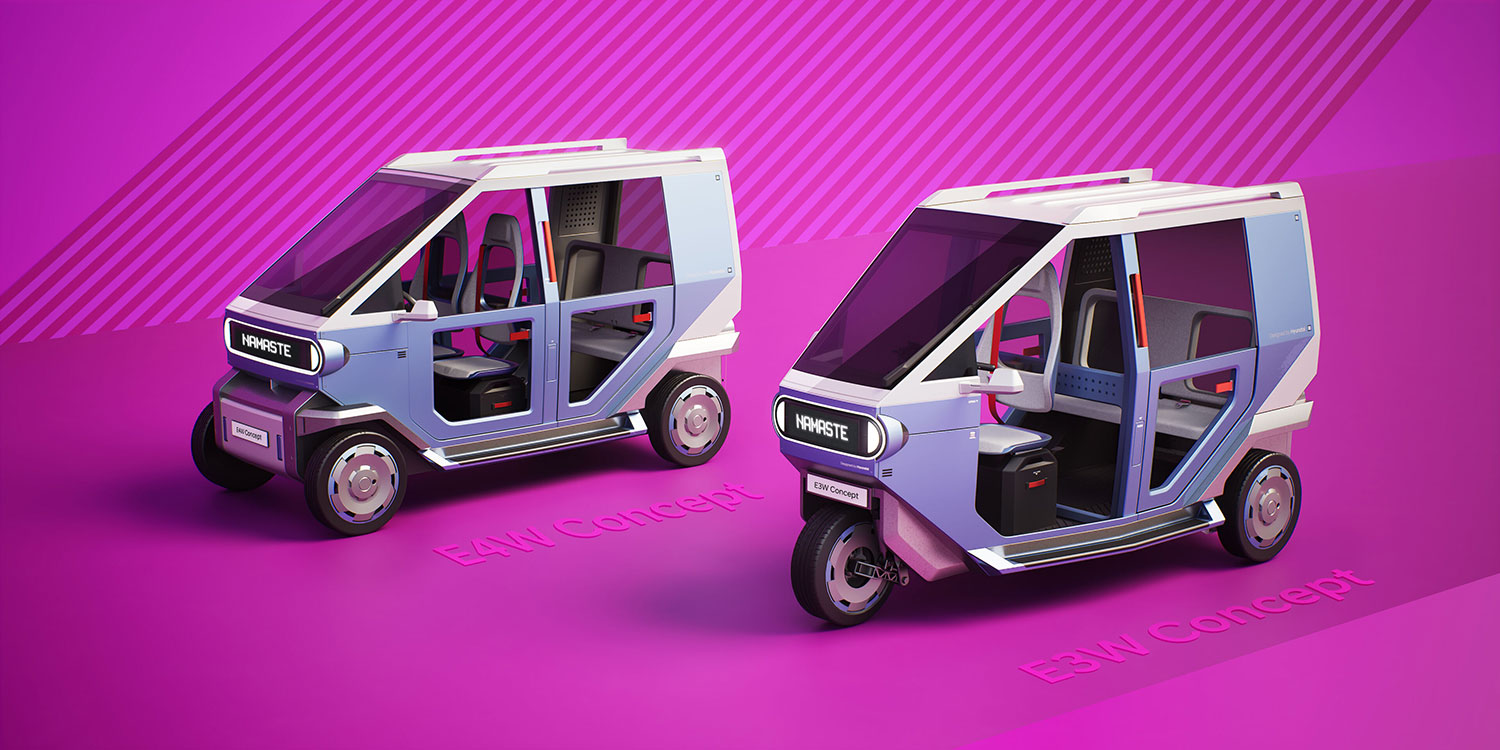
The Bharat Mobility Global Expo, a key event in the Indian automotive calendar, recently played host to a significant announcement from Hyundai: the unveiling of two new micro-mobility concepts, the E3W and E4W. These electric vehicles, developed in collaboration with Indian automotive giant TVS Motor Company, aim to revolutionize urban transport in a country grappling with severe air pollution and a reliance on traditional, high-polluting vehicles.
India‘s automotive market is a force to be reckoned with. As the world’s third-largest market for passenger vehicles and the leading supplier of three-wheelers, the country’s transportation needs are unique and substantial. While India’s net-zero target of 2070 may seem distant, the urgent need to transition away from polluting internal combustion engine (ICE) vehicles is undeniable. Hyundai’s E3W and E4W concepts directly address this challenge by offering electric alternatives in the crucial micro-mobility segment.
Micro-mobility, encompassing bikes, scooters, trikes, and quadricycles, is integral to India’s urban transport networks. Partnering with TVS Motor Company, a major player in the Indian two- and three-wheeler market, positions Hyundai to effectively manufacture and market these new electric vehicles. This collaboration leverages TVS’s extensive production capacity, capable of producing millions of two-wheelers and hundreds of thousands of three-wheelers annually.
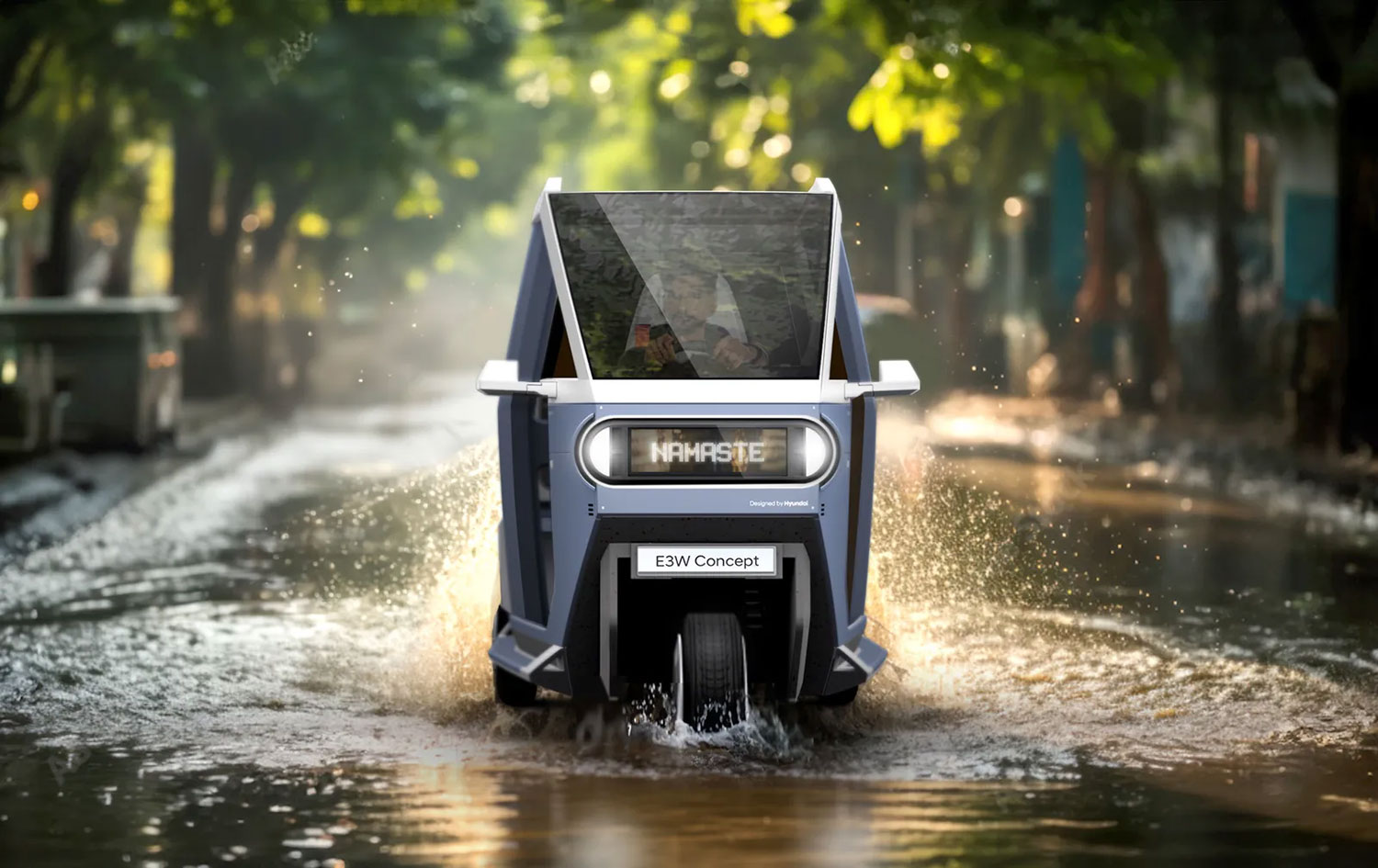
The impact of zero-emission micro-mobility on India’s urban environments cannot be overstated. With some of the world’s worst air pollution, largely attributed to vehicle emissions, the need for cleaner transport solutions is critical. Reports indicate that a significant portion of the world’s most polluted cities are located in India, with some exceeding WHO air quality guidelines by alarming margins.
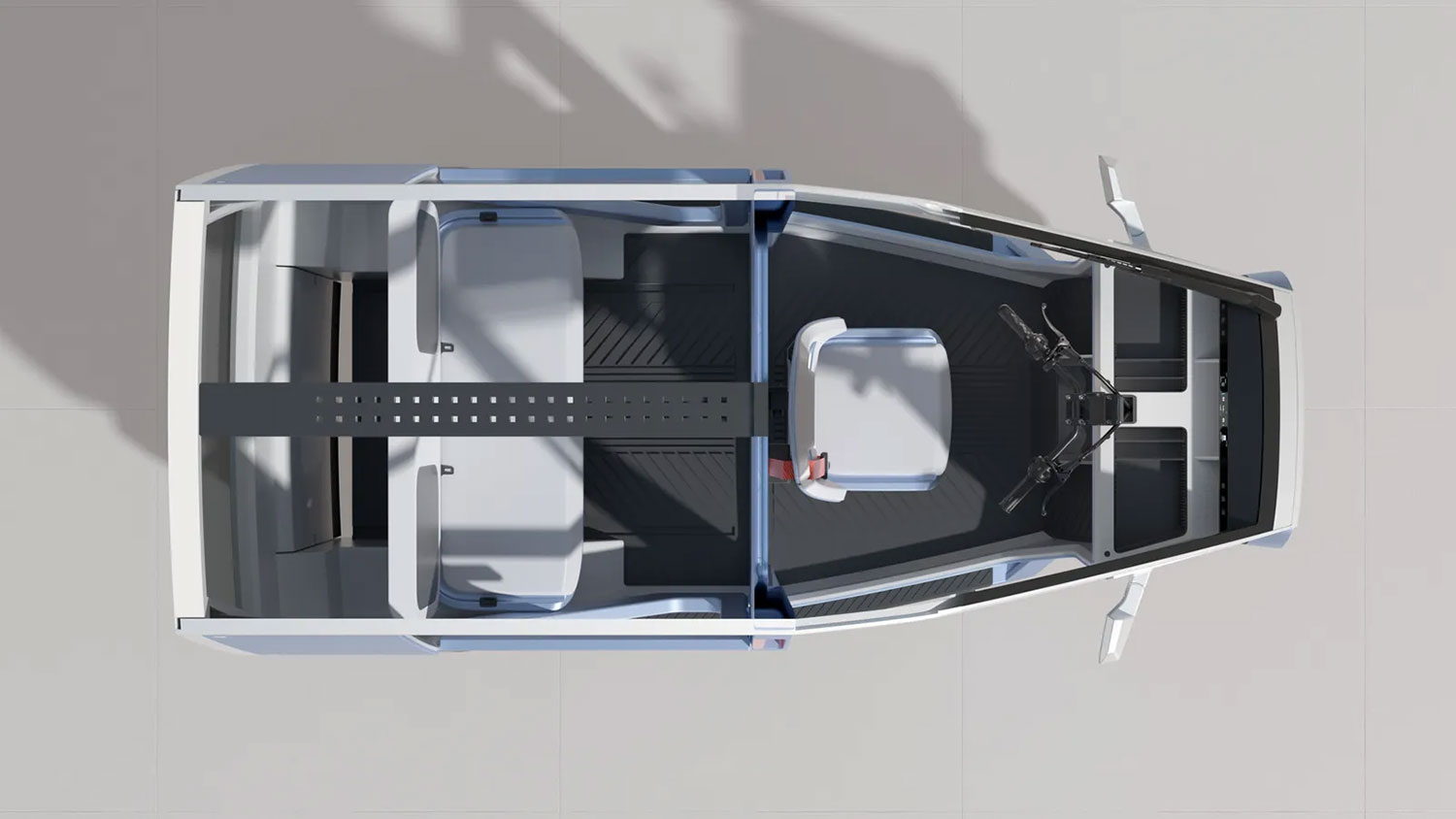
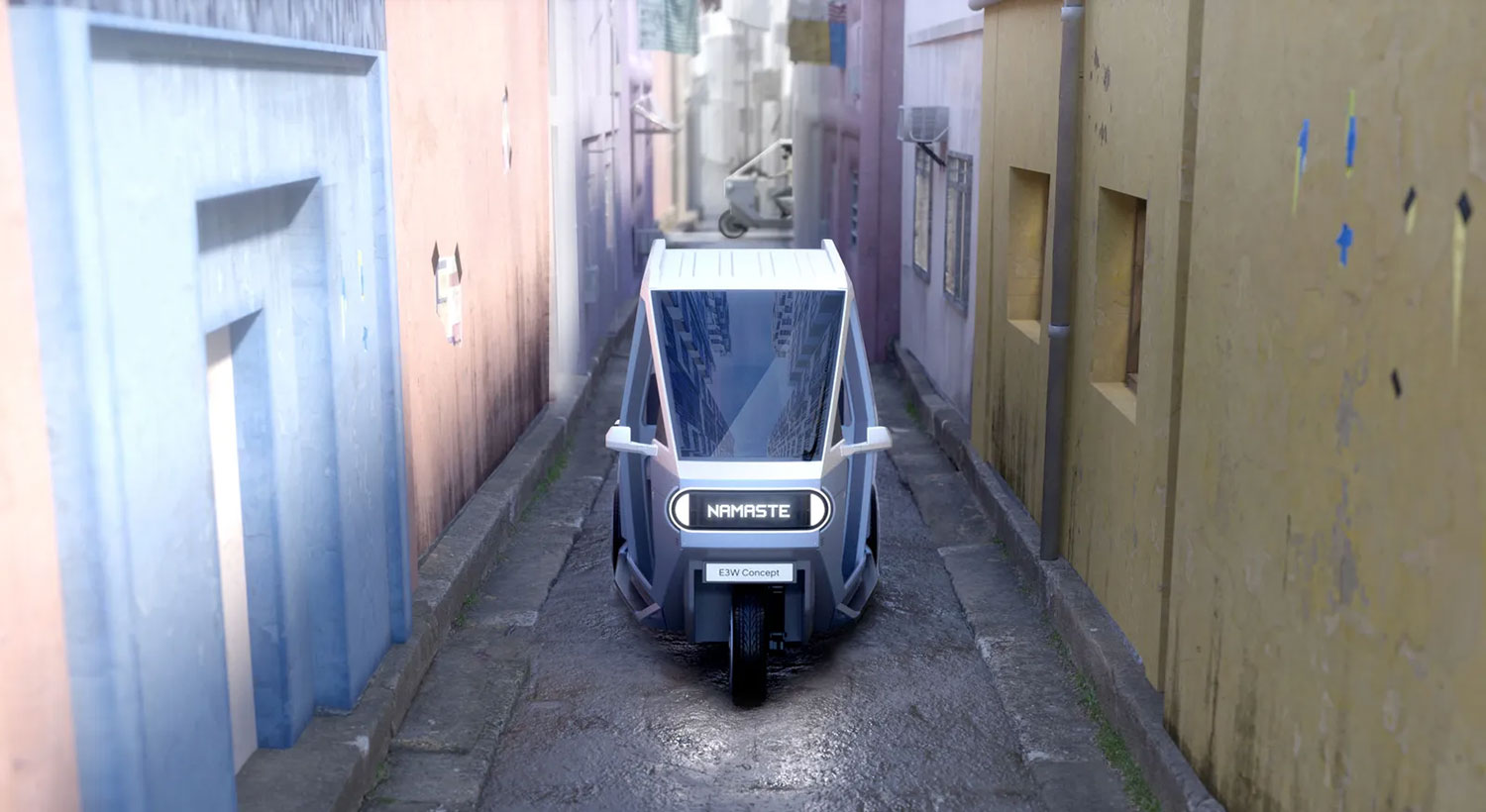
Hyundai‘s design philosophy for the E3W and E4W prioritizes affordability, durability, and flexibility. The design team has meticulously considered India’s specific cultural and commercial mobility requirements, aiming to provide solutions for last-mile delivery, short commutes, business needs, family transport, and public transport. This focus on practical application ensures that the vehicles are not just environmentally friendly but also commercially viable and adaptable to various uses.
SangYup Lee, Executive Vice President and Head of Hyundai and Genesis Global Design, emphasized Hyundai’s customer-centric approach, stating, “Hyundai Motor is a customer-centric brand, and caring for people in India is our first mission. This commitment has driven us to explore designing micro-mobility solutions tailored to India’s unique environment, reimagining the iconic three-wheeler to enhance mobility experiences through thoughtful design.”
The E3W is a modern reimagining of the classic auto-rickshaw, a ubiquitous sight in many Asian cities. These low-cost, functional vehicles are sold in vast numbers, but many still rely on highly polluting two-stroke engines. The E3W offers a clean, electric alternative. Accompanying the E3W is the E4W, a four-wheeled micro-vehicle that presents broader global market opportunities for TVS.
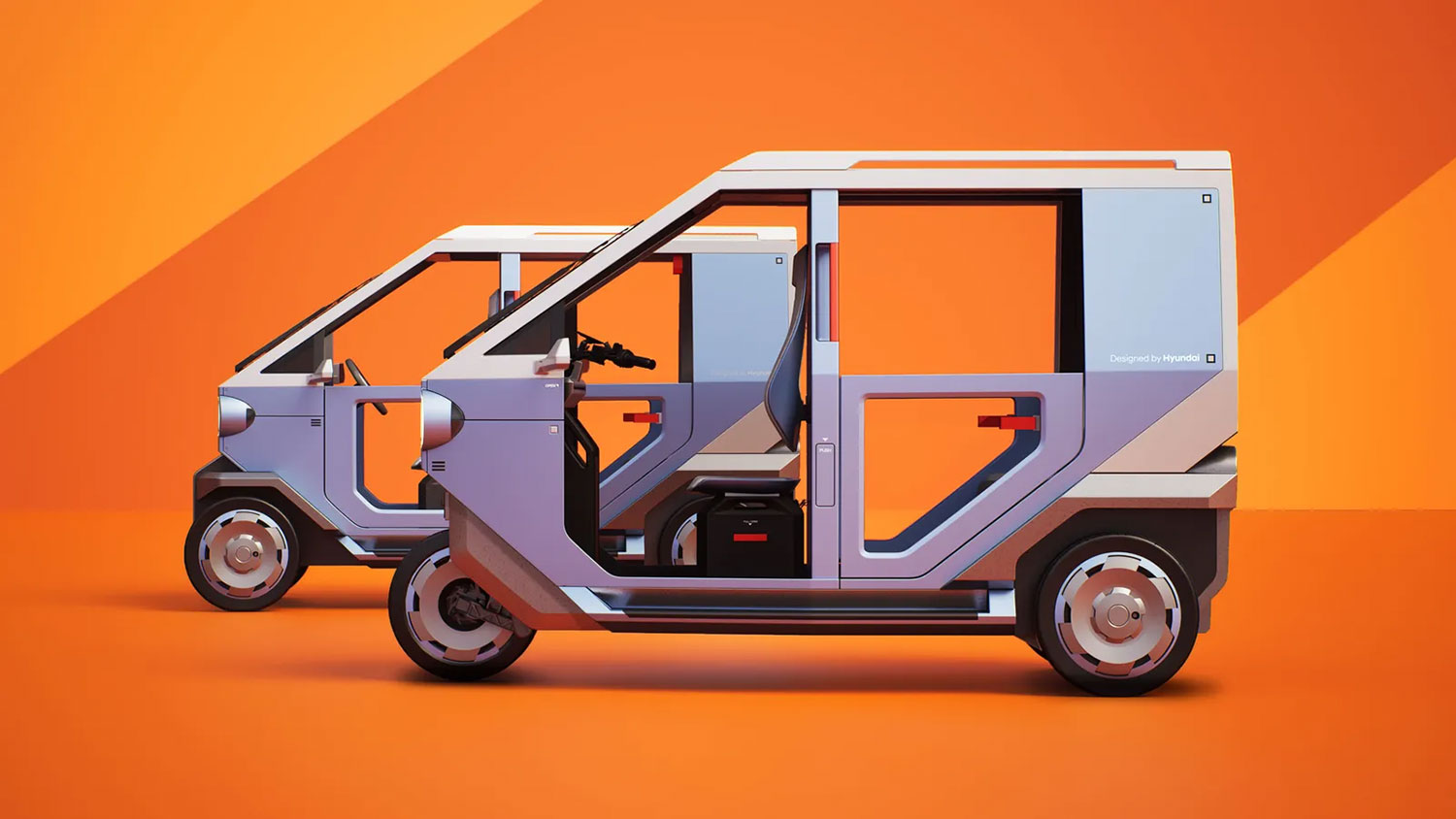
Both concepts feature significant improvements, including enhanced visibility and collision protection. The E3W retains the maneuverability of the traditional auto-rickshaw while incorporating features like adjustable ride height for navigating challenging road conditions and larger wheels for a smoother ride. The more angled windshield and flat floor enhance practicality, while the “Aakaashi Blue” color, inspired by the Indian Ocean and sky, adds a touch of cultural relevance. Practical details like a tow hook for navigating potholes and heat-resistant paint further demonstrate the design team’s attention to detail.
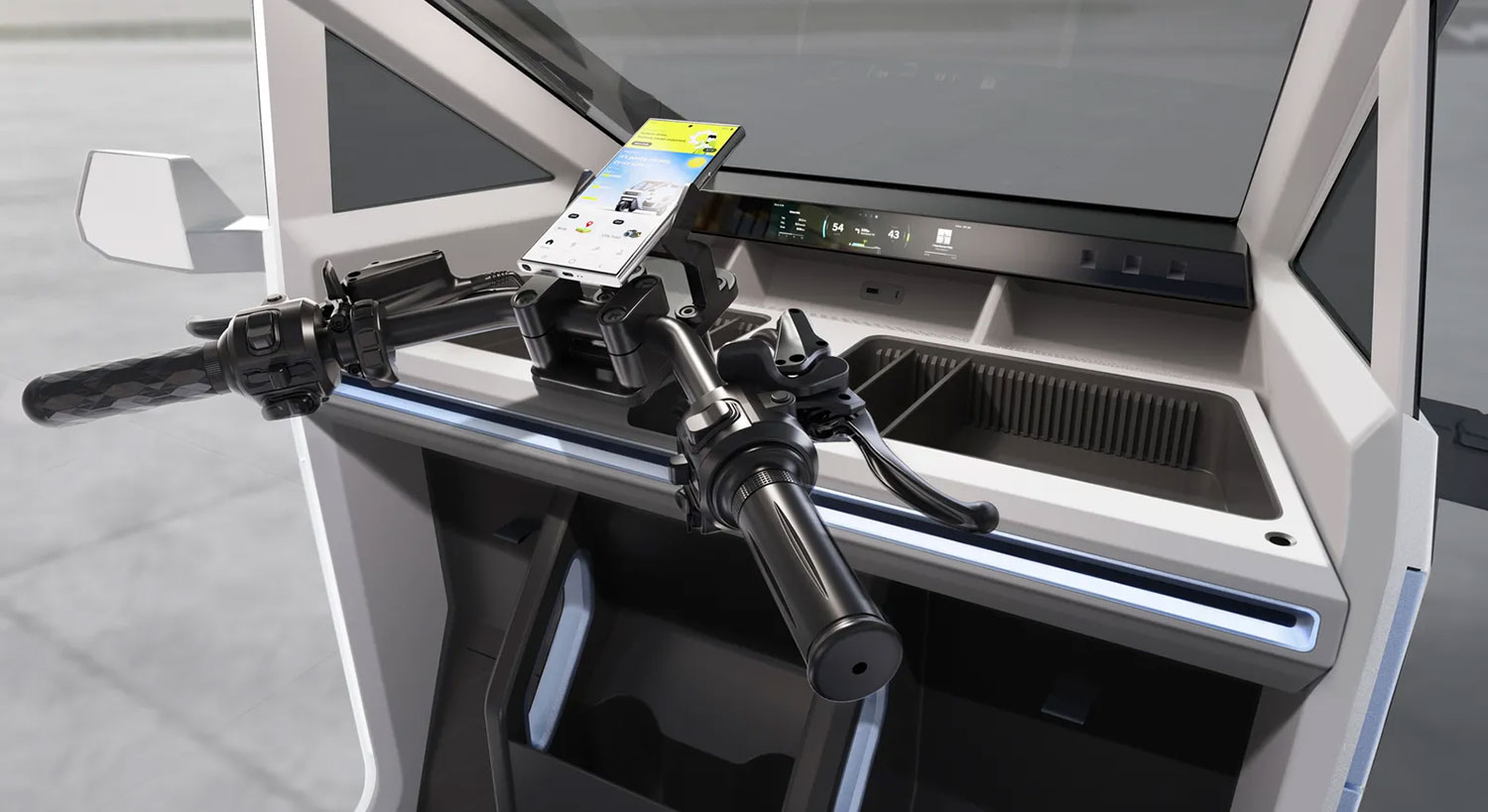
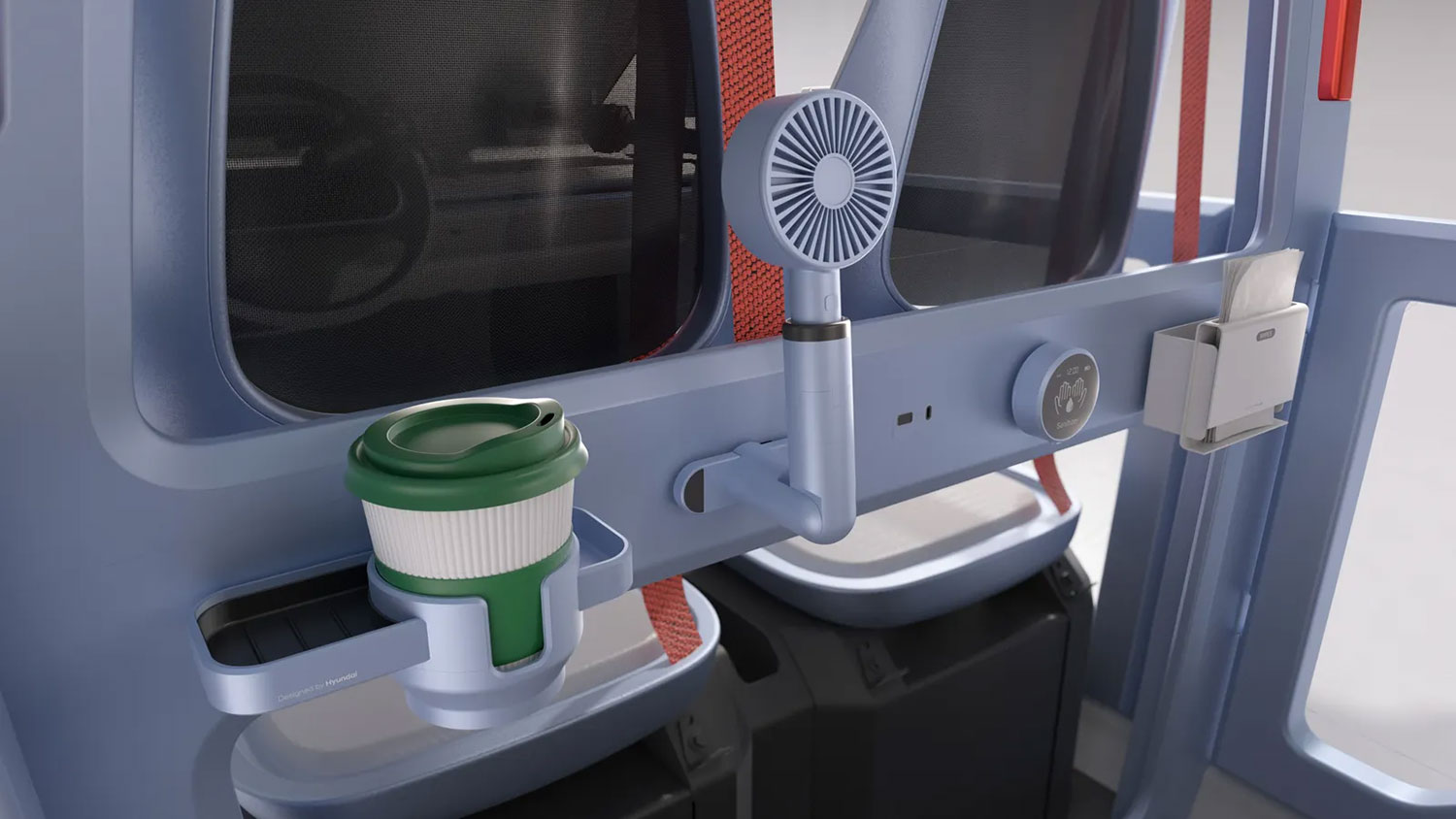
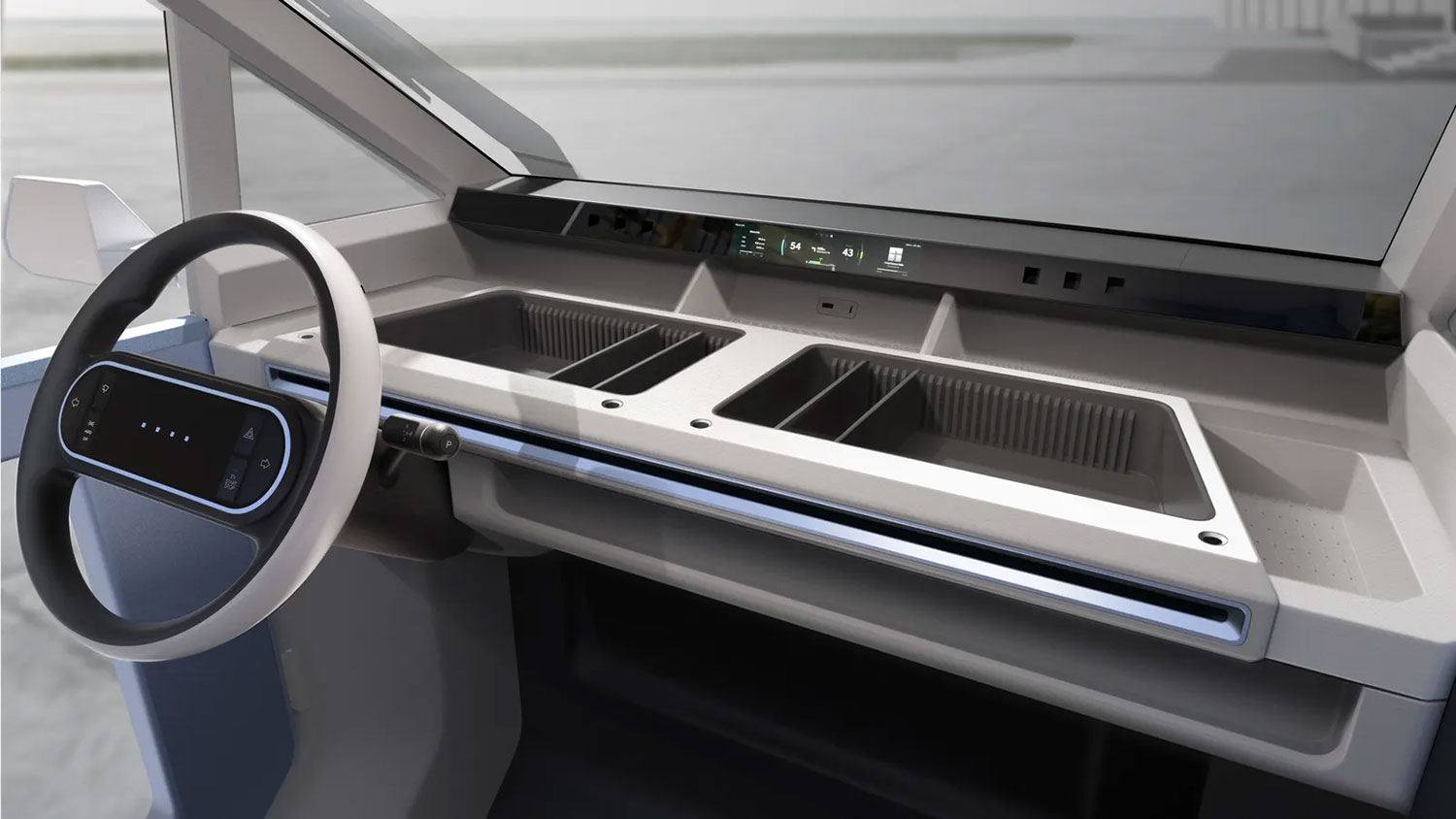
The interior of the E3W is designed for adaptability, offering space for various accessories and the flexibility to swap out seats for cargo, a wheelchair, or other needs. A simple instrument cluster and a dot matrix message screen blend functionality with modern technology.
Hyundai’s E3W and E4W represent a significant step towards electrifying India’s micro-mobility landscape. By focusing on practical design, affordability, and collaboration with a major local manufacturer, Hyundai aims to make a real impact on urban air quality and transform the future of transportation in India.