

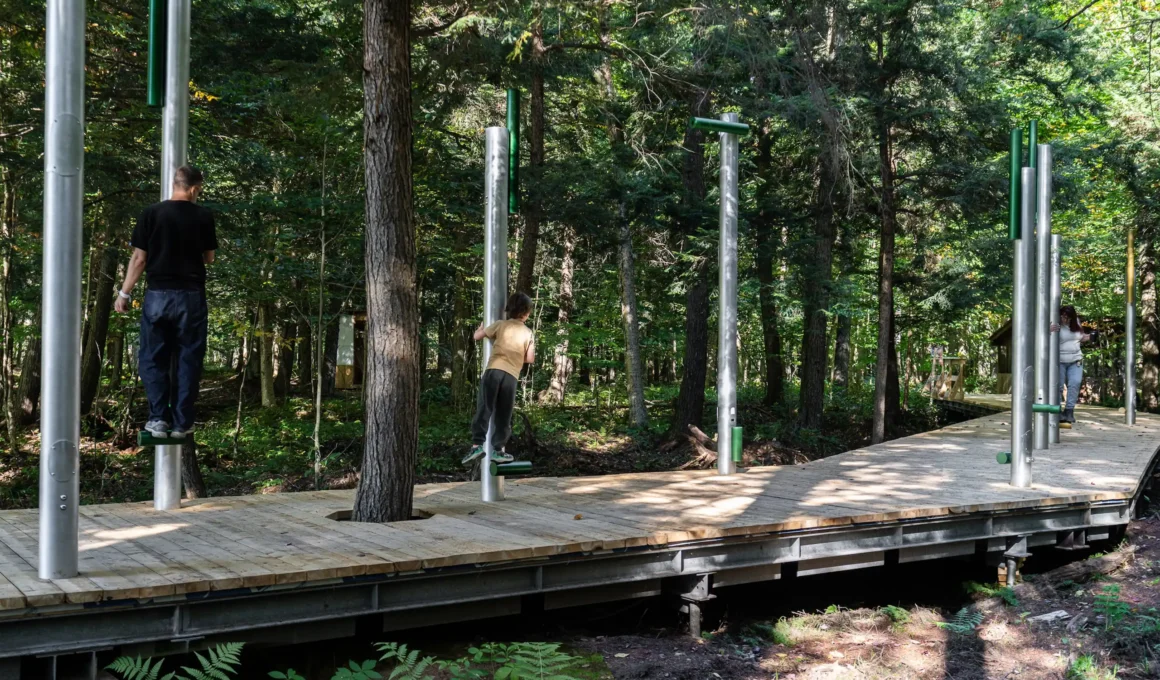
Drawing on their fifteen-year legacy of crafting participatory urban experiences, Montreal-based studio Daily tous les jours has expanded its focus from human connection to the delicate interfaces between species. Led by Mouna Andraos and Melissa Mongiat, the studio’s latest installation, Human Perches, exemplifies this shift. Located within the wooded sanctuary of Chouette à voir! in St-Jude, Québec, the project moves beyond mere observation, inviting visitors to engage in a reciprocal dialogue with the local avian population through a series of interactive architectural interventions.
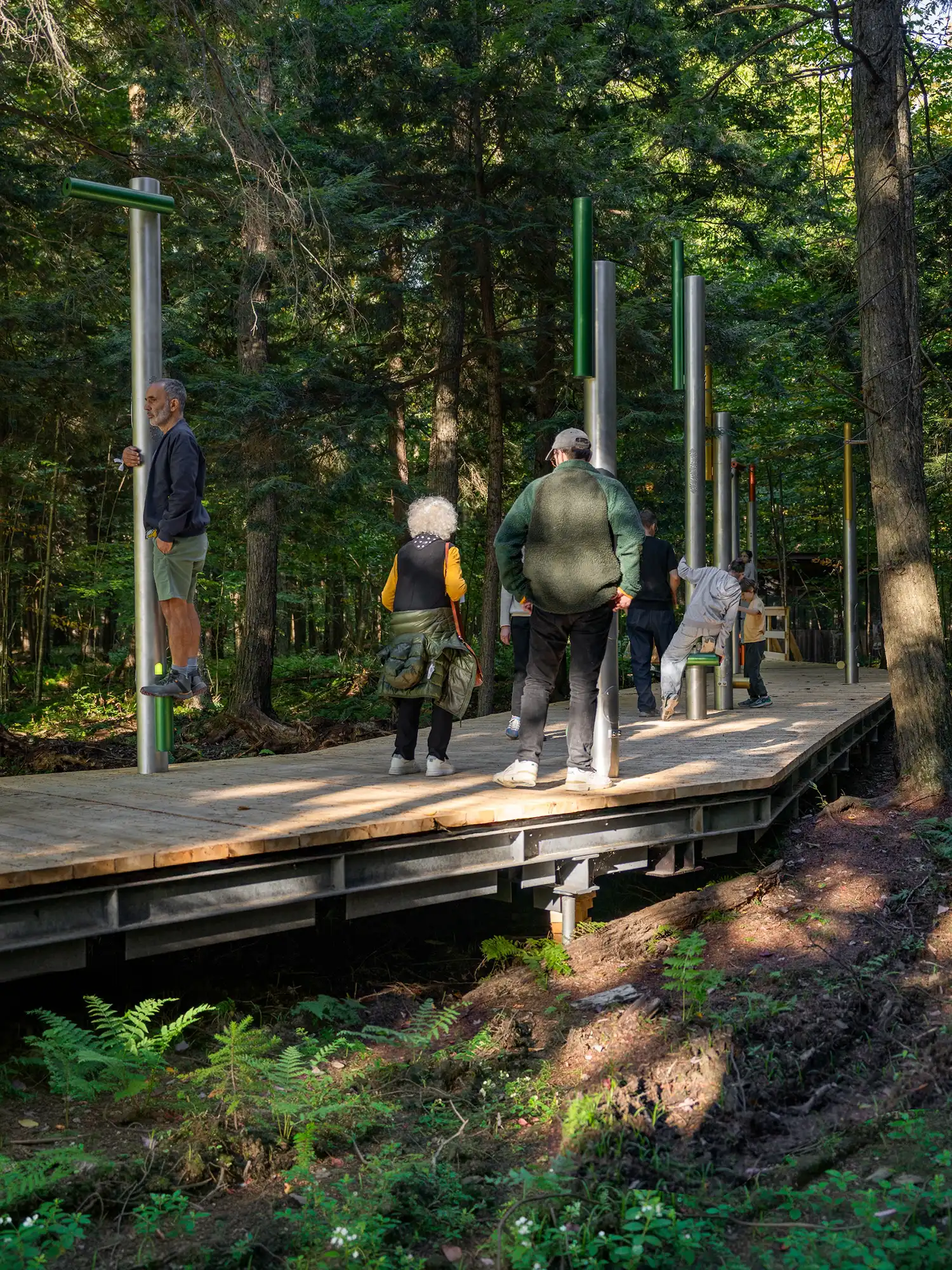
A conceptual vision for interspecies empathy drives the design, positioning the forest not as a backdrop but as a primary collaborator. Commissioned by the Québec Union for the Rehabilitation of Birds of Prey (UQROP), the installation consists of ten aluminum “perches” scattered along an elevated boardwalk. This elevated path allows humans to traverse the fragile marsh ecosystem without disturbing the ground life below, physically manifesting a commitment to environmental stewardship while setting the stage for a unique acoustic performance.
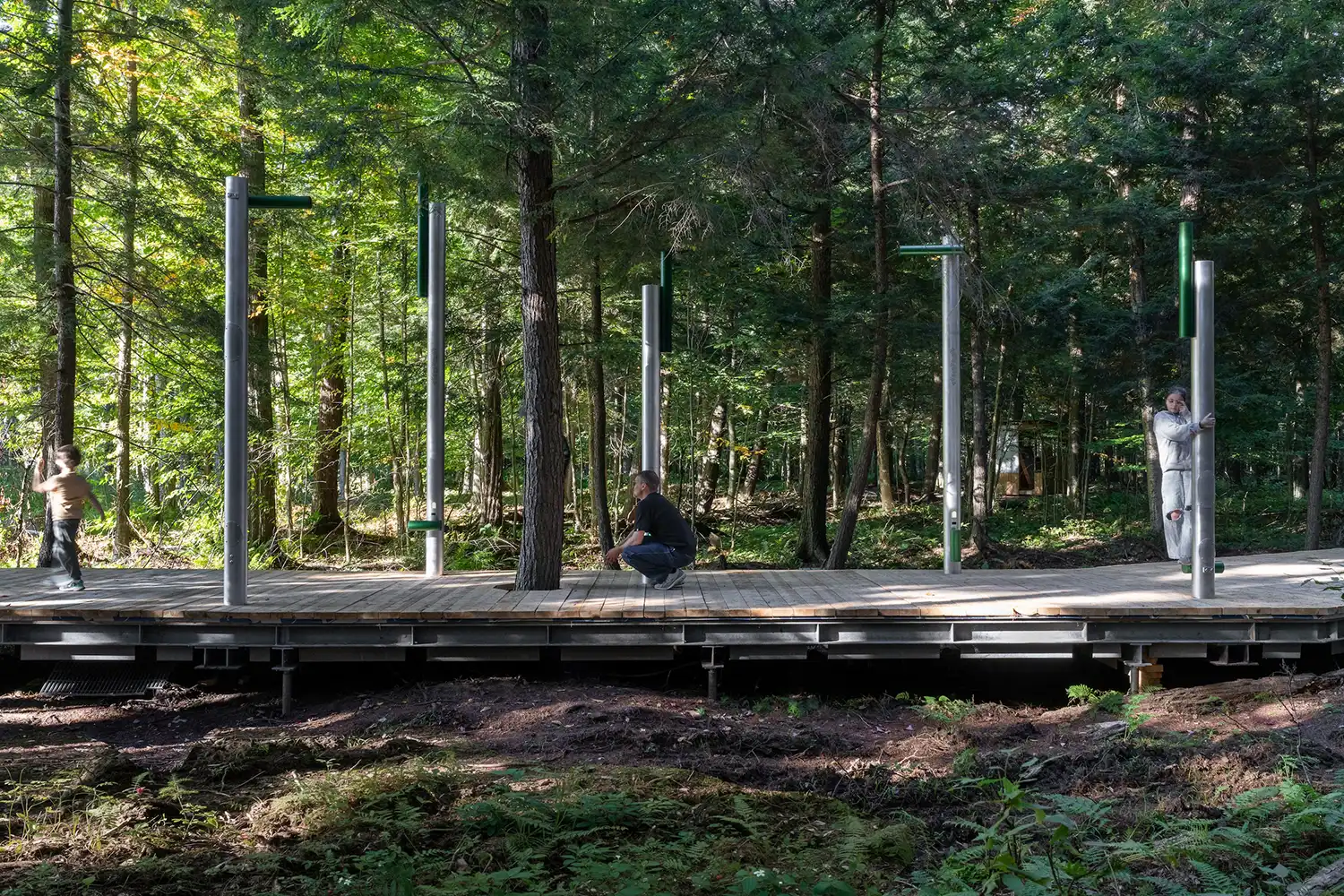
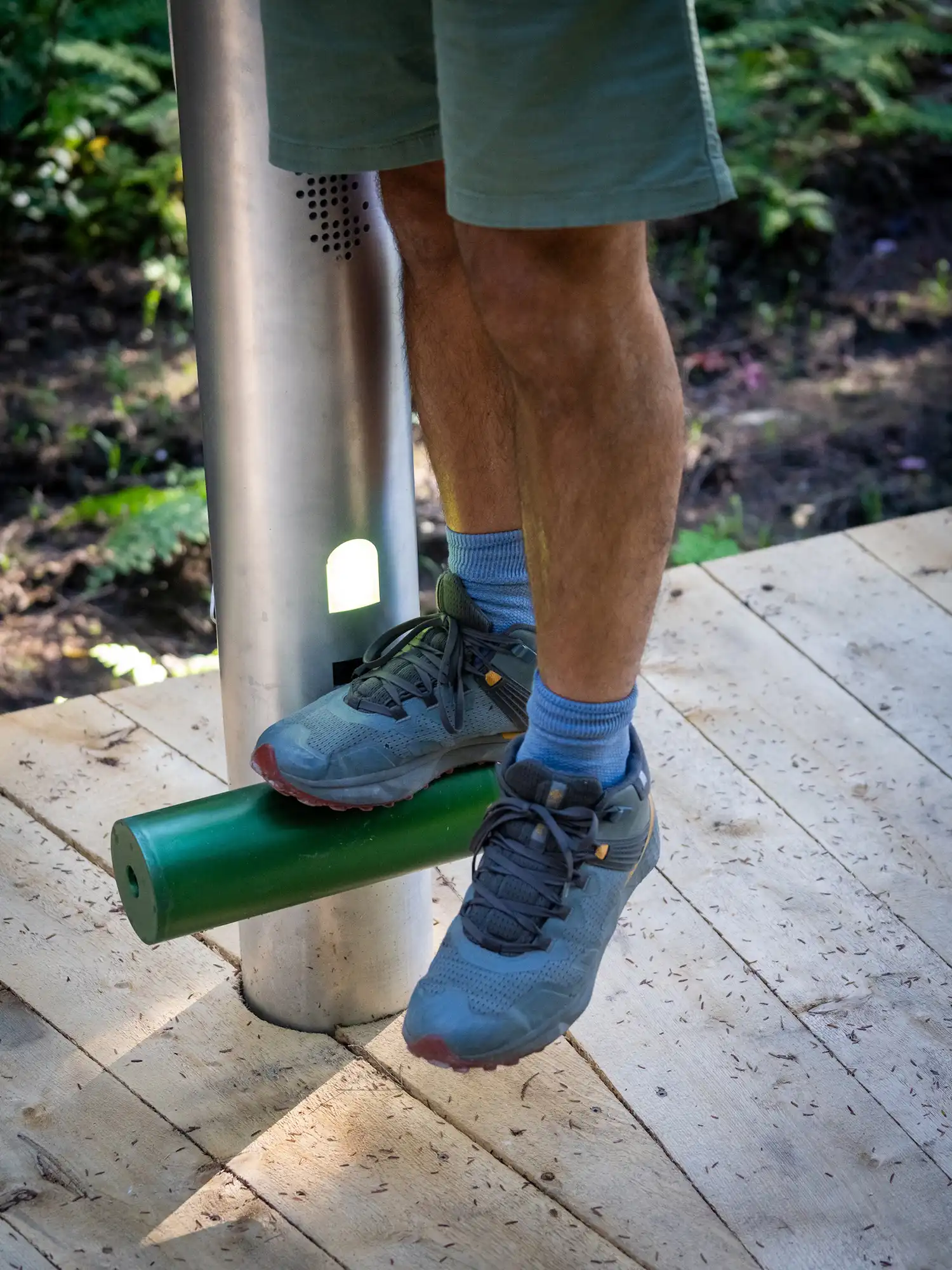
The technical integration of sound and movement transforms the act of walking into a generative musical experience. Developed in collaboration with contemporary classical composer Keiko Devaux, each perch is embedded with an interactive soundtrack. While a base layer of abstract environmental sounds plays continuously, the system responds to human presence: when a visitor sits or stands on a perch, a new sound layer is activated—a specific bird call from a species present during that particular season. This seasonal programming ensures the work remains dynamic, reflecting cycles of winter vigilance, spring courtship, summer protection, and autumn migration.
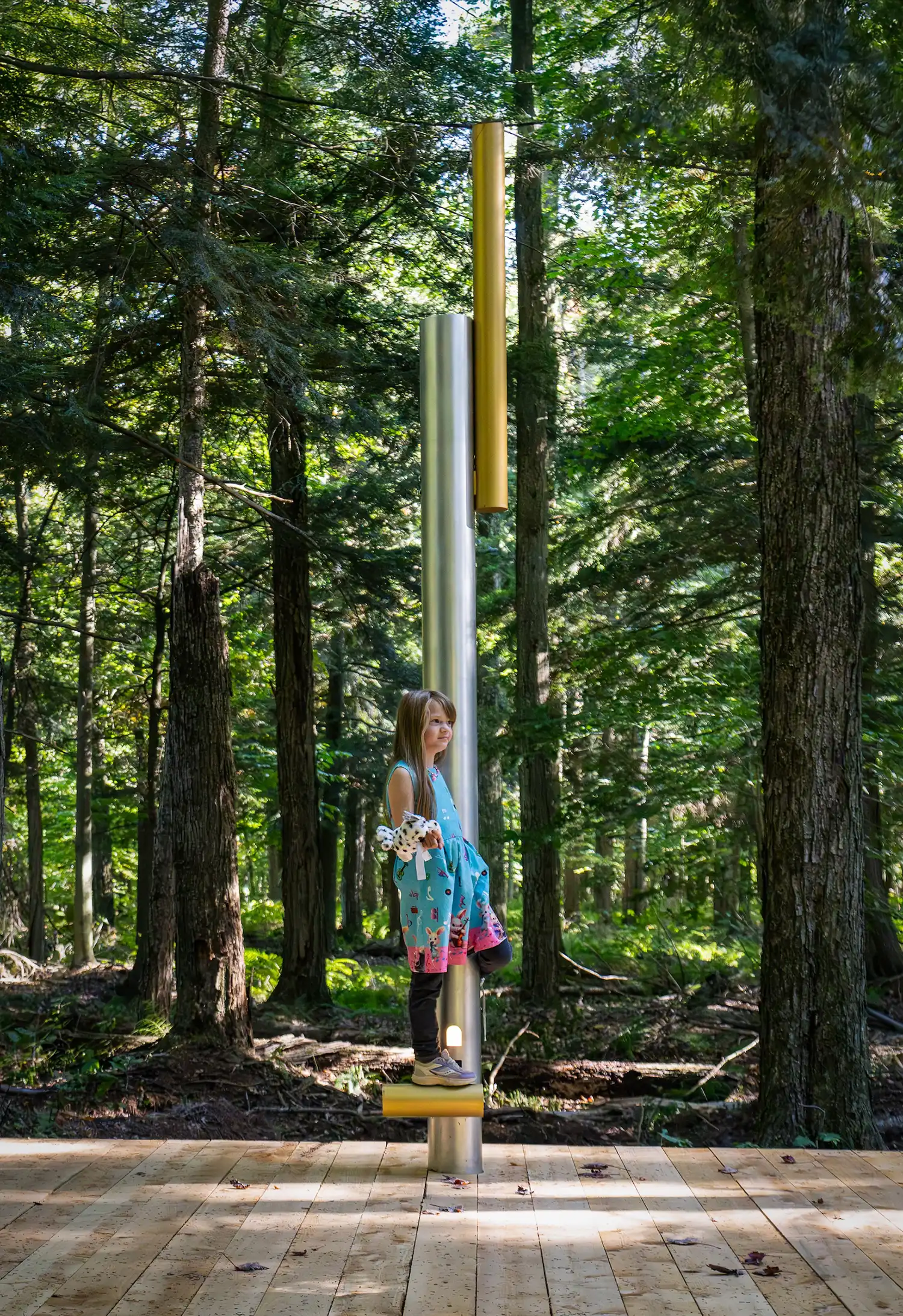
Designing for a sensory and attentive experience, the studio leverages “strange moments” to foster deep listening. As participants move through the installation, their movements and voices mingle with the real-time calls of owls, finches, and woodpeckers. This “living symphony” encourages a slower, more deliberate pace, attuning the human senses to the subtle rhythms of the St-Jude forest. The use of aluminum for the perches provides a minimalist, durable aesthetic that contrasts with the organic textures of the red cedar and spruce, highlighting the intentionality of the human presence within the wild.
Contextual impact and ecological resonance are at the heart of the studio’s broader research into how sound vibrations can stimulate growth and communication within ecosystems. This philosophy is equally present in their concurrent project, the Forest Mixer on Hornby Island, where spoken messages are “composted” into harmonies that vibrate through the soil. By treating public art as “infrastructure for the human spirit,” Daily tous les jours seeks to mend the fractured relationship between modern society and the natural world, proposing that true urban resilience requires designing for all forms of life.
By moving away from human-centric design toward a model of reciprocity, Human Perches serves as a poetic reminder of our place within a larger ecosystem. The installation does not merely celebrate nature; it creates a structured environment where the boundaries between observer and observed begin to blur. Through these subtle, interactive rituals, the studio continues to redefine the 21st-century public space as a site for both social and ecological healing.