

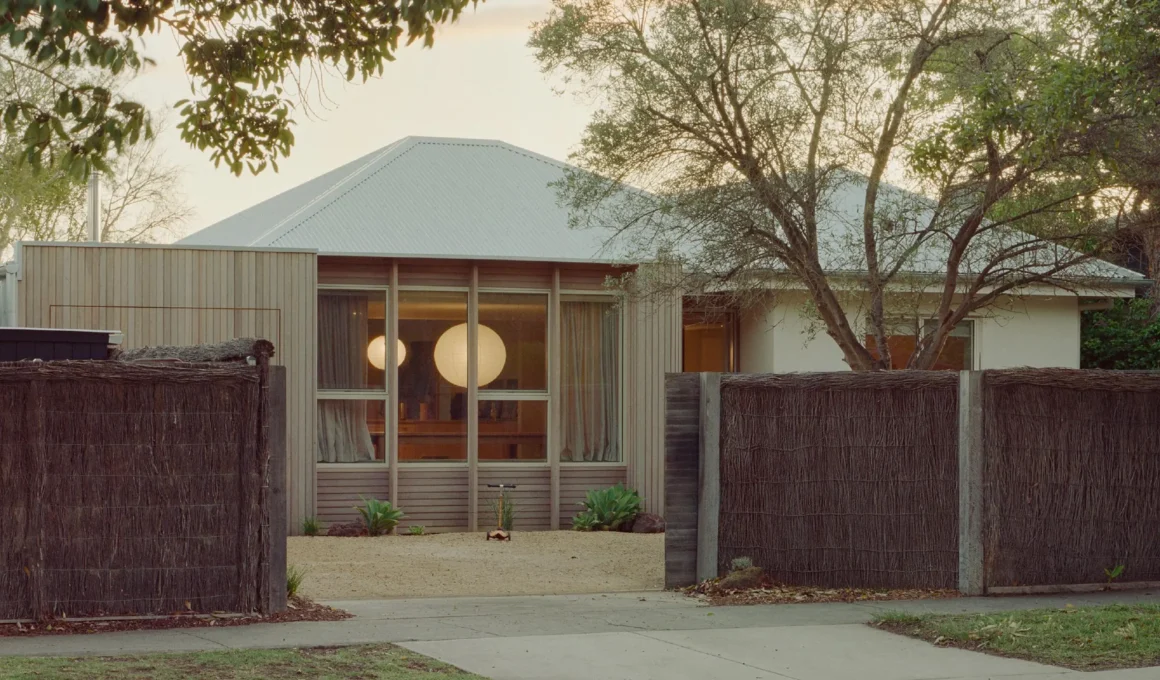
JAK Architecture has reimagined a disjointed family residence in Barwon Heads, Australia, through a restrained renovation that prioritizes structural honesty and a seamless connection to its coastal context.
A philosophy of architectural preservation guided the initial stages of the project. Rather than succumbing to the temptation of a complete teardown—a common trend in evolving coastal suburbs—the studio chose to work within the existing footprint. The original dwelling had suffered from years of unsympathetic additions that left the layout feeling fractured and the construction quality compromised. By stripping back these layers, the team identified the core elements worth saving, establishing a foundation that respects the history of the site while preparing it for a new chapter of family life.
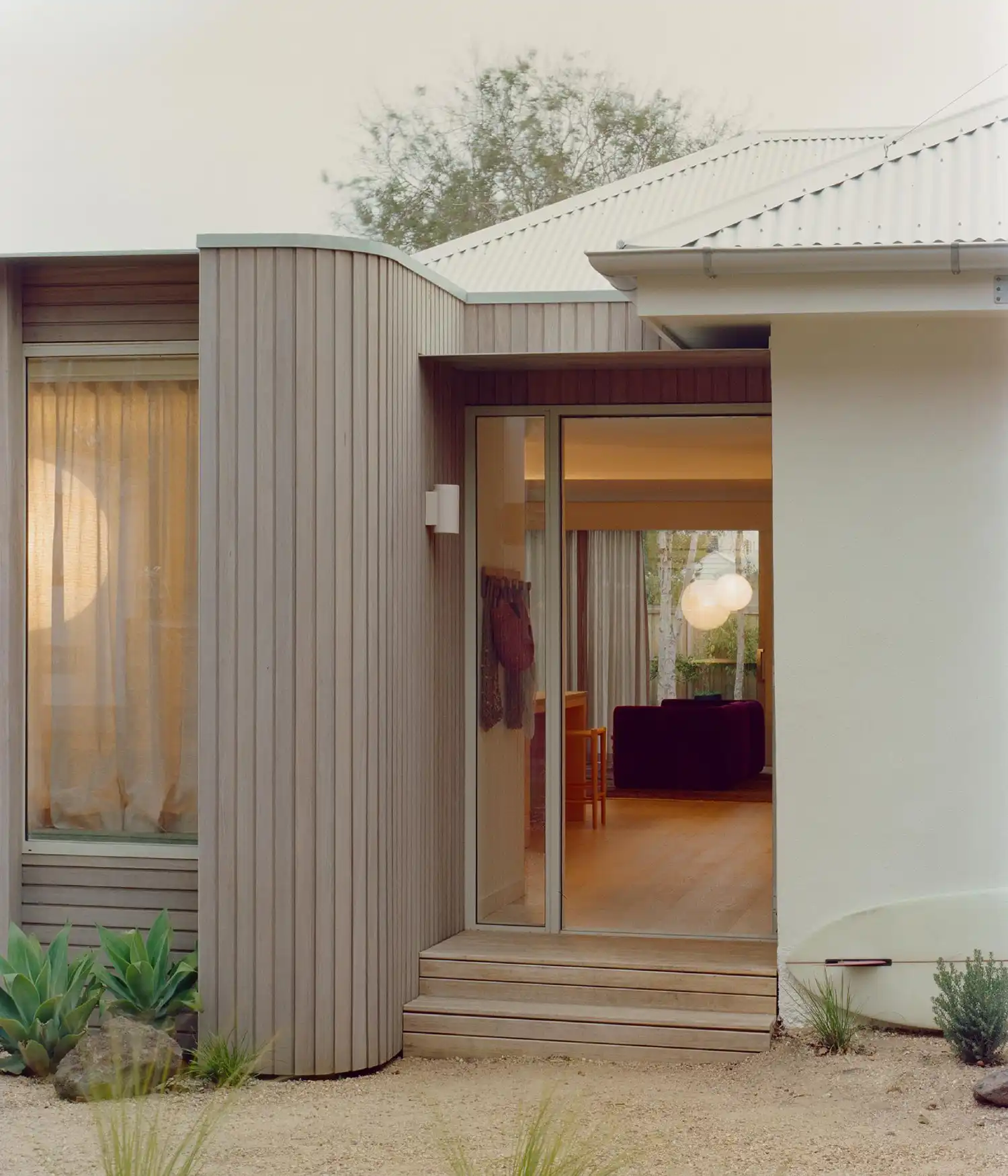
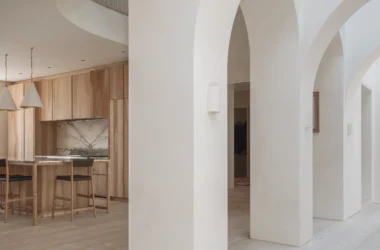
The intentionality of the layout focuses on stitching the home back together. With a modest budget and a condensed construction timeline, the intervention sits quietly beneath the original envelope. This approach avoids the visual noise of a massive extension, opting instead for a humble integration that feels inevitable rather than forced. The spatial flow was recalibrated to eliminate the previous sense of disconnection, ensuring that every square foot serves a functional purpose for a young, growing family without inflating the building’s scale.
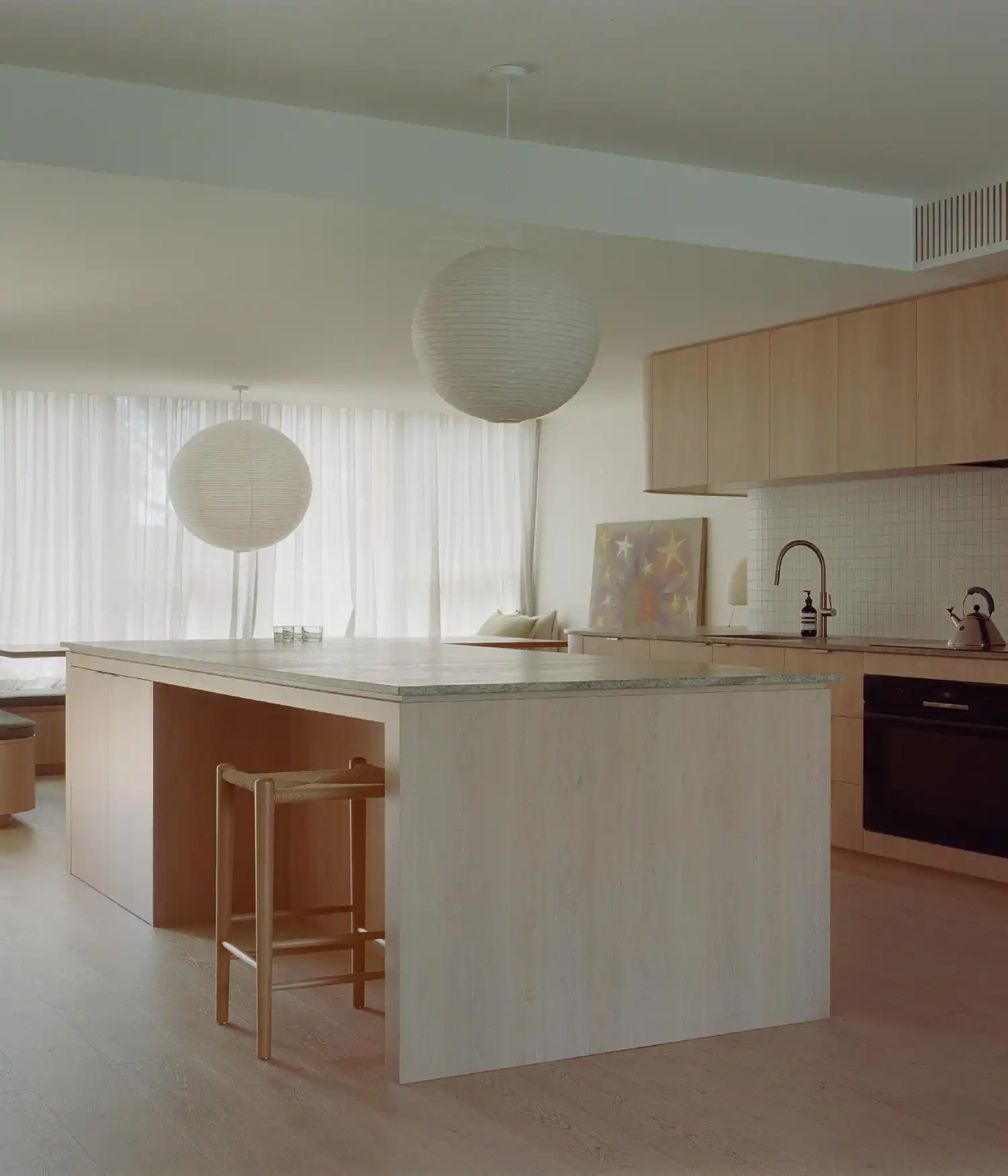
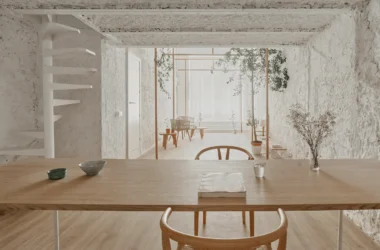
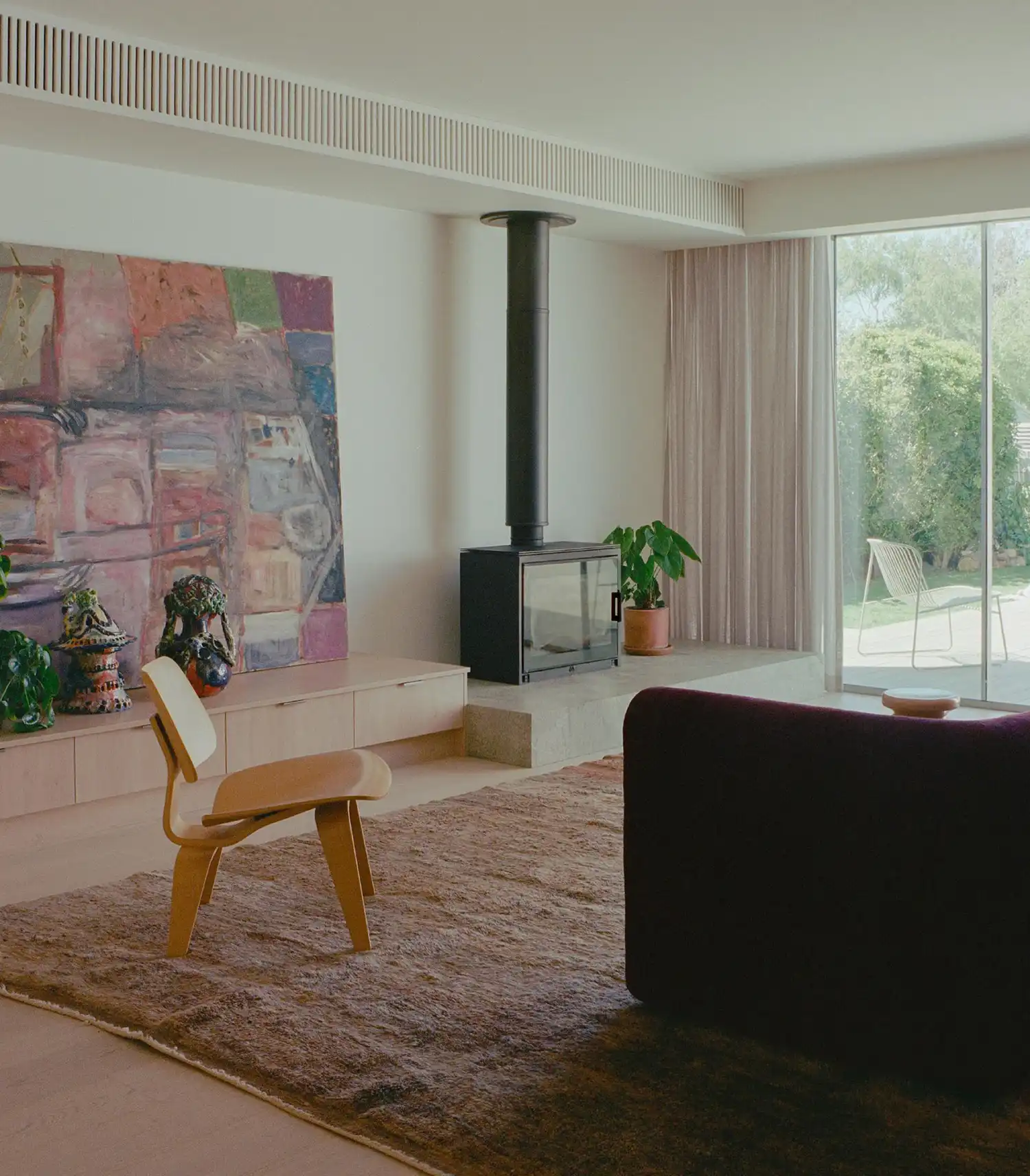
A sensory experience defined by materiality anchors the interior atmosphere. The palette is deliberately understated, utilizing raw and durable materials that invite the touch and provide a neutral backdrop for the family’s personal collection of art and books. There is a tactile quality to the surfaces; the choice of finishes suggests a home that is meant to be lived in, not just looked at. By avoiding fleeting trends, the studio has created a robust environment capable of absorbing the energetic pace of daily life while maintaining a sense of visual clarity.
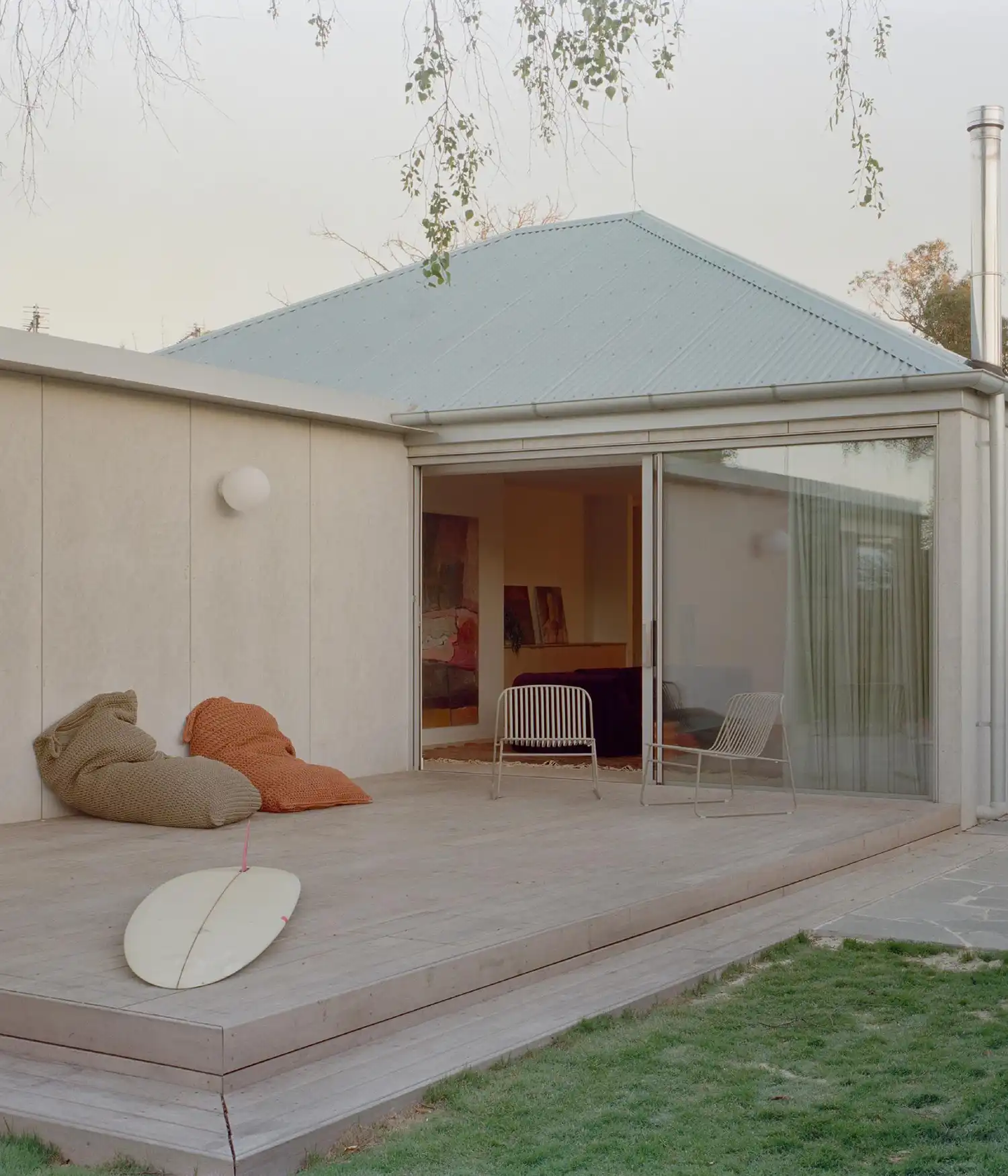
The blurring of interior and exterior boundaries is most evident in the rear sunroom. This specific volume serves as a transitional zone, opening seamlessly toward a cluster of existing birch trees. In the early hours, the space captures a gentle morning light that transforms the room into an immersive extension of the garden. The fluid connection ensures that the rhythms of the seasons are felt deeply within the home, allowing the family to engage with the natural environment regardless of the weather.
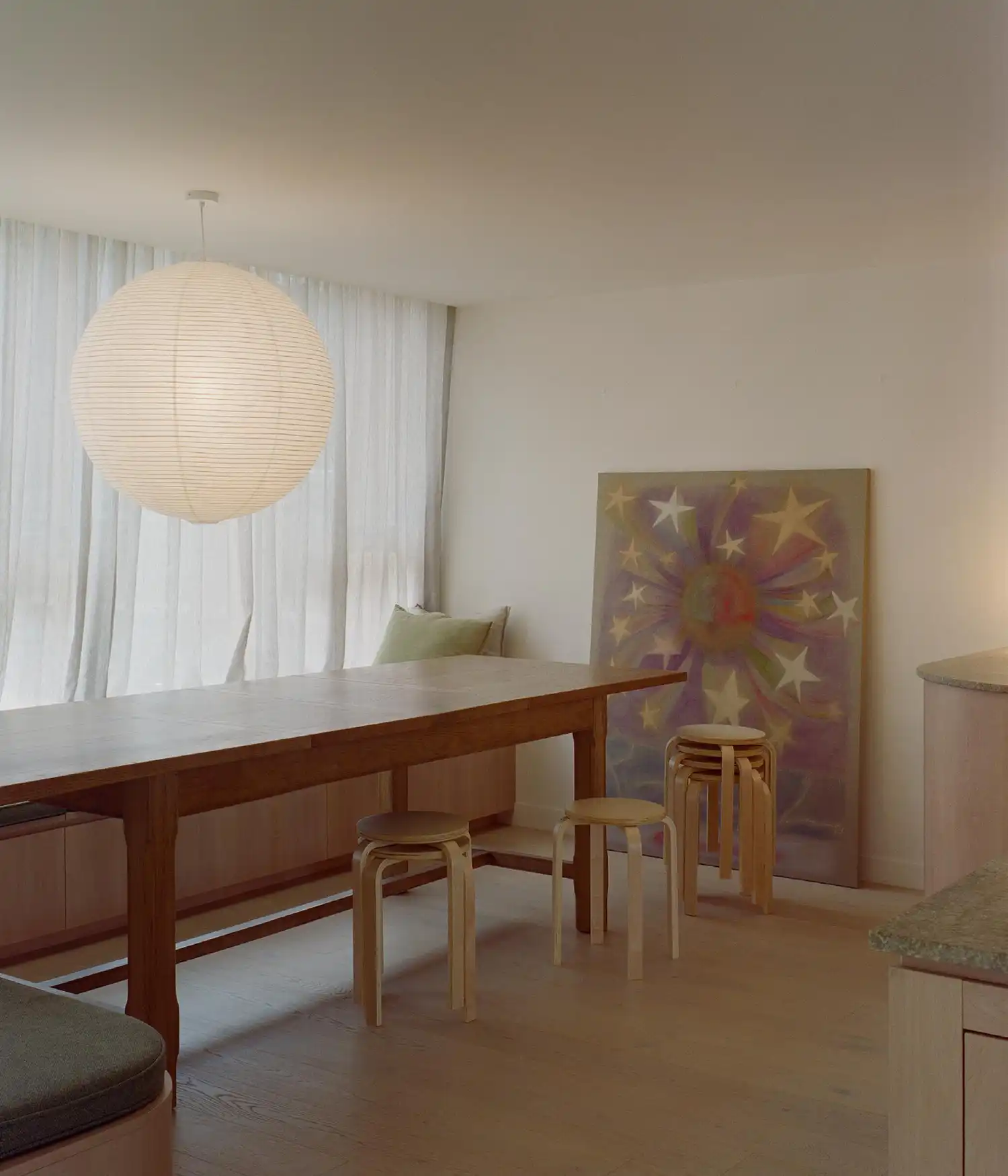
Coastal landscapes and functional simplicity define the outdoor experience. The front yard features a selection of low-maintenance native plants that help anchor the structure into the Barwon Heads terrain. In contrast, the backyard remains a pragmatic playground of grass and sand—a durable landscape designed for the free movement of children and effortless entertaining. This rejection of over-manicured gardening reinforces the project’s focus on ease of use and long-term sustainability, matching the unpretentious character of the coastal township.
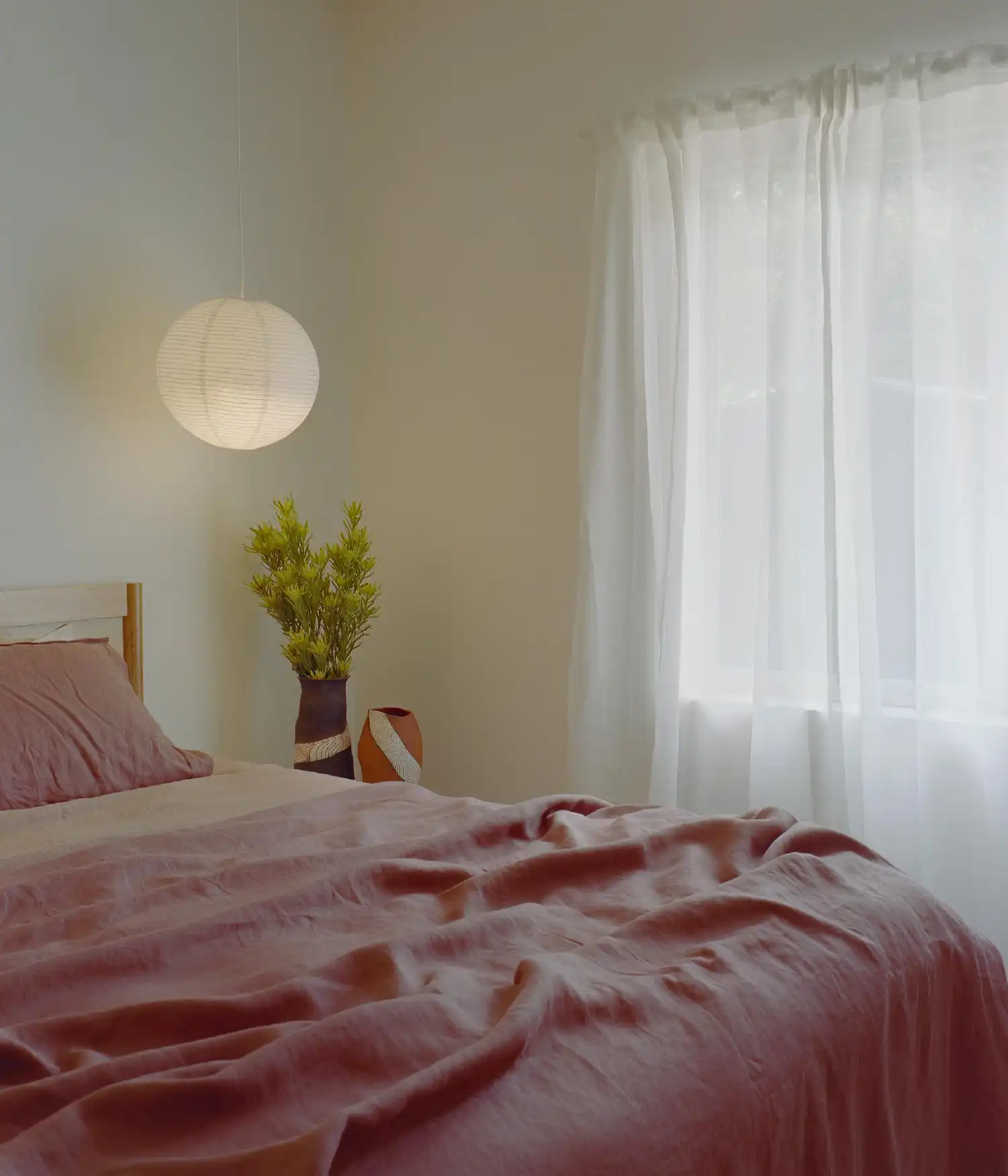
Designing for the future requires a high degree of spatial flexibility. As the children grow, the house is equipped to adapt to shifting needs, with rooms that can easily transition from play areas to quiet study zones. This foresight ensures that the renovation remains relevant as the family’s internal dynamics evolve. The project proves that high-quality living is not always a product of square footage, but rather of thoughtful planning and a deep understanding of how a family interacts with their immediate environment over time.
An enduring legacy of restraint marks the successful completion of this project, demonstrating that the most impactful interventions are often those that value quality over quantity. By focusing on a “less is more” ethos, the studio has delivered a home that feels as though it has always belonged to its site. This project stands as a compelling example of how a thoughtful Australia house can be revitalized through careful detailing and a respect for the original form, creating a residence built to house many chapters of life yet to come.