

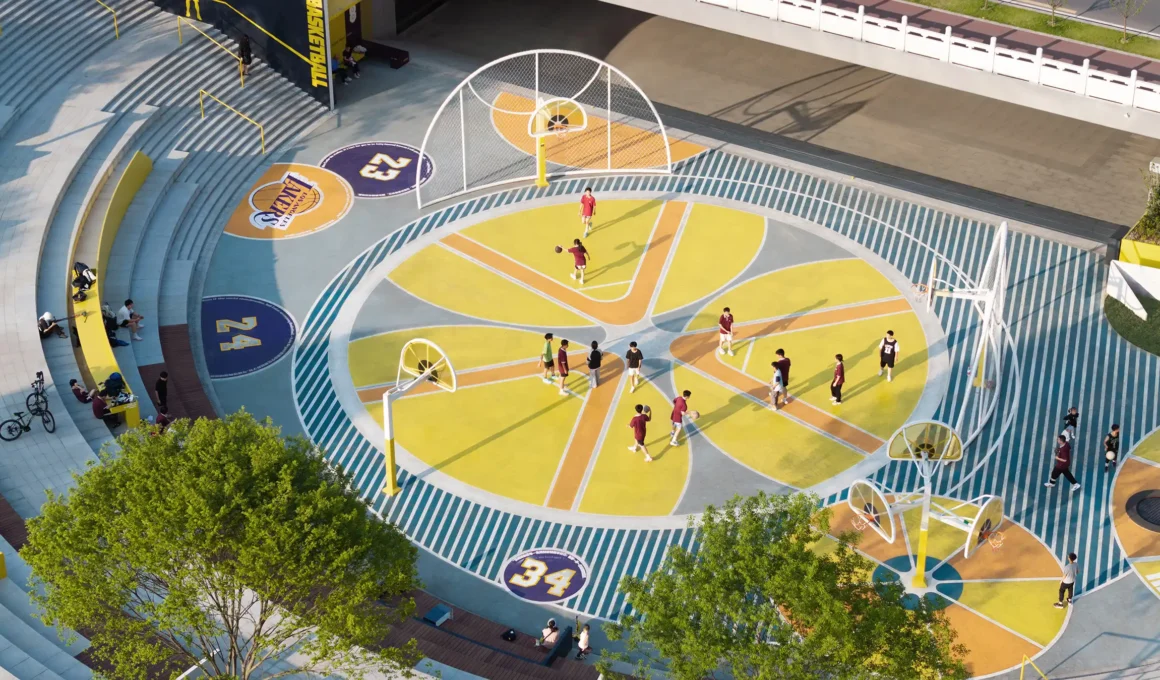
In the bustling heart of Yichang, China, along the vigorous stretch of Development Avenue, an unexpected transformation has injected vibrant life into a forgotten urban void. HID Landscape Architecture‘s ingenious revitalization project, JU•Basketball Park, has turned a neglected underpass space – once a rarely used circular grandstand – into a dynamic, multi-generational urban playground, proving that creative landscape architecture can overcome significant constraints to foster community engagement.
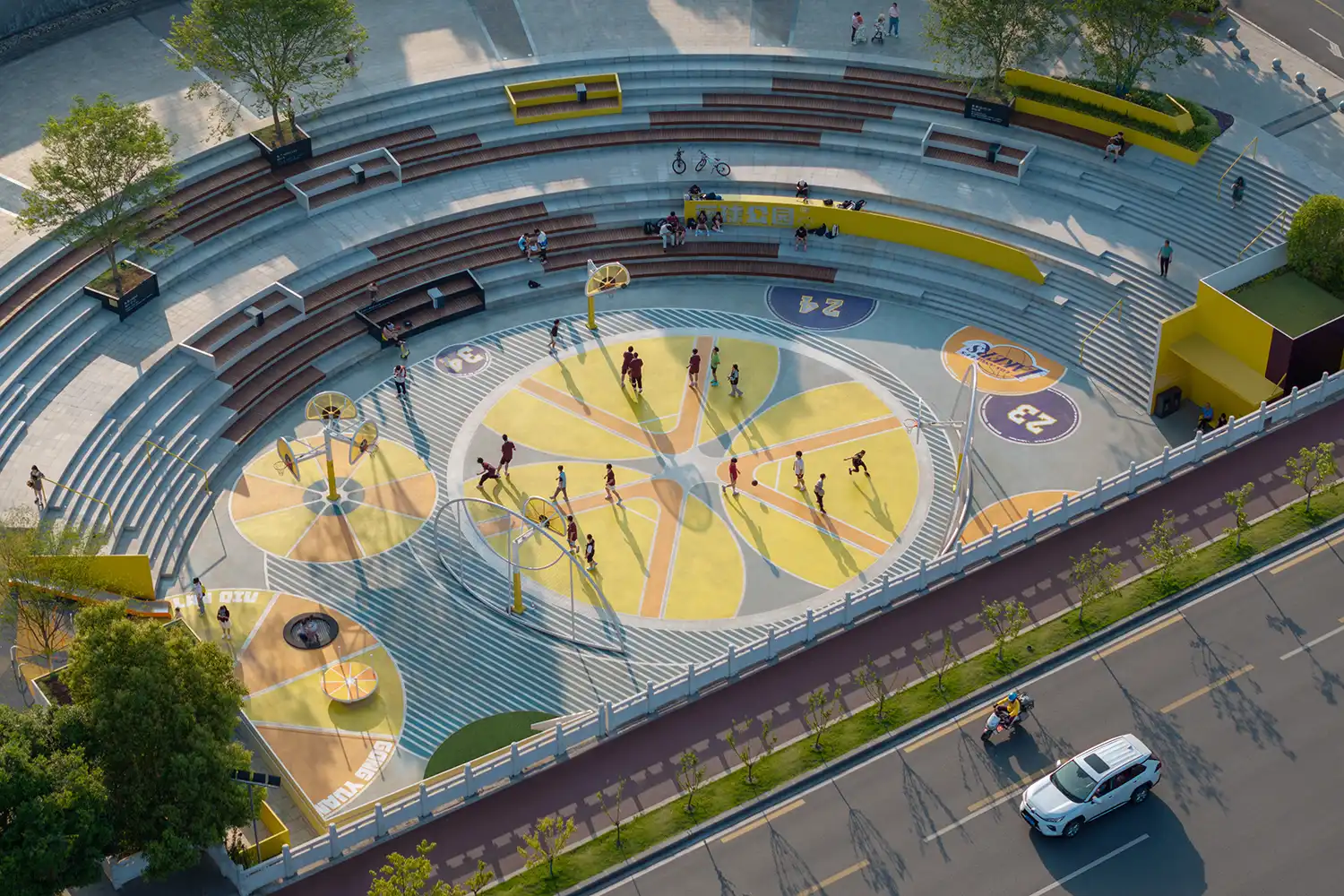
The site presented inherent challenges. Dominated by a solid lithosphere, excavation was impossible. Green space additions were restricted to an existing flower bed. The eastern tunnel connecting to Wanda Plaza felt dark and unwelcoming. Most critically, the original 12-step grandstand lacked accessibility, its steep incline deterring public use. This underutilized urban space was ripe for reinvention.
HID Landscape Architecture responded with a concept both playful and profoundly functional. Inspired by Yichang’s status as the “land of mandarins,” the designers imagined “a colorful mandarin and other colored fruit ‘falling’ into the field.” This whimsical narrative translated into a vibrant citrus-inspired palette splashed across the hardscape. The fallen fruit’s colors and textures became the very functional lines of the basketball court, dividing the sunken plaza into three standard half-court basketball spaces and a dedicated funny basket court for playful shooting.
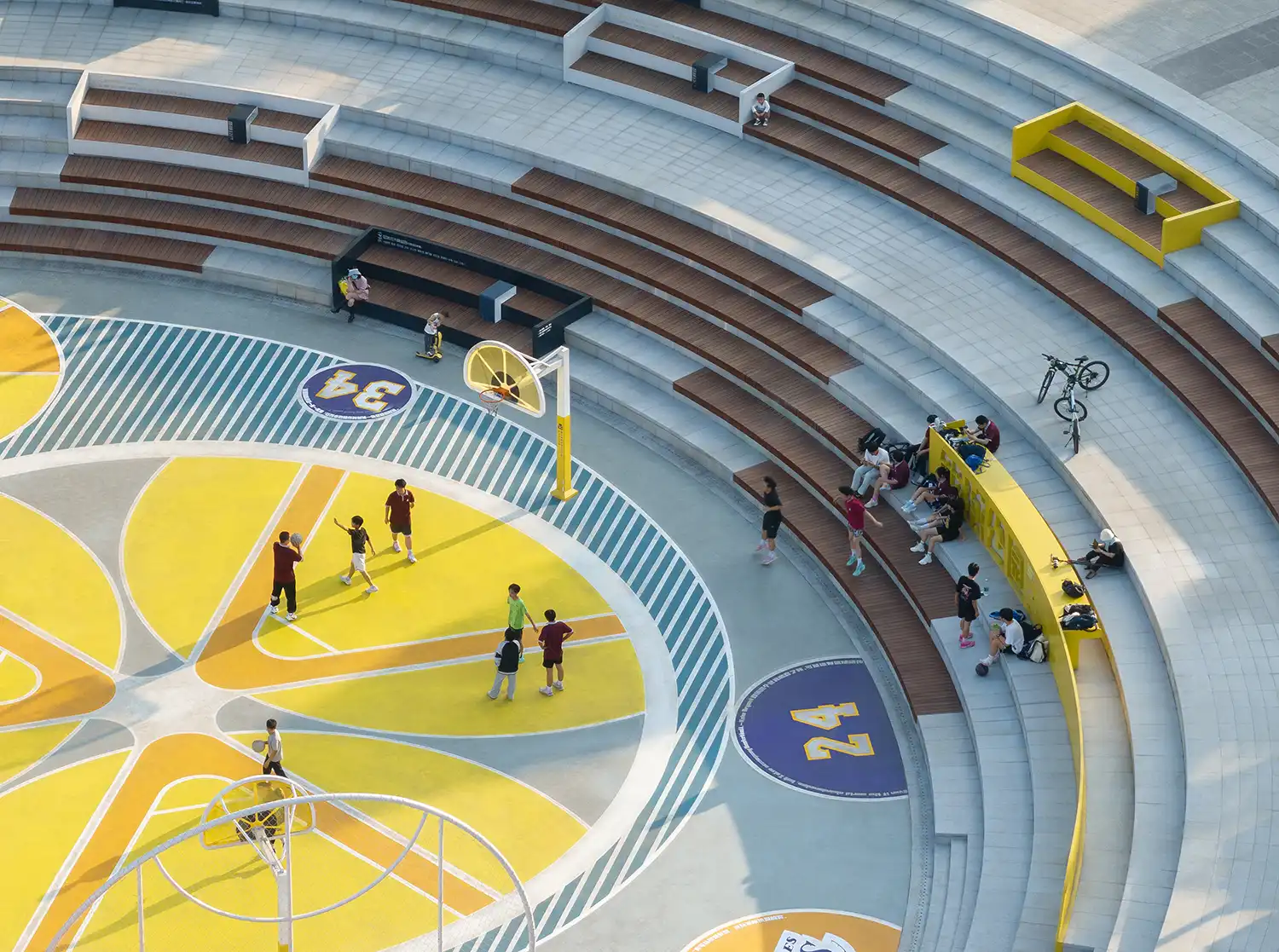
The problematic 12-step structure was not demolished but brilliantly reimagined. HID Landscape Architecture transformed it into a multi-functional stand, integrating a myriad of uses: traditional court seating, booths for vendors, a vital disabled access ramp, a playful slope for children, faster-access steps, integrated step booths, and service counters. This single intervention solved the accessibility issue while layering in social infrastructure and inclusive design.
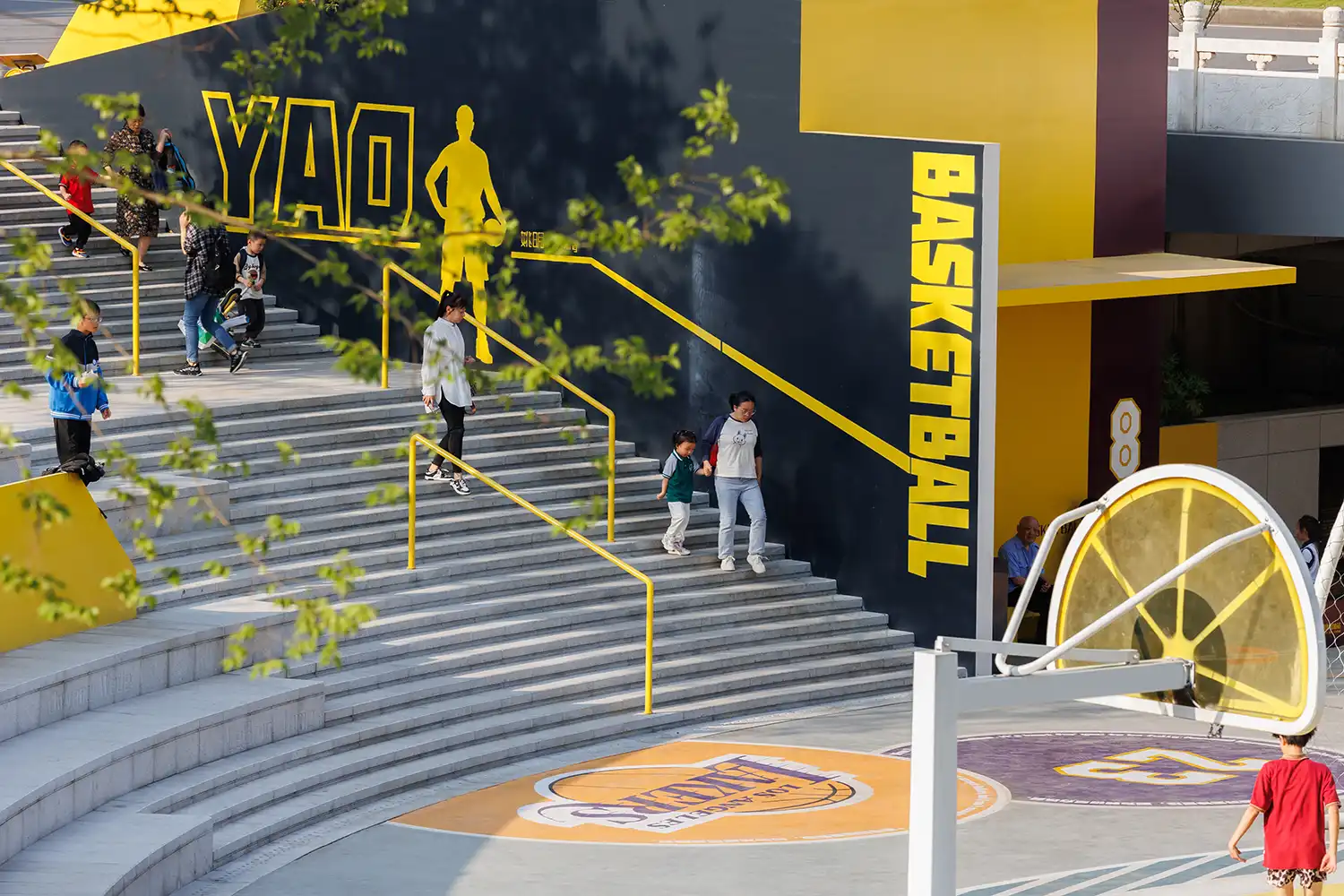
Recognizing the potential of the connecting tunnel, the design seamlessly integrated the underpass passage into the experience. It was reborn as a colorful art business area, providing space for small retail, light meals, and essential rest areas, further enhancing the park’s appeal and utility as a destination.
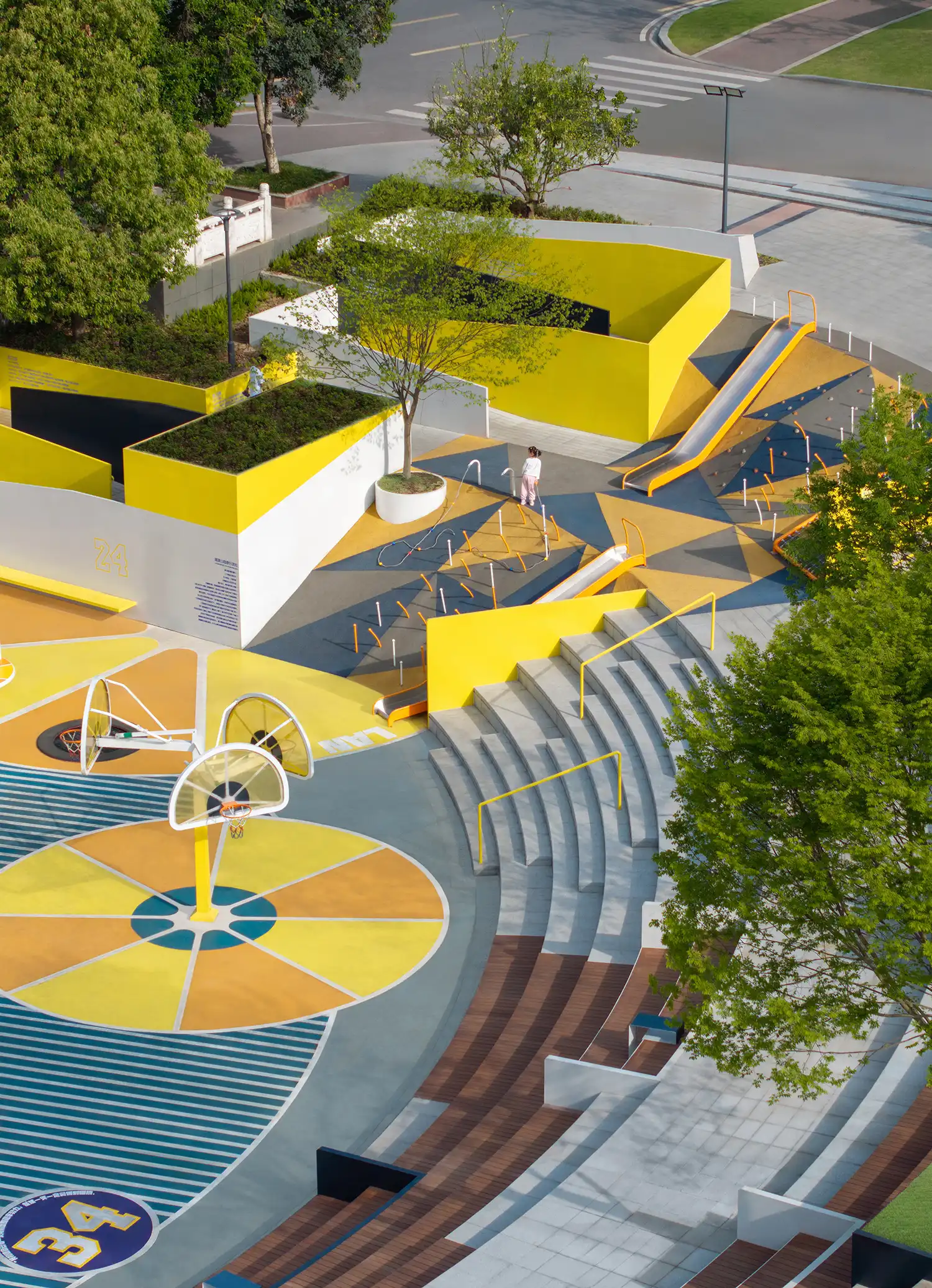
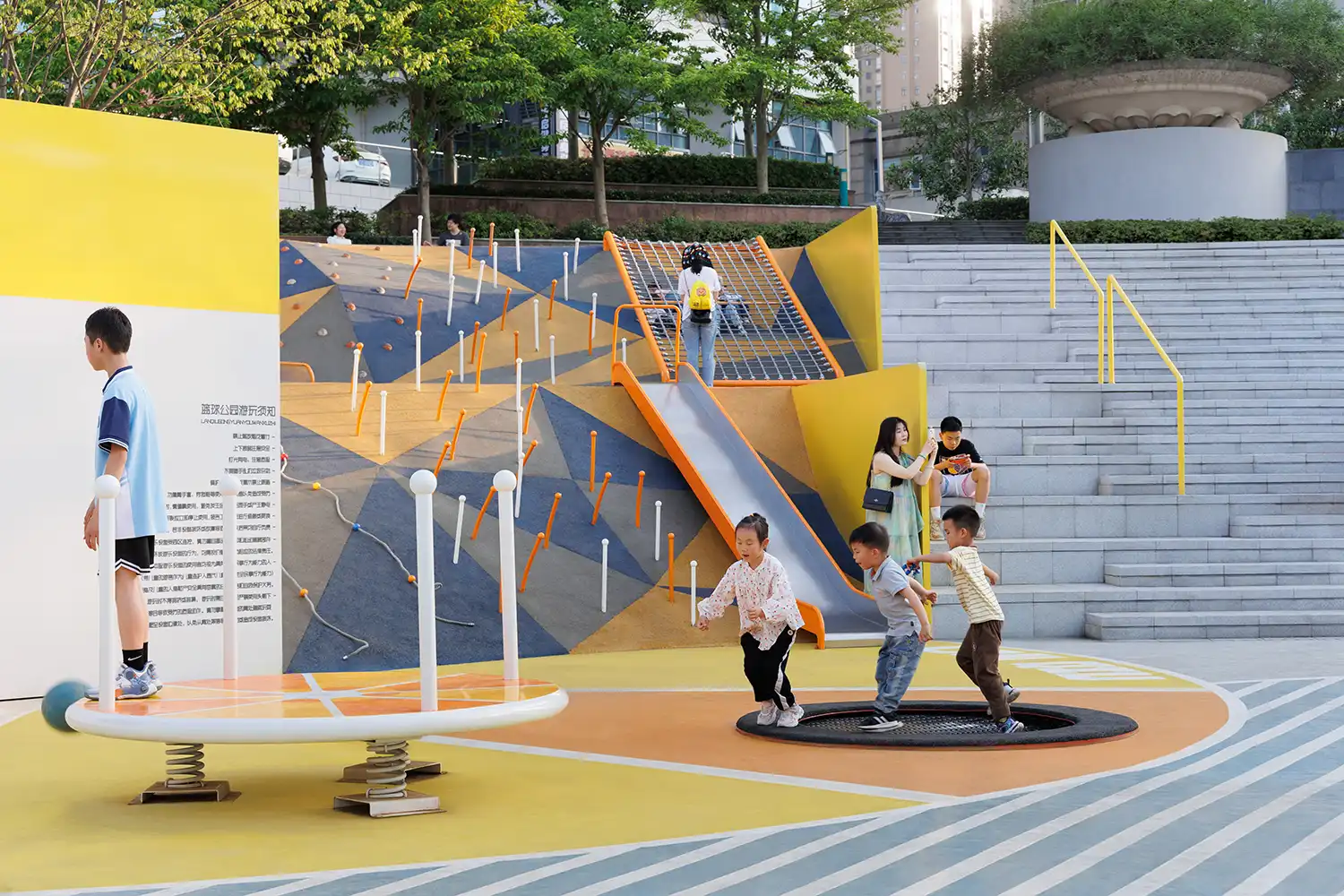
The result is a stunning example of urban revitalization through sporting infrastructure. JU•Basketball Park is no longer a desolate underpass; it’s a diverse and inclusive space pulsating with energy. Street basketball games drive the atmosphere, complemented by fun shooting activities and dedicated zones for children playing. It stands as a bold testament to how creative placemaking, rooted in local identity (the mandarin motif) and driven by a commitment to public space design for all ages and abilities, can resurrect underutilized urban space into a vital community hub. This project sets a compelling precedent for sustainable urban design that prioritizes joy, accessibility, and community engagement in the heart of the city.