




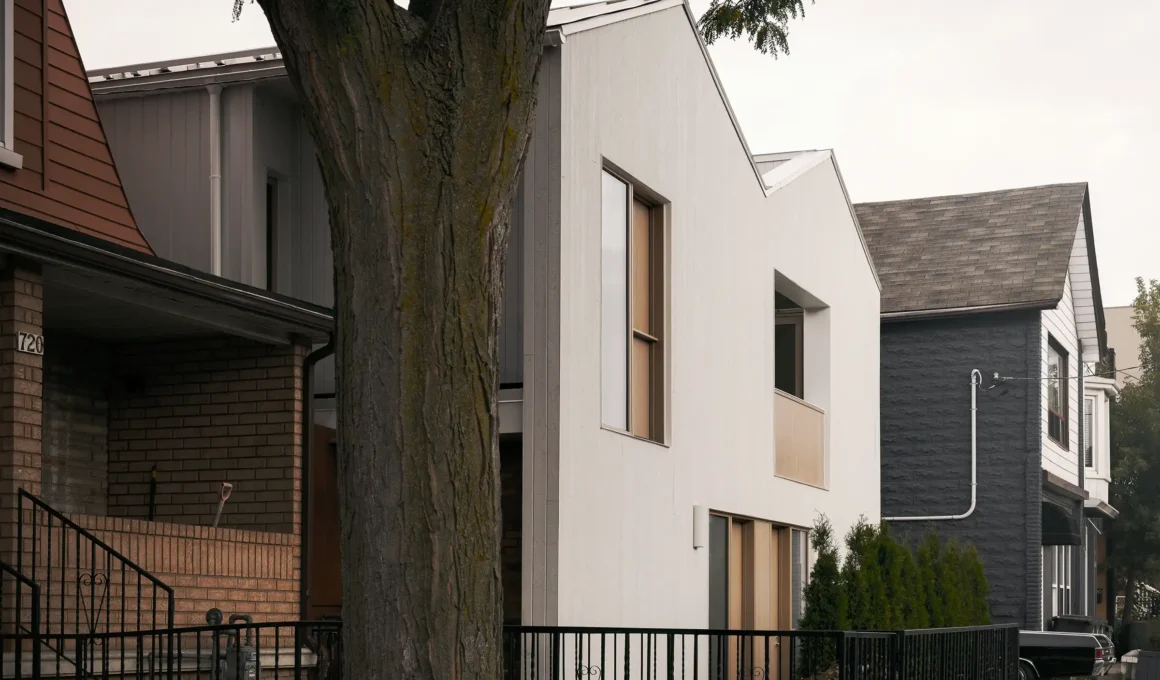
In Toronto’s vibrant west end, a deconsecrated church has undergone a remarkable metamorphosis, emerging as the serene and innovative Junction Semi House. Spearheaded by local architecture practice StudioAC, this ambitious project transforms a once-communal spiritual space into a sophisticated multi-generational home for an extended family, masterfully balancing privacy with connection while celebrating the building’s rich heritage.

The original structure, a church that had served various denominations over its lifetime, spanned the full depth of its site—a unique challenge and opportunity. StudioAC saw potential in its robust form, strategically carving out space to invite natural light deep into the interior. Set slightly below street level, the home offers a retreat-like ambiance and inherent privacy. The solution ingeniously divides the plan north-south into two equal units, accommodating the growing family and their parents, while fostering interaction through thoughtfully shared zones: a unified entry, garage, bedroom terraces, and a standout rooftop urban farm.

The undeniable organizational and spiritual heart of the transformed dwelling is its central courtyard. By carefully removing sections of the original church structure, StudioAC pulled daylight into the building’s core. This intervention not only illuminates but also respectfully showcases the existing structural skeleton. The architects prioritized adaptive reuse, retaining and celebrating the original brickwork and dramatic exposed wood beams alongside the church’s sturdy steel frame, minimizing waste and honoring the past. On the ground floor, a previously monolithic layout was sensitively reconfigured. StudioAC introduced precise openings, creating distinct living areas while maximizing the penetration of natural light.

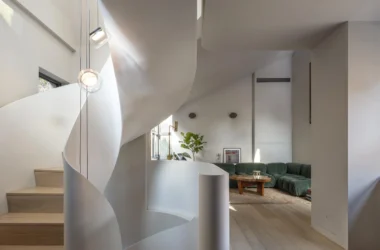
Moving upwards, the second floor employs an additive strategy. Carefully positioned volumes establish private bedroom sanctuaries that seamlessly open onto terraces and communal areas, culminating in the productive rooftop urban farm. A breathtaking double-height atrium, anchored near the entry, serves as a luminous vertical connector between levels. Flooded with light from a generous skylight above and a large street-facing window, this space embodies the project’s focus on luminosity and openness. Adjacent to the atrium, a graceful Japanese maple thrives within the courtyard, forming a living, seasonal privacy screen between the street and the primary bathroom.

Materiality throughout the Junction Semi House is deliberately restrained yet rich in texture, reinforcing the dialogue between old and new and enhancing the ever-changing play of light and shadow. A palette of limewash paint, smooth microcement, the warmth of exposed wood beams, and the tactile presence of original brickwork creates a neutral, timeless canvas. This approach ensures the building’s layered history remains palpable while providing a serene backdrop for contemporary family life.

StudioAC’s church conversion in Toronto stands as a powerful testament to thoughtful adaptive reuse. The Junction Semi House transcends mere functionality, creating a luminous, connected, and deeply respectful family home where history is not erased but elegantly interwoven with modern living. It demonstrates how spatial ingenuity and a reverence for existing structures can yield spaces that are both profoundly personal and inspiringly communal.