

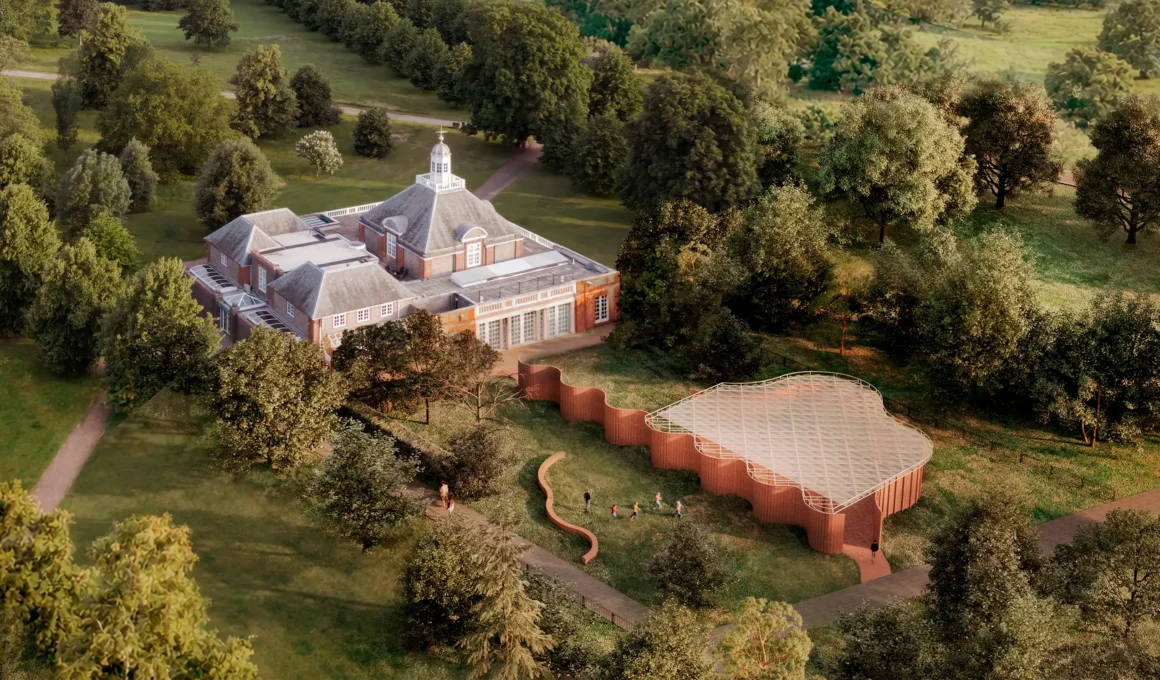
In a landmark announcement marking a quarter-century of architectural experimentation, Serpentine has selected Mexico City-based studio LANZA atelier to design the 25th Serpentine Pavilion. Founded in 2015 by Isabel Abascal and Alessandro Arienzo, the practice is known for a philosophy that treats beauty as a tool against inequality—a perspective that will now find form in London’s Kensington Gardens. Titled ‘a serpentine’, the 2026 commission draws a poetic and structural parallel between the winding forms of the historic English “crinkle-crankle” wall and the studio’s own interest in vernacular masonry, creating a bridge between European heritage and Latin American material sensitivity.
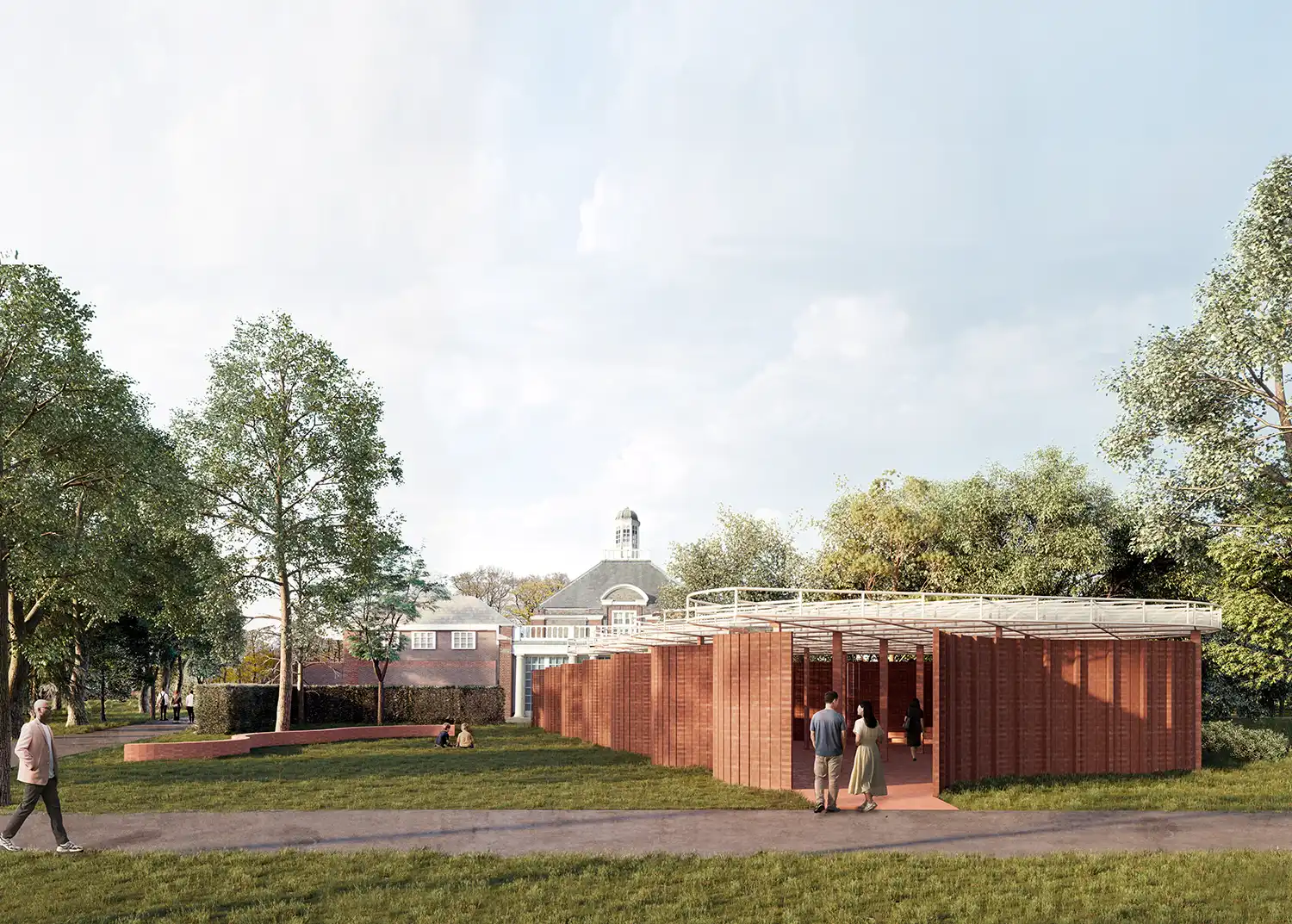
The conceptual vision for the pavilion is rooted in the “serpentine” wall—a geometry traditionally used in the UK to provide stability to thin, single-layer brick structures while tempering the microclimate for fruit trees. Abascal and Arienzo have reimagined this heritage as a generative force that both “reveals and withholds,” shaping a rhythmic path through the park. This year’s structure follows the success of the 2025 Serpentine Pavilion by Marina Tabassum, which explored the ephemerality of the Bengali landscape, and the 2024 Archipelagic Void by Minsuk Cho, continuing a lineage of pavilions that act as cultural thermometers for global architectural discourse.
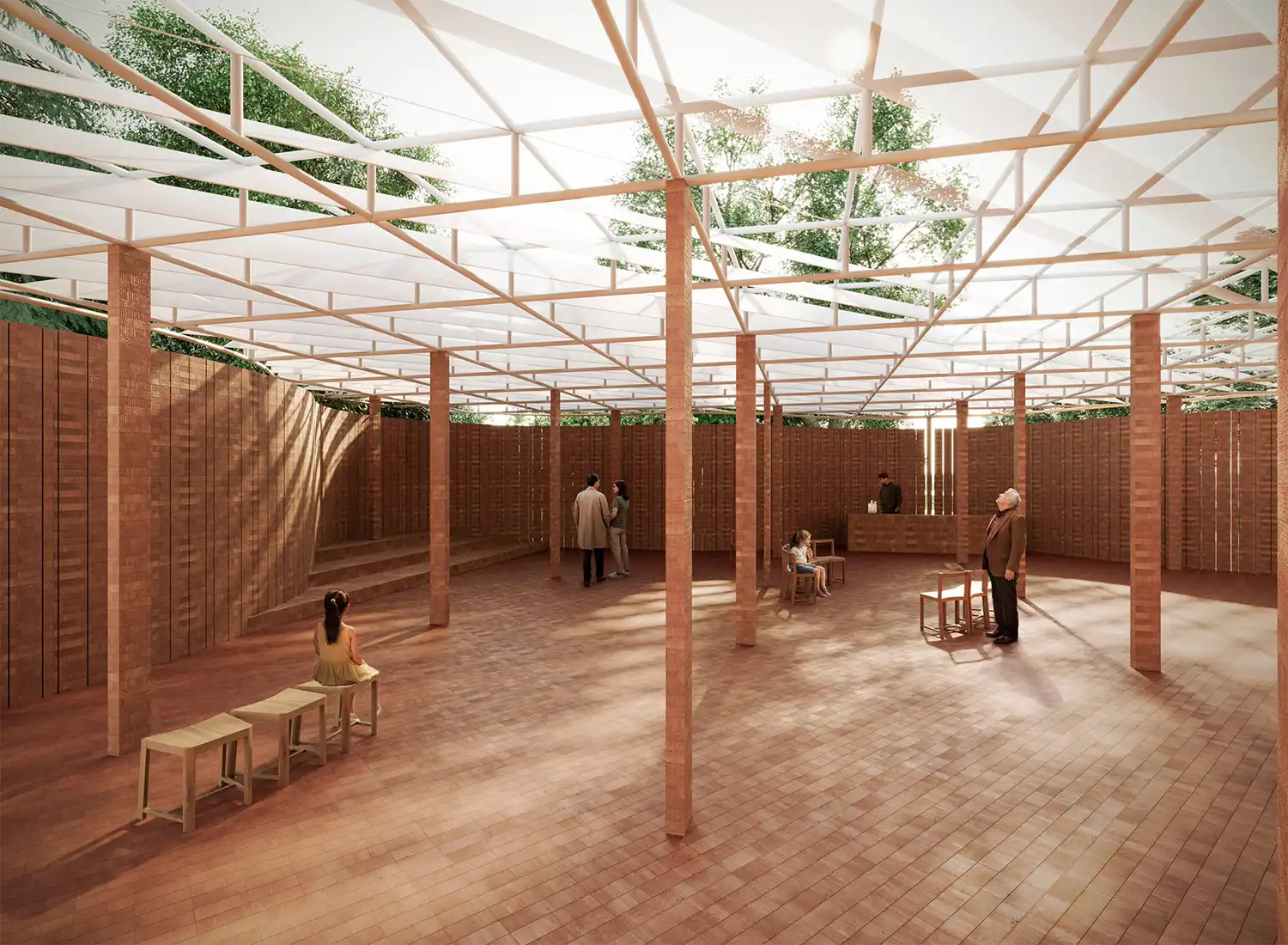
Technical details and materiality play a central role in LANZA atelier’s proposal, which centers on the elemental capacity of the clay brick. The structure is defined by two primary walls: one following the sinuous, “crinkle-crankle” logic and the other aligning with the existing tree canopy of the South Gallery. These walls are composed of rhythmic brick columns that shift from opaque to permeable, allowing the building to breathe. Above, a translucent roof rests lightly on the masonry, evoking the dappled light of a forest grove. This choice of material is a deliberate nod to the brick facade of the Serpentine South building—originally a 1930s tea pavilion—effectively anchoring the new intervention within the site’s historical DNA.
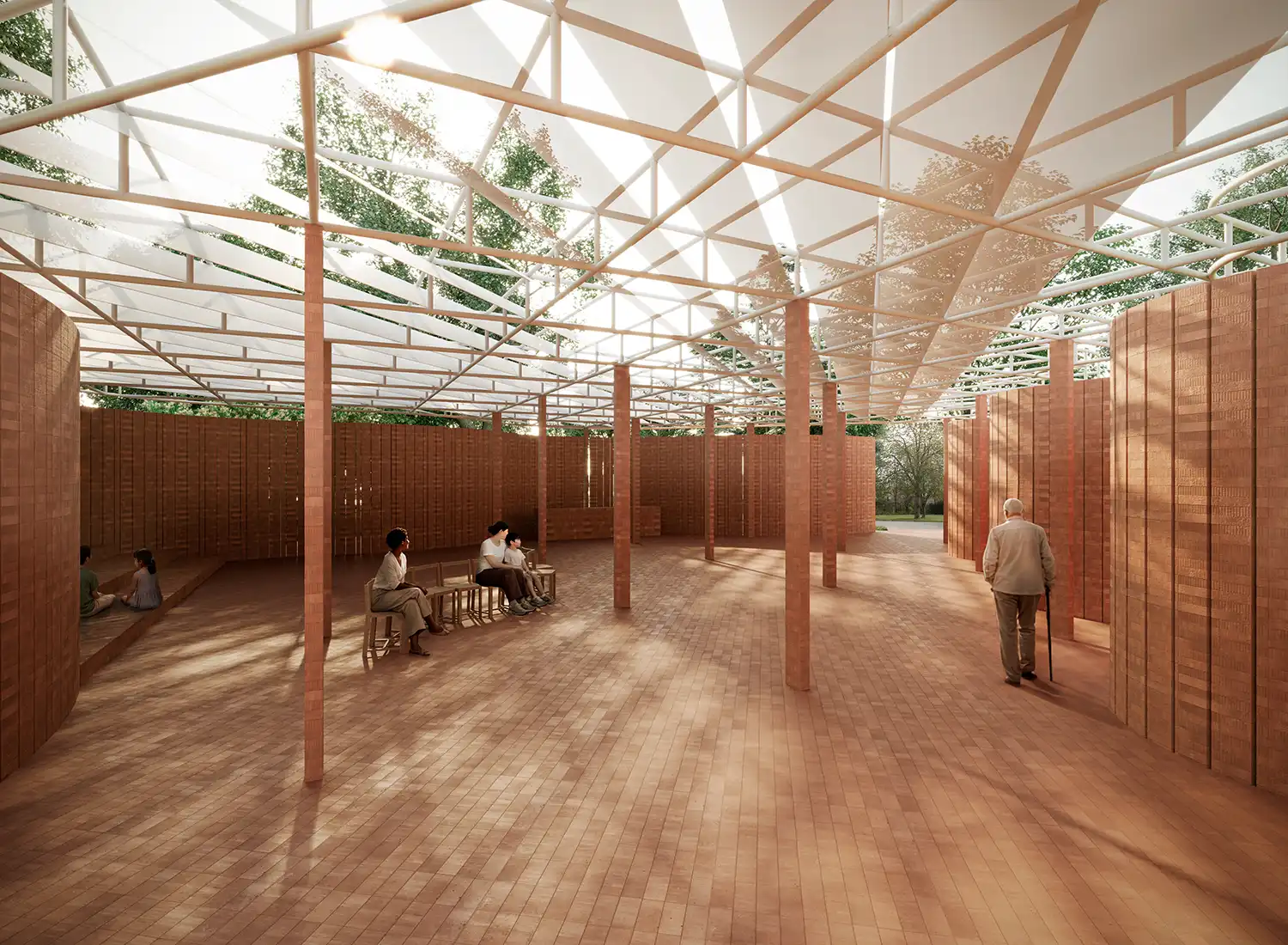
The sensory experience of ‘a serpentine’ is designed as a meditative journey through thresholds of light and shadow. As visitors move along the undulating brickwork, the pavilion acts as a device for orientation and pause, offering a “slow” architectural encounter in the heart of the city. The play of light through the permeable brick columns creates a dynamic interior atmosphere that evolves with the sun’s position, reflecting LANZA atelier’s belief that “architecture deals with time and needs time.” It is a space designed not just to be looked at, but to be inhabited—a ruin in the making that celebrates the permanence of ideas over the transience of trends, weaving together local English craft with a contemporary Mexican architectural lens.

Contextual impact and legacy are particularly resonant this year, as the 2026 edition marks the 25th anniversary of the commission that began in 2000 with Zaha Hadid. To honor this milestone, the pavilion will host a dedicated program of talks in collaboration with the Zaha Hadid Foundation (ZHF). Opening to the public on June 6, 2026, and sponsored by Goldman Sachs, the project reinforces the United Kingdom’s capital as a global center for design innovation. By revisiting the most fundamental of building blocks—the brick—Abascal and Arienzo remind us that the most forward-thinking architecture often emerges from a deep, respectful conversation with the past, creating a sanctuary that is as structurally honest as it is conceptually profound.