

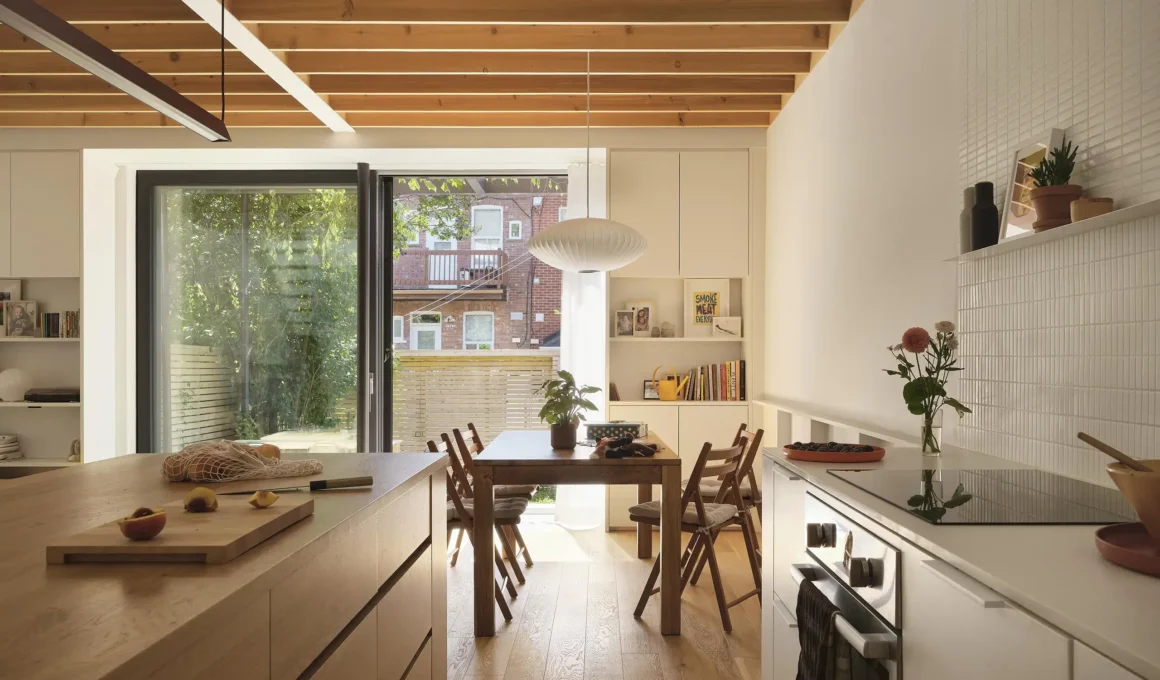
In the dense urban fabric of Montreal, Canada, the act of renovation is increasingly becoming a manifesto for architectural longevity. For architect Claudia Campeau, founder of the newly minted assemblage studio, the transformation of her own Villeray neighbourhood duplex into the Lilac House served as both a debut and a deep dive into the ethics of adaptive reuse. Rather than treating the 1924 structure as a relic to be gutted, Campeau approached the project with the patience of an ethnographer. Having lived within the constraints of the original narrow duplex for three years before picking up a pencil, she translated the daily rhythms of family life into a spatial strategy that prioritizes the “long game” over immediate aesthetic gratification.
A temporal approach to domesticity defines the project’s conceptual core. Campeau’s vision transcends the typical five-year residential plan, instead proposing a flexible framework that anticipates the shifting needs of growing children and evolving work habits. By designating rooms as fluid zones—capable of transitioning from home offices to guest quarters or workshops—the design addresses the environmental necessity of staying put. This philosophy mirrors a growing movement in Quebec’s architectural scene, where the “gentle density” of existing plots is reimagined to support multi-generational living without the carbon footprint of new construction.
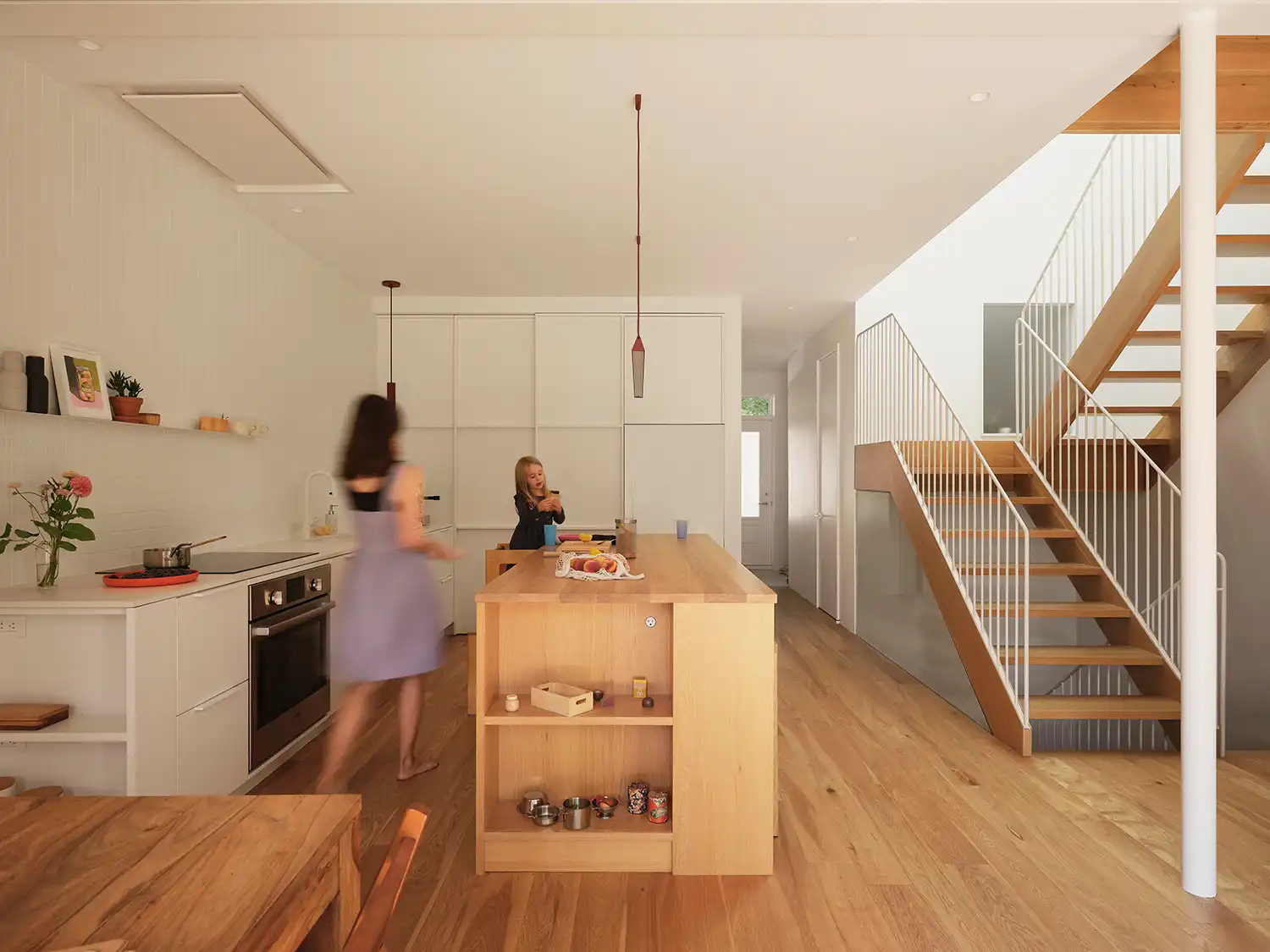
Navigating the structural constraints of a facade barely 21 feet wide required a surgical precision in the floor plan. The ground floor is orchestrated into three distinct volumes that maximize the perception of depth. Upon entry, a functional threshold houses a closed office and powder room, leading into a central, minimalist kitchen. Here, the sensory experience is defined by the warmth of white oak millwork and a central island that acts as the home’s social anchor. The rear of the house unfolds into a living area where the original cedar joists have been left exposed, creating a tactile connection to the building’s skeletal history while providing a sense of vertical rhythm that makes the narrow footprint feel expansive.
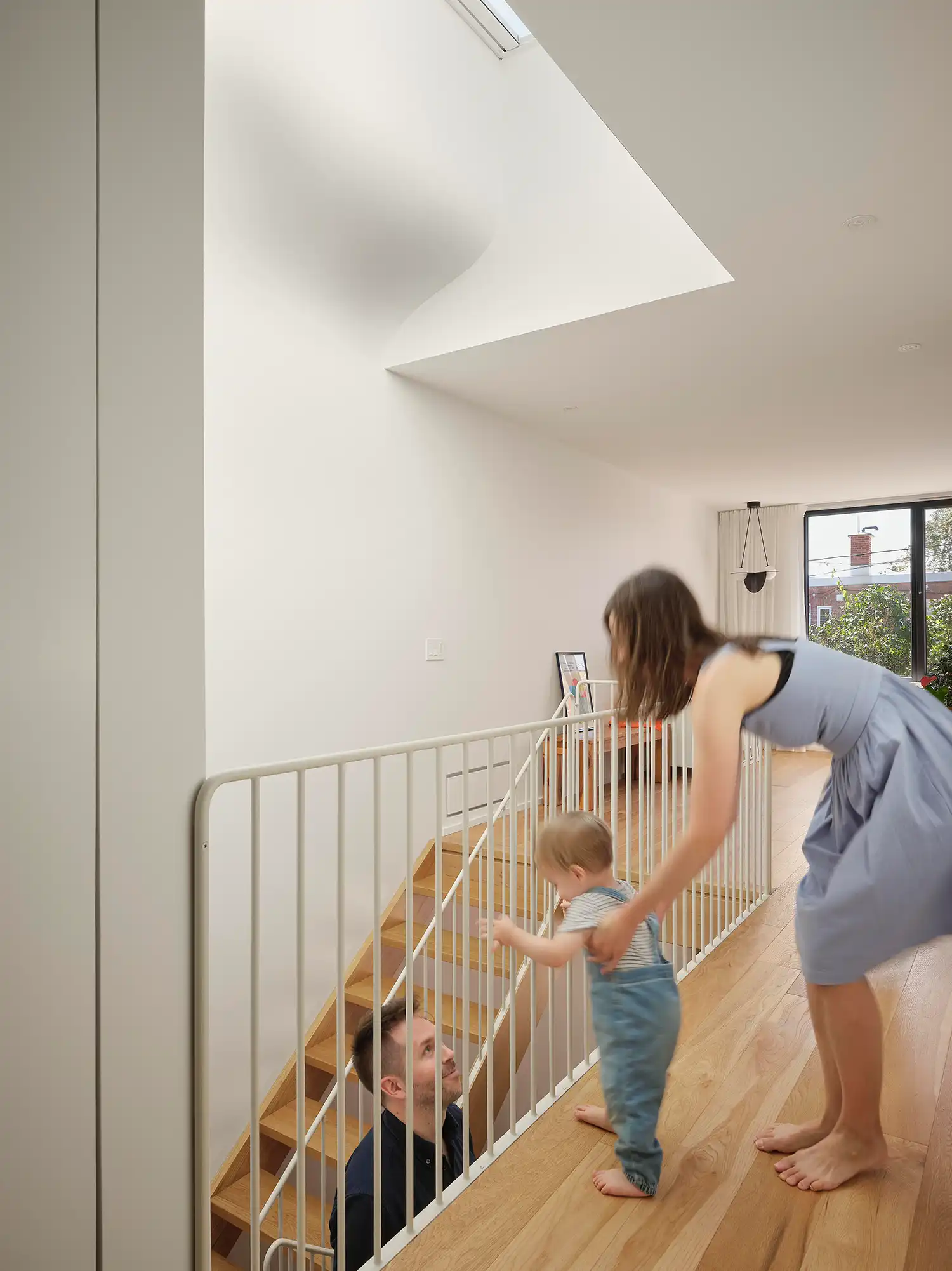
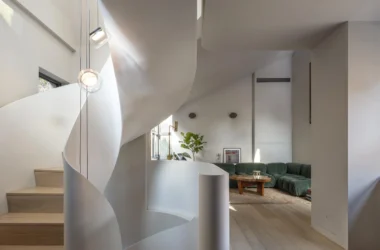
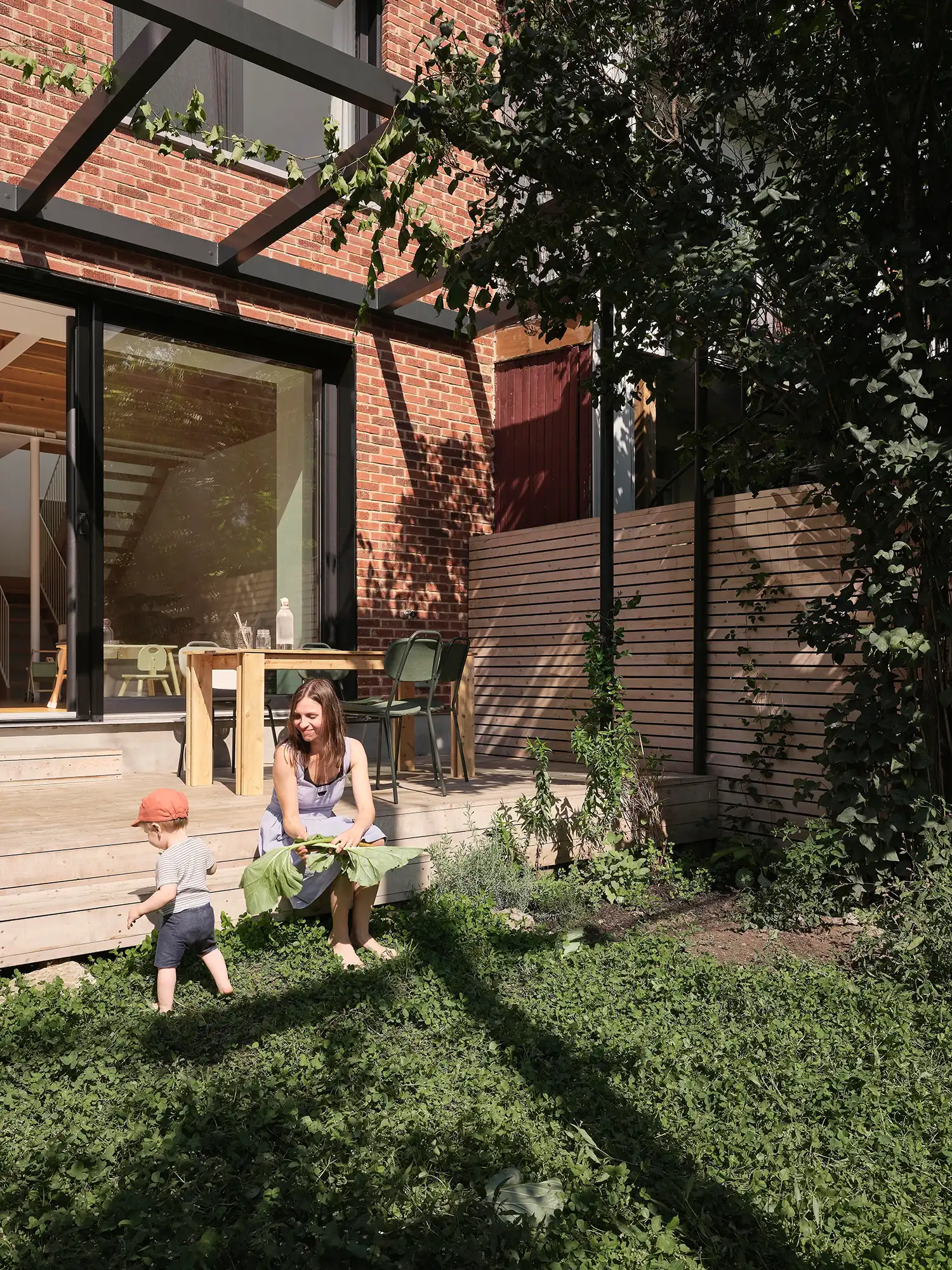
The seamless integration of landscape and light is most evident in the home’s relationship with its namesake—a mature lilac tree in the southwest-facing courtyard. A pergola, inspired by the traditional vine supports found in the local Portuguese community, provides a seasonal filter for the sun. This dialogue between the interior and the outdoors is a sophisticated evolution of the city’s unique residential typologies. Similar to the way this minimalist shoebox renovation in Montreal utilized clean geometries to honor historical footprints, the Lilac House uses the central staircase as a light well. Crowned by a skylight and a sculptural curve, this vertical volume diffuses natural light even into the basement, ensuring that the subterranean levels feel as vital as the upper floors.
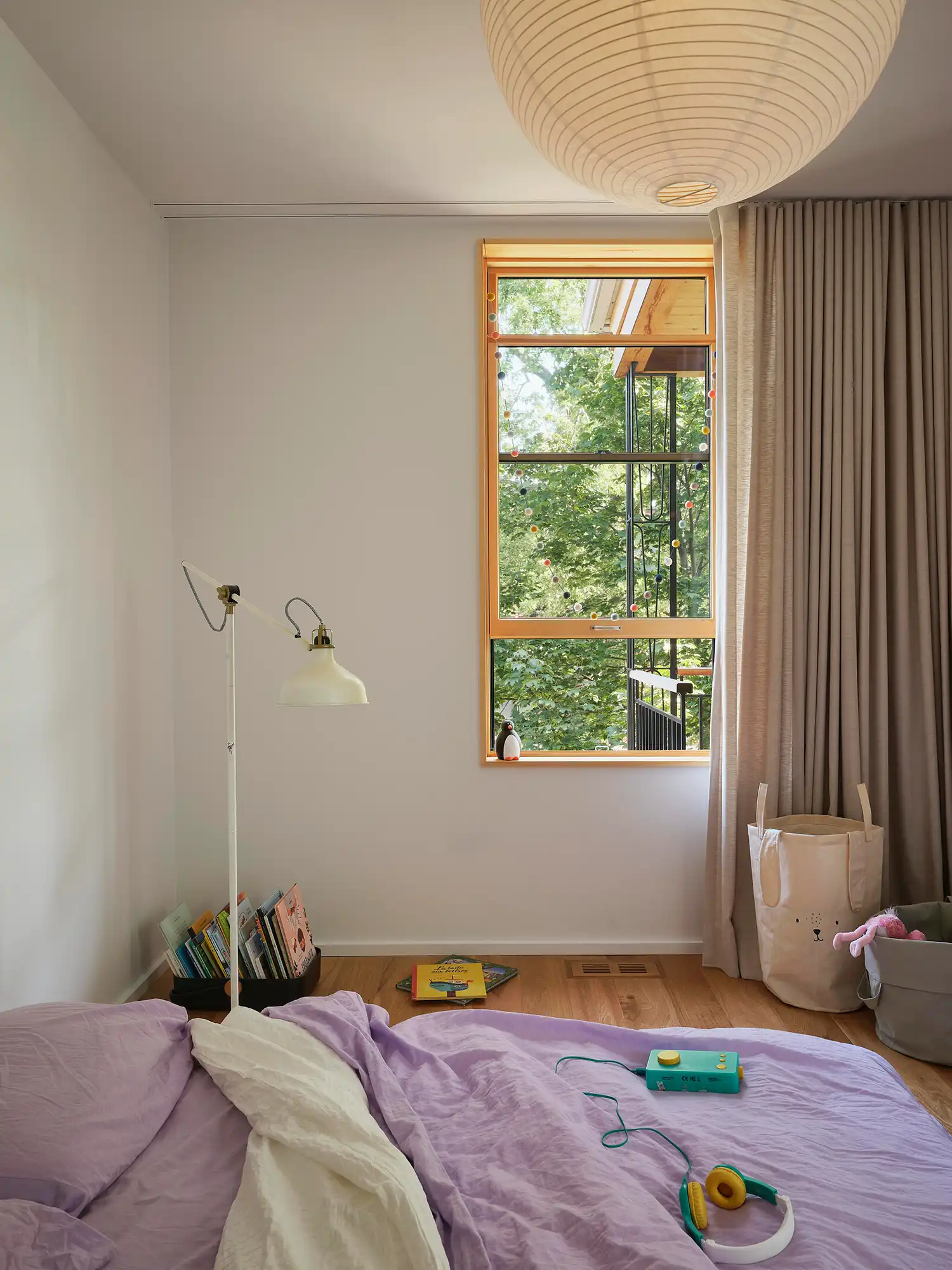
Technical ingenuity meets heritage preservation in the house’s mechanical execution. To preserve the original ceiling heights, assemblage studio meticulously integrated ventilation ducts within the depth of the joists, while a new steel structure clears the circulation paths of intrusive columns. The sustainability of the project is found in its material circularity: brick from the rear facade was dismantled, cleaned, and re-laid by hand, and salvaged timbers from the original structure were repurposed into shelving. This respect for the “life cycle” of materials extends to the choice of local artisans and lighting designers, such as Lambert & Fils and Luminaires Authentik, rooting the project firmly in the Montreal design ecosystem.
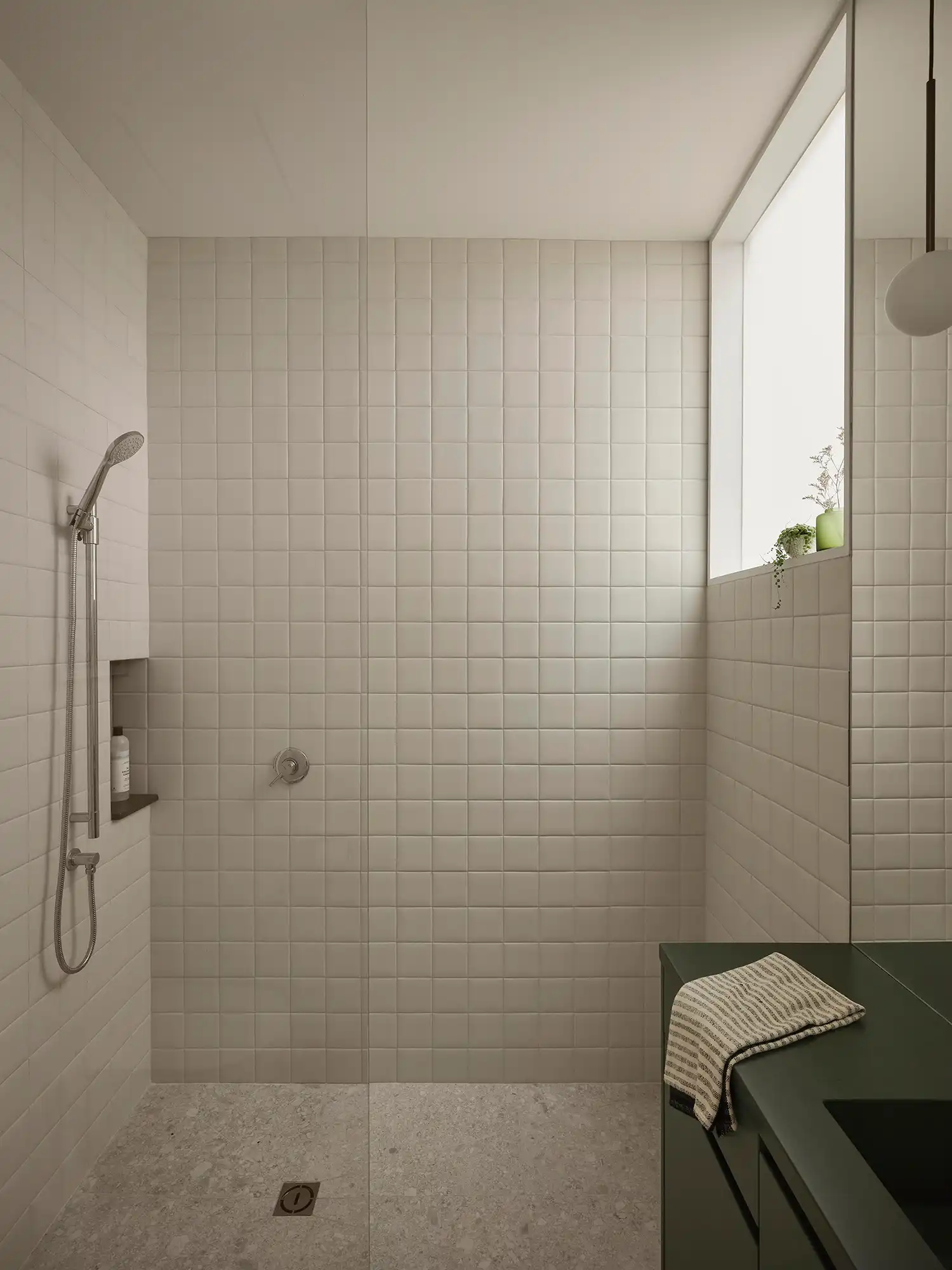
The contextual impact of the Lilac House lies in its refusal to scream for attention. The front balconies have been restored with white cedar and ornamental steel columns that speak the vernacular language of the streetscape, maintaining the neighborhood’s visual continuity. By favoring robust, repairable solutions over fleeting trends, Campeau has created a residence that functions as a silent partner to the family’s daily life. It is a project that proves that the most radical act an architect can perform today is not the creation of something entirely new, but the thoughtful, rigorous metamorphosis of what we already have.