

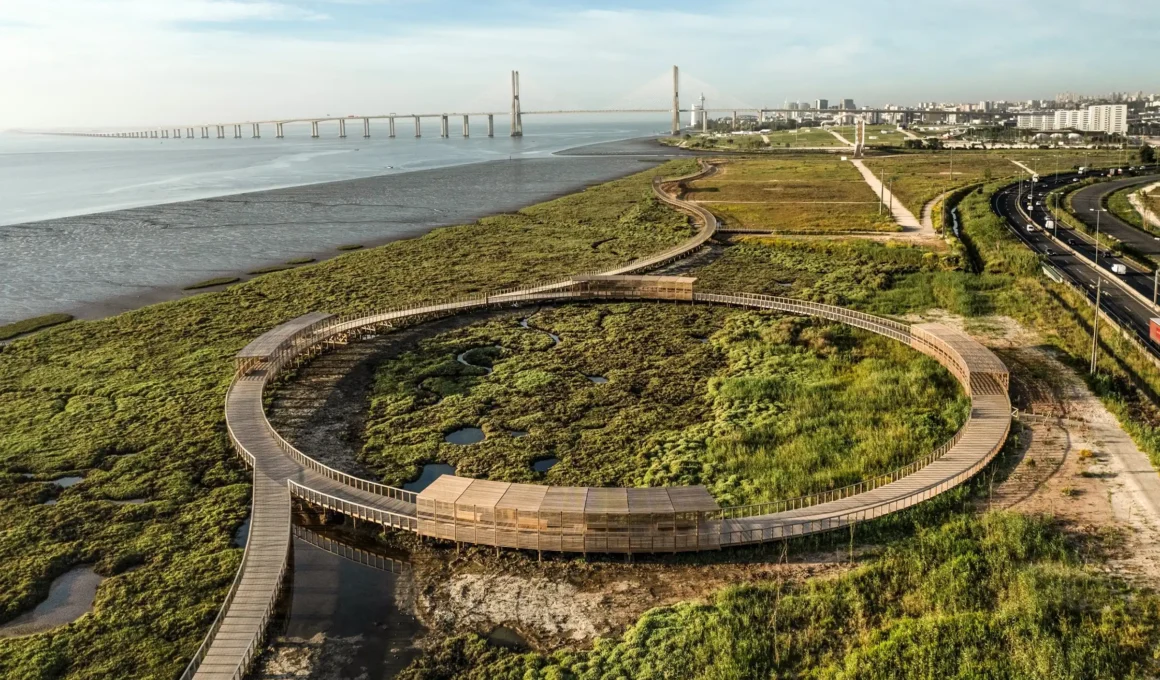
In Lisbon’s northeastern periphery, a transformative landscape project redefines the relationship between urban infrastructure and fragile ecosystems. Designed by Topiaris Landscape Architecture, the Loures Riverfront spans 6.2 kilometers along the Tagus River, weaving through salt marshes, mudflats, and reed beds just minutes from densely populated neighborhoods. This elevated boardwalk—completed in 2023 after seven years of meticulous planning and execution—transcends conventional transit routes. Instead, it merges sustainable mobility with ecological stewardship, creating a corridor that serves commuters, conservationists, and curious explorers alike.
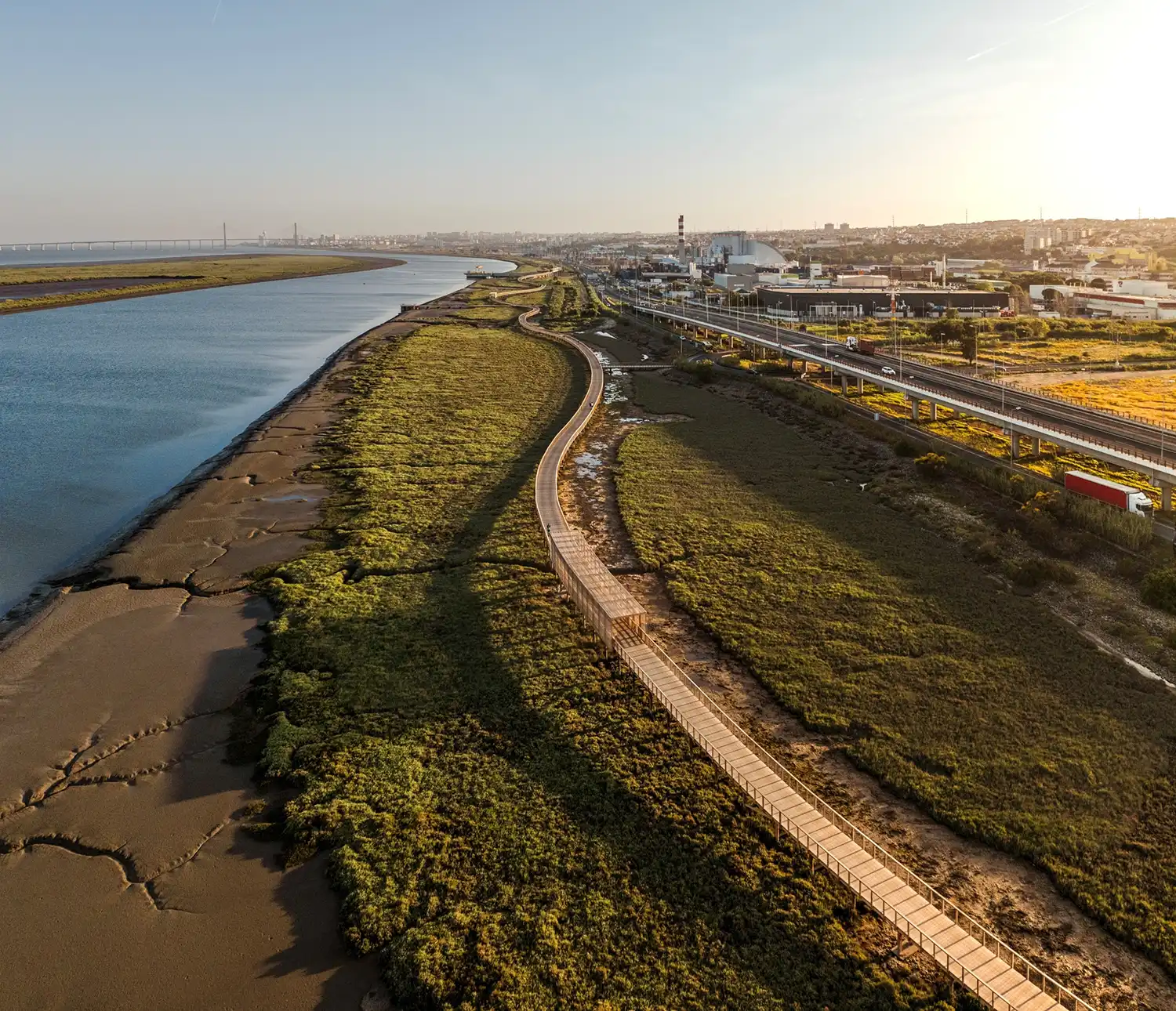
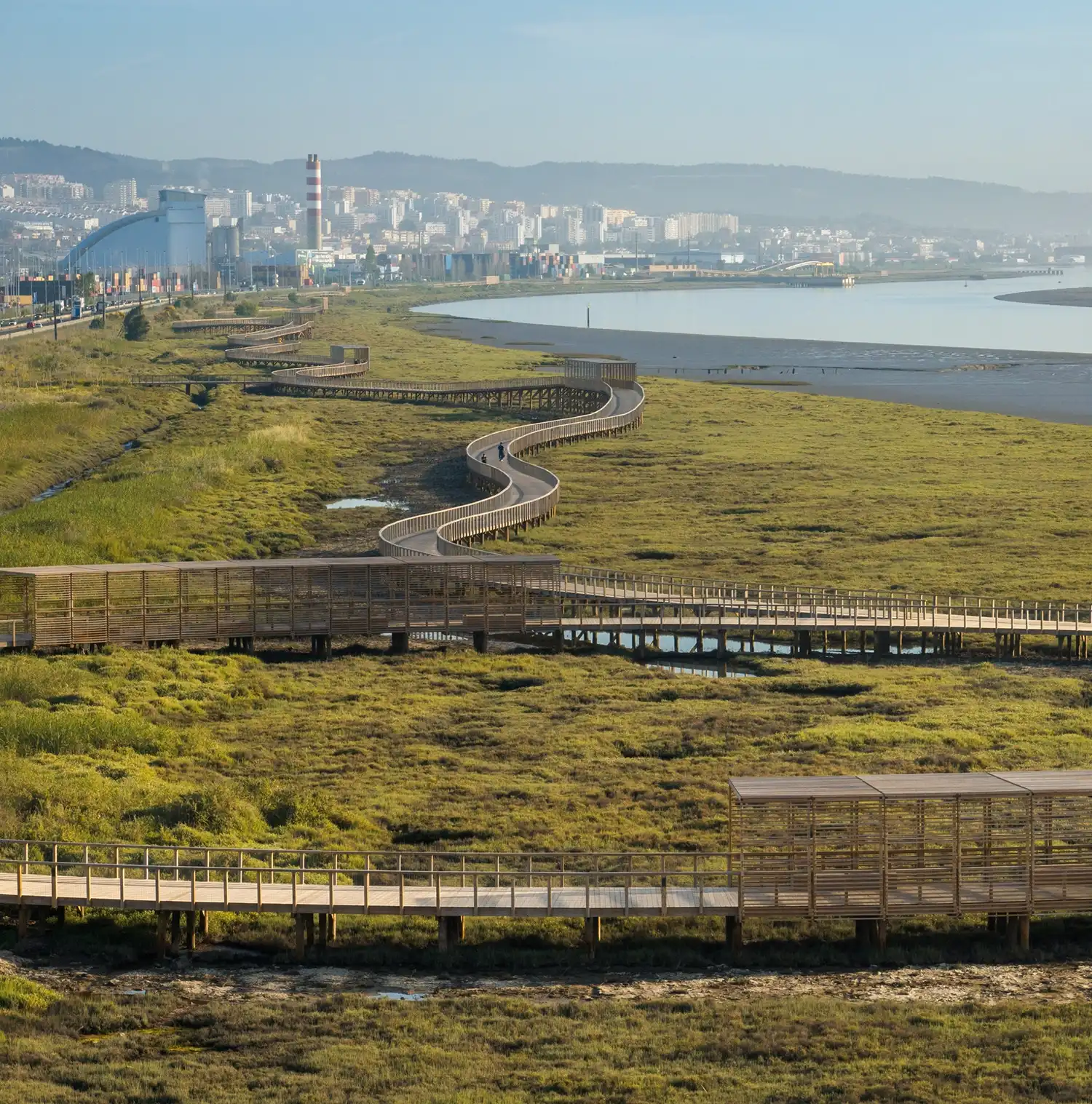
The project’s genius lies in its rejection of efficiency-driven design. Rather than a linear path from point A to B, the trail meanders like the estuary’s natural drainage lines, inviting visitors to slow down and engage with the landscape. Raised on wooden stilts 1 to 5.5 meters above ground, the 3.5-meter-wide boardwalk ensures tidal flows remain uninterrupted, habitats stay connected, and flood risks are mitigated. This technical triumph protects the marsh’s delicate balance while accommodating cyclists and pedestrians on a shared path—a critical link in Lisbon Metropolitan Area’s broader Tagus Riverfront Greenway, connecting the city to Vila Franca de Xira.
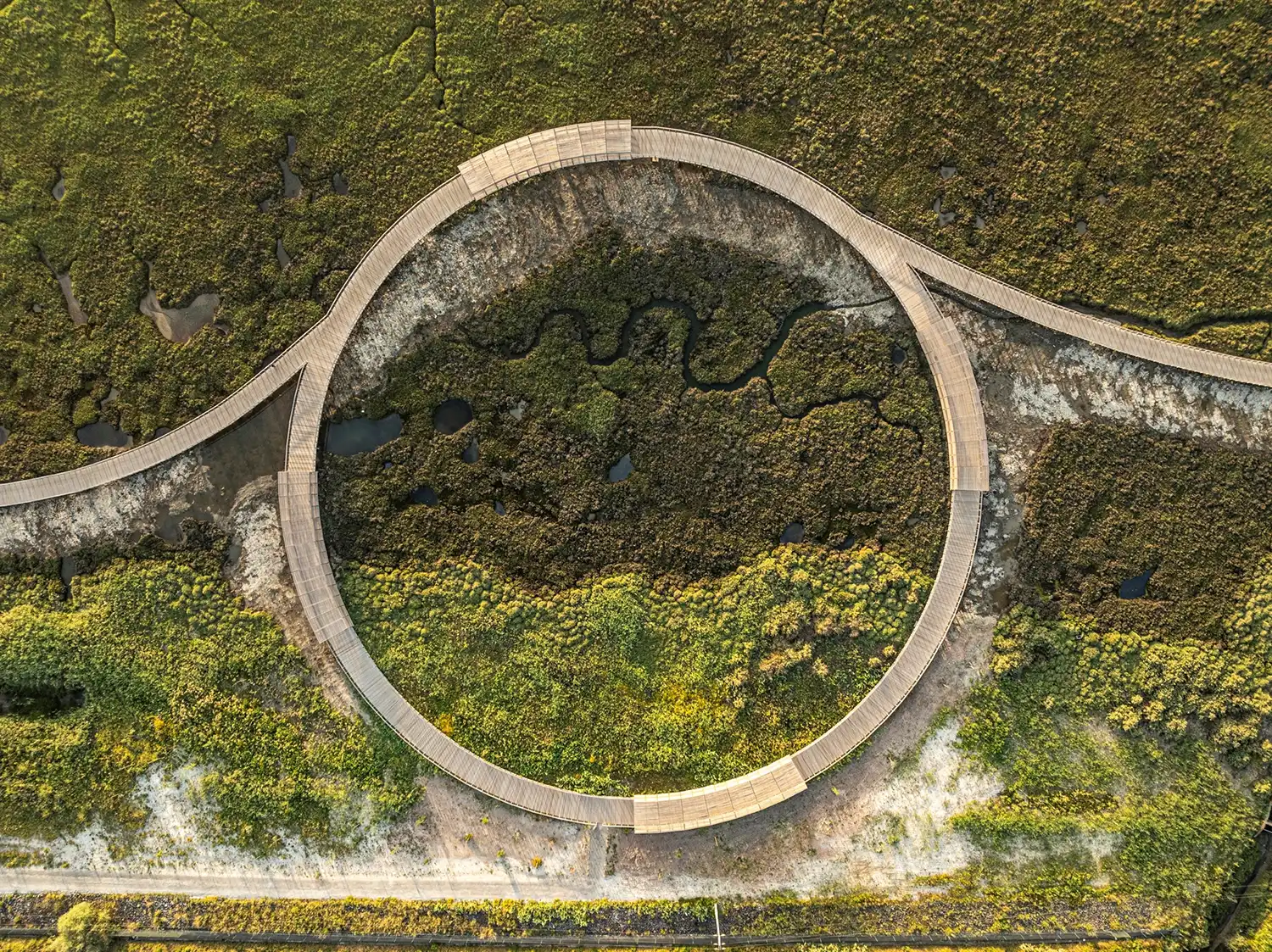
The site, part of one of Europe’s most significant wetlands, shelters migratory birds, fish nurseries, and salt-tolerant flora. Topiaris navigated strict protections—including Special Protection Areas (SPA) and National Ecological Reserves—by implementing rigorous protocols during construction. Work corridors were tightly delimited, heavy machinery avoided sensitive zones, and native vegetation like Spartina maritima and Phragmites australis was reintroduced post-construction. The result? A thriving ecosystem where black-winged stilts forage in mudflats unseen from nearby apartment blocks.
Five observation decks and twelve shaded tunnels punctuate the route, transforming movement into moments of pause. These structures—crafted from sustainably sourced timber—feature birdwatching counters, benches, and interpretive signage. At the “Tagus Circle,” a looped detour reveals the marsh’s stratified micro-habitats: lower salt marshes submerged at high tide, mid-marsh shrublands, and upper marsh grasslands where freshwater mingles with saline flows. This immersive sequence educates visitors on estuarine resilience, illustrating how these landscapes sequester carbon, filter heavy metals, and buffer storm surges.
Reconciling urban access with ecological fragility demanded innovation. Topiaris collaborated with hydrologists and structural engineers to develop foundations that touch the earth lightly. Stilts anchor deep into stable strata, avoiding disturbance to root systems, while the boardwalk’s undulating elevation adapts to terrain and sightlines. Two repurposed concrete piers—vestiges of industrial history—now serve as fishing platforms, embodying the project’s ethos of adaptive reuse. Even shading elements double as habitat connectors, allowing vegetation to climb and fauna to traverse.
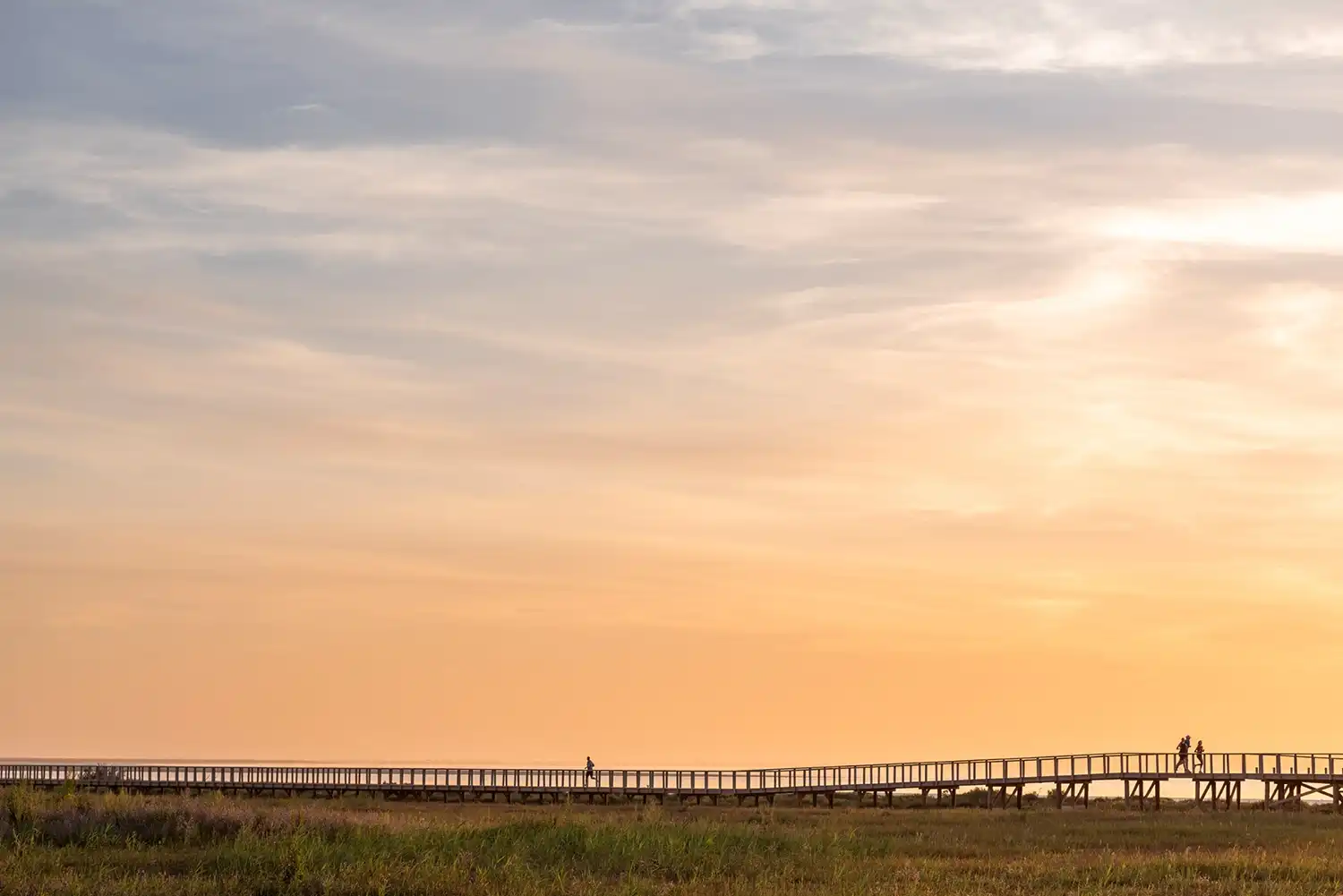
For decades, Loures’ communities were severed from their waterfront by rail corridors and highways. The boardwalk bridges these gaps with overpasses, reknitting neighborhoods to the river. Commuters now pedal to work along car-free routes, reducing CO2 emissions by an estimated 12% in the corridor. Meanwhile, school groups use signage co-designed with ecologists to learn about crustacean life cycles, while interactive displays explain climate adaptation. This seamless blend of daily transit and environmental education proves infrastructure can be both utilitarian and poetic.
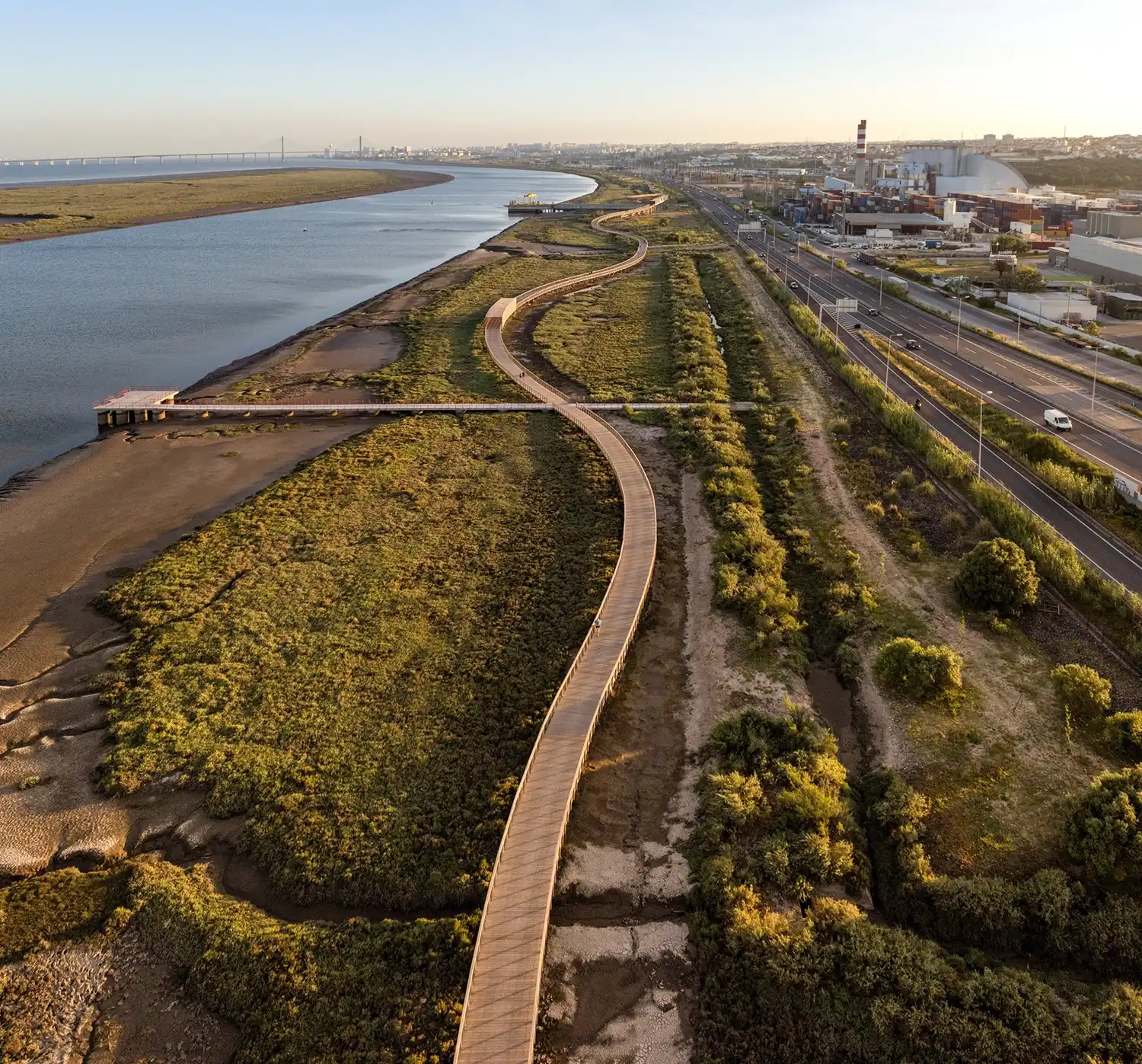
Winning the 2025 A+Award for Public Parks, Loures Riverfront sets a precedent for metropolitan estuaries worldwide. It demonstrates how landscape architecture can orchestrate coexistence: between city and marsh, speed and stillness, human needs and ecological imperatives. As cities globally grapple with rising seas, Topiaris’ work argues that true resilience isn’t found in concrete barriers but in adaptive, respectful engagement with natural systems—one mindful step along a wooden path at a time.