



In the dense urban fabric of Milan, where the demand for central living often results in the aggressive subdivision of historic footprints, the challenge for contemporary designers is no longer just about aesthetics, but about spatial survival. Atelierzero has addressed this modern constraint with the M50 micro-apartment, a 20-square-meter refurbishment that rejects the cold minimalism usually associated with tiny living. Instead of viewing the limited square footage as a deficit, the project treats the home as a singular, adaptive organism, proving that even the most compact Milanese dwellings can transition from anonymous units into soulful, domestic retreats.
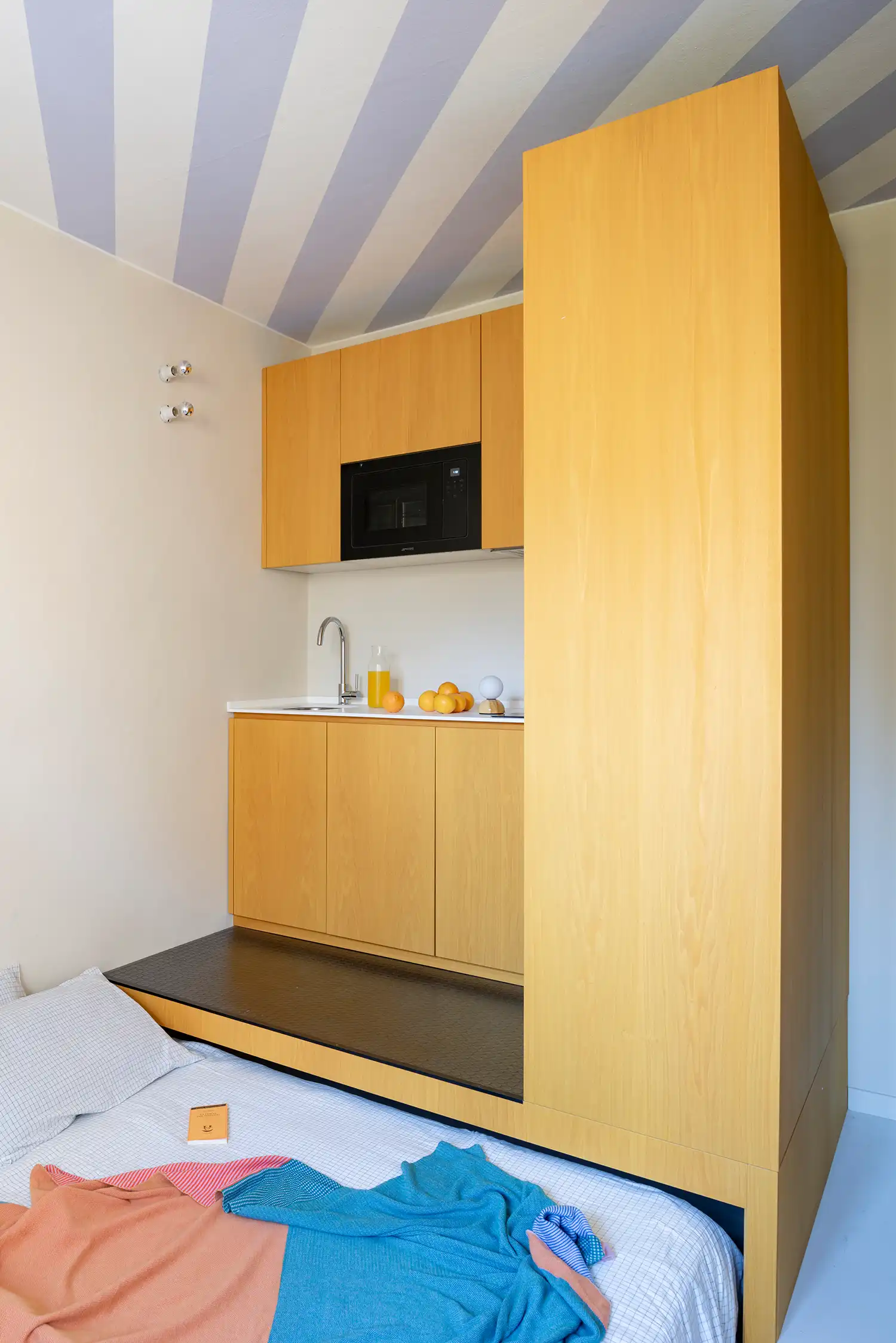
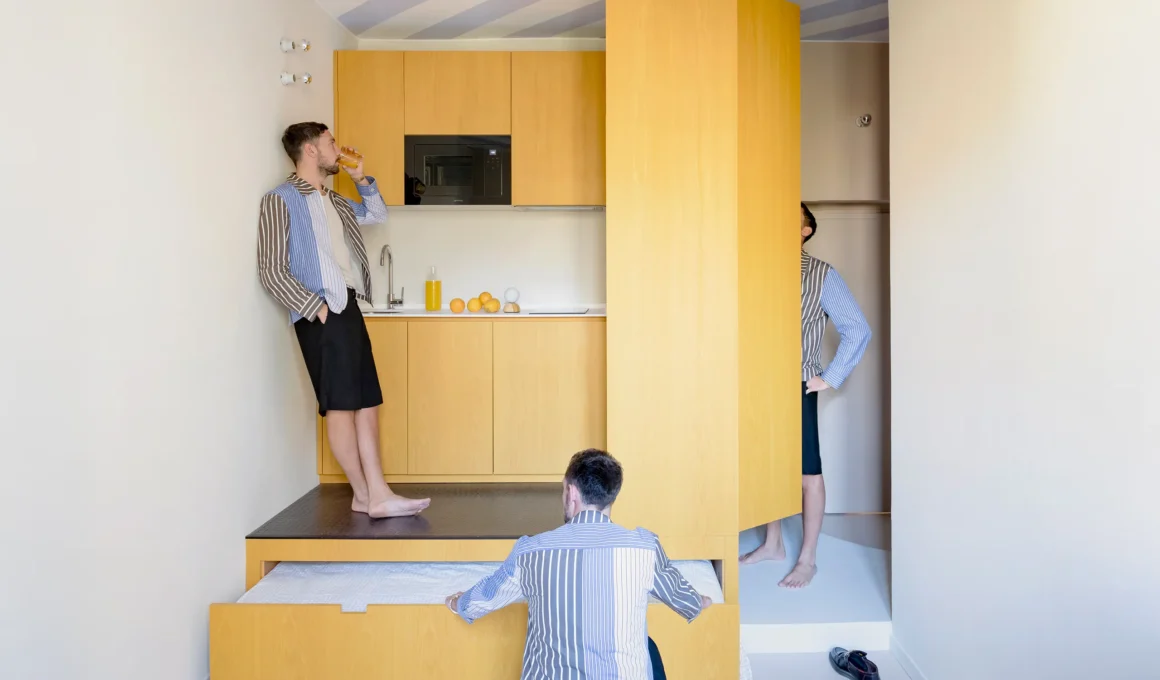
A singular architectural volume acts as the engine of the entire home, moving away from the traditional concept of rooms toward a more fluid, integrated methodology. This custom-made core organizes the primary functions of daily life—wardrobe, general storage, and kitchen—into a high-density cluster that frees up the remaining floor area. By consolidating the technical requirements of the home into a centralized wooden monolith, the designers have maximized the perceived volume of the space, ensuring that the resident never feels pinned in by the walls of their own environment.
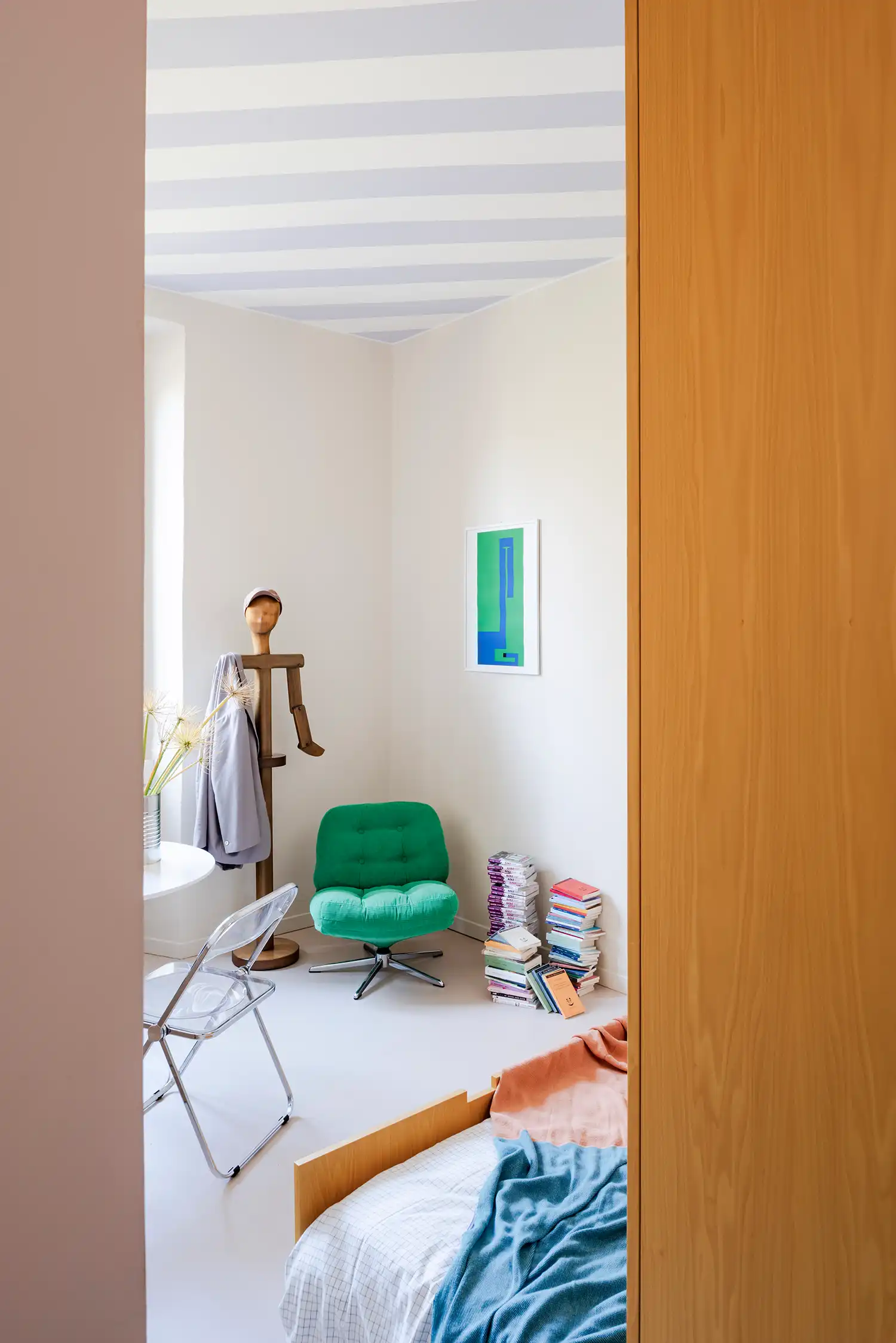
Spatial flexibility is achieved through a mechanical sleight of hand, specifically regarding the sleeping quarters. To avoid the clutter of a permanent mattress in such a restricted footprint, the bed is designed as a retractable element hidden beneath the raised kitchen floor. This elevation not only defines a clear boundary between the “culinary” and “living” zones without the need for partitions but also allows the apartment to physically transform within seconds. This focus on custom furniture for small apartment solutions highlights a shift in urban residential strategy, where the furniture is no longer an accessory but the primary infrastructure of the space.
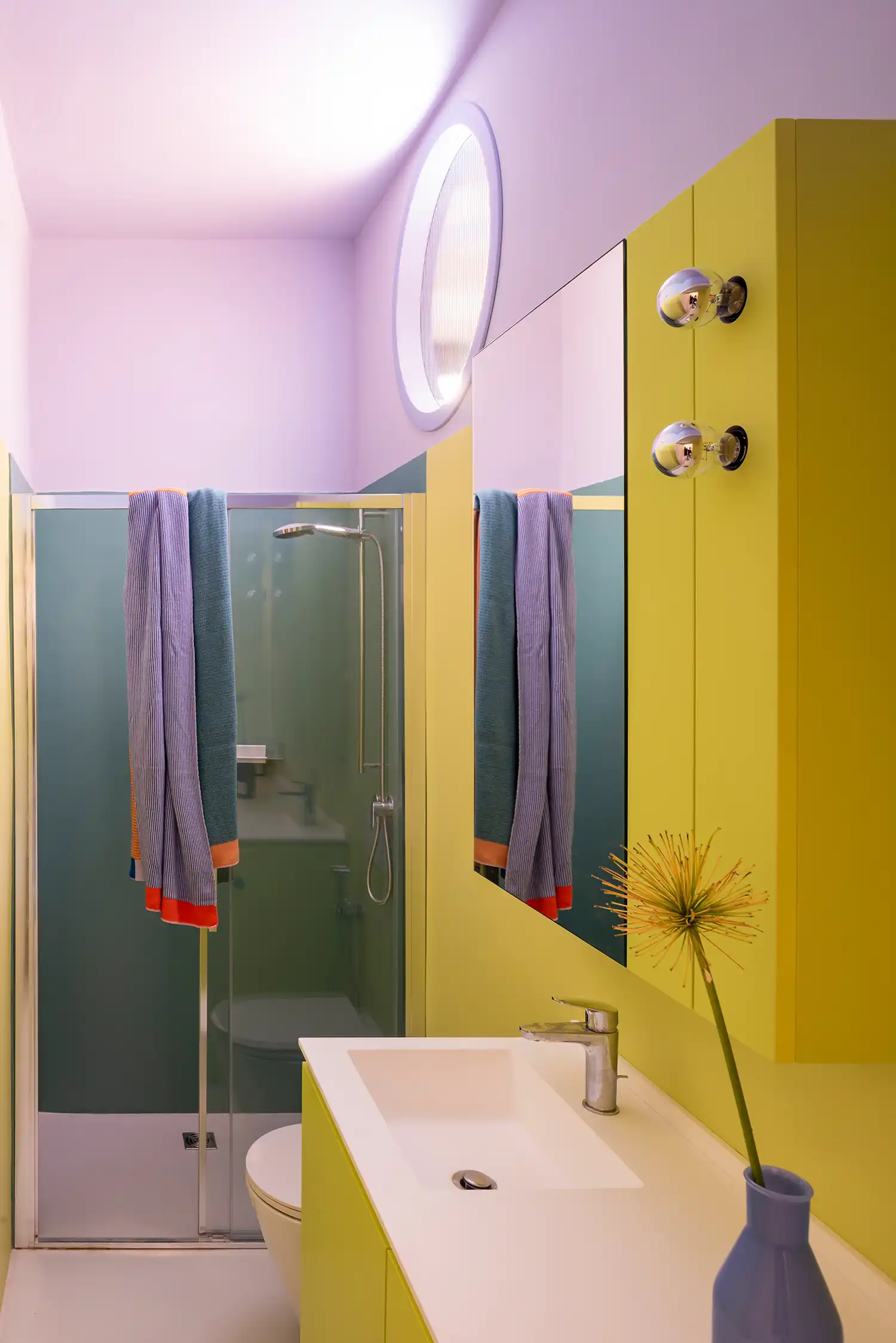
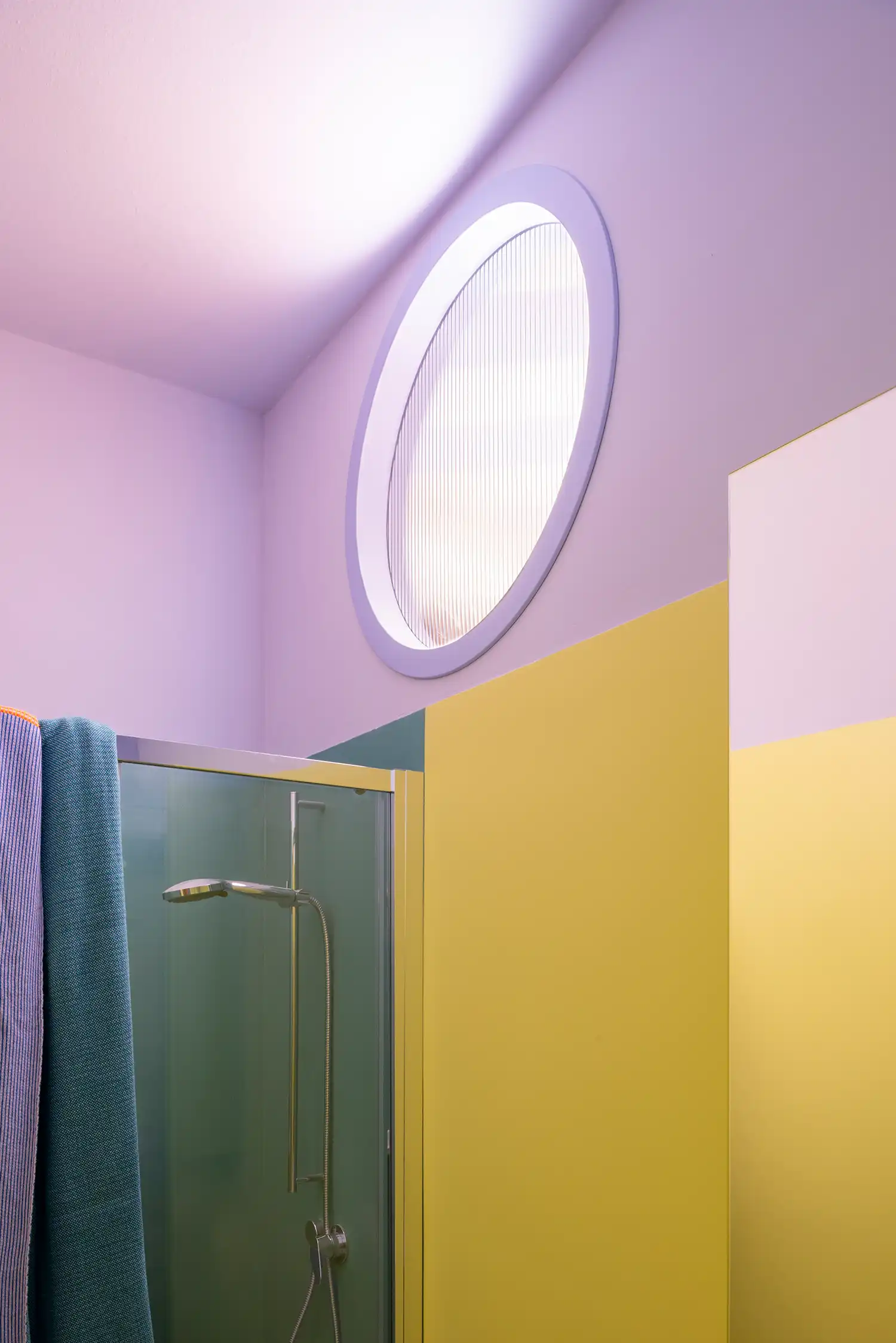
The sensory experience is defined by a bold chromatic intelligence, departing from the safe, neutral palettes often used to make small spaces feel “larger.” Atelierzero instead uses color to provide a sense of immersion and identity. The journey through the 20 square meters begins with the soft warmth of pink flooring, which moves upward into the vibrant orange veneer of the kitchen cabinetry. This tonal progression continues into the bathroom, where acid green and lilac create a surprising, high-contrast interior. This layering of analogous and complementary shades ensures the micro-apartment feels intentional and vibrant rather than merely utilitarian.
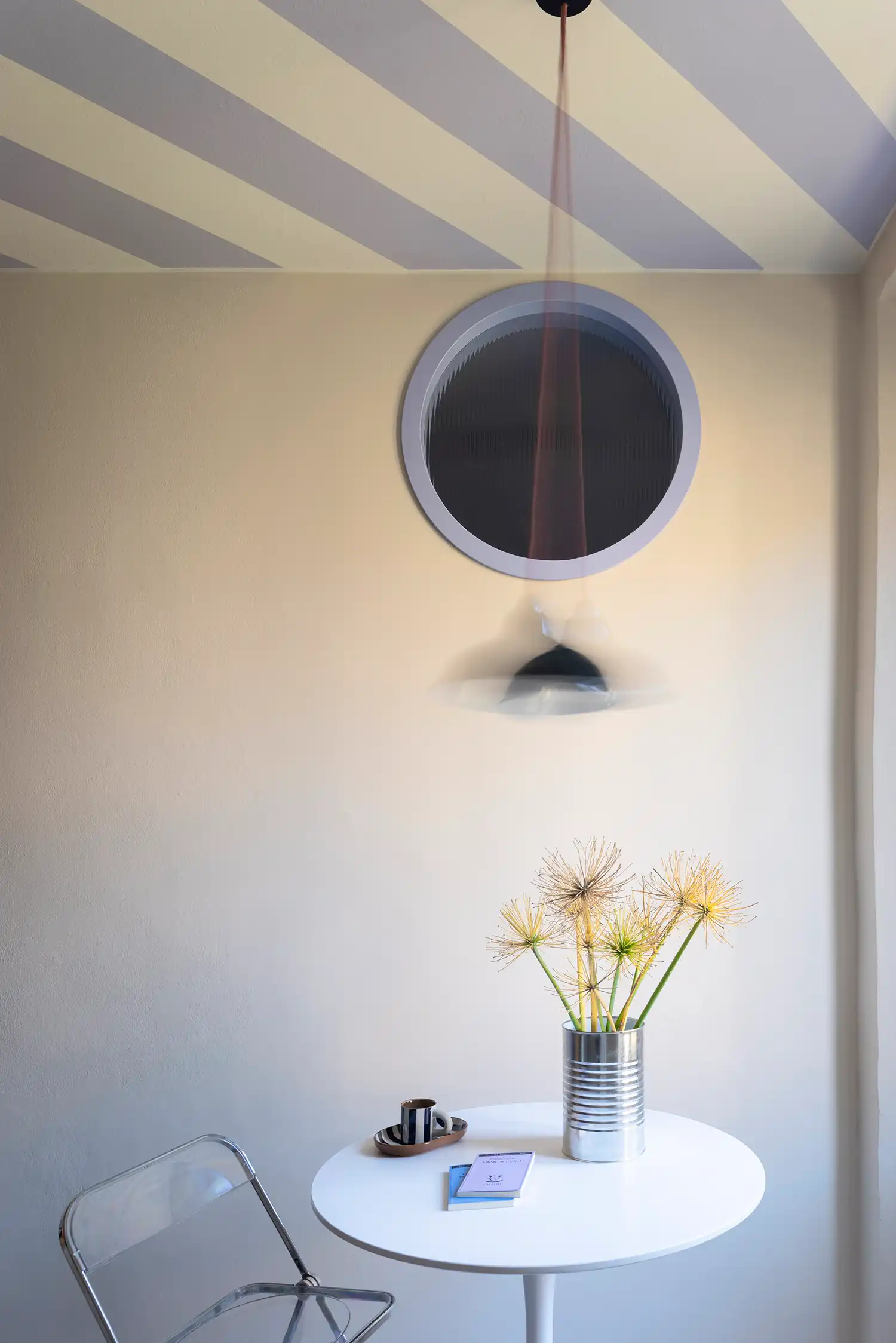
Visual continuity is reinforced overhead, where a distinctive striped pattern occupies the ceiling. This graphic treatment serves as a cohesive thread, physically and visually stitching the various functional zones together. In a space where floor area is at a premium, the ceiling becomes a crucial canvas for expression, drawing the eye upward and providing a sense of rhythmic movement that counters the static nature of the surrounding walls. It is a clever use of the “fifth wall” to distract from the physical boundaries of the site.
The M50 project serves as a compelling case study for the future of high-density urban living in Italy. By prioritizing inclusivity and human-centric needs over the raw logic of square footage, Atelierzero has managed to transform a potentially claustrophobic subdivision into a warm, functional, and deeply characterful home. The intervention suggests that the quality of life in our cities depends less on the total area we occupy and more on the creative sensitivity with which that area is choreographed.