


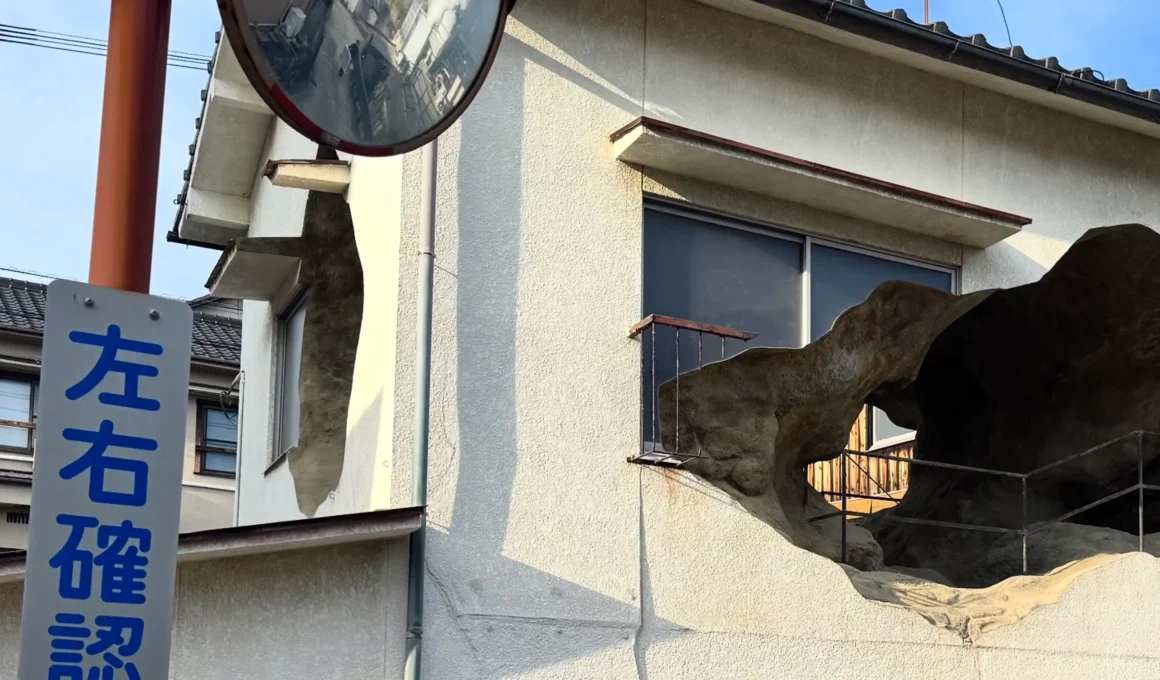
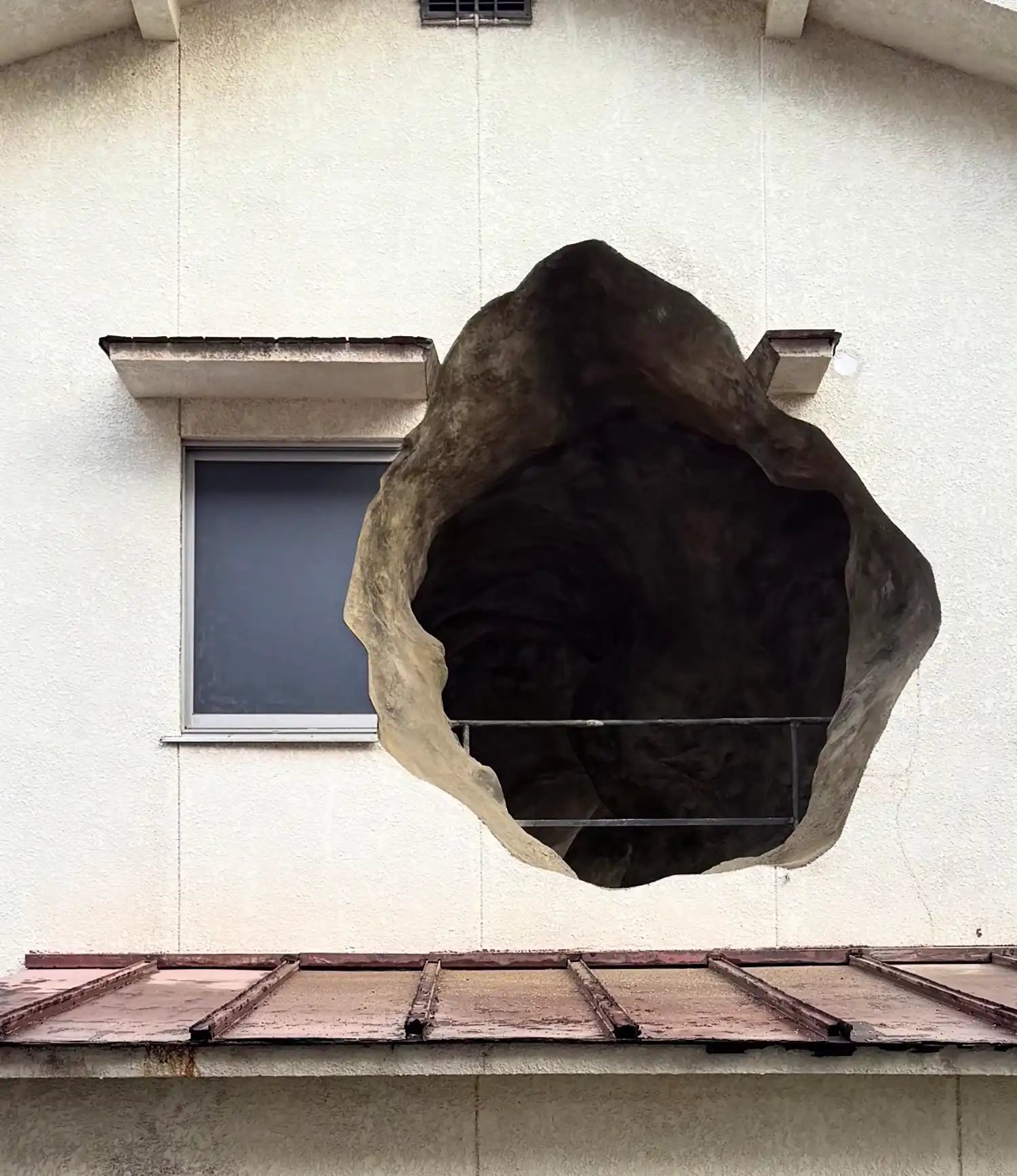
A geological rupture in the domestic landscape defines the essence of Space II (2025), the latest architectural-scale installation by the Japanese art collective 目 [mé]. Situated in the historic geothermal town of Kannawa, within the Oita Prefecture of Japan, the project eschews the traditional additive nature of construction. Instead, the artists have performed a radical act of subtraction, puncturing a private residence with irregular, jagged voids. The resulting structure feels less like a house and more like a living organism that has been excavated from the inside out, challenging our fundamental perception of shelter and permanence.
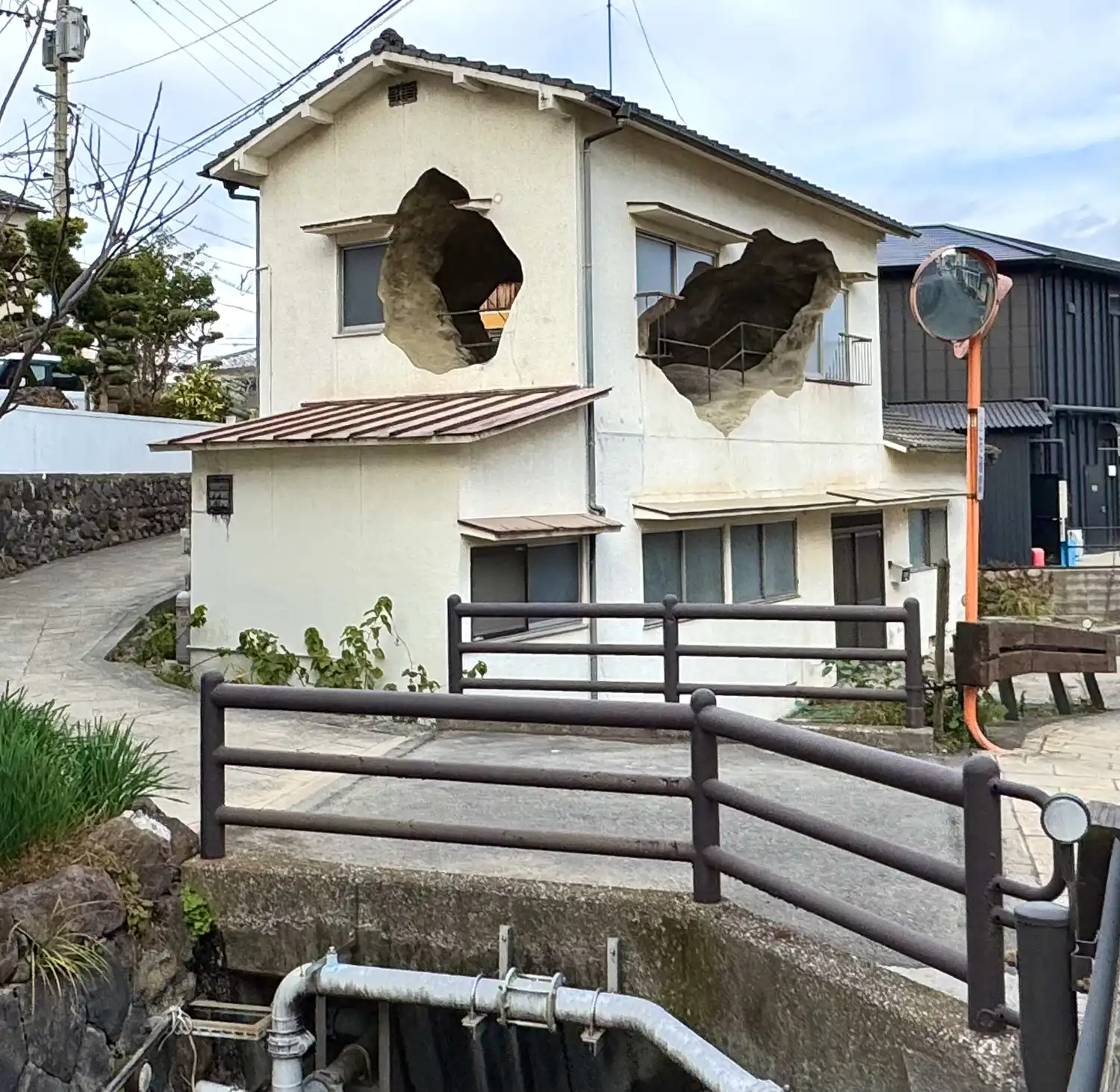
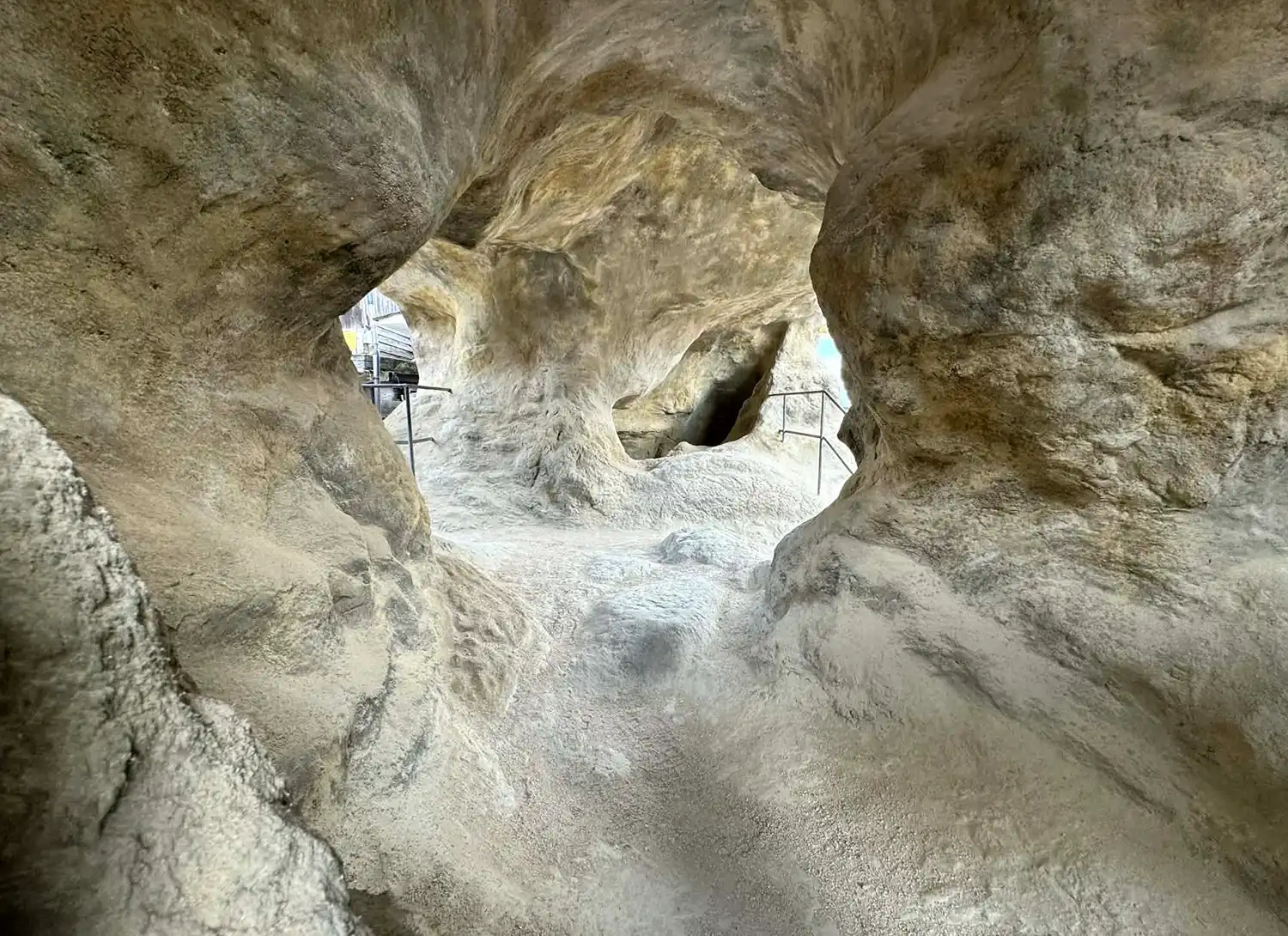
The sensory experience of the installation is one of profound displacement. As one crosses the threshold, the familiar domesticity of the Beppu suburbs dissolves into a cavernous, continuous void. The edges of the openings are rough and tactile, mimicking the volcanic strata and eroded stone found deep beneath the city’s steaming vents. There is a weight to the emptiness; the walls and floors do not merely end—they seem to have weathered away over eons. Minimal handrails provide the only hint of human intervention, acting as silver threads that guide visitors through a dark, subterranean cavity that feels ancient and unpredictable.
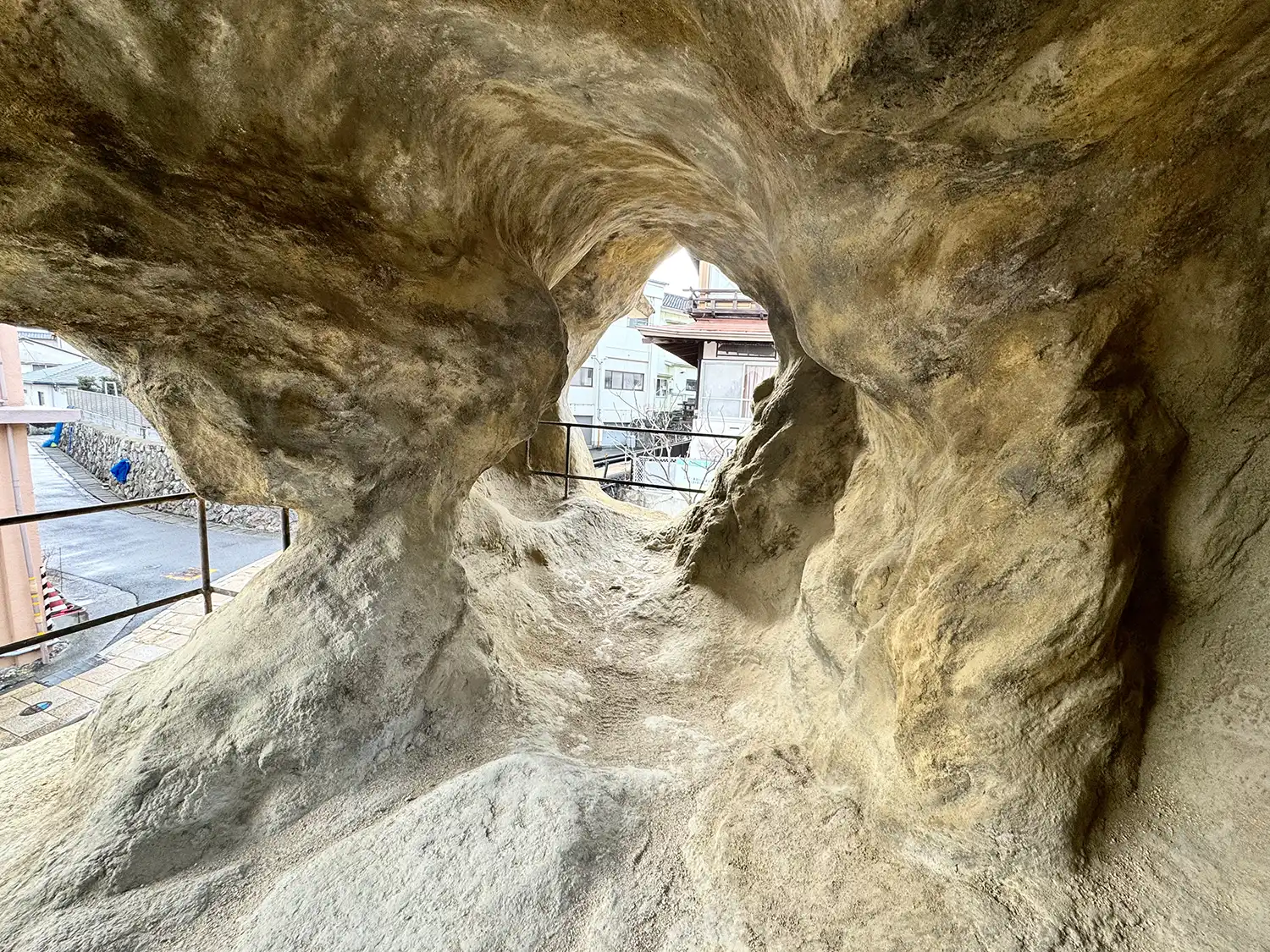
Technical precision meets primordial chaos in the way 目 [mé] navigates the removal of volume. To create Space II, the team meticulously stripped away the architectural layers of the Geothermal Tourism Lab ENMA Annex, transforming a rigid interior into a fluid, geological rupture. This is not a clean, minimalist void, but a textured landscape of shadows. By prioritizing the “non-space,” the collective invites a dialogue between the stability of the built environment and the volatile nature of the earth. The “design” here is not found in what is built, but in the sophisticated management of absence and the structural integrity of the remaining shell.
A dialogue with the local landscape anchors the project within the unique cultural history of Kannawa. Known for its “hells” (jigoku)—boiling hot springs that were once feared as cursed omens before being rebranded as sites of healing—the town is a place defined by transformation. 目 [mé] taps into this unstable lineage, imagining a moment in time before the land was tamed by tourism or infrastructure. The installation serves as a temporal bridge, reflecting the surrounding rooftops and streets through its jagged apertures, momentarily turning the mundane activity of the town into a strange, external spectacle.
The shift in conceptual strategy marks a significant evolution from the collective’s previous work, such as the 2020 space project at the Towada Art Center. While their earlier intervention focused on the jarring juxtaposition of a pristine museum gallery inserted into a weathered snack bar, Space II moves toward the total erasure of context. Rather than overlaying two different realities, the artists have hollowed out the existing one. This radical openness to the elements and the blurring of structural boundaries recalls the ethereal logic of Junya Ishigami’s KAIT Multipurpose Plaza, where architecture is treated not as a shelter, but as a porous extension of the surrounding landscape.
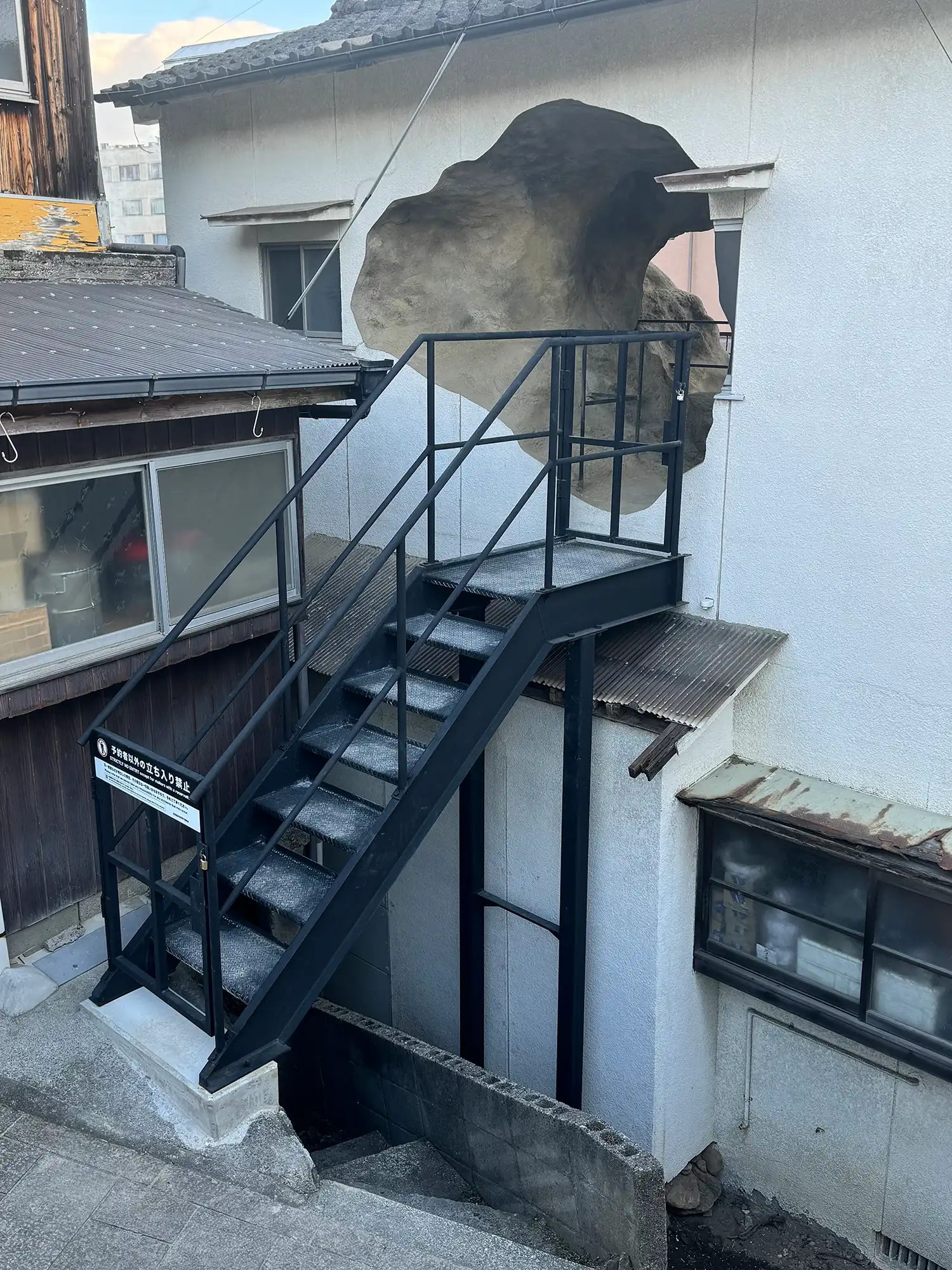
The contextual impact of Space II lies in its ability to make the viewer feel like an outsider within their own environment. Through the cavern’s irregular “windows,” the passing bodies and daily life of Oita are framed as fragments of a world left behind. It is a rare architectural moment where the void becomes more tangible than the solid, and where the act of looking out becomes an act of looking back. Ultimately, 目 [mé] has created a site that is both a reflection of the town’s volcanic soul and a silent sanctuary from it—a place where the earth’s ancient past and the town’s modern present collide within the ruins of a home.